
In This Article
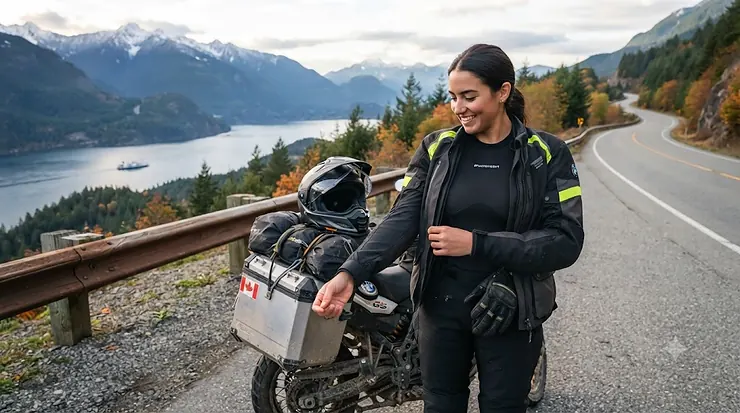
Somewhere around the second red light on a -8°C commute, you’ll figure out whether your base layer is doing its job. Either your core stays warm and your hands still work the clutch, or you’re standing there wondering why you bothered layering up at all. A synthetic thermal base layer for motorcycle riding is the garment worn directly against the skin, under your jacket and pants, made from fibres like polyester or polypropylene that trap warm air while pushing sweat away from your body. It’s the unglamorous foundation that decides whether the rest of your gear actually works. Choosing one badly means chafing, dampness, and a ride that ends two hours earlier than planned; choosing one well means the cold becomes background noise instead of the main event. This guide walks through seven real synthetic options sold in Canada, what actually separates them, and how to match one to the way you ride. For context on just how quickly things go sideways in the cold, Health Canada’s guidance on extreme cold is worth a skim before your next shoulder-season ride.
Prices below are shown as ranges in Canadian dollars, since Amazon.ca pricing shifts often — always check current price at the time of purchase.
Quick Comparison Table
| Product | Best For | Fabric | Price Range (CAD) |
|---|---|---|---|
| KLIM Aggressor Shirt 2.0 | Deep winter powersports use | Gridded polyester fleece | C$90–C$130 |
| Alpinestars Ride Tech Winter Top | Racers wanting compression warmth | Polypropylene/elastane | C$70–C$100 |
| Dainese Thermo LS | All-day touring in variable cold | Technical synthetic blend | C$85–C$120 |
| FXR Pyro Thermal Top | Canadian riders on a mid-range budget | Polyester/spandex microfleece | C$55–C$80 |
| Under Armour ColdGear Mock | Budget-conscious commuters | Polyester/elastane compression | C$45–C$65 |
Looking at this snapshot, the pattern is pretty clear: the powersports-specific brands (KLIM, Alpinestars, Dainese) charge a premium for fabrics engineered specifically around motorcycle riding postures and long saddle time, while crossover athletic brands like Under Armour compete mainly on price and availability. None of that means the cheaper options are bad — it means your riding frequency and climate should decide where you land on this table.
💬 Just one click — help others make better buying decisions too!😊
Top 7 Synthetic Thermal Base Layers: Expert Analysis
1. KLIM Aggressor Shirt 2.0 — purpose-built powersports gridded warmth
The KLIM Aggressor Shirt 2.0 is built around a midweight, gridded 4-way-stretch fabric designed specifically for powersports, not repurposed from a gym rack. The grid pattern creates air pockets that trap heat while channels between them move sweat outward, which matters more than it sounds — a flat fabric traps moisture just as easily as it traps heat. Based on the spec comparison with generic athletic base layers, this construction is why KLIM’s gear shows up so often in ADV and snowmobile forums: it’s designed around hours in a riding position, not a 45-minute gym session. This is the pick for riders doing genuine winter commuting or touring in Canadian conditions, where a base layer needs to survive a full tank of gas, not a single errand. Reviewers on powersports-specific forums consistently note that KLIM’s Aggressor line runs true to a snug, athletic fit, so sizing up slightly is common advice for anyone layering a mid-layer over top.
Pros:
- ✅ Gridded fabric purpose-built for powersports riding postures
- ✅ Strong heat-to-bulk ratio under a jacket
- ✅ Trusted brand with a long powersports track record
Cons:
- ❌ Premium pricing compared to general athletic brands
- ❌ Limited availability in smaller sizes at times
At around C$90–C$130 depending on size and retailer stock, this sits at the premium end of the lineup, but for riders logging real winter kilometres, the cost-per-ride works out favourably over a multi-season lifespan.

2. Alpinestars Ride Tech Winter Long Sleeve Top — dual-density compression warmth from a racing brand
The Alpinestars Ride Tech Winter Long Sleeve Top uses a dual-density polypropylene and elastane fabric, with extra material strategically placed over the chest and back — the areas most exposed to wind chill at speed. What that means in practice is that Alpinestars didn’t just make a warm shirt; they mapped the warmth to where wind actually hits a rider leaning into a windscreen. The tubular, seamless construction also reduces the kind of skin irritation that shows up after three hours in the saddle, something flat-seamed base layers can’t always claim. This is a strong match for sport and sport-touring riders who want compression support for muscle fatigue on longer rides, not just warmth. Aggregated reviews on Alpinestars’ own base layer line frequently mention that the compression fit holds up well below roughly 5°C when paired with a windproof jacket, though a few riders note the tight cut runs small compared to casual base layers.
Pros:
- ✅ Dual-density fabric targets high-exposure wind zones
- ✅ Seamless tubular build reduces chafing on long rides
- ✅ Compression fit supports muscles over multi-hour rides
Cons:
- ❌ Snug fit may feel restrictive for larger frames
- ❌ Not windproof on its own — needs a proper outer shell
Priced in the C$70–C$100 range, it lands mid-pack, and the compression-plus-warmth combination makes it a smart value for anyone who already rides in Alpinestars gear.
3. Dainese Thermo LS Thermal Underwear — touring-bred all-day thermal regulation
Dainese built its technical layers range around one core idea: comfort over distance, not just warmth in isolation. The Dainese Thermo LS uses a technical synthetic fabric engineered to balance insulation with breathability, so the garment regulates temperature rather than just trapping heat and hoping for the best. What most buyers overlook about touring-focused base layers like this one is that overheating on a highway stretch, then chilling at a fuel stop, is often worse for comfort than steady cold — a layer that only insulates without breathing will soak you in your own sweat by the second hour. This is the base layer for riders doing long-distance touring across shifting conditions — a cool morning start, a sunny midday stretch, a chilly evening arrival — rather than a single fixed temperature all day. Since Dainese’s thermal underwear line is sold primarily through its own technical-layers catalogue rather than high-volume marketplaces, review volume specific to this exact model is thinner than for the powersports mega-brands; what’s verifiable is the brand’s established reputation for touring-oriented technical fabrics built into its broader technical-layers system.
Pros:
- ✅ Balances insulation with breathability for shifting conditions
- ✅ Part of a full coordinated technical-layers system
- ✅ European touring-brand engineering pedigree
Cons:
- ❌ Harder to find in Canadian retail than KLIM or Alpinestars
- ❌ Fewer verifiable Canadian customer reviews to reference
Expect a price in the C$85–C$120 range; it’s a reasonable ask for a touring-specific layer, provided you can track down your size through a dealer or the brand’s own site.
4. FXR Pyro Thermal Long Sleeve Top — Canadian-designed microfleece warmth at a mid-range price
FXR is a Manitoba-based brand, which matters more than marketing trivia when you’re shopping for gear meant to survive an actual Canadian winter. The FXR Pyro Thermal Long Sleeve Top uses a 180 gsm brushed microfleece built from a polyester-spandex blend, and FXR’s own base-layer guide rates the line at roughly 4 out of 10 on their internal warmth scale — useful context, since that positions it as a moderate-cold layer rather than an extreme-cold one. Here’s what to weigh: that warmth rating means this shirt shines as a daily-driver layer for typical winter commuting temperatures, but riders heading into deep sub-zero touring should plan to add a proper mid-layer on top rather than relying on the Pyro alone. Verified customer reviews on FortNine’s Canadian storefront describe the shirt as soft, warm, and quick-drying after a sweat, with one recurring complaint about an interior logo decal that some riders find sticks uncomfortably to bare skin.
Pros:
- ✅ Homegrown Canadian brand built for real winter riding
- ✅ Flat-lock seams and thumbhole cuffs for layering comfort
- ✅ Verified reviews confirm warmth and quick-dry performance
Cons:
- ❌ Interior decal reported as irritating by some reviewers
- ❌ Moderate warmth rating means it needs a mid-layer in deep cold
At a C$55–C$80 range, this is one of the best value plays in the lineup for riders who want moto-specific design without paying powersports-premium prices.
5. Fly Racing Lightweight Base Layer — best shoulder-season all-rounder with odor control
The Fly Racing Lightweight Base Layer takes a different approach than the heavier winter-specific options on this list: it uses hollow-core fibres that pull moisture to the outer surface for fast drying, paired with UPF 40+ sun protection and Polygiene odour-control treatment. Reviewers note the flat-lock seam construction holds up well against chafing, and the stretch fabric keeps full range of motion — important for anyone shifting weight in a standing position on an ADV bike. Based on the spec sheet, this isn’t the layer for a -15°C morning; it’s the layer for the in-between weeks of spring and fall when a heavy winter base layer would leave you sweating at a stoplight. What most buyers overlook is that owning one lightweight layer alongside one true winter layer, rather than a single “does everything” garment, usually solves more temperature-range problems than buying the warmest option available.
Pros:
- ✅ Hollow-core fibres wick moisture fast in shoulder-season rides
- ✅ Polygiene odour control useful for multi-day trips
- ✅ UPF 40+ adds sun protection most base layers skip
Cons:
- ❌ Too light for genuine deep-winter Canadian cold
- ❌ Less compression support than the Alpinestars or KLIM options
Priced around C$50–C$75, it’s a smart secondary purchase for riders who already own a winter-weight layer and want proper spring/fall coverage.
6. Under Armour ColdGear Compression Mock — budget athletic-wear crossover with broad size range
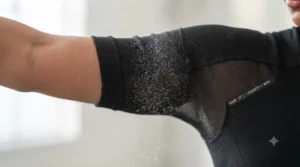
Under Armour’s ColdGear Compression Mock isn’t marketed as motorcycle gear at all, but its dual-layer fabric — a brushed, warm interior paired with a smooth, fast-drying exterior — has made it a popular budget crossover pick among riders who don’t want to pay powersports prices for a base layer. The 4-way stretch construction and flatlock seams do the same practical job as moto-specific brands: trap heat, wick sweat, and avoid chafing under a jacket’s seams. Under Armour’s own product materials state that customers report exceptional warmth in freezing conditions, and the brand’s broad size range (routinely spanning XS through 3XL) is a genuine advantage over some of the more limited European-sized moto brands on this list. The honest trade-off here is fit: this shirt is designed around gym and cold-weather sport movement patterns, not the specific ergonomics of a riding crouch, so expect slightly less mapped warmth-zoning than the Alpinestars or KLIM options.
Pros:
- ✅ Widely available with an unusually broad size range
- ✅ Dual-layer fabric traps warmth without excess bulk
- ✅ Budget-friendly compared to moto-specific brands
Cons:
- ❌ Not designed around motorcycle riding posture specifically
- ❌ Warmth zoning less targeted than dedicated moto brands
At roughly C$45–C$65, it’s one of the most accessible entry points into synthetic base layers for riders just building out a cold-weather kit.
7. TSLA Thermal Compression Base Layer — rock-bottom price for occasional cold commutes
The TSLA Thermal Compression Base Layer is the budget floor of this list, built with a 4-way-stretch exterior and a soft fleece inner lining, plus stretch panels at the sides, shoulders, and thighs. It’s marketed broadly across cold-weather sports — motorcycling, motocross, skiing, running — rather than engineered specifically around riding, and the honest read here is that it shows. What most buyers overlook about generic thermal compression shirts like this one is that “lightweight insulation” is doing a lot of work in the marketing copy; it’s a genuinely useful layer for occasional cold commutes or as a backup base layer in a saddlebag, but it isn’t built to the same durability standard as the powersports-specific brands above. Because this is a lower-cost, broadly-marketed product with a large but generic review pool spanning multiple sports rather than motorcycle-specific feedback, the review signal specific to riding use is harder to isolate — what’s verifiable is that the fabric construction matches other entry-level compression thermals on the market.
Pros:
- ✅ Lowest price point on this list
- ✅ Stretch panels support full range of motion
- ✅ Works across multiple cold-weather activities, not just riding
Cons:
- ❌ Not motorcycle-specific in construction or durability testing
- ❌ Thinner review signal for actual riding conditions specifically
Sitting under C$40 in most cases, it’s a reasonable low-stakes entry point — just don’t expect it to match the multi-season durability of the moto-specific brands above it.
Top 7 Products: Full Specs & Value Comparison
| Product | Fabric Type | Fit Style | Price Range (CAD) | Best For |
|---|---|---|---|---|
| KLIM Aggressor Shirt 2.0 | Gridded polyester fleece | Athletic, true-to-size | C$90–C$130 | Deep winter powersports riding |
| Alpinestars Ride Tech Winter Top | Polypropylene/elastane | Compression, snug | C$70–C$100 | Sport and sport-touring riders |
| Dainese Thermo LS | Technical synthetic blend | Regular technical fit | C$85–C$120 | Long-distance touring |
| FXR Pyro Thermal Top | Polyester/spandex microfleece | Athletic fit | C$55–C$80 | Canadian daily winter commuting |
| Fly Racing Lightweight Base Layer | Hollow-core synthetic | Stretch, relaxed | C$50–C$75 | Shoulder-season riding |
| Under Armour ColdGear Mock | Polyester/elastane | Compression | C$45–C$65 | Budget-conscious commuters |
| TSLA Thermal Compression | 4-way-stretch synthetic | Compression | Under C$40 | Occasional cold-weather rides |
Reading across this table, the value curve isn’t linear — the jump from TSLA to FXR buys you real motorcycle-specific engineering, while the jump from FXR to KLIM mostly buys marginal warmth-to-bulk improvements for riders logging serious winter kilometres. If you ride fewer than a handful of genuinely cold days per year, the mid-tier options likely deliver better cost-per-wear than the premium tier.
Benefits vs. Traditional Alternatives
| Layer Type | Moisture Handling | Dry Time | Typical Price Range (CAD) | Best For |
|---|---|---|---|---|
| Synthetic base layer | Wicks moisture to outer surface | Fast | C$40–C$130 | Most riders, most conditions |
| Cotton undershirt | Absorbs and holds moisture | Very slow | Under C$20 | Not recommended for riding |
| Merino wool base layer | Wicks and regulates odour naturally | Moderate | C$70–C$150 | Multi-day trips, odour control priority |
Cotton’s biggest problem isn’t comfort — it’s what happens once it gets wet from sweat or rain. It holds that moisture directly against your skin and stops evaporating efficiently, which is exactly the mechanism Environment Canada’s wind chill guidance points to when it explains why wet skin loses heat faster than dry skin. Merino wool performs well and resists odour longer, but it costs more, dries more slowly than synthetic fibres, and needs gentler washing — a fair trade for some riders, but not the default choice for daily commuting.
Building a Layering System for Motorcycle Cold Weather
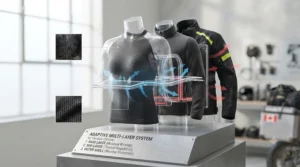
A layering system for motorcycle cold weather isn’t one magic garment — it’s three jobs split across three layers, and understanding which layer does which job is what actually keeps you warm. The base layer’s only job is moisture management against the skin; a mid-layer motorcycle cold weather setup typically adds fleece or synthetic insulation for trapped warm air; the outer shell blocks wind and water. Riders new to layering often make the mistake of buying one thick garment and calling it done, when two thinner, purpose-built layers usually outperform a single bulky one. Ontario’s own motorcycle handbook backs this up directly, advising riders to layer their clothing for extra warmth and protection rather than relying on a single heavy garment. For genuinely cold Canadian rides, a synthetic base layer like the FXR Pyro or KLIM Aggressor, topped with a fleece or synthetic mid-layer, then a windproof textile or leather jacket, covers most winter conditions without restricting movement on the bike.
✨ Ready to build out your winter riding kit?
🔍 Compare the base layers above against your current gear, check current pricing on the ones that fit your riding style, and start layering up before the next cold snap hits.
How to Choose a Synthetic Thermal Base Layer for Motorcycle Riding
Knowing how to choose a synthetic thermal base layer for motorcycle riding comes down to matching seven practical factors to your actual riding conditions, not just picking whatever’s cheapest or most heavily marketed.
- Match warmth to your coldest regular ride, not your average one. Buy for the worst commute of the season, and layer down on milder days rather than the reverse.
- Check the fabric blend, not just the word “thermal.” Polyester and polypropylene wick differently than cotton-poly blends, and the ratio affects both warmth and dry time.
- Prioritize flat-lock or seamless construction. Seams that sit under jacket armour or zippers for hours are where chafing complaints almost always originate.
- Consider compression versus relaxed fit based on ride length. Compression fits support muscles on long tours; relaxed fits are more comfortable for short commutes.
- Factor in your mid-layer and outer shell together. A base layer that’s too thick under an already-insulated jacket traps sweat instead of releasing it.
- Look for odour-control treatments on multi-day trips. Silver-ion or Polygiene treatments matter far more on a five-day tour than a daily commute.
- Weigh price against how many cold days you actually ride. A C$120 premium layer only pays off if you’re genuinely putting in winter kilometres.
Thermal Base Layer Fit Guide: Getting the Right Fit for Riding
A thermal base layer riding fit guide really only needs one rule up front: closer-fitting beats loose, but “compression” and “second-skin tight” aren’t the same thing. What most buyers overlook is that a base layer’s job is to sit against the skin without gaps — gaps let warm air escape and let cold air in — but a fit so tight it restricts breathing or shoulder rotation actively works against you on a bike, where your torso twists constantly while braking, shifting, and checking mirrors. On paper this means sizing charts matter more here than for a casual t-shirt: European-cut brands like Alpinestars and Dainese often run half a size smaller than North American athletic brands like Under Armour, so checking the brand’s specific size chart beats assuming your usual size carries over. Riders layering a base layer under armoured pants or a back protector should also size for that stacking — a base layer that fits perfectly on its own can feel restrictive once armour and an outer shell go on top of it.
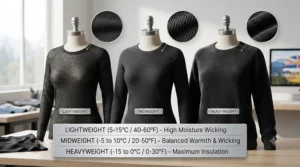
Base Layer Thickness Guide for Riders: Matching Weight to Temperature
A base layer thickness guide for riders generally breaks into three practical tiers, and mismatching thickness to conditions is one of the most common reasons riders think their base layer “doesn’t work.” Lightweight synthetic layers, like the Fly Racing Lightweight Base Layer, suit shoulder-season riding above roughly 10°C, where the priority is moisture management rather than heavy insulation. Midweight options, such as the FXR Pyro with its 180 gsm brushed microfleece, cover the bulk of typical Canadian winter commuting temperatures without overheating a rider at highway speed. Heavyweight, gridded options like the KLIM Aggressor Shirt 2.0 are built for sustained sub-zero exposure, where trapped air volume matters more than breathability. Here’s what to weigh: buying the heaviest option “just in case” often backfires, since overheating under a heavy layer leads to sweat buildup that then chills you the moment you stop moving — the same wet-skin heat-loss mechanism the CCOHS documents in its guidance on cold environment exposure risks.
Synthetic Insulation vs. Merino Wool: Which Wins Under Your Motorcycle Jacket
Choosing a synthetic insulating layer under motorcycle jacket setups over merino wool usually comes down to three factors: dry time, cost, and odour control priorities. Synthetic insulation riding gear, like the Under Armour ColdGear Mock or TSLA Thermal Compression, dries noticeably faster after a sweaty stop-and-go commute, which matters if you’re pulling a damp base layer back on for a return ride the same day. Merino wool, by contrast, regulates temperature more naturally and resists odour longer over a multi-day tour, but it costs more per garment and takes considerably longer to dry if it gets soaked in a sudden downpour. Reviewers consistently note that synthetic options feel less “next-to-skin soft” than merino initially, but that gap narrows significantly with brushed-fleece synthetics like the FXR Pyro or Dainese Thermo LS. For most Canadian commuters riding a handful of days a week rather than multi-week tours, synthetic insulation’s faster dry time and lower price point make it the more practical everyday choice.
Common Mistakes When Buying a Thermal Base Layer for Riding
Even experienced riders make avoidable mistakes shopping for cold-weather base layers, and most of them come down to optimizing for the wrong variable. Buying based on warmth rating alone, without checking fit and seam placement, is probably the single most common error — a warm fabric with poorly placed seams under armour will chafe regardless of its thermal rating. Assuming any “thermal” label means the same thing across brands is another trap; FXR’s own internal warmth scale rating its Pyro line at roughly 4/10 shows that manufacturers themselves distinguish between light and heavy thermal products, and skipping that detail leads to mismatched expectations. Skipping the mid-layer and outer-shell context entirely is a third mistake — a base layer bought in isolation, without considering what goes over it, often ends up either too thin or too bulky once the full system is assembled. Finally, ignoring return policies on sized apparel is a costly oversight, since sizing genuinely does vary between European-cut moto brands and North American athletic brands.
Practical Usage Guide: Setup, Care, and Getting the Most From Your Base Layer
Getting a new synthetic base layer set up right starts before the first cold ride: try it on under your actual jacket and pants, not just on its own, since fit changes once armour and outer layers stack on top. In the first 30 days, most riders make the mistake of over-washing with fabric softener, which coats synthetic fibres and blocks the wicking channels that make the fabric work in the first place — stick to a mild detergent and skip softener entirely. A simple maintenance schedule works well for most riders: wash after every two to three wears rather than every single ride, air-dry or use low heat rather than high heat (which can degrade elastane over time), and inspect flat-lock seams periodically for early fraying, especially in high-friction spots like underarms and inner thighs. One optimization trick that doesn’t show up on any product listing: rotating two base layers rather than relying on one means you’re never pulling on a still-damp garment from the previous ride, which matters a lot on multi-day commuting weeks. Common early mistakes also include sizing too loose “for comfort,” which actually reduces warmth by letting air gaps form, and skipping a mid-layer entirely on the assumption that a thermal base layer alone will handle genuinely cold conditions.
Real Riders, Real Layers: Matching Base Layers to Your Riding Life
Consider three riders with different needs. A daily winter commuter riding 15 km each way in a mid-sized Canadian city, in temperatures hovering around -5°C to 0°C, is best served by a midweight option like the FXR Pyro Thermal Top — enough warmth for a 25-minute ride without overheating at stoplights, at a price that doesn’t sting if it needs replacing every couple of seasons. A weekend sport-touring rider covering 300+ km in a single day, moving through temperature swings from a cool morning start to a milder afternoon, benefits more from the Dainese Thermo LS or Alpinestars Ride Tech Winter Top, since both prioritize regulation over a shifting range rather than flat-out maximum warmth. A budget-conscious rider just building their first cold-weather kit, uncertain how often they’ll actually ride through winter, is better off starting with the Under Armour ColdGear Mock or TSLA Thermal Compression — lower financial risk while they figure out their real riding frequency before investing in premium powersports-specific gear.
Common Cold-Weather Riding Problems (And How the Right Base Layer Fixes Them)
Problem: Sweat-soaked base layer turning cold at every stop. This usually means the fabric isn’t wicking fast enough for your effort level — a hollow-core fabric like the one in the Fly Racing Lightweight Base Layer moves moisture out faster than basic polyester blends. Problem: Chafing under jacket seams after long rides. Flat-lock or seamless construction, like the tubular build in the Alpinestars Ride Tech Winter Top, addresses this directly by removing raised seams from friction zones. Problem: Overheating in a heavy base layer during shoulder-season rides. Swapping to a lightweight layer rather than shedding your jacket mid-ride keeps wind protection intact while managing temperature. Problem: Base layer riding up under armoured pants. Look for a longer torso cut and thumbhole cuffs, both features built into the FXR Pyro, to keep the garment anchored during riding-position movement. Problem: Persistent odour on multi-day tours. Silver-ion or Polygiene-treated synthetics, like the Fly Racing option, or a switch to merino wool, both directly target this rather than masking it.
What to Expect: Real-World Performance in the Saddle
On paper, a spec sheet full of gsm ratings and fabric blends doesn’t tell you much about what a ride actually feels like. In practice, a properly matched synthetic base layer means the first ten minutes of a cold ride feel brisk rather than painful, and that sensation levels out as body heat builds against the fabric rather than escaping through it. What the spec sheet won’t tell you, but reviewers note repeatedly, is that the difference between a good and mediocre base layer often shows up not during the ride itself, but at the first stop — a well-wicking fabric feels merely cool at a red light, while a poor one feels clammy and starts pulling heat away immediately. Riders switching from cotton undershirts to any of the synthetic options above consistently report the biggest single improvement isn’t warmth, but the disappearance of that damp, clingy feeling by the halfway point of a ride.
Frequently Asked Questions
❓ Is a synthetic base layer warm enough for winter motorcycle riding in Canada?
❓ How often should I wash a synthetic thermal base layer?
❓ Can I wear a synthetic base layer under armoured motorcycle pants?
❓ What's the difference between a base layer and a mid-layer for motorcycle riding?
❓ Do I need a different base layer for summer and winter riding?
Conclusion
Choosing the right synthetic thermal base layer for motorcycle riding really comes down to being honest about how you actually ride — daily short commutes, occasional weekend trips, or serious winter touring all call for a different pick from this list. The KLIM Aggressor Shirt 2.0 and Alpinestars Ride Tech Winter Top reward riders logging genuine cold-weather kilometres with purpose-built warmth-to-bulk engineering, while the FXR Pyro offers Canadian-designed value in the middle of the pack. Budget-conscious riders shouldn’t feel like they’re settling with the Under Armour ColdGear Mock or TSLA Thermal Compression either — both do the core job of wicking and insulating at a fraction of the price. Whichever you choose, remember that a base layer is one piece of a three-layer system, not a standalone solution, and matching thickness and fit to your actual riding conditions matters more than chasing the single “warmest” option on paper.
✨ Don’t Miss These Exclusive Deals!
🔍 Take your cold-weather riding kit to the next level with the base layers compared above. Click through to check current pricing and availability, and get your layering system sorted before the next cold snap catches you off guard.
Recommended for You
- 7 Best Synthetic Thermal Base Layers for Motorcycle Riding in 2026
- Merino Wool vs Synthetic Base Layer Motorcycle: 7 Picks for 2026
- Merino Wool Base Layer for Motorcycle Riding: 7 Picks (2026)
Disclaimer: This article contains affiliate links. As an Amazon Associate, I earn from qualifying purchases. If you purchase products through these links, we may earn a small commission at no additional cost to you.
✨ Found this helpful? Share it with your friends! 💬🤗
