
In This Article
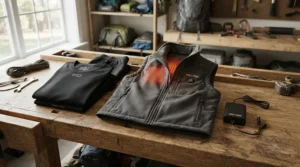
A heated vest warms your chest, back and usually your collar. A heated jacket liner adds heated sleeves, so your arms get warmth too. Both are thin electric layers worn under your riding jacket and wired to the bike’s 12V battery. The real choice is core-only warmth versus full-upper-body warmth, and what your bike’s charging system can handle.
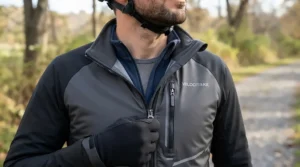
Here’s the problem. It’s October, the mornings are crisp, and you’re doing the maths on how many more rides you can squeeze out before the salt trucks win. Wind chill is the thief here. Environment and Climate Change Canada’s wind chill index exists because moving air strips heat from exposed skin faster than still air at the same temperature. At highway speed you generate your own gale.
Heated clothing is the cheat code. It replaces the “wear everything you own” approach with a thin layer that makes its own warmth. The question this guide answers is the one riders argue about in every parking lot: heated vest vs heated jacket liner for motorcycle riding, which one actually earns its spot in your kit?
Short version: a vest is lighter, cheaper and gentler on your charging system. A liner is warmer, especially at the arms, and costs more in money and watts. We’ll walk through seven real products, the wattage maths, the layering system around them, and who should buy what. Along the way we’ll cover the supporting cast too: thermal base layer for winter motorcycle riding, waterproof winter motorcycle boots, and a motorcycle balaclava and neck warmer.
All prices below are ranges in Canadian dollars at the time of research. Check current pricing before you buy.
Quick Comparison: 7 Heated Vests and Jacket Liners at a Glance
| Product | Type | Power Source | Controller | Best For |
|---|---|---|---|---|
| Gerbing 12V Heated Jacket Liner | Liner (7 zones) | Bike 12V | Sold separately | Serious all-winter riders |
| Venture Heat 78W Motorcycle Heated Jacket Liner | Liner (78W) | Bike 12V | Built-in + app | Tech-friendly tourers |
| Venture Heat Motorcycle Heated Jacket Liner Lite | Liner (3.5A) | Bike 12V | Built-in | Smaller bikes, tight budgets |
| Gears Canada Gen X-4 Heated Vest Liner | Vest (53W) | Bike 12V | Sold separately | Modular gear systems |
| Tourmaster Synergy BT Pro-Plus 12V Heated Vest | Vest (37.2W) | Bike 12V or optional battery | Built-in + app | Commuters wanting flexibility |
| Venture Heat Motorcycle Duo Hybrid Heated Vest | Vest (1.25A) | Bike 12V or optional battery | Built-in | Light-duty and off-bike use |
| Milwaukee M12 Heated AXIS Vest | Vest | M12 battery | One-touch LED | Short rides, off-bike versatility |
The table tells a power story. The liners at the top draw the most watts and deliver the most coverage. The vests sit lower, and one of them runs on a portable tool battery instead of your bike. If your motorcycle is a small-displacement commuter, the Tourmaster Synergy BT Pro-Plus 12V Heated Vest and the Venture Heat Motorcycle Duo Hybrid Heated Vest are the gentle options. If you ride a big tourer with watts to spare, the Gerbing 12V Heated Jacket Liner is where the table’s heat is.
Notice what’s missing: a single “best”. The right answer depends on your stator output, how long you ride and how cold your arms get. That’s what the rest of this guide untangles.
💬 Just one click — help others make better buying decisions too!😊
Top 7 Heated Vests and Heated Jacket Liners: Expert Analysis
A note on method. I’m not claiming to have worn these. What follows is built from manufacturer specs, retailer listings and the themes that keep surfacing in published roundups. Where I couldn’t verify a detail, I say so.
1. Gerbing 12V Heated Jacket Liner — the seven-zone benchmark
The headline is coverage. This liner heats seven zones: the collar, two across the chest, two in the sleeves and two across the back. Heated sleeves are the whole argument against a vest, because forearms and wrists are where wind finds you first.
Gerbing builds on its Microwire heating element, and its listings advertise a lifetime warranty on that element. Treat that as a manufacturer claim, but it signals confidence. Jackets in this category typically draw around 75 to 85 watts, according to RevZilla’s heated-gear guide. That’s real power, so know your bike’s surplus before you buy.
The catch: the liner needs a battery harness and a temperature controller, both sold separately. The liner also acts as a “home base” for Gerbing gloves, pants and socks, so one purchase can grow into a system.
Review sentiment is something I can only describe in aggregate. Roundup reviewers consistently call it the benchmark for plug-in warmth. Recurring gripes include a shell fabric that feels cheaper than older generations and a liner that can ride up slightly. I couldn’t verify individual customer ratings, so I won’t quote any.
Pros:
- ✅ Seven zones, including both sleeves
- ✅ Ecosystem links to gloves, pants and socks
- ✅ Lifetime warranty claimed on heating element
Cons:
- ❌ Harness and controller cost extra
- ❌ Highest watt draw of the group
Price: listings I found sit in the mid-C$400s for the liner alone, so budget more with accessories. Verdict: expensive, but the one to beat if you ride true winter.

2. Venture Heat 78W Motorcycle Heated Jacket Liner — smartphone-controlled full coverage
This is the Gerbing’s closest rival on paper. Venture Heat’s liner is a full-coverage jacket liner rated at 78 watts. It wires to your battery through an included fused harness, and you control it with a built-in button or the HeatSync Bluetooth app.
That 78 watts is a useful number. It sits at the lower end of the 75 to 85W jacket range, which means strong heat without pushing your bike to the edge. For anyone with a mid-size bike and a modest stator, that restraint matters more than a bigger number on the box.
The included harness is a quiet advantage over liners that sell it separately. It also has integrated connections for Venture Heat 12V gloves, so you can daisy-chain hands later. App control is a nice-to-have, not a need-to-have. Mounting a phone on your bars to fiddle with temperature is arguably less safe than a button you can find with a glove on, so I’d treat Bluetooth as a bonus for pre-ride setup.
I couldn’t verify aggregated customer review scores for this model, so I’m not going to guess at them. What the spec sheet does tell you is that it’s a complete package out of the box.
Pros:
- ✅ Full coverage at a moderate 78W
- ✅ Fused harness included in the box
- ✅ Built-in button plus app control
Cons:
- ❌ Fewer proven track-record reviews to lean on
- ❌ App adds little while actually riding
Price: I couldn’t verify a current Canadian price, so check the listing. Expect it to land below the Gerbing once you add the Gerbing’s separate parts. Verdict: strong value if the harness-included package appeals.
3. Venture Heat Motorcycle Heated Jacket Liner Lite — the small-bike, small-budget liner
“Lite” is doing real work here. The 3.5-amp rating works out to roughly 42 watts at 12 volts, about half of what a full-power liner draws. Venture Heat positions it for small or medium vehicles, and that is the sweet spot: a 400 cc commuter that doesn’t have power to burn.
It includes a built-in temperature controller and the fused battery harness, and the jacket rolls up into its own map pocket. That’s more clever than it sounds. A heated liner you can stuff into a tank bag lets you wear it for the cold ride in and stash it when the afternoon warms up.
Here’s the honest trade-off. Lower watts means slower heat-up and a lower ceiling in truly nasty conditions. Think of it as reliable “take the edge off” warmth for fall and shoulder-season riding, not a January arctic crossing.
Listings describe the fabric as windproof and flexible. I couldn’t verify aggregated customer ratings, so I’ll leave sentiment alone rather than invent it.
Pros:
- ✅ About 42W, kind to small charging systems
- ✅ Built-in controller and harness included
- ✅ Rolls into its own map pocket
Cons:
- ❌ Lower ceiling in hard cold
- ❌ Less proven for stacking with gloves and socks
Price: couldn’t verify a current Canadian price; check the listing. Verdict: best value-per-watt for small bikes and fall riding.
4. Gears Canada Gen X-4 Heated Vest Liner — modular vest for building a system
The Gen X-4 vest produces 53 watts and draws 3.9 amps, a figure the maker notes was tested with the engine idling. At idle, bike voltage sags, so real-world draw can climb slightly when the engine is working. That’s a useful tell about how to read any amperage spec.
The fabric is a windproof technical fabric with Lycra side panels, and there are two front pockets and a 20-inch battery cord. A snap-on connection at the back lets you add heated gloves, and the vest offers two input connections so hands and torso can be controlled independently. That independent control is the sleeper feature. Hands often want more heat than your chest.
The catch is that on/off and temperature control isn’t included. You must buy a coax switch cord or a single-output temperature controller. Skip it and you’re riding with a vest that’s basically either on or off, which is a recipe for sweating.
Retail listings I found showed no verified customer reviews, so I’m relying on spec analysis, not sentiment.
Pros:
- ✅ Dual inputs allow independent hand control
- ✅ Windproof fabric with stretch side panels
- ✅ Compatible with Gen X-3 and Gen X-4 gear
Cons:
- ❌ Controller must be purchased separately
- ❌ No heated sleeves
Price: US listings near US$125 suggest roughly the C$150 to C$200 range before the controller. Verdict: a fair entry into a modular system, if you budget the controller.
5. Tourmaster Synergy BT Pro-Plus 12V Heated Vest — flexible power, honest watts
At 37.2 watts and 3.1 amps, this is the efficient vest in the lineup. Four flexible carbon-fibre elements cover the chest, back and collar. It includes an integrated microprocessor and thermal cut-off, plus a built-in three-setting touch controller and Bluetooth app control.
The dual-power option is the real story. You can run it from your bike’s 12V system or from an optional 12V lithium battery. The latter means you can wear it on a motorbike one day and hiking or ski-patrolling the next. Retail listings say the high setting reaches about 126°F (52°C), which is comfortably warm without being scary.
Heat-up speed and element design matter less here than the efficiency. At roughly 37W, you can run this alongside heated grips and still sleep well about your stator.
The vest is wind and water resistant in a polyester soft-shell. That’s a pleasant bonus, though remember that “water resistant” is not a rain jacket. I couldn’t verify aggregated review scores, so this verdict rests on specs.
Pros:
- ✅ Efficient 37.2W draw eases stator load
- ✅ Dual power: bike or optional lithium battery
- ✅ Built-in controller plus Bluetooth
Cons:
- ❌ No sleeves, so arms stay exposed
- ❌ Optional battery sold separately
Price: listings near US$200 point to roughly the C$270 to C$300 range. Verdict: the smart-money commuter vest.

6. Venture Heat Motorcycle Duo Hybrid Heated Vest — the featherweight hybrid
Treat this as a comfort accessory more than a winter engine. The listing rates it at 1.25 amps, which is only about 15 watts at 12 volts. That’s a fraction of the other vests, and that’s the point. It’s light-duty warmth for fall commutes, mild-weather touring and off-bike wear.
It supports both motorcycle batteries and optional 12V portable batteries, with a built-in controller and a fused harness for bike connection. Because it draws so little, it’s the one vest on this list a tiny scooter or a low-output bike can run without a second thought.
Here’s the hard truth. Don’t buy this expecting to beat a -10°C highway run. Based on the wattage comparison, it will take the chill off your chest, but it won’t hold back real cold the way a 50W vest can.
I couldn’t verify customer-review sentiment for this model, so I’ll stay with spec reasoning.
Pros:
- ✅ Very low draw suits any charging system
- ✅ Works on bike or portable battery
- ✅ Fused harness included
Cons:
- ❌ Limited heat for deep-winter riding
- ❌ Core-only coverage
Price: couldn’t verify a current Canadian price; check the listing. Verdict: great for shoulder season, undersized for January.
7. Milwaukee M12 Heated AXIS Vest — the battery-powered wildcard
This isn’t a motorcycle-wired vest, and that’s both its strength and its limit. It runs off Milwaukee’s M12 battery, uses carbon-fibre heating elements for the chest and back, and has a one-touch LED controller with three heat settings per zone. Milwaukee’s listing claims up to eight hours on a compact battery at low, and the battery pocket lets you position the pack at the front or the back.
The analysis here is about independence. A battery vest doesn’t care about your stator at all. If your bike is a vintage single with almost no surplus power, or you want warmth on a snowy dog walk too, it solves a problem that wired gear can’t.
The cost of that freedom is runtime. Eight hours on low is plenty for a commute, but high-heat settings will drain faster and you’ll need to carry a charged spare for long days. It’s also not designed for plugging into a motorcycle battery, so you won’t daisy-chain gloves into it.
The fabric is a wind- and water-resistant ripstop that works as an outer shell or a mid-layer, which is a flexible touch.
Pros:
- ✅ Zero load on the bike’s electrics
- ✅ Wind and water resistant ripstop shell
- ✅ Doubles as off-bike winter vest
Cons:
- ❌ Limited runtime; spare battery needed
- ❌ No bike hookup or glove daisy-chaining
Price: vest-only and kit versions differ, and I couldn’t verify a current Canadian price. Verdict: a clever problem-solver for low-output bikes.
Top 7 Comparison: Specs and Real-World Fit
| Product | Verified Power Spec | Coverage | Best For |
|---|---|---|---|
| Gerbing 12V Heated Jacket Liner | Category norm 75-85W | Core, collar, sleeves | Big bikes, deep cold |
| Venture Heat 78W Motorcycle Heated Jacket Liner | 78W | Core, collar, sleeves | Mid-size bikes, full coverage |
| Venture Heat Motorcycle Heated Jacket Liner Lite | 3.5A (about 42W) | Core, sleeves | Small bikes, fall riding |
| Gears Canada Gen X-4 Heated Vest Liner | 53W, 3.9A at idle | Chest, back | Modular systems |
| Tourmaster Synergy BT Pro-Plus 12V Heated Vest | 37.2W, 3.1A | Chest, back, collar | Efficient commuting |
| Venture Heat Motorcycle Duo Hybrid Heated Vest | 1.25A (about 15W) | Core | Shoulder season |
| Milwaukee M12 Heated AXIS Vest | Battery-powered | Chest, back | Low-output bikes |
Read the table by power, not by brand. The Gerbing 12V Heated Jacket Liner and Venture Heat 78W Motorcycle Heated Jacket Liner buy the most warmth with the most watts. The Tourmaster Synergy BT Pro-Plus 12V Heated Vest delivers the best heat per watt among the vests. The Milwaukee M12 Heated AXIS Vest sidesteps the power question entirely, at the cost of runtime. Budget buyers should note that Venture Heat Motorcycle Duo Hybrid Heated Vest is the cheapest on the bike’s electrics, not necessarily on warmth.
Heated Vest vs Heated Jacket Liner: Head-to-Head Analysis
Time to settle the argument. I’ll score each on the four things riders actually care about.
Coverage. A liner wins. Sleeves are the difference between “my torso is warm” and “my whole upper body is warm”. In practical terms, a vest leaves the forearms exposed, and that’s where wind hits first once your jacket cuffs open. A vest still keeps your core warm, which matters because your body prioritizes core temperature.
Power draw. A vest wins. From the data above, vests range from about 15 watts to 53 watts, while full liners sit around 78 watts or higher. On a bike with a thin surplus, that gap decides what you can run alongside grips, GPS and gloves.
Bulk and fit. A vest wins. Heated gear works best snug, and a vest has fewer seams to bunch up. Roundup reviewers note that even good liners can ride up slightly.
Total system potential. A liner wins. It’s usually the “home base” for gloves, pants and socks, so it grows with you. A vest can too, but with less hardware ecosystem.
The wind-chill science backs the logic. Wind chill is about convective heat loss from exposed skin, so what matters is how much of you is shielded from moving air and how much heat the layer replaces.
The practical rule I’d give a friend: if your hands and forearms go numb first, buy the liner. If your chest and back are the problem, or your bike is small, buy the vest.
| Factor | Heated Vest | Heated Jacket Liner | Layering Only |
|---|---|---|---|
| Coverage | Core and collar | Core, collar, arms | Whatever you wear |
| Typical draw | About 15-53W | About 42-85W | None |
| Bulk | Low | Moderate | High |
| Cost | Lower | Higher | Lowest upfront |
| Best For | Commuters, small bikes | Tourers, deep winter | Mild-weather riding |
A vest and a liner both beat pure layering for warmth per millimetre of bulk. Layering alone costs less upfront, but you pay in restricted movement and cold spots. The liner is the best answer for deep cold. The vest is the best answer when power or budget is tight.
Heated Liner Wattage: What Your Bike Can Actually Feed
This is the section most buying guides skip, and it’s the one that will save you from a dead battery on a dark February road.
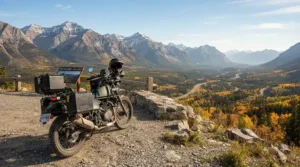
Heated liner wattage is a budget, and your motorcycle’s charging system is the bank. JP Cycles’ guide to adding heated gear makes the key point: you need to know your stator’s amperage output, what your bike consumes while running, and how to convert between watts and amps. It also warns that stator output rises with engine rpm, so look at output at cruising speed in top gear, not the peak figure.
Here’s a quick way to think about it. Watts equal amps times volts. Your bike’s charging system runs at roughly 14 volts, so a 20-amp stator offers about 280 watts at peak. Subtract what the bike already uses (ignition, lights, ECU) and what’s left is your surplus. A bike with 80 to 90 watts spare can handle one vest, but a 78W liner plus gloves may exceed it.
Common draws from retailer guidance: heated jackets average 75 to 85 watts, vests 50 to 60 watts. Tourmaster’s own spec chart lists a jacket at 76 watts and a vest with collar at 52 watts, while heated glove liners draw about 13 watts per pair. These numbers add up fast.
Long-term load matters too. Eagle Leather’s note on long-term stator load describes how running heated gear pushes a stator closer to its ceiling for hours at a time, which is a different stress than occasional bursts. City riding at low rpm is harder on the system than steady highway cruising.
Quick fixes if you’re short on watts:
- Swap a halogen headlight bulb for LED to free up surplus.
- Choose an efficient vest like the Tourmaster Synergy BT Pro-Plus 12V Heated Vest.
- Use a temperature controller to run at medium, not high.
- Consider the battery-powered Milwaukee M12 Heated AXIS Vest.
How to Choose Between a Heated Vest and a Heated Jacket Liner
Here are six steps, in order of importance.
- Check your charging surplus first. Find the stator output in your service manual at cruising rpm, subtract the bike’s own draw, and see what’s left. Everything else depends on that number.
- Decide where you get cold. Core only? Vest. Arms and hands too? Liner. Pay attention to the first body part that goes numb.
- Match wattage to surplus. A 15 to 53W vest suits a modest surplus. A 78W-plus liner wants a healthy one.
- Check the controller situation. Without a controller, heated gear has only two settings, on and off. Confirm whether one is included or costs extra.
- Think about the system. If you’ll add heated gloves or socks later, pick a liner or vest with expansion connections.
- Consider your ride length. Short commutes tolerate a battery vest. Long highway days want a wired, unlimited-runtime system.
Heat Controller and Wiring Harness: Setup Guide
A heated garment is only half a system. The heat controller and wiring harness are what make it safe, comfortable and reliable.
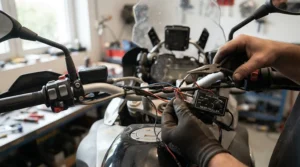
Start with the harness. Most heated gear ships with, or requires, a fused harness that connects to your motorcycle battery. Heated gear on a bike is a simple circuit, but the fuse matters. If you’re running several pieces, such as a liner, gloves and pants, the combined draw may need a direct battery connection with a correctly sized inline fuse, rather than a small accessory outlet. Always check the fuse rating against the combined amps.
Route it cleanly. Run the leads along the frame away from heat sources and moving parts, and keep connectors protected from salt spray and slush. In a Canadian winter, road salt is a corrosion machine. A dab of dielectric grease on connectors is cheap insurance.
Choose the right controller. The Gerbing line sells single and dual temperature controllers separately, and the Gears Canada Gen X-4 Heated Vest Liner needs either a coax switch cord or a single-output controller. The Tourmaster Synergy BT Pro-Plus 12V Heated Vest and Venture Heat 78W Motorcycle Heated Jacket Liner include built-in controls. Dual controllers let you set torso and hands separately, which is worth the money.
First-ride checklist:
- Test the connection at the garage before your first cold ride.
- Start on low, then work up.
- Watch your battery voltage if your bike has a gauge.
- Don’t leave the garment plugged in with the engine off.
Common mistake in the first 30 days: setting everything to high from the start. You’ll sweat, the sweat chills you, and you’ll blame the gear.
Windproof Outer Shell Layering and Thermal Base Layers
Heated gear is the heart of the system, but it can’t do everything alone. The order of layers matters.
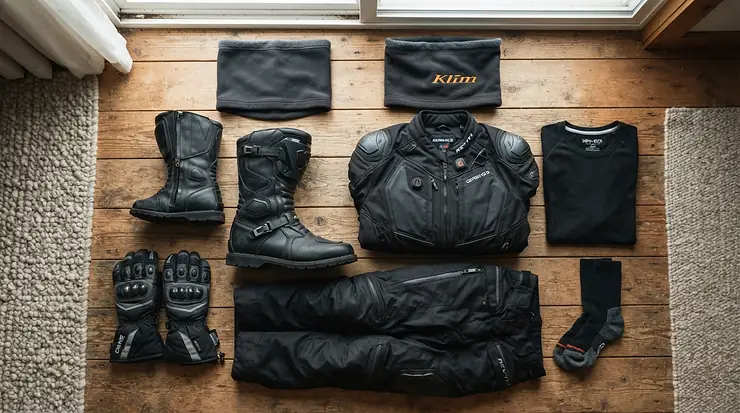
Base layer first. A thermal base layer for winter motorcycle riding should be thin and moisture-wicking. Tourmaster’s instructions for its Synergy line recommend no more than one thin layer under heated apparel, and heated clothing works best when snug. A long-sleeve tee or a midweight base layer is the usual advice from riders. Avoid cotton, which holds moisture and chills you.
Heated layer second. Your vest or liner goes right over the base, close to the skin. Air gaps waste heat.
Insulation third (optional). In truly harsh cold, a thin fleece can sit over the heated layer, but stop there. Too much bulk compresses insulation and restricts movement.
Shell last. Windproof outer shell layering is what keeps your heat from blowing away. A shell that blocks wind and sheds water protects the warm air your heated layer creates. If your riding jacket is mesh-ventilated or has a removable thermal liner that doesn’t fit with your heated piece, rethink it. As one roundup review noted, a bulky heated jacket may force you to remove your riding jacket’s own liner to fit.
Canada’s guidance matches. Dressing in layers with a wind-resistant outer layer is the standard advice, and it’s exactly what a good shell does.
Real-World Scenarios: Three Canadian Riders
The Toronto commuter. She rides a 650 cc twin 25 km each way, October through December, with temperatures hovering between 2°C and 8°C. Surplus power is modest and rides are short. The Tourmaster Synergy BT Pro-Plus 12V Heated Vest fits: efficient, built-in controller, and the optional lithium battery adds weekend flexibility. Budget around the C$270 to C$300 range.
The Calgary tourer. He rides a big adventure bike with a generous charging system and takes long weekend trips into the foothills, where mornings can fall well below freezing. He needs sleeve warmth for hours at a stretch. The Gerbing 12V Heated Jacket Liner, plus a controller and harness, is the logical build. He might add heated gloves later using the liner’s connections. Plan on the upper end of the budget.
The Halifax vintage rider. A 1970s twin with a charging system that barely keeps up. Wired heated gear would be a gamble. The Milwaukee M12 Heated AXIS Vest avoids the bike’s electrics completely and also works as a winter vest off the bike. A spare battery handles long days.
Each profile points to a different answer, which is the point. There is no universal winner, only a right match for your bike, route and climate.

Waterproof Winter Motorcycle Boots, Balaclavas and Neck Warmers: Cover the Gaps
A heated core won’t save you if your feet are blocks of ice. Don’t overspend on the vest and forget the extremities.
Boots. Waterproof winter motorcycle boots need three things: a waterproof membrane, real insulation and room. A boot that’s too tight squeezes blood flow and defeats the insulation. Test with the socks you’ll actually wear, and leave a little wiggle room. Heated socks, such as Gen X-4 heated socks that connect to Gears Canada chaps, exist as an add-on layer, but they’re only as good as your boot’s waterproofing. Slush gets in through seams, so inspect them before the season.
Balaclava and neck warmer. A motorcycle balaclava and neck warmer closes the gap between helmet and collar, where wind finds bare skin. Environment Canada’s cold-weather guidance repeatedly advises covering exposed skin because frostbite can develop within minutes with wind chill. A snug neck warmer also seals the chilly gap at the top of a heated vest, where the collar zone does its work. Choose a thin, moisture-wicking balaclava that fits under your helmet without pressure points.
Gloves. Heated glove liners such as the Tourmaster Synergy Pro-Plus draw about 13.2 watts per pair according to listings, which is modest. One buyer comment on the maker’s page said the liner felt thick enough to interfere with control, so test fit with your riding gloves before committing.
Long-Term Cost and Maintenance
Heated gear is an investment, so think in cost per season, not cost per purchase.
Upfront. A premium liner like the Gerbing 12V Heated Jacket Liner costs more at the start, and its controller and harness add to the total. A vest like the Gears Canada Gen X-4 Heated Vest Liner is cheaper but needs a controller too. All-in totals often land closer together than the sticker prices suggest.
Per-use maths. Say you spend about C$500 on a liner system and ride 60 cold days per season. Over five seasons that’s 300 days, so roughly C$1.70 per use. A cheaper vest at C$200 over the same span is about C$0.65 per use. The cheaper option wins on paper, but only if it keeps you warm enough to ride the days you otherwise wouldn’t.
Maintenance. Many of these garments are machine washable, such as the Tourmaster vest, but always follow the care label. Hang them out of direct sunlight and away from localized heat when storing. Check connectors and fuses at the start of every season.
Hidden cost. Stator wear is the one to watch. Heated gear adds a constant load, so long-term, a stator running near its limit can wear faster. A cheaper, lower-watt garment may be the savvy economic choice on a bike with a thin surplus.
Battery vests. The Milwaukee M12 Heated AXIS Vest looks cheap if you already own M12 batteries. If you don’t, the battery and charger become the real cost.
Safety and Cold-Weather Guidelines for Canadian Riders
Heated gear improves comfort, but it doesn’t change the physics of cold roads.
Know the wind chill. Environment and Climate Change Canada’s wind chill and cold weather guidance stresses dressing in layers with a wind-resistant outer layer and warns that frostbite can develop within minutes on exposed skin. The agency notes that the frostbite risk rises rapidly when wind chill falls below about -27. Remember that your own speed adds to the wind. Use the official calculator before long rides.
Watch for warning signs. Numbness, colour change in fingers and toes, shivering and confusion all signal trouble. If they appear, stop, get indoors and warm up.
Electrical safety. Keep connectors dry, use the right fuse and don’t modify heating elements. I couldn’t verify Canadian electrical certifications (such as CSA marks) for each product, so check the manufacturer’s documentation if that matters to you.
Road conditions. Heated gear can’t help with ice, salt or reduced traction. Be honest about when it’s too cold or too slick to ride.
Common Mistakes When Buying a Heated Vest or Heated Jacket Liner
- Ignoring your stator. The biggest error. Check your surplus before you check the colour options.
- Buying a spec, not a system. A liner without a controller is on or off. Budget for the full setup.
- Too many layers. Heated gear works best close to the body. Extra bulk wastes heat.
- Choosing a battery vest for all-day rides. Runtime limits can strand you cold.
- Forgetting the extremities. Hands, feet and neck often fail before your core does.
- Skipping a test connection. Plug in at home, not at the roadside at -8°C.
- Trusting “water resistant” as waterproof. It isn’t. Pair with a real shell.
Frequently Asked Questions
❓ How many watts does a heated motorcycle jacket liner use?
❓ Can I wear a heated vest under a motorcycle jacket in winter?
❓ Do heated motorcycle liners drain the battery?
❓ Is a battery-powered heated vest good enough for motorcycle riding?
❓ Do I need a separate controller for a heated vest?
Conclusion: Which Should You Buy?
Let’s land the plane. In the heated vest vs heated jacket liner for motorcycle riding debate, the winner is whichever one fits your bike’s electrics and your body’s cold spots.
Choose a liner, such as the Gerbing 12V Heated Jacket Liner or Venture Heat 78W Motorcycle Heated Jacket Liner, if you tour, ride in deep cold and your bike has watts to spare. Choose a vest, such as the Tourmaster Synergy BT Pro-Plus 12V Heated Vest or Gears Canada Gen X-4 Heated Vest Liner, if you commute, want less bulk and respect your stator. If your bike is small or your needs are light, the Venture Heat Motorcycle Heated Jacket Liner Lite, Venture Heat Motorcycle Duo Hybrid Heated Vest or battery-powered Milwaukee M12 Heated AXIS Vest solve real problems.
Then do the unglamorous work. Check your wattage budget, set up the heat controller and wiring harness properly, build a sensible layering stack and don’t neglect your boots, neck and hands. Heated gear is a force multiplier, not a miracle.
Stay warm, stay safe and keep the shiny side up all winter.
✨ Ready to extend your riding season?
🔍 Click any highlighted product to check current pricing and availability, and ride warm all the way to spring! 🏍️
Recommended for You
- Heated Grips For Motorcycles: 7 Best Picks For Canada (2026)
- Women’s Motorcycle Rain Suit: 7 Best Picks In Canada 2026
- Motorcycle Rain Gear For Tall Riders: 7 Best Picks That Fit
Disclaimer: This article contains affiliate links. As an Amazon Associate, I earn from qualifying purchases. If you purchase products through these links, we may earn a small commission at no additional cost to you.
✨ Found this helpful? Share it with your friends! 💬🤗
