
In This Article
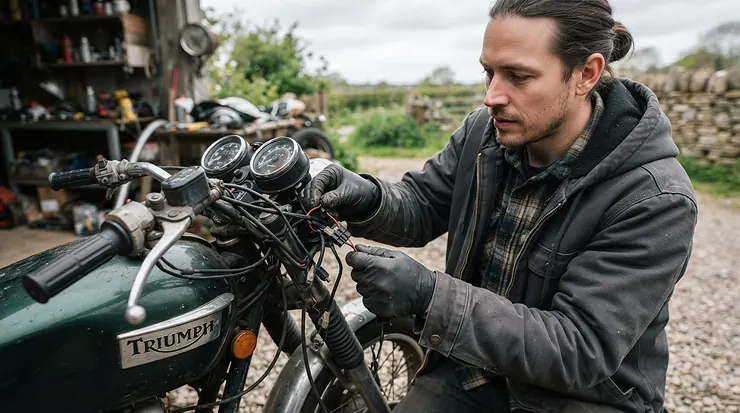
Cold hands ruin rides faster than anything else. Your fingers stiffen, the clutch lever starts feeling like a bag of gravel, and by the first red light your whole trip has shrunk to one question: when can I stop? Heated grips for motorcycles fix that with a few metres of wiring and a modest slice of your bike’s electrical output.
In Canada, that fix matters more than almost anywhere. Health Canada says the risk of windburn and frostbite rises once the wind chill drops below -27, and on a bike you write your own wind chill. A 5 °C morning at 100 km/h does not feel like 5 °C. Hands suffer first because they’re exposed, constantly working and short on the big muscles that make heat.
So this guide ranks seven real options for 2026, from budget kits to premium thumb-and-palm systems. You’ll get honest analysis of the specs, aggregated reviewer themes and the questions that actually trip riders up: 12V wired vs rechargeable battery heating, heated gear and motorcycle battery drain, gauntlet vs short-cuff gloves, and the anti-fog motorcycle visor insert that keeps your view clear when your breath turns to cloud.
One honest note before we start. Everything here comes from spec sheets, manufacturer documentation and aggregated reviews, not from a test bench of my own. Where a detail can’t be verified, I’ll say so. Prices appear as CAD ranges only, so check current pricing before you buy.
Quick Comparison: The Best Heated Grips for Motorcycles at a Glance
| Product | Standout feature | Price range (CAD) | Best for |
|---|---|---|---|
| Oxford Heaterz Premium Adventure (OF690Z) | Five heat levels, automatic low-voltage cutoff | C$130–C$190 | All-season commuters |
| Oxford Hotgrips Evo Adventure | Thermistor-controlled 35–45 °C heat | C$190–C$260 | Riders who want steady, precise warmth |
| Koso Apollo AM111030 | Thumb switch built into the grip | C$150–C$210 | Clean cockpits on 7/8″ or 1″ bars |
| BikeMaster Heated Grips 7/8 | Five levels, optional LCD controller | C$80–C$130 | Budget builds |
| Heat Demon 215049 | 40 W clamp-on kit, hi/lo rocker | C$110–C$150 | Thumb-throttle and dual-sport rigs |
| Kimpex 937160 | Thumb warmer included | C$100–C$150 | Thumb-throttle machines, Canadian-brand fans |
| Heat Demon 215047 Dual Zone | Separate thumb and grip heat | C$230–C$300 | Deep-cold, long-haul riders |
Looking at the comparison above, the BikeMaster Heated Grips 7/8 is the cheapest way in, but the Oxford Heaterz Premium Adventure (OF690Z) is the safer pick if you ride through January, thanks to its battery-protecting cutoff. The Oxford Hotgrips Evo Adventure costs more mainly for its thermistor precision. And clamp-on designs like the Heat Demon 215049 target thumb-throttle machines, so twist-throttle riders should confirm fitment first.
💬 Just one click — help others make better buying decisions too!😊
What Are Heated Grips for Motorcycles?
Heated grips for motorcycles are handlebar grips with built-in electric heating elements that connect to your bike’s 12V electrical system. A controller sets the temperature, warming your palms and fingers through the rubber so you can ride longer in the cold with better lever control and less numbness.
They come in three flavours. Replacement grips swap in for your stock rubber. Under-grip heater kits sit beneath grips you already like. Clamp-on kits, common on thumb-throttle machines, bolt around the bar instead.
Here’s the limit nobody puts on the box: grips heat the part of your hand that touches them. The backs of your fingers and your wrists are still in the wind, which is why glove choice and hand protection still matter. Think of heated grips as the base layer, not the whole outfit.
Top 7 Heated Grips for Motorcycles: Expert Analysis
These seven span budget, mid-range and premium, and a couple of them are really thumb-throttle kits that deserve a fitment check. Each entry covers what the specs mean in practice, what reviewers keep repeating, and who should buy.
1. Oxford Heaterz Premium Adventure (OF690Z) — battery protection for winter commuters
The headline feature is a controller designed to sense a running bike and shut the grips off if system voltage sags to about 10.5 V, so a forgotten switch won’t leave you stranded.
Beyond that, the Oxford Heaterz Premium Adventure (OF690Z) offers five heat levels with LED indicators and draws under 4 A, which works out to roughly 56 W at most on a 14 V system. The 132 mm grips fit 22 mm (7/8″) bars and can be trimmed to 122 mm, with open ends so bar-end weights still fit. That trim option matters on bikes with tight lever-to-grip clearance.
Based on the spec sheet, the pairing of clear heat steps and automatic cutoff makes this forgiving: set it and forget it. It’s pitched at adventure bikes but suits any 22 mm twist-throttle setup. Reviewers on retailer pages score Oxford’s heated grips very high on modest sample sizes, praising warmth and easy fitting. Recurring gripes are chunky grips, thick wiring and a stiff throttle-side cable exit that can crowd the brake lever.
Pros:
- ✅ Five clear heat levels with LED indicators
- ✅ Automatic low-voltage battery protection
- ✅ Trimmable length, bar-end weights still fit
Cons:
- ❌ Fat profile feels bulky to some riders
- ❌ Stiff throttle-side wiring exit can crowd cables
Expect roughly C$130–C$190; check current price. For all-season riders, it’s the value benchmark.
2. Oxford Hotgrips Evo Adventure — thermistor control that holds its temperature
Where cheaper kits simply switch heat on, the Oxford Hotgrips Evo Adventure uses a thermistor-based controller built for precise temperature control, with a memory function.
Its five levels span 35–45 °C, the screw connectors are IP67-rated and the cable entry is a six-core overmould. Draw stays under 4 A, there’s a battery-saving auto shutoff, and the 123 mm race-inspired diamond-tread grips trim to 114 mm on 22 mm bars. Oxford suggests plugging the grips in to warm them before fitting so they slide over the throttle tube. In practice, a 45 °C ceiling is “warm mug” territory, and heat has to pass through your glove anyway, so the range is sensible rather than timid.
You’re paying for consistency. On long highway days when conditions wobble, steady output means fewer trips to the switch. For a ten-minute commute, cheaper kits deliver most of the benefit. UK retailer reviewers describe easy fitting and good build quality, with one preferring a flexible adhesive over the supplied glue for more adjustment time.
Pros:
- ✅ Steady, predictable heat across five levels
- ✅ Waterproof IP67 connectors, sturdy cable entry
- ✅ Trimmable and easy to fit, per reviewers
Cons:
- ❌ Pricier than most rivals in this lineup
- ❌ 45 °C maximum may feel mild to heat lovers
Plan on roughly C$190–C$260 and check current pricing. It’s premium, justified for riders who log serious winter kilometres.
3. Koso Apollo AM111030 — controls built into the grip
The Koso Apollo AM111030 puts a thumb switch right in the grip, so there’s no separate controller to bolt onto your bars.
Koso sells it for both 7/8″ and 1″ bars, which is useful for cruiser riders who get overlooked by 22 mm-only designs. A reviewer at webBikeWorld found it easier to install than most heated grips they’d tested and noted solid heat output. The trade-off is that the switch location is fixed, so check thumb reach while wearing winter gloves. Koso’s published power draw wasn’t something I could confirm, so verify the listing before sizing a fuse.
On analysis, this is the tidy-cockpit choice: fewer cables, one less part to mount, and a cleaner look on naked bikes and cruisers. I could only find one detailed expert review, not a deep pool of buyer feedback, so treat the sentiment as limited rather than settled.
Pros:
- ✅ Integrated thumb switch, no extra controller
- ✅ Versions for both 7/8″ and 1″ handlebars
- ✅ Straightforward install, per a detailed review
Cons:
- ❌ Switch position can’t be relocated
- ❌ Published power draw is hard to confirm
Budget roughly C$150–C$210; check current price. Good value if clutter bothers you.
4. BikeMaster Heated Grips 7/8 — five levels at a budget price
Value is the pitch: the BikeMaster Heated Grips 7/8 is the cheapest route in this lineup to five heat levels, and one version adds an LCD controller that shows both heat level and battery voltage.
They’re built for 7/8″ twist-throttle bars on 12V DC systems, with an open-end design and a removable end cap. That voltage readout is more useful than it sounds. It doubles as a mini battery monitor, which matters once you add other gear (more on heated gear and motorcycle battery drain below). The catch is the “universal fit” label. A Rider Magazine reviewer found the throttle-side grip wouldn’t slide over a Honda’s bare throttle tube until the flares and ribs were ground off, and said the top setting got too hot to hold bare-handed.
What that means for you: you’ll live on levels two and three, and you should budget extra install time. RevZilla’s listing shows about 4.5 out of 5 across roughly 33 buyer reviews, a healthy if modest sample. The grips also appear on Canadian Tire’s site, which makes them easy to find locally.
Pros:
- ✅ Cheapest entry to five heat levels
- ✅ Optional LCD shows heat and battery voltage
- ✅ Plenty of heat on the top setting
Cons:
- ❌ Throttle-side fit can need modification
- ❌ Highest setting runs very hot
Expect roughly C$80–C$130; check current price. It’s the budget pick if you’re comfortable with a little DIY.
5. Heat Demon 215049 — 40 W clamp-on kit for thumb-throttle rigs
Simplicity defines the Heat Demon 215049: a high/low rocker switch and 40 W total, or 20 W per grip at 14 V.
That works out to under 3 A, the lightest published draw in this roundup, which is friendly to small charging systems. The clamp-on grips are designed for most ATV models on 7/8″ bars and install with a 3 mm Allen key. One buyer replacing factory Polaris grips noted thicker rubber padding and slower warm-up; the manual reportedly asks you to allow 5–10 minutes. Switch it on before you leave the driveway, not at the first stop sign.
Here’s the honest framing: this is a thumb-throttle product. ATVs, sleds and some dual-sport setups suit it. Twist-throttle road bikes generally need a different design. The listings I found carry few reviews, so sentiment here is thin rather than settled.
Pros:
- ✅ Low draw, under 3 A total
- ✅ Thick padded grips
- ✅ Dead-simple high/low rocker switch
Cons:
- ❌ Slow to warm, up to 5–10 minutes
- ❌ Built for thumb-throttle, not twist-grip bikes
Plan on roughly C$110–C$150; check current price. Fair value for sled-and-quad riders.
6. Kimpex 937160 — thumb warmer included, from a Canadian brand
The Kimpex 937160 heats your palms and your clutch thumb from one variable controller, with the thumb running slightly hotter than the grips.
It fits 7/8″ grips on a 12 V system. The listing’s figures put draw at roughly 1–1.4 A, though the low and high numbers look inverted, so treat them as ballpark and verify before fusing. Canadian Tire describes the kit as heated snowmobile grips with a thumb warmer, which tells you where its heart is: thumb-throttle sleds and quads. If you ride a twist-throttle motorcycle, confirm fitment first. The upside of the heater-panel approach is that you can keep grips you already like, a point forum users who’ve fitted Kimpex panels often make.
On analysis, that thumb warmer is the real differentiator. Cold thumbs are the part of a hand that suffers most when you’re working a clutch or throttle lever for an hour. Forum reports on Kimpex kits skew positive, but they’re anecdotal, not a verified review pool.
Pros:
- ✅ Thumb warmer included for lever control
- ✅ Low published power draw
- ✅ Canadian-brand availability at Canadian retailers
Cons:
- ❌ Snowmobile roots limit motorcycle fitment
- ❌ Listing power figures look inconsistent
Budget roughly C$100–C$150; check current price. Strong value for thumb-throttle riders.
7. Heat Demon 215047 Dual Zone — separate thumb and grip heat
The Heat Demon 215047 Dual Zone lets you set thumb heat and grip heat independently, which none of the simpler kits here can do.
The grips draw a maximum 40 W (20 W each at 14 V), the listing says the system totals under 3 A, and the self-adhesive flex-circuit design is meant to spread heat evenly. A related quad-zone version adds channels for a vest or insoles. That’s tempting, but each extra zone adds load, which brings us to the battery section below.
What this means in practice: you can dial the thumb up for clutch work while keeping your palms comfortable, a trick single-zone kits can’t match. It’s aimed at deep-cold, long-distance riders on thumb-throttle machines. I couldn’t find verified review data on the listing I checked, so I won’t pretend to summarize sentiment.
Pros:
- ✅ Independent thumb and grip heat control
- ✅ Flex-circuit design spreads heat evenly
- ✅ Still under 3 A, per the listing
Cons:
- ❌ Highest price in this roundup
- ❌ Few verifiable buyer reviews
Expect roughly C$230–C$300; check current price. It’s premium, worth it only for extreme-cold riders.
How the Seven Compare on Specs
| Product | Bar fit | Heat control | Power draw | Price range (CAD) |
|---|---|---|---|---|
| Oxford Heaterz Premium Adventure (OF690Z) | 22 mm (7/8″) | 5 levels, LED display | Under 4 A | C$130–C$190 |
| Oxford Hotgrips Evo Adventure | 22 mm (7/8″) | 5 levels, 35–45 °C thermistor | Under 4 A | C$190–C$260 |
| Koso Apollo AM111030 | 7/8″ or 1″ versions | Built-in thumb switch | Not confirmed | C$150–C$210 |
| BikeMaster Heated Grips 7/8 | 7/8″ twist throttle | 5 levels, optional LCD | Not confirmed | C$80–C$130 |
| Heat Demon 215049 | 7/8″ clamp-on | High/low rocker | 40 W, under 3 A | C$110–C$150 |
| Kimpex 937160 | 7/8″ | Variable, palm plus thumb | About 1–1.4 A (verify) | C$100–C$150 |
| Heat Demon 215047 Dual Zone | 7/8″ clamp-on | Dual zone | 40 W, under 3 A | C$230–C$300 |
The pattern is clear: both Oxford picks pair low-voltage protection with tidy twist-throttle fitment, while the Heat Demon 215049 and Heat Demon 215047 Dual Zone trade polish for lower draw and thumb-throttle focus. If your bike is a twist-throttle roadster and you’d rather not file down a throttle tube, the Oxford Heaterz Premium Adventure (OF690Z) remains the lowest-risk buy. Riders on thumb-throttle machines get more for their money from the Kimpex 937160.
How to Choose Heated Grips for Motorcycles
Getting this right takes six checks, and most buyers skip at least two.
- Match your throttle type. Twist-throttle road bikes need grips built to rotate, like the Oxford Heaterz Premium Adventure (OF690Z) or BikeMaster Heated Grips 7/8. Thumb-throttle machines suit clamp-on kits such as the Heat Demon 215049.
- Confirm your bar diameter. 22 mm (7/8″) is the common size, while many cruisers run 25.4 mm (1″). The Koso Apollo AM111030 is one of the few that covers both.
- Check your electrical headroom. Under 4 A means roughly 56 W at 14 V. If your bike has little spare output, a sub-3 A kit is safer.
- Pick a control style you can work in gloves. A built-in thumb switch, a handlebar controller and a thermistor-regulated dial each feel different with thick gauntlets on.
- Plan the install. Bare throttle tubes, trimmable lengths, bar-end weights and hand guards all affect whether a kit fits without surgery.
- Spend on build quality, not extra heat levels. Sealed controllers and waterproof connectors will outlast a fancier dial, as long as the heat range is wide enough for your climate.
✨ Don’t Miss These Exclusive Deals!
🔍 Take your winter riding to the next level with these carefully selected heated grips for motorcycles. Click on any highlighted product to check current pricing and availability. These picks will help you create warm, confident rides you’ll look forward to!
12V Wired vs Rechargeable Battery Heating: Which Suits You?
Every pick above is a wired 12V design, so the real debate in 12V wired vs rechargeable battery heating happens one layer out: do you run your warmth off the bike, or off a pack in your pocket?
Wired heating wins on endurance. It runs as long as the engine does, there’s nothing to charge the night before, and you never wonder how many bars are left at hour three. The costs are installation (a fused harness, ideally on a switched circuit) and the load it puts on your charging system.
Rechargeable battery heating trades that for freedom. There’s no wiring, you can move it between bikes, and it keeps heat demand off your stator entirely. But runtime is finite and depends on the setting you choose, and lithium packs generally give up capacity in the cold, exactly when you want them most.
Here’s how the comparison plays out in practice: if your rides run longer than a few hours, or you commute daily through January, wired grips are the dependable base layer. If you ride a small bike with little spare power, or you swap between machines, a rechargeable pack for gloves or a liner is the smarter supplement. Some riders end up in exactly this hybrid, with wired grips doing the steady work and portable gear handling the extremes. For most Canadians, 12V wired vs rechargeable battery heating isn’t an either/or. It’s a question of which job each one does.
Heated Gear and Motorcycle Battery Drain: Do the Watt Math
Heated gear and motorcycle battery drain only become a real problem when demand outruns what your charging system supplies. The battery mostly acts as a buffer, so the question is simple arithmetic: watts in versus watts out (watts equal volts times amps).
Typical figures: heated gloves pull roughly 15–25 W, and a jacket liner can pull 65–90 W. Grips vary. Anything under 4 A, like the Oxford Heaterz Premium Adventure (OF690Z), tops out around 56 W at 14 V, while the Heat Demon 215049 is rated at 40 W.
Now a worked example, with illustrative numbers only. One owner-forum calculation for a small bike gave a nominal 14 V at 20 A (about 280 W) at 5,000 rpm, with roughly 90 W left over after night-riding loads. Add 56 W of grips and a 75 W liner and you’re about 40 W short. The battery quietly covers the gap until it can’t. Output also falls at idle, so heated gear and motorcycle battery drain tends to bite in slow city traffic.
Here’s how to stay on the right side of the maths:
- Fit a voltmeter. Readings of 13.5 V or more mean the battery is charging, not draining.
- Prefer grips with a low-voltage cutoff, such as the Oxford Heaterz Premium Adventure (OF690Z), which shuts off near 10.5 V.
- Drop grip heat a level when you add a liner.
- Swap bulbs for LEDs to free up spare watts.
- Check your own manual for stator output before you buy anything big.
A stator upgrade is the last resort, not the first move.
Gauntlet vs Short-Cuff Gloves With Heated Grips
Heated grips warm the palm side of your hand. The backs of your fingers and your wrists still take the full blast, which makes gauntlet vs short-cuff gloves a bigger decision than it first looks.
Gauntlets sit over your jacket sleeve and seal the wind out of it. At highway speed, that matters. A draft up the sleeve chills your forearms, and cold blood returns to your hands no matter how toasty the grips are. The trade-offs are bulk and feel: thick cuffs can make small switches, like the thumb control on the Koso Apollo AM111030, fiddlier to find.
Short-cuff gloves tuck under your jacket cuff. They’re lighter, give you better lever feel and pair well with grips, since Oxford itself pitches heated grips as a way to keep wearing lighter gloves into the cold months. The weak spot is the wrist gap, where cold air sneaks in at speed.
A sound rule of thumb for gauntlet vs short-cuff gloves, based on how heat loss works: choose gauntlets for highway runs or sub-zero mornings, and short cuffs for urban commutes where you’re stop-and-go. This lines up with CCOHS advice on layering against air temperature, wind and wetness, since moisture sharply cuts the insulation value of clothing.
Whichever way you go, leave a little room inside the glove. Squeezed fingers circulate worse, and grips can only warm what blood can reach.
The Anti-Fog Motorcycle Visor Insert Your Cold-Weather Setup Is Missing
Warm hands solve half the winter problem. The other half is your breath hitting a cold visor and turning the world into frosted glass. An anti-fog motorcycle visor insert fixes that, and it pairs naturally with heated grips for motorcycles because both buy you the same thing: the ability to keep riding comfortably when you’d otherwise pull over.
Here’s how the common Pinlock-style insert works. A thin lens clips onto pins inside your visor, and a silicone bead around its edge forms an airtight seal. That leaves a slim pocket of air between the lens and the visor, acting like double glazing against the cold, while the insert’s surface absorbs moisture. Many mid-range and premium helmets either ship with one or are built to accept it.
A few practical points before you buy an anti-fog motorcycle visor insert:
- Check that your visor has the locating pins and that the insert matches your helmet model.
- Peel off the protective film before use, then seat the insert tightly between the pins. A loose fit lets damp air in and the fog comes back.
- Clean gently and avoid wiping the inner surface with rough cloths. How long it lasts depends on use and care.
- Replace it when it’s scratched or no longer clears.
What that means in real life: an anti-fog motorcycle visor insert won’t make you warmer, but it keeps you from cracking the visor open to see, which lets frigid air straight onto your face. Pair it with the grips above and gloves that suit your speed, and the cold stops dictating your route.
Heated Grips for Motorcycles vs Heated Gloves and Other Alternatives
Heated grips for motorcycles and heated gloves attack the same problem from opposite sides. Grips warm what you touch. Gloves warm everything, including the back of your hand, which grips can’t reach. If you want warm hands with zero wrenching, gloves win on convenience. If you want hands that stay warm without plugging in at every stop, grips win on simplicity.
| Option | What it warms | Power source | Weak spot | Best for |
|---|---|---|---|---|
| Heated grips, e.g. Oxford Heaterz Premium Adventure (OF690Z) | Palms and finger fronts, through any glove | Bike 12V, under about 4 A | Back of hand stays exposed | Daily winter commuters |
| Heated gloves (wired or rechargeable) | The whole hand | Roughly 15–25 W wired, or a battery pack | Wrist cords or limited pack runtime | Riders who swap bikes, deep-cold days |
| Hand guards plus insulated gloves | Blocks wind only | None | No active heat | Mild cold, tight budgets |
| Insulated winter gloves alone | Insulation only | None | Bulk dulls lever feel, cold soaks in on long rides | Short commutes |
Looking at the comparison above, grips deliver the most reliable warmth per dollar for anyone riding most days, mainly because there’s no cord at the wrist and no battery to charge. Gloves fix the exposed knuckles that grips miss, so the strongest cold-weather combo is often grips plus a decent gauntlet. If you’re a budget-conscious rider, hand guards plus insulated gloves cover mild weather but give out once the temperature drops hard.
How to Install Heated Grips for Motorcycles and Survive the First 30 Days
Installing heated grips for motorcycles is a one-evening job for most riders, and the mistakes cluster in the same few places. Do the install weeks before the first cold snap, not the morning of it.
- Dry-fit first. Slide the new grips on the bars without glue. Check lever clearance, bar-end fit and whether the length needs trimming. Oxford’s grips can be trimmed by roughly 10 mm.
- Warm the throttle-side grip. Oxford recommends plugging its grips in and letting them warm up before fitting, so they slide over the throttle tube more easily.
- Glue and align. Use the supplied adhesive, or a flexible adhesive if you want more time to adjust, as one reviewer preferred. Aim the wire exit away from the brake lever.
- Check the throttle. Rotate it fully both ways. If it binds, trim the grip or inner sleeve before the glue sets.
- Route the wiring. Tie it along the frame, then turn the bars lock to lock to confirm nothing pulls or pinches.
- Connect to a fused, switched circuit. Then start the engine and watch battery voltage with the grips on.
For the first month, start on a low setting and work upward, because top settings can run very hot. Let the adhesive cure before your first ride. Re-check connectors and cable strain after a few rides. And consider switching the grips off a few minutes before you park, a habit some riders use to let the battery recover.
The payoff for this care is a system that quietly works for years rather than a tangle you resent every January.
Real-World Scenarios: Which Heated Grips for Motorcycles Fit Which Rider
These are hypothetical profiles built from the specs above, not real customers, but they show how the trade-offs land.
The year-round commuter. Picture 22 km each way in Ottawa, five days a week, from -10 °C to 5 °C, on a 22 mm twist-throttle roadster with a budget near C$150. Short rides mean fast warm-up and a forgiving cutoff matter most, so the Oxford Heaterz Premium Adventure (OF690Z) fits, paired with short-cuff gloves for lever feel.
The weekend tourer. Think long highway days on a cruiser with 1″ bars and about C$200 to spend. The Koso Apollo AM111030 is built in a 1″ version and keeps the cockpit clean, while gauntlets stop sleeve drafts at 110 km/h. Add a voltmeter, because long days with other gear punish small charging systems.
The prairie work-rig rider. Imagine a thumb-throttle quad or sled used daily in deep cold, with about C$250 available. The Heat Demon 215047 Dual Zone or the Kimpex 937160 puts heat where the throttle thumb needs it most, and the Heat Demon 215047 Dual Zone adds independent control.
The budget first-bike rider. Consider a small commuter bike, a tight budget and mostly shoulder-season rides. The BikeMaster Heated Grips 7/8 with the LCD controller costs least, and its voltage readout flags trouble early. Just allow extra install time for the throttle-side fit.
Notice the pattern: bar type and electrical headroom decide the pick long before brand does.
Long-Term Cost and Value of Heated Grips for Motorcycles
The sticker price is only part of what heated grips for motorcycles cost. A fair total-cost view includes a voltmeter, a fuse tap or relay, adhesive, maybe LED bulbs to free up watts, and an evening of your time. Running costs are trivial: even a 56 W draw for an hour is 0.056 kWh of engine output, a rounding error against fuel.
The better lens is cost per ride. Take illustrative maths: a C$150 set used for 100 winter rides a year over three winters comes to C$0.50 per ride. A C$100 budget kit works out to about C$0.33. A C$230 premium kit lands near C$0.77. That 40-odd-cent gap is what you pay for precision control, waterproof connectors or a thumb warmer.
Wear is the hidden variable. The right hand does most of the work, and throttle-side rubber is the first part to go. Oxford sells replacement grips separately, which is a useful point in favour of its kits, while kits built around heater panels, such as the Kimpex 937160, let you swap rubber without replacing the heating element. Forum users who’ve fitted Kimpex panels often highlight exactly that.
So where’s the value sweet spot? Based on the spec comparison, the mid-range pair of Oxford Heaterz Premium Adventure (OF690Z) and Koso Apollo AM111030 covers most riders. Go budget with the BikeMaster Heated Grips 7/8 if you accept some DIY. Go premium only when thumb heat or fine temperature control will genuinely change how far you ride.
Safety and Cold-Weather Guide for Canadian Riders
Heated grips improve comfort, but they don’t repeal winter. Here’s where the real safety lines sit.
Respect the wind chill. On a bike, your speed adds to the number the forecast gives you. CBC reports that at -40 frostbite can set in within 10 minutes, and the first sign is typically stinging or burning on exposed skin. Check Environment Canada’s wind chill alerts before you roll out, and remember that Health Canada flags risk from about -27 downward.
Never ignore numbness. CCOHS’s rule for working in the cold is the same one riders should use: numbness is a warning, not a nuisance. If your fingers go dead despite warm grips, pull over. Cold-numbed hands misjudge lever force, which is the part that actually causes crashes.
Mind the heat too. Reviewers note some grips get very hot on their top setting, so start low and don’t leave them running with bare hands in the garage.
Wire it properly. Use a fused, switched circuit, follow the manufacturer’s harness instructions and never bypass a fuse to “fix” a blown one. The voltmeter habit from the battery section doubles as an early warning.
Check your local rules. Provincial regulations and winter-riding conditions vary across Canada, so confirm yours before you plan a January commute.
Treat grips as one layer in a system: warm core, windproof outer layer, insulated gloves, a clear visor and a rider who stops when something feels wrong.
FAQ
❓ How hot do heated grips for motorcycles get?
❓ Can I fit heated grips for motorcycles on 1 inch handlebars?
❓ Do heated grips for motorcycles work with bar-end weights?
❓ How long do heated grips for motorcycles take to warm up?
❓ Are heated grips for motorcycles still worth it if I own heated gloves?
Conclusion
The best heated grips for motorcycles are the ones that fit your throttle type, your bar diameter and your bike’s electrical budget. Everything else is refinement.
For most twist-throttle riders, the Oxford Heaterz Premium Adventure (OF690Z) is the lowest-risk all-rounder, thanks to its five levels and battery-protecting cutoff. Choose the Oxford Hotgrips Evo Adventure if you’ll pay for steady thermistor-controlled warmth, and the Koso Apollo AM111030 for a clean cockpit or 1″ bars. The BikeMaster Heated Grips 7/8 keeps costs down if you can handle a little DIY. For thumb-throttle machines, the Heat Demon 215049, Kimpex 937160 and Heat Demon 215047 Dual Zone each earn a place.
Then look past the grips. Decide whether 12V wired vs rechargeable battery heating suits your rides, do the maths on heated gear and motorcycle battery drain before you add a liner, choose between gauntlet vs short-cuff gloves based on your speed, and add an anti-fog motorcycle visor insert so the cold never forces you to crack your visor.
One last reminder: this is research-based analysis, so confirm fitment, wiring and current pricing on the product page before you order.
✨ Ready to ride warmer this winter?
🔥 Click any highlighted product above to check current pricing and availability, then lock in your setup before the first cold snap. Your hands will thank you on the next frosty morning! 🏍️
Recommended for You
- Women’s Motorcycle Rain Suit: 7 Best Picks In Canada 2026
- Motorcycle Rain Gear For Tall Riders: 7 Best Picks That Fit
- 7 Best Waterproof Rain Jacket And Pants Sets For Motorcyclists 2026
Disclaimer: This article contains affiliate links. As an Amazon Associate, I earn from qualifying purchases. If you purchase products through these links, we may earn a small commission at no additional cost to you.
✨ Found this helpful? Share it with your friends! 💬🤗
