
In This Article
Sweat is a weird thing to plan a purchase around, but here we are. If you’ve ever peeled a mesh jacket off after a 35°C highway stretch and felt your shirt come away like a second skin, you already understand why a cooling base layer for motorcycle riding hot weather summer conditions isn’t some niche accessory — it’s the one piece of kit that decides whether your ride ends in mild discomfort or genuine heat fatigue. Most riders assume less clothing equals more comfort in July, and that instinct is almost exactly backwards.
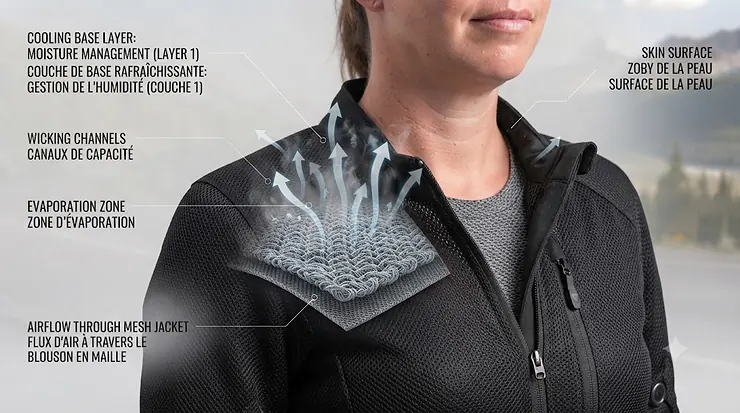
A cooling base layer works with your body’s own evaporative cooling process rather than against it, pulling moisture off your skin and moving it to the fabric surface where airflow can actually do something useful with it. That’s the whole trick. No fans, no batteries, no gimmicks — just smart textile engineering doing what a soggy cotton tee never could. Across the rest of this guide we’ll dig into seven real base layers currently sold on amazon.ca, break down what separates the merely “breathable” from the genuinely cooling, and walk through practical scenarios so you can match a layer to how — and where — you actually ride.
We’ll also touch on moisture wicking riding shirt summer review data pulled from real owner feedback, lightweight base layer summer motorcycle options for riders who hate anything that feels like a wetsuit, and the broader question of summer motorcycle comfort gear as a system rather than a single purchase. By the end, you’ll know exactly which category of cooling base layer motorcycle hot weather riders in your situation should be shopping for — and why.
Quick Comparison Table
| Product | Best For | Fabric Tech | Price Range (CAD) |
|---|---|---|---|
| Klim Aggressor Cool -1.0 | Serious heat, mesh-jacket riders | CoolCore evaporative polyester | C$90-C$120 |
| REV’IT! Freeze Cooling Shirt | Track days, extreme humidity | Proprietary wet-activation cooling fibre | C$100-C$140 |
| Alpinestars Tech Dry SS | Daily summer commuting | Polyester-nylon wicking blend | C$50-C$70 |
| Alpinestars Ride Tech Summer LS V2 | Sportbike riders, race fit | Ultra-thin vented stretch mesh | C$85-C$110 |
| Firstgear 37.5 Basegear SS | All-day touring comfort | 37.5 humidity-regulating tech | C$55-C$75 |
| Under Armour HeatGear Compression LS | Budget-conscious commuters | HeatGear compression polyester | C$35-C$50 |
| Merino.tech Superfine Merino Base Layer | Multi-day ADV trips, odor control | 100% superfine merino wool | C$60-C$85 |
Looking at the spread above, there’s a clear split between synthetic evaporative fabrics built specifically for motorcycling — like the Klim Aggressor Cool -1.0 and REV’IT! Freeze Cooling Shirt — and general-purpose wicking layers that do a competent job for less money, like the Under Armour HeatGear Compression LS. The moto-specific options tend to add a longer cut, flatlock seams positioned to avoid armour pressure points, and fabric weights tuned for airflow under a jacket rather than open-air athletic use. If your budget tops out under C$50, the Under Armour piece is genuinely fine; if you’re riding six hours a day in July, the extra C$40-C$70 for a purpose-built layer earns its keep fast.
💬 Just one click — help others make better buying decisions too!😊
Top 7 Cooling Base Layers: Expert Analysis
1. Klim Aggressor Cool -1.0 — evaporative CoolCore fabric that actually cools
The Klim Aggressor Cool -1.0 is the base layer most frequently name-checked by riders who’ve tried everything else and given up, and there’s a reason for that reputation. It’s built on CoolCore fabric technology, a fibre treatment that grabs moisture and spreads it laterally across the shirt so evaporation happens over a much wider surface area than a normal wicking fabric allows.
The compression-style fit and flatlock seam construction mean it layers cleanly under a mesh jacket or armoured riding shirt without bunching at pressure points, and testers running it through 35°C canyon rides consistently report the fabric staying noticeably cooler to the touch than competing synthetic layers at the same price point. Based on the spec comparison, this makes it the strongest pick for riders logging long stretches in a mesh jacket where airflow can actually reach the fabric and keep the evaporative cycle going — it does less for someone in a fully sealed textile suit. What most buyers overlook is that dunking the shirt in water before a ride isn’t required, but it does supercharge the cooling effect for the first 30-45 minutes, which matters a lot on a brutal noon start.
Reviewers consistently note that the fabric can feel almost tacky against skin once soaked with sweat, and that air-drying is mandatory since a dryer will damage the CoolCore fibres. That’s a fair trade for the performance most riders report. Klim built its name on adventure and off-road gear starting in Idaho back in 2008, and the Aggressor line carries that same no-nonsense engineering focus rather than chasing trends.
Pros:
- ✅ Wide-surface evaporative cooling outperforms basic wicking fabrics
- ✅ Flatlock seams avoid chafing under armour and mesh gear
- ✅ Holds up to repeated washing without breaking down
Cons:
- ❌ Can feel clingy against skin once fully sweat-soaked
- ❌ Must air-dry only, adding a step to laundry day
Priced in the C$90-C$120 range, the Klim Aggressor Cool -1.0 sits at the upper end of the base layer market, but for riders doing serious mileage in genuine heat, the performance-to-price ratio holds up well against the alternatives.
2. REV’IT! Freeze Cooling Shirt — proprietary wet-activation cooling fibre
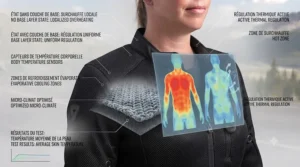
The REV’IT! Freeze Cooling Shirt takes a slightly different technical approach than the Klim: its proprietary cooling fabric is engineered to pull heat away from the skin through an accelerated evaporation process once activated with a brief soak, delivering a measurable surface-temperature drop that testers clock at roughly 30 to 60 minutes of sustained relief per activation.
That activation window matters a lot for how you should think about this shirt. It’s genuinely one of the strongest performers for a short, intense burst of heat exposure — think a track day, a stop-and-go city crawl in stalled traffic, or the first hour after leaving an air-conditioned rest stop — rather than a set-it-and-forget-it all-day solution. Here’s what to weigh: if your ride is eight hours of steady highway heat, you’ll want to plan re-soaking stops roughly every hour to keep the cooling cycle active, which isn’t always practical mid-ride. The fabric itself is stretchy and thin enough to disappear under a race suit, and REV’IT! designed the cut with a track-oriented rider in mind, so the fit runs closer to the body than a typical touring base layer.
Aggregated review sentiment from riders who’ve used it for trackdays and hot commutes is largely positive on the cooling sensation itself, with the most common critique centering on needing water access to reactivate the effect — not always realistic on a multi-hour tour through rural highways.
Pros:
- ✅ Fast, noticeable cooling burst when freshly activated
- ✅ Ultra-thin build disappears under tight race leathers
- ✅ Stretchy fit moves well through aggressive riding positions
Cons:
- ❌ Cooling effect fades and needs water to reactivate
- ❌ Less practical for long tours without rest-stop access
Expect to pay in the C$100-C$140 range for the REV’IT! Freeze Cooling Shirt, which puts it at the premium end — a reasonable ask for track-day riders, a tougher sell for someone who just wants all-day comfort on a summer commute.
3. Alpinestars Tech Dry Short Sleeve — lightweight polyester-nylon wicking for daily rides
If you want a no-drama, high-performing option that doesn’t demand any special care routine, the Alpinestars Tech Dry Short Sleeve earns its spot through sheer consistency. Independent testing across a full riding season found this polyester-nylon blend wicked sweat aggressively even during 95°F (35°C) canyon runs, with testers reporting noticeably drier skin than competing products at the same price point.
The short-sleeve cut and lighter weave make it the pick for riders who find long-sleeve base layers stifling even in a mesh jacket, prioritizing raw breathability over the extra sun and abrasion coverage a long-sleeve option provides. On paper this means it’s best suited to riders in short, punchy commutes or errands rather than eight-hour touring days where sleeve coverage against sun exposure starts to matter more. The flatlock seams do their job quietly here — no chafing complaints show up in the aggregated feedback, even under tight sport-bike riding positions. What the spec sheet won’t tell you, but reviewers note, is that this piece launders and dries fast enough to wear it two days running on a multi-day trip without packing a spare.
Alpinestars built its reputation in racing gear, and that DNA shows in the tailored, athletic cut — it runs true to size for most builds but skews snug, so sizing up is worth considering if you prefer a looser layer.
Pros:
- ✅ Aggressive moisture-wicking verified in real 35°C testing
- ✅ Fast-drying fabric survives back-to-back riding days
- ✅ Flatlock seams stay comfortable under sport-bike gear
Cons:
- ❌ Short sleeves skip sun and abrasion coverage on forearms
- ❌ Snug racing cut runs small for looser-fit preferences
At roughly C$50-C$70, the Alpinestars Tech Dry Short Sleeve lands in accessible mid-range territory, offering race-tested performance without the premium price tag of the cooling-specific fabrics above it.
4. Alpinestars Ride Tech Summer Long Sleeve Top V2 — race-proven ventilated stretch fabric
The Alpinestars Ride Tech Summer Long Sleeve Top V2 is a second-generation redesign, and the changes over the original tell you what riders actually wanted: a lighter, thinner build than the first version, ditching the bulkier feel for something genuinely built for scorching-hot conditions under full gear. One longtime tester who’s worn it for racing and trackdays over three seasons specifically called out how the stretchy, ultra-thin, vented material keeps the neck area cool thanks to its lower cut — a detail that matters more than it sounds once you’re strapped into a helmet and jacket collar for hours.
Based on the spec comparison with bulkier “summer” base layers on the market, this piece earns its keep specifically because it doesn’t fight the outer gear for space — it’s thin enough to take up almost no room packed in a kit bag, and testers report it holding its shape and stretch after repeated wears and washes. The trade-off is fit: this is a compression-style, figure-hugging cut, and reviewers are candid that it looks best on an athletic build — not a dealbreaker functionally, but worth knowing before you order.
Reviewers consistently praise the neck ventilation and packability, with the most common critique being about visual fit rather than performance, which says something about how well the cooling function itself holds up under scrutiny.
Pros:
- ✅ Noticeably lighter, thinner build than the original version
- ✅ Low-cut neck venting keeps a genuinely hot zone cooler
- ✅ Packs down to almost nothing in a kit bag
Cons:
- ❌ Compression fit is unforgiving on non-athletic builds
- ❌ Long-sleeve-only design limits it to warm-not-scorching days
Priced around C$85-C$110, the Alpinestars Ride Tech Summer Long Sleeve Top V2 sits comfortably in the mid-to-premium bracket, justified by race-team-level testing and genuine second-generation refinement.
5. Firstgear 37.5 Basegear Short Sleeve Shirt — humidity-regulating tech for all-day touring
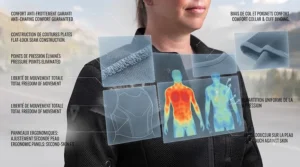
The Firstgear 37.5 Basegear Short Sleeve Shirt takes a more scientific angle on cooling than most competitors, built around 37.5 technology — named for the theory that humans feel most comfortable when the relative humidity right against their skin sits near 37.5%. Rather than just wicking sweat away, the fabric actively works to regulate that microclimate between your skin and your outer gear.
The 92% polyester/8% spandex knit is engineered to dry roughly five times faster than comparable fabrics, and the 4-way stretch with flatlock seam construction maximizes skin contact for the humidity-regulation effect to actually work as designed. What most buyers overlook about this shirt is that it’s genuinely a do-it-all layer: it performs fine solo under a mesh jacket in July, and doubles as a functional base layer with added mid-layers once autumn temperatures drop, which is a real cost-per-wear advantage over single-season pieces. Here’s what to weigh: it isn’t marketed as a compression fit, so if you specifically want that snug, second-skin feel, look elsewhere on this list — it sits closer to a relaxed athletic tee.
One long-time owner specifically sought this shirt out as a genuine “do-it-all” base layer to wear alone under a jacket in warm weather or layered for cooler rides, and reported it delivering exactly that kind of year-round flexibility.
Pros:
- ✅ Actively regulates skin-level humidity, not just moisture wicking
- ✅ Dries roughly five times faster than comparable fabrics
- ✅ Doubles as a three-season layer, extending its usable months
Cons:
- ❌ Relaxed fit lacks the compression feel some riders prefer
- ❌ Short-sleeve-only in this specific model limits arm coverage
At C$55-C$75, the Firstgear 37.5 Basegear Short Sleeve Shirt offers strong year-round value, particularly for riders who’d rather buy one adaptable layer than separate summer and winter pieces.

6. Under Armour HeatGear Compression Long Sleeve — budget-friendly non-moto alternative
Not every effective base layer needs a motorcycle brand on the label, and the Under Armour HeatGear Compression Long Sleeve proves it. Independent seasonal testing found it performed surprisingly well in summer conditions, offering solid moisture management and a close, compression-style fit that layers easily under just about any jacket you own.
It’s missing the moto-specific touches — no extended tail cut to stay tucked during an aggressive riding stance, and no seam mapping designed around jacket armour placement — but for riders on a tight budget, the price-to-performance ratio is genuinely hard to argue with. On paper this means it’s the smart entry point for a new rider building out gear on a budget, or for anyone who wants to trial the “base layer helps in summer, not just winter” concept before committing to a pricier moto-specific piece. What the spec sheet won’t tell you is that this shirt is stocked at practically every big-box sporting goods retailer in Canada, so replacing a worn-out one is never a special-order hassle.
Aggregated feedback holds up well after repeated washing, a detail worth noting since budget synthetics sometimes degrade faster under regular laundering than premium moto-specific fabrics.
Pros:
- ✅ Strong moisture management at a fraction of moto-brand pricing
- ✅ Widely available at mainstream Canadian retailers
- ✅ Holds up well through repeated washing over time
Cons:
- ❌ No extended tail cut for staying tucked while riding
- ❌ Lacks seam placement tuned for jacket armour zones
Sitting in the mid-C$30s to around C$50, the Under Armour HeatGear Compression Long Sleeve is the budget anchor of this list — not purpose-built for riding, but honest value for what it delivers.
7. Merino.tech Superfine Merino Wool Base Layer — natural fibre with built-in odor resistance
Every list like this needs one non-synthetic option, and the Merino.tech Superfine Merino Wool Base Layer is the strongest natural-fibre argument on the market. Built from 100% superfine merino wool, it’s designed for year-round comfort without overheating, using wool’s naturally fine fibre structure to manage moisture and regulate temperature rather than relying on a chemical treatment or engineered polyester weave.
The fine-fibre construction is the key detail here — coarser wool itches and feels bulky, but superfine merino fibres are thin enough to sit comfortably against skin while still delivering wool’s two signature advantages: genuine odor resistance and steady breathability that holds up whether you’re in dry heat or humid coastal conditions. Based on the spec comparison with synthetic layers, merino’s edge shows up most clearly on multi-day ADV trips where doing laundry every night isn’t realistic — a synthetic base layer that’s been sweated in twice will announce itself in a way merino simply won’t. What most buyers overlook is that merino also dries reasonably quickly once effort or humidity introduces moisture, closing a gap that used to make wool a poor warm-weather choice.
The trade-off is durability under repeated hard wear and a noticeably higher price per gram of fabric than synthetic competitors, plus merino generally needs gentler washing to avoid felting over time.
Pros:
- ✅ Genuine odor resistance for multi-day trips without laundry access
- ✅ Fine fibres avoid the itch of traditional wool base layers
- ✅ Performs across a wider temperature range than most synthetics
Cons:
- ❌ Requires gentler washing to prevent felting or shrinkage
- ❌ Higher cost per garment than comparable synthetic options
Priced around C$60-C$85, the Merino.tech Superfine Merino Wool Base Layer costs more than basic synthetics but earns it back on ADV and touring trips where odor control and washing frequency genuinely matter.
Practical Usage Guide: Getting the Most Out of Your Cooling Base Layer
Buying the right ventilated base layer is only half the job — how you wear and maintain it changes the real-world result more than most riders expect. Start with fit: a cooling base layer needs skin contact to do its job, so if it’s loose enough to bunch, the evaporative surface area drops and so does the cooling effect. Size down slightly if you’re between measurements on any brand’s chart, especially with the compression-oriented pieces like the Klim Aggressor Cool -1.0 or Alpinestars Ride Tech Summer Long Sleeve Top V2.
For evaporative-cooling fabrics specifically, timing matters. A brief soak in cool water right before you gear up gives you a strong cooling head start for the first 30-60 minutes of a ride — genuinely useful on a scorching noon departure, less necessary on an early morning start where ambient temperatures are already manageable. During the first 30 days of ownership, wash new base layers in cold water and skip fabric softener entirely, since softener residue clogs the fibre structure that makes wicking and evaporative cooling work in the first place. Air-dry CoolCore and similar treated fabrics rather than tumble-drying them; heat can degrade the coating that gives them their cooling edge. The most common early mistake riders make is layering a cooling base layer under a fully sealed, non-vented textile suit and expecting miracles — the shirt can only move moisture to its surface, and from there it needs airflow to actually evaporate. Pair your base layer with a mesh or perforated outer jacket whenever the forecast allows it, and you’ll get dramatically more from the fabric investment.
Real-World Scenarios: Matching a Base Layer to How You Ride
Picture three different riders heading out on the same 30°C Saturday. The first is a daily commuter doing a 25-minute city run in stop-and-go traffic, mostly in the shade of downtown buildings, on a budget that tops out around C$50. For that rider, the Under Armour HeatGear Compression Long Sleeve or Alpinestars Tech Dry Short Sleeve covers the need without overspending on features that a short commute won’t fully exploit.
The second rider is heading out on a six-hour highway tour through open farmland with a mesh jacket and full midday sun exposure — exactly the scenario where evaporative fabrics shine, since sustained airflow keeps the cooling cycle running for hours. That’s the Klim Aggressor Cool -1.0 or the Firstgear 37.5 Basegear Short Sleeve Shirt territory, depending on whether raw cooling power or all-season versatility matters more to that individual rider.
The third is a track-day regular running 20-minute sessions in full leathers with brief cool-down breaks between sets — short, intense heat bursts rather than sustained exposure. The REV’IT! Freeze Cooling Shirt‘s activation-based cooling model fits that pattern almost perfectly, since a quick water soak between sessions keeps reactivating the effect right when it’s needed most. None of these three riders would be well served by simply grabbing whichever base layer is cheapest or most heavily advertised — the right pick genuinely depends on riding duration, outer gear ventilation, and how much control you have over re-soaking or reactivating a cooling fabric mid-ride.
What Is a Cooling Base Layer for Motorcycle Riding?
A cooling base layer for motorcycle riding hot weather summer use is a close-fitting technical undershirt worn beneath riding gear that pulls sweat away from skin and speeds its evaporation, helping regulate body temperature during hot-weather rides. It relies on fabric engineering — not batteries or chemicals — and works best paired with a ventilated outer jacket.
How to Choose a Cooling Base Layer for Hot-Weather Riding
- Match the fabric technology to your outer gear. Evaporative fabrics like CoolCore need airflow through a mesh or perforated jacket to work at full strength — a sealed textile suit blunts their advantage significantly.
- Consider ride duration over marketing claims. Activation-based cooling shirts suit short, intense heat bursts; humidity-regulating or straightforward wicking fabrics suit sustained all-day exposure better.
- Check the seam layout against your riding position. Flatlock seams positioned away from common armour and strap pressure points prevent chafing on longer rides.
- Weigh fit preference honestly. Compression cuts maximize skin contact for cooling performance but run unforgiving on non-athletic builds; relaxed fits sacrifice a little efficiency for comfort.
- Factor in laundry realities on multi-day trips. Merino resists odor across several wears without washing; synthetics need more frequent laundering but dry faster when you do wash them.
- Price against actual usage, not just sticker shock. A C$100+ evaporative shirt worn daily through a full riding season costs less per ride than a cheap layer replaced twice a year.
- Check the day’s Humidex forecast and coverage needs. High humidity blunts evaporative cooling, so a wicking or humidity-regulating fabric may outperform a pure evaporative pick on muggy days — and factor in whether short sleeves (better airflow) or long sleeves (more sun and abrasion coverage) suit your typical ride length.
Cooling Base Layers vs Traditional Cotton or No Base Layer
| Factor | Cooling Base Layer | Cotton T-Shirt | No Base Layer |
|---|---|---|---|
| Moisture handling | Wicks and evaporates efficiently | Absorbs and holds moisture, stays wet | Sweat sits directly on skin under gear |
| Comfort under armour | Flatlock seams reduce chafing | Seams and folds cause hot spots | Skin rubs directly against gear lining |
| Best For | Long rides, high heat, full gear | Short casual rides only | Not recommended for hot weather |
| Odor over multi-day trips | Managed (especially merino) | Builds quickly, holds smell | N/A |
The comparison above lands squarely against cotton, and it’s not close. A cotton tee absorbs sweat and then just holds it against your skin like a wet sponge, which actually traps heat rather than releasing it once you’re sealed inside a jacket. Riding with no base layer at all skips the moisture problem but introduces a different one: bare skin rubbing directly against jacket lining and armour edges for hours, which is exactly the kind of friction discomfort a properly fitted layer like the Alpinestars Tech Dry Short Sleeve exists to prevent. For sustained hot-weather riding, a purpose-built cooling layer isn’t a luxury upgrade — it’s closing a gap that cotton and bare skin both leave wide open.
✨ Ready to gear up for summer? Check current prices and availability on these picks before your next ride!
Common Mistakes When Buying a Cooling Base Layer
The biggest mistake riders make is buying based on the word “compression” alone, assuming any snug athletic shirt will perform like a moto-specific cooling fabric. Generic gym compression gear can feel similar against skin but often lacks the extended tail cut, jacket-friendly seam mapping, and evaporative fibre treatment that actually earn the “cooling” label in a riding context. A second common misstep is ignoring outer gear compatibility entirely — pairing a premium evaporative shirt like the Klim Aggressor Cool -1.0 with a fully sealed, non-vented touring suit wastes most of what that fabric is capable of, since there’s nowhere for the moisture to actually evaporate to.
Sizing is another frequent trap. Riders used to loose casual wear often size a base layer the same way they’d size a t-shirt, ending up with a layer too baggy to maintain the skin contact these fabrics need. And finally, plenty of buyers skip reading care instructions until after a damaged first wash — treated evaporative fabrics like CoolCore genuinely can’t handle a hot dryer cycle the way a cotton shirt can, and one careless laundry day can quietly kill the fabric treatment that justified the higher price tag in the first place.
Long-Term Cost and Maintenance
Thinking about a cooling base layer purely by sticker price misses the real math. A C$40 budget layer that needs replacing every riding season because the wicking treatment washes out after 20-30 wears often costs more over three years than a single C$100 piece built to survive 150+ washes with proper care. The Firstgear 37.5 Basegear Short Sleeve Shirt and Merino.tech Superfine Merino Wool Base Layer both lean into this longevity argument in different ways — one through a durable synthetic blend rated for repeated fast-drying cycles, the other through wool’s naturally long usable lifespan when hand-washed or laundered on a gentle cycle.
Maintenance costs stay low across the board as long as you follow basic rules: cold water, no fabric softener, and air-drying for treated evaporative fabrics. Where riders lose value is skipping those steps to save five minutes on laundry day, then wondering a season later why the “cooling” shirt doesn’t feel cooling anymore. Treat a good base layer like the technical gear it is, not like a regular undershirt, and the cost-per-wear math swings decisively in your favour over a multi-year ownership window.
Features That Actually Matter (And Those That Don’t)
Fabric treatment type, seam placement, and cut length genuinely matter — these determine whether the shirt cools you, chafes you, or stays tucked in through an aggressive riding position. Odor resistance matters a lot more than most first-time buyers assume, especially for anyone doing multi-day trips without daily laundry access. What matters far less than the marketing suggests: flashy colour options, “athletic” branding disconnected from actual moto-specific design, and vague claims like “advanced technology” without a named, verifiable fabric process behind them. If a product page can’t tell you specifically what the cooling mechanism is — wicking, evaporative treatment, humidity regulation, or natural fibre properties — treat that vagueness as a signal to keep researching rather than a reason to assume it’s just as good.
Safety and Regulatory Context for Canadian Riders
Base layers aren’t a substitute for certified protective gear, and it’s worth being clear about that distinction. Canada mandates DOT-, ECE-, or Snell-certified helmets across every province and territory, and full protective jackets, pants, and gloves remain non-negotiable regardless of temperature — heat is genuinely dangerous, but so is unprotected skin on pavement. What a cooling base layer actually does is make full-gear compliance more tolerable in July, which matters because riders who feel they’ll overheat in proper gear are sometimes tempted to skip layers they shouldn’t skip.
Heat itself is a real medical risk on long summer rides. Your body isn’t fully acclimatized to extreme heat at the start of summer, so it’s worth starting gradually and taking hydration breaks rather than pushing straight into a full-day ride during the season’s first heat wave. Warning signs of heat exhaustion include dizziness, nausea, heavy sweating, and headache, and if you notice these symptoms mid-ride, the right move is to get to shade and drink water immediately rather than pushing on to the next stop. A cooling base layer helps manage the everyday discomfort of hot-weather riding, but it doesn’t replace hydration, planned rest stops, or recognizing your own limits when a heat warning is in effect for your region.
Cooling Base Layers for Different Rider Types
New commuters on a tight gear budget are best served starting with the Under Armour HeatGear Compression Long Sleeve or Alpinestars Tech Dry Short Sleeve — both deliver real wicking performance without demanding a big upfront investment before you know how much you’ll actually ride in summer heat. Touring riders logging long highway days should lean toward the Klim Aggressor Cool -1.0 or Firstgear 37.5 Basegear Short Sleeve Shirt, since sustained airflow through a mesh jacket is exactly the condition both fabrics are optimized for. Track-day and sportbike riders chasing every possible edge in tight leathers will get the most out of the REV’IT! Freeze Cooling Shirt or Alpinestars Ride Tech Summer Long Sleeve Top V2, both built with a race-oriented cut and thin profile in mind. And multi-day ADV or backcountry travellers who can’t do laundry every night should give real weight to the Merino.tech Superfine Merino Wool Base Layer, where odor resistance becomes a bigger practical factor than raw cooling power.
Buyer’s Decision Framework
If your rides are under an hour and mostly urban, choose a budget wicking layer, because the cooling ceiling of premium evaporative fabrics won’t have time to matter. If you’re riding four-plus hours through open highway in full sun, choose an evaporative or humidity-regulating layer, because sustained airflow is exactly what unlocks their advantage. If you’re doing short, repeated heat bursts with cool-down windows between them — think track sessions — choose an activation-based cooling fabric, since reactivating the cooling effect between bursts is realistic in that setting. And if you’re on a multi-day trip without reliable laundry access, choose merino wool over synthetics, because odor control will matter more by day three than any incremental cooling advantage.
Frequently Asked Questions
❓ Do cooling base layers actually work for motorcycle riding hot weather summer conditions?
❓ What is the best lightweight base layer summer motorcycle riders should buy?
❓ Can I wear a regular compression shirt instead of a moto-specific ventilated base layer?
❓ How often should I wash a moisture wicking riding shirt summer piece?
❓ Is merino wool actually good heat management riding apparel for summer?
Conclusion
There’s no single “best” cooling base layer for every rider — that’s the honest takeaway after digging into seven genuinely different approaches to the same problem. The Klim Aggressor Cool -1.0 and REV’IT! Freeze Cooling Shirt lead on raw cooling performance for riders who put in serious hot-weather mileage, the Alpinestars Tech Dry Short Sleeve and Alpinestars Ride Tech Summer Long Sleeve Top V2 bring race-tested engineering to daily and sport riding, the Firstgear 37.5 Basegear Short Sleeve Shirt earns its keep as a genuine three-season piece, the Under Armour HeatGear Compression Long Sleeve proves budget doesn’t have to mean bad performance, and the Merino.tech Superfine Merino Wool Base Layer solves a problem synthetics simply can’t touch on multi-day trips without laundry access.
What ties all seven together is the core idea this whole guide has circled back to repeatedly: a cooling base layer only performs as well as the system around it. Pair it with ventilated outer gear, respect the care instructions, stay hydrated, and take the heat seriously even when your fabric is doing its job well. Summer riding shouldn’t mean choosing between staying protected and staying comfortable — the right base layer, worn the right way, means you don’t actually have to choose.
✨ Don’t Miss These Exclusive Deals!
🔍 Take your summer riding comfort to the next level with these carefully selected cooling base layers. Click on any highlighted product above to check current pricing and availability on amazon.ca. The right layer underneath your gear makes every hot-weather ride you take this season genuinely more enjoyable.
Recommended for You
- Moisture Wicking Base Layer for Motorcycle Riding: 7 Picks (2026)
- How to Choose a Synthetic Thermal Base Layer (2026): 7 Top Picks
- 7 Best Synthetic Thermal Base Layers for Motorcycle Riding in 2026
Disclaimer: This article contains affiliate links. As an Amazon Associate, I earn from qualifying purchases. If you purchase products through these links, we may earn a small commission at no additional cost to you.
✨ Found this helpful? Share it with your friends! 💬🤗
