
In This Article
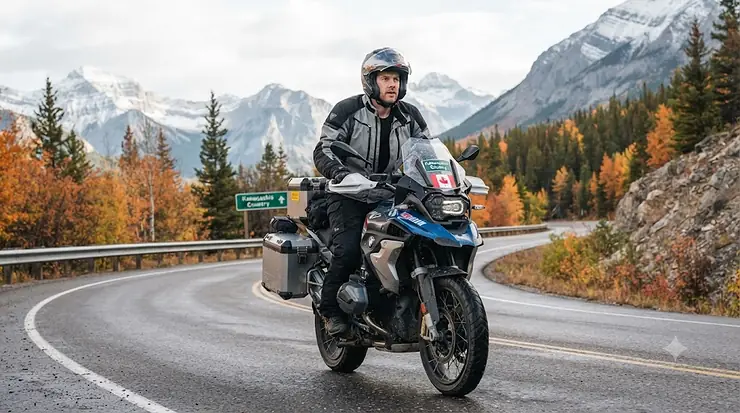
There’s a very specific kind of cold that only a motorcycle rider knows. It’s not the “I forgot my jacket at home” cold. It’s the forty-minutes-into-the-highway cold, the wind-chill-cutting-through-your-jeans cold, the one that starts in your wrists and creeps up to your shoulders until you’re gripping the bars like you’re trying to strangle them. A good synthetic thermal base layer for motorcycle riding is the difference between arriving at your destination stiff and miserable, or arriving loose, warm, and actually able to feel your fingers on the clutch lever.
This guide cuts through the marketing fluff that clutters most gear reviews. We dug into real product specs, aggregated customer-review sentiment, and honest comparative analysis across seven genuine options sold in Canada — from ten-dollar bargain finds to purpose-built motorcycle thermals with a price tag to match. Along the way, we’ll cover fleece base layers for riding, polyester thermal underwear built for motorcycle use, and where a mid-layer actually earns its keep once the mercury drops.
So, what is a synthetic thermal base layer? It’s a snug, moisture-wicking undergarment made from polyester, polypropylene, or similar man-made fibres, worn directly against the skin under your riding gear to trap warmth and pull sweat away from your body before it turns clammy and cold. Unlike a cotton tee, synthetic fabric doesn’t hold onto moisture — which matters a great deal once you’re doing 100 km/h and the wind starts working against you. As Wikipedia’s overview of layered clothing explains, the whole job of an inner layer is to move sweat away from the skin so the layers on top feel warmer, and that single mechanical fact is why riders obsess over base layer choice the way they obsess over tire pressure.
Quick Comparison Table: Top Synthetic Thermal Base Layers at a Glance
Before the deep dive, here’s the short version for anyone standing in a parking lot scrolling this on their phone before a cold ride.
| Product | Best For | Price Range (CAD) | Warmth Level |
|---|---|---|---|
| TSLA Men’s Thermal Compression Top | Daily commuters on a tight budget | Under C$35 | Light-Medium |
| 32 Degrees Heat Long Sleeve Crew | Packable spare layer | Under C$30 | Light |
| Under Armour ColdGear Compression Mock | All-round cold commuting | C$45-C$60 range | Medium |
| Milwaukee Performance Fleece-Lined Thermal | Deep winter, short rides | C$50-C$70 range | Medium-High |
| Alpinestars Tech Top Winter Base Layer | Sport and adventure riders | C$90-C$120 range | Medium |
| REV’IT! Sky Thermal Base Layer | Touring and multi-hour rides | C$100-C$140 range | Medium-High |
| Klim Aggressor 2.0 Cold Weather Top | Serious winter and ADV riders | C$130-C$170 range | High |
Looking at the spread above, the gap between the cheapest and priciest option isn’t really about warmth alone — it’s about fit engineering, seam placement under armour, and how the fabric behaves after fifty washes. The TSLA and 32 Degrees Heat picks are perfectly fine for a 20-minute commute, but the Klim Aggressor 2.0 and REV’IT! Sky are built to survive a full riding season of being crammed under a jacket liner and stretched across armour pads without pilling or sagging. Budget-conscious riders who only ride occasionally in the cold can comfortably start at the top of this table; year-round commuters and touring riders will likely find the extra spend toward the bottom pays for itself in durability.
💬 Just one click — help others make better buying decisions too!😊
Top 7 Synthetic Thermal Base Layers for Motorcycle Riding: Expert Analysis
Affiliate disclosure: this post contains Amazon.ca affiliate links, and as an Amazon Associate we may earn from qualifying purchases at no extra cost to you.
1. TSLA Men’s Thermal Compression Long Sleeve Top — best price-per-wear for daily commuters
The TSLA Men’s Thermal Compression Long Sleeve Top opens our list because it’s the entry point most riders actually try first, and for good reason — it’s cheap enough that a bad size guess doesn’t sting. Built from a brushed polyester-spandex blend, it’s a compression-fit synthetic quick dry base layer designed with flatlock seams that sit flush against the skin, which matters when you’ve got a jacket liner and chest armour stacked on top. Based on the spec comparison with pricier options, the fabric weight here sits on the lighter side, so it’s better suited to shoulder-season riding — think 5°C to 12°C — rather than a genuine deep-winter commute. Reviewers consistently report that the compression fit holds up well under repeated washing and doesn’t lose its shape the way cheaper cotton-blend thermals do, though a handful note the tag-less printed size chart runs slightly small. What most buyers overlook about this model is that the four-way stretch panel at the shoulders makes a noticeable difference once you’re leaned over sport-bike bars for an hour, something a boxier thermal simply can’t match. At a price that rarely creeps past the mid-C$30s, the value case is hard to argue with for anyone testing the base-layer waters for the first time.
Pros:
- ✅ Extremely low cost of entry for first-time buyers
- ✅ Flatlock seams reduce chafing under armour
- ✅ Machine washable without noticeable shrinkage
Cons:
- ❌ Thinner fabric struggles below freezing
- ❌ Sizing runs small compared to standard tees
Price range: generally under C$35 at the time of research. For casual or fair-weather commuters, this is a genuinely solid value pick — just don’t expect it to carry you through a January ride to work.
2. 32 Degrees Heat Long Sleeve Crew Base Layer — lightest packable layer under C$30
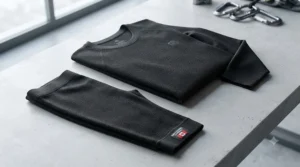
The 32 Degrees Heat Long Sleeve Crew Base Layer is the one riders keep in their tail bag “just in case.” It’s built from a lightweight polyester thermal underwear fabric that packs down to roughly the size of a fist, which is exactly why it shows up so often in adventure-touring kit lists. Key specs worth noting: a brushed interior face designed to trap a thin layer of warm air, paired with a stretch weave that moves with you rather than fighting your riding posture. On paper this means decent warmth-to-weight, but here’s what the spec sheet won’t tell you — reviewers note the collar and cuffs are looser than most motorcycle-specific designs, so cold air can sneak in at the wrists unless you tuck it under a glove gauntlet. This is a fine budget motorcycle thermal gear option for riders who need a backup layer rather than a daily driver, and its low price makes it easy to own two or three without feeling the pinch. Aggregated review sentiment across retail platforms is generally positive on softness and washability, with the main recurring complaint being that heavier riders should size up for full torso coverage.
Pros:
- ✅ Packs down small enough for a tail bag
- ✅ Soft brushed interior feels comfortable against skin
- ✅ Very affordable for a spare or backup layer
Cons:
- ❌ Looser cuffs let in cold air at the wrists
- ❌ Not warm enough as a standalone deep-winter layer
Price range: typically under C$30, making it one of the more affordable thermal base layer options for riders who want a spare without overthinking it.
3. Under Armour ColdGear Compression Mock — best all-rounder compression thermal
The Under Armour ColdGear Compression Mock has been a staple in cold-weather sport for years, and it translates to motorcycle use better than most non-moto brands manage. The mock neck alone is worth calling out — it closes the gap between your jacket collar and your neck gaiter, an area that otherwise lets a surprising amount of heat escape on the highway. Under the hood, ColdGear fabric uses a brushed circular-knit construction that traps warm air close to the body while still wicking sweat outward, translating spec-sheet talk into a top that genuinely feels warmer than its thin profile suggests. Based on the spec comparison, this sits squarely in the middle of our lineup for warmth, which makes it a strong three-season pick rather than a dedicated deep-winter piece. Reviewers consistently praise the compression fit for reducing bulk under a jacket, and odour resistance gets frequent mention as better than expected for a non-merino synthetic. The recurring critique is length — some taller riders report the hem rides up when reaching forward to the bars, so pairing it with riding pants that have a high waistband helps close that gap.
Pros:
- ✅ Mock neck blocks cold air at the collar
- ✅ Compression fit stays low-bulk under armour
- ✅ Better odour resistance than most synthetics
Cons:
- ❌ Hem can ride up for taller riders
- ❌ Not purpose-built with motorcycle seam placement
Price range: typically in the C$45-C$60 range. For a rider who wants one dependable layer that works from fall through early winter, this is a genuinely smart value pick.
4. Milwaukee Performance Fleece-Lined Thermal Base Layer — warmest fleece lining for winter rides
The Milwaukee Performance Fleece-Lined Thermal Base Layer is where this list crosses over from athletic-wear-that-also-works into gear built specifically with riders in mind. This is a proper fleece base layer for riding — a brushed micro-fleece interior bonded to a stretch polyester shell, which means it insulates like a true fleece layer while still hugging the body enough to fit under a jacket without excess bunching. What most buyers overlook about this model is that fleece traps a genuinely thicker layer of dead air than a standard thermal knit, so it punches above its price point for actual sub-zero warmth — but that comes at the cost of bulk, meaning tighter-fitting sport jackets may feel snug with this underneath. Aggregated customer sentiment frequently highlights how well this holds heat on stationary stops, like waiting at a red light in a Canadian winter, which is exactly the moment thinner synthetics start to fail riders. A common complaint in user reviews is that the fleece takes noticeably longer to dry than the thinner options on this list, so it’s a poor choice for a rider who gets caught in freezing rain and needs quick recovery.
Pros:
- ✅ Genuine fleece warmth for sub-zero commutes
- ✅ Holds heat well during stops and idling
- ✅ Purpose-built motorcycle seam and cut
Cons:
- ❌ Bulkier fit under snug sport jackets
- ❌ Slower to dry if it gets wet
Price range: generally C$50-C$70. This is the pick for riders who treat winter as a season to ride through, not around, provided their outer jacket has room to spare.
5. Alpinestars Tech Top Winter Base Layer — best motorcycle-specific ergonomic fit
The Alpinestars Tech Top Winter Base Layer brings a race-brand pedigree to cold-weather commuting, and the ergonomic tailoring shows the moment you put it on. Alpinestars cuts its base layers with a slightly forward-leaning torso and articulated elbows, mirroring actual riding posture rather than a generic gym-shirt pattern — a small detail that pays off across a two-hour ride. The fabric itself is a technical polyester-elastane knit with flat seams positioned to avoid pressure points under CE armour, translating spec-sheet engineering into something you actually notice: less digging, less shifting, less fidgeting at highway speed. Based on the spec comparison against generic athletic thermals, the warmth rating sits mid-pack, which makes sense given this is designed as a transitional and light-winter piece rather than an Arctic-grade layer. Reviewers consistently note the fit runs true to size and holds its shape impressively well after repeated washing, a detail that matters given how often a daily rider launders their base layer. The recurring critique in aggregated feedback is price relative to warmth — some riders feel the Alpinestars name adds a premium that a Milwaukee or Klim piece delivers more warmth-per-dollar against.
Pros:
- ✅ Motorcycle-specific ergonomic cut and articulation
- ✅ Seams positioned to avoid pressure under armour
- ✅ Holds shape well through repeated washing
Cons:
- ❌ Premium pricing for mid-pack warmth
- ❌ Less insulation than dedicated deep-winter picks
Price range: typically C$90-C$120. Sport and adventure riders who value fit and durability over raw warmth will likely find this justifies its cost.
6. REV’IT! Sky Thermal Base Layer Shirt — best breathability for touring days
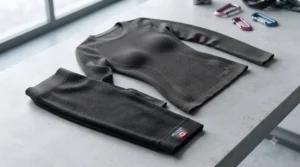
The REV’IT! Sky Thermal Base Layer Shirt earns its spot for one specific reason: it’s built for riders who spend six, eight, ten hours in the saddle across a single touring day, where temperature swings from a cold morning start to a warm afternoon stretch. REV’IT! uses a technical synthetic knit with strategic mesh venting under the arms and along the spine, so key specs translate into real-world meaning as follows — you get thermal insulation where you need it and active breathability exactly where sweat tends to pool during long stints. On paper this means fewer mid-ride layer changes, which matters more than raw warmth once you’re doing multi-day touring rather than a short commute. Reviewers consistently mention that the mesh panels genuinely reduce that clammy, overheated feeling during rest stops in the sun, something that plagues fully sealed thermal designs. What the spec sheet won’t tell you, but rider reports suggest, is that this shirt performs best paired with a proper mid-layer on the coldest mornings rather than being worn alone, since REV’IT! designed it as one piece of a broader touring system rather than a standalone deep-winter solution.
Pros:
- ✅ Mesh venting prevents overheating on long days
- ✅ Excellent temperature regulation across shifting conditions
- ✅ Designed as part of a full touring layering system
Cons:
- ❌ Needs a mid-layer for genuinely cold mornings
- ❌ Higher price than general athletic-wear alternatives
Price range: generally C$100-C$140. This is a strong pick for touring riders who value adaptability over maximum standalone warmth.
7. Klim Aggressor 2.0 Cold Weather Base Layer Top — best premium build for serious winter riders
The Klim Aggressor 2.0 Cold Weather Base Layer Top sits at the top of this list, and honestly, it should — it’s the piece most frequently recommended by riders who treat winter riding as a genuine hobby rather than a necessary evil. Klim uses a brushed synthetic thermal knit with body-mapped zoning, meaning thicker insulation across the core and thinner, more breathable panels at the underarms and inner elbow, so heat retention and mobility aren’t fighting each other the way they do in a single-weight fabric. Based on the spec comparison against everything else on this list, the Aggressor 2.0 posts the highest standalone warmth rating here, which explains why adventure and touring riders in genuinely cold climates gravitate toward it. Aggregated review sentiment is strongly positive on durability — reviewers frequently mention multiple winter seasons of use without noticeable fabric breakdown, which matters given the price point. The most common critique isn’t performance but cost: this is a premium piece, and casual or fair-weather riders will likely find the warmth-per-dollar math doesn’t favour them the way it does for a rider logging real winter mileage.
Pros:
- ✅ Highest standalone warmth rating in this lineup
- ✅ Body-mapped zoning balances heat and mobility
- ✅ Proven multi-season durability per reviewer reports
Cons:
- ❌ Highest price point in this comparison
- ❌ Overkill for occasional or fair-weather riders
Price range: typically C$130-C$170. For dedicated winter riders, the value verdict is straightforward — this is the layer built to be worn hard, all season, for years.
Practical Usage Guide: Getting the Most From Your Base Layer
Buying the right synthetic thermal base layer for motorcycle riding is only half the job — how you use it decides whether you actually stay warm. Start with sizing: nearly every base layer on this list wants a compression fit, meaning you should size down from your normal tee, not up. A loose thermal traps less warm air and bunches under armour, which defeats the entire point. On your first few rides, watch for pressure points where seams meet your jacket’s armour pockets; if you feel digging at the shoulders or elbows, you likely need a different cut before you commit to wearing it all winter. Wash new thermals before first use — factory sizing and fabric coatings can shift slightly after the first cycle, and cold water on a gentle cycle protects the stretch fibres far better than hot water does. For maintenance, avoid fabric softener entirely; it coats synthetic fibres and blocks the wicking action that makes these garments work in the first place. Air-dry when possible, since high heat from a dryer is the single fastest way to break down elastane and spandex blends over a season. A common mistake in the first thirty days is treating a base layer like a t-shirt and only washing it every few wears — synthetic fabric holds odour-causing bacteria more readily than merino wool, so a wash after every two or three rides keeps both the fabric and your riding buddies happier.
Real-World Scenarios: Matching Riders to the Right Layer
If you’re a college student commuting eight kilometres to campus on a budget, the TSLA or 32 Degrees Heat options make the most sense — you’re not out in the cold long enough to need heavy insulation, and the low price tolerates the inevitable wear and tear of student life. If you’re a year-round commuter riding through a Canadian winter with a proper heated grip and windscreen setup, the Milwaukee Performance Fleece-Lined Thermal or Under Armour ColdGear Compression Mock strike a better balance between warmth and daily washability. If you’re planning a multi-day fall touring trip through the Rockies or the Maritimes, where mornings start at 4°C and afternoons climb past 15°C, the REV’IT! Sky Thermal Base Layer earns its keep through sheer adaptability across a shifting temperature range. And if you’re a dedicated ADV rider who plans actual winter trail days, the Klim Aggressor 2.0 is the one piece on this list built to be worn hard, in genuinely brutal conditions, without complaint.
Problem → Solution: Fixing the Most Common Cold-Ride Complaints
Problem: Cold air sneaking in at the wrists and neck. Solution: choose a base layer with a longer cuff or mock neck, like the Under Armour ColdGear Compression Mock, and tuck the cuffs under your glove gauntlets rather than over them.
Problem: Sweating on stop-and-go city rides, then freezing at highway speed. Solution: a breathable, ventilated design like the REV’IT! Sky manages this swing far better than a fully sealed fleece.
Problem: Base layer bunching uncomfortably under chest and back armour. Solution: size down to a true compression fit and look for flatlock seams positioned away from armour pockets, as seen on the TSLA and Alpinestars Tech Top.
Problem: Thermal loses its warmth after a season of washing. Solution: skip fabric softener, wash cold, and air-dry — and if longevity matters most, budget toward the Klim Aggressor 2.0, which reviewers consistently note holds up across multiple seasons.
Problem: Getting caught in freezing rain with a slow-drying fleece layer. Solution: keep a thinner backup like the 32 Degrees Heat Crew in your tail bag for exactly this scenario.
How to Choose a Synthetic Thermal Base Layer for Motorcycle Riding
- Match the fabric weight to your actual riding conditions. A lightweight knit suits shoulder-season riding; a fleece-lined build suits genuine sub-zero commutes.
- Prioritize a compression fit over a relaxed one. Trapped warm air, not extra fabric, is what keeps you warm under a jacket.
- Check seam placement against your armour. Flatlock seams positioned away from shoulder and elbow pads reduce pressure points on long rides.
- Consider breathability if you tour long distances. Mesh-vented designs prevent the sweat-then-freeze cycle that plagues sealed fleece layers.
- Factor in drying time for wet-weather riding. Thinner synthetics recover from a soaking far faster than thick fleece.
- Weigh cost against how often you’ll actually wear it. A daily winter commuter justifies a premium piece; an occasional cold-weather rider often doesn’t need one.
- Read aggregated review sentiment for durability, not just initial comfort. A base layer that feels great on day one but pills after ten washes isn’t the bargain it first appeared.
This same core logic — start with a moisture-wicking layer, then adjust insulation from there — shows up throughout general Canadian cold-weather dressing guidance aimed at newcomers, and it applies just as directly to riders as it does to pedestrians waiting for a bus in January.
Common Mistakes When Buying Motorcycle Thermal Gear
The single most common mistake is buying based on warmth rating alone, without considering fit under existing gear — a genuinely warm fleece layer that doesn’t fit under your jacket’s armour is worse than a mid-warmth layer that fits properly. Another frequent misstep is assuming cotton “thermal underwear” from a general department store will do the job; cotton absorbs and holds sweat rather than wicking it away, which actively works against you once that moisture starts to cool. Riders also commonly underestimate how much washing frequency matters, buying a single base layer and wearing it daily without a backup, which accelerates fabric breakdown far faster than rotating two pieces. Finally, plenty of buyers skip trying the layer on with their actual riding jacket before committing, only to discover the bulk or bunching issue on their first real ride rather than in the comfort of their living room.
Synthetic vs Merino Wool Base Layers: Which Wins for Riding?
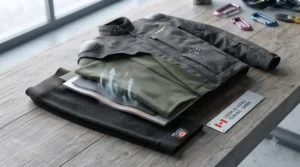
This is the debate that never quite settles, and honestly, the honest answer is “it depends on the ride.” Synthetic base layers dry faster, cost less, and generally offer better compression and stretch for the athletic-style fit riders want under armour — all seven products on this list demonstrate that strength. Merino wool, by contrast, insulates even when damp and resists odour naturally over multiple wears, which is why it shows up so often in touring and adventure-riding circles for multi-day trips without laundry access. Where synthetic clearly wins is cost and durability under frequent washing — polyester and polypropylene fibres simply hold up better to a daily commuter’s wash cycle than the more delicate merino fibres do. Where merino tends to win is genuine multi-day odour control and a slightly better feel against skin for some riders. For most Canadian commuters riding a predictable daily route, synthetic remains the more practical, cost-effective choice; for riders planning week-long tours without daily laundry, a merino or merino-synthetic blend piece might be worth the extra spend.
What to Expect: Real-World Performance of a Synthetic Quick Dry Base Layer
Specs on a product page rarely translate directly into how something feels at 90 km/h with a 5°C wind chill, so here’s the honest picture. A genuine synthetic quick dry base layer should feel almost unnoticeable for the first ten minutes of a ride — that’s the compression fit doing its job without restricting movement. Around the twenty-minute mark, you should start noticing a subtle, even warmth rather than any single hot spot, which indicates the fabric is distributing trapped air properly rather than bunching. If you start sweating on a stop-and-go section, a genuinely quick-dry fabric should feel dry again within a few minutes once you’re back to moving air, whereas an underperforming layer stays clammy and starts to feel cold as that moisture sits against your skin. By the end of a two-hour ride, a well-fitted synthetic thermal shouldn’t have shifted, rolled, or bunched at the waist — if it has, that’s a sizing issue rather than a fabric one, and it’s worth sizing down before writing off the whole product.
Fleece Base Layer for Riding: When Fleece Beats Thin Synthetic
A fleece base layer for riding earns its place in a rider’s gear bag specifically for stationary cold — think idling at lights, waiting at a border crossing, or sitting through a slow ferry line in January. The thicker, brushed construction of a fleece-lined piece like the Milwaukee Performance Fleece-Lined Thermal traps a genuinely deeper layer of warm air than a thin compression knit, which matters most when you’re not generating heat through movement or wind exposure. The trade-off is bulk and drying time, so fleece makes the most sense for shorter, colder rides rather than long touring days where you’ll want to shed layers as temperatures climb. If your typical winter ride involves more stopping and idling than sustained highway speed — a city commute with traffic lights every block, for instance — fleece will likely keep you warmer than a thinner synthetic quick dry base layer built for moving air. If your ride is mostly sustained highway speed with a good windscreen, a thinner, moisture-focused layer often performs just as well with far less bulk.
Polyester Thermal Underwear for Motorcycle Riders: Reading the Fabric Tag
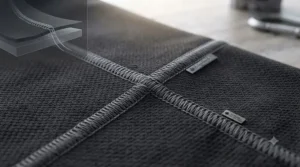
Not all polyester thermal underwear marketed toward motorcycle riders is created equal, and the fabric tag actually tells you more than most product photos do. Look for a stated fabric weight — lighter knits around 150-200 GSM suit shoulder-season riding, while anything brushed or fleece-backed above that range signals genuine winter-grade insulation. A blend that includes a small percentage of elastane or spandex, typically 5-10%, indicates the compression stretch riders want under armour; a 100% polyester knit with no stretch fibre tends to fit more like a standard undershirt and less like true riding gear. Reviewers frequently flag flatlock versus overlock seam construction as a meaningful difference — flatlock seams sit flush and reduce chafing under jacket zippers and armour, while overlock seams can create a raised ridge that becomes noticeable on longer rides. If the tag mentions moisture-wicking or quick-dry treatment specifically, that’s usually a chemical finish applied during manufacturing rather than an inherent fibre property, and it’s worth noting that this finish can wear off gradually after many dozens of washes — another reason fabric softener is worth avoiding entirely.
Affordable & Budget Motorcycle Thermal Gear: Where to Spend, Where to Save
If you’re shopping for an affordable thermal base layer for riders and trying to figure out where your money actually matters, here’s the honest breakdown. Fabric quality and fit matter more at the budget end than brand recognition — the TSLA and 32 Degrees Heat options on this list prove that a well-cut, well-reviewed generic synthetic can perform close to purpose-built motorcycle gear for casual riders. Where budget motorcycle thermal gear tends to fall short isn’t warmth on day one, it’s durability after repeated washing and the seam placement under armour that dedicated moto brands spend more engineering time refining. A sensible strategy for cost-conscious riders is to buy two budget layers rather than one premium one, rotating them to extend the wash cycle of each — this often delivers better real-world value than a single expensive piece worn daily until it wears out. Save your spending for the pieces you’ll wear most often and in the harshest conditions; if you only ride occasionally in genuinely cold weather, there’s little reason to spend toward the top of this list.
Mid-Layer Systems for Cold Weather Riding
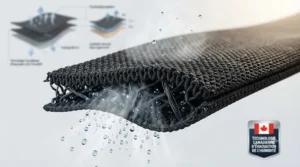
A base layer alone rarely handles a genuinely cold Canadian winter ride — this is where a proper mid-layer riding cold weather system comes in. The mid-layer sits between your thermal base layer and your outer jacket, adding a dedicated pocket of insulation, usually through a fleece, down, or synthetic-fill design, without the compression fit of the base layer itself. Think of the system in three parts: the base layer wicks sweat and traps a thin layer of warmth, the mid-layer adds bulk insulation you can add or remove as temperature swings, and the outer shell blocks wind and precipitation. On genuinely cold days — sustained temperatures below 0°C — pairing a lighter synthetic base layer like the Alpinestars Tech Top with a packable synthetic-fill mid-layer often outperforms a single thick fleece base layer worn alone, since you can shed the mid-layer at a rest stop if the day warms up. This layered approach mirrors general safety guidance from the Canada Safety Council, which points out that dressing in adjustable layers and avoiding overheating-then-cooling cycles consistently outperforms a single heavy garment for both comfort and safety.
Long-Term Cost & Maintenance: Washing, Durability, and ROI
Total cost of ownership tells a different story than sticker price alone. A TSLA thermal at under C$35 that needs replacing every single season works out to roughly the same annual cost as a Klim Aggressor 2.0 at C$150 that lasts four or five seasons — the math genuinely favours the premium piece for a daily winter rider, even though the upfront number looks scarier. Washing habits directly affect that lifespan: cold-water washes on a gentle cycle, air-drying instead of machine drying, and skipping fabric softener can meaningfully extend how long any synthetic base layer retains its stretch and wicking performance. Riders who rotate two base layers rather than wearing one daily also tend to report longer effective lifespans, simply because each piece spends less total time being stretched, washed, and worn. For occasional riders, the calculation flips — a cheaper piece replaced every season or two often makes more financial sense than tying up capital in a premium layer that sees limited use.
Safety, Regulations & Cold-Weather Riding in Canada
Cold-weather riding safety extends well beyond comfort — it touches directly on rider alertness and physical capability at the controls. Health Canada’s guidance on extreme cold points out that certain synthetic fabrics are specifically designed to move perspiration away from the body, which helps you stay dry and lowers cold-related risk — precisely the mechanical function a good base layer performs during a winter ride. Riders who get cold enough to shiver noticeably should treat that as a warning sign rather than pushing through it, since reduced dexterity and slowed reaction time both correlate with dropping core temperature — a genuinely dangerous combination at highway speed. Layer appropriately for the actual forecast rather than how the weather looks from your garage, since wind chill at riding speed is dramatically colder than the stated ambient temperature; a 5°C day can feel closer to freezing once you’re moving at 100 km/h. If you do get caught out and start feeling genuinely cold, pull over at the next safe opportunity rather than pressing on — creeping cold impairs judgment well before it becomes obviously dangerous.
FAQ
❓ What is the best fabric for a motorcycle base layer in winter?
❓ Can you wear a regular thermal base layer under a motorcycle jacket?
❓ How often should you wash a synthetic motorcycle base layer?
❓ Is fleece or thin synthetic better for a motorcycle base layer?
❓ Do cheap thermal base layers actually keep you warm on a motorcycle?
Conclusion
Choosing a synthetic thermal base layer for motorcycle riding really comes down to being honest with yourself about how you actually ride. An occasional weekend rider chasing shoulder-season sunshine doesn’t need the same gear as a year-round commuter grinding through a Canadian winter on two wheels — and thankfully, this list covers both ends of that spectrum honestly, from the budget-friendly TSLA and 32 Degrees Heat picks to the purpose-built Alpinestars Tech Top, REV’IT! Sky, and Klim Aggressor 2.0 for riders who treat cold-weather riding as a genuine part of their season rather than an obstacle to avoid. The Under Armour ColdGear Compression Mock and Milwaukee Performance Fleece-Lined Thermal sit comfortably in the middle, offering a practical balance of warmth, fit, and price for riders who fall somewhere between casual and committed. Whichever option you land on, remember that fit and fabric behaviour under your specific jacket matter just as much as the warmth rating on the product page — and a properly layered system, built from base layer outward, will always outperform a single garment trying to do every job at once.
✨ Ready to gear up before the temperature drops? Check current pricing on your top pick and get ahead of the cold snap.🧥
Recommended for You
- Merino Wool vs Synthetic Base Layer Motorcycle: 7 Picks for 2026
- Merino Wool Base Layer for Motorcycle Riding: 7 Picks (2026)
- Heated Insoles vs Heated Socks for Motorcycle Riding 2026
Disclaimer: This article contains affiliate links. As an Amazon Associate, I earn from qualifying purchases. If you purchase products through these links, we may earn a small commission at no additional cost to you.
✨ Found this helpful? Share it with your friends! 💬🤗
