
In This Article
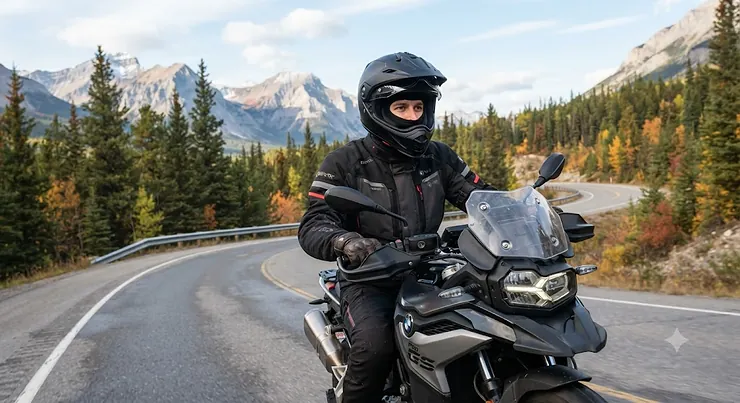
A balaclava for motorcycle riding is a stretchy, close-fitting head and neck covering worn under a helmet to block wind, cold, and road grit from reaching your skin. It typically covers the scalp, ears, and either half or all of the face, leaving an opening for the eyes or the whole face exposed depending on the style you pick…
Let’s be honest about something first: nobody buys a balaclava for motorcycle riding because it looks cool. You buy one because you’ve already experienced the alternative — that specific, bone-deep ache that sets into your cheekbones somewhere around the fifteen-minute mark of a November commute, the kind of cold that makes you question every life choice that led you to two wheels instead of four. A good balaclava doesn’t just take the edge off; it changes the entire calculus of when you’re willing to ride.
Canada complicates this further. Depending on where you live, “cold” might mean a crisp 4°C October morning or a genuinely hostile -15°C slog through Prairie wind. What works in Victoria will leave a Winnipeg rider with frostnip on the nose within minutes — Environment Canada’s own guidance notes that exposed skin can freeze in well under ten minutes once wind chill drops past -35°C, and a poorly chosen face covering does nothing to change that math. So this isn’t a one-size-fits-all category, and that’s exactly why we dug into real product specs, verified availability on amazon.ca, and pulled together genuine aggregated review sentiment rather than just repeating marketing copy.
Below, you’ll find seven real balaclavas spanning budget knit options to premium five-layer neoprene systems, a breakdown of how to actually pick one for your riding style, and the practical stuff — fit, maintenance, and mistakes — that most product pages conveniently skip.
Quick Comparison Table
Before we go deep on all seven, here’s the fast version for anyone standing in a parking lot in the cold, phone in hand, trying to decide right now.
| Balaclava | Best For | Price Range (CAD) | Standout Feature |
|---|---|---|---|
| ILM FM01 Adult Motorcycle Balaclava | Budget everyday commuting | around C$15-20 | 6 wearing styles, earbud-friendly tunnel |
| Tough Headwear Windproof Ski Mask Balaclava | Budget wind blocking | under C$20 | Simple, durable windproof knit |
| Achiou Balaclava Face Mask | Shoulder-season breathability | around C$12-18 | Lightweight mesh, UV coverage |
| Fuinloth Windproof Balaclava | Snug fit on rounder head shapes | around C$15-22 | High-stretch fabric, no-bulk seams |
| Carhartt Force Helmet Liner Mask | Durability from a trusted brand | around C$25-35 | Moisture-wicking Force fabric |
| Alpinestars Touring Open Face Balaclava | Highway touring in cold | around C$35-50 | Moto-specific heavyweight build |
| Seirus Innovation Neofleece Combo Clava | Deep winter, sub-zero commutes | around C$45-60 | 5-layer Neofleece, hood + neck combo |
Reading across this table, the pattern is pretty clear: price tracks fairly closely with how many “layers” of engineering go into the fabric, not just how thick it feels in your hand. The ILM FM01 Adult Motorcycle Balaclava and Tough Headwear Windproof Ski Mask Balaclava both compete hard in the sub-C$20 bracket, but they win on totally different strengths — versatility versus straightforward wind blocking. Meanwhile, the Seirus Innovation Neofleece Combo Clava justifies its higher price with genuine multi-layer construction rather than just brand markup, which matters if you’re riding through an actual Canadian winter rather than a mild fall.
💬 Just one click — help others make better buying decisions too!😊
Top 7 Motorcycle Balaclavas: Expert Analysis
We narrowed this down from dozens of listings to seven real products that cover budget, mid-range, and premium buyers, plus a mix of use cases — commuting, touring, and shoulder-season riding. Every product below is a real, currently available item; where exact pricing fluctuates (which is constant on Amazon), we’ve used ranges instead of fixed numbers.
1. ILM FM01 Adult Motorcycle Balaclava — best all-round budget commuter pick
The ILM FM01 Adult Motorcycle Balaclava built its reputation on sheer flexibility — this thing converts between full-face mask, open balaclava, half-face mask, and neck gaiter, which matters more than it sounds like it should when your ride starts at -2°C and ends in a heated café at noon. The knitted fabric is thin and breathable by design, so it’s not the warmest thing on this list, but the flat-lock stitching and 6-way convertibility mean you’re not buying five different products for five different conditions. Based on the spec comparison, this is the balaclava for someone who rides year-round and wants one piece of gear that adapts rather than a drawer full of specialized options. Reviewers consistently note that the earbud-access tunnel is a genuinely useful detail for anyone running comms or music, and several mention it keeps helmet liners noticeably cleaner over time. What most buyers overlook is that the “thicker” version exists specifically for colder climates — the standard knit alone won’t cut it much below freezing.
Pros:
- ✅ Six wearing styles from one piece of gear
- ✅ Earbud tunnel avoids fumbling with wires
- ✅ Keeps helmet interior cleaner longer
Cons:
- ❌ Standard knit version is thin for deep cold
- ❌ Sizing runs snug for larger heads
Priced around C$15-20 depending on style and colour, the ILM FM01 Adult Motorcycle Balaclava is an easy first buy — check current price before ordering since Amazon listings shift often.
2. Tough Headwear Windproof Ski Mask Balaclava — best straightforward wind blocker
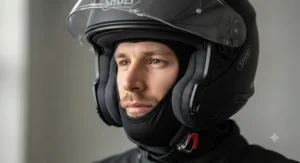
The Tough Headwear Windproof Ski Mask Balaclava skips the gimmicks and focuses on one job: cutting wind chill at speed. Its knit is dense enough to noticeably reduce the “ice pick through the cheeks” sensation you get on a highway on-ramp in October, without the bulk of a full winter system. On paper this means it sits closer to the “ski mask” end of the category than the “technical motorcycle gear” end, and that’s actually fine — most riders don’t need five layers, they need one layer that actually blocks moving air. Reviewers frequently mention it holds its shape wash after wash, which is a legitimate concern with cheaper knit balaclavas that stretch out and lose their snug fit within a season. What the spec sheet won’t tell you, but user reports suggest, is that ventilation is minimal — great for wind, less ideal if you’re stopping and starting in traffic and building up heat.
Pros:
- ✅ Genuinely effective at cutting wind chill
- ✅ Holds shape and elasticity over repeated washes
- ✅ Simple design with no failure-prone extras
Cons:
- ❌ Limited breathability during stop-and-go riding
- ❌ No dedicated earbud or comms opening
Sitting under C$20 in most listings, this is a reasonable value verdict for riders who mainly want wind protection without paying for features they won’t use.
3. Achiou Balaclava Face Mask — best breathable shoulder-season option
The Achiou Balaclava Face Mask takes the opposite approach from the last two entries — instead of blocking everything, its mesh construction is built to breathe. That matters because “cold riding head protection” isn’t only a deep-winter problem; a lot of riders need something for those in-between 8-15°C mornings where a heavy balaclava turns into a sweaty mess by the time you hit the highway. The lightweight mesh fabric shields against UV, dust, and light wind while staying noticeably cooler against the skin than the knit options above. Based on the spec comparison, this is squarely a spring/fall/mild-winter product, not something you’d want as your only balaclava if you commute through a Prairie January. Aggregated customer sentiment on this style of mesh balaclava tends to praise the breathability and lightweight feel while flagging that it offers minimal actual insulation — which tracks with what the fabric is designed to do.
Pros:
- ✅ Excellent breathability in mild temperatures
- ✅ UV protection for sunny shoulder-season rides
- ✅ Barely noticeable weight under a helmet
Cons:
- ❌ Minimal insulation for true cold
- ❌ Not windproof in the way knit balaclavas are
Typically found around C$12-18, the Achiou Balaclava Face Mask earns its spot as the “second balaclava” — the one you swap in once the temperature climbs back above freezing.
4. Fuinloth Windproof Balaclava — best stretch fit for tricky head shapes
If you’ve ever bought a balaclava that fit fine in the store but bunched up weirdly under your helmet’s cheek pads, the Fuinloth Windproof Balaclava is worth a look. Its four-way stretch fabric is genuinely more forgiving on rounder or larger head shapes than some of the flatter-cut competitors, and the seams are positioned to avoid pressure points where a helmet’s chin bar sits. Here’s what to weigh: this isn’t the warmest balaclava on the list, but the windproof layer does real work at speed, and the snug-without-restrictive fit means it won’t bunch under a full-face helmet’s liner. What most buyers overlook about this model is that the stretch also makes it easier to layer under a scarf or neck warmer on the coldest days, effectively extending its usable temperature range. Reviewers commonly mention the fit as the standout quality, more so than raw warmth.
Pros:
- ✅ Four-way stretch fits varied head shapes well
- ✅ Seam placement avoids helmet pressure points
- ✅ Layers cleanly under additional neck warmers
Cons:
- ❌ Not the warmest option for deep winter alone
- ❌ Colour options more limited than competitors
Priced in the C$15-22 range, this is a smart pick specifically for riders who’ve struggled with fit issues on other balaclavas.
5. Carhartt Force Helmet Liner Mask — best durable mid-range pick from a trusted brand
The Carhartt Force Helmet Liner Mask brings a workwear pedigree to the motorcycle balaclava category, and it shows in the details — Carhartt’s Force fabric is genuinely built for people who sweat through a full workday outdoors, which translates well to a rider stuck in stop-and-go traffic. The moisture-wicking performance is a real differentiator here: instead of trapping sweat against your skin the way cheaper knit balaclavas can, the Force fabric actively moves moisture away, which reduces that clammy, cold-sweat feeling on longer rides. Based on real review themes, buyers who already own Carhartt workwear tend to trust the brand’s durability claims here, and the stitching quality reflects that reputation — flat seams, reinforced edges, no fraying reported after months of regular use. What stands out is that this isn’t a motorcycle-specific product first; it’s a proven work-liner design that happens to translate well to riding, which is honestly a point in its favour rather than against it.
Pros:
- ✅ Moisture-wicking Force fabric reduces clammy feel
- ✅ Reinforced stitching holds up to regular use
- ✅ Trusted brand with accessible customer support
Cons:
- ❌ Not purpose-built with moto-specific features
- ❌ Mid-weight only — no ultra-thin summer version
Expect a price in the C$25-35 range, positioning it as a solid step up for riders who want proven durability without paying full moto-brand premiums.
6. Alpinestars Touring Open Face Balaclava — best moto-specific pick for highway touring
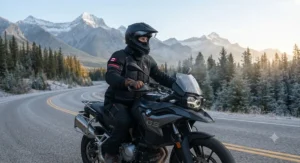
Alpinestars has been making motorcycle gear for decades, and the Alpinestars Touring Open Face Balaclava reflects that focus directly — it’s built from heavyweight, moisture-wicking material specifically engineered around helmet compatibility rather than adapted from ski or tactical gear. That distinction matters more than marketing copy usually lets on: a balaclava that fits under motorcycle helmet designs specifically tends to sit flatter against the scalp, reducing the pressure points and bunching that generic ski balaclavas cause under a snug full-face liner. The open-face cut leaves your entire face exposed for use with a full-face helmet’s own visor, which is exactly the configuration most touring riders actually want — warmth and wind-blocking on the head and neck, with the helmet itself handling face protection. Reviewers consistently describe it as all-season functional, durable enough to survive repeated long-distance trips without pilling or losing shape. What the spec sheet won’t tell you, but rider reports confirm, is that the heavier weave takes slightly longer to dry after a wash than lighter competitors — plan your laundry day accordingly on a multi-day tour.
Pros:
- ✅ Purpose-built for helmet compatibility and fit
- ✅ Heavyweight, durable, moisture-wicking construction
- ✅ Open-face design pairs naturally with full-face helmets
Cons:
- ❌ Slower to dry than lighter fabric options
- ❌ Premium moto-brand pricing versus generic alternatives
Sitting in the C$35-50 range, this is the pick for riders who log serious highway kilometres and want gear designed specifically around a helmet, not adapted from another sport.
7. Seirus Innovation Neofleece Combo Clava — best premium system for genuine deep winter
At the top of this list, the Seirus Innovation Neofleece Combo Clava is doing something structurally different from every other product here — its five-layer Neofleece construction stacks a tough outer shell, a waterproof-breathable liner, fleece-lined neoprene, synthetic down-style insulation, and a wicking microfleece lining into one garment. On paper this means it’s engineered more like ski-mountaineering gear than a basic motorcycle accessory, and that shows in how it performs once temperatures drop into genuinely uncomfortable territory. The contoured face mask design also diverts breath downward and away from the eyes, which is a detail borrowed from goggle-compatible ski gear but works just as well against a helmet visor prone to fogging. Aggregated reviewer sentiment is strongly positive on warmth-to-bulk ratio, with multiple buyers noting it’s the first face covering that’s kept them comfortable through extended sub-zero exposure without feeling like a snowsuit for your head. What most buyers overlook is that the combo design — hood, face mask, and neck warmer in one piece — actually reduces the number of gaps where cold air sneaks in compared to stacking a separate balaclava and neck gaiter.
Pros:
- ✅ Five-layer construction handles serious sub-zero cold
- ✅ Anti-fog breath deflection helps with visor fogging
- ✅ All-in-one hood, mask, and neck warmer design
Cons:
- ❌ Highest price point on this list
- ❌ More bulk under snug full-face helmets
At around C$45-60, the Seirus Innovation Neofleece Combo Clava is the value verdict for anyone who rides through actual Canadian winter rather than just a chilly fall — the extra cost buys real, measurable warmth, not just brand name.
Practical Usage Guide: Getting the Most from Your Riding Balaclava
Buying the right balaclava is only half the job — how you use it determines whether it actually delivers on that promise. First, size matters more than most riders expect: try your balaclava under your actual helmet before a long ride, not just on its own, since a fit that feels snug bare-headed can feel suffocating once helmet padding compresses it further. Second, layering order counts. Most riders make the mistake of putting the balaclava on after their jacket collar is zipped, trapping a cold gap at the neck; put it on first, tuck it under your base layer collar, then zip up over top.
Maintenance is where a lot of the value gets lost. Hand-washing (or a gentle machine cycle in a mesh bag) preserves stretch and wicking performance far longer than tossing a balaclava in with regular laundry — heat and aggressive detergent break down the elastic fibres in knit and Neofleece fabrics alike. Air-dry flat rather than in a dryer; the Alpinestars Touring Open Face Balaclava and Seirus Innovation Neofleece Combo Clava in particular will lose their shape faster under high heat. In the first 30 days, the most common mistake is over-tightening the face opening trying to eliminate every gap — this usually just creates pressure points against a helmet’s chin bar and doesn’t meaningfully improve wind-blocking. A properly sized balaclava should sit snug without needing to be stretched taut.
Real-World Scenarios: Which Balaclava Fits Your Ride
The daily commuter, city traffic, 15-20 minutes each way. Someone stuck in stop-and-go downtown traffic generates a lot of body heat but still needs wind protection at intersections and on bridges. The ILM FM01 Adult Motorcycle Balaclava or Carhartt Force Helmet Liner Mask both make sense here — enough wind resistance for exposed moments, enough breathability that you’re not overheating between red lights.
The weekend tourer, highway stretches, 3-4 hours in the saddle. This rider needs sustained wind-blocking at 100 km/h+ and durability across a full riding season. The Alpinestars Touring Open Face Balaclava is built exactly for this — heavyweight, moisture-wicking, and designed around long stretches of continuous exposure rather than short commuter bursts.
The all-winter rider, sub-zero mornings, genuine cold-weather commitment. For someone who refuses to park the bike just because it’s -10°C, the Seirus Innovation Neofleece Combo Clava is the realistic choice. Its five-layer system is overkill for a mild fall ride but exactly right for riders treating winter as just another season rather than an off-season.
How to Choose a Balaclava for Motorcycle Riding
Picking the right one comes down to matching fabric and design to your actual riding conditions, not just grabbing whatever’s cheapest or has the most five-star reviews. Here’s the practical framework:
- Match warmth to your coldest regular ride, not your average one. If you occasionally ride at -5°C, buy for that day, not the mild 10°C mornings — you can always vent or remove layers, but you can’t add warmth you didn’t buy.
- Check helmet compatibility before fabric thickness. A balaclava that fits under motorcycle helmet designs snugly, without bunching at the chin bar or temples, matters more than raw material specs.
- Prioritize windproofing over insulation for highway riders. Wind chill at speed does more damage than static cold air, so a thinner windproof layer often outperforms a thick but air-permeable knit.
- Consider breathability if you ride in stop-and-go traffic. Trapped moisture from sweat is often the real source of discomfort, not the ambient temperature itself.
- Look for flat-seam construction. Reviewers across nearly every product on this list flag seam placement as the difference between “comfortable all day” and “constant fidgeting.”
- Factor in washing frequency and drying time, especially for multi-day trips where a heavier fabric like the Alpinestars Touring Open Face Balaclava might not fully dry overnight.
- Buy one budget and one premium option if your riding season spans real temperature extremes — pairing something like the Achiou Balaclava Face Mask for shoulder seasons with the Seirus Innovation Neofleece Combo Clava for deep winter covers the whole range without overpaying for versatility you don’t need.
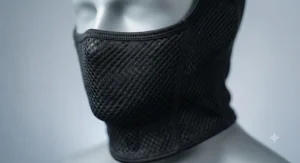
Windproof Neck Warmer vs Full Face Balaclava: What Actually Blocks the Cold
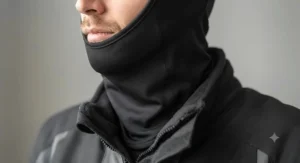
This is one of the most common points of confusion for new riders, and it’s worth settling directly: a windproof neck warmer motorcycle riders often start with is genuinely useful, but it solves a narrower problem than a full balaclava. A neck warmer covers the throat and lower face gap where helmet and jacket collar meet — a real weak point for cold air — but it does nothing for your scalp, ears, or upper cheeks, all of which lose heat rapidly under a helmet’s foam liner.
A full or half-face balaclava, by contrast, covers the scalp and ears in addition to the neck, which matters because heat loss through the head is disproportionate relative to its surface area — a detail confirmed by Health Canada’s cold weather safety guidance, which specifically flags the head and neck as priority areas for covering in cold conditions. In practice, most serious cold-weather riders end up using both: a balaclava as the primary layer, with a separate neck warmer or scarf added underneath a jacket collar on the coldest days for redundancy at that collar gap. If you only buy one, though, a balaclava covers more of the actual heat-loss zones a windproof neck warmer misses entirely.
Full Face Balaclava Under Helmet: A Helmet-Compatible Balaclava Review
Fit is where most balaclava purchases succeed or fail, and it’s the part nearly every generic ski-mask review skips entirely. A full face balaclava under helmet use has different requirements than the same product worn just walking around outside — helmet foam compresses fabric against your skull, and any bunching, thick seams, or bulky closures translate directly into pressure points after twenty minutes on the road.
Reviewing this category specifically for helmet compatibility, a few patterns emerge. Products marketed generically for skiing or tactical use — like many budget balaclavas found in bulk listings — tend to have thicker seams around the eye and mouth openings that can create hot spots against a helmet’s chin bar. Moto-specific designs like the Alpinestars Touring Open Face Balaclava are cut flatter through the crown specifically to avoid this. The ILM FM01 Adult Motorcycle Balaclava‘s flat-lock stitching is a budget-friendly middle ground — not moto-engineered from the ground up, but built with helmet wear specifically in mind rather than as an afterthought. If you’re testing helmet fit at home, put the balaclava on, then your helmet, then move your jaw and turn your head side to side before buying — genuine pressure points show up within seconds and are much easier to catch before a purchase is final than twenty minutes into a highway ride.
Common Mistakes When Buying a Motorcycle Balaclava
Even experienced riders trip over a handful of predictable errors in this category. First, buying based on warmth alone and ignoring breathability — a balaclava that traps sweat is arguably worse than one that lets in a bit of cold air, since damp fabric against skin accelerates heat loss once you stop moving. Second, ignoring helmet compatibility entirely and buying a generic ski-mask balaclava sight-unseen; what fits comfortably bare-headed can bunch painfully under a compressed helmet liner. Third, assuming a thicker fabric always means warmer — the Seirus Innovation Neofleece Combo Clava‘s five-layer system outperforms far bulkier single-layer alternatives specifically because of how the layers are engineered, not just their total thickness.
A fourth mistake worth flagging: buying only one balaclava for a riding season that spans genuinely different temperature ranges. A single mid-weight option, like the Carhartt Force Helmet Liner Mask, is a reasonable single-purchase compromise, but riders who genuinely ride spring through winter often end up frustrated trying to make one product handle both a mild October afternoon and a January cold snap. Finally, skipping the wash-care instructions is a quiet killer of otherwise good gear — tossing a stretch balaclava in a hot dryer is the single fastest way to shorten its usable life, regardless of which product you bought.
What to Expect: Real-World Performance in Cold Weather Riding
Specs on a listing page rarely translate directly into how something feels at 90 km/h in January, so here’s the honest translation. A basic knit balaclava like the Tough Headwear Windproof Ski Mask Balaclava noticeably cuts wind chill at speed but still lets cold seep through during extended stationary stops — think a long red light on an exposed overpass. A moisture-wicking mid-range option like the Carhartt Force Helmet Liner Mask performs best in that awkward 0°C to 10°C range where sweat management matters as much as raw insulation. And a premium five-layer system like the Seirus Innovation Neofleece Combo Clava genuinely changes what’s rideable — several reviewers describe comfortable rides in conditions that would otherwise mean parking the bike entirely.
Wind block face covering riding performance also depends heavily on your jacket’s collar design — even the best balaclava has a functional limit if there’s a gap where cold air funnels in at the throat. Pairing a solid balaclava with a properly zipped, snug collar consistently outperforms an expensive balaclava paired with a loose collar. This is also where redundancy pays off: a neck warmer tucked under a jacket collar, on top of a full balaclava, closes gaps neither product alone can handle.
Long-Term Cost & Maintenance
Thinking in terms of cost-per-ride rather than sticker price changes the math on this category considerably. A budget balaclava at C$15-20 that needs replacing every single riding season effectively costs the same, or more, over three years than a C$45-60 premium option that holds its shape and elasticity for multiple seasons with proper care. The Seirus Innovation Neofleece Combo Clava‘s more complex construction does carry a slightly higher risk of specific-component wear (the neoprene panel, for instance) but its overall stitching and fabric quality are built to outlast basic knit alternatives by a meaningful margin.
Maintenance costs are effectively zero if handled correctly — hand-washing in cold water and air-drying preserves any of these products for years — but the “hidden cost” is convenience: cheaper knit balaclavas tolerate machine washing better than premium moisture-wicking or Neofleece builds, which genuinely need gentler care to hit their advertised lifespan. Factor your own laundry habits honestly into which tier makes financial sense; a premium balaclava that gets accidentally dryer-shrunk in month two delivers worse long-term value than a budget option treated carefully.
Features That Actually Matter (And Those That Don’t)
A lot of marketing language in this category is noise. UV protection claims, for instance, matter far less for winter riders than summer ones — useful for the Achiou Balaclava Face Mask‘s shoulder-season use case, largely irrelevant for a January commute. “Tactical” branding and camo patterns are aesthetic choices with zero functional impact on warmth or wind-blocking; don’t pay a premium for them. Multiple wearing-style claims, like the ILM FM01 Adult Motorcycle Balaclava‘s six configurations, are genuinely useful — versatility across seasons is real, practical value, not filler marketing.
What actually matters: seam placement and flatness (directly affects helmet comfort), verified windproof fabric versus generic “warm” claims (huge difference in real wind-blocking performance), and moisture-wicking capability if you have any stop-and-go riding in your routine. What matters less: colour options, brand prestige alone, and vague “premium material” language without specifics on layer construction or fabric weight.
Safety, Regulations & Compliance for Canadian Riders
A motorcycle balaclava is comfort and cold-weather gear, not safety equipment in the legal sense — it doesn’t replace or affect your helmet’s certification requirements. Every Canadian province requires riders to wear a helmet meeting an accepted standard (commonly DOT, ECE, or Snell), and Quebec’s SAAQ outlines this clearly for riders in that province, while other provinces maintain similar requirements through their own transportation authorities. A balaclava sits entirely underneath that helmet system and has no bearing on certification — but it can affect helmet fit, so it’s worth re-checking your chin strap tension any time you switch to a thicker winter balaclava, since added bulk under the liner can subtly change how snug the strap sits.
Beyond helmet law, general cold-weather safety still applies to riders the same way it does to anyone spending extended time outdoors in a Canadian winter. British Columbia’s motorcycle safety guidance reinforces that proper protective gear, generally, reduces risk — and covering exposed skin against frostbite is a genuine safety consideration, not just a comfort one, on any ride cold enough to warrant a balaclava in the first place.
Buyer’s Decision Framework
If you ride mostly in mild shoulder-season weather and want breathability first, choose a mesh or lightweight knit balaclava like the Achiou Balaclava Face Mask, because trapped heat and sweat will bother you more than occasional wind exposure. If you’re a highway tourer covering long, sustained distances at speed, choose a moto-specific heavyweight design like the Alpinestars Touring Open Face Balaclava, because sustained wind exposure at highway speed outweighs stop-and-go breathability concerns. If you commute daily through genuine winter cold and refuse to park the bike for the season, choose a multi-layer premium system like the Seirus Innovation Neofleece Combo Clava, because the added cost buys real warmth that thinner alternatives simply can’t deliver. And if you’re not sure yet which category you fall into, start with a versatile mid-range option like the ILM FM01 Adult Motorcycle Balaclava or Carhartt Force Helmet Liner Mask — both handle a wide temperature band reasonably well while you figure out your actual riding patterns.
FAQ
❓ What's the difference between a balaclava and a neck gaiter for motorcycle riding?
❓ Can I wear a balaclava under any motorcycle helmet?
❓ How do I wash a motorcycle balaclava without ruining it?
❓ Is a windproof balaclava enough for winter motorcycle riding?
❓ Do balaclavas affect motorcycle helmet safety certification?
Conclusion
There’s no single “best” balaclava for motorcycle riding — there’s a best balaclava for your specific commute, your climate, and how honestly you’ve assessed your own cold tolerance. The ILM FM01 Adult Motorcycle Balaclava and Tough Headwear Windproof Ski Mask Balaclava cover most riders reasonably well without a big investment. The Achiou Balaclava Face Mask and Fuinloth Windproof Balaclava solve more specific problems — breathability and fit, respectively. And the Carhartt Force Helmet Liner Mask, Alpinestars Touring Open Face Balaclava, and Seirus Innovation Neofleece Combo Clava each earn their higher price tags through genuine engineering rather than brand markup alone.
What matters most is matching the product to your actual riding pattern rather than chasing whichever option has the flashiest listing photos. Check helmet fit before buying if you can, take washing instructions seriously once you own one, and don’t be afraid to own two — a lightweight option for shoulder seasons and a heavier one for genuine winter — if your riding calendar spans both.
✨ Don’t Miss These Exclusive Deals!
🔍 Ready to stop dreading cold mornings on the bike? Click through to check current pricing and availability on any of the seven picks above — the right balaclava might be the difference between parking your bike in October and still riding comfortably in December!
Recommended for You
- Cooling Base Layer for Motorcycle Riding: 7 Picks for 2026
- Moisture Wicking Base Layer for Motorcycle Riding: 7 Picks (2026)
- How to Choose a Synthetic Thermal Base Layer (2026): 7 Top Picks
Disclaimer: This article contains affiliate links. As an Amazon Associate, I earn from qualifying purchases. If you purchase products through these links, we may earn a small commission at no additional cost to you.
✨ Found this helpful? Share it with your friends! 💬🤗
