
In This Article
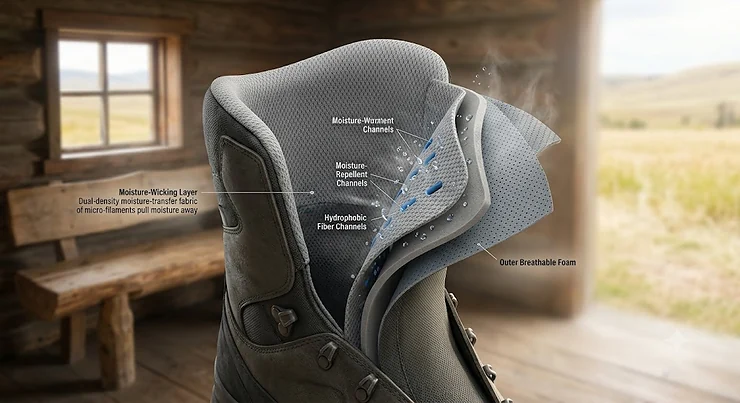
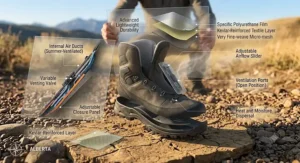
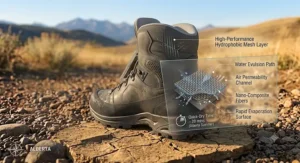
If you’ve ever pulled off your boots after a July afternoon in Medicine Hat or Lethbridge and watched steam practically rise off your socks, you already know the problem: most boots simply aren’t built for Prairie heat. Alberta’s summers swing from chilly mornings to 30°C-plus afternoons fast, and a boot that’s perfect for spring mud can turn into a sauna by August. Summer ventilated boots Alberta heat conditions demand is a specific combination: mesh panels that actually move air, a sole built for gravel and rough terrain, and enough structure to survive everything from backcountry trails to ranch chores.
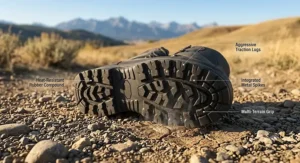
This guide breaks down seven boots that are genuinely available to Canadian shoppers, what their ventilation tech actually does for your feet (not just what the spec sheet claims), and which type suits hikers, off-roaders, and prairie workers differently. We’ll also flag where Canadian buyers run into real friction — pricing differences, availability gaps on Amazon.ca, and when a “ventilated” boot is actually the wrong call for your terrain.
Quick Comparison Table
| Boot | Best For | Ventilation Style | Approx. Price (CAD) | Amazon.ca Status |
|---|---|---|---|---|
| Merrell Moab Speed 2 | Backcountry hiking | Ripstop mesh upper | $150–$180 | Widely available |
| KEEN Targhee IV Vent | All-day trail comfort | No-membrane mesh shoe | $190–$220 | Available, check sizing |
| Salomon X Ultra 4 (non-GTX) | Rugged off-trail terrain | Engineered mesh + grip | $170–$210 | Available, confirm non-GTX listing |
| NORTIV 8 Ankle Hiking Boot | Budget hikers | Mesh-and-synthetic combo | $70–$95 | Widely available |
| Columbia Newton Ridge Plus II | Casual/everyday hiking | Mesh tongue, suede upper | $110–$140 | Widely available |
| Ariat WorkHog XT VentTEK | Ranch & farm work | Shaft mesh panels (VentTEK™) | $230–$270 | Limited; check Ariat.com |
| Royer Agility Airflow | CSA work sites | Airflow-engineered shaft | $260–$310 | Mostly via Canadian safety retailers |
A few things jump out here. The budget-to-premium spread runs from under $100 CAD to over $300 CAD, and the gap isn’t just brand markup — it tracks closely with whether the boot has a safety toe, Goodyear welt construction, or CSA certification. Notice, too, that the two work-boot options (Ariat and Royer) are harder to find directly on Amazon.ca; this is common for specialized safety footwear, which often sells through dedicated retailers instead. If your priority is pure hiking breathability, the Amazon.ca-friendly options dominate; if you need certified work footwear for a jobsite, you may end up buying direct from the manufacturer or a Canadian safety supplier.
💬 Just one click — help others make better buying decisions too! 😊
✨ Don’t Miss These Exclusive Deals!
🔍 Take your summer footwear game to the next level — click through to check current Amazon.ca pricing and availability on any boot below. Prices and stock shift often, so it pays to compare before you buy.
Top 7 Ventilated Boots for Alberta Heat: Expert Analysis
1. Merrell Moab Speed 2
The Moab Speed 2 swaps Merrell’s classic heavy Moab build for a ripstop mesh upper that breathes far better in dry heat. What that mesh actually does is let convective airflow escape with every step — useful on the Bow Valley’s exposed, sun-baked sections where a sealed boot just bakes your feet. The lightweight EVA midsole also means less fatigue on long approach hikes, which matters if you’re covering 15+ km before lunch.
Canadian reviewers and outdoor testers consistently note it runs true to size with a generous toe box, though a few mention the lugs aren’t as aggressive as a full mountaineering boot — fine for maintained trails, less ideal for scree fields.
✅ Lightweight and breathable for long days
✅ True-to-size fit, easy break-in
✅ Solid grip on dry, loose terrain
❌ Less ankle support than a traditional mid boot
❌ No waterproofing — bad pick for spring slush
Best for: Day hikers and backcountry explorers who prioritize speed and airflow over heavy-duty protection. At around $150–$180 CAD, it’s a strong mid-range value if your trips stay mostly dry.
2. KEEN Targhee IV Vent
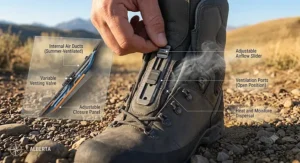
KEEN dropped the waterproof membrane entirely on the Vent version of the Targhee, and that’s the whole point — without a membrane trapping moisture, your foot dries faster and stays noticeably cooler on hot afternoon climbs. The brand’s roomy toe box is either a major comfort win or a minor annoyance depending on your foot shape, so trying these on (or checking a half-size down per several reviewer notes) matters more than usual.
What most buyers overlook: the Targhee Vent’s mesh paneling is most effective on dry singletrack, but in Alberta’s sudden afternoon thunderstorms, you’ll feel that lack of waterproofing fast. Pack a backup pair of socks if you’re heading into the foothills in July.
✅ No membrane means genuinely better airflow
✅ Comfortable straight out of the box
✅ Reliable traction on rocky terrain
❌ Toe box runs large for narrow feet
❌ Not suited to wet conditions
Best for: Hikers who do most of their walking on dry, established trails and want all-day comfort. Expect to pay $190–$220 CAD.
3. Salomon X Ultra 4 (non-Gore-Tex version)
This is where reading the listing carefully really matters. Salomon’s X Ultra line ships in both a Gore-Tex (waterproof, warmer) and a non-membrane version (cooler, less weather protection) — for Alberta heat, you want the latter specifically. The engineered mesh panels combined with Salomon’s Contagrip outsole give you genuine off-trail capability, which is the difference between a casual day-hike shoe and something that can handle the rougher ground found heading into the foothills or Canadian Shield-adjacent terrain in northeastern Alberta.
In practice, this is the boot for people who want hiking-shoe breathability without sacrificing the aggressive grip needed for loose rock and scrambling.
✅ Best-in-class traction for rugged terrain
✅ Precise, locked-in fit
✅ Genuinely vented when you buy the right version
❌ Easy to accidentally order the GTX (waterproof) version by mistake
❌ Narrower fit than Merrell or KEEN
Best for: Off-trail explorers and backcountry users who need serious grip alongside breathability. Price runs $170–$210 CAD — always double-check the listing specifies non-Gore-Tex.
4. NORTIV 8 Ankle High Hiking Boot
The budget pick, and a genuinely defensible one. NORTIV 8’s mesh-and-synthetic build won’t outlast a $250 leather boot, but for someone testing whether ventilated boots are even worth it, this removes the financial barrier. Reviewers across multiple outdoor gear sites report 900–1,000 km of use before wear becomes noticeable — reasonable for the price tier.
The honest trade-off: it runs warmer than the premium mesh boots above once you add a waterproof-treated layer, so it’s a better fit for moderate heat than the scorching 35°C-plus days Alberta sees during a true heat dome.
✅ Lowest price point in this list
✅ No break-in period required
✅ Decent durability for the cost
❌ Less breathable than premium mesh options
❌ Runs slightly large — order accordingly
Best for: Budget-conscious hikers and casual trail users. Typically $70–$95 CAD, often discounted further on Amazon.ca.
5. Columbia Newton Ridge Plus II Waterproof
This one’s popular for a reason — it’s the safe, no-surprises default for casual hikers, with a mesh tongue for some airflow and Columbia’s OMNI-TECH waterproofing. The catch, and it’s a real one: several reviewers specifically note overheating even in moderate temperatures, because the waterproof membrane is doing more work than the limited mesh paneling can offset.
For Alberta buyers, this means treating it as a three-season boot rather than a dedicated summer-heat solution — great for shoulder-season hikes around Kananaskis, less ideal for a mid-July trek in direct sun.
✅ Reliable waterproofing for unpredictable weather
✅ Comfortable, low break-in period
✅ Strong reputation and wide size availability
❌ Limited ventilation compared to mesh-first designs
❌ Can run hot in sustained high heat
Best for: Hikers who want one boot to cover spring, summer, and fall rather than maximum summer breathability. Around $110–$140 CAD.
6. Ariat WorkHog XT VentTEK
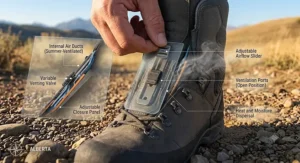
Now we shift from hiking to work boots — and this is the one built specifically for prairie conditions: farm and ranch work, fencing, calving season, long shifts in dry heat. Ariat’s VentTEK™ mesh panels sit in the shaft’s high-heat zones, which is a meaningfully different engineering approach than a mesh hiking shoe — it’s designed for someone standing or walking for 10–12 hour shifts in direct sun, not someone covering technical trail miles.
What the spec sheet won’t tell you: the difference between this and a sealed leather work boot is most noticeable by mid-afternoon, not first thing in the morning — that’s when heat buildup in a non-vented boot really compounds. For ranchers and acreage owners across southern and central Alberta, that’s exactly the window that matters most.
✅ Purpose-built for sustained outdoor work heat
✅ Durable full-grain leather construction
✅ Goodyear welt construction extends boot life
❌ Premium price point
❌ Limited stock through Amazon.ca — often easier via Ariat.com directly
Best for: Farm, ranch, and outdoor trade workers dealing with long days in the heat. Expect $230–$270 CAD.
7. Royer Agility Airflow
The lone Canadian-made entry on this list, and worth including even though it’s harder to find on Amazon.ca specifically. Royer manufactures in Quebec, and the Agility Airflow line is CSA-approved — meaning it meets the Canadian Standards Association’s protective footwear requirements, which matters if you need certified safety footwear for a regulated jobsite (construction, oil and gas, utilities) rather than casual wear.
The honest caveat here: most listings for Royer boots come through dedicated Canadian safety retailers rather than Amazon.ca, so if you specifically want this brand, budget extra time to source it or check the Royer site directly.
✅ CSA-certified protection for jobsite use
✅ Made in Canada, designed for Canadian work conditions
✅ Airflow-specific shaft design reduces heat buildup
❌ Limited Amazon.ca availability — often direct-from-retailer only
❌ Higher price tier than non-certified work boots
Best for: Tradespeople who need certified safety footwear, not just casual ventilation. Pricing runs $260–$310 CAD depending on retailer.
Buying Framework: How to Choose Ventilated Boots for Alberta’s Heat
- Identify your terrain first, not your budget. Backcountry hikers need grip-focused mesh boots (Salomon, Merrell); ranch and trade workers need shaft-ventilated work boots (Ariat, Royer). These categories aren’t interchangeable.
- Decide if you actually need waterproofing. Every waterproof membrane reduces breathability — if your trips are mostly dry-season day hikes, skip it entirely.
- Check the specific model variant, not just the brand. As the Salomon example shows, the same boot line often ships in both vented and waterproof versions under similar names.
- Confirm CSA certification if it’s for work. Jobsite footwear in regulated industries often legally requires certified protective boots — ventilation alone doesn’t meet that bar.
- Size up slightly for all-day wear. Heat causes feet to swell; several reviewers across nearly every model here mention sizing up half a size for long days.
- Verify Amazon.ca stock before committing to a model, especially for the work-boot picks — specialty brands sell through different channels than mainstream hiking footwear.
Common Mistakes When Buying Summer Boots in Canada
A surprising number of returns happen because buyers grab the waterproof version of a boot when they meant to buy the vented one — model names are often nearly identical. Another frequent miss: assuming “breathable” mesh panels alone solve overheating, when the bigger factor is often sock choice (cotton traps moisture; merino or synthetic wicks it away). Buyers also tend to underestimate how differently a boot performs in the dry heat of southern Alberta versus the more humid stretches further east — a boot rated for “hot weather” in a U.S. desert review may behave differently in Prairie conditions with sudden afternoon humidity spikes. Finally, don’t ignore warranty terms: cross-border purchases on Amazon.com instead of Amazon.ca can complicate returns and voided warranties for Canadian buyers.
Real-World Scenarios: Matching Boots to Alberta Buyers
The Calgary weekend trail hiker: Someone doing 10–15 km day hikes around Kananaskis or the foothills most weekends wants the Merrell Moab Speed 2 or Salomon X Ultra 4 — enough grip for mixed terrain, light enough to not cause fatigue, and genuinely vented for July and August trips.
The Lethbridge or Medicine Hat rancher: Long days outdoors managing livestock or fencing in consistently hotter, drier southern Alberta heat call for the Ariat WorkHog XT VentTEK — durability and shaft ventilation matter more than trail grip here.
The budget-first new hiker: Someone testing whether they’ll actually use ventilated boots regularly should start with the NORTIV 8 — low financial risk, decent performance, and an easy upgrade path later.
The regulated jobsite worker: Anyone required to wear CSA-certified footwear on an oil and gas, construction, or utilities site in Alberta needs the Royer Agility Airflow or an equivalent certified option — ventilation features can’t substitute for required certification.
Ventilated Boots vs. Waterproof Boots: Which Wins in Alberta Summers?
| Feature | Ventilated Boots | Waterproof Boots |
|---|---|---|
| Best for | Hot, dry trail/work days | Spring mud, stream crossings |
| Heat performance | Strong | Runs noticeably warmer |
| Wet-weather performance | Poor | Strong |
| Typical lifespan | Comparable | Comparable |
| Best Alberta season | June–August | April–May, September–October |
The pattern across virtually every product review cited above is consistent: waterproofing and breathability are a direct trade-off, not two boxes a single boot can fully check. For Alberta’s distinct seasons — wet, cool springs followed by hot, dry summers — many serious hikers in this province end up owning one pair of each rather than expecting one boot to do both jobs well.
Canadian Climate Realities and What They Mean for Your Boots
Alberta’s summer heat isn’t a minor inconvenience — it’s become a genuine public health consideration. Environment Canada data reported by CBC News shows that recent summers have produced multiple consecutive days above 30°C in Edmonton, a pattern meteorologists describe as historically unusual for the region, with similar record-breaking heat events affecting much of the province in back-to-back years. That’s exactly the kind of sustained heat where boot ventilation stops being a comfort feature and starts affecting whether you can safely stay outdoors for a full workday or hiking trip.
The Government of Canada’s extreme heat guidance and the Canadian Centre for Occupational Health and Safety both note that heat stress risk climbs with prolonged outdoor exposure — which is precisely the scenario ranch workers, trail crews, and all-day hikers face. The Canadian Red Cross’s heat wave preparedness guidance also recommends lightweight, breathable gear generally as part of staying safe during extreme heat — footwear included, even though boots rarely get top billing in heat-safety advice.
For work footwear specifically, look for the CSA (Canadian Standards Association) certification mark if your job requires protective footwear — ventilation features don’t replace that requirement on a regulated worksite.
Frequently Asked Questions
❓ Are ventilated boots good for Alberta's dry summer heat?
❓ Can I wear ventilated boots in the rain?
❓ Do ventilated boots work for ranch or farm use in Alberta?
❓ Are these boots available on Amazon.ca, or only Amazon.com?
❓ How much more do ventilated boots typically cost in Canada vs. the US?
Conclusion
There’s no single “best” ventilated boot for Alberta’s summer heat — there’s a best boot for your specific situation. Trail hikers covering technical backcountry ground want the grip-and-airflow balance of the Salomon X Ultra 4 or Merrell Moab Speed 2. Budget-conscious or first-time buyers can reasonably start with the NORTIV 8. Ranch and farm workers dealing with long, hot prairie days need the shaft ventilation built into the Ariat WorkHog XT VentTEK, and anyone needing certified jobsite protection should look at Royer’s Canadian-made, CSA-approved Agility Airflow line.
What matters most is matching the boot’s actual design intent — hiking mesh vs. work-shaft ventilation — to how you’ll really use it, and double-checking you’re ordering the non-waterproof variant if breathability is your priority. Alberta’s heat isn’t going anywhere this summer, but the right boots make it a lot more bearable.
Recommended for You
- Best 7 Motorcycle Boots Ice Grip Sole for Canada (2026)
- Best Motorcycle Boots for Wide Feet 2026: Top 7 Picks for Canada
- Motorcycle Boot Fit Guide: 7 Picks to Stop Heel Slip (Canada 2026)
Disclaimer: This article contains affiliate links. As an Amazon Associate, I earn from qualifying purchases. If you purchase products through these links, we may earn a small commission at no additional cost to you.
Found this helpful? Share it with your friends! 💬🤗
