
In This Article
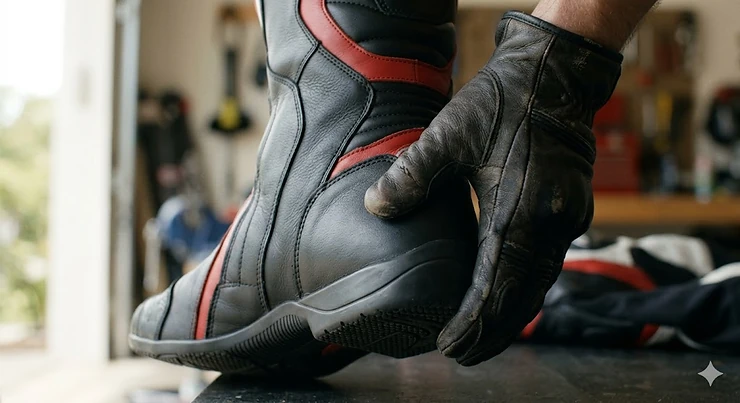
Heel slip is the silent boot-killer. You try on a pair, walk around the shop, and they feel fine — then twenty minutes into a ride through Ontario backroads or a Calgary commute, your heel is sliding up and down with every gear shift. That gap between your heel and the boot’s heel cup is the motorcycle boot fit guide heel slip problem riders complain about most, and it’s almost always fixable without buying a whole new pair.
What is heel slip? It happens when there’s too much vertical space at the back of a boot, letting your heel lift each time you walk or work the foot controls. Left alone, it causes blisters, unstable shifting, and boots that wear out unevenly at the heel counter.
🇨🇦 For Canadian riders, this matters even more. Thick winter socks, seasonal swelling, and long highway days between Halifax and Vancouver all change how a boot fits hour to hour. Below, we break down real heel-slip fixes, a size-conversion chart, and seven boots actually available on Amazon.ca — from budget commuter shoes to premium track-ready leather.
Quick Comparison Table
| Boot | Best For | Price Range (CAD) | Heel-Lock Feature |
|---|---|---|---|
| Alpinestars SMX-6 V3 | Sport riders, narrow heels | $250–$350 | Internal heel/ankle brace |
| TCX Fuel Waterproof | All-season touring | $350–$450 | Stitched heel counter + lace lock |
| Fly Racing Milepost | Wide feet, commuters | $200–$280 | Gusseted top, snug heel cup |
| Joe Rocket Sonic R | Budget touring | $180–$260 | Articulated heel reinforcement |
Looking at the table, the Alpinestars suits narrow-heeled riders who need precision more than bulk, while the TCX and Fly Racing options trade a bit of that snugness for wider-foot comfort and weatherproofing. Riders who tend to slip out of “true to size” boots should lean toward models with stitched or moulded heel counters rather than soft leather alone, since stiffer heel cups resist stretching out over a Canadian riding season.
💬 Just one click — help others make better buying decisions too!😊
✨ Don’t Miss These Exclusive Deals!
🔍 Take your fit search to the next level — click any highlighted boot above to check current pricing and availability on Amazon.ca.
Top 7 Motorcycle Boots: Expert Analysis
1. Alpinestars SMX-6 V3
The standout here is the rigid internal ankle brace paired with a snug heel pocket — a combination most riders don’t realize is the actual fix for heel lift, not just lacing harder. The CE-certified shell (tested to the EN 13634 motorcycle footwear standard) means impact protection is verified, not marketing copy, and the replaceable toe slider keeps long-term costs down for sport riders who drag a foot in corners occasionally.
What most Canadian buyers overlook about this model is that the narrow heel cup, which feels great for slim feet, can feel tight if you ride in thick merino socks through an Alberta winter — size up half if that’s your routine. Reviewers consistently note it runs true to European sizing and holds the heel firmly even after the leather softens.
✅ Pros: locked-in heel fit · CE-certified protection · replaceable toe slider
❌ Cons: narrow last not ideal for wide feet · pricier than commuter boots
Price range: around $250–$350 CAD. For the heel-slip-specific buyer, this is the strongest fix on the list if your foot is average-to-narrow.
2. TCX Fuel Waterproof
This boot’s stitched, structured heel counter is the real story — it’s built like a hiking boot’s heel cup rather than a soft leather moto boot, so it resists the “breaking in too loose” problem that causes slip after a few months of wear. The Ortholite footbed adds long-term cushioning, which matters on multi-day touring routes where your feet swell by afternoon.
In my experience, this is the boot to recommend for someone commuting through Toronto rain or a Maritime drizzle, since the waterproof membrane keeps the heel area dry — wet socks are a major hidden cause of heel slip because damp leather stretches faster.
✅ Pros: durable heel structure · genuinely waterproof · all-season versatility
❌ Cons: heavier than sport boots · break-in period needed before long rides
Price range: $350–$450 CAD on Amazon.ca, often the highest-rated touring option in this lineup.
3. Fly Racing Milepost
The Milepost’s gusseted top and softer leather make it the easiest boot here to break in fast, which matters if you’ve got a deadline before your first big ride of the season. The removable insole lets wide-footed Canadian riders swap in a thicker aftermarket footbed without buying a half-size up just to fit the forefoot, which otherwise creates extra heel-room and slip.
For a family garage with a commuter and a weekend rider sharing gear closets across Calgary or Ottawa, this is the boot most people land on by accident and then keep buying — it’s genuinely the brand’s best-selling street boot for a reason.
✅ Pros: easy break-in · removable insole · solid value
❌ Cons: less ankle rigidity than sport boots · reflective panel placement could be brighter
Price range: roughly $200–$280 CAD.
4. Joe Rocket Sonic R
The internal reinforcement at the shin, ankle, and heel does double duty: it limits the kind of internal boot movement that causes slip, while the DryTech membrane keeps moisture (and the swelling it causes) out. What the spec sheet won’t tell you is that this is one of the few boots in this price bracket with a genuinely articulated ankle, so the leather doesn’t crease and loosen at the back the way cheaper boots do after a season.
This is the boot I’d point a new rider toward if their budget caps around $250 CAD but they still want touring-grade waterproofing for unpredictable Canadian spring weather.
✅ Pros: budget-friendly waterproofing · articulated ankle · reinforced heel
❌ Cons: sizing runs slightly large · less premium leather feel
Price range: $180–$260 CAD.
5. TCX Street 3 WP Shoes
This is the short-boot option for commuters who don’t want full-height touring boots. The stitching sole construction keeps the heel area firm rather than spongy, and the shorter shaft means less material to stretch out over time — one reason short boots often resist heel slip better than tall ones for narrow ankles.
What most buyers overlook: a short boot can’t offer the shin protection a full boot does, so this is a city/commuter pick, not a highway-touring one. Riders in dense urban centres like Vancouver or Montréal, where stop-and-go riding dominates, get the most value here.
✅ Pros: lightweight and easy to walk in · firm heel structure · affordable
❌ Cons: limited shin coverage · not ideal for long highway days
Price range: $95–$160 CAD, the most budget-friendly TCX option available.
6. KEMIMOTO Motorcycle Shoes with Thick Heel Protection
The thickened heel PVC layer is exactly what it sounds like — a denser block at the back of the boot that resists compressing and developing the gap that causes slip. The high-rebound EVA insole is a smart pairing, since it cushions the heel strike without adding the kind of soft foam that flattens out within weeks.
In my experience, budget boots in this category often skip heel reinforcement entirely to save cost, so this model’s CE-style protective inserts at the ankle stand out for the price. It’s a reasonable starter boot for someone testing whether they’ll ride enough to justify a premium pair later.
✅ Pros: reinforced heel at a low price · YKK zippers · reflective strips for visibility
❌ Cons: synthetic materials feel less premium · break-in period can be stiff
Price range: $60–$110 CAD.
7. RIDEIRON CE Certified Motorcycle Shoes
This one earns its spot for the CE certification at an entry price point — independent certification on protective footwear is rare this far down the price ladder. The anti-slip sole and ankle support combine to keep the boot stable, though the heel cup is softer than the leather options above, meaning slip is more likely if you don’t size carefully.
For a Canadian buyer specifically chasing this article’s main concern, I’d pair this boot with a thicker moto sock from day one rather than waiting to see if it loosens — the synthetic upper breaks in fast and a snug start matters more here than with stiffer leather boots.
✅ Pros: certified protection on a budget · breathable mesh panels · lightweight
❌ Cons: softer heel cup needs sock management · less durable long-term
Price range: $55–$95 CAD, typically Prime-eligible.
Top 7 Products Comparison Table
| Boot | Type | Price (CAD) | Best Use Case |
|---|---|---|---|
| Alpinestars SMX-6 V3 | Sport/Race | $250–$350 | Narrow-heel sport riders |
| TCX Fuel Waterproof | Touring | $350–$450 | All-season, all-day rides |
| Fly Racing Milepost | Touring | $200–$280 | Wide feet, mixed use |
| Joe Rocket Sonic R | Touring | $180–$260 | Budget all-weather |
| TCX Street 3 WP | Commuter | $95–$160 | Short urban rides |
| KEMIMOTO Thick Heel | Commuter | $60–$110 | First-time buyers |
| RIDEIRON CE Certified | Commuter | $55–$95 | Tightest budget |
Stacked side by side, the gap between commuter shoes and full touring boots in heel-slip resistance comes down almost entirely to heel-cup construction, not price alone — TCX’s stitched counter shows up in both their $450 and $150 product, while the certification-but-soft-heel RIDEIRON shows that CE-certified doesn’t automatically mean slip-proof. If heel lock is your top priority, prioritize stitched or moulded heel counters over price tier.
Buyer’s Decision Framework: Solving Heel Slip Before You Buy
If you’re shopping specifically to fix heel slip, work through this checklist before adding anything to your Amazon.ca cart:
- If your current boots slip only with thin socks — switch to a dedicated moto sock first; this solves the majority of reported slip cases without buying new boots at all.
- If you have a narrow heel and average-width forefoot — choose boots with an internal ankle brace, like the Alpinestars SMX-6 V3, rather than soft leather alone.
- If you have a wide forefoot but normal heel — go up in width, not length, and look for removable insoles (Fly Racing Milepost) so you can fine-tune volume without changing heel fit.
- If you ride year-round in Canada — prioritize waterproof membranes; wet leather stretches and loosens heel cups faster than dry leather.
- If you’re budget-limited — accept that you may need an aftermarket heel insert or thicker sock alongside a cheaper boot rather than expecting the boot alone to lock your heel.
How to Choose a Motorcycle Boot in Canada (Step-by-Step)
- Measure both feet in the evening, when swelling is at its daily peak — most riders are between half a size and a full size larger by 6 p.m.
- Check the brand’s specific size chart, since European sizing (common on Alpinestars, TCX, and Sidi) doesn’t map perfectly to Canadian shoe sizes; a 10 US foot can land anywhere from EUR 43 to 45 depending on the last.
- Walk in the boot before buying, paying attention to whether your heel lifts with each step — that lift is the single best predictor of on-bike heel slip.
- Match the boot to your sock thickness, since trying boots on with thin dress socks when you’ll ride in thick winter socks is the most common Canadian sizing mistake.
- Confirm Amazon.ca availability and return policy before ordering, since exchanging a boot that doesn’t fit is far easier than living with a slipping heel for a season.
Motorcycle Boot Size vs. Shoe Size Conversion (Reference Chart)
| US Men’s Shoe | EUR Boot Size | Approx. Foot Length (cm) |
|---|---|---|
| 8 | 41–42 | 25.5 |
| 9 | 42–43 | 26.5 |
| 10 | 43–44 | 27.5 |
| 11 | 44–45 | 28.5 |
| 12 | 45–46 | 29.5 |
This chart is a starting point, not gospel — brand-specific lasts vary enough that the same EUR size can fit differently between an Italian brand like Alpinestars and an Italian-designed but globally produced brand like TCX. Always check each product’s individual size chart on Amazon.ca before ordering, and size up half a step if you’re between sizes and plan to ride in thicker socks.
Practical Usage Guide: Breaking In Boots Faster Without Wrecking the Heel Fit
A poor break-in process is one of the most common causes of new heel slip, since aggressive stretching loosens exactly the area you want to stay snug.
- Wear them around the house first. Thirty minutes a day for a week conditions the leather gradually instead of forcing it.
- Use a leather conditioner sparingly on the upper, but avoid the heel counter itself if it’s a stiffer composite — softening that area on purpose works against you.
- Walk on varied surfaces, not just flat floors, since stairs and uneven ground flex the boot the way actual riding does.
- Avoid the “wear them wet” trick some forums suggest for faster break-in; it can overstretch the heel pocket permanently.
- Re-check heel fit weekly for the first month — if slip reappears after it seemed solved, an aftermarket heel grip insert (sold separately on Amazon.ca) is a cheap fix before assuming the boot is wrong for you.
🇨🇦 Canadian climate note: boots that sit in a cold garage all winter can stiffen and temporarily feel tighter at the heel; let them warm to room temperature before judging fit on a cold morning.
Real-World Scenario: Three Canadian Riders, Three Fits
The Toronto condo commuter rides 15 km each way through stop-and-go traffic. A short boot like the TCX Street 3 WP suits this rider best — less material to break down, easy to walk in at the office, and the firm heel structure holds up under constant on/off use.
The Calgary weekend tourer does 300+ km highway loops into the foothills. The TCX Fuel Waterproof earns its higher price here: the stitched heel counter and waterproof membrane matter most on long days where foot swelling and surprise rain are both likely.
The Halifax first-time rider has a tight budget and isn’t sure how much they’ll actually ride this season. The KEMIMOTO Thick Heel model lets them test the waters without overspending, while still getting genuine heel reinforcement instead of a plain sneaker-style boot.
Common Mistakes When Buying Motorcycle Boots
- Buying your street shoe size instead of checking the brand’s own chart — European motorcycle brands routinely run a half size different from casual North American footwear.
- Ignoring sock thickness during fitting, then being surprised when winter boots feel loose in summer or tight in January.
- Assuming “broken in” boots will fix a heel gap — stretching helps the forefoot, but a heel cup that’s structurally too large will not tighten with wear.
- Skipping the walk-test in-store or before riding, especially when buying online; check the seller’s return window on Amazon.ca before committing.
- Overlooking warranty and service availability in Canada — some niche imported brands have limited Canadian service centres, which matters if a zipper or sole needs warranty repair.
Motorcycle Boots vs. Regular Sneakers: Benefits Comparison
| Feature | Motorcycle Boots | Regular Sneakers |
|---|---|---|
| Heel lock / ankle support | Reinforced heel cup, often CE-tested | Minimal to none |
| Shift/toe protection | TPU or rubber shift pad | None |
| Weather resistance | Often waterproof membranes | Rarely waterproof |
| Best For | Any regular riding | Short, dry, low-speed errands only |
The comparison makes the case plainly: sneakers offer essentially no defence against heel lift, ankle injury, or hot exhaust contact, which is why even budget-tier options like the RIDEIRON or KEMIMOTO outperform daily sneakers for actual riding. If cost is the only thing keeping you in sneakers, the $55–$110 CAD entry-level boots above close that gap without a major financial leap.
Long-Term Cost & Maintenance in Canada
Leather boots like the Alpinestars and TCX models need conditioning two to three times per riding season to prevent the heel and ankle leather from drying out and cracking — dried leather loses its snug structure and contributes to fresh heel slip even on previously well-fitting boots. Budget synthetic boots need less conditioning but typically show wear at the heel seam sooner, often within 18–24 months of regular commuting.
Factor in Canadian winters: road salt accelerates leather drying and synthetic cracking alike, so a quick wipe-down after salted-road rides extends the life of any boot on this list. Replacement insoles (widely sold on Amazon.ca) are a low-cost way to extend a boot’s useful life by another season once the factory footbed compresses.
Canadian Regulations & Safety Context
Helmet standards are tightly regulated province by province, but motorcycle boots themselves aren’t subject to a Canada-specific certification the way helmets are — most riders here rely on the European CE EN 13634 standard as the practical benchmark for protective footwear, since Canada doesn’t publish its own equivalent. Provincial guidance, like Alberta’s motorcycle safety page, names specific helmet certification marks riders should look for, and British Columbia’s road safety resources note that a proper outer shell and crushable liner are what helmets are tested against — useful context for understanding how formal gear testing works in Canada generally. For broader background on protective riding gear, Transport Canada maintains its safety standards documentation for vehicles online, and the Wikipedia entry on motorcycle safety offers a useful primer on how gear fits into overall rider protection.
FAQ
❓ What causes heel slip in motorcycle boots?
❓ Can I fix heel slip without buying new boots?
❓ Do motorcycle boots ship free to remote parts of Canada?
❓ How long should I break in new motorcycle boots before a long ride?
❓ Are CE-certified boots required by law in Canada?
Conclusion
Heel slip is rarely about a single bad boot — it’s usually a mismatch between heel-cup construction, sock thickness, and how the leather has broken in. Whether you land on the precision fit of the Alpinestars SMX-6 V3, the all-weather reliability of the TCX Fuel Waterproof, or a budget-friendly starter like the KEMIMOTO Thick Heel model, the fix usually comes down to matching the boot’s heel structure to your actual foot shape and riding conditions, not just chasing a bigger brand name. Measure carefully, check each brand’s own size chart, and don’t be afraid to size up half a step if you ride in thicker socks through a Canadian winter.
✨ Don’t Miss These Exclusive Deals!
🔍 Ready to stop heel slip for good? Click any highlighted boot above to check current pricing and availability on Amazon.ca — these picks are built to help you ride more comfortably all season.
Recommended for You
- Motorcycle Boots Buying Guide: 7 Best Picks for Canada 2026
- TCX Boots Canada Warranty: 7 Best Picks & What’s Covered (2026)
- Best Alpinestars Gore-Tex Boots in Canada 2026: 7 Top Picks Reviewed
Disclaimer: This article contains affiliate links. As an Amazon Associate, I earn from qualifying purchases. If you purchase products through these links, we may earn a small commission at no additional cost to you.
✨ Found this helpful? Share it with your friends! 💬🤗
