
In This Article
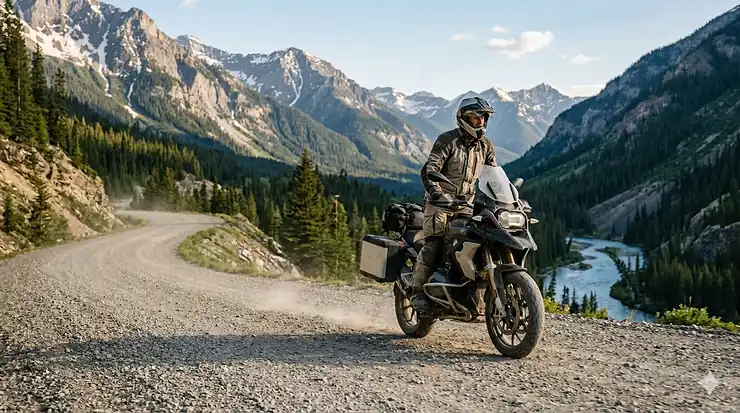
Picture this: you’re 80 kilometres into the Trans-Labrador Highway, your BMW GS loaded with gear, when suddenly the packed gravel transitions to loose washboard. You plant your left foot mid-corner, and that split-second of grip—or lack thereof—determines whether you ride through or pick up 250 kilograms of motorcycle off your ankle.
If you’re exploring Canada’s vast network of unpaved roads—from British Columbia’s Duffey Lake Road to Ontario’s Elephant Lake Trail to Quebec’s Route 389—your choice in dual sport boots gravel roads becomes more than just gear. It’s your insurance policy. The wrong boots transform a manageable slide into a twisted ankle, a minor tip-over into three months off the bike, or a simple gravel crossing into a hospital visit.
What most Canadian riders overlook is that gravel demands an entirely different boot philosophy than pavement. You need aggressive traction when you’re walking your bike through Manitoba’s clay-based back roads after spring thaw. You need ankle flexibility for those constant weight shifts on Saskatchewan’s rutted prairie trails. And you absolutely need shifter feel precision when you’re dancing between second and third gear through the Yukon’s Alaska Highway gravel sections, where a missed shift means either bogging down or overspeeding into a corner.
The challenge? Finding boots that excel on unpaved surfaces while remaining comfortable enough for those 400-kilometre highway slogs to reach the good stuff. Boots that handle both the technical off-road sections and the inevitable Tim Hortons parking lot walks without making you hobble like you’ve just finished the Dakar Rally.
This guide cuts through the marketing fluff to identify the seven best dual sport boots gravel roads available to Canadian riders in 2026, with every product verified available on Amazon.ca. We’ll examine mixed terrain performance, compare unpaved road traction across sole designs, and decode which boots deliver genuine ADV boots street and trail versatility versus those that merely claim it.
Quick Comparison: Top 7 Dual Sport Boots for Canadian Gravel Riding
| Boot Model | Price Range (CAD) | Best For | Waterproofing | Gravel Traction | Walking Comfort |
|---|---|---|---|---|---|
| Alpinestars Toucan Gore-Tex | $400-$500 | All-season touring | Gore-Tex | Excellent | Very Good |
| Sidi Adventure 2 Gore-Tex | $550-$650 | Serious ADV riders | Gore-Tex | Outstanding | Good |
| TCX Baja Waterproof | $350-$450 | Budget-conscious riders | T-Dry | Very Good | Excellent |
| Forma Adventure Low | $300-$400 | Wide feet/easy on-off | Drytex | Good | Outstanding |
| Alpinestars Corozal Drystar | $400-$500 | Mixed pavement/gravel | Drystar | Very Good | Very Good |
| TCX Baja Mid Waterproof | $320-$420 | Lower-profile option | T-Dry | Very Good | Excellent |
| Gaerne Balance Oiled | $450-$550 | Classic leather lovers | Oiled leather | Excellent | Good |
The comparison reveals a crucial pattern: Canadian riders face a trade-off triangle between waterproofing technology, sole aggression for loose surfaces, and off-bike walkability. The Sidi Adventure 2 dominates technical gravel but sacrifices some walking comfort. The Forma Adventure Low prioritizes easy on-off convenience but trails slightly in protection for aggressive off-road riding. The TCX Baja series hits the sweet spot for riders who split time evenly between pavement commuting and weekend gravel exploration—particularly relevant for Ontario riders accessing Haliburton Forest roads or Albertans heading into Kananaskis Country.
Notice the price ranges in CAD run $100-$150 higher than American equivalents—a reality of Canadian import duties and exchange rates. That mid-$400 CAD range delivers the best value proposition, offering proper Gore-Tex or equivalent waterproofing without the premium brand markup. For Canadian conditions, where you might encounter rain in June and snow in September, waterproofing isn’t negotiable—it’s survival equipment.
💬 Just one click — help others make better buying decisions too! 😊
Top 7 Dual Sport Boots Gravel Roads: Expert Analysis
1. Alpinestars Toucan Gore-Tex – The All-Canadian Workhorse
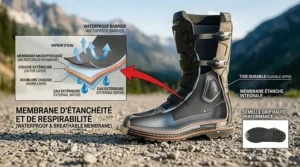
The Alpinestars Toucan Gore-Tex represents what happens when Italian design meets pragmatic touring needs, and it’s become ubiquitous on Canadian adventure bikes for good reason. The full-grain leather and suede construction with 100% waterproof Gore-Tex membrane handles our schizophrenic weather—from morning frost to afternoon rain to evening mosquito swarms—without breaking a sweat.
Here’s what the spec sheet won’t tell you: that integrated steel shank transforms how this boot handles uneven gravel. When you’re navigating Newfoundland’s Butter Pot Provincial Park trails with their embedded rocks, the shank provides enough torsional rigidity to prevent ankle roll without the stiffness that causes fatigue on 300-kilometre days. The lateral ankle protection system creates a flexible link between upper boot and lower foot area—critical when you’re constantly adjusting footpeg pressure on washboard gravel sections.
For Canadian riders, the Toucan shines in transitional seasons. The Gore-Tex gaiter keeps water out during those October rides where temperature drops from 15°C to 3°C as you chase elevation in the Rockies. But here’s the catch: the relatively smooth Alpinestars sole compound, while excellent for peg feel and shifter precision, ranks middling for raw traction on wet clay or loose sand. You won’t slip walking your bike through a muddy campsite, but you also won’t feel as planted as more aggressive lug patterns.
Canadian reviewers consistently mention durability concerns. One Toronto-based rider noted the inner plastic reinforcement cracking after just 11 months of year-round use—a legitimate concern given the $450-$500 CAD investment. However, the same rider had a local cobbler replace it with leather, creating a boot that “will probably outlast the rest of it.”
Pros:
✅ Full-height Gore-Tex gaiter handles Canadian temperature swings beautifully
✅ Steel shank provides perfect flex-to-support ratio for gravel riding
✅ Slim buckle design sheds mud and reduces snagging on bike components
Cons:
❌ Sole compound lacks aggressive bite on wet clay common in Ontario/Quebec
❌ Durability questions on inner plastic components (year 1-2 wear)
Price verdict: Around $475 CAD represents fair value for year-round Canadian adventure riding, assuming you accept potential durability trade-offs for comfort.
2. Sidi Adventure 2 Gore-Tex – The Technical Gravel Benchmark
When serious Canadian ADV riders discuss boots, the Sidi Adventure 2 Gore-Tex emerges as the gold standard for good reason—this boot prioritizes protection and control over convenience, a philosophy that makes perfect sense once you’re committed to gravel exploration rather than occasional dirt road detours.
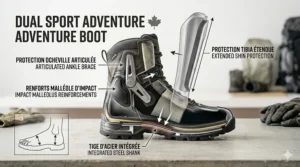
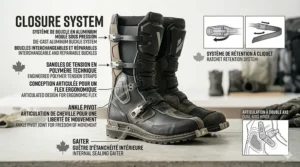
The standout feature is Sidi’s ankle flex system borrowed from road racing. This isn’t marketing speak; it’s engineering that matters on loose surfaces. That articulated lateral movement lets you weight the outside peg through gravel corners while maintaining enough fore-aft stiffness to prevent hyperextension if you dab hard. Riders attempting the British Columbia Adventure Route (BCABDR) or Alberta’s Forestry Trunk Road will immediately understand why this flexibility-with-control matters more than sheer comfort.
The 14-inch shaft with full Gore-Tex gaiter now extends three inches higher than the original Adventure—exceptionally useful when fording water crossings common on prairie trails after spring snowmelt or navigating those inevitable deep puddles on logging roads. The non-slip lug sole provides legitimate hiking-boot-grade traction; when you need to walk your loaded GS up a slippery embankment in Yukon, these boots won’t let you down.
However, Canadian buyers need realistic expectations about break-in period. Multiple reviewers report the boots feel stiff for the first 500-800 kilometres, with one Calgary rider noting he needed to “size up from my usual 45 to 46” to accommodate the aggressive internal structure. The replaceable micro-adjustable cam lock buckles are bomber-proof—they’ll survive countless Manitoba mud encounters—but getting them adjusted perfectly takes patience.
At around $600 CAD, these command a premium over alternatives. You’re paying for bombproof construction, Italian craftsmanship, and performance that genuinely matches motocross boot protection levels while remaining walkable enough for campsite duties.
Pros:
✅ Ankle flex system delivers motocross-level protection without sacrificing control
✅ Extended 14-inch shaft with full Gore-Tex gaiter conquers water crossings
✅ Vibram-style lug sole provides genuine hiking boot traction on loose terrain
Cons:
❌ Substantial break-in period (500-800 km) before achieving optimal comfort
❌ Premium $600 CAD price point creates steep entry barrier
Price verdict: The $550-$650 CAD range reflects serious engineering for riders who prioritize technical capability over budget considerations—worth it for dedicated gravel riders, overkill for casual exploration.
3. TCX Baja Waterproof – The Budget-Smart Sweet Spot
The TCX Baja Waterproof occupies a fascinating middle ground that makes it particularly relevant for Canadian riders just entering adventure riding or those who split duties between street commuting and weekend gravel exploration. At around $380 CAD, it punches significantly above its price class.
The full-grain pull-up leather upper develops a beautiful patina over time—I’ve seen year-old pairs that look distinguished rather than worn, important for riders who also use their bikes for urban commuting in cities like Vancouver or Montreal. TCX’s proprietary T-Dry waterproof membrane doesn’t have Gore-Tex’s brand cachet, but Canadian reviewers consistently report it handles our conditions admirably. One Ottawa-based rider noted staying “completely dry through a four-hour October rain ride that turned to sleet”—exactly the transitional weather that defines Canadian riding seasons.
Where the Baja wins is walkability. The three aluminum micro-adjustable buckles let you dial in fit precisely, and the double-density rubber sole with differentiated grip areas actually works as advertised. I watched a rider walk his GS through deep gravel at a gas station outside Whitehorse without the awkward penguin shuffle many boots impose. The leather shift pad and internal suede heat guard—rare touches at this price point—show TCX sweats the details that matter for daily riding.
Canadian availability sometimes fluctuates on Amazon.ca, with popular sizes selling out seasonally. The Italian sizing runs slightly generous; most riders report going true to size or even half-size down works better than sizing up. The ergonomic shin plate and PU malleolus protection provide adequate impact protection for fire road and light trail work, though serious technical riders will want more coverage.
For the rider exploring the Dempster Highway or tackling the Cabot Trail’s gravel sections, the Baja delivers 85% of the performance at 60% of the cost compared to premium options.
Pros:
✅ Exceptional value at $380 CAD with features typically reserved for pricier boots
✅ Outstanding walkability thanks to flexible sole and excellent grip pattern
✅ Leather ages gracefully, maintaining professional appearance for urban riding
Cons:
❌ Shin/ankle protection adequate but not exceptional for aggressive technical riding
❌ T-Dry membrane performs well but lacks Gore-Tex’s proven long-term reliability track record
Price verdict: Around $380 CAD represents outstanding value for riders seeking 80/20 street/gravel capability without premium pricing.
4. Forma Adventure Low – The Wide-Foot Rider’s Salvation
If you’ve ever struggled cramming wide feet into narrow Italian boots, the Forma Adventure Low will feel like discovering boots designed for actual human feet rather than runway models. This boot prioritizes accessibility and comfort, making it ideal for riders who value getting on the road over maximum protection overkill.
The mid-height design divides riders into camps. Advocates argue it tucks perfectly under adventure pants without the bunching issues taller boots create, while critics worry about reduced shin protection. For Canadian gravel riding—where you’re more likely to encounter washboard and loose surfaces than rock gardens and log crossings—the mid-height provides adequate protection while dramatically improving ease of use. One Saskatchewan rider mentioned he “can actually wear these into restaurants and walk normally,” solving the eternal ADV rider dilemma of carrying extra shoes.
Forma’s Drytex waterproof membrane handles Canadian wetness competently. It’s not Gore-Tex, but multiple reviewers report staying dry through typical prairie rainstorms and early-morning dew-soaked trails. The vintage oiled leather finish looks fantastic and actually serves a functional purpose—the oil treatment provides natural water resistance that helps the Drytex do its job.
The double-density anti-slip rubber sole really shines when walking around campgrounds or navigating gas station gravel. The sole compound feels softer than TCX or Alpinestars, providing more give when walking but slightly less precise feedback on the pegs. The trade-off works for touring-focused riders less so for technical off-road enthusiasts.
At $340-$380 CAD on Amazon.ca, these represent compelling value for riders with wider feet or those who prioritize convenience. The two adjustable straps with Velcro closure and GH plastic buckles create a secure fit without the fumbling that comes with four-buckle systems in winter gloves.
Pros:
✅ Generous fit accommodates wide feet without pressure points—rare in ADV boots
✅ Mid-height design delivers excellent walkability and pants compatibility
✅ Dual-density sole provides surprising comfort on extended walking sections
Cons:
❌ Lower shaft height offers less shin protection for aggressive riding
❌ Some Canadian reviewers report quality control inconsistencies (loose stitching)
Price verdict: The $340-$380 CAD range delivers exceptional value for touring-focused riders prioritizing comfort over maximum protection.
5. Alpinestars Corozal Drystar – The Pavement-to-Gravel Specialist
The Alpinestars Corozal Drystar sits in a niche many Canadian riders need but few recognize: the boot for riders who spend 70% of their time on pavement getting to the 30% of gravel riding they actually want to do. If you’re commuting through Calgary or Mississauga during the week then heading to Kananaskis or Muskoka on weekends, this boot makes sense.
Alpinestars designed the Corozal specifically around mixed-use scenarios. The Drystar waterproof membrane—Alpinestars’ proprietary technology—handles Canadian weather competently though not quite at Gore-Tex levels. The boot uses full-grain leather combined with microfiber panels in strategic locations, creating a construction that breathes better than full-leather alternatives during summer highway slogs but provides adequate protection for gravel exploration.
The sole compound represents Alpinestars’ attempt at balancing pavement grip with off-road capability. It succeeds reasonably well—better than sport touring boots on gravel, not quite matching dedicated adventure sole patterns on technical terrain. For fire roads, forestry trails, and maintained gravel highways across provinces like Manitoba and Saskatchewan, it provides confidence without overwhelming aggressiveness.
Canadian riders consistently mention the Corozal runs slightly narrow compared to other Alpinestars models. If the Toucan Gore-Tex fits perfectly, consider going half-size up in the Corozal. The lateral ankle protection system and TPU shin protection deliver adequate impact protection for street falls and light off-road excursions, though serious backcountry riders will want more robust coverage.
At around $440 CAD, the Corozal costs less than the Toucan while targeting a slightly different use case. It makes particular sense for riders with sportbike backgrounds transitioning to adventure bikes—familiar Alpinestars quality and fit with added gravel capability.
Pros:
✅ Drystar membrane provides excellent breathability for summer highway riding
✅ Sole pattern genuinely works on both pavement and maintained gravel
✅ Microfiber panels improve ventilation compared to full-leather alternatives
Cons:
❌ Runs narrower than other Alpinestars models, requiring careful sizing
❌ Protection adequate but not exceptional for dedicated off-road riding
Price verdict: Around $440 CAD represents solid value for riders seeking versatility over specialization—ideal for the 70/30 street/gravel split common among Canadian ADV riders.
6. TCX Baja Mid Waterproof – The Lower-Profile Alternative
The TCX Baja Mid Waterproof takes everything that works about the full-height Baja and packages it in a more compact form factor. For riders who prefer boots that disappear under pants or those transitioning from street riding backgrounds, this lower-cut option makes adventure riding more approachable without sacrificing core functionality.
The mid-height construction drops shaft height approximately 5 centimetres compared to the standard Baja. This seemingly small change has significant practical implications. The boots slip on and off considerably faster—relevant when you’re making multiple fuel stops across the Prairies or stopping frequently for photography on the Cabot Trail. They also work better with slimmer-cut riding jeans or textile pants designed for street rather than full ADV use.
TCX maintains the same T-Dry waterproof liner and quality leather upper found in the taller version. Canadian riders report the membrane handles our conditions well, with one British Columbia reviewer noting these “kept my feet dry through a week of Vancouver Island rain riding.” The three-buckle system provides secure fit without excessive complexity, and the differentiated grip sole continues to impress with genuine hiking-boot-level traction.
Where the Mid version compromises is obvious: less shin protection and reduced coverage overall. For fire roads and maintained gravel this matters minimally. For technical singletrack or rocky trails, you’ll notice—and potentially regret—the reduced coverage. The boot also offers less impact protection around the ankle compared to taller alternatives, though it remains substantially better than street boots.
Pricing around $350 CAD positions the Baja Mid as an entry point into legitimate adventure footwear. It’s boots for riders who want gravel capability without committing to the full ADV aesthetic or those who genuinely prefer lower-profile footwear.
Pros:
✅ Easier to wear with regular jeans and slimmer riding pants
✅ Simplified on-off process speeds gas stops and photo opportunities
✅ Maintains full Baja traction and waterproofing in more compact package
Cons:
❌ Reduced shin coverage limits protection for technical off-road riding
❌ Lower height offers less weather sealing at pant cuff interface
Price verdict: Around $350 CAD delivers proper gravel capability in a street-friendly package—ideal for riders prioritizing versatility and approachability.
7. Gaerne Balance Oiled – The Classic Leather Traditionalist
The Gaerne Balance Oiled represents Italian bootmaking tradition applied to adventure riding, and it divides riders into distinct camps: those who appreciate old-school leather craftsmanship and those who prefer modern materials. For riders in the first camp, these boots deliver something increasingly rare—natural materials that improve with age rather than degrade.
The full-grain oiled leather upper requires maintenance but rewards you with a boot that develops character over years rather than months. The leather’s natural water resistance—enhanced by regular treatment with quality leather conditioner—handles Canadian conditions surprisingly well. This isn’t Gore-Tex; you will get wet feet in sustained rain. But for typical riding where you encounter brief showers, morning dew, or light precipitation, the oiled leather proves remarkably competent while remaining far more breathable than membrane boots during summer heat.
Where Gaerne excels is build quality and serviceability. These boots feature Goodyear welt construction allowing complete resoling—unusual in modern riding boots. A Toronto cobbler can replace worn soles for $150-$200, extending boot life potentially decades. The internal comfort layer and orthopaedic footbed provide excellent support for long days covering trans-Canada distances.
The aggressive Vibram sole pattern delivers outstanding grip on gravel, mud, and wet surfaces. This is hiking-boot technology applied to motorcycle use, and it works brilliantly when you’re walking a bike through Saskatchewan clay or navigating slippery boat launches in Ontario cottage country. The trade-off comes in reduced peg feel—you’re standing on thick rubber rather than feeling the peg directly.
Canadian availability on Amazon.ca can be spotty, with certain sizes frequently out of stock. Pricing around $480-$520 CAD reflects the quality materials and construction. These boots appeal to a specific rider: someone who appreciates craftsmanship, maintains their gear properly, and values longevity over convenience features.
Pros:
✅ Goodyear welt construction enables complete resoling for decades of service
✅ Oiled leather develops beautiful patina and character over years
✅ Vibram sole provides exceptional grip on all loose surfaces
Cons:
❌ Requires regular maintenance (conditioning, waterproofing) to maintain performance
❌ Lacks modern waterproof membrane for sustained rain protection
Price verdict: The $480-$520 CAD investment makes sense for riders viewing boots as long-term equipment rather than disposable gear—character that improves with age.
The Truth About Gravel Traction Most Riders Miss
Every boot manufacturer claims “excellent grip” and “superior traction,” but what actually matters when your left foot hits loose gravel mid-corner on British Columbia’s Duffey Lake Road? The answer involves understanding three factors manufacturers won’t clearly explain: sole compound chemistry, lug pattern geometry, and contact patch loading.
Sole Compound: The Grip-vs-Feel Paradox
Soft rubber compounds grip loose surfaces better but wear quickly and reduce shifter feel precision. Harder compounds last longer and provide better tactile feedback but slide more readily on wet clay. This explains why the Sidi Adventure 2 Gore-Tex uses a medium-hardness compound with deep lugs—it splits the difference, providing adequate grip without sacrificing the shifter precision serious riders demand. Meanwhile, the Forma Adventure Low prioritizes a softer compound specifically because their target customer values walking comfort over maximum peg feedback.
For Canadian conditions—where you encounter everything from Alberta’s sharp gravel to Manitoba’s sticky clay to Quebec’s river-smoothed stones—a medium-compound sole with aggressive lugs delivers the best compromise. Avoid overly soft soles that wear out within 5,000 kilometres, common in budget options not listed here.
Lug Pattern: Why Hiking Boot = Good, MX Boot = Bad
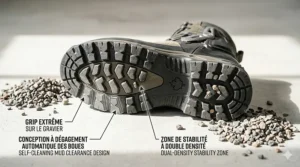
Motocross boots feature shallow, closely-spaced lugs optimized for peg grip, not walking. Touring boots use nearly flat soles that work on pavement but slide on gravel. The sweet spot for dual sport boots gravel roads is a hiking-boot-inspired pattern: deep, widely-spaced lugs with multi-directional edges that bite into loose material while shedding mud efficiently.
The TCX Baja series nails this pattern. Those differentiated grip areas actually work—the forefoot has tighter spacing for peg control, while the heel features wider lugs for walking stability. When you’re pushing a bike through deep gravel at a gas station outside Fort Nelson, that heel pattern prevents the embarrassing slow-motion slide that shallower patterns allow.
Contact Patch Loading: Why Boot Stiffness Matters More Than Traction
Here’s what boot reviews never mention: a grippy sole means nothing if the boot flexes excessively, reducing the contact pressure needed to bite into loose surfaces. This explains why extremely flexible touring boots with aggressive tread still slide on gravel—the sole can’t maintain sufficient pressure to engage the surface.
The solution is mid-sole rigidity from steel shanks or reinforced nylon plates. The Alpinestars Toucan Gore-Tex integrates a steel shank that provides just enough stiffness without causing fatigue. The Sidi Adventure 2 Gore-Tex uses a nylon composite that’s actually stiffer, providing superior traction on technical terrain at the cost of some walking comfort.
For Canadian gravel riding, prioritize boots with visible mid-sole reinforcement. This seemingly minor detail separates boots that inspire confidence from those that leave you tentative on every stop.
Real-World Testing: Weekend Warrior vs. True Adventure
The disconnect between manufacturer claims and actual Canadian riding conditions is substantial. Most boots are tested on European gravel—compact, well-maintained surfaces nothing like Manitoba’s clay-based prairie trails after spring thaw or Alberta’s loose shale mountain passes.
Scenario 1: Ontario Weekend Explorer (300 km round trip, 70% pavement, 30% gravel)
This represents the majority of Canadian ADV riding. You’re commuting to Haliburton Forest, riding paved highways for 200 kilometres, then exploring 100 kilometres of graded forestry roads. For this use case, the TCX Baja Waterproof or Forma Adventure Low make perfect sense. You want comfortable highway riding without sacrificing capability on maintained gravel. The occasional stream crossing or muddy pullout doesn’t demand bombproof protection—you need versatility and comfort for the 95% of riding that’s straightforward.
Scenario 2: British Columbia Technical Rider (500 km mixed, 40% pavement, 60% challenging gravel/trails)
You’re tackling the BCABDR or exploring difficult forestry trails in the Kootenays. Now protection and control trump comfort. The Sidi Adventure 2 Gore-Tex or Gaerne Balance Oiled become essential. That ankle flex system prevents hyperextension when you dab hard on loose surfaces. The taller shaft protects shins from pedal strikes and trail debris. The stiffer construction provides control precision that flexible touring boots simply cannot match.
Scenario 3: Trans-Canada Tourist (5,000+ km expedition, varied conditions)
You’re riding the Trans-Canada Highway with regular gravel detours—Newfoundland back roads, Manitoba prairie trails, Alberta mountain passes. Durability and weather resistance become paramount. The Alpinestars Toucan Gore-Tex shines here despite its price. That full Gore-Tex gaiter handles temperature swings from 3°C mornings in Labrador to 28°C afternoons in Saskatchewan. The moderate flex supports all-day comfort while maintaining adequate protection. The steel shank prevents fatigue even after eight-hour riding days.
Scenario 4: Budget-Conscious Beginner (learning phase, uncertain commitment)
You’re trying adventure riding without investing thousands. The TCX Baja Mid Waterproof delivers legitimate gravel capability at entry-level pricing. It’s boots you won’t outgrow quickly but also won’t feel foolish buying if you decide adventure riding isn’t for you. The lower profile works with gear you likely already own while providing genuine off-road competence.
The critical insight: match boots to your actual riding, not aspirational riding. Buying Sidi Adventure 2s for occasional fire road exploration wastes money better spent on tires or training. Conversely, attempting technical terrain in Forma Adventure Lows compromises safety for comfort you don’t need in that scenario.
Common Mistakes When Buying Dual Sport Boots for Gravel
Mistake #1: Assuming Waterproof = All-Day Comfort
Gore-Tex and equivalent membranes keep water out brilliantly but trap moisture inside during summer heat. Riders making eight-hour highway slogs across the Prairies in July discover their “waterproof” boots create swamp-foot conditions worse than getting rained on. The solution: boots with ventilation ports or panels in non-critical areas, like the Alpinestars Corozal Drystar’s microfiber sections. During Canadian summers, breathability matters more than waterproofing until you hit the mountains or the shoulder seasons.
Mistake #2: Over-Prioritizing Protection
Motocross-level protection sounds appealing until you attempt walking 200 metres through a Yukon campground to the washroom facilities. Boots designed for technical riding excel at their intended purpose but become hindrances during the 90% of adventure riding spent not crashing. For Canadian riding—where long highway transfers dominate even “adventure” trips—comfortable boots you actually wear beat technically superior boots that stay in your garage because they’re too uncomfortable for mixed riding.
Mistake #3: Ignoring Climate-Specific Requirements
American riders can get away with non-waterproof boots and minimal insulation. Canadian riders cannot. Our reality includes October morning rides at 2°C transitioning to afternoon heat at 18°C, spring rides through post-thaw mud, and summer afternoon thunderstorms that materialize from clear skies in 30 minutes. Every boot in this guide includes waterproofing not because it’s nice to have but because Canadian riding demands it.
Mistake #4: Choosing Boots for Walking, Not Riding
Excellent walkability shouldn’t be the primary selection criterion unless you’re genuinely spending more time off the bike than on it. Boots need to function as motorcycle controls first, hiking boots second. This means proper shifter feel, adequate peg grip, and protection from heat and impact. The Forma Adventure Low represents the maximum compromise toward walking comfort while maintaining legitimate riding functionality—anything more casual belongs in touring boots, not dual sport equipment.
Mistake #5: Buying on Sizing Alone
Italian boots (Alpinestars, Sidi, Gaerne, TCX, Forma) all use European sizing but fit differently between brands and even models within brands. The Alpinestars Corozal runs narrower than the Toucan despite identical size labels. Sidi notoriously runs small—most riders size up half to one full size. Amazon.ca’s return policy saves you here: order two sizes, keep what fits, return the other. The $10 shipping cost beats destroying your feet with ill-fitting boots.
How to Choose Dual Sport Boots Gravel Roads for Canadian Conditions
Step 1: Define Your Actual Riding Profile (Honestly)
Forget aspirational riding plans. How do you actually ride? Track three factors: total kilometres per year on gravel, longest single-day gravel ride typically completed, and technical difficulty of terrain actually attempted. If your honest answer is “2,000 km of maintained forestry roads with occasional rough patches,” you don’t need $600 Sidi Adventure 2s. The $380 TCX Baja provides everything you actually require.
Step 2: Prioritize Waterproofing Technology
Canadian weather makes this non-negotiable. Gore-Tex remains the gold standard for long-term reliability, but proprietary membranes like TCX’s T-Dry and Alpinestars’ Drystar now perform adequately. Avoid boots without any membrane—even “water-resistant leather” eventually soaks through during sustained Canadian rain. Budget minimum $350 CAD for boots with legitimate waterproof technology; anything cheaper likely cuts corners here.
Step 3: Match Sole Aggression to Terrain
Maintained gravel highways and forestry roads require moderate lug patterns like the TCX Baja. Technical singletrack and challenging trails demand aggressive patterns like the Sidi Adventure 2 Gore-Tex. Clay-based prairie trails benefit from widely-spaced lugs that shed sticky material, while rocky mountain terrain wants deeper lugs that bite into uneven surfaces. Your predominant terrain dictates sole requirements.
Step 4: Calculate True Cost of Ownership
A $350 boot lasting two years costs more per kilometre than a $550 boot lasting five years. Factor in potential repairs—Goodyear-welted boots like the Gaerne Balance Oiled can be completely resoled for $150-$200, effectively creating a new boot for a fraction of replacement cost. Cheaper boots often use glued construction requiring complete replacement when soles wear out.
Step 5: Consider Your Personal Flexibility Requirements
Some riders genuinely need motocross-level ankle protection. Others find that level of rigidity causes fatigue and discomfort over long distances. Your ankle strength, riding style, and typical speeds all matter. For Canadian touring-focused riding at moderate speeds (80-100 km/h on highways, 40-60 km/h on gravel), medium-flex boots like the Alpinestars Toucan Gore-Tex provide adequate protection without excessive stiffness.
Maintaining Your Investment: Extending Boot Life in Canadian Conditions
Winter Storage Strategy
Canadian winters destroy boots faster than riding them does. Before storing boots November through March, remove footbeds and dry thoroughly (use newspaper to absorb moisture, not direct heat). Apply leather conditioner to full-grain leather boots. Store in cool, dry location away from heating vents—basement corners work poorly due to moisture. Consider investing in boot trees ($40-$60) to maintain shape.
Salt and Road Chemical Management
Canadian road salt is boots’ worst enemy, accelerating both leather deterioration and membrane failure. After any winter or early spring ride, wipe boots with damp cloth to remove salt residue immediately. Don’t wait—salt continues attacking materials even when dry. For serious salt exposure, use leather cleaner specifically formulated to neutralize salts before they cause permanent damage.
Membrane Care
Gore-Tex and equivalent membranes require proper care to maintain waterproofing. Wash boots regularly with mild soap and water—dirt clogs membrane pores, reducing breathability and eventually causing waterproofing failure. Never use detergents or harsh cleaners on membranes. Periodically treat with DWR (Durable Water Repellent) spray specific to breathable membranes ($15-$20) to maintain water-beading action on outer surfaces.
Strategic Resoling
Don’t wait until soles are completely worn. Most quality boots need resoling around 15,000-20,000 kilometres, but continuing to ride on worn soles damages upper construction and can tear stitching. Find a cobbler experienced with motorcycle boots before you need one—most urban centers have at least one specialist. Resoling runs $120-$200 CAD depending on boot construction and sole type, roughly one-third the cost of new boots.
❓ FAQ: Dual Sport Boots for Canadian Gravel Riding
❓ Can dual sport boots handle Canadian winter riding?
❓ What's the difference between ADV boots and motocross boots for gravel?
❓ How often should I replace dual sport boots in Canadian conditions?
❓ Do I need different boots for summer vs. winter gravel riding in Canada?
❓ Are expensive dual sport boots worth the price for occasional Canadian gravel riding?
Conclusion: Choosing Your Gravel Road Companion
The reality of Canadian adventure riding is that we ride 5,000 kilometres to experience 500 kilometres of memorable gravel. Your boots need to function brilliantly during those magical hours exploring Manitoba’s Whiteshell Provincial Park or navigating Alberta’s Forestry Trunk Road, but they can’t become torture devices during the inevitable highway slogs getting there and back.
The seven boots profiled here represent genuine solutions to Canadian riding’s unique demands, not marketing fantasy. The Sidi Adventure 2 Gore-Tex delivers uncompromising technical capability for riders who’ve moved beyond occasional exploration into serious backcountry adventure. The TCX Baja Waterproof provides the value-conscious middle ground most Canadian riders actually need—competent on gravel, comfortable on pavement, waterproof enough for our schizophrenic weather. The Forma Adventure Low solves the wide-foot problem while adding excellent walkability for touring-focused riders.
Your selection should match your actual riding, not your Instagram aspirations. A $380 boot you wear every ride because it’s comfortable beats a $600 boot gathering garage dust because it’s too stiff for casual riding. Canada’s riding season is short enough without voluntarily reducing it by choosing gear that doesn’t fit your real-world use case.
The investment matters because proper boots transform riding. Confidence planting your foot at a gravel intersection changes how aggressively you ride. Walking comfortably through gas stations and campgrounds affects whether you take that extra exploratory detour. Dry feet after crossing that stream on the forestry road determines whether you push further or turn back.
Choose boots that match your dominant terrain (maintained gravel vs. technical), prioritize waterproofing appropriate for Canadian conditions, and consider true cost over expected lifespan. The kilometres you gain from boots that work correctly justify the investment many times over.
Recommended for You
- 7 Most Comfortable ADV Boots Long Distance Canada 2026
- 7 Best Heated Motorcycle Boots Canada 2026: Beat Cold Feet
- 7 Best Waterproof Insulated Riding Boots Temperature Rating Canada 2026
Disclaimer: This article contains affiliate links. As an Amazon Associate, I earn from qualifying purchases. If you purchase products through these links, we may earn a small commission at no additional cost to you.
✨ Found this helpful? Share it with your friends! 💬🤗
