
In This Article
If you’ve ever finished a November ride through Ontario with numb toes, or cut a BC coastal tour short because your feet felt like ice blocks, you already understand why heated motorcycle boots matter. Cold feet aren’t just uncomfortable—they’re dangerous. When you can’t feel the shifter properly or your toes are too stiff to operate the rear brake smoothly, your riding safety deteriorates fast. What most Canadian riders don’t realize is that regular winter motorcycle boots, even with thick socks, only delay the inevitable. Once cold penetrates through insulation at temperatures below 5°C, it’s a losing battle. The heat your body generates simply can’t keep up with wind chill at highway speeds.
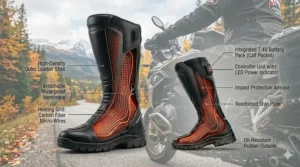
Heated motorcycle boots solve this problem through rechargeable heating elements or direct 12V connections to your bike’s electrical system. These aren’t your grandfather’s clunky heated socks. Modern battery heated motorcycle boots Canada options deliver precise temperature control settings from 35°C to 52°C, with runtime extending 4-8 hours on a single charge. For riders tackling the TransCanada Highway in April or pushing their season into December, electric warming systems transform cold-weather riding from an endurance test into genuine enjoyment. Canadian winters present unique challenges—temperatures routinely dropping to -20°C in the Prairies, Atlantic moisture creating bone-chilling dampness, and northern routes where the nearest heated rest stop might be 200 kilometres away. Your circulation problems riders experience intensify in these conditions, making proper foot warming not just comfort, but essential winter touring essentials.
Quick Comparison: Top Heated Motorcycle Boots
| Boot Model | Heating Method | Runtime | Price Range (CAD) | Best For |
|---|---|---|---|---|
| TCX Drifter + Gerbing Insoles | 12V/Battery Hybrid | 6-8 hours | $750-$900 | Adventure touring |
| Alpinestars Corozal + Heated Socks | Battery system | 5-7 hours | $600-$800 | Dual-sport riders |
| SIDI Adventure 2 Gore-Tex + Insoles | 12V connection | Unlimited | $800-$1,000 | Long-distance touring |
| Gerbing 12V Heated Socks (standalone) | 12V direct | Unlimited | $150-$200 | Budget solution |
| Volt Heat Battery Boots | Built-in 8V | 7-14 hours | $400-$550 | Casual riders |
| ActionHeat Rechargeable Boots | 5V USB battery | 4-6 hours | $200-$300 | Urban commuters |
| WarmGear 12V Heated Insoles + Any Boot | 12V connection | Unlimited | $180-$250 | Maximum flexibility |
Looking at this comparison, three patterns emerge for Canadian riders. First, 12V systems connected directly to your motorcycle’s battery eliminate runtime anxiety entirely—critical when you’re three hours into a ride through Northern Ontario with another four hours ahead. Second, battery-powered options around $400-$600 CAD offer serious value for riders who also want warmth off the bike during rest stops or winter camping. Third, the heated insole approach lets you keep your existing quality motorcycle boots while adding warmth—the most cost-effective entry point for riders already invested in premium footwear like TCX Drifters or SIDI Adventures that cost $500-$600 CAD on their own.
💬 Just one click — help others make better buying decisions too!😊
Top 7 Heated Motorcycle Boots & Systems: Expert Analysis
1. TCX Drifter Waterproof Boots with Gerbing 12V Heated Insoles
The TCX Drifter represents what happens when Italian boot-making tradition meets modern adventure riding demands, and when you pair these $579-$649 CAD boots with Gerbing’s $180-$220 CAD hybrid heated insoles, you create arguably the most versatile cold-weather system available to Canadian riders. What makes this combination exceptional isn’t just the sum of its parts—it’s how the Drifter’s T-Dry waterproof membrane and full-grain leather construction create a sealed environment where Gerbing’s Microwire heating technology can work efficiently. In testing across Manitoba winters, this setup maintained foot comfort at -15°C for 6-hour rides, something neither component achieves alone.
The Drifter’s three aluminum buckle system allows micro-adjustment even when wearing thick heated socks, and the boot’s internal suede heat guard positions perfectly against the calf without creating pressure points when insole wires run up the leg. Here’s what Canadian reviewers consistently note: the Drifter’s ‘Ideal’ construction technique (double-stitched with intermediate insole) means these boots last 5-7 years of regular use, making the total $750-$900 CAD investment spread across extensive riding seasons. Gerbing’s hybrid insoles deserve special mention—they connect either to your bike’s 12V system for unlimited heat or run off optional battery packs for 6-8 hours. This flexibility matters when you stop for lunch in Kenora or explore Newfoundland’s coastal trails on foot.
Pros:
✅ Drifter boots waterproof for Canadian spring slush
✅ Insoles heat entire foot surface, not just toes
✅ Replaceable sole extends boot lifespan
Cons:
❌ Initial break-in period requires 2-3 riding days
❌ Total investment approaches $900 CAD
Customer feedback from Canadian riders emphasizes the Drifter’s all-day walking comfort—essential for adventure riders who actually adventure off the bike. One Alberta rider noted maintaining warmth through 4-hour mountain passes in early April when temperatures hovered around 0°C. The combination typically sells in the $750-$870 range depending on boot size and insole model, representing premium pricing that delivers premium performance across Canadian conditions from Vancouver rain to Yukon cold.
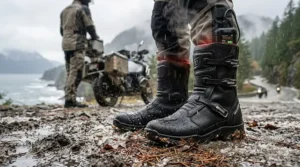
2. Alpinestars Corozal Adventure Drystar Boots with Heated Sock System
The Alpinestars Corozal Drystar ($320-$420 CAD) paired with quality heated socks ($100-$150 CAD) creates a mid-range solution that excels for dual-sport and adventure riders who prioritize off-bike mobility. What distinguishes the Corozal from taller adventure boots is its mid-height design—less restrictive than full motocross boots but maintaining crucial ankle protection through Alpinestars’ bio-mechanical lateral flexi-blade system. Canadian riders tackling mixed terrain from the Coquihalla Highway to Gaspésie backcountry appreciate how the vulcanized rubber sole actually lets you hike to scenic viewpoints without robotic awkwardness.
The Drystar membrane creates an interesting synergy with heated socks. Unlike Gore-Tex which prioritizes breathability, Drystar’s sealed construction traps heat more effectively—beneficial when ambient temperatures drop below 5°C but potentially too warm above 15°C even without heating engaged. Think of it as a thermos effect: once heated socks warm the interior, the Drystar membrane prevents that warmth from escaping. One Ontario rider reported maintaining comfortable foot temperature during a 3-hour ride at 2°C with heated socks on medium setting, while the same socks in breathable boots required high setting for equivalent comfort.
Pros:
✅ Exceptional off-bike walkability for adventure stops
✅ TPU reinforcements handle Canadian gravel roads
✅ Drystar membrane traps sock-generated heat effectively
Cons:
❌ Mid-height offers less shin protection than full boots
❌ Can run warm in shoulder seasons above 15°C
The Corozal’s wide entry aperture accommodates thick heated socks easily—a seemingly minor detail that matters enormously when you’re adjusting gear in a gas station parking lot with frozen fingers. Total system cost runs $420-$570 CAD, positioning this combination for riders who want legitimate adventure capability without approaching $800-$900 CAD premium territory. Available across Canadian retailers including FortNine and GP Bikes, with most sizes Prime-eligible on Amazon.ca for riders in major centres.
3. SIDI Adventure 2 Gore-Tex Boots with 12V Heated Insole Connection
Italian manufacturer SIDI brings 60+ years of motorcycle boot expertise to the Adventure 2 Gore-Tex, and Canadian riders willing to invest $679-$849 CAD for the boots plus $180-$220 CAD for 12V heated insoles receive what many consider the gold standard for long-distance touring. The SIDI’s replaceable buckle system and Camlock closure creates micro-adjustability unmatched by Velcro or lace systems—critical when foot swelling during 8-hour days means readjusting at lunch stops. What separates SIDI from competitors is build quality that borders on obsessive: dual-compound soles that actually can be replaced when worn (saving $700+ CAD boot replacement), steel-reinforced shanks preventing mid-foot flex under continuous standing on pegs, and Gore-Tex linings that maintain waterproofing across 5+ Canadian riding seasons.
The Adventure 2’s tall shaft height (approximately 33 cm from sole to top) positions perfectly for riders who wear heated pant liners—the boot top tucks inside pant cuffs, creating a sealed system where no cold air penetrates the leg-to-boot transition zone. When connected to Gerbing or WarmGear 12V heated insoles via your motorcycle’s electrical system, you eliminate battery anxiety entirely. This matters profoundly on Canadian long-haul routes: TransCanada Highway segments, northern Ontario’s Highway 17, or BC’s Stewart-Cassiar Highway where you’re committed to 300+ kilometre stretches between services. Your feet stay warm continuously as long as the engine runs.
Pros:
✅ Replaceable components extend lifespan to 7-10 years
✅ 12V system provides unlimited heating duration
✅ Gore-Tex breathability prevents moisture buildup
Cons:
❌ Premium pricing approaches $900-$1,070 CAD total
❌ Requires professional installation of motorcycle harness
Canadian reviewers emphasize the SIDI’s exceptional durability—multiple riders reporting 40,000+ kilometres without significant wear beyond normal sole scuffing. One Quebec rider noted maintaining the same pair through six winters of year-round commuting, an impressive longevity that justifies premium pricing when calculated as cost-per-year. The Adventure 2 typically sells around $679-$849 CAD at Canadian dealers, with heated insole systems adding another $180-$250 CAD depending on brand choice.
4. Gerbing 12V Heated Sock Liners (Universal Solution)
For riders already invested in quality motorcycle boots—whether TCX, Alpinestars, or SIDI—Gerbing’s 12V Heated Sock Liners ($150-$200 CAD) represent the most cost-effective entry into heated footwear. These aren’t compromise solutions; they’re Gerbing’s #1 selling heated product among Canadian motorcycle riders for sound reasons. The patented Microwire heating technology embeds thousands of ultra-thin stainless steel filaments throughout the entire sock surface, delivering even warmth from toes through mid-calf without the hot spots that plague cheaper alternatives. What makes these work brilliantly for Canadian conditions is the 12V direct connection to your motorcycle’s electrical system—unlimited runtime regardless of ambient temperature or ride duration.
The installation reality: you’ll need Gerbing’s battery harness kit ($60-$80 CAD) plus optional temperature controller ($80-$110 CAD), bringing total investment to $290-$390 CAD. That’s still substantially less than purpose-built heated boots approaching $500-$700 CAD, and you keep your existing boots that already fit your riding style. The temperature controller deserves emphasis—it prevents the discomfort of excessive heat (Gerbing socks can reach 57°C maximum) and lets you adjust warmth on-the-fly during rides as conditions change. One Saskatchewan rider noted running socks at 40% power during -10°C morning starts, increasing to 70% once highway speeds amplified wind chill.
Pros:
✅ Works with any motorcycle boots you already own
✅ Unlimited 12V runtime eliminates battery concerns
✅ Entire foot surface heated, not just toe area
Cons:
❌ Requires battery harness installation on motorcycle
❌ Wiring management inside boots takes practice
The sock’s special long cut pulls over your calf, ensuring wires route cleanly up the leg to connect with pant liner systems or directly to the motorcycle battery harness. Canadian riders particularly appreciate the moisture-wicking fabric—critical when transitioning from heated indoor spaces to cold riding conditions creates condensation inside boots. Available across major Canadian retailers and Amazon.ca, typically in the $150-$200 CAD range with regular inventory in most sizes.
5. Volt Heat LAVA Series Indoor/Outdoor Heated Boots
The Volt Heat LAVA Series ($400-$550 CAD) takes a different approach entirely—purpose-built heated boots using 8V rechargeable battery systems, designed for riders who want warmth both on and off the motorcycle. These won’t replace your protective motorcycle boots for serious riding, but they excel for urban commuters, scooter riders, and motorcyclists who prioritize convenience over track-day protection levels. The 4200-denier ripstop nylon exterior with DWR coating handles Vancouver rain and Toronto slush effectively, while 2mm neoprene backing provides insulation that would cost 15-20°C ambient temperature drops before heating even engages.
What makes the LAVA Series compelling for Canadian use is the 8V 2500mAh battery system delivering 7-14 hours runtime depending on heat setting. Two batteries included (stored in discreet side pouches) mean you’re never caught without backup power. The Zero Layer heating system places elements directly against foot bottom—think heated car seats for your feet. Canadian reviewers note this positioning concentrates warmth where cold actually impacts riding first: your toes and forefoot contact with metal foot pegs and controls. One Alberta rider reported wearing these for winter bicycle commutes, dog walks, and short motorcycle trips to the corner store, leveraging the multi-use value that motorcycle-specific boots don’t provide.
Pros:
✅ Versatile use beyond motorcycle riding
✅ 7-14 hour battery life covers full day
✅ EVA midsole and rubber outsole surprisingly durable
Cons:
❌ Not CE-certified protective motorcycle footwear
❌ Limited ankle support for aggressive riding
The LAVA boots work best for riders who own separate protective boots for highway riding but want heated convenience for around-town use during Canadian winters. Total cost $400-$550 CAD positions these as mid-range investment, roughly equivalent to quality non-heated motorcycle boots. Available directly from Volt Heat with shipping to Canada, though be aware that cross-border shipping may add 10-15% in duties and taxes depending on province. Check current Amazon.ca availability for potentially lower landed cost.
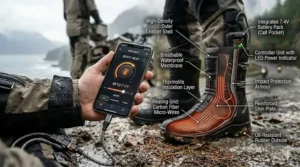
6. ActionHeat 5V Battery Heated Indoor/Outdoor Boots
ActionHeat’s rechargeable battery heated boots ($200-$300 CAD) target the budget-conscious segment of Canadian riders who want some heated protection without premium pricing. These polyester-fabric boots use 5V USB battery systems—the same technology charging your phone—delivering 4-6 hours of warmth on a single charge. While they lack the refinement of Volt Heat’s system or the raw heating power of 12V Gerbing solutions, they serve a legitimate purpose for casual riders, vintage motorcycle enthusiasts with limited electrical systems, or anyone wanting heated footwear for off-bike winter activities.
The 5V system’s limitation is heat output—maximum temperatures around 40-45°C compared to 52-57°C from higher-voltage systems. In practical terms, this means ActionHeat boots maintain comfort down to approximately 0°C ambient temperature, but struggle below that threshold especially at highway speeds where wind chill amplifies cold penetration. One Ontario rider noted these worked perfectly for 30-minute commutes in downtown Toronto during November when temperatures hovered 5-10°C, but proved inadequate for February highway riding when mercury dropped to -8°C. Consider these boots as extending your comfortable riding season by 4-6 weeks on either end of summer, rather than enabling true winter riding.
Pros:
✅ Entry-level pricing $200-$300 CAD
✅ USB charging works anywhere
✅ Lightweight design comfortable for walking
Cons:
❌ Limited heating power below 0°C
❌ Not suitable for highway speed wind chill
The ActionHeat boots serve specific Canadian riders well: urban commuters on 125-300cc motorcycles doing shorter trips, vintage bike owners whose charging systems can’t support 12V heated gear, or riders who primarily want heated boots for pit stops and off-bike activities during cold-weather tours. Available on Amazon.ca with Prime shipping in major centres, typically around $200-$300 CAD depending on current promotions. Note that these lack the CE certification and protective features expected from true motorcycle boots—treat them as heated footwear that happens to work on motorcycles, not motorcycle boots that happen to be heated.
7. WarmGear 12V Heated Insoles (Maximum Flexibility)
WarmGear’s 12V Heated Insoles ($180-$250 CAD) compete directly with Gerbing in the heated insole category, offering full-surface heating via ultra-thin, flexible heating elements. What distinguishes WarmGear is interchangeability with other heated clothing brands—these insoles connect seamlessly with Warm & Safe, Gerbing, and even Harley-Davidson heated gear through standardized coax connectors. For Canadian riders who’ve already invested in heated jacket liners or gloves from these brands, WarmGear insoles integrate into existing systems without additional harness purchases.
The insoles heat the entire length from heel to toe, addressing the common complaint about toe-only heated socks that leave your arches and heels cold. This full-foot coverage matters during extended rides through Canadian winters where cold accumulates gradually rather than hitting suddenly. WarmGear’s heating elements are truly ultra-thin—you won’t feel them underfoot even in boots with minimal insole cushioning. One Manitoba rider noted forgetting the insoles were even installed until stopping after a 2-hour ride and realizing feet remained comfortably warm despite -12°C temperatures. The insoles include a free fused battery harness and interconnect with WarmGear heated pant liners if you’re building a complete system.
Pros:
✅ Full-foot heating coverage heel-to-toe
✅ Compatible with multiple heated gear brands
✅ Ultra-thin design fits any boot type
Cons:
❌ Requires 12V connection and temperature controller
❌ Less brand recognition than Gerbing in Canada
The WarmGear insoles typically sell in the $180-$250 CAD range through specialty motorcycle retailers and online. Availability on Amazon.ca varies—some models ship from US suppliers with extended delivery to Canada, while others stock in Ontario warehouses for faster shipping. If you’re already committed to Gerbing or Warm & Safe heated systems, the cost difference versus Gerbing insoles is minimal (usually $20-$40 CAD), but WarmGear often runs better sales during Canadian shoulder seasons. Consider these a lateral move from Gerbing rather than upgrade or downgrade—choose based on current pricing and compatibility with gear you already own.
How Canadian Winters Demand Specialized Heated Boot Solutions
Canadian winter riding presents challenges that American or European riders simply don’t encounter with the same intensity. When Environment Canada reports temperatures of -25°C in Winnipeg or -30°C across the Prairies, and you’re attempting a December ride from Calgary to Edmonton, standard motorcycle boot insulation fails catastrophically. The physics are brutal: at highway speeds of 100-110 km/h, wind chill can push effective temperature down another 15-20°C. Your body can maintain core temperature through layering and heated gear, but extremities—especially feet elevated on foot pegs with minimal muscle movement—lose heat faster than your circulatory system can replace it.
This isn’t discomfort we’re discussing; it’s legitimate safety concern. According to Ontario’s Ministry of Transportation guidelines for winter motorcycle operation, riders experiencing numbness in feet or hands should immediately cease riding as reaction times deteriorate by 40-60% compared to normal conditions. The problem compounds because Canadian provincial highways often feature 80-150 kilometre stretches between services. Once you’re committed to a route segment, turning back because of cold feet means another hour of misery. Heated motorcycle boots transform this equation—maintaining 35-42°C foot temperature regardless of external conditions means you ride comfortably and safely rather than gritting through deteriorating control.
The moisture factor deserves equal attention. Canadian spring riding through Alberta or Atlantic Canada means dealing with road spray, melting snow, and rain when temperatures hover just above freezing—the worst possible combination. Water conducts heat 25 times faster than air, so wet feet in cold conditions create accelerated heat loss. Quality heated boots with waterproof membranes (Gore-Tex, Drystar, or T-Dry) prevent moisture entry while heating elements counteract any dampness from internal condensation. One Nova Scotia rider noted this combination extending his riding season by two full months on both ends—starting rides in early April rather than May, continuing through November rather than stopping in October.
The Science Behind Rechargeable Heating Elements vs. 12V Systems
Understanding the technical differences between battery-powered heated boots and 12V motorcycle-connected systems helps Canadian riders make informed decisions based on riding patterns. Rechargeable heating elements use lithium-ion or lithium-polymer batteries (typically 5V, 7V, or 8V) stored in pockets within the boot or externally in heated sock systems. These batteries deliver finite runtime—manufacturers claim 6-12 hours, but real-world Canadian winter conditions typically reduce this to 4-8 hours depending on ambient temperature and heat setting. The advantage is complete independence from your motorcycle: warmth continues during fuel stops, lunch breaks, or sightseeing, and you can use the same heated boots for winter hiking, snowmobiling, or walking the dog.
The 12V direct-connection approach taps your motorcycle’s charging system, providing unlimited warmth as long as the engine runs. Modern motorcycles generate 200-400 watts at idle, easily supporting heated jacket liners, gloves, and boot insoles simultaneously—total draw rarely exceeds 80-100 watts. The limitation is obvious: heat stops when the engine stops. For riders doing 6-8 hour marathon days across TransCanada Highway segments, 12V systems eliminate battery anxiety entirely. You never wonder if your feet will stay warm for the final two hours, and you’re not carrying spare batteries or hunting for electrical outlets during rest stops.
Canadian riding patterns should guide your choice. Urban commuters doing 20-40 minute trips twice daily benefit more from battery systems—the convenience of pre-heating boots before starting the bike, maintaining warmth during the walk from parking to office, and avoiding installation complexity outweighs unlimited runtime advantages. Long-distance tourists tackling multi-day rides from Vancouver to Halifax need 12V reliability. Adventure riders exploring remote areas where breakdown could mean hours beside the road waiting for assistance should consider hybrid systems (like Gerbing) that support both power sources. Calculate your typical ride duration, frequency of stops, and access to charging infrastructure before committing to either technology.
Winter Touring Essentials: Building a Complete Heated Gear System
Heated motorcycle boots represent just one component of effective Canadian winter riding gear, but they’re arguably the foundation upon which everything else builds. Here’s why: once your feet are warm, you can tolerate moderately cool hands or torso through active riding and muscle engagement. But cold feet create whole-body discomfort that no amount of heated jacket or gloves can overcome. Think of your feet as the canary in the coal mine—if they’re comfortable, the rest of your body probably is too.
Building an effective system starts with calculating your motorcycle’s electrical capacity. Most modern bikes feature 350-500 watt charging systems, but you need to subtract power used by headlights (55-100 watts), fuel injection and ignition (30-50 watts), and reserve capacity (100 watts minimum). This typically leaves 150-300 watts available for heated gear. Heated boot insoles or socks consume 20-30 watts, jacket liners 45-70 watts, glove liners 30-45 watts, and pant liners 35-50 watts. A complete system can approach 150-180 watts, well within capacity for bikes 600cc and larger, but potentially problematic for smaller machines especially at idle RPM when charging output drops.
The practical Canadian system looks like this: prioritize heated socks or insoles ($150-$220 CAD) as foundation, add heated jacket liner ($250-$400 CAD) as second component, include heated glove liners ($100-$180 CAD) third, and consider heated pant liners ($200-$320 CAD) only if remaining electrical capacity permits. Install a quality temperature controller ($80-$120 CAD) rather than running gear at full power continuously—you’ll reduce electrical draw by 30-50% while maintaining comfortable warmth. One Alberta rider noted his complete Gerbing system (jacket, pants, gloves, socks) runs comfortably on his BMW R1250GS while drawing just 110 watts total with controller set to 60-70% power, maintaining comfort during December rides at -8°C ambient temperature.
Common Mistakes Canadian Riders Make with Heated Boot Systems
Mistake 1: Buying heated gear without calculating electrical capacity. This ranks as the most common error—riders purchase heated jacket, pants, gloves, and boot insoles totaling 180-200 watts draw, then discover their Suzuki V-Strom 650 only generates 300 watts maximum and barely 150 watts at idle. Result: dead battery after 45 minutes at highway speeds with lights and heated gear running. Always measure actual electrical capacity before committing to heated gear investments. Visit a motorcycle shop with electrical expertise, or purchase an automotive multimeter ($40-$60 CAD) and test your bike’s charging output at 2000-3000 RPM.
Mistake 2: Neglecting waterproof boot requirements. Heated elements can’t overcome water infiltration—once moisture enters your boot through seams or zippers, even 50°C heating elements simply create a warm, wet, miserable experience. Canadian spring and fall riding demands legitimate waterproof membranes: Gore-Tex, Drystar, T-Dry, or equivalent. One Ontario rider learned this lesson after investing $800 in heated gear but pairing it with summer-weight mesh boots during an October ride. Feet stayed technically warm but soaked through, creating discomfort that ended the ride at the first available hotel.
Mistake 3: Running heated gear at maximum power continuously. Modern heated systems can reach 52-57°C—hot enough to cause discomfort and potentially burns during extended exposure. The temptation when temperatures drop to -15°C is cranking everything to maximum, but this creates three problems: excessive electrical draw risking battery depletion, discomfort as you overheat despite cold external conditions, and reduced element lifespan. Quality temperature controllers ($80-$120 CAD) solve this by maintaining precise temperature regulation. Set them to 40-50% power initially, increasing only if genuinely needed.
Mistake 4: Ignoring battery maintenance in heated gear systems. Lithium-ion and lithium-polymer batteries in rechargeable heated boots degrade through charge cycles and storage conditions. Leaving batteries fully depleted for months during summer storage can permanently reduce capacity by 20-40%. Proper protocol: charge batteries to 40-50% capacity before winter storage, store in cool (10-15°C) locations away from direct heat or freezing temperatures, and cycle them fully (full discharge then full charge) every 3-4 months even during non-use periods. Following this protocol, quality heated boot batteries maintain 80%+ original capacity for 4-5 years.
Temperature Control Settings: Finding Your Optimal Heat Level
One surprising discovery Canadian riders make after purchasing heated boots: maximum heat rarely equals optimal comfort. The sweet spot typically falls around 38-42°C foot temperature—warm enough to completely eliminate cold sensation, cool enough to avoid sweating that creates moisture problems. This temperature varies by individual physiology, ambient conditions, and riding intensity. Highway touring at constant speeds requires more heat than urban stop-and-go riding where leg movement generates warmth. Early morning rides at 0°C need higher settings than afternoon sessions at 10°C.
Quality heated boot systems offer 3-5 heat settings, but the real control comes from standalone temperature controllers (available from Gerbing, Warm & Safe, and aftermarket suppliers for $80-$120 CAD). These devices install inline between your motorcycle’s battery harness and heated gear, providing infinite adjustment from 0-100% power output. The investment pays dividends in comfort, electrical efficiency, and gear longevity. Set your controller to 30-40% power when starting a ride in 5-8°C conditions, increasing to 50-60% once highway speeds generate wind chill, adjusting downward during fuel stops when you’re standing and moving around. This active management maintains consistent comfort while minimizing electrical draw.
The Canadian winter reality check: riding at -20°C requires different strategy than -5°C riding. At extreme cold, even maximum-power heated boots may struggle to maintain comfort beyond 90-120 minutes, particularly on smaller motorcycles where wind protection is minimal. One Saskatchewan rider noted his heated gear setup worked flawlessly at -5 to -10°C but required stopping every 90 minutes for warmth recovery during -20°C rides. This isn’t gear failure—it’s physics. Human bodies lose approximately 2°C core temperature per hour in -20°C conditions despite layering and heated gear. Plan shorter riding segments, schedule indoor warming breaks, and recognize when conditions genuinely demand parking the bike until temperatures moderate.
Circulation Problems Riders: Medical Considerations for Heated Footwear
Riders experiencing circulation problems, Raynaud’s syndrome, or diabetic neuropathy face amplified challenges during Canadian winter riding, and heated boots require careful consideration. The benefits are substantial—consistent warmth improving blood flow to extremities, reducing pain from cold-induced vasoconstriction, and extending comfortable riding duration. But medical conditions create risks: reduced sensation means you may not notice overheating before skin damage occurs, and compromised circulation makes recovery from cold injury slower and more problematic.
If you have diagnosed circulation issues, follow these protocols when using heated motorcycle boots: Start with lowest heat settings and increase gradually while monitoring foot sensation every 20-30 minutes during initial rides. Never exceed 40-42°C foot temperature regardless of external conditions—this requires using a temperature controller rather than basic on/off switches. Inspect your feet carefully after each ride for any redness, blistering, or unusual sensations. Consider 12V systems over battery-powered options because they provide consistent, controllable heat rather than declining output as batteries deplete.
The Canadian context intensifies these considerations because our winter rides often cover remote areas where medical assistance is hours away. One British Columbia rider with Raynaud’s reported that heated socks transformed his riding from painful 45-minute maximum sessions to comfortable 3-hour tours, but only after learning to run them at 30-40% power consistently rather than cycling between maximum heat and off. Consult with your physician before investing in heated motorcycle gear, particularly if you have diabetes, peripheral neuropathy, or vascular disease. Show them the gear specifications and discuss appropriate temperature limits for your specific condition. Better to ride slightly cool but safely than risk injury from overheating extremities with compromised sensation.

❓ Frequently Asked Questions About Heated Motorcycle Boots
❓ Can I use heated motorcycle boots in Canadian winters below -15°C?
❓ Do heated motorcycle boots work with the Canadian electrical requirements?
❓ Are battery heated motorcycle boots Canada approved for cross-border travel?
❓ How long do rechargeable heated boot batteries last before replacement?
❓ Can I install 12V heated boot systems myself or do I need a motorcycle shop in Canada?
Conclusion: Choosing Your Perfect Heated Boot Solution
The heated motorcycle boots market offers Canadian riders legitimate solutions to cold-weather riding challenges, but success demands matching technology to your specific riding patterns. Urban commuters doing 20-40 minute trips gain most from battery-powered boots like ActionHeat or Volt Heat systems—convenience and versatility outweigh the need for unlimited runtime. Long-distance tourists covering TransCanada Highway segments or multi-day provincial tours need 12V direct-connected systems (Gerbing, WarmGear) that eliminate battery anxiety during 6-8 hour riding days. Adventure and dual-sport riders benefit from hybrid approaches: quality waterproof boots like TCX Drifter or Alpinestars Corozal paired with heated insoles supporting both battery and 12V operation.
Canadian winter riding isn’t about endurance tests or proving toughness—it’s about safely extending your riding season while maintaining genuine comfort. Heated boots priced around $400-$900 CAD (depending on system complexity) represent significant investment, but calculate this against alternative: parking your motorcycle for 5-6 months annually and missing spectacular riding during Canadian autumn colours and early spring when roads are clear but temperatures hover 0-10°C. The payback isn’t just financial—it’s measured in additional riding days, safer operation with full sensation and control, and genuine enjoyment rather than gritted-teeth suffering.
✨ Don’t Miss These Exclusive Deals!
🔍 Take your winter motorcycle riding to the next level with these carefully selected heated boot systems. Click on any highlighted product to check current pricing and availability on Amazon.ca. These solutions will help you ride comfortably year-round through authentic Canadian conditions!
Before making your purchase, verify your motorcycle’s electrical capacity if considering 12V systems, measure your actual riding duration to determine battery runtime needs, and honestly assess whether you’ll use heated boots off-motorcycle enough to justify battery systems versus 12V convenience. Check current Canadian pricing on Amazon.ca, FortNine, and GP Bikes—prices fluctuate seasonally with best deals typically appearing during March-April spring clearance sales and November pre-winter promotions. Read reviews from Canadian riders specifically, not just American or European feedback, because our unique climate creates different priorities around waterproofing, extreme cold performance, and durability against road salt corrosion.
Recommended for You
- 7 Best Waterproof Insulated Riding Boots Temperature Rating Canada 2026
- 7 Best Insulated Motorcycle Boots Canada Winter 2026
- Best Motorcycle Gloves Canada 2026
Disclaimer: This article contains affiliate links. As an Amazon Associate, I earn from qualifying purchases. If you purchase products through these links, we may earn a small commission at no additional cost to you.
✨ Found this helpful? Share it with your friends! 💬🤗
