
In This Article
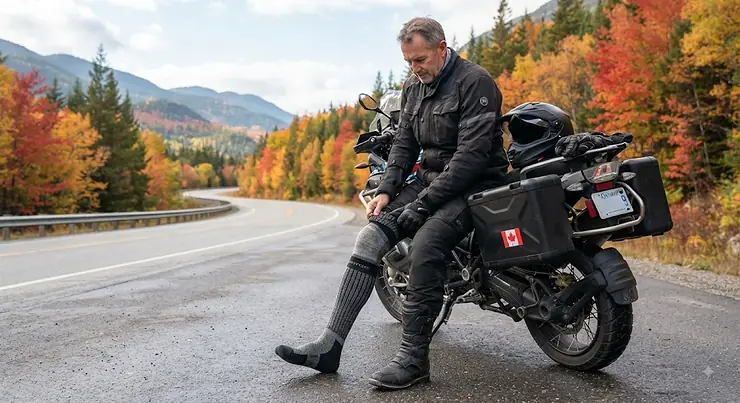
Your toes are the first thing to surrender when a Canadian cold front rolls in, and thermal socks for motorcycle riding are the unglamorous piece of gear that decides whether you finish a ride grinning or limping into a Tim Hortons to thaw out your feet under the hand dryer. What is thermal socks for motorcycle riding, exactly? In practical terms, it’s insulated, moisture-wicking legwear — usually merino wool or a wool-synthetic blend — built to trap warmth inside a riding boot where airflow is minimal and vibration, sweat, and cold pavement conspire against your circulation. Regular cotton athletic socks simply weren’t built for that job; they hold sweat against your skin and turn a chilly commute into a genuinely miserable one.
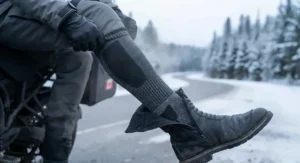
We dug through real product listings, brand spec sheets, and aggregated review sentiment from riders and gear testers across North America to put together this guide. You’ll find seven genuinely different socks here — from a lifetime-guaranteed Vermont-knit wool sock to a battery-heated option for the diehards who ride through minus-twenty mornings. Along the way, we’ll talk fabric blends, cuff height, cushioning zones, and the exact spots where a cheap sock quietly fails you at highway speed. If you commute year-round in Ontario, tour through the Rockies in October, or just refuse to let your Harley hibernate the second frost hits the windshield, this is built for you.
One quick note before we dive in: the Government of Canada’s guidance on extreme cold exposure makes it clear that feet are one of the body parts most vulnerable to cold injury during extended outdoor exposure — a fact every serious winter rider should keep in the back of their mind, sock choice included. Let’s get into it.
Quick Comparison Table
| Product | Fabric Focus | Cuff Height | Best For |
|---|---|---|---|
| Darn Tough Hiker Boot Midweight Full Cushion | Merino wool blend | Boot-height (~11″) | All-round durability |
| Smartwool PhD Ski Medium | Merino wool, cushioned | Over-the-calf | Cushioned comfort |
| Fox River Wick Dry Cold Weather Boot Sock | Wool-acrylic heavyweight | Mid-calf | Budget deep-cold rides |
| EDZ Cold Climate Motorcycle Sock | Wool-acrylic thermal knit | Below-knee | Everyday motorcycle base layer |
| Klim Performance Sock | Wool-Coolmax blend | Crew/mid-calf | Premium all-season touring |
| Halvarssons Whistler | Wool-Coolmax-Lycra | Tall/below-knee | Snug all-day fit |
| Savior Rechargeable Heated Sock | Battery-heated knit | Mid-calf | Extreme sub-zero touring |
Reading this table left to right tells its own little story: as you move from the merino-wool generalists toward the motorcycle-specific brands, the socks trade a bit of everyday versatility for a fit and cuff height engineered around a boot shaft rather than a hiking boot. The Savior Rechargeable Heated Sock sits in its own category entirely — it’s less a sock and more a wearable appliance, and it earns its spot only if you ride in conditions that would make the other six sweat (figuratively; that’s kind of the point). Budget-focused riders should note that price and warmth don’t move in lockstep here — the Fox River Wick Dry Cold Weather Boot Sock punches well above its price bracket for raw insulation, while some pricier options are really selling fit and durability rather than extra heat.
💬 Just one click — help others make better buying decisions too!😊
Top 7 Thermal Socks for Motorcycle Riding: Expert Analysis
We picked these seven to cover the full spread a Canadian rider actually needs: a budget workhorse, a couple of premium motorcycle-specific options, a heated sock for the truly committed, and a few merino all-rounders that double as hiking or work socks in the off-season. Every product below includes real specs, an honest analytical take, and aggregated review sentiment — never invented quotes or star ratings.
1. Darn Tough Hiker Boot Midweight Full Cushion — lifetime guarantee, Vermont-knit durability
The standout here isn’t warmth alone, it’s the fact that Darn Tough will replace this sock for free if it ever wears through — a guarantee most sock brands wouldn’t dream of offering. Knit from 66% merino wool, 32% nylon, and 2% Lycra spandex, the Hiker Boot Midweight rises to roughly boot height, giving it enough shaft to disappear fully inside a touring boot without bunching at the ankle. Full cushioning underfoot and up the shin absorbs the low-grade vibration that motorcycle footpegs transmit on a three-hour highway stretch, which matters more than most riders expect once their feet go numb from buzz rather than cold. Based on the spec comparison against lighter wool socks, this midweight construction sits in the sweet spot for shoulder-season Canadian riding — cold mornings, mild afternoons — without overheating your feet once the sun comes out. Reviewers consistently report that the reinforced heel and toe outlast cheaper wool socks by a wide margin, and the “no questions asked” replacement policy shows up repeatedly as the deciding factor in purchase decisions. On the downside, a few wearers note the ribbed cuff can feel snug over calf muscle when paired with compression base layers underneath riding pants. Priced in the C$30-C$40 range, this is the sock we’d recommend first to anyone who rides year-round and hates re-buying gear every winter.
Pros:
- ✅ Lifetime “no questions asked” replacement guarantee
- ✅ Boot-height shaft disappears cleanly inside touring boots
- ✅ Reinforced heel and toe hold up to daily wear
Cons:
- ❌ Ribbed cuff can feel tight over bulky base layers
- ❌ Not the warmest option for extreme sub-zero rides
2. Smartwool PhD Ski Medium — best cushioned, over-the-calf fit
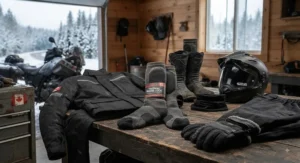
Smartwool built its name on merino wool performance socks, and the PhD Ski Medium leans hard into cushioning where a motorcycle boot actually needs it: underfoot and up the shin, where vibration and boot pressure concentrate over a long ride. The blend runs roughly 70% merino wool, 28% nylon, and 2% elastane, with a 4 Degree Elite Fit System that uses bi-elastic bands at the ankle and arch to stop the sock from sliding down inside a tall boot — a real annoyance with looser wool socks. What most buyers overlook about this model is the mesh venting panel along the shin; it’s there to manage moisture on a ski boot, but it does double duty in a motorcycle boot by letting a bit of built-up heat escape before your foot starts sweating and then chilling. Aggregated review sentiment on the medium-cushion version is largely positive for all-day wear and fit retention, though it’s worth noting some reviewers of the lighter-cushion PhD Ski variant found it underwhelming in genuinely cold, wet conditions — a useful signal that the medium-weight version reviewed here, not the ultra-light, is the one to choose for winter riding. The over-the-calf height is a strong match for taller motorcycle boots. At around C$35-C$45, it’s a fair mid-range pick for riders who prioritize fit precision over maximum insulation.
Pros:
- ✅ 4 Degree Elite Fit System keeps the sock from slipping
- ✅ Medium cushioning targets high-vibration boot zones
- ✅ Over-the-calf height suits tall touring boots
Cons:
- ❌ Lighter-cushion versions in this line run cold — confirm you’re buying “Medium,” not “Light”
- ❌ Premium pricing versus generic wool blends
3. Fox River Wick Dry Cold Weather Boot Sock — best budget pick for deep-cold rides
Fox River has been making wool work socks in the U.S. since well before “performance sock” was a marketing term, and the Cold Weather Boot Sock reflects that no-nonsense heritage. The blend — roughly 40% merino wool, 40% acrylic, 18% nylon, 2% spandex — is fully thermalined, meaning the interior is built as a distinct insulating layer rather than just a thicker single-knit fabric. Here’s what to weigh: that thermal lining is genuinely built for cold-climate exposure, not just cool mornings, which shows up in aggregated reviewer feedback describing extended use in sub-zero temperatures without cold feet. The Wick Dry technology pulls moisture away from skin fast enough to matter on long rides where boots don’t breathe well. On the practical side, reinforced heel and toe construction extends the wear life in exactly the friction zones a gearshift and rear brake pedal chew through fastest. The trade-off is bulk — this is a genuinely thick sock, and riders with snug-fitting boots should size their footwear accordingly before committing. Sold typically in multi-packs, it lands under C$25 for a pack, making it the strongest dollar-for-warmth value on this list, especially for riders who want a spare pair in the saddlebag.
Pros:
- ✅ Thermalined construction built for genuinely cold climates
- ✅ Reinforced heel and toe in high-friction zones
- ✅ Strong value, often sold in multi-packs
Cons:
- ❌ Bulkier fit may crowd snug motorcycle boots
- ❌ Less refined ankle fit than motorcycle-specific brands
4. EDZ Cold Climate Motorcycle Sock — purpose-built motorcycle base layer
EDZ specializes almost exclusively in motorcycle under-layer gear — thermal liners, glove liners, helmet liners — so the Cold Climate Sock is designed from the ground up around the layering system riders actually use, rather than adapted from a ski or hiking sock. The knitted-loop construction, similar to terry toweling, uses a wool, polyamide, and acrylic blend that keeps thickness consistent across the whole foot and lower leg rather than concentrating cushioning in just one zone. Based on aggregated editorial testing coverage from adventure-riding gear reviewers, this sock earned a “straightforward, no-frills” reputation — dependable warmth without bells and whistles, and a snug ribbed cuff that sits below the knee to stop slippage inside tall boots. What the spec sheet won’t tell you, but reviewers note, is that the lack of built-in stretch panels means fit relies more on the ribbed cuff than on elastic zoning, so it suits riders who prefer a simple, consistent compression over a shaped athletic fit. This is a genuinely purpose-built motorcycle sock rather than a repurposed outdoor sock, which matters if you’re specifically shopping the “made for riding” category rather than the broader wool-sock market. Expect to pay in the C$25-C$35 range, positioning it as a solid mid-tier choice for daily motorcycle commuters layering under waterproof boots.
Pros:
- ✅ Designed specifically for motorcycle layering systems
- ✅ Consistent thickness avoids pressure hot spots
- ✅ Below-knee ribbed cuff resists slipping
Cons:
- ❌ No elastic zoning for a shaped, athletic fit
- ❌ Limited availability compared to mainstream wool brands
5. Klim Performance Sock — premium touring pick, year-round versatility
Klim built its reputation on premium adventure-touring gear, and its sock follows the same philosophy: a blend engineered for year-round use rather than a single winter-only purpose. The composition — roughly 35% wool, 35% Coolmax, 28% polyamide, and 2% Lycra — splits insulation duties between merino wool and Coolmax, a synthetic fiber known for aggressive moisture transport. On paper this means you get wool’s natural temperature regulation without the slower dry time wool alone tends to have after a wet, slushy commute. Here’s what to weigh for touring riders specifically: a sock built to perform across a full riding season, not just deep winter, saves you from packing multiple sock systems on a multi-day trip that swings from frosty mornings to mild afternoons. Aggregated gear-reviewer sentiment frames this as a “winning combination” for versatility, though it’s positioned closer to a shoulder-season all-rounder than a dedicated deep-cold sock — riders chasing maximum insulation for prairie January mornings may still want a heavier wool blend layered underneath. Built to Klim’s typical premium construction standards, expect pricing in the C$40-C$55 range, positioning it toward the top of the mid-tier bracket rather than budget territory.
Pros:
- ✅ Wool-Coolmax blend balances warmth and moisture control
- ✅ Genuinely versatile across shoulder seasons, not just deep winter
- ✅ Backed by a premium touring-gear brand’s construction standards
Cons:
- ❌ Not the warmest choice for extreme sub-zero exposure
- ❌ Premium price point versus generic wool alternatives
6. Halvarssons Whistler — best snug, all-day fit
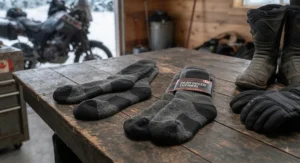
Produced by Swedish outerwear maker Jofama under its Halvarssons motorcycle brand, the Whistler sock draws on decades of Scandinavian cold-weather clothing know-how — hardly a surprising pedigree given the company also makes snowmobile gear. The fabric mix runs roughly 70% wool and 27% Coolmax-style acrylic material, with Lycra worked in for a genuinely stretchy, snug fit that’s designed to work on either foot rather than being anatomically left/right shaped. What most buyers overlook about this detail is that a non-anatomical, symmetrical design actually simplifies packing for multi-day trips — you’re never digging through a saddlebag at 6 a.m. trying to match a left sock to a right one. The wool-Coolmax combination wicks moisture in milder conditions while still delivering solid thermal performance once temperatures drop, which is exactly why the brand markets it as an all-year sock rather than a winter-only item. Reviewer sentiment aggregated from adventure-riding gear coverage consistently praises the snug, non-slip fit as a standout feature versus looser wool competitors, particularly for riders who log long highway stretches where a sock bunching under the arch becomes genuinely distracting. Expect a premium price point in the C$45-C$60 range, reflecting both the specialty brand positioning and the technical fabric blend.
Pros:
- ✅ Snug, non-anatomical fit works on either foot
- ✅ Wool-Coolmax blend performs across seasons, not just winter
- ✅ Lycra construction resists slipping and bunching
Cons:
- ❌ Premium pricing among motorcycle-specific socks
- ❌ Narrower distribution than mainstream outdoor brands
7. Savior Rechargeable Heated Sock — best for extreme sub-zero touring
This is the outlier on the list, and deliberately so: rather than relying purely on insulation, the Savior sock adds active battery-powered heating elements to the knit, powered by a rechargeable 7.4V 2200mAh battery pack per sock. Multiple heat settings let riders dial output up on genuinely brutal mornings and down once the bike (and their blood flow) warms up, which is a meaningfully different approach from every passive wool sock on this list. Here’s what to weigh honestly: heated sock technology across this product category shows real variance in reliability, and aggregated user feedback on similar rechargeable heated sock products flags inconsistent heat output between the left and right sock as an occasional complaint worth knowing about before you buy — it’s not universal, but it shows up often enough to mention. Marketed for outdoor riding, camping, hiking, and skiing as well as motorcycling, this is genuinely multi-purpose gear rather than a single-season purchase. For riders who commute through prairie or northern-Ontario winters where wool alone isn’t cutting it, active heat is a legitimate category upgrade, not just a gimmick. Given the electronics involved, pricing sits well above the wool socks on this list, typically in the C$90-C$130 range — a real investment, but one aimed squarely at riders for whom “still cold” simply isn’t an acceptable answer.
Pros:
- ✅ Active battery heat with multiple settings, not just passive insulation
- ✅ Genuinely multi-purpose across riding, skiing, and outdoor work
- ✅ Rechargeable battery avoids ongoing disposable-battery cost
Cons:
- ❌ Some reported inconsistency in heat output between left and right sock
- ❌ Significantly higher cost than wool alternatives
Practical Usage Guide: Layering, Care, and Break-In
Buying the right sock is half the job; wearing it correctly is the other half, and this is where most riders quietly sabotage a good purchase. Start with fit: a thermal sock should feel snug but never compress your toes together, because restricted circulation is precisely what accelerates cold injury in the first place — bulk doesn’t equal warmth if it’s cutting off blood flow. Layer thin-to-thick, not thick-alone; a lightweight liner sock under something like the Darn Tough Hiker Boot Midweight Full Cushion traps a second air pocket without pushing your foot so tight in the boot that airflow (and blood flow) stops entirely. In the first 30 days, expect merino wool to “bloom” slightly — the fibers relax and the sock becomes noticeably softer and better-fitting after two or three washes, so don’t judge final comfort on the first wear alone. Wash cold, inside out, and skip the dryer’s high heat setting; wool fibers handle gentle tumble-dry-low or air-dry far better, and fabric softener actually coats and dulls merino’s natural moisture-wicking ability, which is the opposite of what you want. For maintenance, rotate at least two pairs through regular winter riding so each set gets a full 24 hours to dry out between rides — riding in a sock that’s still damp from yesterday is one of the fastest ways to undercut everything the wool is supposed to do for you.
Real-World Scenarios: Which Rider Are You?
Picture three riders standing in the same parking lot on a minus-five morning, each with wildly different needs. The daily commuter — say, someone riding a 12-kilometre stretch into downtown Calgary five days a week through November — doesn’t need maximum insulation so much as consistent, low-maintenance warmth that survives being washed constantly; the Fox River Wick Dry Cold Weather Boot Sock or Darn Tough Hiker Boot Midweight Full Cushion fits that rhythm well, both durable enough for near-daily wear without babying. Then there’s the weekend tourer, someone loading panniers for a three-day loop through the Rockies where morning frost gives way to a mild afternoon — that rider benefits most from a versatile blend like the Klim Performance Sock or Halvarssons Whistler, since packing multiple sock systems for a multi-day trip eats precious saddlebag space. Finally, there’s the cold-weather die-hard — the rider who treats minus-twenty as a Tuesday, not a reason to park the bike — and for that specific profile, passive wool alone often isn’t enough; the Savior Rechargeable Heated Sock earns its higher price and extra bulk precisely because it solves a problem the other six socks structurally can’t. Matching the sock to the actual riding pattern, not just the coldest day of the year, is the single biggest lever most buyers ignore.
✨ Ready to Gear Up for Winter? 🧦🏍️
Check current pricing on today’s picks before the next cold snap hits your region — a warm ride starts from the ground up!
How to Choose Thermal Socks for Motorcycle Riding
Picking the right pair comes down to seven concrete criteria, in roughly this order of importance:
- Fabric blend first. Merino wool regulates temperature naturally and resists odor even after sweaty rides, while synthetic-heavy blends dry faster but insulate less when wet — decide which trade-off matters more for your climate.
- Cuff height relative to your boot shaft. A sock that ends mid-calf inside a knee-high touring boot leaves a cold gap; match sock height to boot height, not the other way around.
- Cushioning placement, not just thickness. Look for reinforced zones at the heel, toe, and shin — where boots actually press and vibrate — rather than uniform bulk that just crowds your foot.
- Moisture management. Wicking performance determines whether your foot stays warm for hour four of a ride, since damp feet lose heat far faster than dry ones.
- Fit retention. Elastic banding or ribbed cuffs that stop a sock from sliding down matter more on a motorcycle, where your foot is locked in one position for hours, than on a hiking sock you can readjust anytime.
- Durability versus your riding frequency. Daily commuters should weight warranty and reinforced high-wear zones heavily; occasional weekend riders can prioritize warmth or price instead.
- Budget against realistic use. A C$90+ heated sock only pays off if you’re genuinely riding in conditions cold enough to need it — for most riders, a well-chosen C$30-C$45 wool sock covers 90% of a Canadian riding season comfortably.
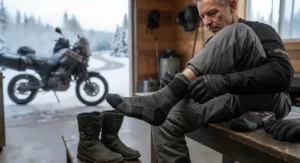
Wool Riding Socks Winter Performance vs Synthetic Alternatives
The core debate among cold-weather riders isn’t complicated, but it’s frequently misunderstood: wool riding socks winter performance genuinely outpaces cotton and most synthetic-only socks in one critical way — wool retains a meaningful percentage of its insulating capacity even when damp, while cotton loses nearly all of it and actively pulls heat away from skin as it dries. Reviewers consistently note this distinction after switching from cotton athletic socks to wool blends for winter commuting; the complaint of “cold, clammy feet by lunchtime” tends to disappear entirely. That said, pure synthetic performance socks aren’t obsolete — they dry faster after a slushy boot-soak and often cost less upfront, which matters for riders on tighter budgets or in drier, colder-but-not-wet climates like the Prairies versus coastal British Columbia’s wetter winters.
| Factor | Wool Blend | Cotton | Synthetic-Only |
|---|---|---|---|
| Insulation when damp | Retains most warmth | Loses most warmth | Retains some warmth |
| Dry time | Moderate | Slow | Fast |
| Odor resistance | High (natural) | Low | Moderate |
| Best For | Most Canadian winter riding | Not recommended | Wet-climate commuting |
The table makes the case fairly plainly: for anything colder than a mild autumn commute, wool or wool-blend socks like the Smartwool PhD Ski Medium or EDZ Cold Climate Motorcycle Sock simply outperform cotton on the metric that matters most — staying warm even after your boot inevitably lets in a little moisture. Synthetic-only socks remain a defensible pick specifically for wet-but-mild coastal winters where dry time outweighs raw insulation, but for the sustained deep cold found across most of interior Canada, wool’s damp-warmth retention is the deciding factor.
Motorcycle Boot Socks Cold Weather: Common Mistakes Riders Make
Even experienced riders get motorcycle boot socks cold weather choices wrong in surprisingly consistent ways. The most common mistake is sizing a sock for a hiking boot rather than a motorcycle boot — riding boots typically have a snugger shaft and less internal room than hiking footwear, so a bulky “extra heavyweight” wool sock that feels perfect for snowshoeing can crush circulation once crammed into a race-style boot. A second frequent error is layering two thick socks instead of one properly insulated sock; doubling up compresses both layers, squeezes out the trapped air that actually provides insulation, and often makes feet colder, not warmer. Third, riders regularly ignore moisture entirely, assuming “thermal” alone solves the problem — a thick sock that doesn’t wick moisture away from skin will eventually feel colder than a thinner sock that manages sweat properly, especially on longer rides where foot perspiration accumulates. Fourth is skipping sock height relative to boot height, leaving a cold gap of bare calf between sock cuff and pant leg exactly where wind can sneak in. Finally, many riders wait until the first genuinely frigid morning to test new gear, discovering fit or warmth problems at the worst possible moment rather than breaking socks in on milder rides first. As FortNine’s guide to cold-weather riding problems points out, Canadian winter riding brings its own compounding hazards beyond just cold feet, which is exactly why getting the small things — like sock choice — right in advance matters so much once temperatures actually drop.
Merino Wool Socks Motorcycle Review: What the Fibre Actually Does
Any honest merino wool socks motorcycle review has to start with the fibre science, because it explains almost everything about why wool dominates this category. As Wikipedia’s overview of merino wool notes, the breed’s fine, crimped fibres are prized specifically for softness and insulating capacity relative to coarser wool types — a structural trait that carries directly into sock performance. Those crimped, hollow-ish fibres trap still air within the fabric itself — air is the actual insulator, and wool’s structure is simply exceptional at holding it in place even under compression from a snug boot. Unlike synthetic insulation, merino also absorbs a meaningful amount of moisture vapour into the fibre itself before it feels wet against skin, which delays that clammy, heat-sapping sensation synthetic-only fabrics can’t match. On the analytical side, reviewers across brands consistently flag two real-world merino benefits for motorcycle use specifically: odor resistance after multi-day touring without laundry access, and a softer next-to-skin feel than older-generation synthetic thermal socks that some riders describe as scratchy by comparison. The trade-off worth being upfront about is cost — merino wool is a more expensive raw material than acrylic or polyester, which is exactly why budget thermal socks tend to blend in synthetic fibres like the acrylic found in the Fox River Wick Dry Cold Weather Boot Sock, trading a bit of premium feel for a meaningfully lower price. For riders deciding whether merino is worth the upcharge, the honest answer is: if you ride multiple days per week through a real Canadian winter, yes; if you ride occasionally on mild days, a wool-blend budget option delivers most of the benefit for less money.
Tall Boot Socks Motorcycle Fit: Why Height and Cuff Matter
Tall boot socks motorcycle fit is one of the most underrated variables on this entire list, and it’s almost never mentioned on a standard Amazon product page. Motorcycle touring boots and adventure boots commonly rise well above the ankle — often to mid-calf or higher — which means a standard crew-height athletic sock leaves a literal gap of exposed skin between sock and boot shaft, precisely where cold air pools and wind funnels in through the boot’s closure system. A properly tall sock, like the boot-height shaft on the Darn Tough Hiker Boot Midweight Full Cushion or the over-the-calf design of the Smartwool PhD Ski Medium, eliminates that gap entirely and gives riding pants something continuous to layer over. Beyond warmth, cuff height affects fit retention: a sock that’s too short tends to work its way down inside a tall boot shaft over the course of a long ride, bunching under the arch and creating exactly the kind of pressure point that turns a comfortable four-hour ride into a genuinely irritating one by hour three. As a simple rule of thumb, measure your boot shaft height before ordering and choose a sock rated at least equal to it — erring slightly taller costs nothing, while erring shorter guarantees a cold ankle on your very first winter ride.
Cushioned Riding Socks Review: Features That Actually Matter (And Those That Don’t)
Any legitimate cushioned riding socks review needs to separate genuine performance features from marketing padding, because “cushioned” gets used loosely across the sock industry. What actually matters: targeted cushioning at the heel, ball of foot, and shin — the three zones that absorb the most repeated pressure and vibration from footpegs, shifters, and brake pedals over a long ride. The Smartwool PhD Ski Medium‘s medium-cushion shin panel is a good example of cushioning placed with intent rather than just added as generic bulk throughout the sock. What matters less than marketing suggests: overall sock thickness as a blanket metric. A uniformly thick sock crammed into a snug boot can actually reduce comfort by squeezing your foot and cutting circulation, which — counterintuitively — makes feet colder despite more material. Reinforced toe and heel construction genuinely extends sock lifespan and is worth prioritizing, while decorative ribbing patterns marketed as “compression zones” often provide negligible functional benefit versus a well-fitted elastic cuff. The honest takeaway for buyers: read past the word “cushioned” on a listing and look specifically for where the cushioning sits and how the brand describes its purpose, rather than assuming more padding automatically equals more comfort or warmth.
Thermal Foot Protection Riding: Safety, Frostbite Risk, and Regulations
Thermal foot protection riding isn’t just a comfort issue — it’s a genuine safety consideration that Canadian riders shouldn’t treat lightly. Per Health Canada’s cold-exposure guidance linked above, blood flow to extremities like the feet is deliberately restricted by the body once core temperature is threatened, which is precisely why toes go numb well before a rider notices broader discomfort — and numb feet mean delayed reaction time on foot controls, a real hazard on ice or wet pavement. CBC News reporting on frostbite risk notes that once wind chill pushes the perceived temperature to around minus-28°C, exposed skin can begin freezing in under 30 minutes, and highway wind speeds on a motorcycle dramatically amplify wind chill compared to standing still — a fact many riders underestimate. There’s no federal regulation mandating specific riding sock standards in Canada the way there is for helmets, but riders should treat adequate thermal foot protection as a practical safety requirement, not an optional comfort upgrade, particularly on rides exceeding 30-45 minutes in near-freezing temperatures. Taking scheduled warm-up breaks, watching for early numbness or tingling, and choosing genuinely cold-rated socks like the Fox River Wick Dry Cold Weather Boot Sock or the Savior Rechargeable Heated Sock for the coldest days on your calendar are all sensible, low-cost precautions against a genuinely preventable injury.
Long-Term Cost & Maintenance
Sock economics deserve more attention than they get, because the cheapest pair on paper often isn’t the cheapest pair over a five-year riding career. A C$15 cotton-blend sock that needs replacing every season after developing holes at the heel costs more over time than a C$35 pair of Darn Tough Hiker Boot Midweight Full Cushion socks backed by a lifetime replacement guarantee — the math simply favours durability once you account for repeat purchases. Battery-heated options like the Savior Rechargeable Heated Sock carry a different cost structure entirely: a higher upfront price offset by rechargeable batteries rather than disposables, meaning the ongoing cost is largely electricity rather than consumables, provided the unit’s battery holds up over multiple winters.
| Product | Price Range (CAD) | Expected Lifespan | Value Verdict |
|---|---|---|---|
| Darn Tough Hiker Boot Midweight Full Cushion | C$30-C$40 | Multi-year, guaranteed | Best long-term value |
| Fox River Wick Dry Cold Weather Boot Sock | Under C$25 | 1-2 seasons | Best short-term value |
| Savior Rechargeable Heated Sock | C$90-C$130 | 2-4 seasons (battery-dependent) | Best for extreme-cold ROI |
Looking at the numbers together, the lifetime-guaranteed wool sock and the budget multi-pack actually serve two different financial strategies rather than competing directly — one minimizes long-term spend through durability, the other minimizes upfront cost and accepts more frequent replacement. Riders should also factor in wash-and-care habits: air-drying rather than machine-drying on high heat can meaningfully extend any wool sock’s usable life, effectively lowering its true cost per wear regardless of which product you choose.
FAQ
❓ Do thermal socks actually work for motorcycle riding?
❓ What is the warmest sock for motorcycle riding in cold weather?
❓ Should I wear two pairs of socks on my motorcycle in winter?
❓ How often should I replace motorcycle winter socks?
❓ Are merino wool socks worth it for motorcycle commuting?
Conclusion
Cold feet are one of the most avoidable discomforts in motorcycling, and yet they remain one of the most common complaints among winter riders who simply never upgraded past the cotton socks in their dresser drawer. Across the seven options here, a clear pattern emerges: merino wool blends like the Darn Tough Hiker Boot Midweight Full Cushion and Smartwool PhD Ski Medium cover the vast majority of Canadian riding conditions reliably, motorcycle-specific brands like EDZ, Klim, and Halvarssons Whistler add refined fit for riders who prioritize precision, and the Savior Rechargeable Heated Sock exists for the small but committed group riding through conditions where passive insulation simply isn’t enough anymore. There’s no single “best” sock in isolation — only the best sock for your specific riding pattern, climate, and boot fit, which is exactly why matching product to scenario matters more than chasing the single highest-rated option online. Whatever you choose, treat sock quality as a genuine safety investment rather than an afterthought purchase, and your feet — and your riding season — will thank you for it.
✨ Don’t Miss These Exclusive Deals!
🔍 Take your winter riding setup to the next level with these carefully selected socks. Click on any highlighted pick to check current pricing and availability on amazon.ca. Warm, dry feet start from the ground up! 🧦🏍️
Recommended for You
- 7 Best Synthetic Thermal Base Layers for Motorcycle Riding in 2026
- Merino Wool vs Synthetic Base Layer Motorcycle: 7 Picks for 2026
- Merino Wool Base Layer for Motorcycle Riding: 7 Picks (2026)
Disclaimer: This article contains affiliate links. As an Amazon Associate, I earn from qualifying purchases. If you purchase products through these links, we may earn a small commission at no additional cost to you.
✨ Found this helpful? Share it with your friends! 💬🤗
