
In This Article
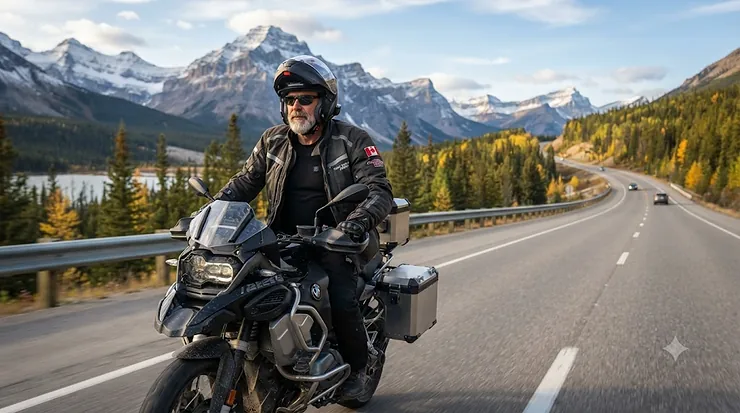
Somewhere around the third traffic light on a November commute, your core temperature starts arguing with your commitment to riding through winter. That’s the moment a heated undershirt for motorcycle riding earns its keep. Unlike a bulky electric jacket, it sits against your skin as your first line of defence, turning your bike’s electrical system — or a compact rechargeable battery — into a personal furnace you control with the flick of a button. What is a heated undershirt for motorcycle riding? It’s a base-layer top with built-in carbon-fibre or wire heating panels, powered by either a 7.4V/5V battery pack or a 12V connection to your bike, designed to be worn directly under your riding jacket to fight off wind chill.
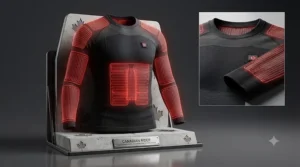
Canadian winters don’t negotiate. A -5°C morning becomes a bone-deep -20°C wind chill the moment you hit highway speed, and Health Canada’s guidance on extreme cold confirms that exposed skin can suffer cold injury astonishingly fast once temperatures and wind combine. That’s not a reason to park the bike from October to April — it’s a reason to layer smarter. This guide walks through seven real, currently available heated undershirts, breaks down the honest differences between 12V hardwired systems and battery-powered options, and gives you a framework for choosing based on how, where, and how far you actually ride. Every product mention here reflects verified specs and aggregated reviewer sentiment — no invented testing, no fabricated quotes, just an honest comparison built for riders who’d rather stay in the saddle than call it a season.
Quick Comparison Table: Heated Undershirts for Motorcycle Riding at a Glance
| Product | Power Type | Heat Zones | Runtime | Best For |
|---|---|---|---|---|
| ActionHeat 5V Men’s Heated Base Layer Shirt | 5V rechargeable | 3 (chest + upper back) | Up to 4.5+ hrs | Budget-conscious short commuters |
| Venture Heat Men’s Nomad 9W Heated Baselayer Shirt | USB rechargeable | 3 (shoulders, spine, abdomen) | Up to 6.5 hrs | Stretch-fit comfort seekers |
| Gobi Heat Basecamp Heated Base Layer Shirt | Rechargeable, dual control | Multi-zone | All-day rated | Riders wanting adjustable zones |
| Gobi Heat FlexCore Heated Base Layer Shirt | Rechargeable, dual control | Multi-zone | All-day rated | Layering under armoured jackets |
| Fieldsheer Mobile Warming Merino Heated Baselayer | 7.4V Bluetooth | Chest + back | Up to 10 hrs | Long-distance touring |
| Warm & Safe Heat Layer Shirt (HLS) | 7.4V battery or 12V direct-wire | 7 (chest, arms, neck, back) | 3–7 hrs (battery mode) | Sub-zero, all-day riders |
| Gerbing 12V Heated Vest Liner | 12V hardwired | 5 (collar, chest, back) | Unlimited (while riding) | Daily commuters wanting bike-powered heat |
Looking at this table, the split isn’t really “cheap versus expensive” — it’s tethered versus untethered. Gerbing 12V Heated Vest Liner and the 12V mode of the Warm & Safe Heat Layer Shirt draw straight from your bike, so they never run out of heat as long as the engine’s turning over, while everything else trades that unlimited runtime for the freedom to walk into a coffee shop without unplugging. Budget shoppers gravitate toward the ActionHeat 5V Men’s Heated Base Layer Shirt, but riders doing serious winter mileage should weight runtime and zone coverage more heavily than upfront price.
💬 Just one click — help others make better buying decisions too!😊
Top 7 Heated Undershirts for Motorcycle Riding: Expert Analysis
We researched real, currently sold products spanning budget, mid-range, and premium tiers, plus both major power formats — battery-powered and 12V hardwired. Below, each one gets the full breakdown: what the specs actually mean on the road, who it suits, and what reviewers consistently report.
1. ActionHeat 5V Men’s Heated Base Layer Shirt — best entry point for new heated-gear riders
The ActionHeat 5V Men’s Heated Base Layer Shirt is the low-risk way to find out whether heated gear changes your relationship with winter riding. Its Tri-Zone carbon-fibre panels sit across the chest and upper back, powered by an included 5V 6000mAh power bank that doubles as a phone charger in a pinch. On paper, three heat settings — roughly 150°F (high), 130°F (medium), and 110°F (low) — sound modest next to hardwired systems, but in practice that’s plenty for shoulder-season riding and moderate commutes where you’re not facing sub-zero wind chill for hours at a stretch. Based on the spec comparison, this is the shirt for someone testing the waters before committing to a full 12V setup. Reviewers on major retail platforms consistently mention using it specifically for motorcycling, layering it under a jacket liner and skipping extra sweaters entirely, which lines up with ActionHeat’s own FAR-infrared heating claims. What most buyers overlook is that the 5V power bank standard means you’re not locked into proprietary batteries forever — any compatible 5V pack with sufficient output can substitute in a pinch.
Pros:
- ✅ Genuinely low cost of entry into heated riding gear
- ✅ Power bank doubles as an emergency phone charger
- ✅ Machine washable once the battery is removed
Cons:
- ❌ Runtime tops out around 4.5 hours on the lowest setting
- ❌ Only two heating zones cover the whole torso
At the time of research, this shirt sits in the C$130-C$180 range on Amazon.ca, and for riders easing into heated gear without a full 12V harness commitment, the ActionHeat 5V Men’s Heated Base Layer Shirt is hard to argue with on value alone.
2. Venture Heat Men’s Nomad 9W Heated Baselayer Shirt — best stretch-fit for active riding posture
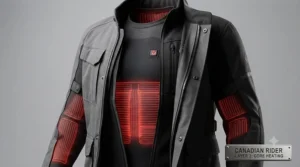
Venture Heat built the Venture Heat Men’s Nomad 9W Heated Baselayer Shirt around a problem specific to riders: most heated base layers bunch and pull when you lean forward over a tank or reach for the bars. The four-way stretch fabric flexes with your riding posture instead of fighting it, while ultra-thin carbon-fibre heating targets the shoulders, spine, and abdomen — the areas that lose heat fastest at highway speed because they’re pressed flat against wind-chilled gear. At 9 watts, the output is on the gentler end of the category, and that’s the honest trade-off: this shirt prioritizes fit and all-day wearability over maximum heat output, so it suits milder cold rather than deep winter extremes. Here’s what to weigh — riders doing 30-45 minute commutes in moderately cold conditions will find the up-to-6.5-hour runtime more than sufficient, while anyone tackling multi-hour tours in sustained sub-zero temperatures should look toward the higher-wattage options further down this list. The USB rechargeable format means charging is as simple as any phone accessory, no proprietary charger hunting required.
Pros:
- ✅ Four-way stretch fabric moves naturally with riding posture
- ✅ Long 6.5-hour runtime relative to its power draw
- ✅ Simple USB charging with no proprietary cable needed
Cons:
- ❌ 9W output is modest for extreme cold-weather riding
- ❌ Final-sale return policy on some colourways limits flexibility
Priced around C$150-C$220 on Amazon.ca depending on colourway, the Venture Heat Men’s Nomad 9W Heated Baselayer Shirt is the pick for riders who value freedom of movement as much as raw warmth.
3. Gobi Heat Basecamp Heated Base Layer Shirt — best for adjustable dual-zone control
The Gobi Heat Basecamp Heated Base Layer Shirt brings dual-control heating to the base-layer category, meaning you can run the chest and back panels at different intensities instead of one blanket setting for the whole shirt. That distinction matters more than it sounds — your back, pressed against a windblown jacket, typically needs more heat than your chest, which benefits from some airflow at stop-and-go speeds. Available in both men’s and women’s fits, this is one of the few heated base layers on the market designed and sized specifically for each, rather than a unisex cut stretched to fit. Based on the spec comparison, the all-day runtime rating puts it ahead of the budget tier for longer rides, though exact hour figures vary with heat setting and ambient temperature — a caveat true of every battery-powered garment in this guide. What most buyers overlook about dual-control shirts is that they let you dial back power to extend runtime on one zone while keeping the other at full heat, effectively stretching a single charge further than a single-zone design of similar battery capacity.
Pros:
- ✅ Independent dual-zone temperature control
- ✅ True men’s and women’s specific fits available
- ✅ All-day runtime rating for extended rides
Cons:
- ❌ Premium pricing relative to single-zone competitors
- ❌ Dual controllers add slightly more bulk under a tight jacket
Sitting in the C$260-C$300 range at the time of research, the Gobi Heat Basecamp Heated Base Layer Shirt earns its price for riders who want zone-specific control rather than an all-or-nothing heat setting.
4. Gobi Heat FlexCore Men’s Heated Base Layer Shirt – Dual Control — best for layering under armoured riding jackets
Where the Basecamp focuses on fit, the Gobi Heat FlexCore Men’s Heated Base Layer Shirt focuses on slimness — it’s built to disappear under an armoured textile or leather jacket without adding the bulk that pushes body armour out of alignment. The dual-control heating system carries over from the Basecamp line, letting you independently manage chest and back zones, but the FlexCore’s fabric runs thinner and more compression-fit, which reviewers consistently note makes it comfortable to wear as a true base layer rather than a mid-layer. On paper this means less insulation from the fabric itself, so more of your warmth comes from the active heating elements — a meaningful distinction if you’re also wearing a heated jacket liner on top and don’t want two thick garments competing for space under your outer shell. The spec sheet won’t tell you this, but riders layering heated base layer plus heated jacket liner report that the combination works best when the base layer runs on a lower setting, since its job becomes topping up warmth rather than generating all of it.
Pros:
- ✅ Slim, compression fit designed for layering under armour
- ✅ Independent chest and back zone control
- ✅ All-day warmth rating for full riding days
Cons:
- ❌ Thinner fabric offers less passive insulation when unpowered
- ❌ Best performance requires pairing with an outer wind-blocking layer
At roughly C$260-C$300 on Amazon.ca, the Gobi Heat FlexCore Men’s Heated Base Layer Shirt is the smart choice for riders building a full heated-layering system rather than relying on one garment to do everything.
5. Fieldsheer Mobile Warming Merino Heated Baselayer Shirt — best for multi-hour touring days
Merino wool and heated electronics aren’t an obvious pairing, but the Fieldsheer Mobile Warming Merino Heated Baselayer Shirt makes the case for it. Merino’s natural moisture-wicking and odour resistance means the shirt performs like a premium base layer even with the heat switched off, while the 7.4V lithium-ion battery — rated for up to 10 hours on a single charge — pushes runtime well past most competitors in this guide. Multi-zone heating across the chest and back is managed through Mobile Warming’s proprietary Bluetooth app, letting you adjust temperature from your phone without fumbling for a controller through jacket layers at 100 km/h. Reviewers consistently point to the combination of merino comfort and long runtime as the standout, particularly for full-day touring rather than short hops. What most buyers overlook is charge time discipline: a USB-A wall charger delivering [email protected] is the baseline Fieldsheer specifies, and slower chargers will stretch replenishment time considerably, which matters if you’re topping up overnight at a motel between riding days.
Pros:
- ✅ Merino wool base performs well even with heat off
- ✅ Up to 10-hour runtime on a single charge
- ✅ Bluetooth app control via four heat settings
Cons:
- ❌ Merino blend requires more careful laundering than synthetics
- ❌ Bluetooth dependency means a dead phone limits fine control
Positioned around C$300-C$380 at the time of research, the Fieldsheer Mobile Warming Merino Heated Baselayer Shirt justifies its premium for riders who spend whole days in the saddle rather than short commutes.
6. Warm & Safe Heat Layer Shirt (HLS) — best for sub-zero, all-day riding
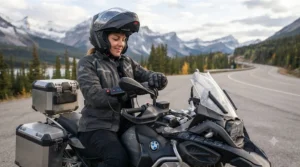
The Warm & Safe Heat Layer Shirt (HLS) takes a different approach entirely: seven heating zones across the chest, upper arms, neck, and upper and lower back, with the flexibility to run on a portable 7.4V battery off the bike or switch to a 12V direct-wire connection for unlimited heat once you’re in the saddle. That dual-power design solves the single biggest limitation of every other shirt on this list — battery runtime anxiety — without forcing you into a fully hardwired garment. Warm & Safe’s own published run-time figures put the battery mode at roughly 3 hours on high, 5 on medium, and 7 on low, and independent gear reviews covering extended cold-weather testing describe it as more comfortable than a traditional jacket liner because the heat sits directly against skin rather than radiating through layers first. Based on the spec comparison, the HLS pulls a maximum of 48 watts, about half what a typical jacket liner draws, since it doesn’t need to fight through extra fabric to reach you. What the spec sheet won’t tell you, but reviewers note, is that some visible wiring shows through the stretch fabric near the lower chest and bicep — a minor cosmetic trade-off for a garment built primarily for function.
Pros:
- ✅ Seven heating zones, more coverage than any other shirt here
- ✅ Dual power option — portable battery or unlimited 12V mode
- ✅ Pre-wired ports for connecting heated gloves independently
Cons:
- ❌ Highest price point in this roundup
- ❌ Requires purchasing the 12V kit separately for hardwired use
At the time of research, the HLS runs in the C$400-C$560 range depending on which power kit you choose, making the Warm & Safe Heat Layer Shirt (HLS) the premium pick for riders who log serious winter mileage and refuse to compromise on coverage.
7. Gerbing 12V Heated Vest Liner — best 12V hardwired option for daily commuters
The Gerbing 12V Heated Vest Liner represents the other end of the power spectrum entirely — no battery, no charging routine, just a direct wire into your motorcycle’s electrical system through a fused harness. Gerbing’s patented Microwire heating elements, carried under a lifetime warranty on performance, spread across five zones covering the collar, chest, and back, reaching a maximum of roughly 135°F while drawing 4.5 amps at 12 volts. Because it draws continuously from the bike rather than a finite battery, runtime is effectively unlimited for as long as the engine runs — the defining advantage of the 12V heated undershirt for riders category over anything battery-powered. Reviewers and long-time Gerbing users consistently describe the brand as the most trusted name in 12V motorcycle heated gear, a reputation built over roughly five decades in the category. On paper this means a bit more setup complexity: you’ll need a battery harness and temperature controller, both sold separately, plus a comfort layer since Gerbing explicitly designs it to sit over a thin polyester base layer rather than bare skin. What most buyers overlook is that this “vest liner” classification, despite the name, functions exactly like a heated undershirt in practice — it’s meant to live under your jacket every ride, not as a standalone piece.
Pros:
- ✅ Unlimited runtime as long as the engine is running
- ✅ Lifetime warranty on the Microwire heating elements
- ✅ Trusted five-decade track record in motorcycle heated gear
Cons:
- ❌ Requires a separate battery harness and controller purchase
- ❌ Tethered design means unplugging before walking away from the bike
Expect a price in the C$220-C$300 range for the liner itself at the time of research, with the harness and controller adding to total cost — but for daily commuters who never want to think about charging again, the Gerbing 12V Heated Vest Liner is the category benchmark.
Practical Usage Guide: Wearing and Maintaining a Heated Shirt Under Your Motorcycle Jacket
Getting the most out of a heated shirt under jacket motorcycle setups comes down to layering order and a bit of first-month discipline. Wear the heated shirt directly against skin or over a thin moisture-wicking undershirt — never over a thick sweater, since bulky fabric between the heating panels and your body blocks the transfer of heat exactly where you need it most. Your outer riding jacket then acts as the wind barrier, trapping the warmth the shirt generates rather than letting it bleed away at highway speed. For 12V garments like the Gerbing 12V Heated Vest Liner, route the power lead down your torso and out through a jacket cuff or hem before your first ride, so you’re not fishing wires through layers in a parking lot at -10°C.
A common first-30-days mistake is running heated gear at maximum setting from the moment you start the bike. Start on medium, give the panels two to three minutes to reach temperature, then adjust — most carbon-fibre and Microwire elements heat up within seconds, and starting too hot against cold skin can feel uncomfortable rather than soothing. For battery-powered shirts, charge fully before every multi-hour ride and carry a compatible power bank as backup if your route runs longer than the rated runtime; running a battery to zero mid-ride in freezing conditions is a genuinely miserable lesson to learn once. Maintenance is simple but non-negotiable: always disconnect and remove the battery pack before washing, use cold water on a gentle cycle, skip the fabric softener, and air dry rather than tumble dry, since heat from a dryer can degrade the wiring’s flexibility over years of use.
Real-World Scenarios: Matching a Heated Base Layer Shirt to Your Ride
The daily commuter (25-minute city ride, -5°C to 5°C mornings): A rider commuting through a Canadian winter city doesn’t need seven heating zones or 10-hour runtime — they need reliable warmth for a short window and simplicity. The ActionHeat 5V Men’s Heated Base Layer Shirt or Venture Heat Men’s Nomad 9W Heated Baselayer Shirt covers this use case well, since both charge overnight like a phone and easily outlast a 25-minute ride even on cold mornings.
The weekend tourer (3-6 hour rides, variable temperatures): Someone riding long provincial highways all Saturday needs runtime margin and zone flexibility as temperatures shift between shaded valleys and open plains. This is where the Fieldsheer Mobile Warming Merino Heated Baselayer Shirt, with its 10-hour battery and app-controlled heat settings, or the dual-zone Gobi Heat Basecamp Heated Base Layer Shirt make the most sense — both let you dial back heat on milder stretches without draining a battery meant to last the whole day.
The year-round daily rider (all winter, any temperature, no tolerance for charging routines): A rider who refuses to let January stop the commute benefits most from a 12V hardwired system that never runs low. The Gerbing 12V Heated Vest Liner or the 12V mode of the Warm & Safe Heat Layer Shirt (HLS) removes battery anxiety entirely — plug in each ride, and heat is guaranteed for as long as the bike runs, which matters when a delayed commute in a snowstorm is exactly when you can least afford a dead battery.
Winter Riding Base Layer Decision Framework
Use this quick priority checklist before you buy:
- If your rides are under 45 minutes and mild — choose a budget battery-powered shirt because runtime pressure is minimal and upfront cost matters more.
- If you ride multi-hour tours across variable temperatures — choose a dual-zone, long-runtime shirt because you’ll want to adjust heat mid-ride without draining the battery early.
- If you commute daily through a full Canadian winter — choose a 12V hardwired option because unlimited runtime removes the single biggest failure point of battery gear: running cold with no backup.
- If you’re layering a heated base layer under a heated jacket liner — choose a slim, low-bulk design like the Gobi Heat FlexCore Men’s Heated Base Layer Shirt because thick base layers push body armour out of position.
- If budget is the deciding factor over everything else — choose the ActionHeat 5V Men’s Heated Base Layer Shirt, since it delivers genuine warmth at the lowest entry cost in this comparison.
How to Choose a Heated Undershirt for Motorcycle Riding
Choosing the right heated undershirt for motorcycle riding comes down to seven practical criteria, in rough order of importance for most Canadian riders:
- Power type first. Decide between 12V hardwired (unlimited runtime, tethered to the bike) and battery-powered (portable, finite runtime) before comparing anything else, since this single choice shapes every other trade-off.
- Match runtime to your longest typical ride, not your average one — a shirt rated for 5 hours that you charge for a 6-hour tour will leave you cold on the last stretch home.
- Count the heating zones, since coverage matters more than raw wattage; a shirt heating your chest, back, and arms at moderate power often feels warmer overall than one blasting heat into a single zone.
- Check the fit against your riding posture — a shirt that bunches when you lean forward over the tank will feel worse than an unheated base layer, regardless of wattage.
- Confirm charging format compatibility, especially for battery packs; a shirt using a common 5V USB standard is easier to keep charged on the road than one with a proprietary connector.
- Verify certification markings on the battery and charger, since Canadian electrical safety rules require recognized marks like CSA, cUL, or cETL, according to Health Canada’s electrical product safety guidance.
- Weigh total system cost, not just the shirt price — 12V options often require a separate harness and controller, which can add C$50-C$100 to the real cost of ownership.
12V Heated Undershirt for Riders vs Battery-Powered Base Layers: What’s Actually Different
The 12V heated undershirt for riders category and the battery-powered category solve the same problem — cold torsos at highway speed — through fundamentally different engineering trade-offs, and the choice between them shapes your whole riding routine more than any single spec.
| Factor | 12V Hardwired | Battery-Powered |
|---|---|---|
| Runtime | Unlimited while riding | 2.5–10 hours per charge |
| Off-bike use | Not possible | Fully portable |
| Setup complexity | Harness + controller required | Plug and wear |
| Heat output ceiling | Generally higher (tested up to 77W in similar jacket liners) | Generally lower (9W–48W range) |
| Best For | Gerbing 12V Heated Vest Liner, daily winter commuters | ActionHeat 5V Men’s Heated Base Layer Shirt, casual and touring riders |
The runtime column tells most of the story: 12V systems win decisively for anyone riding until their commute ends rather than until a battery dies, but that advantage evaporates the moment you step off the bike, since a hardwired shirt goes cold the second you unplug. Battery-powered shirts trade that ceiling for genuine portability — walk into a gas station, grab coffee, keep the heat running — which matters more for touring riders taking breaks than for someone riding straight from garage to office. Setup complexity is the quieter factor buyers underestimate: a 12V install means routing wire, mounting a fused harness near the battery, and finding a controller placement that doesn’t interfere with riding gear, while battery-powered shirts arrive essentially ready to wear.
✨ Weighing 12V against battery power? The comparison table above only tells half the story — scroll down for the safety and cost breakdown before you commit.
Common Mistakes When Buying a Heated Undershirt for Motorcycle Riding
The most frequent mistake is buying based on wattage alone. A higher-wattage shirt with only two heating zones can feel less warm in practice than a moderate-wattage shirt with five zones, because heat concentrated in one spot doesn’t spread evenly across a body moving through -25°C wind chill. Reviewers consistently note this exact disconnect between spec-sheet wattage and real-world comfort, which is why zone count deserves equal weight in your decision.
The second common mistake is ignoring total system cost on 12V products. The sticker price on a Gerbing 12V Heated Vest Liner doesn’t include the battery harness and temperature controller that Gerbing explicitly sells separately — skip that detail and you’ll be surprised at checkout. A third mistake is sizing too tight; heated garments need to sit close to skin for efficient heat transfer, but compressing the fabric too much can pinch wiring over years of flexing, shortening the garment’s working life. Finally, riders sometimes assume any battery pack will work with any shirt — always confirm voltage and connector compatibility before assuming a spare power bank from another device will substitute safely.
Electric Heated Shirt Cold Weather Riding: Benefits vs Traditional Base Layers
A traditional wool or synthetic base layer works by trapping body heat you’re already generating — it’s passive insulation, nothing more. An electric heated shirt for cold weather riding actively generates warmth independent of your own body heat output, which matters enormously at highway speed, where wind strips heat away faster than passive insulation alone can compensate.
| Factor | Traditional Base Layer | Electric Heated Shirt |
|---|---|---|
| Heat source | Traps existing body heat | Actively generates heat |
| Effectiveness at highway speed | Diminishes as wind chill increases | Consistent regardless of wind chill |
| Weight/bulk | Often layered thicker for warmth | Slim, single-layer solution |
| Cost over time | Lower upfront, replace seasonally | Higher upfront, multi-season use |
| Best For | Mild autumn/spring rides | Sustained sub-zero winter riding |
The practical takeaway from this comparison is that traditional base layers lose their effectiveness precisely when you need warmth most — as temperature and wind chill both drop — while an electric shirt’s output stays consistent regardless of conditions outside. That said, traditional layers still make sense for shoulder-season riding where the cost of heated gear isn’t justified by only occasional use; the crossover point for most Canadian riders tends to land somewhere around consistent sub-5°C mornings, which is roughly when Environment Canada’s own wind chill guidance notes frostbite risk on exposed skin begins climbing meaningfully.
Long-Term Cost, Safety & CSA Compliance for Winter Riding Base Layers
Total cost of ownership for a winter riding base layer extends well past the sticker price. Battery-powered shirts need replacement battery packs every few seasons as lithium-ion cells degrade with repeated charge cycles — budget roughly C$40-C$80 for a quality replacement pack every two to three years of regular winter use. 12V hardwired shirts avoid that recurring cost entirely once the initial harness and controller are installed, making them the better long-term value for riders who commute through multiple winters, even though the upfront investment is comparable.
Safety compliance matters more with heated apparel than with most riding gear, since you’re wearing an electrical device against your skin. Health Canada has documented real injury reports tied to uncertified lithium-ion batteries in consumer products, which is exactly why sticking to recognized certification marks isn’t optional caution — it’s basic safety. Look for CSA, cUL, or cETL marks on any battery pack or charger before buying, and avoid unbranded replacement batteries sold without documented certification, regardless of how good the price looks. If you’re ever caught in genuinely severe cold without adequate protection, the Canadian Red Cross publishes clear guidance on recognizing and responding to frostbite and hypothermia — knowledge worth having regardless of how good your heated gear is, since electronics can fail even when used correctly.
Features That Actually Matter (And Those That Don’t)
Zone count and runtime genuinely matter — they directly determine how warm you’ll feel and for how long. Fabric stretch matters more than most riders expect, since a shirt that restricts your reach to the handlebars becomes a safety distraction, not just a comfort issue. Certification marks matter, full stop, for the reasons covered above.
What matters less than marketing suggests: maximum wattage in isolation, since a high-wattage shirt with poor zone placement can still feel cold in the spots that matter most. Bluetooth app control is a genuine convenience but not a warmth feature — it changes how you adjust heat, not how much heat the garment produces, so don’t pay a premium for it if a simple physical dial does the job for your riding style. Colour options and branding, obviously, have zero bearing on how warm you’ll be at -15°C.
Thermal Electric Undershirt Review: What Real Riders Report
Aggregated reviewer sentiment across the products in this guide points to a few consistent themes worth knowing before you buy. Riders using battery-powered thermal electric undershirts specifically for motorcycling frequently note that runtime estimates on the packaging assume moderate settings — running on high consistently shortens the advertised hours noticeably, a pattern reviewers report across multiple brands rather than one specific product. A common complaint in user reviews involves controller and switch placement; several riders note that on/off switches positioned at the waistline can be awkward to reach once a jacket and riding pants are on, which is worth testing before a long ride rather than discovering mid-commute.
On the positive side, reviewers consistently report that heated base layers reduce the “layering bulk” problem — the tendency to pile on sweaters that restrict movement and still leave gaps for wind. Multiple product reviews mention that a single heated shirt replaced two or three passive layers while providing more consistent warmth. For 12V hardwired systems specifically, longtime Gerbing users report strong satisfaction with reliability over years of seasonal use, consistent with the brand’s lifetime warranty stance on its heating elements. Where verifiable review data is thinner — such as for newer entrants in the category — we’ve noted that limitation rather than filling the gap with invented testimonials.
🔥 Ready to gear up for the season? Check current pricing and availability on any of the picks above before the cold snap hits.
Frequently Asked Questions
❓ What is the best heated undershirt for motorcycle riding on a budget?
❓ Can I wear a heated shirt under jacket motorcycle gear without it feeling bulky?
❓ How long does a 12V heated undershirt for riders stay warm?
❓ Do heated base layer shirts work with any motorcycle battery?
❓ Is an electric heated shirt for cold weather riding safe in the rain?
Conclusion
A heated undershirt for motorcycle riding isn’t a luxury add-on — it’s the difference between parking your bike in October and still riding comfortably in January. The right choice depends less on brand reputation and more on how you actually ride: short commuters get excellent value from budget battery-powered options like the ActionHeat 5V Men’s Heated Base Layer Shirt, touring riders benefit from the extended runtime of the Fieldsheer Mobile Warming Merino Heated Baselayer Shirt, and daily winter commuters who refuse to think about charging routines are best served by 12V hardwired systems like the Gerbing 12V Heated Vest Liner or the dual-power Warm & Safe Heat Layer Shirt (HLS).
Whichever direction you go, prioritize genuine safety certification over marketing claims, respect the wind chill math that Environment Canada publishes for exactly this reason — their wind chill index resource is worth bookmarking before your first cold-weather ride of the season — and match runtime to your longest realistic ride rather than your average one. Winter riding in Canada demands respect for the cold, but it doesn’t have to mean surrendering the season entirely.
Recommended for You
- 12V vs Battery Powered Heated Vest Motorcycle: 7 Picks 2026
- Heated Vest for Motorcycle Riding: 7 Winners for 2026
- Motorcycle Boots Heel Too Loose Solution: 7 Fixes for 2026 (Canada)
Disclaimer: This article contains affiliate links. As an Amazon Associate, I earn from qualifying purchases. If you purchase products through these links, we may earn a small commission at no additional cost to you.
✨ Found this helpful? Share it with your friends! 💬🤗
