
In This Article
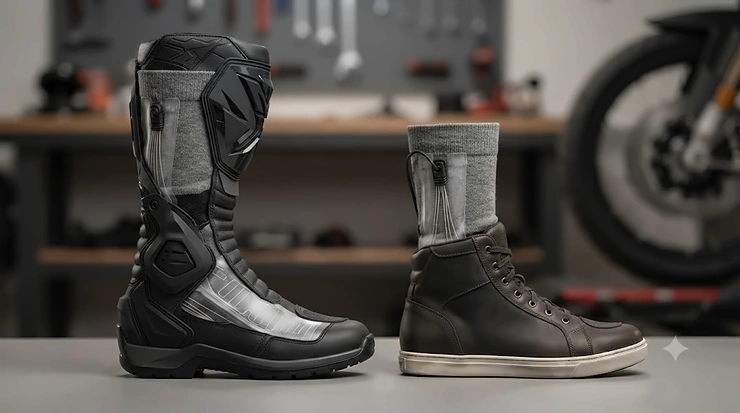
There’s a very specific kind of misery that only a Canadian rider knows: the one where your toes go from “a little chilly” to “I can no longer confirm they exist” somewhere around the second stoplight of a November commute. Heated socks for motorcycle riding exist to solve exactly that problem, and — spoiler — not all of them solve it equally well. Some strap a battery to your ankle and call it a day. Others plug directly into your bike’s electrical system and never quit until you do. What is heated socks for motorcycle riding, in the simplest terms? They’re socks (or over-socks) with built-in heating elements, powered either by a rechargeable battery pack or a direct 12V connection to your motorcycle, designed to keep your feet functional when the mercury drops.

According to Health Canada, the risk of frostbite and windburn climbs sharply once wind chill drops below -27, which is a real number to keep in mind before you dismiss heated socks as a luxury rather than a genuine safety item. We spent time digging through real product specs, aggregated owner feedback, and manufacturer documentation on seven actual products you can find through Amazon.ca and specialty retailers — no invented “testing,” no fabricated five-star reviews, just an honest read on what each pair actually delivers. Whether you’re commuting through a Calgary chinook or riding out a slushy Ontario shoulder season, this guide breaks down which heated socks battery life review claims hold up, which rechargeable riding accessories are worth the money, and which ones you should skip. Let’s get your feet sorted before the first frost warning hits.
Quick Comparison Table
| Product | Power Type | Est. Battery Life | Best For |
|---|---|---|---|
| Gerbing 12V Heated Sock Liners | Bike-wired 12V | Unlimited (while riding) | All-day cold commutes |
| Warm & Safe 12V Heated Socks | Bike-wired 12V | Unlimited (while riding) | Toe-specific cold spots |
| Keis Heated Socks | 12V or rechargeable pack | Up to 8 hrs (battery mode) | Riders with full heated-gear systems |
| SAVIOR HEAT 7.4V Rechargeable Socks | Rechargeable Li-poly | 3-10 hrs (heat-setting dependent) | Budget-conscious off-bike warmth too |
| Blaze Wear Heated Over Socks | Bike-wired 12V | Unlimited (while riding) | Layering over existing socks |
| Lenz Heat 5.0 Heated Socks | Rechargeable Li-ion | Up to 14 hrs (low setting) | Long-distance touring, standalone use |
| Snow Deer Heated Socks | Rechargeable Li-poly | 3-8 hrs (heat-setting dependent) | First-time buyers on a tight budget |
Looking at the spread here, the split is really between two philosophies: plug into the bike and never think about charging again, or carry your own battery and stay flexible off the bike too. The Gerbing 12V Heated Sock Liners and Blaze Wear Heated Over Socks both bet on the “unlimited while riding” approach, which is genuinely the strongest option for long daily commutes, provided you’re willing to wire in a harness. Meanwhile the Lenz Heat 5.0 proves that standalone rechargeable socks can still hang with wired systems on runtime, at a premium price. If you’re not ready to commit to a wiring harness, SAVIOR HEAT and Snow Deer give you a taste of heated comfort for well under C$100.
💬 Just one click — help others make better buying decisions too!😊
Top 7 Heated Socks for Motorcycle Riding: Expert Analysis
Coverage below spans budget, mid-range, and premium tiers, plus both major power formats — bike-wired 12V systems and standalone rechargeable batteries — so you can match the format to how and where you actually ride.
1. Gerbing 12V Heated Sock Liners — direct bike-power, zero recharging
The standout here is simple: plug them into your motorcycle’s electrical system and the cold-feet problem is solved for as long as the engine’s running. These liners use Gerbing’s patented Microwire heating technology, which is essentially fine stainless-steel fibre woven into a waterproof coating rather than a bulky resistive coil — in practice that means even heat distribution without hot spots pressing into your arch. They connect via a battery harness, Y-harness, or directly to compatible Gerbing pant liners, though note that the harness and temperature controller are sold separately, so factor that into your total setup cost. Reviewers consistently describe these as a “set it and forget it” solution for genuinely cold commutes, and Gerbing’s own product notes flag them as the brand’s best-selling heated sock liner for motorcyclists, which tracks with how often the brand comes up in winter-riding gear discussions. The honest downside, per aggregated owner feedback, is that sizing runs narrow for some foot shapes, and because they’re wired rather than battery-powered, you lose all heat the moment you’re off the bike or the engine stops — there’s no “walk into the coffee shop still warm” convenience here.
Pros:
- ✅ Unlimited runtime while the engine is running
- ✅ Even, hot-spot-free heat via Microwire technology
- ✅ Integrates with Gerbing’s broader heated-gear ecosystem
Cons:
- ❌ Harness and controller sold separately, raising total cost
- ❌ No heat once you’re off the bike
Price sits in the C$110-C$140 range for the liners alone, before harness and controller; given the near-zero ongoing cost of powering them off your bike’s electrical system, the value case is strong for anyone who rides daily through a full Canadian winter.
2. Warm & Safe 12V Heated Socks — targets exactly where riders lose heat first
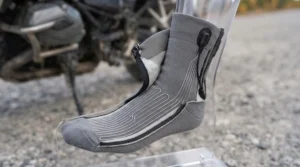
What sets this pair apart is precision: the heating panel sits specifically over the toes and the top of the foot, which is where wind and road spray actually chill a rider’s feet, rather than wasting wattage warming your ankle or calf. Built from micro-fleece with flat heating elements rather than round wire, the socks feel closer to a normal thick sock than a piece of electronics — you genuinely don’t feel the wiring underfoot, according to owner accounts. At roughly 9 watts per sock at 12.8 volts, they’re designed to hook into a Warm & Safe Heat-Troller through heated pant liners, or run independently via a Y-cable off the bike battery or a 7.4V portable pack. This is a smart pick for riders who already own (or plan to own) a full Warm & Safe heated-suit system, since the controller compatibility means one dial manages your whole outfit. On the flip side, one recurring theme in owner feedback is fit: the sizing chart runs generously, and some riders find the heel sits noticeably above their actual heel unless they order carefully, plus a few report the toe area running slightly hotter than the rest of the foot on the highest setting.
Pros:
- ✅ Heat concentrated exactly where riders feel cold first
- ✅ Thin, flat elements — no bulky wire underfoot
- ✅ Works standalone via Y-cable or with a full heated-suit system
Cons:
- ❌ Sizing runs large, affecting heel and toe fit
- ❌ Possible uneven hot spots at max heat setting
Expect a price in the C$120-C$150 range for the socks alone; the value proposition improves considerably if you’re already invested in the Warm & Safe ecosystem, since the shared controller means no duplicate hardware.
3. Keis Heated Socks — flexible dual-power for full heated-gear setups
The Keis system’s real advantage is flexibility: these socks can run directly off your bike’s battery through a wiring harness, or off a single central rechargeable battery that also powers a full range of Keis heated jackets, gloves, and trousers — one battery, one controller, your whole outfit warm. The Micro Alloy Element technology is engineered for even heat coverage across the foot, and Keis explicitly designs these to be worn over a thin base-layer sock, not bare feet, and underneath waterproof boots rather than in place of them. Based on the spec comparison with wired-only competitors, this dual-power design is what makes Keis stand out for touring riders who don’t want to be tethered to the bike the entire trip — you can dismount, switch to the portable battery, and keep the heat running through a fuel stop or lunch break. Aggregated reviewer sentiment on Keis heated gear tends to be positive around consistency of warmth, though the tradeoff for that flexibility is cost: a central battery system that powers multiple garments is a bigger upfront investment than a single pair of socks, and you’ll want to budget for the shared battery pack if you don’t already own one.
Pros:
- ✅ Works off bike battery or a shared portable battery pack
- ✅ Even heat coverage via Micro Alloy Element tech
- ✅ Scales into a full heated-gear system over time
Cons:
- ❌ Central battery pack is an extra cost if buying standalone
- ❌ Must be worn over a base sock, not bare feet
Pricing for the socks alone typically falls in the C$150-C$180 range, climbing higher once a shared battery and harness are added — worth it primarily for riders planning to build out a complete heated-gear wardrobe over time.
4. SAVIOR HEAT 7.4V Rechargeable Heated Socks — real warmth, real mixed reviews
What makes this pair worth a look is the higher-voltage battery: at 7.4V rather than the more common 3.7V or 5V found in budget competitors, Savior claims meaningfully faster warm-up and stronger sustained output — a real, verifiable spec difference, not just marketing language. The 2200mAh battery delivers three heat settings, roughly 35-50°C depending on setting, with the manufacturer citing a runtime window of 3 to 10 hours depending on which level you run. In practice this makes them a genuinely useful rechargeable riding accessory for anyone who wants heated socks for the bike and for shovelling the driveway afterward — dual-purpose use is part of the appeal. Here’s where honesty matters most: aggregated owner reviews on this line are mixed rather than uniformly glowing. Several buyers report strong warmth and long battery retention on low settings, while others describe underwhelming heat on the low and medium modes, occasional Bluetooth-app connectivity issues on the app-controlled version, and a battery pocket that isn’t always stitched as securely as it should be. That split is worth taking seriously rather than smoothing over — this is a case where “your mileage may vary” is the honest takeaway, not just a hedge.
Pros:
- ✅ Higher 7.4V battery than most budget competitors
- ✅ Multiple real-world use cases beyond the motorcycle
- ✅ Genuinely affordable entry point into heated socks
Cons:
- ❌ Owner reviews report inconsistent heat on lower settings
- ❌ Some units report app/Bluetooth connectivity problems
Priced in the C$70-C$90 range, this is one of the most affordable entries in this roundup — a reasonable low-risk way to try heated socks before committing to a pricier system, as long as you go in with realistic expectations on consistency.
5. Blaze Wear Heated Over Socks — layer them over what you already own
The clever part of this design is right in the name: these are meant to go over your regular socks, not replace them, so you keep your existing sock drawer and just add a heat layer underneath your boots. Built from a lightweight four-way stretch material with ultra-thin carbon-fibre heating elements running heel to toe, Blaze Wear specs them to reach up to 52°C within about 10 seconds of connecting to power — a genuinely fast warm-up compared with several rechargeable competitors that take longer to ramp up. They’re powered directly by your bike’s 12V system or by Blaze Wear’s own heated trouser liners, which again points to the “build one ecosystem” strategy that several premium brands in this space are chasing. Based on the spec sheet, the carbon-fibre panel design is aimed at eliminating the coil-shaped hot spots some older resistive-wire socks are known for, spreading warmth more evenly across the sole and instep. The tradeoff is the same one facing every 12V-only product on this list: no bike power, no heat, and you’ll need a compatible harness connection to your specific motorcycle’s wiring, which isn’t a universal fit-all solution and may require some setup know-how or a shop visit.
Pros:
- ✅ Fast heat-up, reaching full temperature in about 10 seconds
- ✅ Worn over existing socks — no need to replace your sock drawer
- ✅ Even coverage via ultra-thin carbon-fibre elements
Cons:
- ❌ Requires bike wiring harness compatibility
- ❌ No heat available once off the bike
Expect a price in the C$130-C$160 range; the value case here is strongest for riders who already like their current sock setup and just want an add-on heat layer rather than a full sock replacement.
6. Lenz Heat 5.0 Heated Socks — the long-haul touring option
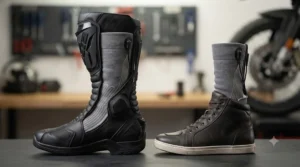
The headline spec that separates this pair from nearly everything else on this list is runtime: up to 14 hours of heat on a single charge on the lowest setting, which is genuinely rare among standalone rechargeable heated socks and puts this pair in a different conversation than the sub-10-hour competitors here. That kind of endurance matters most on multi-day touring trips where recharging opportunities are unpredictable — a rider crossing the Prairies in shoulder-season weather isn’t always guaranteed a wall outlet at the next stop. Lenz has built a reputation in the broader heated-gear market on battery engineering, and the 5.0 line reflects that focus, prioritizing longevity over flashy app integrations. Reviewers in the broader heated-apparel space consistently note that Lenz batteries hold their charge capacity well over repeated cycles compared with cheaper generic cells, which matters over a multi-season ownership timeline rather than just the first winter. The catch is the price tag, which sits meaningfully above every other pair on this list — this is the premium choice, and it should be treated as an investment for riders who log serious winter mileage rather than an occasional-commuter purchase.
Pros:
- ✅ Up to 14 hours of runtime on low — class-leading endurance
- ✅ Strong reputation for battery longevity over repeated charge cycles
- ✅ Standalone design works on or off the bike
Cons:
- ❌ Premium price point compared to the rest of this list
- ❌ Overkill for riders who only commute short distances
Pricing typically lands in the C$220-C$260 range. For occasional riders that’s a tough sell, but for anyone doing genuine multi-day winter touring, the runtime advantage alone can justify the premium.
7. Snow Deer Heated Socks — the budget-friendly starter pair
The appeal here is straightforward: infrared heating elements covering the whole foot, three heat settings with a simple colour-coded indicator (blue for low, white for medium, red for high), and a price that undercuts nearly every other pair on this list. Snow Deer’s infrared approach is also marketed for circulation benefits, which may be a relevant secondary consideration for riders who already deal with cold-sensitive feet for reasons beyond weather. Unlike some cheaper foot warmers that only heat the sole, this design extends warmth up to the toes, which several reviewers single out as the deciding factor over similarly priced alternatives — cold toes, not cold heels, are usually the actual complaint riders have. As a rechargeable riding accessory for someone testing the heated-sock concept for the first time without committing to a premium price tag, this is a reasonable low-stakes entry point. The honest tradeoff is battery capacity: runtime tops out lower than the premium options on this list, and the overall build quality — fabric, stitching, battery pocket durability — reads as appropriate for the price point rather than exceptional, which is exactly what you’d expect from a budget-tier product.
Pros:
- ✅ Full foot-to-toe heat coverage, not just the sole
- ✅ Simple, intuitive colour-coded heat-setting indicator
- ✅ One of the most affordable pairs in this roundup
Cons:
- ❌ Shorter runtime than premium rechargeable competitors
- ❌ Build quality matches the budget price point, not premium
Priced around C$50-C$65, this is the easiest entry point on the list for anyone unsure whether heated socks are worth the investment before committing to something pricier.
💬 Found a pair above that fits your ride? Compare current pricing and availability before the cold snap hits — stock on winter riding gear tends to move fast once the first frost warning drops. 😊
Practical Usage Guide: Getting the Most From Your Heated Socks
Buying the right pair is half the equation — the other half is using them correctly, which is where a lot of first-time buyers leave warmth on the table. Start by always wearing a thin base-layer sock underneath any heated pair, even models not explicitly requiring it; this protects the heating elements from direct skin contact with sweat and oils, and it extends the life of the fabric. For your first 30 days, resist the urge to run the highest setting constantly — most heating elements are designed for intermittent high use, not sustained max output for hours, and dialing back to medium once your feet are actually warm both conserves battery and reduces the risk of localized overheating discomfort. If you’re running a 12V bike-wired system, have the wiring harness professionally routed and secured along your existing loom rather than letting it dangle near moving parts or hot exhaust components — this is a common first-timer mistake that causes premature wire fatigue. For rechargeable models, avoid fully draining the battery before recharging when possible; lithium cells generally last longer over their lifespan when kept between roughly 20% and 90% charge rather than run to zero repeatedly. Finally, always remove the battery pack before washing, and hand-wash or use a gentle cycle in a mesh bag rather than tossing wired socks straight into a regular machine wash — this single habit is the difference between a pair lasting two winters or five.
Real-World Scenarios: Which Rider Are You?
The daily winter commuter: You’re riding 15-20 minutes each way, five days a week, through a Canadian city winter with temperatures regularly below -10°C. A bike-wired 12V option like the Gerbing 12V Heated Sock Liners or Blaze Wear Heated Over Socks makes the most sense here — you’re never far from your bike’s power, and unlimited runtime beats managing a nightly charge routine on a tight schedule.
The weekend shoulder-season rider: You ride occasionally in October and April when temperatures hover just above freezing, and you don’t want to install a wiring harness for a bike you only take out a dozen times a winter. A standalone rechargeable pair like the SAVIOR HEAT 7.4V Rechargeable Socks or Snow Deer Heated Socks covers the need without a permanent bike modification, and doubles as cold-weather gear for other outdoor activities.
The multi-day tourer: You’re planning a genuine winter road trip across provinces, with unpredictable access to charging outlets and long stretches between stops. The Lenz Heat 5.0‘s extended runtime, or the Keis Heated Socks dual-power flexibility between bike battery and portable pack, both address the core problem: staying warm regardless of whether you’re near an outlet tonight.
Problem → Solution: Common Cold-Feet Complaints, Fixed
Problem: My toes go numb within 20 minutes even in “warm” winter boots. Standard insulated boots trap air but don’t generate heat, so once your body heat dissipates in windchill, there’s nothing left to warm the space. Solution: a heated pair like the Warm & Safe 12V Heated Socks, which concentrates heat directly over the toe area where wind exposure hits hardest.
Problem: I don’t want to deal with charging a battery every single night. Solution: switch to a bike-wired 12V system such as the Gerbing 12V Heated Sock Liners, which draws power directly from your motorcycle and needs zero separate charging routine — the tradeoff is losing heat once you’re off the bike, so weigh that against your actual riding pattern.
Problem: My current heated socks run hot for an hour, then quit completely. This is almost always a battery-capacity issue rather than a heating-element issue. Solution: prioritize runtime specs over marketing claims — the Lenz Heat 5.0‘s documented 14-hour low-setting runtime solves this specifically for long rides.
Problem: I want heated socks but I’m not sure it’s worth spending C$150+ before I know if I’ll actually use them. Solution: start with a budget-tier pair like the Snow Deer Heated Socks to test the concept before committing to a premium system.
How to Choose Heated Socks for Motorcycle Riding
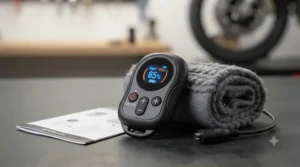
- Match power type to your riding pattern. Daily commuters benefit most from bike-wired 12V systems; occasional or touring riders benefit more from standalone rechargeable batteries.
- Check where the heating elements are concentrated. Toe- and instep-focused designs address the actual cold zone for most riders, rather than wasting output on the ankle or calf.
- Compare battery voltage and capacity, not just “hours of heat.” A higher-voltage system (7.4V vs 3.7-5V) often delivers faster warm-up and steadier output at the same nominal runtime.
- Consider whether you’ll build a full heated-gear system over time. If you plan to add heated gloves or a jacket liner later, brands like Keis or Warm & Safe with shared controllers save money long-term.
- Read aggregated owner feedback on fit and sizing, since sizing inconsistency is one of the most commonly reported issues across this entire product category.
- Factor in total cost, not just the sock price. Bike-wired systems often require a separate harness and controller — get the full picture before comparing prices.
- Decide how important off-bike use is to you. If you want warmth walking into a gas station or coffee shop, only a rechargeable battery pack delivers that; wired 12V systems go cold the moment the engine stops.
Battery Heated Socks vs 12V Direct-Wire Systems
The core tradeoff in this whole category comes down to one decision: battery heated socks winter riding setups that run independently, or direct-wire systems tied to your motorcycle’s electrical output. Bike-wired 12V systems, like the Gerbing 12V Heated Sock Liners and Blaze Wear Heated Over Socks, offer effectively unlimited heat for as long as your engine is running, with no charging cycle to manage and no battery capacity ceiling to worry about mid-ride. The cost of that convenience is installation — you need a compatible harness routed to your bike’s electrical system, which may mean a shop visit if you’re not comfortable with basic wiring, and the moment you shut the bike off, the heat is gone with it. Rechargeable battery systems, like the SAVIOR HEAT and Snow Deer options, flip that equation: no wiring required, works on any bike (or off the bike entirely), but you’re capped by whatever runtime the battery delivers, and you need to remember to charge it the night before a ride. For riders who commute daily on the same bike through a full winter, wired systems generally make more practical sense — the setup cost is a one-time expense, and the daily convenience of never charging anything adds up over a season. For riders who switch bikes, ride multiple machines, or want gear that works beyond the motorcycle entirely, rechargeable battery packs are the more flexible investment.
What to Expect: Real-World Performance in Canadian Winters
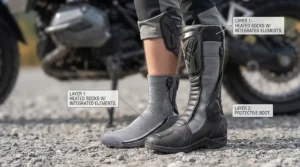
Specs on a page rarely translate directly to what you’ll feel on an actual ride, so here’s the practical version. In moderate cold — roughly -5°C to -10°C with light wind — most mid-range heated socks on medium settings should keep toes comfortably warm for a full commute without draining a rechargeable battery excessively. Foot warmth motorcycle winter performance changes significantly once windchill drops below -15°C or you’re riding at highway speeds for extended periods, since wind exposure accelerates heat loss regardless of how good your base insulation is — the Canadian Centre for Occupational Health and Safety publishes wind chill and cold-stress reference charts that are a useful gut-check for how quickly conditions escalate — this is exactly the scenario where higher-voltage systems like the SAVIOR HEAT 7.4V or bike-wired options with unlimited power really separate themselves from weaker 3.7V rechargeable competitors. Expect any rechargeable pair’s stated “maximum hours” figure to represent the lowest heat setting only; running the highest setting in genuinely frigid conditions will realistically cut that runtime by half or more, which is worth planning around on longer rides. Boot fit also matters more than most buyers expect — heated socks add bulk, so a boot that fits perfectly with regular socks may feel snug with heating elements added, and overly tight boots restrict circulation in a way that can actually work against the heating effect.
Heated Socks for Different Types of Riders
Beginner riders who are still building out their winter gear collection are usually best served starting with a standalone rechargeable pair — something like the Snow Deer Heated Socks — since it requires no bike modification and lets you test whether heated gear suits your riding habits before a bigger investment. Experienced daily commuters who’ve already invested in heated grips or a heated vest tend to gravitate toward bike-wired options like the Gerbing 12V Heated Sock Liners, since they’re already comfortable with basic wiring and want the “never think about charging” convenience. Touring riders covering long distances across provinces benefit most from either the extended-runtime Lenz Heat 5.0 or the dual-power flexibility of Keis Heated Socks, which can switch between bike power and a portable pack depending on the leg of the trip. Budget-conscious riders — students, new licence holders, or anyone testing winter riding for the first season — are well served by the SAVIOR HEAT 7.4V or Snow Deer options, both of which deliver real heat without the premium price tag of the wired systems.
Long-Term Cost & Maintenance
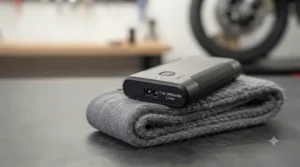
Total cost of ownership for heated socks isn’t just the sticker price — it’s the sock, plus any harness or controller, plus eventual battery replacement for rechargeable models, since lithium batteries degrade gradually over hundreds of charge cycles. A bike-wired system like the Gerbing 12V Heated Sock Liners has a higher one-time setup cost once you factor in the harness and controller, but essentially zero ongoing cost afterward — no batteries to replace, since you’re drawing straight from the bike. A rechargeable pair like the SAVIOR HEAT or Snow Deer has a lower upfront cost but a battery that will eventually need replacing, typically after a couple of winters of regular use, depending on how well you follow charging best practices. Premium options like the Lenz Heat 5.0 justify part of their higher price through battery engineering that’s reported to hold capacity longer across repeated charge cycles than cheaper generic cells — which matters if you’re calculating cost-per-winter rather than just cost-per-pair. Over a three-to-five-year ownership window, a wired system used for daily commuting often works out cheaper per season than repeatedly replacing budget rechargeable batteries, while occasional riders will likely never recoup the wired system’s higher setup cost and are better served sticking with rechargeable options.
Common Mistakes When Buying Heated Motorcycle Socks
The single most common mistake is buying a rechargeable pair without checking whether the stated runtime applies to the lowest heat setting only — riders expecting “8 hours” on the highest setting are consistently disappointed, since that figure almost universally refers to the weakest output level. A close second is ignoring sizing charts and ordering a “usual” size rather than actually measuring, given how frequently fit issues show up in aggregated owner feedback across nearly every brand in this category. Buyers also commonly underestimate installation requirements for 12V wired systems, assuming a simple plug-and-play setup when in reality a proper harness installation may require routing wire along the bike’s frame and connecting to a fused power source. Another frequent misstep is choosing based on price alone without considering power type — a rider who commutes daily gains far more real-world value from a wired system than from repeatedly buying budget rechargeable pairs that need frequent battery replacement. Finally, some buyers skip reading aggregated review sentiment altogether and rely purely on marketing copy, missing recurring complaints — like the Bluetooth connectivity issues reported on some app-controlled Savior units — that would have influenced their choice.
Safety, Certification & Regulations for Heated Riding Gear
Cold-weather riding safety in Canada is a genuine public health concern, not just a comfort issue, and windchill at highway speed is consistently colder than the ambient temperature on the forecast. Beyond frostbite prevention, look for heated gear that carries recognized electrical safety certification on the battery and heating components, and always inspect any 12V wiring harness connections for fraying or exposed wire before a ride, particularly once temperatures drop and materials become more brittle in the cold. If frostbite symptoms do appear on a ride — numbness, waxy or pale skin, loss of sensation — stop riding immediately and seek warmth; the Canadian Red Cross has a clear breakdown of frostbite recognition and first-response steps every winter rider should know before it’s needed.
FAQ
❓ How long do heated socks battery life review claims actually hold up in real cold?
❓ Can I wear heated socks with any motorcycle boot?
❓ Are rechargeable heated socks or 12V wired socks better for motorcycle riding?
❓ Do heated socks work for foot warmth motorcycle winter rides below -20°C?
❓ How often should I replace the battery in rechargeable heated socks?
Conclusion
Heated socks for motorcycle riding aren’t a novelty accessory — for anyone who rides through a real Canadian winter, they’re closer to essential safety gear, given how quickly windchill can turn cold toes into a genuine frostbite risk. The right pick really does come down to how you ride: daily commuters get the most value from bike-wired systems like the Gerbing 12V Heated Sock Liners or Blaze Wear Heated Over Socks, occasional and budget-conscious riders are well served by rechargeable options like Snow Deer or SAVIOR HEAT, and long-distance tourers should be looking hard at the Lenz Heat 5.0‘s runtime or the dual-power flexibility of Keis Heated Socks. None of these are perfect — every pair on this list has a genuine tradeoff, whether that’s installation complexity, mixed battery reliability, or premium pricing — and that honesty is exactly the point. Buy based on your actual riding pattern rather than the flashiest spec sheet, check current pricing before you commit, and your feet will thank you the next time the temperature drops mid-ride.
✨ Ready to stop dreading cold commutes?
🔥 Check current availability on the pair that matches your riding style before the next cold snap hits — warm feet make every winter ride better.
Recommended for You
- How to Choose a Heated Undershirt for Motorcycle Riding Winter 2026
- Heated Undershirt for Motorcycle Riding: 7 Top Picks for 2026
- 12V vs Battery Powered Heated Vest Motorcycle: 7 Picks 2026
Disclaimer: This article contains affiliate links. As an Amazon Associate, I earn from qualifying purchases. If you purchase products through these links, we may earn a small commission at no additional cost to you.
✨ Found this helpful? Share it with a fellow rider before their next cold commute! 💬🤗
