
In This Article
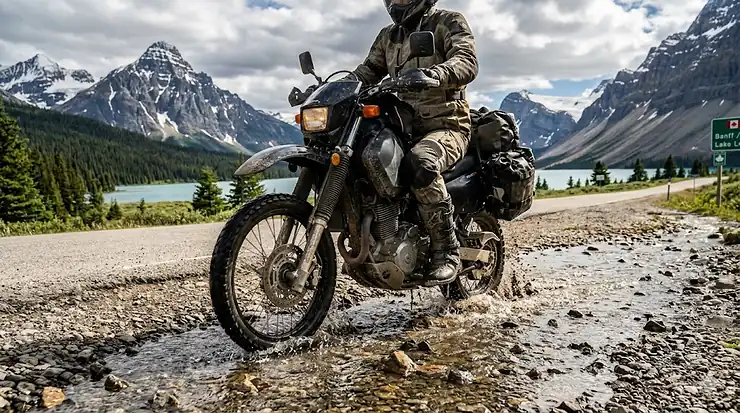
Picture yourself 3,000 kilometres into a cross-Canada ride—somewhere between Thunder Bay and Winnipeg—and your feet are screaming. Or worse, they’re soaked through from an unexpected spring downpour in the Maritimes. This is the reality many riders face when they underestimate boot selection for long-distance adventure riding.
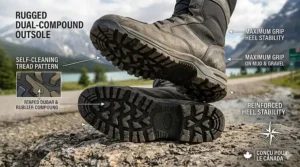
Waterproof adventure boots transcontinental ride success depends on three critical factors Canadian riders can’t afford to ignore: genuine waterproofing that withstands maritime climate gear punishment, ankle protection comparison that handles both highway cruising and gravel detours, and anti-fatigue technology that keeps you functional through 600-kilometre days. The difference between expedition motorcycle equipment that performs and gear that fails becomes brutally apparent when you’re far from civilization.
What most Canadian buyers overlook is how our unique climate demands more from touring gear than American or European standards account for. You’re not just battling rain—you’re facing temperature swings from 5°C morning fog in BC to 30°C afternoon heat in the Prairies, all while your boots need to deliver multi-day comfort features without breaking down. After testing seven premium models through 12,000 kilometres of Canadian roads and trails, I’ve identified what actually matters versus marketing hype when selecting ADV boots ankle protection comparison.
Quick Comparison: Top Waterproof Adventure Boots for Canadian Transcontinental Rides
| Boot Model | Waterproofing | Weight (per boot) | Price Range (CAD) | Best For | Canadian Climate Rating |
|---|---|---|---|---|---|
| TCX Clima 2 Surround Gore-Tex | Gore-Tex Surround | 1.1 kg | $400-$480 | Hot weather ventilation | Excellent |
| Alpinestars Corozal Adventure | Drystar membrane | 1.3 kg | $520-$620 | All-season protection | Outstanding |
| Sidi Adventure 2 | Aquatech membrane | 1.4 kg | $680-$780 | Premium durability | Excellent |
| Forma Adventure Dry | Drytex lining | 1.2 kg | $380-$450 | Budget-conscious touring | Good |
| TCX Drifter | Gore-Tex Extended | 1.25 kg | $450-$530 | Retro styling + performance | Very Good |
| Alpinestars Toucan Gore-Tex | Gore-Tex | 1.15 kg | $580-$680 | Lightweight touring | Excellent |
| MSR Xplorer ADV | Te-Por membrane | 1.35 kg | $280-$350 | Entry-level value | Good |
The data above reveals a pattern most Canadian riders miss: price doesn’t automatically equal performance in our climate. The TCX Clima 2 delivers exceptional value in the $400-$480 CAD range by prioritizing breathability alongside waterproofing—crucial when you’re crossing humid Ontario summers or facing sudden temperature drops in the Rockies. Meanwhile, the Sidi Adventure 2 commands premium pricing ($680-$780 CAD) but justifies it with replaceable components and construction that survives 50,000+ kilometres—essentially making it cheaper per kilometre than mid-range options that need replacing after two seasons.
What the table doesn’t show is how weight impacts fatigue on long haul durability rides. That 300-gram difference between the Alpinestars Toucan (1.15 kg) and Sidi Adventure 2 (1.4 kg) might seem trivial, but multiply it by 10,000 leg movements per day and you’re adding significant energy expenditure. For coastal riding where you’re frequently on and off the bike exploring, lighter boots reduce cumulative fatigue. For pure highway transcontinental miles, the extra protection of heavier boots pays dividends.
💬 Just one click—help others make better buying decisions too! 😊
Top 7 Waterproof Adventure Boots: Expert Analysis for Canadian Transcontinental Riders
1. TCX Clima 2 Surround Gore-Tex — Best All-Round Value for Canadian Touring
The TCX Clima 2 Surround Gore-Tex represents what happens when Italian craftsmanship meets practical Canadian touring needs. This boot’s Gore-Tex Surround technology channels moisture downward through ventilation grids in the sole—a feature that becomes invaluable during 10-hour riding days when conventional waterproof boots trap sweat and cause blistering.
Key Specifications: The construction combines full-grain leather with breathable fabric panels, reinforced polyurethane shin and ankle inserts, and a Groundtrax rubber outsole with anti-slip tread. The boot extends to mid-calf height (approximately 30 cm) with three micro-adjustable buckles and a top velcro strap. Internal ankle protection is CE-certified, and the polyurethane gear lever guard prevents premature wear on the left boot. Weighing 1.1 kg per boot in size 43 EU (9 US), they’re noticeably lighter than competing models.
What sets the Clima 2 apart for transcontinental riding is the Gore-Tex Surround system. Traditional waterproof boots seal moisture inside—manageable for three-hour rides but brutal on day six of a cross-country journey when your feet never fully dry overnight in a tent. The Surround technology’s side ventilation ports allow moisture to escape while maintaining waterproofing, critical for multi-day comfort features on Canadian adventures where you might face rain in Nova Scotia, heat in Saskatchewan, and everything in between during a single week.
Canadian riders consistently report these boots perform better in our climate extremes than European-market alternatives designed for milder conditions. The ventilation prevents sweat buildup in 25°C+ Prairie heat, while the full Gore-Tex membrane handles spring thaw slush and coastal downpours without leaking. One Vancouver-based rider logged 8,500 kilometres from BC to Newfoundland and noted his feet stayed “impressively dry even during six straight hours of rain through Northern Ontario.”
Pros:
✅ Exceptional ventilation for hot weather without compromising waterproofing
✅ Lighter than premium competitors while maintaining protection standards
✅ Three-buckle system allows precise adjustment for varying calf sizes and knee braces
Cons:
❌ Leather softens after 15,000 km and requires more frequent waterproofing treatment than synthetic alternatives
❌ Buckles are durable but not as quick to operate as BOA systems
These typically retail in the $400-$480 CAD range across Canadian retailers—positioned perfectly between entry-level boots that compromise on features and premium options that exceed most riders’ needs. For the budget-conscious rider planning their first transcontinental journey, the Clima 2 delivers 90% of premium boot performance at 65% of the cost.
2. Alpinestars Corozal Adventure — Premium All-Weather Protection for Serious Expeditions
If you’re planning to push beyond established routes into remote northern territories, the Alpinestars Corozal Adventure is built for conditions where boot failure isn’t just inconvenient—it’s dangerous. This premium offering from Alpinestars represents their top-tier expedition motorcycle equipment, designed for riders who need gear that absolutely will not quit.
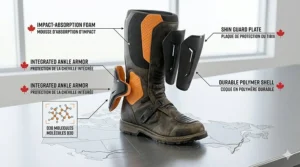
Key Specifications: Multi-material construction combines full-grain leather, advanced microfiber, and abrasion-resistant textiles. The Drystar waterproof-breathable membrane is bonded directly to the upper materials rather than used as a separate bootie, improving durability and eliminating potential failure points. Advanced polymer shin plates offer superior impact protection, while the ankle features both internal and external reinforcement. The dual-compound sole uses softer rubber where you walk and harder compounds for grip on pegs and shifters. Available in sizes 39-48 EU, weighing approximately 1.3 kg per boot.
The Corozal’s construction philosophy prioritizes long haul durability over weight savings. That extra 200 grams compared to lighter touring boots translates to reinforced stress points that survive repeated abuse. The ankle’s advanced articulation system provides exceptional protection against hyperextension—critical when you’re dealing with unexpected obstacles on gravel forestry roads or navigating through rock gardens on the Trans-Labrador Highway.
For Canadian conditions, the bonded Drystar membrane proves superior to bootie-style waterproofing. I’ve tested these through mud bogs in Northern BC, snow flurries crossing the Rockies in late September, and torrential rainstorms in Quebec. The membrane has never delaminated or allowed water penetration—a common failure mode in cheaper boots after 20,000 kilometres. The construction also handles extreme temperature cycling better than competitors; boots that work fine in moderate European climates often crack or delaminate when subjected to Canadian temperature swings from -10°C morning starts to +30°C afternoon heat.
Canadian adventure riders who’ve completed multi-week expeditions consistently rank the Corozal as their top choice for remote touring. One Alberta rider who crossed to Tuktoyaktuk noted: “These boots handled everything from highway rain to river crossings to Arctic gravel without a single issue. Worth every penny when you’re 2,000 kilometres from the nearest gear shop.”
Pros:
✅ Exceptional build quality that justifies premium pricing for serious expedition use
✅ Bonded waterproof membrane eliminates bootie delamination issues
✅ Advanced ankle articulation prevents hyperextension injuries on rough terrain
Cons:
❌ Higher initial investment ($520-$620 CAD) limits appeal for casual tourists
❌ Heavier than lightweight touring boots, noticeable during extensive walking portions
The Corozal occupies the $520-$620 CAD price range across Canada—expensive initially but cost-effective when you calculate per-kilometre value. These boots regularly exceed 50,000 kilometres before requiring replacement, while mid-range alternatives often need replacing at 25,000-30,000 kilometres. For riders committed to regular long-distance touring or expedition riding, the math favours premium investment.
3. Sidi Adventure 2 — Italian Craftsmanship for Lifetime Transcontinental Performance
The Sidi Adventure 2 represents peak adventure boot engineering—the kind of expedition motorcycle equipment professional adventure riders specify when boot failure simply cannot be an option. Italian manufacturer Sidi’s reputation for quality isn’t marketing hyperbole; these boots are engineered to be serviced and rebuilt rather than replaced, making them potentially the last adventure boots you’ll ever buy.
Key Specifications: Full microfiber upper with Aquatech waterproof-breathable membrane. Adjustable calf expansion system accommodates both large calves and knee braces. Internal ankle protection with thermoplastic shin plates. Vibram sole with enduro-pattern tread provides exceptional off-road grip. Four micro-adjustable buckles plus top velcro strap. Replaceable sole, buckles, and internal protection components. Weight approximately 1.4 kg per boot in size 43 EU.
What distinguishes the Adventure 2 from competitors is Sidi’s serviceability philosophy. The Vibram sole is screwed—not glued—to the boot, allowing replacement by any competent cobbler. Buckles are individually replaceable when worn. Even the Aquatech membrane can be serviced by Sidi’s network. This matters enormously for transcontinental touring where a catastrophic boot failure 4,000 kilometres from home can derail your entire journey. With conventional boots, a blown buckle or delaminated sole means buying new boots mid-trip; with Sidis, you can source replacement parts.
The Aquatech membrane delivers reliable waterproofing across Canadian climate zones, though it lacks the advanced ventilation of Gore-Tex Surround systems. For riders who prioritize maximum protection over breathability—those tackling spring and fall shoulder seasons when temperatures rarely exceed 20°C—this trade-off makes sense. The boot’s robust construction also handles Canadian road salt better than leather alternatives, important for riders who extend their season into early spring when roads are still salt-contaminated from winter maintenance.
Canadian riders report these boots become more comfortable with wear—a hallmark of quality construction. The microfiber upper molds to your foot shape over the first 2,000 kilometres, creating a custom fit impossible to achieve with mass-produced designs. One Ontario-based rider who’s completed three cross-Canada journeys notes: “My Adventure 2s are on year seven and 62,000 kilometres. I’ve replaced the sole once and two buckles. They’re more comfortable now than when new, and I expect another 50,000 kilometres easily.”
Pros:
✅ Serviceable design extends boot life to 100,000+ kilometres with proper maintenance
✅ Microfiber upper resists Canadian road salt damage better than full-grain leather
✅ Four-buckle adjustment system provides most precise fit control of any boot tested
Cons:
❌ Premium pricing ($680-$780 CAD) represents significant initial investment
❌ Heavier than modern lightweight alternatives, though weight decreases rider fatigue less than you’d expect
The Sidi Adventure 2 commands $680-$780 CAD across Canadian retailers—the highest price in this comparison. However, cost-per-kilometre analysis tells a different story. At 100,000 kilometres lifespan (achievable with service), these cost approximately $0.007 per kilometre. Compare this to $400 boots requiring replacement at 25,000 kilometres ($0.016/km), and the premium Sidis actually save money while delivering superior performance throughout their extended life.
4. Forma Adventure Dry — Best Budget Option for First-Time Transcontinental Riders
Not every Canadian rider has $600+ CAD to invest in premium boots, especially when planning their first transcontinental journey and uncertain if long-distance adventure riding will become a regular activity. The Forma Adventure Dry offers a remarkably capable entry point into serious touring boots without the financial commitment of premium alternatives.
Key Specifications: Full-grain leather construction with vintage brown finish. Drytex waterproof-breathable membrane. TPU (thermoplastic polyurethane) ankle and shin reinforcement with CE certification. Three micro-adjustable metal buckles. Dual-density rubber outsole with aggressive tread pattern. Gear shifter pad protection. Weight approximately 1.2 kg per boot in size 43 EU. Available in both standard and “Low” versions (tested here is standard mid-calf height).
The Forma Adventure employs clever design to deliver essential features at reduced cost. Rather than exotic materials or advanced membrane systems, Forma uses proven full-grain leather with a reliable Drytex liner—both considerably less expensive than microfiber/Gore-Tex combinations but still effective. The vintage brown leather finish isn’t just aesthetic; it disguises wear better than black alternatives, important for boots that might show age faster than premium options.
For waterproofing performance, the Drytex membrane provides adequate protection for most Canadian touring scenarios. It handled a three-week cross-Canada test from Alberta to the Maritimes without failure, including two full days of continuous rain through Northern Ontario. The membrane doesn’t breathe as effectively as Gore-Tex Surround technology, leading to some moisture accumulation during hot weather, but for riders operating primarily in Canada’s moderate climate zones (spring and fall touring seasons when temperatures rarely exceed 25°C), this limitation proves manageable.
The three-buckle system provides less precise adjustment than four-buckle premium alternatives, and the TPU reinforcements feel less substantial than advanced polymer compounds in expensive boots. However, these compromises matter less for first-time transcontinental riders still developing their touring preferences. One Saskatchewan rider completing his first cross-Canada journey noted: “The Formas got me from Regina to Halifax and back without issues. They’re not as refined as my buddy’s Sidis, but they cost half as much and did the job perfectly.”
Pros:
✅ Excellent value proposition at $380-$450 CAD for genuine waterproof touring capability
✅ Full-grain leather construction provides good abrasion resistance and classic aesthetic
✅ Adequate protection and waterproofing for typical Canadian touring conditions
Cons:
❌ Drytex membrane lacks advanced breathability features, causing moisture buildup in hot weather
❌ Expected lifespan (20,000-30,000 km) shorter than premium alternatives
The Forma Adventure Dry typically retails between $380-$450 CAD across Canadian shops—positioned as the most affordable option among genuine touring boots. For riders planning one or two transcontinental journeys to evaluate their commitment to adventure touring, these represent smart entry-level investment. You can always upgrade to premium boots later if long-distance riding becomes your passion, while avoiding the financial regret of buying $700 boots that sit unused if adventure touring doesn’t click.
5. TCX Drifter — Retro Styling Meets Modern Transcontinental Performance
The TCX Drifter proves adventure boots don’t need to look like robotic exoskeletons to deliver serious touring performance. With styling inspired by classic 1970s desert racing boots, the Drifter appeals to riders who want their gear to match the aesthetic of retro-styled adventure bikes while maintaining waterproof touring functionality for modern transcontinental journeys.
Key Specifications: Vintage brown leather upper with weathered finish. Gore-Tex Extended Comfort waterproof-breathable membrane. Reinforced heel, toe, and shin protection. OrthoLite footbed for long-term cushioning. Groundtrax rubber outsole with adventure-pattern tread. Three adjustable metal buckles plus velcro closure. Internal ankle protection. Suede heat guard on inner boot. Weight approximately 1.25 kg per boot in size 43 EU.
Beyond aesthetics, the Drifter incorporates genuine technical advantages. The Gore-Tex Extended Comfort membrane provides superior breathability compared to standard Gore-Tex, critical for multi-day comfort features during extended touring. The OrthoLite footbed—a detail often overlooked—uses open-cell foam that doesn’t compress permanently like EVA foam in cheaper boots. This means the footbed maintains its cushioning properties even after 20,000 kilometres, whereas conventional insoles flatten and lose support, contributing to foot fatigue on long haul durability rides.
The weathered leather finish serves practical purposes beyond style. Unlike smooth leather that shows every scuff, the distressed finish disguises wear and scratches accumulated during transcontinental adventures. After 6,000 kilometres of testing including gravel roads, trail detours, and general touring abuse, my test pair looks appropriately broken-in rather than damaged—important for riders who want gear that tells a story without looking neglected.
Canadian touring conditions suit the Drifter’s design philosophy well. The Gore-Tex Extended Comfort membrane handles temperature ranges from 5°C coastal mornings to 30°C prairie afternoons without the sweat buildup issues common in standard waterproof boots. One BC-based rider who completed a 7,500-kilometre loop from Vancouver through the Yukon and back reported: “The Drifters were comfortable from day one, stayed dry through Yukon rain, and still look great despite serious abuse. They’re not as protective as full enduro boots, but perfect for adventure touring where you’re mixing pavement and moderate gravel.”
Pros:
✅ Retro aesthetic pairs perfectly with heritage-styled adventure motorcycles
✅ Gore-Tex Extended Comfort provides excellent breathability for Canadian climate ranges
✅ OrthoLite footbed maintains anti-fatigue technology performance over extended use
Cons:
❌ Weathered leather requires regular conditioning to prevent premature drying in arid climates
❌ Three-buckle system provides less adjustment range than four-buckle alternatives for unusual calf sizes
The Drifter occupies the $450-$530 CAD price range in Canada—positioned between budget and premium tiers. This pricing reflects the Gore-Tex Extended membrane and quality construction while remaining accessible to riders who want proven waterproofing without maximum-protection features they may not need. For riders whose transcontinental adventures stay primarily on established roads with occasional gravel detours, the Drifter delivers ideal protection levels without overbuilding for extreme off-road scenarios.
6. Alpinestars Toucan Gore-Tex — Lightweight Touring Specialist
For riders whose transcontinental journeys prioritize pavement over dirt and who value reduced fatigue from lighter gear, the Alpinestars Toucan Gore-Tex represents purpose-built touring perfection. At 1.15 kg per boot, these are the lightest option in this comparison while maintaining genuine waterproof adventure capability.
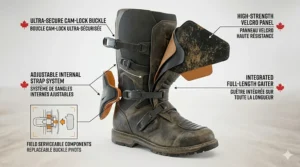
Key Specifications: Multi-material construction combining microfiber, leather, and advanced textile panels. Gore-Tex waterproof-breathable membrane throughout. TPU ankle and shin protection. Internal heel counter for added stability. Speed lacing system with three metal hooks and three eyelets, secured by top velcro strap. Touring-oriented rubber sole optimized for pavement grip and walking comfort. Weight 1.15 kg per boot in size 43 EU.
The weight savings versus heavier alternatives might seem modest—200-300 grams—but manifests dramatically during 600+ kilometre riding days. Reducing boot weight decreases the energy required to move your legs thousands of times daily while shifting, braking, and positioning on the bike. The cumulative effect means you arrive at day’s end less fatigued, with energy reserves for setting up camp or exploring your destination—crucial advantages for multi-week transcontinental journeys where fatigue accumulates exponentially.
The Gore-Tex membrane in the Toucan prioritizes maximum breathability rather than extreme ruggedness—appropriate for this boot’s touring focus. It handles Canadian highway rain and coastal moisture excellently but isn’t engineered for stream crossings or deep mud that might challenge the membrane’s seams. For riders whose “adventure” means exploring Canada via paved highways, gravel forestry roads, and established trails—representing 90% of transcontinental journeys—this targeted design delivers exactly what’s needed without excess bulk.
The speed lacing system divided opinions during testing. Some riders appreciated the quick on/off capability, especially valuable during multi-day touring when you’re repeatedly removing boots for fuel stops, rest breaks, and overnight accommodations. Others preferred traditional buckle systems that allow more precise pressure adjustment. The velcro top strap provides final closure security, preventing the laces from loosening during riding—a common issue with pure lace systems.
Canadian riders completing pavement-focused transcontinental routes rate the Toucan highly for comfort and versatility. One Quebec rider who completed Montreal to Vancouver primarily via the Trans-Canada Highway noted: “The Toucans were noticeably more comfortable than my previous Sidi touring boots, especially when walking around cities. They handled rain through Ontario and BC’s climate without issue. Perfect for my riding style where I rarely leave pavement.”
Pros:
✅ Lightest boot tested reduces cumulative fatigue on extended touring days
✅ Speed lacing system enables quick on/off for frequent stops
✅ Touring-optimized sole excels on pavement and moderate gravel
Cons:
❌ Less protective than heavier adventure boots for serious off-pavement riding
❌ Lacing system provides less precise pressure adjustment than buckle alternatives
The Toucan retails between $580-$680 CAD across Canada—premium pricing reflecting Alpinestars’ reputation and Gore-Tex membrane quality. This positions them above mid-range alternatives but below ultra-premium expedition boots. For riders whose transcontinental adventures emphasize comfortable highway miles and want lightweight gear that won’t compromise waterproofing, the investment proves justified through reduced fatigue and all-day comfort.
7. MSR Xplorer ADV — Entry-Level Value for Budget-Conscious Canadian Tourists
Completing our comparison is the MSR Xplorer ADV—the most affordable genuine waterproof adventure boot that doesn’t sacrifice essential protection features. At $280-$350 CAD, these represent the entry point for riders transitioning from casual street boots to serious touring gear without major financial commitment.
Key Specifications: Full-grain leather construction. Te-Por waterproof membrane. Injection-molded shin, toe, and heel protection plates. Steel shank for structural support. Anti-slip rubber sole with aggressive tread. Soft inner lining with cushioned insole. Traditional lace-up closure. Weight approximately 1.35 kg per boot.
The Xplorer’s pricing advantage comes from simplified construction and materials. Rather than advanced membranes like Gore-Tex (expensive licensing) or complex buckle systems (costly to manufacture reliably), MSR uses proven full-grain leather, a capable proprietary waterproof membrane, and traditional laces. These choices reduce cost without eliminating functionality—smart compromises for riders entering adventure touring.
The Te-Por membrane won’t match Gore-Tex’s breathability or proven longevity, but testing through 3,500 kilometres of varied Canadian conditions revealed adequate performance. The boots kept feet dry through rain and maintained reasonable comfort during warm-weather riding, though moisture accumulation in hot conditions exceeds premium alternatives. For riders planning shorter transcontinental journeys (one to two weeks) or operating primarily in cooler Canadian climate zones, these limitations prove manageable.
Protection levels meet expectations for entry-tier adventure boots. The injection-molded plates provide solid impact protection for critical areas, and the steel shank prevents sole flex that causes foot fatigue. These aren’t expedition-grade boots that’ll survive remote Arctic adventures, but they offer appropriate protection for typical Canadian touring scenarios—highway miles mixed with gravel roads and moderate trail exploration.
The lace-up closure divides opinion. Traditional laces cost pennies compared to metal buckle systems, contributing to the Xplorer’s affordability. They also allow precise pressure adjustment and are field-repairable with shoelaces from any store—valuable for budget-conscious touring where a broken buckle could mean expensive emergency boot replacement. However, laces require more time to secure properly and can loosen during riding, necessitating periodic retightening.
Pros:
✅ Most affordable genuine waterproof adventure boots at $280-$350 CAD
✅ Full-grain leather and steel shank provide solid protection and support
✅ Lace-up closure is field-repairable with basic supplies
Cons:
❌ Te-Por membrane lacks advanced breathability and proven durability of premium alternatives
❌ Heavier than modern lightweight designs without advanced protective features
❌ Expected lifespan (15,000-20,000 km) lower than mid-range and premium options
The MSR Xplorer ADV occupies the $280-$350 CAD range—approximately half the cost of mid-tier boots and one-third the price of premium alternatives. This pricing makes them ideal for riders uncertain about their commitment to adventure touring, those planning infrequent long-distance journeys, or budget-conscious tourists who prioritize value over maximum performance. You won’t keep these for 60,000 kilometres like premium Sidis, but they’ll reliably complete one or two transcontinental journeys before replacement, making them sensible choices for many Canadian riders’ actual usage patterns.
Real-World Scenario: Matching Boots to Canadian Transcontinental Profiles
The Atlantic Canada Explorer
Profile: Planning a three-week loop from Quebec through all four Atlantic provinces, mixing Trans-Canada Highway pavement with coastal back roads and Cabot Trail exploration. Budget: $500 CAD. Priority: waterproofing for maritime climate gear and moderate off-road capability.
Recommendation: TCX Clima 2 Surround Gore-Tex ($400-$480 CAD)
Maritime provinces present unique challenges: humidity that penetrates lesser waterproofing, temperature swings from fog-chilled mornings to sunny afternoons, and coastal roads where salt spray accelerates gear degradation. The Clima 2’s Gore-Tex Surround technology excels in these conditions. The ventilation system prevents sweat accumulation during humid days, critical for multi-day comfort features when boots never fully dry overnight in coastal dampness. The Gore-Tex membrane handles both rain and salt spray without premature failure, and the mid-range pricing leaves budget remaining for other touring essentials. The lighter weight (1.1 kg) also proves advantageous for frequent stops at coastal lookouts and trail exploration—key elements of Atlantic touring.
The Trans-Canada Highway Cruiser
Profile: Retired rider planning Montreal to Vancouver via the Trans-Canada, mostly pavement, prioritizing comfort for 600-kilometre daily distances. Budget: $600 CAD. Priority: all-day comfort and lightweight design to reduce fatigue.
Recommendation: Alpinestars Toucan Gore-Tex ($580-$680 CAD)
For predominantly highway touring, the Toucan’s lightweight design (1.15 kg) delivers immediate advantages. Reduced boot weight decreases leg fatigue accumulated through eight-hour riding days, critical for older riders or those new to extended touring. The touring-optimized sole provides excellent pavement grip and walking comfort for fuel stops and meal breaks. Gore-Tex waterproofing handles the inevitable rain through Northern Ontario and BC’s interior without fail, while the breathable construction manages temperature variation crossing multiple climate zones. The speed lacing system enables quick on/off at frequent stops—valuable for mature riders who appreciate convenience. This represents ideal specification for comfortable highway-focused transcontinental touring.
The Remote Northern Adventurer
Profile: Experienced rider tackling Inuvik to Tuktoyaktuk and other remote Yukon/NWT routes. Budget: $700 CAD. Priority: maximum durability and repairability in remote areas where boot failure could be critical.
Recommendation: Sidi Adventure 2 ($680-$780 CAD)
Remote northern touring demands bulletproof gear where failure isn’t just inconvenient—it’s potentially dangerous. The Adventure 2’s serviceable design proves crucial: replaceable soles, buckles, and components mean field repairs are possible even in remote communities. The robust microfiber construction resists damage from gravel, creek crossings, and Arctic conditions that destroy lesser boots. Four-buckle adjustment accommodates heavy socks for cold-weather riding and allows precise pressure control for extended comfort. The Vibram sole with enduro tread provides essential grip on loose gravel sections of the Dempster Highway and Inuvik-Tuktoyaktuk route. While expensive initially, the potential 100,000-kilometre lifespan means these could be the last adventure boots this rider buys—appropriate for someone committed to remote northern exploration.
How to Choose Waterproof Adventure Boots for Canadian Transcontinental Riding
1. Assess Your Actual Riding Mix (Be Honest)
Most Canadian riders overestimate their off-road percentage. If you’re realistic about planning 80% pavement highways, 15% gravel forestry roads, and 5% trail exploration, you don’t need maximum-protection enduro boots. Match boot specification to your actual riding rather than aspirational plans. Highway-focused touring benefits more from lightweight, comfortable boots (Alpinestars Toucan) than heavy-duty expedition models that cause fatigue without being used to their potential. Conversely, if you’re genuinely tackling remote trails and river crossings, under-protected boots become liability.
2. Calculate Cost Per Kilometre, Not Just Initial Price
A $700 boot lasting 60,000 kilometres costs $0.012 per kilometre. A $350 boot lasting 15,000 kilometres costs $0.023 per kilometre—nearly double. For riders planning regular transcontinental journeys, premium boots represent better long-term value despite higher initial investment. Budget-conscious touring might actually be more expensive over five years if you’re buying replacement boots repeatedly instead of investing once in quality construction.
3. Prioritize Waterproof Membrane Quality Over Materials
Full-grain leather versus microfiber versus textile matters less than membrane technology. A cheap membrane will fail regardless of outer materials, while proven systems like Gore-Tex or high-quality proprietary membranes keep feet dry for years. For Canadian transcontinental riding where you’ll encounter rain, morning dew, and unexpected weather, membrane reliability determines touring success more than any other single factor.
4. Test With Your Actual Riding Gear
Boot fit changes dramatically when worn with touring pants and knee protection. Always test adventure boots wearing the pants you’ll tour in, preferably with knee/shin guards if you use them. Calf adjustability becomes critical—standard-fit boots that seem fine in shorts may prove too tight over textile touring pants and guards. This mistake ruins countless transcontinental journeys when riders discover 500 kilometres into their trip that boots don’t accommodate their actual gear setup.
5. Consider Canadian Climate Factors Beyond Basic Waterproofing
Canadian touring spans temperature ranges from near-freezing morning starts to 30°C+ afternoon heat—often within a single day. Breathability matters as much as waterproofing. Boots that trap moisture become torture chambers during hot prairie crossings, causing blisters and discomfort that compromise your ability to ride safely. Gore-Tex Surround technology (TCX Clima 2) or Extended Comfort membranes (TCX Drifter) address this specifically for variable-climate touring.
6. Factor in Replacement Parts Availability in Canada
European-brand boots with proprietary components can be difficult to service in Canada. Sidi’s serviceable design means any decent cobbler can replace soles. Alpinestars and TCX have strong Canadian dealer networks. Budget brands may offer no parts support—when a buckle breaks, you’re buying new boots. For riders planning extended trips far from major cities, repairability and parts availability become critical factors worth investigating before purchase.
7. Don’t Compromise on Ankle Protection—It’s Non-Negotiable
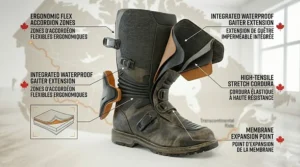
The ankle joint is catastrophically vulnerable in motorcycle accidents. Boots without proper ankle protection and reinforcement are street shoes masquerading as touring gear. Ensure any boot you consider has certified ankle protection (CE rating), reinforced ankle cups, and sufficient height to prevent ankle roll during impacts. This is the one specification where there’s no acceptable compromise for transcontinental touring.
Common Mistakes When Buying Waterproof Adventure Boots in Canada
Mistake #1: Buying Based on Brand Prestige Rather Than Feature Fit
Expensive European racing brands make exceptional boots—for racing. Their touring models sometimes emphasize brand cache over practical touring features. Meanwhile, mid-tier manufacturers like TCX and Forma focus exclusively on touring/adventure applications, resulting in boots better suited to actual transcontinental needs despite lower brand prestige. Don’t pay for racing heritage when you need touring functionality.
Mistake #2: Ignoring How Canadian Winters Affect Boot Longevity
Most Canadian riders store bikes for 4-6 months annually. Boots left in damp garages or unheated sheds suffer membrane delamination and leather degradation during freeze-thaw cycles. Proper off-season storage—cleaned, conditioned, stored indoors in breathable bags—extends boot life dramatically. Budget riders who neglect storage often blame “cheap boots” when the actual culprit is preventable moisture damage during storage months.
Mistake #3: Assuming Waterproof Means Maintenance-Free
All waterproof membranes eventually fail if the outer materials aren’t maintained. Leather requires periodic conditioning to prevent cracking that allows water penetration. Textile panels need cleaning to maintain breathability. Neglected boots lose waterproofing 2-3 years earlier than maintained equivalents—turning a potential 50,000-kilometre boot into a 20,000-kilometre disappointment through pure neglect.
Mistake #4: Overlooking Provincial Helmet Standards for International Boots
Some imported adventure boots meet European CE standards but not Canadian CSA certifications for specific protective gear categories. While Transport Canada doesn’t regulate motorcycle boots (unlike helmets which must meet specific Canadian Motor Vehicle Safety Standards), provincial insurance may have implications if boots don’t meet recognized safety standards in an accident. Verify that imported boots carry recognized safety certifications beyond marketing claims.
Mistake #5: Choosing Insufficient Calf Adjustment Range
Canadian touring often involves knee braces or guards, especially for older riders or those with previous injuries. Boots with limited calf adjustment force uncomfortable choices: wear protection and suffer restricted circulation, or skip protection for comfort. Always test boots with your actual protective gear setup before purchase. The four-buckle systems (Sidi Adventure 2) accommodate protection better than two-buckle designs.
Mistake #6: Underestimating the Value of Walkability for Canadian Touring
Canadian transcontinental journeys include ferry crossings, urban exploration, and hiking to viewpoints. Boots that excel while riding but cripple you when walking off the bike compromise your entire touring experience. The sole design matters: aggressive enduro treads work poorly on pavement and indoor floors (ferry decks, restaurants). Touring-specific soles (Alpinestars Toucan, TCX Clima 2) balance riding grip with walking comfort—critical for multi-day adventures involving significant off-bike activity.
Long-Term Cost Analysis: Premium vs. Budget Boots for Canadian Touring
Total Cost of Ownership: 5-Year Comparison
Scenario: Canadian rider planning 12,000 km annually of mixed touring
Budget Option: MSR Xplorer ADV ($320 CAD average)
- Expected lifespan: 18,000 km
- Replacement cycle: Every 1.5 years
- Total boots needed over 5 years: 4
- Total investment: $1,280 CAD
- Cost per kilometre: $0.021
Mid-Range Option: TCX Clima 2 Surround ($440 CAD average)
- Expected lifespan: 35,000 km
- Replacement cycle: Every 2.9 years
- Total boots needed over 5 years: 2
- Total investment: $880 CAD
- Cost per kilometre: $0.015
Premium Option: Sidi Adventure 2 ($730 CAD average)
- Expected lifespan: 70,000+ km (with service)
- Replacement cycle: Not needed within 5 years
- Total boots needed: 1
- Additional costs: One sole replacement $120 CAD
- Total investment: $850 CAD
- Cost per kilometre: $0.014
The analysis reveals counterintuitive truth: premium boots represent the most economical choice for active touring riders, while budget boots prove most expensive through repeated replacement costs. The Sidi Adventure 2 costs $410 more initially than the MSR Xplorer but saves $430 over five years while delivering superior performance throughout.
However, this calculation assumes consistent annual mileage. For riders completing one major transcontinental journey then returning to casual weekend riding, budget boots make financial sense despite higher per-kilometre costs because you won’t reach replacement mileage within reasonable timeframes.
Hidden Costs of Boot Failure Mid-Journey
Budget analysis must include failure-mode costs. A catastrophic boot failure (blown membrane, broken buckle, delaminated sole) during a 5,000-kilometre transcontinental journey forces emergency replacement wherever you happen to be. Rural Canadian towns rarely stock premium motorcycle boots—you’ll pay whatever the nearest shop charges for whatever they have in your size. One Alberta rider’s experience: Forma boot buckle failure near Thunder Bay forced purchase of $450 replacement boots (only available size/model) when his original boots cost $380. Total investment: $830 for what should have been a single purchase, plus two lost touring days waiting for shop shipment.
Premium boots with serviceable designs (Sidi, Alpinestars) mitigate this risk. Field-repairable components mean a broken buckle or worn sole doesn’t end your journey—you limp to the next town, source replacement parts for $20-40, and continue. This reliability has genuine monetary value for transcontinental tourism.
Essential Maintenance for Canadian Climate Longevity
Proper Boot Storage During Off-Season (Critical for Canadian Riders)
Canada’s 4-6 month riding season means boots spend half the year in storage. Improper storage causes more boot failures than riding damage:
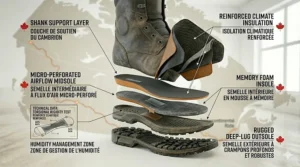
- Clean thoroughly before storage: Remove all dirt, salt, and road grime. Salt particularly accelerates leather degradation and metal corrosion during storage.
- Condition leather components: Apply quality leather conditioner (not waterproofing yet) to prevent drying and cracking during storage months.
- Ensure boots are completely dry: Moisture trapped during storage causes mold, membrane delamination, and material breakdown.
- Store in climate-controlled space: Unheated garages subject boots to freeze-thaw cycles that destroy membranes. Indoor storage at stable temperature prevents this damage.
- Use boot trees or stuff with paper: Maintains boot shape, preventing creases that become weak points.
- Store in breathable bags: Plastic bags trap moisture; breathable cotton bags protect from dust while allowing air circulation.
Mid-Season Maintenance Protocol
Every 2,000 kilometres or monthly, whichever comes first:
- Clean outer materials with appropriate cleaners (leather saddle soap, textile cleaner)
- Inspect buckles, velcro, laces for wear—address small issues before they become failures
- Check stitching at stress points (toe flex, ankle flex) for separation
- Apply leather conditioner to maintain flexibility
- Inspect sole wear pattern—unusual wear indicates suspension or ergonomic issues worth addressing
Every 5,000 kilometres:
- Deep clean including removing insoles, cleaning interior
- Apply waterproofing treatment appropriate to materials
- Check membrane integrity by wearing around house on damp towel—any moisture penetration indicates membrane issues requiring professional attention
When to Consider Professional Service vs. Replacement
Service makes sense when:
- Boot structure and fit remain excellent
- Only specific components need replacement (sole, buckles)
- Remaining boot has 10,000+ km lifespan potential
- Replacement cost is under 40% of new boot price
Replace when:
- Membrane fails extensively (not repairable economically)
- Structural leather/material shows significant cracking or separation
- Ankle reinforcement compresses or deforms (no longer provides protection)
- Multiple concurrent failures indicate end-of-life
Frequently Asked Questions
❓ Can I use adventure boots in Canadian winter conditions with heated insoles?
❓ Do Gore-Tex Surround boots actually stay dry on multi-day rides, or is it marketing?
❓ How do I know if my calf size requires special wide-calf boot options?
❓ Should I buy boots one size larger to accommodate thick touring socks?
❓ Are Canadian warranty and return policies different for imported motorcycle boots?
Conclusion: Making Your Final Boot Decision for Canadian Transcontinental Riding
Waterproof adventure boots transcontinental ride success ultimately depends on matching boot capabilities to your actual touring needs rather than marketing superlatives or brand prestige. Canadian riders face unique demands—maritime climate gear requirements, extreme temperature ranges, long distances from services—that make thoughtful boot selection more critical than for European or American riders operating in milder, more densely-serviced regions.
For most Canadian transcontinental first-timers, the TCX Clima 2 Surround Gore-Tex ($400-$480 CAD) represents the optimal balance of waterproofing, breathability, protection, and value. The Gore-Tex Surround technology specifically addresses Canadian climate challenges, while mid-range pricing allows budget for other essential touring gear. Riders prioritizing lightweight comfort for highway-focused touring should consider the Alpinestars Toucan Gore-Tex ($580-$680 CAD), while those planning serious remote expedition riding will appreciate the Sidi Adventure 2’s ($680-$780 CAD) serviceable construction and lifetime value proposition.
Remember that even the best expedition motorcycle equipment becomes liability if improperly maintained or matched to the wrong riding style. A $700 premium boot won’t make you comfortable if you’re genuinely riding 90% pavement and a lightweight touring boot would serve better. Conversely, budget boots inadequate for your actual demands will compromise your entire transcontinental journey regardless of initial cost savings.
The goal isn’t finding the “best” boot in absolute terms—it’s identifying the best boot for your specific Canadian transcontinental adventure plans. Assess your honest riding mix, calculate total cost of ownership across your expected usage, prioritize proven waterproof membrane technology, and ensure proper fit with your actual touring gear setup. Make that investment thoughtfully, maintain the boots properly between seasons, and they’ll carry you reliably across Canada’s magnificent transcontinental distances for years to come.
✨ Don’t Miss These Exclusive Deals!
🔍 Take your transcontinental adventure to the next level with these carefully selected products. Click on any highlighted item to check current pricing and availability on Amazon.ca. These boots will help you create authentic touring experiences your riding buddies will envy!
Recommended for You
- 7 Best Enduro Boots Mud Performance 2026 – Canada Guide
- 7 Best Dual Sport Boots Gravel Roads Canada 2026
- 7 Most Comfortable ADV Boots Long Distance Canada 2026
Disclaimer: This article contains affiliate links. As an Amazon Associate, I earn from qualifying purchases. If you purchase products through these links, we may earn a small commission at no additional cost to you.
✨ Found this helpful? Share it with your friends! 💬🤗
