

In This Article
Your hands are covered. Your core is wrapped in three layers plus a windproof shell. And your toes? Your toes are staging a mutiny somewhere around the second stoplight. If you’ve ever pulled into a gas station just to stomp feeling back into your boots, you already understand why rechargeable vs 12V heated socks motorcycle debates show up in every cold-weather riding forum every October. Both systems solve the same problem — frozen toes at 100 km/h — but they solve it in completely different ways, and picking the wrong one means either running out of juice on a long haul or wiring your bike for a system you barely use.
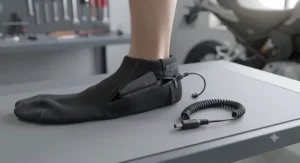
This guide breaks the decision down honestly: how 12V hardwired socks compare with rechargeable battery socks, seven real products worth your money across budget, mid-range, and premium tiers, and the practical stuff — fit, maintenance, and what actually happens to your toes at -15°C — that Amazon listings never mention. As Canadian public health guidance on cold-related emergencies points out, frostbite happens when skin freezes, and the toes are usually among the first body parts affected, which is exactly why this isn’t just a comfort question. Let’s get your feet sorted before the first real cold snap hits.
Quick Comparison Table: Rechargeable vs 12V at a Glance
| Feature | 12V Wired Socks | Rechargeable Battery Socks |
|---|---|---|
| Power source | Motorcycle battery (direct wire) | Internal lithium battery (USB/proprietary charge) |
| Runtime | Unlimited while riding | 3-10 hours per charge, varies by heat setting |
| Off-bike use | No — needs the bike’s electrical system | Yes — walk, hike, or commute on foot |
| Setup complexity | Moderate (harness, Y-cable, controller) | Low — charge and wear |
| Typical price range (CAD) | C$70-C$150 | C$55-C$400 depending on brand/battery |
| Best For | Long daily commuters, touring riders | Multi-activity riders, walk-in/walk-out trips |
The core trade-off here is simple, and once you see it, the rest of this article is just filling in the details. 12V wired socks trade portability for infinite runtime — plug into your bike’s electrical system and you’ll never think about battery percentage again, but you’re stuck once you park. Rechargeable socks flip that: you get freedom to walk into a diner, a gas station, or a ski hill lodge without dragging a wire, but you’re managing a battery clock that eventually hits zero. Neither is objectively “better” — it depends entirely on how you ride, which we’ll dig into next.
💬 Just one click — help others make better buying decisions too!😊
Top 7 Heated Socks for Motorcycle Riders: Expert Analysis
Every product below was chosen to represent a real trade-off in the rechargeable vs 12V heated socks motorcycle decision — budget, mid-range, and premium, across both power types. Specs are drawn from manufacturer documentation and aggregated review sentiment; price ranges are approximate CAD figures at the time of research and will shift with currency and retailer promotions.
1. Gerbing 12V Heated Sock Liners — unlimited runtime wired straight to the bike
The headline feature here is simple: plug in and forget about battery math for the rest of the season. Gerbing’s socks run on the brand’s patented microwire heating elements, which connect directly into Gerbing pant liners or wire straight into your motorcycle’s battery. In practice, that means as long as your bike is running, your toes are warm — no clock ticking down at hour four of a nine-hour ride. The liners hit a maximum output of roughly 135°F, and the stretch-upper, non-stretch-sole construction keeps them snug without bunching under a boot. Note that a battery harness, Y-harness, and temperature controller are needed for stand-alone operation and are sold separately from the socks themselves, so budget for that add-on cost before you commit.
Based on the spec comparison against other 12V options on this list, Gerbing earns its reputation through longevity — the company has been building heated motorcycle gear for decades, and the microwire tech is backed by a lifetime warranty on the heating elements themselves, which is rare in this category. This is the pick for riders who commute year-round or tour long distances where “battery life” simply isn’t a variable they want to manage. Aggregated review sentiment across retailers consistently praises the even heat distribution and durability, though some riders note the socks run large and recommend sizing down if you wear a thinner liner sock underneath.
Pros:
- ✅ Unlimited heat as long as the bike is running
- ✅ Lifetime warranty on the microwire heating elements
- ✅ Connects into the broader Gerbing 12V gear ecosystem
Cons:
- ❌ Requires a separately sold harness and controller
- ❌ Completely powerless once you’re off the bike
Expect to pay somewhere in the C$90-C$130 range for the sock liners alone, with the harness and controller adding another C$40-C$80 depending on configuration. For riders who log serious winter mileage, that upfront cost is the price of never worrying about cold toes again.

2. Warm & Safe Heated Socks — best toe-targeted heat for cold blasts
Warm & Safe built this sock around a very specific complaint: motorcyclists get cold in the toe area first, from wind and road spray hitting the front of the boot, not the whole foot uniformly. So instead of blanket heating across the entire sole, the heating element concentrates specifically where bikers actually get cold — the toe area — using flat heat technology built into a micro-fleece fabric that you genuinely can’t feel through the sock. That’s a smart engineering call — heating the whole foot wastes power and adds bulk exactly where boots are already tightest.
Here’s what the spec sheet won’t tell you outright: at roughly 9 watts of draw, this sock sips power compared to full-foot systems, which matters if you’re running heated gloves and a heated jacket liner off the same harness and worrying about total electrical load. It connects to a Heat-Troller through heated pants, or via a separate Y-cable straight to the battery or a 7.4V portable pack, giving you a bit of hybrid flexibility other 12V-only options don’t offer. Real customer feedback is a genuine mixed bag: one long-time buyer called switching from heated insoles to this sock “a game changer,” while another flagged sizing as generous — ordering a size 12.5 (US) shoe in 2XL left two inches of slack at the heel — and noted occasional toe hot spots when the connected heated pants dialed down elsewhere on the body.
Pros:
- ✅ Toe-focused heat where riders actually feel the cold
- ✅ Low 9-watt draw, easy on your bike’s electrical system
- ✅ Thin, seamless construction that disappears inside boots
Cons:
- ❌ Sizing runs large — order down from your usual size
- ❌ Requires separate Heat-Troller or Y-cable purchase
Price typically lands around C$70-C$100 for the sock liner, before any controller or harness add-ons. If your main complaint is specifically frozen toes (not cold ankles or arches), this is the most targeted fix on the list.
3. Lenz Heat Sock 5.1 with Toe Cap and Lithium Pack rcB — most advanced battery tech on this list
Lenz didn’t just strap a battery to a sock — they engineered a whole heating architecture. The patented Toe Cap heating element surrounds the toes from above and below, which solves a problem most competitors ignore: heat from a single flat panel under the foot rarely reaches the tops of your toes, where a lot of cold sensation actually registers. The battery itself press-studs onto the sock cuff through three rivet-style holders, and once attached, the extended cuff folds over to hide the battery completely, so there’s no bulky pocket digging into your shin inside a snug motorcycle boot.
On paper, this means serious runtime flexibility: depending on which battery you pair it with, the socks can keep your feet warm anywhere from 3 to 23 hours, with the largest battery option lasting up to 23 hours on the lowest setting and roughly 7.5 hours on maximum heat. That’s genuinely class-leading among rechargeable options. Reviewers consistently rate the build quality and warmth as best-in-class, but a recurring theme in aggregated feedback is sticker shock combined with a snug fit — some users report the sock itself runs tight through the ankle, and the companion smartphone app for monitoring battery status draws mixed reviews for reliability.
Pros:
- ✅ Toe Cap heats from above and below, not just underneath
- ✅ Up to 23 hours of runtime on the largest battery
- ✅ Merino wool blend feels premium against skin
Cons:
- ❌ Among the most expensive options in this category
- ❌ Some reviewers report a snug, tight ankle fit
Because this is an imported European system, Canadian pricing runs high — expect somewhere in the C$300-C$400 range once you include a battery pack, positioning it as the splurge pick for riders who want the absolute best rechargeable tech and don’t mind paying premium-brand prices for it.
4. Mobile Warming 3.7V Rechargeable Heated Socks — best odor control for multi-day tours
If you’ve ever pulled your boots off after eight hours of riding and immediately regretted it, this is the pick built with you in mind. Mobile Warming constructs its socks from an antibacterial tri-blend fabric specifically engineered to resist odor and wick moisture, which matters more than most riders expect — sweaty feet inside sealed motorcycle boots is a genuinely unpleasant combination by day three of a road trip. The ultra-fine heating elements are powered by slim lithium-ion batteries that tuck into the sock without adding noticeable bulk, and a wireless remote lets you adjust heat settings without pulling your boot off mid-ride.
What most buyers overlook about this model is the runtime-to-thinness ratio: independent testers report roughly 10 hours of warmth on a single charge, which is impressive given how slim the battery pack sits against the calf. Here’s what to weigh — the battery lasts up to 10 hours, but that’s the manufacturer’s ceiling figure on the lowest heat setting, and a full day of high-heat use in genuinely frigid temperatures will draw that down considerably faster, so treat the number as a best-case estimate rather than a guarantee. Aggregated review sentiment highlights the fabric quality and odor resistance as standout strengths, particularly among riders who use the socks for multi-day touring rather than short commutes.
Pros:
- ✅ Antibacterial tri-blend fights odor on long tours
- ✅ Slim lithium-ion battery with minimal added bulk
- ✅ Wireless remote for on-the-fly heat adjustment
Cons:
- ❌ Real-world runtime often falls short of the 10-hour claim
- ❌ Remote control is another accessory that can be lost
Expect a price range around C$80-C$110, positioning this as a genuine mid-tier option for riders prioritizing comfort and hygiene over raw runtime numbers.
5. ActionHeat 3.7V Rechargeable Heated Socks — best value under C$80
This is the pick for riders who want to test the rechargeable-sock concept without committing serious money to it first. ActionHeat’s 3.7V system uses a carbon fiber heating panel positioned on the top of the foot near the toes, combining FAR infrared heating with heat-reflective technology to deliver more than seven hours of warmth on a single charge. That’s a genuinely competitive runtime figure for a sock that regularly sells under the C$80 mark in Canada, undercutting most rechargeable competitors by a wide margin.
Based on the spec comparison, the trade-off for that lower price is heat zone coverage — this panel concentrates warmth near the toes rather than wrapping the whole foot the way Lenz’s Toe Cap does, so riders with cold ankles specifically may still feel a chill. That said, independent gear testers who wore the socks through actual cold-weather use described the cotton-and-spandex blend as comfortable, stretchy, and durable through frequent wear, which speaks well to longevity at this price point. What the spec sheet won’t tell you is that the included remote control genuinely simplifies mid-ride adjustments — you don’t need to stop and dig into your boot to change heat levels, a small detail that matters a lot at highway speed.
Pros:
- ✅ Reliably priced under C$80 in most retailer listings
- ✅ Over 7 hours of runtime on a single charge
- ✅ Remote control adjusts heat without removing boots
Cons:
- ❌ Toe-focused panel leaves ankles less warmed
- ❌ Four-color heating range means less nuance than 9-level systems
At roughly C$55-C$75 depending on retailer and sizing, this is the clearest “best heated socks under C$80” pick on the list — genuinely capable performance without the premium-brand markup.
6. Savior Heat 7.4V Rechargeable Heated Socks — biggest battery, longest high-heat runtime
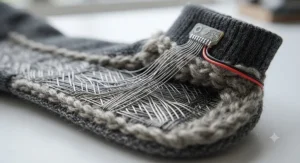
Savior Heat took a different approach to the rechargeable category: instead of a small, discreet battery, they went big. The socks run on a powerful 7.4V 2200mAh rechargeable battery designed to maximize warmth over long stretches, reaching temperatures up to 140 degrees across three heat settings. That extra battery capacity translates directly into real-world staying power — independent testers reported up to seven hours of high-heat runtime on a single charge, which is unusually strong for the “high” setting specifically, where most competitors’ batteries drain fastest.
Here’s what to weigh if you’re considering this one: the larger battery means a slightly bulkier profile than the ActionHeat or Volt options, so fit inside a tight-fitting sport boot deserves extra attention before you buy. The over-the-calf design with a no-slip elastic band keeps the sock securely in place, addressing a common complaint with cheaper heated socks that slide down mid-ride. Reviewers highlight the breathable CoolMax fabric, which keeps feet from getting sweaty once warmed, as a genuine strength, and the ability to charge multiple battery packs simultaneously means road-trip riders can carry a spare and swap mid-day without waiting hours for a recharge.
Pros:
- ✅ 2200mAh battery delivers strong high-heat runtime
- ✅ No-slip elastic band keeps socks from sliding
- ✅ CoolMax fabric manages sweat well once heated
Cons:
- ❌ Slightly bulkier fit than slimmer rechargeable rivals
- ❌ Charging multiple spare batteries adds ongoing cost
Pricing generally sits in the C$65-C$90 range, making this a strong middle-ground pick between the ultra-budget ActionHeat and the premium Lenz system.
7. Volt 3V Rechargeable Heated Socks — thinnest fit for snug boots
Volt approached the rechargeable heated sock from an entirely different angle: instead of maximizing battery size, they minimized bulk. The sock uses a distinctively thin poly/Spandex fabric construction that’s noticeably slimmer than most competitors on this list, which solves a specific and very real problem — riders with narrow, race-cut sport boots often find that thicker heated socks simply don’t fit once combined with a boot liner and the boot’s internal padding.
What most buyers overlook about slim heated socks generally is that thinner construction almost always means a smaller battery and correspondingly shorter runtime, and Volt’s 3V system is no exception — expect meaningfully less high-heat endurance than the 7.4V Savior Heat or the multi-battery Lenz system. Based on the spec comparison, this isn’t a sock built for a 10-hour highway tour in -20°C weather; it’s built for riders whose primary problem is fit inside snug motorcycle or sport boots, with reasonable warmth as a secondary benefit rather than the headline feature. That trade-off makes sense for track-day riders or commuters in aggressive sport boots who’ve already been priced out of every other option on this list by their boot’s internal volume.
Pros:
- ✅ Genuinely thin profile fits snug sport boots
- ✅ Budget-friendly compared to bulkier rechargeable rivals
- ✅ Simple design with fewer parts to fail
Cons:
- ❌ Shorter high-heat runtime than bulkier battery systems
- ❌ Less cushioning than thicker touring-oriented socks
Expect a price range around C$60-C$80, making this another strong candidate if boot fit — not raw runtime — is your primary constraint.
Practical Usage Guide: Getting Your Heated Socks Boot-Ready
Buying the right heated socks is only half the job — setup mistakes are what actually leave riders disappointed in week one. If you’ve gone the 12V route, start by mapping your bike’s electrical capacity before you wire anything in: heated jackets, gloves, grips, and socks running simultaneously can pull well over 100 watts, and stacking accessories onto an already-loaded charging system is a fast way to a dead battery at a gas station. Route the wiring harness along existing cable runs, away from the exhaust and moving parts, and use a fused connection at the battery rather than tapping an accessory outlet not rated for the extra draw.
For rechargeable socks, the first-30-days mistake almost everyone makes is charging habits. Lithium batteries degrade faster with full-drain-then-full-charge cycles, so top up after most rides rather than waiting until the indicator hits zero, and avoid leaving batteries at 100% charge in storage for weeks at a time — a half-charge is friendlier to long-term battery health. Break your socks in on shorter rides first to confirm heat-setting comfort before committing to a full-day tour, and always test the fit with the exact boots you’ll actually be riding in, not your everyday sneakers — boot volume changes everything about how a heated sock feels once you’re moving.
Real-World Scenario: Which Rider Are You?
Picture Maya, a year-round commuter who rides 14 km each way to work through a Canadian winter that doesn’t care about her schedule. For her, the Gerbing 12V system makes obvious sense — she’s already on the bike every single day, the wiring is a one-time job, and she never has to remember to charge anything before an early shift.
Now picture Dev, who takes his bike out for weekend rides but also wants heated socks for the walk from the parking lot to the trailhead when he goes winter hiking. A 12V system is useless off the bike, so a rechargeable option like the ActionHeat or Savior Heat fits his actual pattern of use — heat that travels with him, not with the bike.
And then there’s Priya, doing multi-day touring across provinces every October, stopping at diners and motels along the way. She needs both worlds: heated socks that draw off the bike during long highway stretches but still function during rest stops. A hybrid-capable system like the Warm & Safe sock, which connects via harness or a portable battery pack, threads that needle better than a pure 12V or pure rechargeable setup.
Problem → Solution: Common Cold-Foot Riding Issues
Cold feet on a motorcycle rarely come down to one single cause, so treating symptoms one at a time gets better results than buying more gear and hoping. Problem: toes go numb within 20 minutes despite thick socks. Thick cotton socks trap moisture and compress inside a tight boot, actually reducing insulation — switch to a thin, moisture-wicking base layer under a targeted heating sock like the Warm & Safe Heated Socks, since bulk isn’t the fix here, targeted heat is.
Problem: heated socks work great until hour four, then go cold. This is almost always a battery-capacity mismatch, not a defective product — riders doing long highway stints should prioritize either a 12V system like the Gerbing 12V Heated Sock Liners or a high-capacity rechargeable option like the Savior Heat 7.4V Rechargeable Heated Socks rather than a slim, lower-capacity sock built for shorter use. Problem: socks feel great in the garage but too tight once boots go on. Boot volume shrinks available space dramatically — this is exactly the scenario the Volt 3V Rechargeable Socks were designed to solve with their intentionally thin construction. Problem: feet stay warm but end up damp and cold by the end of the ride. Look for CoolMax or moisture-wicking fabrics specifically, since heat alone doesn’t solve sweat management — the Savior Heat and Mobile Warming picks both address this directly through fabric choice, not just heating output.

How to Choose Between Rechargeable and 12V Heated Socks
- Map your actual riding pattern first. Daily commuters who are always on the bike lean 12V; weekend or multi-activity riders lean rechargeable — this single factor eliminates half the options immediately.
- Check your bike’s spare electrical capacity. Older bikes with smaller stators may struggle to support a 12V heated sock on top of a jacket and gloves; rechargeable sidesteps this entirely.
- Confirm boot volume before buying. Bring your actual riding boots when trying socks on, since a snug sport boot fits differently than a touring boot.
- Match runtime to your longest typical ride. A 3-hour battery is fine for a commute but risky for a 6-hour tour — check manufacturer runtime claims against your worst-case ride length, not your average one.
- Decide how much you value off-bike warmth. If you’re walking around at rest stops or hiking after parking, only rechargeable socks travel with you.
- Factor in total system cost, not just the sock price. 12V systems often need a separately purchased harness and controller — that add-on cost changes the value equation significantly.
- Weigh fabric and moisture management alongside heat output. A sock that’s warm but damp by hour three isn’t actually solving your problem — prioritize CoolMax or wool blends if long rides are common.
Common Mistakes When Buying Heated Motorcycle Socks
The single most common mistake is buying based on maximum wattage or temperature claims alone, without checking whether that heat is targeted at the toes (where cold actually registers first) or spread thinly across the whole foot. A close second is skipping the boot-fit test entirely — ordering online, trying socks on barefoot in a warm living room, and discovering three weeks later that they don’t actually fit inside a proper motorcycle boot with room to spare. Riders also frequently underestimate total system cost on 12V setups, forgetting that the harness, Y-cable, and temperature controller are typically sold separately and can add 30-50% to the sock’s sticker price. Finally, plenty of buyers assume “rechargeable” automatically means “portable and convenient” without checking actual runtime against their real ride length — a sock rated for 3 hours on high heat is a poor match for a 5-hour tour, no matter how good the reviews look.
Heated Socks Fit for Motorcycle Boots and Tall Boots
Fit is where most heated sock purchases succeed or fail, and it’s rarely about the sock alone — it’s about the interaction between sock thickness, boot internal volume, and how tall the boot shaft actually is. Riders with tall touring boots or off-road boots that extend well up the calf generally have more room to work with, meaning bulkier options like the Savior Heat 7.4V Rechargeable Heated Socks with their over-the-calf design and larger battery pocket fit comfortably without pressure points. Sport and race boots, by contrast, are cut aggressively narrow through the ankle and shin specifically to reduce bulk for performance, which is exactly why a slimmer profile like the Volt 3V Rechargeable Socks exists — cramming a thick battery pack into a boot designed with zero spare volume is a recipe for circulation-cutting discomfort, not warmth.
For 12V wired options, tall boots actually simplify things, since there’s more room to route the connector cable up toward the top of the boot shaft where it exits to the harness, rather than fighting for space around the ankle. The Gerbing 12V Heated Sock Liners and Warm & Safe Heated Socks both position their connector at the top rear of the calf specifically for this reason. One practical tip that rarely appears on product pages: always try your heated socks with the same base layer sock (or lack thereof) you’ll actually wear riding, since adding or removing a thin liner sock changes total volume enough to shift a comfortable fit into a tight one.
Long-Term Cost and Maintenance: 12V vs Rechargeable
| Cost Factor | 12V Wired Socks | Rechargeable Battery Socks |
|---|---|---|
| Upfront hardware | Sock + harness + controller (C$130-C$230 total) | Sock with battery included (C$55-C$400) |
| Ongoing cost | Minimal — occasional wiring checks | Battery replacement every 2-4 years |
| Electricity cost | Draws from bike, negligible fuel impact | Home charging, negligible electricity cost |
| Maintenance | Check connectors for corrosion annually | Follow half-charge storage guidance |
| Resale/reuse | Harness reusable across future bikes | Sock and battery both reusable off-bike |
Looking at the comparison above, 12V systems carry a heavier upfront cost once you factor in the harness and controller, but that hardware is largely a one-time investment — a well-maintained harness can outlast several motorcycles if you transfer it during upgrades. Rechargeable systems spread cost differently: the sock itself is often cheaper out of the gate, but lithium battery packs degrade with age and typically need replacing every few seasons, which is an ongoing cost 12V riders simply don’t face. For riders trying to calculate true total cost of ownership over five years, a heavily used 12V setup on a daily commuter bike often ends up cheaper per season than repeatedly replacing rechargeable batteries, while occasional weekend riders usually come out ahead sticking with rechargeable and skipping the harness investment entirely.
✨ Ready to Stop Dreading Winter Rides?
🔍 Take your cold-weather riding kit to the next level with heated socks matched to how you actually ride. Click on any highlighted pick above to check current pricing and availability, and get ready for a season of rides that don’t end with you limping into the garage on numb feet.
Features That Actually Matter (And Those That Don’t)
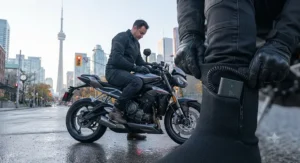
Toe-specific heating placement matters enormously, since that’s where cold registers first and where most riders actually feel discomfort — a sock that heats the arch evenly but leaves toes cold is solving the wrong problem. Multiple heat settings matter too, not because you need nine granular levels, but because having at least a low/medium/high split lets you match output to conditions without needlessly draining a battery on a mild day. Fabric moisture-wicking capability matters more than most buyers expect, since a warm-but-damp foot is still an uncomfortable foot by the end of a long ride.
On the other hand, smartphone app connectivity is a feature that sounds impressive but rarely earns its keep in practice — aggregated reviews consistently flag app reliability issues, and fumbling with a phone screen at highway speed isn’t realistic anyway. Marketing claims around maximum temperature figures (135°F, 140°F, and so on) also matter far less than they appear, since virtually every heated sock on the market clusters in the same narrow range — the real differentiator is how evenly and specifically that heat is delivered, not the peak number on the box.
Safety, Regulations, and Compliance Guide
Wiring anything into your motorcycle’s electrical system carries real risk if done carelessly, and this is where 12V heated sock installation deserves genuine caution. Common failure points in aftermarket electrical installs include loose connections, wiring with low heat tolerance routed too close to hot engine components, and connectors that weren’t properly seated. Always use a fused connection at the battery, route cables away from the exhaust and moving parts, and if you’re not confident routing and securing a harness yourself, a shop install is worth the labour cost given what’s at stake electrically.
Beyond wiring, the underlying reason heated gear matters at all is medical, not just comfort-related. According to the Canadian Centre for Occupational Health and Safety’s guidance on cold environments, frostbite risk climbs with both lower temperatures and wind exposure, and proper sock layering is part of standard cold-exposure control measures. Riders should treat persistently numb or painful toes as a genuine warning sign, not something to push through — Alberta Health Services’ cold weather safety guidance notes that frostbite occurs when skin becomes so cold that the skin and underlying tissues freeze, and by the time that happens, a heated sock alone won’t reverse the damage. Get out of the cold and seek warmth immediately if you notice numbness that doesn’t resolve.
Best Heated Socks Under C$80: Budget Picks That Still Deliver
You don’t need to spend premium-brand money to solve frozen toes, and this category proves it. The ActionHeat 3.7V Rechargeable Heated Socks lead the budget tier, typically priced in the C$55-C$75 range while still delivering over seven hours of runtime and remote-controlled heat adjustment — genuinely competitive specs against sock systems costing two or three times as much. The Volt 3V Rechargeable Socks sit close behind, usually in the C$60-C$80 window, trading some runtime for a noticeably slimmer fit that suits snug sport boots better than bulkier alternatives.
What most buyers overlook when shopping strictly by price is that “budget” doesn’t have to mean “compromised” in this category specifically — unlike some gear where cheaper options cut corners on core function, several sub-C$80 heated socks use the same fundamental heating-element technology as premium options, just paired with smaller batteries and simpler fabric blends. The trade-off is almost always runtime and moisture management rather than raw warmth output, which makes budget picks a genuinely smart choice for riders doing shorter commutes or occasional weekend rides rather than all-day winter tours.
Winter Riding Comfort Accessories: Building Your Full Cold-Weather Kit
Heated socks solve one piece of a much bigger puzzle, and riders who treat cold-weather comfort as a system — not a single product — end up far more comfortable overall. Heated grips reduce the strain on your hands specifically, working alongside heated gloves rather than replacing them, since palm and finger cold come from different exposure than wind-chilled fingertips. A windproof, breathable base layer under your riding jacket does more for core warmth than most riders assume, and since your body prioritizes core temperature over extremities when it’s cold, a genuinely warm core actually helps blood flow (and therefore warmth) reach your toes more effectively too.
Neck gaiters and balaclavas matter more in winter riding than most non-riders would guess, since wind at highway speed strips heat from any exposed skin far faster than standing still in the same temperature — a dynamic covered well in the Government of Canada’s winter weather safety tips, which apply just as much to riders as to pedestrians. And don’t overlook simple mechanical fixes — heated grips or bar mitts (insulated handlebar covers) paired with heated socks and a windproof base layer often outperform any single “best” piece of gear purchased in isolation. Building toward a complete winter riding comfort accessories kit, rather than chasing one perfect product, is consistently what separates riders who enjoy winter commuting from those who dread every cold morning.
Heated Toe Warmers vs Full Heated Socks
Disposable and rechargeable heated toe warmers — the small insert-style products that sit inside your boot rather than wrapping the whole foot — solve a narrower problem than full heated socks, and it’s worth being honest about what each does well. Heated toe warmers motorcycle riders use as insoles are genuinely good for a quick, low-cost fix if toe cold is your only complaint and you don’t want to invest in a full sock system or any wiring. They’re typically cheaper upfront, require zero installation, and slip into boots you already own without any fit reconsideration.
Full heated socks, by contrast, cover a larger surface area, generally offer adjustable heat settings that disposable toe warmers can’t match, and — in the case of rechargeable or 12V systems — provide sustained, controllable warmth rather than a single-use chemical reaction that fades gradually and can’t be turned back up. If your cold-foot problem is genuinely isolated to your toes and you ride infrequently in cold weather, toe warmers are a reasonable low-commitment starting point. But for anyone riding regularly through a real Canadian winter, the adjustability and reusability of a proper heated sock system — whether 12V or rechargeable — delivers meaningfully better value over a full season.

Frequently Asked Questions
❓ Are 12V heated socks better than rechargeable for motorcycle riding?
❓ How long do rechargeable heated socks last on a single charge?
❓ Do heated motorcycle socks fit inside regular riding boots?
❓ Can I install 12V heated socks myself without a mechanic?
❓ What's the best heated socks under $80 CAD for motorcycle riders?
Conclusion
There’s no single right answer in the rechargeable vs 12V heated socks motorcycle debate — there’s only the answer that’s right for how you actually ride. Daily commuters and long-haul tourers who are always tethered to their bike anyway get the most out of a 12V system like the Gerbing 12V Heated Sock Liners, trading a bit of upfront installation complexity for genuinely unlimited runtime. Riders who split their time between the saddle and their own two feet — hiking, walking around at rest stops, running errands mid-ride — get far more practical value out of a rechargeable option, whether that’s the budget-friendly ActionHeat 3.7V Rechargeable Heated Socks or the premium, toe-cap-equipped Lenz Heat Sock 5.1.
Whichever direction you go, prioritize boot fit and toe-specific heat placement over flashy spec numbers, and remember that a warm ride is a system, not a single product — pair your heated socks with the right base layers, grips, and windproofing, and this winter’s rides stop being something you endure and start being something you actually look forward to.
✨ Don’t Miss These Exclusive Deals!
🔍 Take your winter riding comfort to the next level with these carefully selected heated socks. Click on any highlighted item to check current pricing and availability, and get ready to actually enjoy the ride this season!
Recommended for You
- Heated Socks for Motorcycle Riding: 7 Warmest Picks for 2026
- How to Choose a Heated Undershirt for Motorcycle Riding Winter 2026
- Heated Undershirt for Motorcycle Riding: 7 Top Picks for 2026
Disclaimer: This article contains affiliate links. As an Amazon Associate, I earn from qualifying purchases. If you purchase products through these links, we may earn a small commission at no additional cost to you.
✨ Found this helpful? Share it with your friends! 💬🤗
