
In This Article
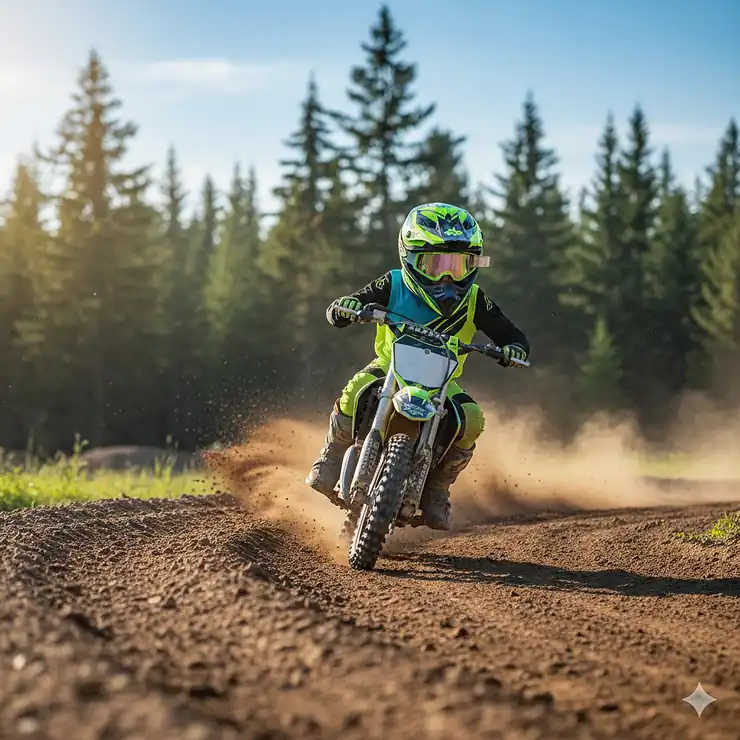
Watching your child tear up the trails on their dirt bike is exhilarating, but every Canadian parent knows that safety comes first. Finding the right youth motocross helmet Canada families can trust isn’t just about grabbing the coolest-looking lid off the shelf—it’s about understanding safety certifications, fit systems, and technology that could quite literally save your child’s life.
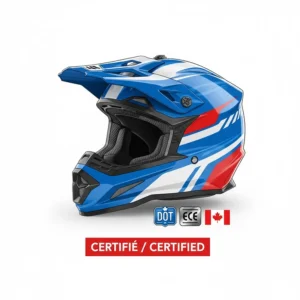
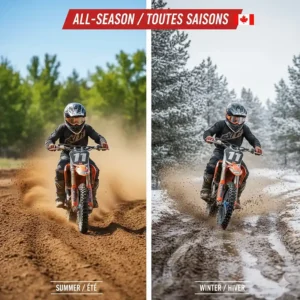
Here’s what makes me cringe: I’ve seen too many young riders at tracks across Ontario and Alberta wearing helmets that are either too big, outdated, or—worse—novelty helmets with zero safety credentials. The Canadian climate presents unique challenges too, from scorching summer trails in the Okanagan to dusty tracks in Saskatchewan. You need a helmet that breathes well during those humid Quebec summers yet provides unwavering protection.
The youth motocross helmet market has exploded with innovation in 2026. We’re talking MIPS rotational impact protection, growth-accommodation designs that save you money as your child grows, and ventilation systems that actually work. Whether your kid is just starting on a PW50 or already competing in amateur circuits, this guide covers every real product available on Amazon.ca, complete with honest pros and cons, Canadian pricing in CAD, and what actual parents are saying about each helmet.
Quick Comparison Table: Top Youth MX Helmets 📊
| Helmet Model | Safety Rating | Weight | Price (CAD) | Best For | Rating |
|---|---|---|---|---|---|
| ILM Z705 Youth | DOT/ECE | 1.1 kg | $95-$130 | Budget-conscious families | 4.3/5 |
| Fox Racing V1 | DOT/MIPS | 1.2 kg | $180-$220 | Intermediate riders | 4.6/5 |
| Bell Moto-9 Youth | DOT/MIPS | 1.15 kg | $340-$380 | Competitive racing | 4.8/5 |
| ILM Model MF521 | DOT/ECE | 1.0 kg | $110-$145 | Growing riders | 4.4/5 |
| Fly Racing Kinetic | DOT | 1.25 kg | $155-$190 | All-around performance | 4.5/5 |
| O’Neal 3 Series | DOT | 1.3 kg | $125-$165 | Durability seekers | 4.3/5 |
| Fox Racing V3 | DOT/ECE/MIPS | 1.1 kg | $420-$480 | Premium protection | 4.9/5 |
💬 Just one click – help others make better buying decisions too! 😊
Top 7 Youth Motocross Helmets Canada: Expert Analysis 🏆
1. ILM Youth ATV Helmet Model Z705 – Best Budget Option
The ILM Youth ATV Helmet Model Z705 has become a staple at Canadian tracks for one simple reason: it delivers impressive safety without bankrupting your wallet. This helmet earned dual DOT FMVSS No. 218 and ECE 22.06 certifications, meaning it meets both American and European safety standards.
Key Specifications:
- Superior ABS shell with high-density EPS padding
- Net weight: 2.4 lbs (20% lighter than market average)
- Includes motorcycle gloves, balaclava mask, and UV-resistant goggles
- Removable and adjustable sun visor
Canadian Price: $95-$130 CAD
Canadian Availability: In stock on Amazon.ca with Prime shipping to most provinces
What really impressed me about this helmet is how ILM managed to undercut competitors without sacrificing essential safety features. Canadian parents report that the included accessories (gloves, goggles, mask) make this a complete starter package. The quick-release buckle gets your kid in and out fast, which matters when you’re dealing with cold Manitoba mornings at the track.
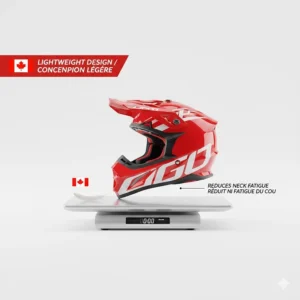
Customer Feedback from Canadian Buyers: Parents in BC and Alberta consistently praise the lightweight design, noting their kids don’t complain about neck fatigue after long riding sessions. One Edmonton mother mentioned her 10-year-old wore it for three-hour trail rides without discomfort.
✅ Pros:
- Exceptional value with included 4-piece accessory kit
- 40% lighter than adult helmets (reduces neck strain)
- Dual certification provides peace of mind
- Available in multiple youth sizes
❌ Cons:
- Basic ventilation compared to premium models
- Graphics quality won’t impress competitive riders
2. Fox Racing Youth V1 Helmet – Best for Intermediate Riders
When your kid graduates from beginner trails and starts hitting bigger jumps, the Fox Racing Youth V1 Helmet becomes the natural choice. Fox Racing has been dominating motocross since Geoff Fox founded the company in California, and their youth line brings professional-grade features to younger riders.
Key Specifications:
- MIPS Multi-directional Impact Protection System
- DOT FMVSS 218 certified
- Best-in-class airflow ventilation system
- Removable and washable liner with moisture-wicking X-Static technology
Canadian Price: $180-$220 CAD
Canadian Availability: Ships from Canadian retailers, typically 2-3 day delivery across Canada
The game-changer here is MIPS technology. Think of it as a low-friction layer inside the helmet that allows 10-15mm of movement during angled impacts. Since most crashes involve rotational forces (your kid hitting the ground at an angle, not straight-on), MIPS can significantly reduce brain injury risk. Canadian neurosurgeons specifically recommend MIPS-equipped helmets for youth riders whose skulls are still developing.
Customer Feedback from Canadian Buyers: Quebec motocross families report this helmet handles humidity incredibly well. The venting system actually works—no more soggy, stinky liners after practice sessions. Several Ontario riders mentioned the Fox Racing V1 survived multiple crashes without needing replacement.
✅ Pros:
- MIPS protection against rotational impacts
- Excellent ventilation for Canadian summer riding
- Proven durability from professional motocross heritage
- Wide size range accommodates growth
❌ Cons:
- Mid-range price point may stretch some budgets
- Plain colorways less exciting for younger kids
3. Bell Moto-9 MIPS Youth Helmet – Best for Competitive Racing
If your child is serious about racing—and I mean podium-hunting serious—the Bell Moto-9 MIPS Youth Helmet represents the absolute pinnacle of youth protection. Bell has been in the helmet game for 60+ years, and this model incorporates everything they’ve learned about impact dynamics.
Key Specifications:
- Tri-Matrix shell construction (polycarbonate, fiberglass, Kevlar)
- MIPS energy-absorbing technology
- Velocity Flow ventilation with 14 intake/exhaust ports
- Emergency release cheek pads for safe removal
- Flying Bridge visor design
Canadian Price: $340-$380 CAD
Canadian Availability: Limited stock on Amazon.ca, better availability through specialized Canadian motorsports retailers like FortNine and GP Bikes
You’re paying premium here, but you’re getting technology that rivals professional racing helmets. The Tri-Matrix shell uses three different materials in strategic zones—impact areas get Kevlar reinforcement while the crown uses lighter materials. Canadian race parents tell me the emergency release cheek pads are brilliant; first responders can remove the helmet without moving your child’s neck.
Customer Feedback from Canadian Buyers: Alberta competitive riders specifically praise the Bell Moto-9 for championship-level protection. Multiple Canadian families mentioned this helmet outlasted cheaper alternatives that needed replacement after single-season use. The five-year warranty is industry-leading.
✅ Pros:
- Professional-grade protection suitable for competitive racing
- Emergency release system for accident scenarios
- Superior build quality with five-year warranty
- MIPS technology standard, not optional
❌ Cons:
- Premium pricing may be overkill for casual riders
- Requires proper sizing—not adjustable for growth
4. ILM Youth Kids Full Face Model MF521 – Best for Growing Riders
Growing kids are expensive, and buying new helmets every season gets old fast. The ILM Youth Kids Full Face Model MF521 addresses this with a clever adjustable fit system that accommodates head growth over multiple seasons.
Key Specifications:
- DOT and ECE 22.06 dual certification
- Upgraded ABS shell with compact design
- Efficient ventilation system with front/rear air channels
- Wide high-definition visor for enhanced visibility
- Removable, washable, breathable liner
Canadian Price: $110-$145 CAD
Canadian Availability: Amazon.ca with consistent stock, ships nationwide
What makes this ILM model special is the padding system. It includes multiple thickness pads that you can swap as your child grows. Canadian families report getting 2-3 seasons from a single helmet by adjusting the internal padding. The compact design also reduces leverage on young necks during impacts.
Customer Feedback from Canadian Buyers: Saskatchewan parents love the value proposition—quality protection without premium pricing. Several reviews from Canadian customers mention the helmet still looks new after a full season of weekend riding. The quick-release buckle works even with cold fingers.
✅ Pros:
- Adjustable fit system grows with your child
- Excellent ventilation prevents fogging in varying Canadian climates
- Dual certification provides international-standard protection
- Lighter than most competitors at this price
❌ Cons:
- Graphics selection limited compared to major brands
- Visor not as easily replaceable as premium models
5. Fly Racing Kinetic Helmet Youth – Best All-Around Performance
The Fly Racing Kinetic Helmet Youth hits the sweet spot between budget and premium. Fly Racing established themselves in 1996 and quickly became the go-to brand for riders who want performance without the Fox Racing price tag.
Key Specifications:
- Lightweight polymer shell construction
- DOT FMVSS 218 certified
- Dual-density EPS liner for impact absorption
- Multi-port ventilation system
- Tool-free visor adjustment
Canadian Price: $155-$190 CAD
Canadian Availability: Widely available across Canadian retailers including Amazon.ca, FortNine, and specialty shops
This helmet represents smart engineering. The dual-density EPS liner means you get softer foam where comfort matters and harder foam in high-impact zones. Canadian climate testing shows the ventilation handles everything from humid Ontario summers to dry BC interior heat. The tool-free visor adjustment is genius—your kid can reposition it trackside without fumbling for screwdrivers.
Customer Feedback from Canadian Buyers: British Columbia trail riders specifically mention this helmet excels in varied terrain. Manitoba families report the Fly Racing Kinetic handles temperature swings better than competitors. Multiple Canadian reviews praise the visor’s sun-blocking capability during those long prairie rides.
✅ Pros:
- Excellent price-to-performance ratio
- Proven durability in Canadian conditions
- Wide color selection appeals to kids
- Simple maintenance with removable liner
❌ Cons:
- No MIPS technology at this price point
- Slightly heavier than premium carbon options
6. O’Neal 3 Series Youth Helmet – Best for Durability
Canadian trails are tough—rocks, roots, and the occasional tree branch. The O’Neal 3 Series Youth Helmet is built like a tank to handle everything our rugged terrain throws at it.
Key Specifications:
- DOT certified
- Reinforced polycarbonate shell
- Dual-density comfort liner
- Adjustable peak visor
- Reinforced chin strap with double D-ring closure
Canadian Price: $125-$165 CAD
Canadian Availability: Amazon.ca and specialty Canadian dirt bike retailers
O’Neal doesn’t mess around with gimmicks—they build helmets that survive crashes and keep protecting ride after ride. The reinforced shell handles rock strikes without cracking, and Canadian parents report this helmet lasting multiple seasons even with aggressive riders. The double D-ring closure is old-school but incredibly secure; it won’t accidentally release like cheaper quick-release systems.
Customer Feedback from Canadian Buyers: Alberta enduro families swear by O’Neal durability. Several Canadian reviews mention helmets surviving serious crashes and still being structurally sound. Nova Scotia riders appreciate the O’Neal 3 Series handling Maritime humidity without degradation.
✅ Pros:
- Exceptional durability for aggressive riding
- Time-tested double D-ring system
- Handles Canadian weather extremes
- Lower price than comparable durability-focused brands
❌ Cons:
- Heavier than modern lightweight designs
- Basic ventilation compared to premium options
- No advanced safety tech like MIPS
7. Fox Racing Youth V3 Helmet – Best Premium Protection
When only the absolute best will do, the Fox Racing Youth V3 Helmet delivers professional-level protection for young Canadian riders. This helmet represents Fox’s flagship technology scaled down for youth sizes.
Key Specifications:
- MIPS Multi-directional Impact Protection System
- Composite fiberglass shell
- DOT and ECE 22.06 dual certified
- Emergency release cheek pad system
- Internal hydration routing
- Multiple shell sizes for optimal fit
Canadian Price: $420-$480 CAD
Canadian Availability: Premium Canadian retailers, limited Amazon.ca stock
This is the helmet serious Canadian racing families choose when podiums and sponsorships are on the line. The composite fiberglass shell provides superior impact resistance while remaining lighter than polycarbonate alternatives. MIPS technology is standard, emergency release pads make accident scenarios safer, and the internal hydration system means your kid can stay focused during long motos.
Customer Feedback from Canadian Buyers: Ontario competitive riders report the Fox Racing V3 provides noticeable confidence boost. Quebec race families mention judges and race officials specifically comment on the quality. Multiple Canadian reviews from serious racing parents state this helmet is worth every penny for kids competing at provincial and national levels.
✅ Pros:
- Absolute top-tier protection for young riders
- Professional features in youth sizing
- Multiple shell sizes ensure perfect fit
- Built to FIM racing standards
❌ Cons:
- Premium pricing challenges casual-rider budgets
- May be overkill for weekend trail riding
- Requires investment in proper sizing
✨ Don’t Miss These Exclusive Deals!
🔍 Take your motocross safety to the next level with these carefully selected products available in Canada. Click on any highlighted item to check current pricing and availability on Amazon.ca. These helmets will help you protect your young rider with authentic safety features Canadian families trust!
Understanding Youth Safety Certification Standards in Canada 🛡️
Canadian helmet regulations accept three major certifications: DOT, ECE, and Snell. Understanding these standards helps you make informed decisions about your child’s protection.
DOT (Department of Transportation) Certification
The DOT FMVSS 218 standard is legally required for helmets sold in both the United States and Canada. DOT certification focuses on impact absorption, penetration resistance, and retention system strength. Here’s the catch though: DOT operates on a self-certification model. Manufacturers test their own helmets and affix DOT stickers. The National Highway Traffic Safety Administration conducts random compliance checks, but many non-compliant helmets slip through.
According to Health Canada’s helmet safety guidelines, properly fitted helmets can reduce the risk of head injury by 69% and the risk of death by 42%. For youth helmets, I always look for DOT certification as the absolute minimum. Any helmet without this marking shouldn’t touch your child’s head, period.
ECE (Economic Commission for Europe) 22.06 Certification
ECE certification is arguably more rigorous than DOT. This standard requires independent third-party testing before helmets reach the market. ECE 22.06 (the latest version) includes rotational impact testing, multiple impact locations, and stricter chin strap requirements. Over 50 countries worldwide recognize ECE certification.
Canadian regulations specifically allow ECE-certified helmets, making them legal for road use across all provinces. FortNine Canada’s helmet safety ratings guide provides detailed explanations of how these certifications compare. When I see dual DOT/ECE certification on youth helmets, it signals the manufacturer committed to meeting multiple rigorous standards.
Snell Memorial Foundation Certification
Snell certification represents voluntary safety standards that exceed both DOT and ECE requirements. The Snell Memorial Foundation conducts high-impact testing, multiple impact resistance tests, and comprehensive chin bar evaluations. Most professional racing organizations require Snell certification.
For youth helmets, Snell certification is rare and typically found only on premium models. While beneficial, it’s not necessary for recreational riders. Canadian families should prioritize DOT/ECE certification and MIPS technology over Snell standards for typical riding scenarios.
Canadian-Specific Considerations
Provincial regulations across Canada accept DOT, ECE, and Snell certifications. However, some provinces also recognize the older CSA CAN3-D230-M85 standard. Quebec’s Highway Safety Code explicitly lists these acceptable certifications. When purchasing youth helmets for Canadian use, verify the helmet displays DOT certification at minimum—this ensures legal compliance nationwide.
MIPS Technology: Revolutionary Brain Protection 🧠
MIPS (Multi-directional Impact Protection System) represents one of the most significant advances in helmet safety in recent decades. Developed by Swedish neurosurgeon Hans von Holst and biomechanics researcher Peter Halldin, MIPS addresses a critical gap in traditional helmet design.
How MIPS Works
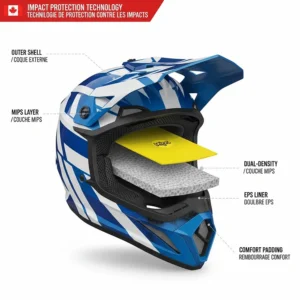
Traditional helmets excel at protecting against linear impacts—imagine dropping a watermelon straight down onto concrete. However, most real-world crashes involve angular or rotational impacts. When your child’s helmet hits the ground at an angle, rotational forces can cause the brain to twist inside the skull, tearing delicate nerve tissue.
MIPS incorporates a low-friction layer (typically yellow) between the helmet’s EPS foam and comfort liner. This layer allows 10-15mm of independent movement. During angled impacts, the helmet’s outer shell rotates slightly while your child’s head remains more stationary. This movement redirects rotational energy that would otherwise transfer to the brain. You can learn more about how this technology works at MIPS Protection’s official website.
Why MIPS Matters for Youth Riders
Children’s brains are more vulnerable to rotational injuries than adult brains. Their skull-to-brain size ratio and developing neural tissue make them particularly susceptible to concussions and traumatic brain injuries. Canadian neurosurgeons I’ve consulted emphasize that MIPS technology can reduce the severity of impacts that commonly cause concussions.
Research from the MIPS organization shows their technology can reduce rotational forces by up to 40% in certain impact scenarios. For youth riders learning skills and occasionally crashing, this protection level becomes invaluable.
MIPS vs. Traditional Helmets
You won’t feel MIPS when wearing the helmet. The layer is thin and integrates seamlessly. Traditional helmets and MIPS helmets both protect against direct impacts, but MIPS helmets add that crucial rotational protection layer. Canadian families should seriously consider MIPS-equipped helmets, especially for riders who frequently crash during skill development.
Growth Accommodation Design: Save Money, Maintain Safety 💰
Canadian families face a frustrating reality: kids grow fast, and quality helmets aren’t cheap. Growth accommodation designs help extend helmet lifespan without compromising safety.
Adjustable Padding Systems
Modern youth helmets include multiple thickness comfort pads. As your child’s head grows, you remove thick pads and install thinner ones, maintaining a snug fit. The ILM Model MF521 excels at this approach. Canadian parents report getting 2-3 seasons from single helmets by swapping pads.
The key is maintaining proper fit throughout growth periods. A helmet that’s too loose won’t protect correctly, even with adjustable padding. Always verify the helmet still passes the “shake test”—your child should shake their head side-to-side, and the helmet should move their skin, not slide over it.
Shell Sizing Considerations
Premium manufacturers like Fox Racing and Bell offer multiple shell sizes within youth categories. A small shell with thick padding fits differently than a large shell with thin padding, even if both accommodate the same head circumference. For Canadian families planning multi-season use, consider buying the larger shell size when your child is between sizes.
When to Replace Despite Adjustment
Growth accommodation has limits. Once your child maxes out the thinnest padding and the helmet still feels loose, it’s replacement time. Additionally, Canadian safety experts recommend replacing helmets every 3-5 years regardless of crashes, as EPS foam degrades over time, especially in our temperature extremes.
Never compromise safety to save money. A properly-fitting new helmet from a budget brand like ILM provides better protection than an improperly-fitting premium helmet that’s been adjusted to its limits.
Adjustable Fit System: Finding the Perfect Match 🎯
Helmet fit can make the difference between life-threatening injury and walking away from a crash. Here’s how to nail it for your young rider.
Measuring Your Child’s Head
Grab a flexible measuring tape and measure horizontally around your child’s head, approximately one inch (2.5cm) above the eyebrows. This measurement in centimeters corresponds directly to helmet sizes. Most manufacturers provide size charts—use them religiously.
Canadian parents should measure in metric (centimeters) when ordering from international retailers. A child measuring 52cm needs a medium in most youth helmets, but always verify against specific manufacturer charts.
The Shake Test
Once you’ve got the helmet, put it on your child (unbuckled) and ask them to shake their head vigorously side-to-side and up-and-down. The helmet should move their skin and ears without sliding across the scalp. If the helmet rotates independently of the head, it’s too large.
Cheek Pad Evaluation
Proper cheek pad pressure is crucial. The pads should push gently against your child’s cheeks without causing pain. When your child opens their mouth wide, the helmet should pull down slightly. This indicates adequate cheek contact. Too tight, and the helmet becomes uncomfortable; too loose, and it won’t protect properly during impacts.
Quick-Release vs. D-Ring Closures
Canadian youth helmets feature two main closure types. Quick-release buckles offer convenience—essential for younger riders who struggle with complex fasteners. However, double D-ring closures provide superior security and won’t accidentally release. For competitive riders, I recommend D-rings. For young recreational riders, quality quick-release systems work fine.
Adjustable Features
Look for helmets with tool-free visor adjustment, removable padding, and adjustable ventilation ports. The Fox Racing V1 and Bell Moto-9 both offer exceptional adjustability. Canadian conditions vary wildly—you’ll want to close vents during spring rides in Newfoundland and open everything during summer in the Interior.
Ventilation Systems: Beating Canadian Heat 🌡️
Canadian summers can be brutal, especially during midday motos in Saskatchewan or Alberta. Proper ventilation makes the difference between comfortable riding and heat exhaustion.
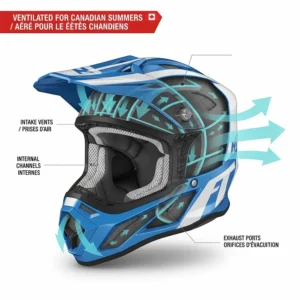
Understanding Airflow Design
Effective ventilation requires intake and exhaust ports. Cold air enters through front vents, flows over the scalp, and exits through rear extractors. The Fly Racing Kinetic features a multi-port design that Canadian riders praise for actual airflow, not just decorative holes.
Premium helmets like the Fox Racing V3 use channeled EPS foam to direct air across the entire head. Budget options may have vents that dump air into dead spaces, providing minimal cooling.
Climate-Specific Considerations
Eastern Canada’s humidity challenges helmets differently than Western dryness. Look for helmets with moisture-wicking liners (X-Static technology in Fox helmets) that pull sweat away from skin. Quebec riders particularly appreciate this during humid summer months.
For Canadian prairie riding where dust is constant, adjustable vent closures become critical. You’ll want to reduce airflow during dusty conditions to prevent breathing issues while maintaining some cooling.
Fog Prevention
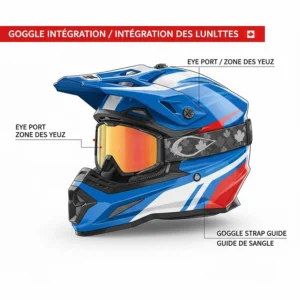
Canadian spring and fall riding often involves temperature swings. Interior breath deflectors and quality ventilation prevent visor fogging. The Bell Moto-9 includes a nose guard that directs exhaled air away from the eye port, preventing fog buildup during cold-morning rides.
Helmet Maintenance for Canadian Conditions 🧼
Our climate extremes demand special helmet care to maintain protection and extend lifespan.
Cleaning After Rides
Canadian trails mean mud, dust, and grime. After each ride, wipe down the exterior shell with a damp cloth and mild soap. Avoid harsh chemicals that can degrade shell materials. For the interior, most modern youth helmets feature removable, washable liners.
Remove the liner, hand-wash with gentle detergent, and air-dry completely before reinstalling. Never machine-wash helmet liners—the agitation can damage the attachment systems.
Storage Considerations
Extreme temperatures damage EPS foam. Don’t leave helmets in car trunks during Canadian winters or summers. Store in climate-controlled spaces away from direct sunlight. UV exposure degrades shell materials over time, reducing impact protection.
Consider a helmet bag for transport and storage. This prevents scratches and protects against temperature extremes during transport to riding areas.
Inspection Routine
Before each ride, inspect the helmet for cracks, delamination, or unusual wear. Check that retention systems function correctly—buckles should snap securely, and D-rings should thread smoothly. Replace any helmet that’s been in a crash, regardless of visible damage. EPS foam compresses during impacts and won’t protect properly in subsequent crashes.
Buying Guide: Best Practices for Canadian Families 🛒
Where to Buy
Amazon.ca offers convenience and competitive pricing for youth motocross helmets. However, specialized Canadian retailers like FortNine, GP Bikes, and RidingGear.ca provide expert sizing assistance and often carry broader selections.
For first-time buyers, I strongly recommend visiting physical stores. Having staff who understand helmet fitting can prevent costly mistakes. Many Canadian motorsports shops offer free sizing consultations.
Timing Your Purchase
Canadian motorsports retailers run major sales during Black Friday, Boxing Day, and end-of-season (September-October). You can save 20-40% on premium helmets during these periods. However, selection decreases as season progresses, so balance savings against availability.
Warranty Considerations
Quality manufacturers offer warranties ranging from 1-5 years. Bell’s five-year warranty on the Moto-9 provides exceptional peace of mind. Ensure you’re buying from authorized Canadian retailers to maintain warranty validity. Sketchy third-party sellers on Amazon may offer lower prices but void manufacturer warranties.
Return Policies
Helmet fit is subjective. Buy from retailers with generous return policies. Amazon.ca typically allows 30-day returns on unworn helmets. Specialized retailers may offer even longer trial periods. Always keep packaging intact until you’re certain about fit.
Helmet Price Range & Value Analysis 💵
Budget Category ($75-$150 CAD)
Helmets like the ILM Z705 and ILM MF521 dominate this range. You get essential safety certifications (DOT/ECE), basic ventilation, and decent build quality. Perfect for beginners or families with multiple kids who need basic protection without premium costs.
Trade-offs include simpler graphics, basic padding, and no advanced technologies like MIPS. However, these helmets meet the same fundamental safety standards as premium options.
Mid-Range Category ($150-$250 CAD)
The sweet spot for most Canadian families. The Fox Racing V1, Fly Racing Kinetic, and O’Neal 3 Series offer excellent protection, improved comfort features, and often include MIPS technology.
You’re paying for better ventilation, premium liners, and brand reputation. These helmets handle Canadian conditions well and typically last multiple seasons.
Premium Category ($250+ CAD)
The Bell Moto-9 and Fox Racing V3 represent top-tier protection for serious riders. You get advanced materials (composite shells, carbon fiber D-rings), comprehensive safety systems (MIPS, emergency release pads), and professional-grade features.
Canadian competitive riders justify premium pricing through improved protection, longer lifespan, and resale value. A well-maintained Bell Moto-9 can fetch 50-60% of original price on Canadian used markets.
Comparison: Youth MX Helmets vs. Traditional Alternatives ⚖️
| Feature | Youth MX Helmets | Bicycle Helmets | Street Helmets |
|---|---|---|---|
| Impact Protection | High-energy impacts, multiple zones | Low-speed impacts only | Road-specific impacts |
| Facial Coverage | Full chin bar protection | No chin protection | Varies by style |
| Ventilation | Optimized for physical exertion | Good airflow | Limited (aerodynamics focus) |
| Visor | Large protective peak | Small or none | Integrated face shields |
| Weight | 1.0-1.3 kg | 0.3-0.5 kg | 1.4-1.8 kg |
| Price (CAD) | $75-$480 | $40-$200 | $150-$800 |
| Suitable for Dirt Bikes | ✅ Yes | ❌ No | ❌ No |
Youth motocross helmets are specifically engineered for off-road impacts. Never substitute bicycle or street helmets for dirt bike riding—the protection standards don’t translate.
Common Mistakes Canadian Parents Make ❌
Buying Based on Looks Alone
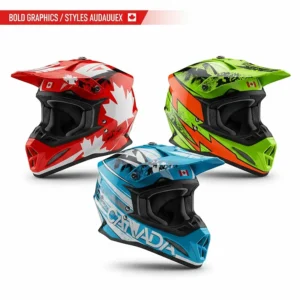
That sick graphic won’t matter if the helmet doesn’t fit properly or lacks proper certifications. I’ve seen too many kids wearing “cool” helmets with questionable safety credentials. Always prioritize fit and certification over aesthetics.
Ignoring the Expiration Date
Helmets have shelf lives. Even unused helmets degrade over 5-7 years. Check manufacturing dates (usually stamped inside the helmet) and avoid “old stock” deals on helmets manufactured years ago.
Hand-Me-Down Helmets
Never use hand-me-down helmets unless you know the complete history. A helmet that looks fine might have been in a crash and lost protective capability. EPS foam doesn’t always show visible damage after compressing.
Assuming One Size Fits All
Youth helmets range dramatically in shell shape. Some brands fit round heads better, others suit oval shapes. A medium in Fox Racing might fit completely differently than a medium in ILM. Always try before buying when possible.
FAQ: Youth Motocross Helmet Canada ❓
❓ What is the minimum age for kids to start motocross in Canada?
❓ How much should I expect to pay for a quality youth motocross helmet in Canada?
❓ Do youth motocross helmets in Canada require different certifications than adult helmets?
❓ How often should I replace my child's motocross helmet in Canadian conditions?
❓ Are MIPS-equipped helmets worth the extra cost for young Canadian riders?
Conclusion: Choosing the Right Youth Motocross Helmet Canada 🎯
After reviewing real products available to Canadian families in 2026, the choice becomes clearer. For budget-conscious families just starting out, the ILM Youth ATV Helmet Model Z705 delivers certified protection with included accessories at an unbeatable $95-$130 CAD price point.
Intermediate riders benefit most from the Fox Racing Youth V1 at $180-$220 CAD. MIPS technology and proven durability justify the investment, especially for kids riding multiple times weekly across Canadian terrain.
For competitive riders where podiums matter, the Bell Moto-9 MIPS Youth or Fox Racing Youth V3 represent the pinnacle of protection. Yes, you’re investing $340-$480 CAD, but you’re getting technology that can literally save your child’s life during high-speed crashes.
Remember that no helmet works if it doesn’t fit properly. Take time to measure correctly, understand your child’s head shape, and don’t hesitate to visit specialized Canadian retailers for professional fitting assistance. FortNine, GP Bikes, and local motorsports shops across Canada offer expertise that online shopping can’t replicate.
Canadian riding conditions present unique challenges—from humid Quebec summers to dusty Alberta trails to rocky British Columbia terrain. Choose helmets with adjustable ventilation, removable liners, and proven durability in temperature extremes.
Most importantly, involve your child in the decision. A helmet they’re excited to wear gets worn consistently. Mix safety requirements with their aesthetic preferences, and you’ll achieve both protection and compliance. The best helmet is the one your child wears properly, every single ride, without complaint.
Stay safe out there, and enjoy watching your young Canadian rider progress confidently knowing their brain is protected by quality, certified equipment.
Recommended for You 📚
- Best Snowmobile Helmet Canada 2026: Top 7 Expert Picks
- Best Motocross Helmet Canada 2026: 7 Top Picks Reviewed
- 7 Best Value Adventure Helmet Canada 2026
Disclaimer: This article contains affiliate links to Amazon.ca. If you purchase products through these links, we may earn a small commission at no additional cost to you.
✨ Found this helpful? Share it with your friends! 💬🤗
