
In This Article
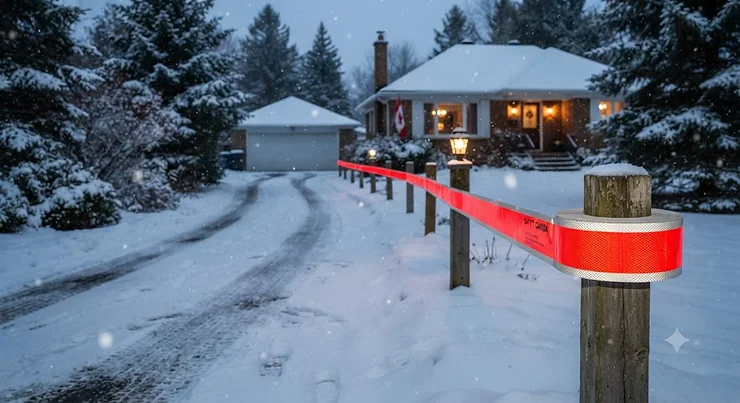
Somewhere between your basement toolbox and your bike’s rear fender, a strip of reflective safety tape roll material is quietly doing more for your safety than almost anything else you own. It costs less than a fast-food combo, it never needs charging, and it works exactly as hard on a black-ice February night in Winnipeg as it does on a foggy October evening in Halifax. That’s the whole appeal, really — no batteries, no app, no Bluetooth pairing gone wrong at the worst possible moment. Just light bouncing back to its source.

But “reflective tape” is not one product. It’s a category that ranges from flimsy dollar-store film that peels off after a single car wash to industrial-grade sheeting engineered to survive a decade of prairie sun and coastal humidity without fading. Reflectivity, adhesive chemistry, and width all vary wildly between rolls that look nearly identical in a thumbnail photo. Reflective safety tape roll products are, in the simplest terms, self-adhesive retroreflective strips made from glass-bead or micro-prismatic sheeting that reflect vehicle headlights back toward the driver, dramatically shortening the distance at which you become visible after dark.
Cycling-safety fundamentals reported by CBC consistently point back to the same basics: lights, reflectors, and predictable riding, in that order. This guide walks through seven real, currently available rolls spanning budget hardware-store options to 3M’s industrial standard, with honest analysis of where each one earns its price and where it falls short. We’ll dig into adhesive strength, tape width options, and exactly how far away a driver can realistically spot you — because those three questions determine whether your tape is decoration or genuine protection. Whether you’re prepping a commuter bike for Canadian winters, sealing up a motorcycle pannier for a fall touring season, or just trying to stop tripping over the trailer hitch in your driveway, there’s a roll here that fits. Let’s get into it.
Quick Comparison Table
| Product | Best Width | Reflective Rating | Best For |
|---|---|---|---|
| 3M Scotchlite Reflective Striping Tape | 0.5″–4″ | Engineer-grade, high | Long-term vehicle & trailer marking |
| STARREY DOT-C2 Reflective Tape | 1″–2″ | DOT-C2 certified | Trailers, RVs, commercial vehicles |
| Goldenfox DOT-C2 Reflective Tape | 2″ | DOT-C2 certified | Budget-conscious trailer owners |
| AISEY Honeycomb Prismatic Tape | 2″ | ASTM D-4956 Type 1 | Motorcycles, road barriers, panniers |
| XFasten Reflective Tape | 2″ | High-intensity | DIY home & garage projects |
| SWRT Reflective Tape | 2″ | Standard grade | First-time buyers, small fixes |
| Hillman Reflective Safety Tape | 2″ | Basic reflective | Small, quick hardware-store fixes |
Based on the spec comparison, the split here isn’t really about brand prestige — it’s about certification and substrate quality. Products carrying a DOT-C2 rating (like STARREY and Goldenfox) have passed a specific reflectivity and weather-durability test that matters if the tape is going on a trailer that shares the road with transport trucks. 3M Scotchlite sits in its own tier because it’s engineered sheeting rather than a printed reflective film, which shows up in longevity more than in raw shine. For casual, low-stakes fixes, the Hillman and SWRT rolls do the job without over-spending.
💬 Just one click — help others make better buying decisions too!😊
Top 7 Reflective Safety Tape Rolls: Expert Analysis
1. 3M Scotchlite Reflective Striping Tape — the industrial benchmark for longevity
The name that comes up in every reflective-tape conversation for a reason: 3M Scotchlite Reflective Striping Tape uses 3M’s own engineer-grade retroreflective sheeting rather than a licensed or generic film, and it shows in how the tape ages. It’s sold in a wide spread of widths — roughly 0.5, 1, 2, 3, and 4 inches — and colours including white, red, yellow, black, and blue, in 50-foot rolls, which means one purchase can outfit a trailer, a mailbox post, and a set of stair edges with matching material. Based on the spec comparison, the pressure-sensitive adhesive is formulated to bond to metal, glass, and painted surfaces without the “starts strong, gives up by spring” problem that plagues cheaper backings, and the sheeting conforms reasonably well around curves and rounded trailer fenders instead of lifting at the edges. Reviewers consistently note that even after a full Canadian winter of road salt and slush, the reflectivity holds up noticeably better than off-brand alternatives, though a handful mention that very sharp corners need a heat gun or hair dryer to seat properly. This is the roll for anyone who wants to apply it once and forget about it — landlords marking fire-lane curbs, boat owners, and homeowners tagging a long gravel driveway all get real mileage from the 50-foot length.
Pros:
- ✅ Engineer-grade 3M sheeting outlasts printed reflective films
- ✅ Wide range of widths and colours in one product line
- ✅ Adheres well to metal, glass, and painted trailer panels
Cons:
- ❌ Pricier per foot than generic DOT-C2 rolls
- ❌ Sharp 90-degree corners can need gentle heat to lie flat
Expect to pay in the C$25–C$45 range depending on width and colour — check current price, as availability shifts by size. Given the durability data, this is the strongest long-term value pick on the list.
2. STARREY DOT-C2 Reflective Tape — best for trailers sharing the highway
STARREY Reflective Tape is sold in long runs — some listings stretch to 210 feet — in the classic red-and-white diagonal pattern most Canadians associate with trailer conspicuity markings. The 2-inch width and DOT-C2 certification mean it’s been tested against U.S. Department of Transportation reflectivity minimums, a useful proxy standard even though Canadian provinces set their own vehicle-marking rules through Transport Canada’s technical standards documents. What most buyers overlook about this model is that the sheer length of the roll changes the economics: at 200-plus feet, the effective cost per running foot drops well below shorter 30-foot rolls, which matters if you’re marking a full livestock trailer or a construction equipment fleet rather than a single bumper. Reviewers consistently report strong initial adhesion to smooth aluminum and painted steel, with a handful of complaints about reduced grip on textured or dusty surfaces — a reminder that surface prep, not the tape itself, is often the actual point of failure. On paper this means STARREY rewards buyers who plan to use most of the roll in one project; it’s a poor fit if you only need a few feet for a mailbox.
Pros:
- ✅ DOT-C2 tested reflectivity for highway-adjacent trailers
- ✅ Long roll length drops the effective cost per foot
- ✅ Classic red/white pattern reads instantly as a hazard marker
Cons:
- ❌ Adhesion weakens on dusty or textured surfaces
- ❌ Long rolls are awkward to store once opened
Price sits around the mid-C$20s to low-C$30s for the longer lengths, making it one of the better cost-per-foot performers here.
3. Goldenfox DOT-C2 Reflective Tape — best value certified option
Goldenfox Reflective Tape occupies the same DOT-C2 certified category as STARREY but tends to land at a friendlier price point, in 2-inch by 200-foot rolls with the familiar red-and-white striping. Here’s what to weigh: certification tells you the reflectivity met a lab standard when new, not that the adhesive will survive five Canadian winters, so this is best framed as a solid mid-tier pick rather than a premium one. The spec sheet won’t tell you this, but user reports suggest the backing liner can be a little stiff in cold temperatures, making it worth applying in a heated garage rather than outdoors in January. Where Goldenfox genuinely shines is upfront cost relative to certified reflectivity — buyers who need DOT-C2 compliance for a utility trailer but don’t want to pay 3M pricing consistently land here. Aggregated review sentiment points to strong daytime and headlight visibility, with mixed but generally positive comments on multi-year durability outdoors.
Pros:
- ✅ DOT-C2 certified reflectivity at a lower price point
- ✅ Generous 200-foot roll covers multiple projects
- ✅ Bright, consistent striping visible from a distance
Cons:
- ❌ Backing can stiffen and crack if applied in cold weather
- ❌ Multi-year outdoor durability is less consistently reported
Typical pricing runs in the C$18–C$28 range, putting it among the better value-per-certification options on this list.
4. AISEY Honeycomb Prismatic Reflective Tape — best for motorcycles and panniers
AISEY Reflective Safety Tape uses a honeycomb prismatic construction rather than the simpler glass-bead sheeting found in cheaper rolls, and it’s rated to ASTM D-4956-99 Type 1 reflectivity standards. In 2-inch by 30-foot rolls in red/yellow or gold/black combinations, this is a shorter, more manageable size that suits smaller, curved surfaces — which is exactly why it turns up so often on motorcycle forums discussing pannier and fairing visibility. The prismatic structure reflects light back over a wider viewing angle than flat glass-bead tape, meaning a driver approaching from slightly off-axis (very common on curved roads and at intersections) still picks up the reflection instead of losing it. Reviewers consistently mention strong initial tack on hard plastic and painted metal, which lines up with motorcycle panniers and fairings being the most commonly cited application in aggregated feedback. A common complaint in user reviews is that the honeycomb texture, while optically effective, is slightly more visible as a “sticker” in daylight than smoother tapes — a fair trade for most riders prioritizing night visibility over daytime aesthetics.
Pros:
- ✅ Wide-angle prismatic reflection suits curved panniers and fairings
- ✅ ASTM D-4956 Type 1 tested reflectivity
- ✅ Strong initial adhesion to plastic and painted metal
Cons:
- ❌ Honeycomb texture is more visible as a sticker by daylight
- ❌ Shorter 30-foot roll length limits large-scale projects
Expect a price in the C$12–C$20 range for a single roll, which is reasonable given the certified reflectivity grade.
5. XFasten Reflective Tape — best all-purpose DIY roll
XFasten Reflective Tape shows up frequently in Canadian search results in a white-and-silver, 2-inch by 5-yard format carrying DOT-C2 high-intensity certification. What most buyers overlook about this model is how well-suited it is to indoor and workshop use rather than purely outdoor vehicle marking — the shorter 5-yard length and lighter backing make it easy to cut precise strips for step edges, electrical panels, or tool cabinets without wasting a 50-foot roll on a five-inch job. Based on the spec comparison, the white/silver colourway reflects the most incoming light of any non-fluorescent option on this list, which is useful in low-ambient-light indoor settings like garages and basement stairwells where headlight-style beams aren’t the primary light source. Aggregated customer sentiment is largely positive on ease of application, with occasional notes that the adhesive, while strong on smooth surfaces, needs a firm initial press-and-hold to avoid edge lifting on textured drywall or unfinished wood.
Pros:
- ✅ High-intensity white/silver reflects the most ambient light
- ✅ Compact roll size suits precise, small-project cutting
- ✅ DOT-C2 high-intensity certification for outdoor use too
Cons:
- ❌ Shorter length isn’t ideal for whole-trailer projects
- ❌ Needs firm pressure on textured surfaces to prevent lifting
Pricing typically falls in the C$10–C$18 range, making it an accessible entry point for first-time buyers testing the category.
6. SWRT Reflective Tape — best budget pick for small fixes
SWRT Reflective Tape rounds out the middle of the market with 2-inch by 30-foot (and longer) rolls in the standard red/white and black/yellow patterns, positioned as a straightforward, no-frills reflective option. Here’s what to weigh: this isn’t a DOT-C2 certified product in most listings, so it’s better matched to lower-stakes applications — marking a garden shed, tagging a wheelbarrow, brightening a bike trailer — than to anything that needs to meet a specific highway-marking standard. Reviewers consistently note that the adhesive bonds quickly and the reflectivity is genuinely bright under direct headlight beams, even if the marketing claims (as with most tape in this price bracket) run a little ahead of lab-verified numbers. A common complaint in user reviews involves the tape’s performance in humid or rainy conditions, where a small number of buyers reported edge peeling after a few weeks outdoors — a reasonable trade-off at this price point, and one that’s easily managed by pressing edges down firmly and avoiding application during damp weather.
Pros:
- ✅ Low price point makes it easy to buy in bulk
- ✅ Bright, genuinely reflective under direct headlight beams
- ✅ Quick, straightforward application
Cons:
- ❌ Not DOT-C2 certified, so unsuitable for highway compliance needs
- ❌ Some reports of edge peeling in humid outdoor conditions
Price generally sits under C$15, making this one of the most accessible rolls in this roundup.
7. Hillman Reflective Safety Tape — best for tiny, quick hardware fixes
Hillman Reflective Safety Tape is the smallest-format entry here, sold in short 2-inch by 24-inch strips rather than long rolls, and it’s exactly what it sounds like: a hardware-store convenience product for spot fixes rather than large projects. What most buyers overlook about this model is that it’s genuinely the right tool for a narrow set of jobs — marking a single mailbox post, a fence corner, or a set of porch steps — where buying a full 30-foot roll would mean wasting most of it. Based on the spec comparison, the reflectivity is basic compared to DOT-C2 or ASTM-rated competitors on this list, adequate for close-range visibility but not engineered for the distance performance a trailer or motorcycle needs on a highway. Reviewers consistently describe it as easy to find at local hardware chains and simple to apply without special tools, which is really the entire value proposition: convenience over performance.
Pros:
- ✅ Small format avoids waste on tiny, one-off jobs
- ✅ Widely available at hardware stores across Canada
- ✅ No special tools needed for application
Cons:
- ❌ Basic reflectivity, not rated for highway-grade visibility
- ❌ Short strip length is impractical for larger projects
Typical pricing runs under C$10 per pack, reflecting its role as a small-scale convenience buy rather than a performance product.
✨ Don’t Miss These Exclusive Deals!
🔍 Take your night-visibility setup to the next level with these carefully selected reflective tape rolls. Click on any highlighted item to check current pricing and availability. These small strips make a genuinely big difference to how safely you and your gear get seen after dark!
Practical Usage Guide: Getting the Most From Your Reflective Tape
Buying a good roll is only half the job — application technique determines whether it lasts one season or five. Start by cleaning the target surface with isopropyl alcohol rather than soap and water; soap leaves a thin residue that quietly undermines adhesive bond strength, especially on painted or powder-coated metal. Apply in a room at or above 15°C whenever possible, since most acrylic adhesives (including the ones used across all seven products above) bond poorly to cold surfaces — a real issue for anyone trying to reflective-tape a trailer in a Canadian driveway in November.
Cut the tape with sharp scissors or a utility knife rather than tearing it, since a jagged edge is the first place peeling starts. Press from the centre outward to push out air bubbles, and for curved surfaces like fenders or motorcycle panniers, apply gentle, even heat with a hair dryer before pressing to help the sheeting conform without wrinkling. In the first 30 days, avoid pressure-washing the treated area if you can — most adhesive systems need roughly 48–72 hours to reach full bond strength, and a high-pressure spray during that window is one of the most common causes of early edge lift reported in reviews across every brand here.
For ongoing maintenance, a simple annual inspection routine keeps tape performing at its rated brightness: wipe treated surfaces with a damp cloth every few weeks during winter to clear road salt film, which dulls reflectivity more than most people realize, and replace any strip once it visibly clouds, cracks, or lifts more than a centimetre at the edge. A common first-30-days mistake is applying tape directly over factory wax or a freshly waxed vehicle panel — the wax layer prevents proper adhesion no matter how strong the tape’s marketing claims.
Real-World Scenarios: Matching Tape to Your Ride
Picture three different Canadians reaching for reflective tape roll for entirely different reasons, because that’s really who this category serves.
There’s the Ottawa bike commuter riding home from a downtown office job through November’s early dark, budget under C$20, who mainly needs strips on the rear fender, frame, and pedal edges — a job perfectly suited to a shorter, flexible roll like AISEY or XFasten, applied along the frame tubes and rear rack rather than the wheels themselves, since spoke-mounted reflectors already handle wheel visibility under most provincial rules.
There’s the touring motorcyclist heading through the Rockies with hard-shell panniers, riding into mountain fog and unpredictable dusk timing, who benefits most from a wide-angle prismatic product like AISEY‘s honeycomb sheeting on the sides and rear of each pannier — surfaces that catch approaching headlights at an angle rather than head-on, where flat glass-bead tape underperforms.
And there’s the rural Saskatchewan farm-equipment owner marking a grain trailer that shares gravel roads with grain trucks during harvest season, where a long, DOT-C2 certified roll like STARREY or Goldenfox covers far more surface area per dollar and meets the reflectivity standard most insurance adjusters and provincial inspectors actually expect to see on slow-moving farm equipment.
Same category of product, three very different applications — and matching roll length, certification, and reflection angle to the actual use case is where most buyers either overspend or under-protect themselves.
Problem → Solution: Common Reflective Tape Headaches
Peeling edges after a few weeks usually trace back to inadequate surface cleaning or applying over wax; the fix is a full alcohol wipe-down and reapplication rather than layering new tape over the old, lifted strip. Dulled reflectivity over a Canadian winter is most often road-salt film rather than actual sheeting failure — a damp-cloth wipe restores most of the lost brightness. Bubbling on curved surfaces comes from applying cold, stiff tape without heat-assisted conforming; a hair dryer on low heat, applied while pressing from the centre out, solves this on almost every product in this roundup. Cracking in extreme cold is more common with basic, uncertified tape like Hillman or SWRT; DOT-C2 or ASTM-rated sheeting like STARREY, Goldenfox, or 3M Scotchlite handles freeze-thaw cycling noticeably better according to aggregated review patterns. And for buyers frustrated that their tape “isn’t as bright as the packaging photo,” the honest answer is usually distance and angle — retroreflective tape needs a direct light source pointed roughly at it to bounce light back; ambient daylight or off-angle streetlight simply won’t trigger the same effect a car’s headlights do at night.
How to Choose Reflective Safety Tape Roll
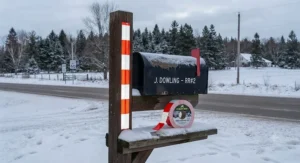
What is a reflective safety tape roll? A reflective safety tape roll is a self-adhesive strip made from retroreflective sheeting — typically glass-bead or micro-prismatic material — that bounces vehicle headlights back toward the driver, increasing a vehicle, trailer, bike, or object’s visibility in low-light or nighttime conditions.
- Match certification to your actual use. DOT-C2 or ASTM D-4956 ratings matter for trailers and highway-adjacent equipment; basic tape is fine for a mailbox or shed.
- Pick width based on the surface, not the label. Narrow 1-inch tape suits bike frames and pannier edges; 2-inch and up suits flat trailer panels and fence rails.
- Check colour against local convention. Red/white striping reads instantly as a hazard marker to Canadian drivers; white or silver maximizes raw reflectivity for less regulated uses.
- Confirm the surface temperature range you’ll be applying in. Cold-weather application dramatically weakens most acrylic adhesives — plan for a heated space if it’s below 10°C outside.
- Buy roll length to match the project, not the sale price. A 200-foot roll is cheaper per foot but wasteful for a single mailbox; a short 24-inch strip is the opposite mistake for a full trailer.
- Weigh prismatic versus glass-bead construction for angled visibility. Honeycomb prismatic tape (like AISEY) reflects better from off-axis angles, which matters on curved surfaces and intersections.
- Read aggregated reviews for freeze-thaw performance, not just initial brightness — that’s where budget tape most often falls short over a full Canadian winter.
| Feature | DOT-C2 Certified Tape | Uncertified/Basic Tape |
|---|---|---|
| Lab-tested reflectivity | Yes | No |
| Typical cost per foot | Higher | Lower |
| Best for | Trailers, commercial vehicles | Small household fixes |
| Freeze-thaw durability | Generally stronger | More variable |
| Examples in this roundup | STARREY, Goldenfox | SWRT, Hillman |
Looking at the table above, the certification gap explains most of the price spread across this category — buyers aren’t paying extra for the same material with a fancier label, they’re paying for documented lab performance that matters when reflectivity is a compliance question rather than a convenience feature.
Reflective Tape for Bikes Canada: What Riders Need to Know
Canadian cyclists face a specific mix of provincial reflector rules and genuinely dark commuting hours for a large chunk of the year, which makes reflective tape for bikes Canada a slightly different shopping problem than general-purpose reflective tape. Most provinces already mandate a minimum set of reflectors — a front white, a rear red, and pedal or ankle reflectors in several jurisdictions, as Quebec’s road-safety authority details for cyclists — but tape supplements rather than replaces those factory-fitted pieces. Applying a thin strip of tape along the top tube, seat stays, and rear rack adds continuous, larger-surface reflectivity that a small clip-on reflector can’t match, and it’s particularly effective because it moves with the bike’s silhouette rather than being a single point of light.
For riders shopping specifically for bike use, width matters more than certification: 1-inch strips from XFasten or AISEY wrap tighter curves like seat stays and fork legs without wrinkling, while a wider 2-inch strip works better on flat surfaces like a pannier rack deck or fender. According to Canada’s national road-safety non-profit, retro-reflective material on clothing and bike frames genuinely helps drivers spot cyclists in the exact conditions — dusk, dawn, and full dark — where collisions cluster most heavily. Pair tape with an actual front and rear light rather than treating it as a lighting substitute; reflective tape only works when a light source is actively pointed at it, while an LED taillight is visible from any angle, including from the side at an intersection where tape alone does very little.
Weatherproof Reflective Adhesive Strips: Why Climate Matters
Not all “waterproof” claims on packaging mean the same thing once winter actually arrives, and weatherproof reflective adhesive strips need to survive a genuinely brutal cycle in most of Canada: freezing rain, road salt, plowed-snow abrasion, and repeated freeze-thaw swings that can crack a rigid adhesive layer the way a Prairie pothole cracks asphalt. The spec sheet won’t tell you this, but user reports suggest the real differentiator between brands isn’t the initial waterproof rating — nearly every product in this roundup claims it — but how the adhesive layer behaves after dozens of freeze-thaw cycles rather than in a single lab test.
Products built on true engineer-grade sheeting, like 3M Scotchlite, tend to hold their seal and reflectivity longest through a full Canadian winter based on aggregated review patterns, while thinner printed films can develop micro-cracks that let moisture creep beneath the surface and lift the edges from the inside out. If you’re applying tape somewhere it’ll face direct road spray — a trailer fender, a motorcycle pannier’s lower edge, a mailbox post near a plowed driveway — favour a wider, thicker-gauge tape and seal the cut edges with a thin bead of clear silicone caulk, a trick that noticeably extends lifespan according to several long-term user reports. Applying in above-freezing temperatures, as covered earlier, remains the single biggest controllable factor in how weatherproof any strip actually turns out to be once real Canadian weather tests it.
Reflective Tape for Motorcycle Panniers: Touring & Commuting
Motorcycle panniers present an unusual reflectivity challenge: they’re large, flat-ish surfaces mounted low and to the sides of the bike, exactly where a driver merging from a side street or turning left across traffic needs to spot you fastest — and exactly where a rear-only light setup does the least good. Reflective tape for motorcycle panniers works because it adds passive, always-on side visibility that doesn’t depend on your taillight being angled correctly or your brake light staying on.
Honeycomb prismatic tape like AISEY genuinely outperforms flat glass-bead tape here, because its wider reflection angle means a car approaching from 30 or 40 degrees off-axis — the exact geometry of an intersection — still triggers a strong reflective return rather than a dim one. Apply strips along the pannier’s outer face and rear-facing edge, keeping them clear of latches and zippers so the tape isn’t stressed every time the bag opens. For hard-shell panniers, clean thoroughly with isopropyl alcohol first, since many hard-shell cases ship with a light mold-release residue that quietly sabotages adhesion even when the surface looks clean. Touring riders crossing multiple provinces should also note that reflective marking requirements can vary slightly by jurisdiction, so erring toward brighter, more visible coverage rather than the legal minimum is the safer default for a multi-day trip.
Adhesive Strength: What the Numbers Actually Mean
Adhesive strength on product listings is often expressed vaguely — “strong,” “heavy-duty,” “industrial-grade” — without a real number attached, which makes comparison shopping harder than it should be. Here’s what to weigh: the honest predictors of real-world adhesive performance are surface type, application temperature, and dwell time before load, not the marketing adjective on the package. Acrylic pressure-sensitive adhesives, used across nearly every product in this roundup, reach roughly 80–90% of their maximum bond strength within the first 24 hours and full strength within about 72 hours — which is precisely why avoiding a pressure wash or heavy flexing in that early window matters so much.
Smooth, non-porous surfaces like glass, gel-coat, and painted metal give the strongest, most reliable bond; textured plastics, unfinished wood, and anything with surface wax or mold-release residue meaningfully undercut adhesion regardless of how “strong” the tape claims to be. Reviewers consistently report that products marketed with heavier, more aggressive adhesive backing — generally the DOT-C2 certified and 3M options on this list — hold up better under vibration, which matters more for trailers and motorcycle panniers than for a stationary mailbox post. If a project involves genuine long-term outdoor exposure to vibration and weather, budgeting for a certified product with documented adhesive testing is a better bet than chasing the cheapest roll with the boldest “extra strong” label.
Tape Width Options: Choosing the Right Size
Tape width options across this category typically run from a slim half-inch up to a full four inches, and picking the wrong one is a surprisingly common and avoidable mistake. Narrower widths — half-inch to one-inch — suit curved, tight surfaces: bike seat stays, fork legs, motorcycle fairing edges, and pannier zippers where a wide strip would wrinkle or overhang. Standard two-inch tape is the category’s default for good reason — it’s wide enough to be clearly visible at highway distances while still flexible enough to handle moderate curves, which is why the majority of DOT-C2 certified trailer products, including STARREY and Goldenfox, default to this width.
Wider strips, from three inches up to 3M’s four-inch option, make sense for flat, high-visibility panels: the rear of a box trailer, a shed door, or a warehouse loading-dock edge, where maximizing the reflective surface area outweighs any need for flexibility. What most buyers overlook about width selection is that narrower tape isn’t automatically “less reflective” — the reflectivity is a property of the sheeting material itself, not the width — but a narrower strip does return less total light simply because there’s less surface area to catch the headlight beam in the first place. For most Canadian household and vehicle projects, keeping a roll of 1-inch and a roll of 2-inch tape on hand covers the large majority of real-world jobs without needing the full 3–4 inch range most homeowners will never use.
Night Visibility Distance: How Far Can You Actually Be Seen?
Night visibility distance is the number that actually determines whether reflective tape does its job, and it varies more than most buyers expect based on tape quality, size, and — critically — whether a light source is actually aimed at it. According to research summarized by road-safety advocates, a cyclist in dark clothing with no reflective gear might be spotted from roughly 30 metres under headlights, while proper reflective material can push that detection distance out to 150 metres or more, translating into several extra seconds of driver reaction time at typical urban and rural speeds.
On paper this means the difference between reflective tape and no reflective tape isn’t cosmetic — it’s the gap between a driver having time to brake smoothly and a driver reacting at the last possible second. Detection distance drops sharply with viewing angle, which is exactly why prismatic tape like AISEY outperforms flat glass-bead sheeting on curved or angled surfaces such as panniers and fenders; a reflector only works as well as the angle it’s presenting to an oncoming light source. Distance also drops in rain and fog, since water film on the tape’s surface scatters some of the returning light rather than sending it straight back — a good reason to favour wider, higher-grade tape on anything used regularly in wet Canadian conditions, and to treat reflective tape as a strong complement to active lighting rather than a full replacement for it after dark.
Reflective Safety Tape vs. Reflective Vests & Stick-On Reflectors
| Feature | Reflective Tape Roll | Reflective Vest | Stick-On Reflector Disc |
|---|---|---|---|
| Surface coverage | Continuous, customizable | Full torso | Single small point |
| Application | Permanent/semi-permanent | Wearable, removable | Permanent |
| Best for | Vehicles, bikes, gear | Pedestrians, roadside work | Quick spot marking |
| Cost | Low per project | Moderate | Very low |
| Weather durability | High (certified options) | Moderate (washing wears fabric) | High but limited coverage |
A comparison paragraph tells the fuller story here: reflective vests win on total body coverage and portability — you can take a vest off and put it on a different person entirely — but they only protect the wearer, not the bike, trailer, or gear itself. Stick-on reflector discs are cheap and genuinely effective at close range but cover such a small area that they’re easily blocked by a bag, fender, or shadow. Reflective tape splits the difference: it’s permanent enough to stay put through a season of use, customizable enough to trace the exact silhouette of a bike frame or pannier, and — based on the spec comparison above — generally the most cost-effective option per square inch of coverage when buying a full roll rather than a handful of small discs.
Common Mistakes When Buying Reflective Tape Roll
The single most common mistake is buying based on colour or brand recognition alone rather than checking certification against the actual intended use — a bright red roll with no DOT-C2 rating might look identical to one that’s actually been lab-tested, and only the fine print tells them apart. A close second is underestimating roll length needs and buying a short 24-inch strip for a full trailer project, leading to visible seams and mismatched batches when a second purchase is needed later. Buyers also frequently skip surface prep entirely, assuming “self-adhesive” means “sticks to anything,” when factory wax, dust, and cold temperatures routinely undermine even premium adhesive. Finally, a subtler mistake: choosing flat glass-bead tape for a curved or angled application like a pannier or fairing, where prismatic sheeting’s wider reflection angle would have performed meaningfully better for the same price.
Long-Term Cost & Maintenance
Thinking in cost-per-foot rather than sticker price changes the calculus noticeably. A 30-foot roll at roughly C$15 works out to around C$0.50 per foot, while a 200-foot roll at roughly C$25 drops to roughly C$0.13 per foot — a meaningful gap if a project genuinely needs the length, though a poor deal if most of that 200 feet goes unused in a drawer. Total cost of ownership also has to account for replacement cycles: budget, uncertified tape (like Hillman or SWRT) may need replacing every one to two Canadian winters as edges lift and reflectivity dulls, while certified, engineer-grade tape (3M Scotchlite, STARREY, Goldenfox) more commonly lasts three to five years with basic maintenance. Factoring in the time cost of reapplication — cleaning, cutting, and pressing a fresh strip isn’t difficult, but it isn’t instant either — the higher upfront cost of certified tape often works out roughly comparable to, or cheaper than, repeatedly replacing bargain tape over the same multi-year period.
Safety, Regulations & Compliance Guide for Canada
Reflector and lighting requirements for bicycles, trailers, and vehicles are set provincially in Canada, layered on top of federal vehicle-safety standards for manufactured equipment, so specifics genuinely vary depending on where you ride or drive. Quebec’s Highway Safety Code, for instance, spells out mandatory front, rear, wheel, and pedal reflectors for bicycles in detail, and other provinces set their own combinations of required lights and reflective material, generally centred on dusk-to-dawn hours and periods of poor visibility. Canada’s national safety non-profit notes that going beyond the legal minimum — adding retro-reflective tape to clothing and bike frames rather than relying solely on factory reflectors — meaningfully improves how easily drivers spot cyclists after dark. For trailers and larger equipment, Transport Canada’s technical standards documents outline conspicuity and reflective-device requirements that align closely with the DOT-C2 rating carried by several products in this roundup, which is why matching certified tape to trailers and commercial equipment is the safer, more defensible choice over uncertified alternatives. Always double-check your specific province’s current bicycle and vehicle equipment rules before treating any single product’s certification as a guarantee of legal compliance, since requirements do get updated from time to time.
🔔 Ready to Gear Up for Dark-Season Riding?
Whether you’re prepping a bike for winter commuting or sealing up motorcycle panniers before a fall tour, the right reflective safety tape roll turns a genuinely risky ride into a manageable one. Check the current price and availability on the picks above before your next dark-hours trip. ⚡🚴♂️
FAQ
❓ Does reflective tape work without headlights shining on it?
❓ Can I put reflective tape roll material on a bike helmet?
❓ How long does weatherproof reflective adhesive strips last outdoors in Canada?
❓ What's the difference between DOT-C2 and ASTM-rated reflective tape?
❓ Is wider reflective tape always more visible than narrow tape?
Conclusion
Reflective safety tape roll products are one of those rare purchases where the cheapest option and the best option for your specific job are often genuinely different products, not just different price tags on the same material. A hardware-store strip from Hillman is exactly right for a mailbox post and exactly wrong for a highway trailer, while a certified roll from STARREY or Goldenfox is overkill for a kid’s bike helmet but exactly what a grain trailer needs. The honest takeaway from comparing all seven rolls side by side is that certification, width, and application technique matter more than brand name alone — a correctly applied budget tape will often outperform a premium roll slapped onto a dirty, cold, or waxed surface. Match the tape to the surface, respect the application conditions, and treat reflective tape as one layer in a broader visibility strategy alongside actual lights where that’s relevant, and a roll costing well under C$30 can genuinely extend the distance at which you’re seen after dark — which, on a Canadian road in December, is not a small thing.
✨ Don’t Miss These Exclusive Deals!
🔍 Take one more look at the picks above before you head out after dark — a properly applied roll of reflective tape is one of the cheapest, most effective safety upgrades you can make this season.
Recommended for You
- Reflective Helmet Decals: 7 Best Picks for Canada in 2026
- Reflective Safety Vest: 7 Best Hi-Vis Picks for Canada (2026)
- How to Choose Thermal Socks for Motorcycle Boots: 7 Picks for 2026
Disclaimer: This article contains affiliate links. As an Amazon Associate, I earn from qualifying purchases. If you purchase products through these links, we may earn a small commission at no additional cost to you.
✨ Found this helpful? Share it with your friends! 💬🤗
