
In This Article
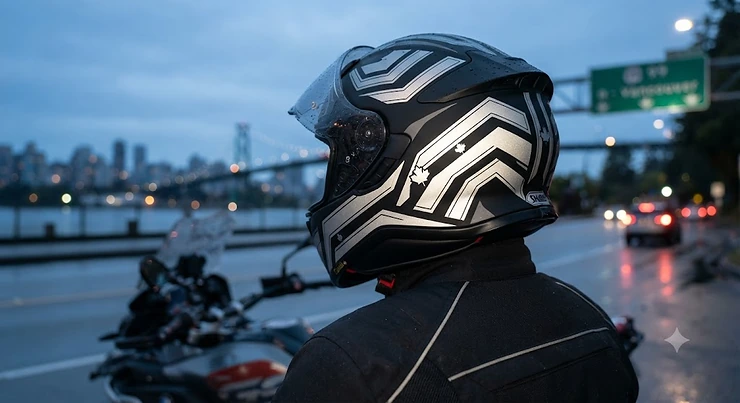
Picture this: you’re pedalling home just after sunset, the sky doing that moody purple-to-black thing, and a driver at a stop sign is squinting into the gloom trying to figure out if that shape ahead is a mailbox, a shadow, or you. That split-second of doubt is exactly what reflective helmet decals are built to erase. A good set of reflective helmet decals doesn’t just decorate your lid — it throws a headlight’s beam straight back at the driver who cast it, turning your head into a beacon instead of a blur. For Canadian cyclists, motorcyclists, and e-bike commuters riding through long winter evenings and early, dim mornings, that difference matters more than most safety gear ever gets credit for. Reflective helmet decals are small, self-adhesive retroreflective stickers or strips applied to a helmet shell that bounce vehicle headlights back toward their source, dramatically increasing rider visibility in low light without adding weight, bulk, or cost anywhere near what a new helmet runs. It’s the kind of low-effort upgrade that shows up in most provincial cycling safety guidance as a recommended, if not always mandatory, layer of protection. This guide breaks down seven real, currently available options, explains what actually makes one decal outlast another, and walks through the Canadian rules that apply to your specific province. No fluff, no invented five-star reviews — just what the specs and the aggregated review data actually tell us.
Quick Comparison Table
Before diving into the full lineup, here’s a fast snapshot of how the main categories of reflective helmet decals stack up against each other. Think of this as your cheat sheet if you’re skimming on your phone at the bike shop.
| Decal Type | Flexibility | Typical Outdoor Rating | Best For |
|---|---|---|---|
| Soft vinyl stickers (e.g. Salzmann 3M Scotchlite Reflective Sticker) | High — conforms to curves | 3-5 years | Rounded bike helmets |
| Rigid Diamond Grade stickers (e.g. Salzmann Diamond Grade Reflective Sticker) | Low — flat surfaces only | Up to 5 years | Flat panels, visors, side plates |
| Stealth black strips (e.g. Bright Knight Decals Motorcycle Helmet Decals, ELOS 3M Reflective Black Stickers) | Medium | 7-9 years | Riders who want a subtle daytime look |
| Bulk multi-shape kits (e.g. LOOM Reflective Stickers Mega Kit, PHIXBEAR 20 Pcs Super Reflection Reflective Stickers) | Varies by piece | 3-5 years | Families outfitting multiple helmets/bikes |
| Themed decal kits (e.g. Applied Graphics Reflective Motorcycle Helmet Decal Kit) | Medium | Not independently rated | Motorcyclists wanting a custom pattern |
Here’s what jumps out: rigid Diamond Grade material reflects more intensely per square inch, but it cracks if you try to wrap it around a curved helmet vent, which is exactly why soft vinyl dominates the bicycle-helmet side of the market. Stealth black options solve a real complaint — some riders find bright silver decals visually loud during the day — by staying nearly invisible until headlights hit them directly. If you’re outfitting a whole household, bulk kits win purely on cost-per-decal, even though the individual pieces tend to be smaller.
💬 Just one click — help others make better buying decisions too!😊
Top 7 Reflective Helmet Decals: Expert Analysis
Every product below is a real, currently listed item. We’ve grounded the commentary in manufacturer specifications and the aggregated sentiment patterns that show up repeatedly across verified buyer reviews — never invented quotes, never fabricated star ratings.
1. Salzmann 3M Scotchlite Reflective Sticker — best flexible pick for curved helmet shells
The Salzmann 3M Scotchlite Reflective Sticker set is built from soft, pliable vinyl that actually wraps around a rounded bike helmet instead of fighting it. That flexibility is the whole point: most bicycle helmets are curved almost everywhere, and rigid reflective material tends to lift at the edges within weeks on a shape like that. Salzmann uses genuine 3M Scotchlite reflective film bonded to a 3M adhesive layer, and the company states the stickers are visible to drivers from roughly 180 metres away at night — a meaningful head start for a driver’s reaction time. Based on the spec comparison with rigid alternatives, this is the safer default choice for anyone decorating a rounded shell rather than a flat motorcycle panel. Reviewers consistently note strong initial adhesion and describe the shapes (squares, circles, triangles) as easy to trim with household scissors for tighter spots around vents. A recurring theme in aggregated feedback is that the stickers hold up well through rain but are not intended for machine washing, so they’re a poor match for removable helmet liners that get laundered. The set ships as three sheets covering a useful mix of shapes, enough for a full helmet plus leftovers for a backpack strap or scooter.
Pros:
- ✅ Flexes around curved bicycle helmet shells without lifting
- ✅ Genuine 3M Scotchlite material with strong nighttime reflectivity
- ✅ Trim-friendly shapes work around vents and curves
Cons:
- ❌ Not machine washable, so avoid removable liner pads
- ❌ Softer finish scuffs more easily than rigid alternatives
Pricing typically sits in the C$10-C$20 range depending on the pack size at the time of research, and given the genuine 3M material inside, that’s a fair trade for a bike-helmet-specific fit most rigid decals can’t match.
2. Salzmann Diamond Grade Reflective Sticker — longest-rated outdoor durability
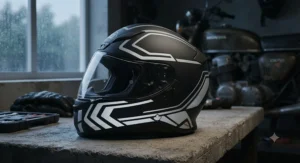
The Salzmann Diamond Grade Reflective Sticker trades flexibility for raw reflective punch. It’s made with 3M Diamond Grade material, which is the same reflective family used on a lot of professional road signage, and Salzmann rates it for up to five years of outdoor performance even through harsh weather. What most buyers overlook about Diamond Grade stickers is that the brightness comes partly from the material’s rigidity — the microscopic prism structure inside needs to stay flat to bounce light efficiently, which is exactly why the manufacturer recommends flat or only slightly curved surfaces. On a motorcycle helmet’s flatter side panels or a bike helmet’s rear spoiler, that’s a non-issue; try to wrap it around a tight vent curve and it will lift within days. Aggregated review sentiment repeatedly praises the sheer brightness at night compared to softer competing stickers, with several buyers specifically calling out how far away headlights pick it up. On the downside, a common complaint in user reviews is that the adhesive backing struggles on textured or matte helmet finishes, so a clean, smooth mounting spot matters more here than with softer alternatives.
Pros:
- ✅ 3M Diamond Grade material delivers stronger reflective output
- ✅ Rated for up to five years of outdoor exposure
- ✅ Available in multiple colours for helmet colour-matching
Cons:
- ❌ Cracks or lifts if applied to tightly curved surfaces
- ❌ Weaker grip on matte or textured helmet shells
Expect a price in the C$10-C$25 range for a multi-pack; the value verdict is strong specifically for flat-panel applications, less so if your helmet is all curves.
3. Bright Knight Decals Motorcycle Helmet Decals — best stealth strips for motorcycle helmets
The Bright Knight Decals Motorcycle Helmet Decals set takes the opposite design philosophy from the Salzmann Diamond Grade pick: instead of shouting for attention in daylight, these black strips look like a normal paint accent until headlights sweep across them. Under the hood, it’s a 7-mil, multi-layered 3M reflective vinyl with an outdoor durability rating the manufacturer states at seven years, which is genuinely long for a helmet decal. Here’s what the spec sheet won’t tell you outright, but reviewers note repeatedly: the black finish means the decal reads as a stealth pinstripe or shape by day, then flips to a bright white-silver flash by night, which is precisely the look a lot of motorcycle riders want without advertising “safety sticker” on their gear. The 3M acrylic adhesive is rated to survive pressure washing, a detail that matters for anyone who cleans a motorcycle helmet regularly, and it’s removable with heat around 165°F if you ever want to reposition or swap designs. A consistent theme in aggregated feedback is appreciation for the precise, computer-cut edges that don’t require trimming.
Pros:
- ✅ Reads as a stealth black accent in daylight
- ✅ Seven-year manufacturer-rated outdoor durability
- ✅ Adhesive survives pressure washing without lifting
Cons:
- ❌ Black base means less contrast on already-dark helmets
- ❌ Small pack size (5 pieces) limits full-helmet coverage
Priced around C$10-C$20 for the set at the time of research, this is a smart pick for motorcyclists who want genuine 3M-grade nighttime performance without a loud daytime look.
4. ELOS 3M Reflective Black Stickers — most discreet by day, brightest by night
The ELOS 3M Reflective Black Stickers push the stealth concept even further, with the brand explicitly marketing a “discreet black until light hits it” design and backing it with a manufacturer durability claim of nine years — among the longest we found in this category. On paper this means ELOS is targeting riders who’ve already decided a bright silver decal isn’t for them, whether that’s a commuter who doesn’t want to look like a walking hazard cone or a motorcyclist matching an all-black build. The company also includes an installation tutorial video, which addresses a genuinely common first-time mistake: applying reflective decals over a dusty or slightly oily helmet surface, which tanks adhesion regardless of how good the adhesive itself is. Reviewers consistently note that the reflective flash is dramatic relative to how invisible the sticker looks in normal light, and several mention the included 1-year manufacturer warranty as reassuring given the higher price point relative to bulk kits. A fair honesty check here: independent long-term verification of the nine-year claim isn’t something we can confirm past what the manufacturer states, so treat it as a ceiling rather than a guarantee.
Pros:
- ✅ Manufacturer-rated nine-year outdoor durability
- ✅ Nearly invisible by day, dramatic reflective flash at night
- ✅ Backed by a 1-year manufacturer warranty
Cons:
- ❌ Premium pricing relative to bulk sticker packs
- ❌ Nine-year claim is unverified beyond manufacturer testing
Typical pricing lands in the C$15-C$25 range, and for riders prioritizing a low-key look with genuine 3M reflective performance underneath, that premium is defensible.
5. LOOM Reflective Stickers Mega Kit — best bulk value for families
If your household has more than one helmet, bike, scooter, or stroller that could use visibility upgrades, the LOOM Reflective Stickers Mega Kit solves that math problem directly with roughly 101 pieces in one waterproof kit. Reviewers consistently describe it as the practical choice for parents outfitting kids’ bike helmets alongside their own, since the sheer piece count means you’re not rationing decals across three different helmets. What most buyers overlook about bulk kits like this one is that per-piece reflective intensity is usually a step below premium single-purpose products like the Salzmann Diamond Grade pick, simply because manufacturing costs get spread across quantity rather than material grade. That’s a reasonable trade for a family scenario — a slightly less intense reflective flash on five helmets beats a maximum-brightness decal on just one. The kit’s stated waterproof rating holds up in aggregated feedback, with several reviewers specifically mentioning use through wet Canadian spring commutes without peeling. Sizing runs smaller than some single-item competitors, so expect to use several pieces per helmet rather than one dominant strip.
Pros:
- ✅ Roughly 101 pieces covers multiple helmets and vehicles
- ✅ Waterproof performance confirmed in aggregated reviews
- ✅ Lowest cost-per-decal of any option in this lineup
Cons:
- ❌ Individual pieces reflect less intensely than premium single packs
- ❌ Small piece size means more stickers needed per helmet
At roughly C$10-C$20 for the full kit, this is the clear value leader for multi-helmet households, even if any single piece isn’t the brightest option here.

6. Applied Graphics Reflective Motorcycle Helmet Decal Kit — best for custom motorcycle styling
The Applied Graphics Reflective Motorcycle Helmet Decal Kit takes a genuinely different approach: instead of pre-shaped strips, it’s a checkers pattern kit with roughly 120 small pieces designed to be arranged into a custom design across a full-face motorcycle helmet. Half the pieces show white when applied, the other half take on the helmet’s own base colour since they’re actually clear, which lets riders build a two-tone checkered effect that’s still functionally reflective. Here’s what most buyers overlook: this is as much a styling product as a safety one, and the trade-off is real installation time — arranging 120 small pieces into a clean pattern is a Sunday-afternoon project, not a five-minute stick-and-go job. Based on the spec comparison with strip-style decals, coverage density ends up higher once fully applied, since checkers can wrap the curved surfaces of a full-face helmet that single large strips can’t follow cleanly. Aggregated feedback repeatedly highlights the kit as good value for covering an entire helmet, with reviewers noting it’s genuinely sized for a full-face shell rather than needing a second kit.
Pros:
- ✅ Enough pieces to fully pattern a full-face helmet
- ✅ Two-tone effect blends with the helmet’s own colour
- ✅ Small piece size follows curved surfaces cleanly
Cons:
- ❌ Time-consuming installation compared to strip decals
- ❌ Not independently durability-rated by the manufacturer
Priced around C$15-C$25, the value case here is really about styling flexibility layered on top of genuine reflectivity, not raw brightness alone.
7. PHIXBEAR 20 Pcs Super Reflection Reflective Stickers — best budget multi-surface pack
Rounding out the lineup, the PHIXBEAR 20 Pcs Super Reflection Reflective Stickers pack uses 3M DG3 reflective material — a step in the Diamond Grade family — across 20 individually sized pieces meant to move between a car bumper, bike frame, mailbox, and helmet as needed. Based on the spec comparison with helmet-dedicated products, the appeal here is flexibility rather than specialization: it’s the pack you grab when you’re not sure yet where every decal will end up. The waterproof rating and 3.15 x 1.18-inch sizing make individual pieces large enough to read clearly at a distance, which matters more than people expect — tiny reflective dots simply don’t throw back as much light as a properly sized strip. A consistent theme in aggregated review sentiment is satisfaction with the price-to-piece-count ratio, with several buyers specifically comparing it favourably to single-purpose helmet decal packs costing more for fewer pieces. The trade-off, honestly, is that PHIXBEAR doesn’t market a specific helmet-curve-friendly design the way Salzmann’s soft vinyl does, so expect the same flat-surface caution that applies to any 3M Diamond Grade family product.
Pros:
- ✅ Genuine 3M DG3 reflective material at a low price point
- ✅ Generously sized pieces for strong nighttime visibility
- ✅ Versatile enough for helmets, bikes, and household items
Cons:
- ❌ Best suited to flat or lightly curved surfaces
- ❌ No helmet-specific design or curve testing from the brand
At roughly C$10-C$18 for 20 pieces, this is the budget pick that still delivers genuine Diamond Grade family material rather than a generic reflective coating.
Practical Usage Guide: Getting Peel and Stick Helmet Decals to Actually Stick
Buying good reflective helmet decals is only half the job — application technique determines whether they last one season or five. Start by cleaning the mounting area with isopropyl alcohol rather than soap and water; soap leaves a thin residue that soap-and-water rinsing alone won’t remove, and that residue is the single biggest reason peel and stick helmet decals fail early. Let the surface dry completely, since trapped moisture under the adhesive creates bubbles that eventually become peeling edges. Apply in a room temperature environment — cold garages make adhesive stiff and less willing to bond, while working outdoors on a hot day can cause premature tackiness that traps air as you press the decal down. Use a credit card or similar flat edge to smooth from the centre outward, pushing air bubbles toward the nearest edge rather than trapping them in the middle. For the first 24 hours after application, avoid pressure washing or submerging the helmet, since most adhesives need that window to reach full bond strength. A maintenance habit worth building into your routine: wipe decals down monthly with a damp cloth rather than harsh cleaners, since some solvents that are fine on a helmet shell will actively degrade reflective film over a season. The most common mistake in the first 30 days is riders reapplying a decal that’s already lost its tack — once adhesive has been pulled up and repositioned more than once, it rarely holds as well the second time, so measure twice and stick once.
Real-World Scenario: Matching Decals to How You Actually Ride
Consider three riders with genuinely different needs. First, a university student in Halifax commuting 8 kilometres each way through late-fall darkness on a budget — for that rider, the LOOM Reflective Stickers Mega Kit or PHIXBEAR 20 Pcs Super Reflection Reflective Stickers makes sense, since the priority is maximum visible surface area at minimum cost, and a student’s helmet takes enough daily wear that spending premium dollars on nine-year durability doesn’t pay off before the helmet itself gets replaced. Second, a motorcycle commuter in the Greater Toronto Area riding a matte-black cruiser who wants safety without looking like a construction sign — the Bright Knight Decals Motorcycle Helmet Decals or ELOS 3M Reflective Black Stickers fit that brief precisely, since both stay visually quiet until headlights hit them. Third, a parent in Calgary outfitting two kids’ bike helmets and their own for weekend family rides — here the Salzmann 3M Scotchlite Reflective Sticker set is the practical call, since its flexibility handles the rounded shells typical of youth helmets, and the moderate price makes buying three sets manageable. None of these are wrong choices; they’re just optimized for different frequencies of use, budgets, and aesthetic priorities, which is exactly the kind of reasoning a spec sheet alone won’t walk you through.
How to Choose Reflective Helmet Decals
Picking the right set comes down to seven practical criteria, roughly in order of importance:
- Helmet shape first. Rounded bicycle helmets need soft vinyl like the Salzmann Scotchlite pick; flat motorcycle panels can handle rigid Diamond Grade material.
- Riding frequency. Daily commuters should prioritize durability ratings over price, since decals reapplied every few months cost more in effort than a slightly pricier long-lasting option.
- Visual preference. Decide whether you want the decal visible by day (bright silver/white) or only at night (stealth black), since that changes which of the seven products above fits.
- Surface condition. Textured or matte helmet finishes need stronger adhesives; check manufacturer notes before assuming a decal will hold.
- Climate exposure. Riders facing heavy rain or road salt in winter months should favour waterproof-rated products and avoid anything marketed primarily for indoor or dry-climate use.
- Coverage needed. A single commuter helmet needs far fewer pieces than a family outfitting multiple bikes, which shifts the value equation toward bulk kits.
- Removability. If you swap helmets seasonally or resell gear, favour decals rated for clean heat-removal over permanent adhesives.
Common Mistakes When Buying Reflective Helmet Decals
The most frequent misstep is buying based on package piece-count alone without checking individual piece size — twenty tiny dots reflect far less total light back at a driver than five properly sized strips, even though the tiny-dot pack looks like better value on the shelf. A second common mistake is ignoring helmet curvature entirely; buyers repeatedly report rigid Diamond Grade stickers lifting within days when forced onto a tightly curved vent, a problem the product spec sheet usually mentions but shoppers skip past. Third, some buyers assume any reflective sticker satisfies provincial bicycle lighting requirements, when in most provinces those rules specifically govern wheel and pedal reflectors rather than helmet decorations — helmet decals are a visibility bonus, not a legal substitute. Fourth, price-anchoring on the cheapest option available often means settling for generic reflective coating rather than genuine 3M Scotchlite or Diamond Grade material, and the difference in actual candela output between the two is significant, not cosmetic. Finally, buyers frequently skip surface prep entirely, expecting adhesive alone to overcome months of accumulated road grime — no decal, however well-reviewed, bonds reliably to a dirty shell.
Reflective Helmet Decals vs Reflective Helmet Paint and Wraps
Reflective decals aren’t the only route to a more visible helmet, and it’s worth understanding how they stack up against the alternatives. Reflective spray paints and full-helmet wraps cover more total surface area in one application, which sounds appealing until you factor in application complexity — paint requires taping off vents and visors, proper ventilation, and multiple thin coats to avoid cracking, while a wrap typically needs professional heat-forming to avoid bubbling around helmet curves. Decals, by contrast, are a 10-minute job most riders handle themselves. On raw reflective performance, genuine 3M-backed decals like the Salzmann Diamond Grade pick actually outperform most consumer reflective paints, since paint’s reflective particles are suspended in a liquid binder that dilutes the prismatic effect compared to a purpose-engineered reflective film. Cost tells a similar story: a full reflective wrap job at a shop commonly runs well past what seven decal packs would cost combined, making decals the far more budget-friendly path to a genuinely visible helmet. Where wraps and paint do win is aesthetic consistency across the entire shell rather than discrete accent shapes — if a uniform reflective helmet is the goal rather than functional visibility strips, that’s a legitimate reason to look past decals.
✨ Ready to add real nighttime visibility to your gear?
Check current pricing on any product above before you head out for your next ride.
Helmet Visibility Laws in Canada
Canadian helmet and visibility rules are set provincially, not federally, so what applies to you depends heavily on where you ride. In Ontario, cyclists under 18 are legally required to wear an approved helmet, and the Ontario government’s cycling safety guidance notes that a bicycle is treated as a vehicle under the Highway Traffic Act, which carries its own equipment expectations. British Columbia requires an approved helmet for cyclists of all ages under the Motor Vehicle Act, and provincial guidance recommends high-visibility clothing and reflective gear as a practical safety layer beyond the legal minimums. Quebec’s Highway Safety Code focuses its mandatory visibility requirements on wheel, pedal, and frame reflectors rather than the helmet itself, though provincial safety communications still actively encourage reflective accessories for the head and body. Nationally, helmet legislation is inconsistent enough that the injury-prevention organization Parachute Canada tracks province-by-province helmet laws, and its research consistently shows that properly fitted helmets reduce serious head injury risk substantially regardless of whether a given province legally mandates them. The practical takeaway: reflective helmet decals are almost never a legal requirement anywhere in Canada, but they’re a low-cost way to exceed the safety bar most provincial laws only set at a bare minimum.
DOT-Safe Helmet Reflectors: What the Label Actually Means for Canadian Riders
“DOT-safe” is a phrase that shows up constantly in helmet reflector marketing, and it’s worth being precise about what it actually certifies. DOT refers to the United States Department of Transportation’s motorcycle helmet standard (FMVSS 218), which governs the helmet’s impact protection — not its decals. In Canada, the comparable framework riders should actually look for is CSA certification for bicycle helmets, or ECE 22.05/22.06 and Snell ratings commonly referenced for motorcycle helmets, since DOT approval on its own doesn’t automatically satisfy Canadian retail or safety expectations for the helmet shell itself. Reflective decals — DOT-safe labelled or otherwise — are accessories applied after the fact and don’t affect a helmet’s underlying impact certification either way, provided the adhesive doesn’t degrade the shell material, which is a genuine consideration with some solvent-heavy adhesive removers. What most buyers overlook is that “DOT-safe” language on a decal package usually just means the product itself won’t compromise a DOT-rated helmet’s structural integrity, not that the sticker carries its own government safety approval. For Canadian riders, the more useful question isn’t whether a decal is DOT-safe, but whether the helmet underneath meets CSA, Snell, or ECE standards appropriate to cycling versus motorcycling, since those are the certifications Canadian regulations and insurers actually reference.
Adhesive Durability: Why Some Decals Peel and Others Don’t
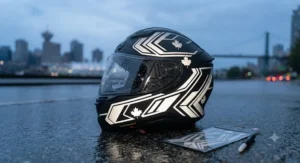
Adhesive durability is the single biggest differentiator between a decal that lasts a season and one that lasts five years, and it comes down to three variables working together: adhesive chemistry, surface prep, and climate exposure. Genuine 3M adhesive formulations, like those used across the Salzmann and Bright Knight Decals products in this lineup, are engineered specifically for outdoor UV and temperature swings, which explains why manufacturer durability claims in this category commonly run from three to nine years depending on the product line. Generic adhesives found on unbranded competitors tend to harden and crack faster in cold weather — a real concern for Canadian winters where a helmet left in an unheated garage swings from -20°C to room temperature repeatedly across a season. Surface prep matters just as much as adhesive quality: aggregated review data across nearly every product in this category shows a consistent pattern where negative reviews mentioning early peeling almost always coincide with skipped cleaning steps, while positive long-term reviews consistently mention alcohol-wiping the surface first. Humidity and precipitation exposure round out the picture — waterproof ratings genuinely matter for anyone riding through rain or slush, since water intrusion under a decal edge is the most common trigger for the peeling that eventually ruins reflective performance entirely.
Night Riding Safety: Making the Most of Reflective Decals After Dark
Reflective helmet decals work by retroreflection, meaning they bounce light directly back toward its source rather than scattering it in every direction — which is exactly why they’re most effective against oncoming headlights and nearly useless against ambient streetlight alone. That physics detail changes how you should think about placement: decals mounted on the sides and back of a helmet catch light from vehicles approaching from angles a front-only strip would miss entirely, which matters enormously at intersections where cross-traffic is the real risk. Pairing decals with an actively powered light — a front white light and rear red light — closes the gap retroreflection can’t cover, since decals only work when something is already shining light at you; they add nothing in complete darkness with no vehicle nearby. The SAAQ’s cyclist visibility guidance reinforces this layered approach, treating reflective accessories as a complement to, not a replacement for, active lighting. Riders commuting through Canadian winters should also account for a practical detail: road salt and slush residue reduce reflective effectiveness by coating the decal surface, so a quick wipe-down before an evening ride restores far more visibility than most people expect from thirty seconds of effort.
Long-Term Cost and Maintenance
Thinking about reflective helmet decals purely as an upfront purchase misses the real cost picture. A single premium set like the ELOS 3M Reflective Black Stickers, priced around C$15-C$25 but rated for roughly nine years, works out to a couple of dollars per year of protection — genuinely cheaper over time than replacing a budget bulk pack like the PHIXBEAR 20 Pcs Super Reflection Reflective Stickers every two or three seasons, even though the PHIXBEAR pack costs less upfront. That said, total cost of ownership isn’t just decal price: riders who reposition or remove decals frequently should factor in that repeated peeling reduces adhesive effectiveness, sometimes forcing an earlier replacement than the manufacturer’s durability rating suggests. Maintenance costs are effectively zero beyond the occasional damp-cloth wipe-down, which makes reflective decals one of the lowest-maintenance safety upgrades available for either a bicycle or motorcycle helmet, especially compared to actively powered lighting systems that need battery replacement or recharging on a regular cycle.
Features That Actually Matter (And Those That Don’t)
Genuine 3M-backed reflective material matters enormously — it’s the difference between a decal visible from 180 metres and one a driver only notices once they’re already close. Waterproof rating matters for anyone riding through Canadian rain or winter slush, full stop. Piece size matters more than piece count, since total reflective surface area drives visibility, not how many individual stickers came in the box. On the other hand, novelty shapes and colour variety matter far less than marketing suggests — a triangle and a circle made from the same reflective film perform identically, so don’t pay a premium for shape variety alone. Branded packaging and warranty length matter less than manufacturer-stated durability ratings, since a 1-year warranty on a product rated for five years of performance is more about return-policy comfort than an indicator of quality. And despite how often it’s marketed, “DOT-safe” phrasing on a decal package is largely irrelevant to actual reflective performance, since it speaks to helmet-shell compatibility rather than visibility output.
Problem to Solution: Fixing Common Reflective Decal Issues
Decal lifting at the edges within weeks almost always traces back to inadequate surface cleaning — the fix is removing the decal, wiping the area with isopropyl alcohol, letting it dry fully, and reapplying with firm pressure from the centre outward. Reduced brightness after a season typically means road grime has coated the reflective surface rather than actual material degradation — a gentle wipe with a damp cloth restores most of the lost reflectivity instantly. Decals that won’t conform to a curved vent area are usually the wrong material for the job; swap a rigid Diamond Grade product for a flexible option like the Salzmann 3M Scotchlite Reflective Sticker, which is specifically designed to wrap curves. Adhesive residue left behind after removing an old decal responds well to a small amount of rubbing alcohol on a cloth, applied gently to avoid damaging the underlying paint or shell finish. Finally, decals that looked great on application but seem dim within days may simply be mounted in a spot the helmet’s own shape shadows from typical headlight angles — repositioning to a more forward-facing or side-facing panel usually solves it without buying a new set.
Buyer’s Decision Framework
If you ride a rounded bicycle helmet and want maximum flexibility, choose the Salzmann 3M Scotchlite Reflective Sticker because its soft vinyl conforms without lifting. If you want the single brightest reflective output on a flat motorcycle panel, choose the Salzmann Diamond Grade Reflective Sticker because Diamond Grade material outperforms softer alternatives on flat surfaces. If you want safety without a loud daytime look, choose between the Bright Knight Decals Motorcycle Helmet Decals and ELOS 3M Reflective Black Stickers based on budget, since both deliver a stealth-by-day, bright-by-night effect. If you’re outfitting multiple family helmets on a budget, choose the LOOM Reflective Stickers Mega Kit because its piece count solves the multi-helmet math problem cheaply. If you want a custom styled motorcycle helmet and don’t mind a longer install, choose the Applied Graphics Reflective Motorcycle Helmet Decal Kit for its checkers-pattern flexibility. And if you just want solid 3M-family material at the lowest realistic price point, choose the PHIXBEAR 20 Pcs Super Reflection Reflective Stickers.
Top 7 Products at a Glance
| Product | Material | Curve-Friendly | Price Range (CAD) | Best For |
|---|---|---|---|---|
| Salzmann 3M Scotchlite Reflective Sticker | 3M Scotchlite (soft) | Yes | C$10-C$20 | Rounded bike helmets |
| Salzmann Diamond Grade Reflective Sticker | 3M Diamond Grade | No | C$10-C$25 | Flat panels, max brightness |
| Bright Knight Decals Motorcycle Helmet Decals | 3M reflective vinyl | Somewhat | C$10-C$20 | Stealth motorcycle look |
| ELOS 3M Reflective Black Stickers | 3M reflective, black | Somewhat | C$15-C$25 | Premium stealth durability |
| LOOM Reflective Stickers Mega Kit | Mixed reflective vinyl | Yes | C$10-C$20 | Multi-helmet families |
| Applied Graphics Reflective Motorcycle Helmet Decal Kit | Reflective vinyl checkers | Yes (small pieces) | C$15-C$25 | Custom motorcycle styling |
| PHIXBEAR 20 Pcs Super Reflection Reflective Stickers | 3M DG3 | No | C$10-C$18 | Budget multi-surface use |
Looking at the table as a whole, the clearest pattern is that curve-friendliness and raw reflective intensity trade off against each other almost every time — the softer materials that hug a bike helmet’s rounded shell sacrifice some of the prismatic punch that rigid Diamond Grade and DG3 materials deliver on flat surfaces. Budget-conscious families and commuters should lean toward the LOOM Reflective Stickers Mega Kit or PHIXBEAR 20 Pcs Super Reflection Reflective Stickers, while riders chasing maximum nighttime brightness on appropriate flat surfaces get the most out of the Salzmann Diamond Grade Reflective Sticker.
Benefits vs Traditional Alternatives
| Approach | Setup Effort | Reflective Performance | Approx. Cost |
|---|---|---|---|
| Reflective helmet decals | Low (10 minutes) | High with genuine 3M material | C$10-C$25 |
| Reflective spray paint | Medium-high | Moderate (diluted by liquid binder) | C$20-C$40 |
| Full helmet reflective wrap | High (often professional) | High but uniform, not accented | C$60-C$120+ |
| No visibility upgrade | None | None beyond factory helmet shell | C$0 |
The comparison makes the case for decals fairly plainly: they deliver reflective performance close to or exceeding paint and wraps at a fraction of the cost and effort, which is exactly why they’ve become the default recommendation for riders who want a meaningful visibility upgrade without a weekend project. Wraps still make sense for riders chasing a fully uniform reflective shell rather than accent placement, but for most commuters and weekend riders, decals hit the best ratio of effort to real-world safety benefit.
Reflective Helmet Decals for Commuters and Everyday Riders
Commuters riding on a predictable schedule benefit most from durability-focused picks like the ELOS 3M Reflective Black Stickers or Bright Knight Decals Motorcycle Helmet Decals, since daily exposure to sun, rain, and repeated helmet handling wears decals down faster than occasional weekend use. A practical habit worth adopting: inspect decal edges monthly during your regular helmet check, the same way you’d check strap wear or shell cracks, since catching an early lifted edge before it fully peels means a quick alcohol-wipe fix rather than a full decal replacement. For commuters riding through Canadian winters specifically, road salt exposure is the wildcard most buyers don’t plan for — salt residue both degrades some adhesive formulations over time and physically coats the reflective surface, so a five-minute wipe-down before evening rides during salted-road months meaningfully extends both decal life and nightly visibility.
Frequently Asked Questions
❓ Are reflective helmet decals legal in Canada?
❓ Do reflective helmet stickers actually work?
❓ How long do reflective helmet decals last?
❓ Can I put reflective stickers on any helmet?
❓ Are reflective helmet decals DOT approved?
Conclusion
Reflective helmet decals sit in that rare category of gear that’s genuinely cheap, genuinely fast to apply, and genuinely effective — which is a combination safety products rarely manage all at once. Whether you land on the curve-friendly Salzmann 3M Scotchlite Reflective Sticker, the maximum-brightness Salzmann Diamond Grade Reflective Sticker, a stealth pick like the Bright Knight Decals Motorcycle Helmet Decals or ELOS 3M Reflective Black Stickers, a family-friendly bulk option like the LOOM Reflective Stickers Mega Kit, the styling-forward Applied Graphics Reflective Motorcycle Helmet Decal Kit, or the budget-smart PHIXBEAR 20 Pcs Super Reflection Reflective Stickers, the underlying math stays the same: a few dollars and ten minutes of application time buys a meaningfully better chance of being seen on a dark Canadian road. Match the decal to your helmet’s shape, prep the surface properly, and pair decals with active lighting rather than treating them as a full replacement, and you’ve closed a real visibility gap for less than the cost of a tank of gas.
Recommended for You
- Reflective Safety Vest: 7 Best Hi-Vis Picks for Canada (2026)
- How to Choose Thermal Socks for Motorcycle Boots: 7 Picks for 2026
- Thermal Socks for Motorcycle Riding: 7 Warmest Picks (2026)
Disclaimer: This article contains affiliate links. As an Amazon Associate, I earn from qualifying purchases. If you purchase products through these links, we may earn a small commission at no additional cost to you.
✨ Found this helpful? Share it with your friends! 💬🤗
