
In This Article
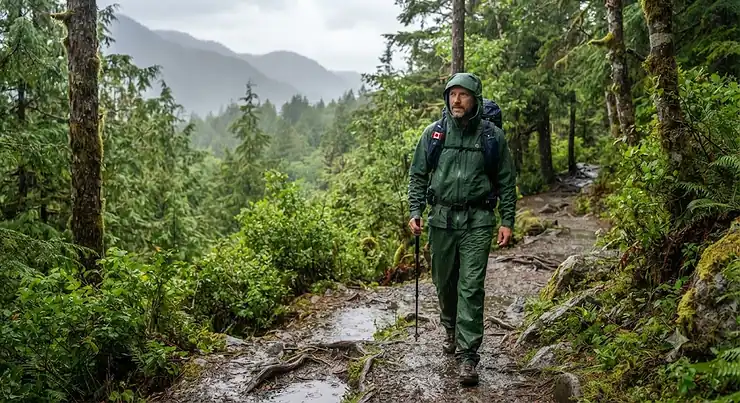
There’s a very specific kind of dread that hits somewhere around the second highway on-ramp, when the sky goes the colour of a bruise and you realize your rain gear is sitting in a closet 40 kilometres behind you. Every rider who’s put in a season of real kilometres has a version of this story, and it almost always ends the same way: soaked socks, fogged visor, and a solemn promise to finally sort out proper wet-weather gear. A good packable rain suit is the fix — something small enough that leaving it at home stops being an option.
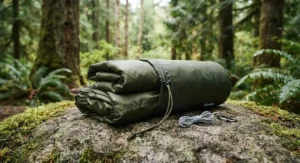
So, what is a packable rain suit? It’s a waterproof jacket-and-pant combination (or one-piece suit) engineered to compress down small enough to live permanently in a saddlebag, tail bag, or tank bag, so it’s always on the bike rather than sitting at home when the forecast turns. The best ones fold into a stuff sack the size of a rolled towel and weigh less than a bottle of water.
The trick is that “packable” covers a huge range of actual performance. Some suits use the same basic non-woven fabric found in disposable ponchos, just cut generously and thrown in a drawstring bag. Others use genuine laminated, breathable membranes — the same family of technology explained in this overview of waterproof fabric construction — that cost more but actually survive being unpacked and repacked a hundred times over a riding season. In this guide, we dug into seven real, currently available options spanning budget emergency kits to Gore-Tex-backed premium suits, and we’re breaking down exactly how each one packs, fits, and performs once the clouds actually open up. Every price below is shown as a range in Canadian dollars, since Amazon pricing shifts constantly — always check the current price before you buy.
Quick Comparison: 7 Packable Rain Suits at a Glance
| Suit | Packed Size Snapshot | Price Range (CAD) | Best For |
|---|---|---|---|
| Frogg Toggs Ultra-Lite2 Rain Suit | Fist-sized stuff sack, ~12.8 oz total | Under C$45 | Emergency backup for occasional riders |
| TIDEWE 2-Piece Rain Suit | Small storage bag, multiple pockets | C$55-C$70 range | Budget commuters who want pocket space |
| Nelson-Rigg Stormrider SR-6000 | Rolls to roughly a rolled sweater | C$110-C$130 range | Daily commuters wanting motorcycle-specific fit |
| Tourmaster Sentinel 2.0 | Self-stuffing internal pouch | C$180-C$210 range | Mixed-weather riders wanting better airflow |
| Alpinestars Hurricane Rain V2 Suit | Compact roll bag with handle | C$270-C$320 range | Touring riders wanting laminated waterproofing |
| REV’IT! Pacific 4 H2O | Compact carrying pouch, one-piece | C$200-C$230 range | Riders who want the fastest one-piece don |
| Klim Stow Away Jacket + Pant | Roughly the size of a cantaloupe | C$400-C$480 range (set) | ADV and touring riders wanting Gore-Tex reliability |
Looking at the spread above, there’s a clear line between suits built from simple coated fabric and suits built from laminated, breathable membranes — and that line tracks almost perfectly with price. Budget picks like the Frogg Toggs Ultra-Lite2 Rain Suit and TIDEWE 2-Piece Rain Suit win on packed volume and price but sacrifice long-term durability, while the Klim Stow Away Jacket + Pant and Alpinestars Hurricane Rain V2 Suit cost more but shrug off repeated pack-and-unpack cycles far better. If you only ride in the rain a handful of times a year, the cheaper end of this table is honestly the smarter buy.
💬 Just one click — help others make better buying decisions too!😊
Top 7 Packable Rain Suits: Expert Analysis
1. Frogg Toggs Ultra-Lite2 Rain Suit — lightest budget pick that still packs into its own sack
The standout here is genuinely the weight: this two-piece suit tips the scales at roughly 12.8 ounces total, which is lighter than most rider’s phone-and-wallet combo. It’s built from Frogg Toggs’ L83 nonwoven bi-laminate material, carries ASTM F1670/F1670M-17a certification for resistance to liquid penetration, and ships with its own stuff sack. In practice, that certification means the fabric has been tested to actually block liquid under lab conditions, not just marketed as “water-resistant” — a meaningful distinction when a sudden downpour catches you between exits. This is a suit for the rider who wants insurance, not a primary layer: someone who rides in the rain maybe five or six times a season and just needs something to throw over their gear without adding bulk to a tail bag. Aggregated reviewer sentiment across retail and enthusiast sites is consistently split along exactly that line — riders praise how easily it disappears into a pack, but several report the nonwoven fabric stretching or tearing at the seams after a full season of regular use. That’s not a knock on value; it’s just a reminder that this fabric class trades durability for weight. Based on that trade-off, this suit earns its spot as the suit you keep in the bottom of your bag “just in case,” not the one you reach for every commute.
Pros:
- ✅ Packs into a stuff sack barely bigger than a fist
- ✅ ASTM-certified waterproof and wind-resistant construction
- ✅ Roomy cut slides easily over a full jacket and pants
Cons:
- ❌ Nonwoven fabric can stretch or tear with frequent heavy use
- ❌ Feels noticeably thinner than motorcycle-specific rain suits
Expect to pay under C$45 at the time of research, which makes this one of the cheapest ways to eliminate the “I forgot my rain gear” problem entirely — just don’t expect it to survive a full riding season of daily use.
2. TIDEWE 2-Piece Rain Suit — most storage pockets for the price
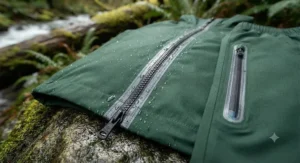
The first thing riders notice about this suit is the pocket layout: two large side pockets plus additional storage give it more carrying capacity than most rain gear at this price point, which matters when you need quick access to a phone or toll transponder mid-ride. It’s built from high-density polyester with fully sealed seams, an adjustable hood, and cinch points at the cuffs and waist, and it ships in its own storage bag. What that sealed-seam construction means practically is that water can’t creep in through the stitch lines the way it does on cheaper rainwear, even though this isn’t a motorcycle-specific pattern — there are no boot stirrups or a diagonal entry zip, so it’s cut more like general outdoor rainwear than dedicated riding gear. That makes it a strong fit for budget-conscious commuters who ride shorter distances at lower speeds and want something functional rather than technical. One verified buyer specifically reported wearing the suit on a 500-mile motorcycle trip and finding it held up, which is a meaningfully positive data point for a suit not marketed primarily at riders. Reviewers consistently flag the fit as generous, recommending sizing up if you’re layering it over winter gear.
Pros:
- ✅ Sealed seams hold up through sustained rain
- ✅ Two large side pockets keep essentials within reach
- ✅ Included storage bag makes packing simple
Cons:
- ❌ Non-motorcycle cut can billow slightly at highway speed
- ❌ No boot stirrups, so pant hems can ride up
Pricing typically lands in the C$55-C$70 range, and for riders whose commute is mostly city streets rather than sustained highway speed, that pocket layout alone can justify the pick.
3. Nelson-Rigg Stormrider SR-6000 — best value for daily commuters
This is a suit built specifically around motorcycle use, and it shows in the details: a soft polyester outer shell backed with PVC for full waterproofing, underarm ventilation, oversized zipper gussets, and elasticized boot stirrups on the pants to keep the hem sealed against your boot. The PVC backing is the real story here — it’s a heavier, more old-school waterproofing method than the laminated membranes on pricier suits, but it’s also proven and genuinely 100% waterproof against direct rain. Nelson-Rigg backs the suit with an exclusive two-year warranty, which is unusually generous for gear in this price bracket and suggests real confidence in the stitching and seams. Aggregated reviewer sentiment from RevZilla describes it as a strong value pick that keeps riders dry in light-to-moderate rain with genuinely compact packability, though the same review data flags durability concerns, occasional zipper jams, and crotch-seam leaks specifically during heavy, sustained downpours. That combination — great for a commute through an afternoon shower, less certain for three hours of steady highway rain — is exactly what you’d expect from PVC-backed construction at this price. Riders who commute daily but rarely face extended downpours will likely never encounter the failure points reviewers mention.
Pros:
- ✅ Two-year warranty is rare at this price tier
- ✅ Reflective striping on both jacket and pants
- ✅ Boot stirrups keep pant hems properly sealed
Cons:
- ❌ Some reviewers report crotch-seam leaks in heavy downpours
- ❌ PVC backing traps more heat than laminated alternatives
Nelson-Rigg’s Stormrider typically runs in the C$110-C$130 range, positioning it as the sensible middle ground between disposable-feeling budget suits and pricier laminated gear.
4. Tourmaster Sentinel 2.0 — best breathability in the mid-range
Where the Stormrider leans on PVC, the Sentinel 2.0 uses a ripstop nylon shell rated at MVM 5000 for breathability — a meaningfully higher airflow spec than basic PVC-backed suits, which translates to less of that clammy, sauna-like feeling on a long ride. The jacket includes an Aqua-Barrier under-helmet hood, underarm vents, a polyester mesh lining, and — cleverly — a self-contained storage pouch built into the jacket itself, so the garment stuffs into its own pocket rather than requiring a separate bag you can misplace. A jacket-to-pant zipper attachment lets the two pieces clip together at the waist, closing the gap that causes water to sneak in on cheaper two-piece designs. One long-time reviewer for a rider publication specifically noted using the rolled-up jacket and pants as makeshift pillows during roadside breaks, which says as much about the packed size as any spec sheet could. The trade-off is cost: since the jacket and pants are sold separately, outfitting the full suit costs more than most single-purchase options on this list, and ripstop nylon — while durable — doesn’t compress down quite as small as laminated ADV fabrics.
Pros:
- ✅ MVM 5000 breathability outperforms PVC-backed suits
- ✅ Self-contained pouch means nothing extra to pack
- ✅ Jacket-to-pant zip attachment seals the waist gap
Cons:
- ❌ Jacket and pants are sold separately, raising total cost
- ❌ Packs slightly larger than laminated premium suits
Budget roughly C$180-C$210 for the complete jacket-and-pant combination, which puts it squarely in mid-range territory for a suit built specifically for riders who face rain often, not just occasionally.
5. Alpinestars Hurricane Rain V2 Suit — lightest laminated suit with a roll-bag
This is where the fabric technology takes a real step up. The Hurricane Rain V2 is built from an ultra-lightweight, wind-resistant laminated textile rated at 4,000mm waterproofing and 6,000 g/m²/24h breathability (MVTR) — figures that put it firmly in genuine waterproof-breathable territory rather than simple water-resistant coating, and it weighs only 660 to 728 grams depending on size. Tape-sealed seams run throughout, the collar, cuffs, and waist use an elasticated, contoured design, and the whole suit compresses into a dedicated roll bag with a shock-cord closure and slim carry handle — genuinely one of the more thoughtfully designed pack systems in this lineup. One rider on an adventure-touring forum specifically noted that the suit’s sizing matched their existing jacket without needing to size up, a small but telling detail since oversized rain suits are one of the most common fit complaints in this category. Retail listings show it scoring consistently high marks from verified buyers, reinforcing its reputation as reliable emergency-grade protection that doesn’t feel disposable. The laminated fabric treatment is also engineered to resist sticking to leather or textile gear underneath, which sounds minor until you’ve fought a suit that clings to your jacket sleeve mid-ride.
Pros:
- ✅ True laminated fabric breathes far better than PVC coatings
- ✅ Compact roll bag includes its own carry handle
- ✅ Extra-long leg zips fit easily over adventure boots
Cons:
- ❌ Costs noticeably more than non-laminated competitors
- ❌ Reflective detailing is modest compared to hi-viz-specific suits
Pricing generally sits in the C$270-C$320 range, which is a fair ask given the laminate quality — this is the suit for a rider who wants to genuinely forget they’re wearing rain gear.
6. REV’IT! Pacific 4 H2O — fastest one-piece entry via diagonal zip
The Pacific 4 H2O solves a very specific annoyance: the awkward hop-and-wiggle of getting into a two-piece suit at a gas station while trucks blast past. Its long diagonal zipper runs from knee to neck, so you essentially step in and zip up in one motion, and built-in stirrups anchor the pant legs so they can’t ride up while you’re seated. The shell is a PVC-free polyester Oxford with a PU coating — a construction choice that avoids the stiff, cold-weather brittleness that plain PVC suits are known for — paired with 3M Scotchlite laminated reflection at the shoulders and reflective prints at the arms, chest, and calves for genuine nighttime visibility. A tank-protecting zipper cover keeps the metal pull from scratching your fuel tank when you’re leaned forward, which is a small detail that shows real motorcycle-specific design thinking rather than a repurposed outdoor rain shell. The trade-off with any one-piece design is flexibility: you can’t wear just the jacket half on a day with light drizzle, and because the fit runs loose for comfort and mobility, it needs its multiple adjustment points at the cuffs, arms, waist, and legs properly cinched or it will flap noticeably at highway speed.
Pros:
- ✅ Diagonal zip allows dramatically faster entry than two-piece suits
- ✅ Boot stirrups and wide leg openings seal out water at the ankle
- ✅ PVC-free construction stays flexible in cold weather
Cons:
- ❌ One-piece design means no wearing the jacket alone
- ❌ Loose fit can flap at speed if not fully cinched
Expect a price range of roughly C$200-C$230, positioning it just below the laminated Alpinestars suit while offering the quickest don-to-riding time of any suit on this list.
7. Klim Stow Away Jacket + Pant — smallest premium pack size, Gore-Tex backed
At the top of this list sits the suit built for riders who treat rain gear as mission-critical equipment rather than a backup plan. The Stow Away Jacket uses a genuine Gore-Tex Performance Shell, weighs about 19 ounces in a size medium, and famously compresses into its own hand pocket down to roughly 6 by 9 inches and 3 inches thick — reviewers consistently describe the packed size as “about the size of a cantaloupe.” Two hook-and-loop straps let you lash the stuffed jacket directly to a handlebar crossbar or luggage strap, meaning it doesn’t even need to occupy saddlebag space if you don’t want it to. Construction details reinforce the premium positioning: water-resistant YKK zippers, pit zips backed with mesh for active venting, and a fixed hood with a shaped visor built for use under a helmet. A published gear review noted the sewing quality as some of the best seen in motorcycle-adjacent products, with only minor collar splash-in during a controlled hose-down test — a genuinely tough real-world evaluation method. The matching Stow Away Pant is sold separately, and Klim’s Pro variant streamlines the fabric further for even lower bulk, but both pieces command premium pricing that puts this well above every other suit on this list.
Pros:
- ✅ Genuine Gore-Tex membrane breathes better in warm rain
- ✅ Smallest pack-to-weight ratio of any suit tested here
- ✅ Can be strapped directly to the bike instead of stowed
Cons:
- ❌ Jacket and pant are separate purchases, increasing total cost
- ❌ Premium price puts it out of reach for occasional riders
Combined jacket-and-pant pricing generally lands in the C$400-C$480 range, which is a serious investment — but for riders logging thousands of kilometres a season, the packed size and Gore-Tex durability genuinely earn it.
Quick-Don Design: Getting Dressed Before the Downpour Hits
A packable rain suit is only useful if you can actually get it on before you’re already wet, which is exactly what quick-don design is meant to solve. The fastest suits on this list use either a full diagonal zipper (like the REV’IT! Pacific 4 H2O) or a self-storing pouch that eliminates the fumbling search for a separate stuff sack (like the Tourmaster Sentinel 2.0). A genuinely quick-don design lets you get fully suited up in under 30 seconds at the roadside, boots and all, without removing your helmet or gloves.
There’s a real safety dimension here, too. Riding in wet clothing at highway speed dramatically accelerates heat loss through evaporative cooling, and Environment and Climate Change Canada’s own guidance on wind chill and cold-weather exposure specifically notes that staying dry is one of the simplest ways to reduce cold-related risk — advice that applies just as much to a soaked rider at 100 km/h as it does to a pedestrian in a windstorm. Practically, that means the extra thirty seconds it takes to properly seal cuffs and collar isn’t fussiness; it’s the difference between staying warm for the next two hours and slowly chilling down as wet fabric wicks heat away. A few first-30-days habits make a real difference: practise donning your suit in your driveway before you ever need it in traffic, always seal the collar last so water doesn’t run down your neck while you’re adjusting other closures, and store the suit somewhere it can dry fully between rides so the fabric doesn’t develop mildew inside a sealed pouch.
Real-World Scenarios: Matching Riders to the Right Suit
The daily commuter. Riding 20 minutes each way through city traffic, five days a week, in a climate where showers pop up without warning — this rider needs something that lives permanently in a pannier and can go on fast in a parking lot. The Nelson-Rigg Stormrider SR-6000 or TIDEWE 2-Piece Rain Suit both fit this budget and frequency profile well, since neither suit needs to survive extended highway downpours, just repeated short bursts of city rain.
The weekend tourer. Doing 300-plus kilometre days on secondary highways, this rider needs a suit that breathes well over several hours and packs small enough to fit alongside camping gear. The Alpinestars Hurricane Rain V2 Suit or Tourmaster Sentinel 2.0 both make sense here, trading a bit of budget for genuinely better airflow on long stretches.
The ADV rider heading off-pavement. Facing unpredictable mountain weather, needing gear that survives being strapped to a pannier rack and exposed to dust and grit between uses, this rider benefits most from the Klim Stow Away Jacket + Pant, whose Gore-Tex shell and handlebar-strap compatibility were built with exactly this use case in mind.
Problem to Solution: Fixing the Most Common Rain Suit Failures
Even a well-chosen packable rain suit runs into predictable trouble spots. Here’s how to handle the most common ones.
Problem: water creeping in at the collar. This is almost always a sealing issue, not a suit-quality issue — make sure the collar sits over the top of your jacket collar, not tucked under it, so rain runs down the outside rather than inside the seam.
Problem: fogging or clamminess inside the suit. This points to a breathability mismatch — PVC-backed suits like the Stormrider will always run warmer than laminated options, so opening underarm vents early, before you’re fully soaked in sweat, helps more than opening them once you’re already overheated.
Problem: the suit won’t fit back into its original stuff sack. Fabric never folds the same way twice. Rather than fighting the factory fold, roll the suit from the hem upward instead of trying to refold the original creases, which compresses more evenly.
Problem: leaking at the crotch or seat seam. This is the most commonly reported failure point on PVC-backed suits under sustained heavy rain — sizing up slightly reduces stretch on that seam, which is often the actual cause rather than a manufacturing defect.
Problem: the suit balloons and flaps at highway speed. Nearly every adjustment point on these suits exists for exactly this reason — cinch the waist, cuffs, and ankles fully before you accelerate, not after you notice the flapping.
Ready to stop guessing at the forecast? 🌧️ Tap any highlighted pick above to check today’s price and grab your backup before the next front rolls in!
Buyer’s Decision Framework: If This, Choose That
If you ride in the rain fewer than ten times a season, choose a budget non-motorcycle-specific suit like the Frogg Toggs Ultra-Lite2 Rain Suit, because paying for laminated fabric you’ll rarely use doesn’t make financial sense.
If you commute daily in a climate with frequent short showers, choose a motorcycle-specific mid-range suit like the Nelson-Rigg Stormrider SR-6000, because the boot stirrups and reflective detailing matter more with repeated daily use.
If you tour for multiple hours at a stretch, choose a laminated, breathable suit like the Alpinestars Hurricane Rain V2 Suit, because sustained comfort outweighs the higher upfront cost.
If you need the absolute fastest way to get dressed at a roadside stop, choose a one-piece diagonal-zip suit like the REV’IT! Pacific 4 H2O, because a single motion beats stepping into separate jacket and pants.
If your riding includes off-pavement or multi-day adventure touring, choose a genuine Gore-Tex system like the Klim Stow Away Jacket + Pant, because durability and true breathability justify the investment over a full season of varied conditions.
How to Choose a Packable Rain Suit
Picking the right packable rain suit comes down to matching a handful of specific criteria to how you actually ride, not just picking whatever’s cheapest or most expensive.
- Check the packed dimensions, not just the weight. A suit can be light but still bulky if it doesn’t compress well — look for actual packed measurements where manufacturers list them.
- Match the waterproof rating to your typical exposure. A 4,000mm-rated laminate handles sustained highway rain far better than a basic PVC coating, though both will keep you dry in a short shower.
- Prioritize breathability if you ride long distances. MVTR ratings above 5,000 g/m²/24h noticeably reduce that sweaty, sealed-in feeling on rides over an hour.
- Confirm the suit is cut to fit over your existing gear. Rain suits sized for bare clothing will feel dangerously tight zipped over a jacket, pants, and armour.
- Look for boot stirrups and wide leg zips. These two features are the difference between water running into your boots and staying properly sealed at the ankle.
- Decide between one-piece and two-piece based on your donning habits. One-piece suits go on faster; two-piece suits let you wear just the jacket in light drizzle.
- Factor in the warranty length. A longer warranty, like Nelson-Rigg’s two years, often signals genuine manufacturer confidence in seam durability.

Common Mistakes When Buying a Packable Rain Suit
The single most common mistake is buying based on size alone without checking the suit is actually meant to fit over riding gear — a suit sized for street clothes will bind at the shoulders and knees the moment you zip it over an armoured jacket. A close second is skipping colour and visibility entirely; heavy rain already cuts visibility for other drivers, and choosing a suit with no reflective or hi-vis elements compounds that risk unnecessarily. Quebec’s road safety authority, in guidance on motorcycle visibility, specifically recommends bright or fluorescent protective clothing with reflective strips as one of the most effective ways for riders to be seen — advice that applies just as directly to rain gear as to everyday riding jackets. Another frequent misstep is assuming a suit is motorcycle-specific just because it’s marketed as “packable” or “waterproof” — plenty of general outdoor rainwear works fine at walking pace but billows badly at highway speed without a motorcycle-cut pattern. Finally, riders often skip trying the suit on over their actual gear before a trip, only discovering mid-ride that the sleeves are too short to clear their glove cuffs, leaving a gap where water runs straight in.
Packable Rain Suit vs Traditional PVC Rain Suit
| Factor | Packable Laminated Suit | Traditional PVC Rain Suit |
|---|---|---|
| Pack size | Compresses to roughly fist- or grapefruit-sized | Bulkier, often needs a larger stuff sack |
| Breathability | High — genuine membrane technology | Lower — traps heat and moisture |
| Cold-weather flexibility | Stays supple in low temperatures | Can stiffen and crack in cold |
| Typical price | Higher upfront cost | Lower upfront cost |
| Longevity with frequent packing | Holds up well to repeated folding | Coating can crack with repeated folding |
The clearest takeaway from this comparison is that PVC-backed suits win decisively on upfront price, which is exactly why suits like the Nelson-Rigg Stormrider SR-6000 remain popular for occasional or budget-focused riders. Laminated suits like the Alpinestars Hurricane Rain V2 Suit justify their higher cost specifically for riders who pack and unpack their rain gear dozens of times a season, since that repeated folding is where PVC coatings start to crack and lose waterproofing. If your riding is occasional and mostly short-distance, the traditional PVC column is genuinely the smarter economic choice.
Compact Rain Suit for Motorcycle Storage: Pouch Size and Saddlebag Compatibility
Finding a genuinely compact rain suit for motorcycle storage means thinking about your specific luggage setup before you buy, not after. A suit that fits perfectly in a full-size top case can be hopelessly oversized for a small tank bag or a sport bike’s minimal under-seat compartment, so it pays to compare actual packed dimensions against your available space.
Storage pouch size compared. At one end of the spectrum, the Frogg Toggs Ultra-Lite2 Rain Suit compresses down small enough to tuck into almost any glovebox-sized space, while the Klim Stow Away Jacket + Pant packs to roughly 6 by 9 inches and 3 inches thick — genuinely tiny for a Gore-Tex garment, but still noticeably larger than the featherweight budget options. Suits like the Alpinestars Hurricane Rain V2 Suit land in between, using a dedicated roll bag with a shock-cord closure that keeps the packed shape consistent trip after trip, which matters if your storage pouch size needs to stay predictable to fit a specific saddlebag pocket.
Saddlebag compatibility by suit type. Hard saddlebags with fixed internal dimensions generally accommodate any of these suits without issue, since even the bulkiest option here is still smaller than a typical rain jacket sold at retail. Soft saddlebags and tail bags are where saddlebag compatibility gets more specific — a suit like the Tourmaster Sentinel 2.0, which self-stuffs into its own jacket pocket, tends to mould into odd-shaped gaps better than a suit in a rigid roll bag. If your bike only offers a small tank bag or under-seat storage, prioritize the lightest, most compressible options on this list rather than the laminated premium suits, which — while excellent performers — simply take up more consistent volume.
Lightweight Emergency Rain Gear for Every Riding Season
The case for keeping lightweight emergency rain gear on the bike year-round is simple: weather forecasts are wrong often enough that “it won’t rain today” isn’t a reliable riding strategy, and getting soaked at speed does more than ruin your afternoon. Wet clothing loses its insulating properties almost immediately, and the Canadian Red Cross specifically warns that cold and wet conditions can accelerate the onset of hypothermia even when air temperatures aren’t dangerously low — a genuinely relevant risk for a rider soaked through at highway speed on a cool spring evening. That’s exactly the scenario lightweight emergency rain gear is built for: not a suit you plan to wear, but one you’re relieved to have when a forecast changes mid-ride.
Seasonally, the priorities shift. In warmer months, breathability matters more than outright warmth, since the goal is staying dry without overheating — a laminated suit or even a basic non-woven suit like the Frogg Toggs works fine here. Once temperatures drop into single digits, a rain suit doubles as a genuine wind barrier over your existing layers, and a slightly heavier, better-sealed suit like the Nelson-Rigg or Tourmaster options earns its keep. Either way, the core logic of lightweight emergency rain gear stays the same across seasons: it only helps you if it’s actually on the bike, which is precisely why pack size is the deciding factor for most riders, not features.
What Makes a Foldable Waterproof Suit for Riders Actually Work
Not every foldable waterproof suit for riders performs the same way once it’s actually been folded and unfolded a dozen times, and the difference usually comes down to fabric construction rather than marketing copy. Non-woven fabrics, like the material in the Frogg Toggs suit, fold extremely small and cheaply, but the fibres can stretch and weaken along the crease lines with repeated compression — which is exactly the durability trade-off reviewers consistently flag. Laminated fabrics, by contrast, bond a thin waterproof membrane to a woven outer layer, which holds up to folding far better over time, explaining why suits like the Alpinestars Hurricane Rain V2 and Klim Stow Away survive years of regular packing without losing their waterproof rating.
Seam construction matters just as much as the base fabric. A genuinely foldable waterproof suit for riders needs fully taped or welded seams, not just stitched-and-hoped-for-the-best construction, since needle holes are the single most common point of water intrusion on cheaper rainwear. Look, too, at how the manufacturer designed the actual stow mechanism — a dedicated roll bag with a shock cord, or a jacket that stuffs into its own built-in pocket, both hold their compressed shape far better over time than a generic drawstring sack that stretches out and stops cinching tightly after a season of use.
Frequently Asked Questions
❓ What is a packable rain suit?
❓ How small does a packable rain suit fold down?
❓ Will a packable rain suit fit in a saddlebag?
❓ Can I wear a packable rain suit over my regular riding jacket and pants?
❓ How long does a packable rain suit actually keep you dry?
Conclusion
A packable rain suit isn’t glamorous gear, but it’s the piece of kit most likely to actually get used precisely because it’s small enough to always be there. Budget options like the Frogg Toggs Ultra-Lite2 Rain Suit and TIDEWE 2-Piece Rain Suit make sense for occasional riders who just want insurance against a surprise shower, while the Nelson-Rigg Stormrider SR-6000 and Tourmaster Sentinel 2.0 hit a genuine sweet spot for daily commuters facing regular rain. Riders logging serious highway or touring kilometres will get real, tangible value from the laminated construction in the Alpinestars Hurricane Rain V2 Suit or the one-piece speed of the REV’IT! Pacific 4 H2O, and anyone heading into unpredictable multi-day or off-pavement conditions should seriously weigh the long-term durability of the Klim Stow Away Jacket + Pant against its higher price tag. Whichever suit ends up living in your saddlebag, the real win is simply having one there at all — because the ride you forget your rain gear on is, without fail, the one where you need it most.
Recommended for You
- 7 Best Reflective Tape for Motorcycle Helmets in 2026
- 7 Best Reflective Helmet Stickers for Canadian Riders (2026)
- Hi-Vis Rain Jacket for Motorcycle Commuting: 7 Picks (2026)
Disclaimer: This article contains affiliate links. As an Amazon Associate, I earn from qualifying purchases. If you purchase products through these links, we may earn a small commission at no additional cost to you.
✨ Found this helpful? Share it with a riding buddy before their next rainy commute! 💬🤗
