
In This Article
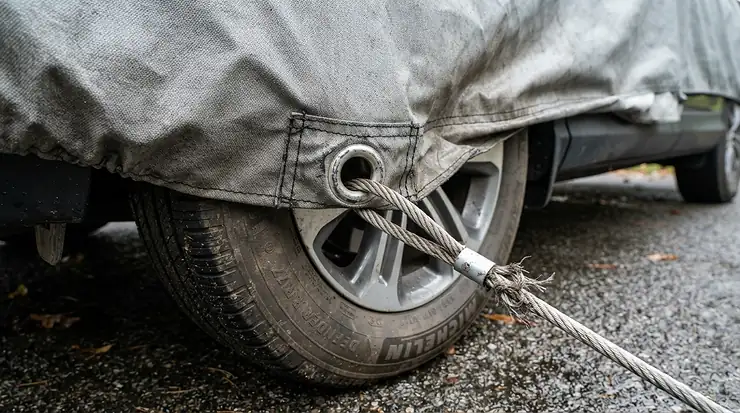
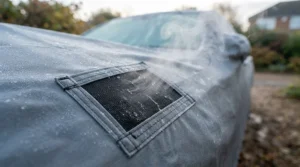
A motorcycle cover for outdoor winter storage is a fitted, weather-resistant shell that keeps snow, freezing rain, road-salt spray, UV and dust off a parked bike for months at a time, while letting trapped moisture escape. Unlike a quick-stop rain cover, it has to breathe, stay put in a prairie gale and fit the bike closely enough not to flog its paint raw.
Canadian riders know the drill. The first snowfall lands, the bike goes into hibernation, and the garage is already full of somebody’s hockey gear. Plenty of us end up with the bike parked beside the house, and the cover becomes the only thing between a C$10,000 machine and five months of freeze-thaw punishment. Canada Moto Guide’s winter prep advice makes the same point: if the bike must live outside, make sure snow and water can’t get underneath the cover.
Here’s the catch. The cheapest “waterproof” tarp-style cover can do more harm than the weather, because sealed fabric traps condensation against chrome and clear coat. So this guide goes beyond a list of products. We compare seven real covers, untangle breathable vs waterproof covers, cover condensation and mould prevention, and look at wind straps and tie-downs. We also tackle two rider-favourite companions: the motorcycle battery maintainer vs trickle charger debate, and why you should buy fuel stabilizer for motorcycle storage before the first snow.
Everything below is analysis built on real specs and aggregated review themes, not hands-on testing. Prices are ranges in CAD at the time of research, so check current prices before you buy.
Quick Comparison: Motorcycle Cover for Outdoor Winter Storage
| Cover | Best For | Key Feature | Price Range (CAD) |
|---|---|---|---|
| Favoto 300D Oxford Cover | Budget all-rounder | 300D Oxford polyester, aluminum lock holes | C$40-C$60 |
| NEVERLAND Waterproof Cover | Lowest cost entry | Listed 3000 mm waterproof rating | C$25-C$45 |
| XYZCTEM All Season Cover | Big touring bikes | Large sizes up to XXXL | C$40-C$65 |
| VELMIA Heat-Resistant Cover | Covering a warm bike after a ride | Heat-resistant fabric (listed to roughly 288°C) | C$45-C$75 |
| Zacro 420D Heavy Duty Cover | Budget heavy-duty fabric | Thicker 420D construction | C$45-C$75 |
| Dowco Guardian WeatherAll Plus | Serious vented protection | Large Moisture-Guard vents, taped seams | C$150-C$300 |
| Nelson-Rigg Defender Extreme | Long-haul premium | Perma-Venting, heat-taped seams, lifetime warranty | C$170-C$260 |
On paper, the Favoto 300D Oxford Cover and NEVERLAND Waterproof Cover win on price, while the Dowco Guardian WeatherAll Plus and Nelson-Rigg Defender Extreme win on engineering. The gap between them is mostly venting and seam construction, which matter far more in February than in June. If your bike sits under a cover for four to five months, the premium end starts looking less like a luxury and more like insurance.
💬 Just one click — help others make better buying decisions too!😊
Top 7 Picks for a Motorcycle Cover for Outdoor Winter Storage: Expert Analysis
1. Favoto 300D Oxford Cover — best budget all-rounder
The Favoto 300D Oxford Cover is the one most roundups reach for first, and it’s easy to see why. It lists 300D Oxford polyester, an elastic hem, windproof buckles, reflective strips and aluminum lock holes, plus a storage bag, in a size that fits bikes up to about 245 cm (96.5 in).
The 300D weight is a sweet spot in this price tier. It’s heavier than the flimsy 190T covers, so it flaps less and resists tearing better. It’s also not so stiff that it won’t pull over a loaded tourer. Based on the spec sheet, it suits a mid-sized standard, cruiser or adventure bike parked on a driveway.
Reviewers consistently praise the value. Some report a cover surviving sun, rain and snow for years, with snow sitting on top for a day or two without leaking through. Complaints are just as consistent: sizing that runs snug on big bikes, short buckle straps, and tears at saddlebag corners in gusting wind. One owner also reported water beneath a black cover, a reminder that cover colour and venting interact with condensation.
Pros:
- ✅ Strong 300D fabric for the price
- ✅ Lock holes and reflective strips included
- ✅ Handles snow load in owner reports
Cons:
- ❌ Snug fit on large touring bikes
- ❌ Limited venting for sealed-up winter months
Price range: roughly C$40-C$60; excellent value if you add your own extra strap and ventilation habits.
2. NEVERLAND Waterproof Cover — cheapest way to get a listed waterproof rating
The NEVERLAND Waterproof Cover is the budget outlier. It advertises a 3000 mm hydrostatic rating, lock holes, reflective trim, adjustable elastic straps and buckle fastening, all at a price that barely covers a tank of premium gas.
That 3000 mm figure means the fabric resists a water column three metres high before leaking. That’s plenty for steady rain and wet snow melt, but it says nothing about how well the cover breathes. A high waterproof number with no venting is exactly the recipe that fogs chrome in a freeze-thaw cycle. Treat this one as a short-term or milder-region option.
Review sentiment on the listing is positive, sitting around 4.5 out of 5 across several hundred ratings at the time of research. A different owner comparing covers noted a previous NEVERLAND lasted about eight months under harsh South Florida sun, which hints that UV longevity, not rain, is the weak spot. Canadian winter sun is gentler, so that matters less here.
Pros:
- ✅ Lowest price in this lineup
- ✅ Listed 3000 mm waterproof rating
- ✅ Lock holes and reflective trim included
Cons:
- ❌ No venting advertised for condensation control
- ❌ UV durability questioned by some owners
Price range: roughly C$25-C$45; a fine spare or secondary-bike cover, less ideal as your only barrier.
3. XYZCTEM All Season Cover — widest size range for big bikes
If your bike is a Gold Wing, Road Glide or loaded adventure tourer, the XYZCTEM All Season Cover deserves a look. Roundups single it out as a budget universal pick and for big bikes, and it comes in XXXL sizing with a storage bag.
Size is the hidden failure point of cheap covers. A cover that’s two centimetres too short at the rear won’t stay anchored, and wind will peel it off the bike by January. A generous XXXL gives you the slack to cover a top case, a windshield and a pair of saddlebags with room left for a belly strap.
I couldn’t verify detailed owner-review data on this specific listing, and the independent roundups are brief about its venting. Practically, that means you should read the current listing’s fabric and vent details before ordering, and plan to add your own tie-down strap.
Pros:
- ✅ Large size options for touring bikes
- ✅ Storage bag keeps it tidy off-season
- ✅ Budget-friendly entry point
Cons:
- ❌ Limited independent owner data
- ❌ Venting details thin on listings
Price range: roughly C$40-C$65; solid value for large bikes if fit matters more than premium fabric.
4. VELMIA Heat-Resistant Cover — best for covering a bike that’s still warm
The VELMIA Heat-Resistant Cover is built around one clever idea: heat. It advertises tolerance up to about 288°C (550°F), which means you can throw it over the bike right after a last ride without melting a hole near the exhaust.
That sounds like a gimmick until you picture the first cold weekend of November. You roll in, pop the cover on a still-warm engine and lock it down. A warm bike under a sealed cover is a condensation machine as it cools, so I’d still let the pipes cool before closing it up. But the heat-tolerant fabric removes the real risk of melted polyester.
Roundups repeatedly rate it for heat resistance and breathability, and it’s been a perennial top pick in several 2026 lists. It’s also a universal fit across motorcycles, scooters and mopeds, which works well for smaller and mid-sized bikes. Detailed long-term winter reports are harder to find, so treat the durability claim cautiously.
Pros:
- ✅ Heat-tolerant near exhaust areas
- ✅ Frequent top pick in 2026 roundups
- ✅ Built-in storage bag
Cons:
- ❌ Limited long-term winter durability data
- ❌ Universal fit may be loose on big tourers
Price range: roughly C$45-C$75; a smart choice for shoulder-season riders who cover and uncover often.
5. Zacro 420D Heavy Duty Cover — thickest fabric at a budget price
The Zacro 420D Heavy Duty Cover goes a step up in fabric weight with 420D construction, marketed for rain, UV, dust and snow. In the budget tier, that thicker denier is the main reason to pick it over a 190T alternative.
Denier measures yarn thickness, and heavier yarn generally means better tear resistance and less flutter. In winter, that translates to a cover that doesn’t chafe your paint and tank every time the wind picks up. The trade-off is bulk: it’s heavier to wrestle onto a tall bike, and a thick cover can run hotter and hold more moisture if not vented.
Roundups label it the best budget heavy-duty option. I couldn’t find verifiable independent owner-review volume specific to winter use, so the safest framing is this: pair it with an under-bike strap and a ventilation plan.
Pros:
- ✅ Thicker 420D fabric for the price
- ✅ Positioned as snow and UV resistant
- ✅ Universal fit across common brands
Cons:
- ❌ Heavier and bulkier to handle
- ❌ Sparse verified winter-use reviews
Price range: roughly C$45-C$75; good for riders who want sturdier fabric without paying premium money.

6. Dowco Guardian WeatherAll Plus — vented, taped-seam premium protection
The Dowco Guardian WeatherAll Plus is the cover most riders mention when the conversation turns to serious outdoor protection. It uses ClimaShield Plus, a 300D solution-dyed polyester with a water-repellent top coat and a mildew-resistant polyurethane undercoating, plus taped seams.
The headline feature is the Moisture-Guard vent system, reported as 195 per cent larger than the previous version. On paper, that’s the single most relevant spec for outdoor winter storage, because vents are how condensation leaves. Add a sewn-in belly strap, shock-cord hem, cotton windshield liner, heat shield panels, a wheel-lock hole and a compression bag, and the details read like a cover designed by people who’ve lost a cover to a gale.
At one major US powersports retailer, it sits around 4.5 out of 5 across several hundred reviews, and one long-term owner reports four years without issues. Sizes run from medium to 3XL.
Pros:
- ✅ Large vents aid moisture escape
- ✅ Taped seams and mildew-resistant undercoating
- ✅ Sewn-in belly strap for wind
Cons:
- ❌ Costs several times a budget cover
- ❌ Must be sized carefully with accessories
Price range: roughly C$150-C$300 depending on size; worth it for a bike that spends every winter outdoors.
7. Nelson-Rigg Defender Extreme — lifetime warranty and the longest runway
The Nelson-Rigg Defender Extreme is the other premium heavyweight. It uses UltraMax polyester billed as the highest UV-rated in its class, heat-taped seams, a Perma-Venting system, reflective strips, heat-resistant exhaust panels, a soft windshield liner and a quick-release belly strap.
What the spec sheet implies is a cover engineered for both extremes: waterproof enough for sustained wet snow, vented enough to avoid becoming a terrarium. Grommets at the front wheel accept a cable lock, and it ships in sizes from M to XXL, with Sport and Adventure variants for bikes with unusual silhouettes.
The lifetime warranty (original purchaser, receipt required) is a rare promise at this price. One roundup named it the best overall pick, citing durability and air circulation. One manufacturer instruction is worth heeding: don’t put it on a bike with hot pipes.
Pros:
- ✅ Perma-Venting reduces moisture buildup
- ✅ Heat-taped seams and UV-rated fabric
- ✅ Lifetime warranty on original purchase
Cons:
- ❌ Premium price tier
- ❌ Not for covering hot exhaust pipes
Price range: roughly C$170-C$260; the buy-it-once pick if your bike sits outside through every Canadian winter.
How the Top 7 Compare on Specs
| Cover | Fabric | Wind Securing | Best Winter Role |
|---|---|---|---|
| Favoto 300D Oxford Cover | 300D Oxford polyester | Elastic hem, windproof buckles | Budget driveway storage |
| NEVERLAND Waterproof Cover | Waterproof polyester, 3000 mm listed | Elastic straps, buckle | Short-term or mild-region use |
| XYZCTEM All Season Cover | Waterproof polyester | Check current listing | Large touring bikes |
| VELMIA Heat-Resistant Cover | Heat-resistant fabric | Check current listing | Shoulder-season covering |
| Zacro 420D Heavy Duty Cover | 420D polyester | Check current listing | Budget heavy-duty |
| Dowco Guardian WeatherAll Plus | 300D ClimaShield Plus | Sewn-in belly strap, shock cord | Full-winter outdoor storage |
| Nelson-Rigg Defender Extreme | UltraMax polyester | Quick-release belly strap, elastic hem | Full-winter outdoor storage |
The big divide isn’t denier, it’s venting and wind securing. Only the Dowco Guardian WeatherAll Plus and Nelson-Rigg Defender Extreme document dedicated vent systems and sewn-in belly straps, and those are the features that decide whether a cover survives January. If you choose a budget model like the Favoto 300D Oxford Cover, budget a few extra dollars for an under-bike strap and a ventilation routine.
How to Choose a Motorcycle Cover for Outdoor Winter Storage
Picking the right motorcycle cover for outdoor winter storage comes down to matching fabric, fit and venting to the months your bike will sit. Work through these steps in order.
- Measure your bike first. Run a tape from front tire to the rear-most point, then across the widest part and up to the highest point, including bags and windshield. Choose a cover with a few centimetres of slack so you’re not wrestling it on at -15°C.
- Decide how long it will sit. Under three weeks, a waterproof cover is fine. Over two months, venting matters more than raw waterproofing.
- Check for vents and taped seams. Vents let moisture escape; taped seams stop meltwater sneaking through needle holes.
- Look for a belly strap and elastic hem. These are your first line against wind.
- Read the heat-tolerance note. If you cover right after a ride, choose heat-resistant fabric or wait for the pipes to cool.
- Plan for security. Lock holes or grommets let you pass a cable lock through the cover and a wheel.
- Weigh warranty against price. Lifetime coverage on premium models spreads cost over many winters.
Breathable vs Waterproof Covers: What Works in a Canadian Winter
Breathable vs waterproof covers is the most misunderstood trade-off in this category. A cover that blocks every drop of water also blocks water vapour, and when a cold bike warms slightly under a sunny winter afternoon, that vapour condenses on the cold metal underneath.
Rider forums are blunt about this. One owner warned that a truly waterproof cover will trap condensation, fog the clear coat and rust chrome if it stays on all winter. Another explained that breathable material lets water vapour pass out while still shedding rain. European retailer Louis makes a related point in its buying guide: indoor covers are deliberately not waterproof, so condensation can’t form beneath them.
The practical sweet spot is a hybrid: water-resistant outer fabric with vents or a breathable membrane, such as the Dowco Guardian WeatherAll Plus or Nelson-Rigg Defender Extreme. Pure waterproof covers like the NEVERLAND Waterproof Cover work better for days or weeks, not entire winters.
| Cover Type | Strength | Weakness | Best For |
|---|---|---|---|
| Fully waterproof, no vents | Sheds heavy rain | Traps condensation | Short stays outdoors |
| Breathable, water-resistant | Releases vapour | May wet through in downpours | Garage or sheltered storage |
| Hybrid (waterproof plus vents) | Balanced protection | Higher price | Months of outdoor winter storage |
Looking at the table, the hybrid design is the clear match for a bike that sits outdoors from November to April. The compromise is price, which is why the Favoto 300D Oxford Cover remains a decent budget answer if you pair it with disciplined ventilation checks. If your bike can sit under a carport or eave, a breathable option suddenly becomes viable and cheaper.
Condensation and Mould Prevention Under a Cover
Condensation and mould prevention starts with understanding when moisture forms: on cold surfaces whenever warmer, humid air touches them. Under a cover, the bike’s thermal mass lags behind the air, so a mild afternoon can leave you with a damp bike by evening.
Health Canada notes that mould grows wherever moisture is present, including from condensation on cold surfaces, and that growth can begin within 48 hours of excessive moisture. That guidance is written for homes, but the physics apply equally to the pocket of air beneath your cover.
Here’s a practical routine:
- Start dry. Wash the bike and dry it completely before covering; a damp seat is a mould starter.
- Get airflow. Leave a small gap at the bottom rather than cinching the hem to the ground, as guidance from retailer Louis suggests.
- Lift the bike off damp ground. Owners suggest plywood, pavers or pallets, ideally over a vapour barrier, to reduce ground moisture.
- Use a dry microclimate. Parking nearer the house or under eaves can help noticeably.
- Inspect monthly. On a mild day, peel the cover back, check for moisture and let the bike breathe.
If you spot fuzzy spots on the seat, wipe with mild soap and water, dry thoroughly and fix the moisture source, because mould will return otherwise.
Wind Straps and Tie-Downs: Keeping the Cover On
Wind straps and tie-downs are the unglamorous hero of any outdoor winter storage setup. A cover that’s flapping is a cover that’s abrading your paint and tearing at its own seams.
Start with what’s built in. The Dowco Guardian WeatherAll Plus includes a sewn-in polyester webbing belly strap, and the Nelson-Rigg Defender Extreme uses a quick-release belly strap with an elastic hem. The Favoto 300D Oxford Cover relies on an elastic hem and windproof buckles, which owners say work but can run short.
Then add your own layers:
- Under-bike strap. A second strap through the frame area, positioned opposite the built-in one, prevents billowing.
- Soft straps or bungee cords. Avoid hard hooks directly on paint.
- Cable lock through the grommets. This secures cover and wheel together.
- Cover clips on tall windshields. These stop wind lifting the front edge.
Check straps after every major wind or snow event. Ice can fuse a cover to the bike, so brush loose snow off gently and don’t yank a frozen cover free. Cloth edges that rub on sharp saddlebag corners are where tears start, so pad them with a folded towel or foam strip.
Motorcycle Battery Maintainer vs Trickle Charger
The motorcycle battery maintainer vs trickle charger question matters because winter is when batteries die quietly. A discharged lead-acid battery sulfates, forming hard lead sulfate crystals on the plates, a process Wikipedia’s lead-acid battery entry covers in detail. It’s a leading cause of early battery failure.
A trickle charger pushes a steady, unregulated current whatever the battery’s state. Rider Magazine notes that basic units can let output voltage rise to 15 or 16 volts once the battery is full, while a maintainer like the Battery Tender Junior floats around 13.2 volts, below the gassing threshold. A maintainer monitors and shuts off; a trickle charger doesn’t.
| Feature | Trickle Charger | Battery Maintainer |
|---|---|---|
| Output | Constant current | Regulated, float mode |
| Left on all winter | Risky | Designed for it |
| Overcharge protection | Often none | Built in |
| Example | Basic 1A units | Battery Tender Junior, NOCO Genius1 |
The verdict is lopsided: for a bike sitting October to April, a maintainer is the safer choice. The Battery Tender Junior (750 mA, 3Ah to 30Ah batteries, ETL and CETL certified for the US and Canada) suits typical motorcycles, while the NOCO Genius1 (1A, 6V/12V) adds a desulfation mode. Check lithium-battery compatibility before connecting anything. Expect roughly C$50-C$85 for either; check current price.
Buy Fuel Stabilizer for Motorcycle Storage: What to Know
If you plan to buy fuel stabilizer for motorcycle storage, do it before the last fill-up, not after. Gasoline degrades, and ethanol blends attract moisture, leaving gum and varnish in carburetors and injectors. As Canada Moto Guide puts it, the worst outcome is rebuilding the fuel system.
The simplest fix is Sta-Bil Storage, which the manufacturer says keeps fuel fresh for up to 24 months and works in ethanol and non-ethanol gasoline. The standard dose is about 30 mL per 9.5 L (1 oz per 2.5 US gallons). Pour it into a nearly full tank, then run the engine a few minutes so the treated fuel reaches the injectors or carburetors. Riders also use Sea Foam, which markets a storage use as well; both are reasonable, and your owner’s manual has the final word.
Calgary-based automotive journalist advice is consistent: fill the tank to the top, add stabilizer, run the bike briefly and don’t start it mid-winter unless you’ll take a proper ride. A bottle runs roughly C$25-C$35 for a large size; check current price. Pair it with a cover, a maintainer and a dry spot, and spring becomes a key-turn event.
Common Mistakes When Buying a Motorcycle Cover for Outdoor Winter Storage
Most winter damage comes from avoidable errors, so here are the big ones.
Buying on waterproof claims alone. As we saw, sealed fabric can create condensation. Look for vents, not just rating numbers.
Ignoring size. A cover that’s too small leaves the rear exposed and lifts in wind. Measure with bags and windshield on.
Covering a hot or dirty bike. Heat can melt thin fabric and grit under a cover acts like sandpaper. Let pipes cool, wash and dry the bike first.
Skipping extra tie-downs. Built-in buckles help, but an under-bike strap is cheap insurance.
Using a cheap cover and forgetting about it. BrokerLink warns that cheap covers can fail to protect against winter conditions. Check monthly.
Letting the cover touch wet ground. Wicking moisture travels upward; keep the hem clear.
Leaving a trickle charger running all winter. A maintainer is the safer tool, as the battery section explained.
Avoiding these keeps even a budget setup, such as the Zacro 420D Heavy Duty Cover plus a strap, from becoming a spring-cleaning headache.
Practical Winter Prep Guide: From Last Ride to Cover On
Think of this as your five-step winter routine, aligned with Michelin Canada’s winter storage advice, which also recommends stabilizer, a battery tender and a breathable cover.
- Wash and dry. Remove salt and grit, then let the bike dry fully.
- Fill and stabilize. Top up the tank, add Sta-Bil Storage, and run the engine a few minutes.
- Connect the maintainer. Attach a Battery Tender Junior or equivalent, with a pigtail harness for easy access.
- Lift and ventilate. Put the bike on a stand or on plywood over pavers, keeping tires off wet ground.
- Cover and secure. Wait for pipes to cool, fit the cover with a gap at the hem, then add belly and under-bike straps.
First 30 days: check the cover weekly, since early storms test fit and strapping. After that, monthly checks are enough. On a dry, mild day, lift the cover edge and sniff for mustiness. If the cover is frozen stiff, wait for a thaw rather than forcing it, as cracked coatings let water in.
Real-World Scenarios: Matching Cover to Rider
The apartment commuter (budget C$100 total). A 200 kg standard bike parked in a shared lot, covered five months. The Favoto 300D Oxford Cover plus a Battery Tender Junior is the sensible spend. Add a cable lock through the grommets and a monthly airing-out habit.
The touring rider with saddlebags (budget C$250-C$350). A fully loaded tourer parked beside a detached garage, covered November to April. The Dowco Guardian WeatherAll Plus in 3XL, or the XYZCTEM All Season Cover if budget is tight, handles the dimensions. Prairie wind means a second strap is non-negotiable.
The shoulder-season rider (budget C$100-C$150). Rides until the first hard freeze and covers often. The VELMIA Heat-Resistant Cover suits quick on-off use, and the Zacro 420D Heavy Duty Cover is a fall-back for the deep-winter stretch.
Across all three, the pattern is the same: match venting and strapping to storage length, and let price follow.
Long-Term Cost and Maintenance of a Motorcycle Cover for Outdoor Winter Storage
The cheapest cover isn’t always the cheapest cover. Here’s an illustrative calculation, not a promise: a C$50 cover that lasts two winters costs C$25 per winter. A C$200 cover that lasts eight winters, backed by a warranty like the Nelson-Rigg Defender Extreme‘s lifetime coverage, costs the same C$25 per winter, and likely protects the bike better in between.
Add hidden costs: rust on chrome, fogged clear coat, a dead battery and a rebuilt carburetor all dwarf the price of any cover. A Battery Tender Junior at a modest price and a bottle of Sta-Bil Storage protect assets worth far more.
Maintenance is small. Rinse the cover with mild soap and cool water each spring, air-dry it fully, fold it loosely into its bag and store it dry. Skip harsh detergents that strip the coating. Retreat water-repellent finishes when beading fades, as some owners recommend. Replace straps that fray before they fail in the wind.
FAQ
❓ Should I leave my motorcycle gas tank full for winter?
❓ How long can a battery tender stay connected?
❓ What size motorcycle cover do I need?
❓ Can I put a cover on right after riding?
❓ Is it okay to start my bike mid-winter?
Conclusion
Choosing a motorcycle cover for outdoor winter storage is really a choice about moisture. Waterproof ratings win rain, but vents, fit and strapping win the long haul. For most Canadian riders, that points to either a vented premium cover, like the Dowco Guardian WeatherAll Plus or Nelson-Rigg Defender Extreme, or a well-strapped budget pick, like the Favoto 300D Oxford Cover, paired with disciplined monthly checks.
Don’t stop at the cover. A battery maintainer instead of a trickle charger, stabilizer in a nearly full tank, a dry base under the tires and solid wind straps and tie-downs are what separate a smooth spring start from a repair bill. Prices shift and stock changes, so check current price and availability before the snow flies.
✨ Ready to protect your bike this winter?
Pick the cover that fits your bike and storage, add a maintainer and stabilizer, and spring will thank you. 🏍️
Recommended for You
- Heated Vest Vs Heated Jacket Liner For Motorcycle Riding 2026
- Heated Grips For Motorcycles: 7 Best Picks For Canada (2026)
- Women’s Motorcycle Rain Suit: 7 Best Picks In Canada 2026
Disclaimer: This article contains affiliate links. As an Amazon Associate, I earn from qualifying purchases. If you purchase products through these links, we may earn a small commission at no additional cost to you.
✨ Found this helpful? Share it with your friends! 💬🤗
