
In This Article
A textile vs leather motorcycle jacket for spring riding comparison weighs synthetic, weatherproof fabrics (nylon, polyester, Cordura) against cowhide leather across abrasion protection, rain handling, temperature range and armour. Textile usually wins on versatility and rain; leather usually wins on slide resistance and long-term durability.
Here’s the catch: Canadian spring doesn’t read the brochure. You leave the driveway at 3°C with frost still crunching on the gravel, hit 17°C by lunch, and get pelted with sleet by four. Sometimes that all happens inside one ride. A jacket that’s perfect for one of those moods is usually mediocre at the other two, which is why the textile vs leather motorcycle jacket for spring riding debate refuses to die.
Provincial guidance is at least consistent on one point. Alberta’s motorcycle safety guidance recommends sturdy leather or similar purpose-built riding material over denim, which wears through quickly in a slide. Beyond that, the right answer depends on your commute, your region and how much rain you’re willing to endure before you start composing angry poetry.
So this guide does the sorting. You’ll get a quick material comparison and seven real jackets from budget to premium. You’ll also get plain-English notes on CE-rated armour, waterproof membrane liner designs, motorcycle rain gear jacket and pants combinations, waterproof motorcycle gloves, and the perforated vs full-grain leather question.
A note on method: I haven’t ridden in these jackets, and I won’t pretend otherwise. Everything below is analysis built from published specs, retailer listings and the review sentiment I could genuinely verify. Where the evidence is thin, I’ll say so.
Quick Comparison: Textile vs Leather Jackets at a Glance
| Factor (spring riding) | Textile | Perforated leather | Solid full-grain leather |
|---|---|---|---|
| Slide (abrasion) resistance | Good to very good; depends on fabric and class | Excellent | Excellent |
| Rain handling | Best, especially with a membrane | Poor; water passes through the holes | Fair; needs treatment and dries slowly |
| Cold mornings (about 3-8°C) | Strong with a thermal liner | Drafty without a windproof layer | Naturally windproof; layer underneath |
| Warm afternoons (15°C+) | Good with vents; mesh is best | Very good | Warm; can feel heavy |
| Typical armour | Level 1 standard, Level 2 on premium models | Level 1 to Level 2 | Level 1 to Level 2 |
| Upkeep | Easy to wash; occasional re-proofing | Conditioner; careful drying | Conditioner; careful drying |
| Typical price (CAD) | C$180-C$1,300 | C$700-C$1,400 | C$1,300-C$1,500 |
| Best for | Commuters, wet regions, one-jacket riders | Sport riders on dry spring days | Cool, dry rides; long-term durability |
Read across the rows and a pattern emerges. Textile owns the wet, cold and budget columns, while leather owns slide resistance and longevity. Perforated leather is the specialist of the group: brilliant on a dry 18°C afternoon, a poor choice on a wet 4°C morning. If you can afford only one jacket for the whole season, the table quietly argues for textile with a good weather system.
💬 Just one click — help others make better buying decisions too!😊
Top 7 Jackets for Spring Riding: Expert Analysis
Seven jackets, three budget tiers, two materials. A quick caution first: stock on amazon.ca shifts by size, colour and model year, and a few of these have newer successors. Treat every price below as a range at the time of research, and check the current listing, since prices may vary.
1. Joe Rocket Atomic 5.0 — budget workhorse with a removable thermal liner
Think of the Joe Rocket Atomic 5.0 as the Swiss Army knife of affordable spring jackets: nothing fancy, but every blade earns its keep. The shell is waterproof-treated Rock Tex fabric with Hitena abrasion-resistant panels at the impact zones. The removable full-sleeve insulated liner turns a 3°C-morning jacket into an afternoon one in a few minutes.
The headline spec is the VariableFlow ventilation with waterproof zippers. In practice, you can open the vents on a sunny stretch without giving the rain a free entrance when the sky turns. CE-approved armour sits at the shoulders and elbows and is accessible from the outside, which makes it easy to remove for off-bike wear. The soft spot is the back: published reviews describe a non-CE spine pad, so budget for a proper back protector.
Based on the spec comparison, this is a commuter’s jacket, built for weather flexibility rather than track-day protection. Review sentiment is mixed in a typical budget-gear way. Testers call it a versatile all-conditions piece, while at least one owner comment reports a front seam separating and slow customer service. That’s an isolated report, but worth knowing.
Pros:
- ✅ Waterproof-treated shell with waterproof vent zippers
- ✅ Removable thermal liner covers cold mornings
- ✅ Externally accessible CE armour at shoulders and elbows
Cons:
- ❌ Back pad isn’t CE-rated; an upgrade is needed
- ❌ Mixed durability reports on seams
Price range: around C$230-C$290 at the time of research. Value is strong if you add a CE back protector. Some retailers list the newer Turbulent as its replacement, so confirm what’s current.
2. REV’IT! Eclipse 2 — mesh-heavy cooling for warm spring afternoons
Where the Joe Rocket Atomic 5.0 hedges, the REV’IT! Eclipse 2 commits. This is a back-to-basics ventilation machine: abrasion-resistant 600-denier polyester at the impact zones and big mesh panels on the front, back and inner arms. It’s certified Class A under EN 17092-4:2020, the tier aimed at lighter, urban riding rather than touring or track. It ships with SEESMART Level 1 shoulder and elbow armour.
What does that mean in real life? It’s a late-spring-through-summer commuter jacket, full stop. Mesh is glorious at 20°C and brutal at 4°C, and there’s no waterproofing to speak of, so it needs proper rain gear. The smartest feature is the pocket prepared for a SEESOFT Level 2 back protector. You buy the protector separately, but the jacket is already built to host it. A jeans loop also keeps the short cut from riding up your back.
Review sentiment is hard to read. The pool I could verify is tiny (one retailer shows a 4.75 average from just four reviews), so treat the praise for comfort and airflow as encouraging rather than conclusive.
Pros:
- ✅ Large mesh panels for serious airflow
- ✅ Class A certification (EN 17092-4:2020)
- ✅ Pocket ready for a Level 2 back protector
Cons:
- ❌ No waterproofing and too airy for cold mornings
- ❌ Back protector is sold separately
Price range: around C$180-C$280, depending on colour and retailer. It’s a good-value summer shell, but it isn’t a true early-spring jacket.
3. Alpinestars Andes v3 Drystar — fixed waterproof membrane for soggy shoulder seasons
If your spring is mostly wet, the Alpinestars Andes v3 Drystar is the sensible adult in the room. Its party trick is a fixed Drystar waterproof, breathable membrane with taped seams, not a liner you have to remember to zip in while the clouds gather. This kind of waterproof membrane liner is permanent, so you can’t forget it.
Underneath sits a removable long-sleeve thermal liner (100 g in the body, 80 g in the sleeves). That stretches the usable range from near-freezing mornings to mild afternoons. Chest air intakes and back exhaust ports give you some ventilation control, though a fixed membrane inevitably limits how much air really moves through. Protection is Class A under EN 17092, with Nucleon Flex Plus Level 1 armour at the shoulders and elbows and an optional Level 2 Nucleon back protector.
Honest analysis: this is a rainy-region commuter’s jacket, and a good one. RevZilla’s listing notes that customers found it runs small and suggests sizing up, which is the most actionable review theme I could verify. A newer Andes v4 has replaced the v3 at some retailers, so check which generation you’re looking at.
Pros:
- ✅ Fixed waterproof membrane with taped seams
- ✅ Thermal liner adds cold-morning range
- ✅ Tech-Air 5 ready, with a pant connection zip
Cons:
- ❌ Runs small; sizing up is often needed
- ❌ Level 1 armour; back protector sold separately
Price range: around C$370-C$430 at the time of research. Value is excellent per rainy ride, and the Class A rating makes it a commuter pick rather than a touring one.
4. Klim Carlsbad — premium Gore-Tex shell with Level 2 armour throughout
The Klim Carlsbad is what happens when an adventure-gear specialist asks what to build if weather were simply a minor inconvenience. Now in its fourth generation, it pairs a Gore-Tex Performance Shell with a tough FPL400 chassis fabric and 630D Cordura overlays at the shoulders and elbows.
The specs that matter: a CE AA rating (listed to prEN 17092-3), Level 2 vented armour at the shoulders and elbows, and a Level 2 back pad that appears in the listed armour system. Add six vents (two forearm, two chest, two back), a long list of pockets, a jacket-to-pant zip and kidney-belt compatibility. Translation: AA-class protection with real ventilation and no hidden accessory bill, in a jacket designed for all-day riding in changing skies. That’s the strongest protection-per-feature case in this list.
Verified review sentiment comes from small pools. RevZilla shows a 5-out-of-5 average from nine reviews, and a UK retailer’s reviewers mention staying dry in torrential rain. One notes that the sizing runs generous, so sizing down may work better.
Pros:
- ✅ AA-rated with Level 2 armour at shoulders, elbows and back
- ✅ Gore-Tex shell plus six vents for wide weather range
- ✅ Cordura overlays and generous storage
Cons:
- ❌ Premium price
- ❌ Sizing reportedly runs large
Price range: around C$1,100-C$1,300 at the time of research. The cost per season drops sharply if this is the one jacket you wear from April to October.
5. Alpinestars Faster V2 Airflow — perforated sport leather without flagship pricing
Here’s where leather enters. The Alpinestars Faster V2 Airflow is a sport-cut jacket in premium leather with perforated panels and stretch zones, positioned a notch below the Missile. Retailer listings cite EN 17092 AA class. That’s notable, because AA is the tier designed for broad road riding and many textile jackets stop at Class A.
Armour is Level 1 Nucleon Flex Plus at the shoulders and elbows, with a snap system for an optional Level 2 Nucleon back protector and Tech-Air 5 readiness if you ever want an airbag. An elongated tail adds coverage, and a waist zip connects to Alpinestars pants. The analysis is simple: this is a dry-weather jacket. Perforations that cool you at 18°C will let wind through at 3°C, so plan on a thermal layer under it for April mornings.
On reviews, I couldn’t find a meaningful pool of verified customer feedback. I won’t characterise sentiment I can’t see, so the evidence here is the spec sheet and the AA certification.
Pros:
- ✅ AA-class certification at a mid-premium price
- ✅ Perforated panels for warm-day airflow
- ✅ Ready for Level 2 back protector and Tech-Air 5
Cons:
- ❌ Not rainproof
- ❌ Level 1 shoulder and elbow armour; back protector extra
Price range: around C$700-C$900 at the time of research. It’s the most approachable route to AA-class leather in this list.
6. Alpinestars Missile V3 Airflow — MotoGP-derived leather with Level 2 armour
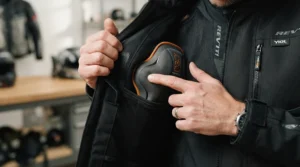
The Alpinestars Missile V3 Airflow is the dressed-for-the-podium option. It uses bovine race leather with perforations across the front, back, forearms and biceps, plus stretch panels and seamless DFS shoulder caps. Armour is Nucleon PLASMA Pro Level 2 at the shoulders and elbows, and it’s Tech-Air ready.
Level 2 matters more than the label suggests. Level 2 armour must transmit roughly half the impact force of Level 1 in testing, which is a genuine safety step. The earlier Missile V2 used 1.3 mm cowhide, but V3 listings I found don’t state thickness, so check before buying. The race fit and pre-curved arms are built for a tucked riding position; if you sit upright on a cruiser or adventure bike, this cut may feel cramped.
I could not verify any customer reviews for the V3. Its predecessor’s retailer notes say the V2 runs small and suggest sizing up, which is a reasonable thing to keep in mind.
Pros:
- ✅ Level 2 PLASMA Pro armour at shoulders and elbows
- ✅ Extensive perforations, including forearms and biceps
- ✅ Tech-Air compatible
Cons:
- ❌ Race fit isn’t ideal for upright commuting
- ❌ Premium price and no rain protection
Price range: around C$1,000-C$1,400 at the time of research. It’s worth it only if you ride a sport bike on dry roads.
7. Dainese Super Speed 5 — solid or perforated cowhide with AA and Level 2
The Dainese Super Speed 5 uses D-skin 2.0 cowhide with S1 bielastic and ARROW XF stretch fabrics and an aerodynamic hump. It’s CE certified to EN 17092 as a Class AA garment. Protection includes Level 2 composite elbow protectors, Level 2 Pro-Armor shoulder protectors, aluminum shoulder plates and elbow sliders.
The back protector is sold separately, but the pocket accepts several Dainese options. The jacket is also compatible with Dainese’s Smart Air airbag system and has a full jacket-to-pant zip. Here’s the part that matters for spring buyers: it’s sold in both a standard and a perforated version. That makes it a clean case study for the perforated vs full-grain leather decision, because the real choice is vented or unvented. The solid version suits early spring, with layers underneath, and the perforated version suits May onward.
No customer reviews turned up for the 5. Reviewers of the previous Super Speed 4 on a UK retailer praised the stretch fabric and build quality over a rival brand. They also called it pricey and noted that back and chest protectors cost extra.
Pros:
- ✅ AA class with Level 2 shoulder and elbow armour
- ✅ Choice of solid or perforated version
- ✅ Aluminum shoulder plates and elbow sliders
Cons:
- ❌ High cost, with back protector extra
- ❌ Sporty cut and aero hump suit tucked riding best
Price range: around C$1,300-C$1,500 at the time of research.
Side-by-Side: All Seven Jackets
| Jacket | Type | Certification / armour | Weather handling | Price range (CAD) | Best For |
|---|---|---|---|---|---|
| Joe Rocket Atomic 5.0 | Textile | CE shoulder/elbow armour; class not stated; non-CE spine pad | Waterproof-treated shell, thermal liner | C$230-C$290 | Budget commuters |
| REV’IT! Eclipse 2 | Textile mesh | Class A; Level 1 armour | Ventilation only, no waterproofing | C$180-C$280 | Warm-day commuting |
| Alpinestars Andes v3 Drystar | Textile | Class A; Level 1 armour | Fixed Drystar membrane, thermal liner | C$370-C$430 | Wet-region daily riders |
| Klim Carlsbad | Textile | AA; Level 2 armour | Gore-Tex shell, six vents | C$1,100-C$1,300 | Touring in mixed weather |
| Alpinestars Faster V2 Airflow | Perforated leather | AA; Level 1 armour | Vented, not rainproof | C$700-C$900 | Sport riding on dry days |
| Alpinestars Missile V3 Airflow | Perforated leather | Level 2 armour | Vented, not rainproof | C$1,000-C$1,400 | Track-day crossover |
| Dainese Super Speed 5 | Cowhide leather (perforated version also sold) | AA; Level 2 armour | Solid version blocks wind | C$1,300-C$1,500 | Protection-first sport riders |
I’ve left out star ratings on purpose. The verified review pools for several of these jackets are too thin to rank fairly, and a made-up score would be worse than none. The table does show clear tiers. The Joe Rocket Atomic 5.0 and REV’IT! Eclipse 2 cover budget textile, the Alpinestars Andes v3 Drystar is the mid-range rain specialist, and the Klim Carlsbad is the premium all-weather option. In leather, the Alpinestars Faster V2 Airflow is the value entry, while the Alpinestars Missile V3 Airflow and Dainese Super Speed 5 are for riders who put protection above comfort.
Practical Usage Guide: Setting Up Your Spring Jacket in the First 30 Days
Buying the jacket is the easy part. Making it work is where the value hides, and where most listings go quiet.
Day one: the fit test. Put the jacket on and take the riding position, arms forward and shoulders rounded. Canadian insurer Allstate’s rider blog suggests sleeves should cover your wrists and the lower back should stay covered. Then check the armour. Elbow protectors should sit on your elbows, not drift toward your forearms when you bend. If they wander, tighten the adjusters or size down.
Week one: layer for cold mornings. Start with a thin merino or synthetic base layer, add the thermal liner, and keep the vents closed. Open them as you warm up, not before. Lower armour pockets can let cold air in, so check the fit around the waist.
Week two: maintenance. Textile jackets are easy to wash according to the label. If water stops beading on the shell, re-treat the water repellency. Always dry a waterproof membrane liner fully before storing it. For leather, wipe off road grime and condition it before and after the season. Never dry it on a radiator.
Weeks three and four: stress-test the setup. Take a short loop in light rain before a long trip. Check where water pools: collar, cuffs, zip flaps. This is also the moment to decide whether you need motorcycle rain gear jacket and pants on top.
The most common first-month mistake is wearing the thermal liner on a mild afternoon and slowly cooking.
Real-World Scenarios: Matching a Jacket to Your Spring Ride
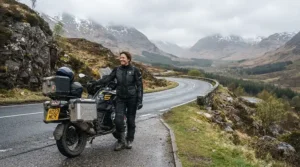
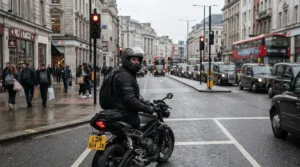
The Toronto commuter. Twenty-two kilometres each way, four days a week, budget around C$300 for the jacket. Based on the spec comparison, the Joe Rocket Atomic 5.0 with a separate CE back protector and packable rain pants is the most sensible kit. If most of your commutes are warm and dry, the REV’IT! Eclipse 2 is cooler, but you’ll need a waterproof layer for wet days.
The weekend tourer. Think 300 km days between Vancouver Island and the Okanagan, with drizzle at the coast and sun on the passes. With a budget near C$1,200, the Klim Carlsbad is the logical choice. If you want to spend less, the Alpinestars Andes v3 Drystar keeps you dry at roughly a third of the price, with less protection and no airflow of the Klim’s calibre.
The dry-weather sport rider. Sunday mornings in the Alberta foothills, budget around C$1,300. The Dainese Super Speed 5 in the solid version suits early April, and the perforated version suits May. The Alpinestars Missile V3 Airflow is the alternative if you want the Level 2 PLASMA Pro armour and airbag readiness.
The stakes are real. The RCMP, citing Transport Canada, notes that motorcycles make up about three per cent of registered vehicles but are involved in roughly 10 per cent of road fatalities.
✨ Don’t Miss These Exclusive Deals!
🔍 Take your spring riding kit to the next level with these carefully selected jackets. Click on any highlighted item to check current pricing and availability. These picks will help you build the confident, comfortable season you’ve been planning!
How to Choose: Textile vs Leather Motorcycle Jacket for Spring Riding
Short answer first: choose textile if you ride in the rain, commute daily or want one jacket for three seasons. Choose leather if you ride dry roads on weekends, prioritize slide resistance and want a jacket that ages well. For everything in between, work through these seven steps.
- Name your worst ride, not your average one. The coldest, wettest day you’ll realistically ride determines whether you need a membrane.
- Look for the EN 17092 class label. AA and above signals serious protection, while Class A suits lighter urban riding.
- Check the armour level, and the back. Level 2 is worth the money, and many jackets include only a thin foam spine pad.
- Pick a weather system. Decide between a fixed membrane, a removable liner, treated shell or a separate rain suit.
- Fit it in the riding position. Try it with your gloves on and your arms extended.
- Weigh ventilation against layering. Mesh and perforations need thermal layers on cold mornings.
- Budget for the whole kit. Back protector, waterproof motorcycle gloves and rain pants can add several hundred dollars.
Textile vs Leather Motorcycle Jacket for Spring Riding: Temperature, Rain and Slide Reality
Strip away the marketing and the textile vs leather motorcycle jacket for spring riding question comes down to which mood of spring you expect. Leather is naturally windproof and does well in the cool, dry stretches of early April. Perforated leather is excellent in warm weather and a poor performer once it rains. Textile jackets win by accumulation: a thermal liner for cold mornings, vents for midday, and a membrane for the sky’s bad days.
On slide resistance, leather’s reputation is deserved. Enthusiast writers note that full-grain leather’s abrasion resistance still hasn’t been fully matched by man-made fabrics. But modern certification narrows the gap. A Class AA textile jacket like the Klim Carlsbad and a Class AA leather jacket like the Dainese Super Speed 5 have both passed the same standard, though the leather version is likely to be less flexible and warmer.
The honest trade is protection versus versatility. For most Canadian riders on mixed spring roads, a certified AA textile jacket is the more practical daily tool. A leather jacket is the specialist you choose for dry-weather days and sport bikes.
Perforated vs Full-Grain Leather: What Actually Changes
Perforated vs full-grain leather sounds like a fork in the road, but it’s really two different questions. Full-grain describes the hide layer: the outermost, densest and most durable part of the skin. Perforation describes the holes punched in it for airflow. A jacket can be both, as Alpinestars’ Missile line shows with its full-grain bovine leather and large perforated panels.
So the real choice is vented or unvented. Perforated panels cut heat on warm days, and one enthusiast writer reports that perforation, done the way it is on MotoGP race suits, doesn’t measurably compromise abrasion resistance. That’s one opinion, not a lab result, so rely on the certification label instead. The Dainese Super Speed 5, sold in both versions and rated AA, is a good example.
The downside is weather. Perforated leather lets wind and water straight through, and another reviewer found it never quite as cool as mesh textile. In early spring, a solid jacket plus a base layer is more comfortable. By late May, perforation earns its keep. If you want one leather jacket for the full season, the perforated vs full-grain leather decision favours solid for April and perforated for everything after.
CE-Rated Armour and EN 17092: Reading the Labels Before You Buy
Two different labels matter. The garment carries an EN 17092 class, and the armour carries an EN 1621 level. Centexbel’s overview of EN 17092 describes five classes: AAA at the top, AA for touring-type riding, A for lighter use, and B and C as additional levels. Class B offers abrasion resistance without armour, and Class C is armour holders only.
CE-rated armour comes in Level 1 and Level 2. Level 2 must transmit roughly half the force of Level 1 in testing. A listing that says “Level 2 jacket” refers to the armour, not the garment’s abrasion performance, which is why a Class A jacket with Level 2 armour isn’t the same as a Class AA jacket. Check both.
Back protection deserves its own line. The REV’IT! Eclipse 2, Alpinestars Andes v3 Drystar, Alpinestars Faster V2 Airflow and Dainese Super Speed 5 all accept back protectors sold separately, and the Joe Rocket Atomic 5.0 ships with a non-CE spine pad. Only the Klim Carlsbad lists a Level 2 back pad in its armour system.
In Canada, protective clothing is recommended rather than mandated, according to RCMP and provincial guidance, so the CE label is your best independent evidence.
Waterproof Membrane Liner: Drop Liner, Fixed Membrane or Laminate?
Not all waterproofing is built the same way, and the differences matter on a cold, wet commute.
| Approach | How it works | Strength | Weakness | Best For |
|---|---|---|---|---|
| Treated shell + waterproof zips (Joe Rocket Atomic 5.0) | Water-resistant fabric and sealed vents | Light, simple, cheaper | Less protection in sustained rain | Showers and budget riders |
| Fixed membrane (Alpinestars Andes v3 Drystar) | Membrane sewn between shell and lining | Always present; affordable | Can limit ventilation | Wet-region commuters |
| Gore-Tex shell (Klim Carlsbad) | Branded membrane system; confirm liner construction on the listing | Proven performance | Premium price | All-weather touring |
| Laminated membrane | Membrane bonded to outer fabric | Outer layer dries quickly | Less breathable; costly | Frequent wet riding |
| Separate overgarment | Rain suit worn on top | Packable; use-as-needed | Extra item to carry | Mixed weather, any jacket |
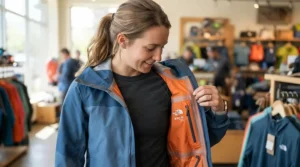
The key distinction is where the membrane sits. A drop liner hangs separately inside the jacket, and a laminate is bonded to the outer fabric. Laminated shells dry faster and let vents work better, but they cost more and breathe less on their own.
A good waterproof membrane liner only works if the jacket’s other weak points (collar, zip flap and cuffs) are sealed. Whatever system you choose, check how it handles the main zip and how the cuffs interact with your gloves.
Motorcycle Rain Gear Jacket and Pants: When the Jacket Alone Isn’t Enough
Even the best waterproof jacket protects only half of you. Rain runs off the jacket onto your lap and seat, and your legs soak through in a surprisingly short time. That’s why Allstate’s Canadian rider blog advises carrying rain gear and non-slip boot covers whenever you head out.
Motorcycle rain gear jacket and pants sets pack small and go on over your riding kit, which is useful for jackets without membranes. A REV’IT! Eclipse 2 plus a packable rain suit gives you a cool summer jacket and a wet-weather option for less than a dedicated waterproof jacket. For jackets with membranes, like the Alpinestars Andes v3 Drystar, a pair of waterproof pants completes the system.
The practical test is accessibility. Rain pants that can’t go on over boots in a parking lot don’t get used. Look for full-length leg zips and a high-vis colour, and store the set where you’ll remember to grab it.
If you commute daily, a motorcycle rain gear jacket and pants combination is arguably the best first purchase before upgrading to a more expensive jacket.
Waterproof Motorcycle Gloves: The Spring Essential People Forget
Numb hands in 4°C air are a bigger safety problem than most riders admit, because poor feeling in the controls slows your reactions. In spring, waterproof motorcycle gloves are as important as the jacket.
Look for a built-in waterproof membrane, a wrist closure and a gauntlet cuff long enough to go over the jacket sleeve. Jackets with adjustable cuffs, like the Joe Rocket Atomic 5.0 with its neoprene cuff design, interact differently with gloves than leather jackets with zip cuffs. Try the combination in the shop. Centexbel’s overview notes that protective gloves are tested to EN 13594:2015, which covers abrasion, impact and sizing among other properties, so look for that label.
Wet leather gloves dry slowly and can leave your hands cold, so many riders keep two pairs: waterproof for cold wet days and ventilated for warm ones. Waterproof gloves with insulation are the safer default for April. The waterproof motorcycle gloves you wear in spring should fit snugly over your base layer, without squeezing your fingers.
Long-Term Cost & Maintenance: What Each Jacket Really Costs You
Price tags lie by omission. Consider a hypothetical: a C$1,200 jacket used for eight seasons costs about C$150 a season, while a C$250 jacket replaced every three seasons costs about C$83. That’s an illustration, not a lifespan claim, but it shows why the cheapest jacket isn’t always the cheapest to own.
Extras change the maths. The Dainese Super Speed 5, Alpinestars Faster V2 Airflow and REV’IT! Eclipse 2 all need a separate back protector, and airbag compatibility (Tech-Air on the Alpinestars models, Smart Air on the Dainese) adds a further system cost.
Maintenance differs too. Textile jackets wash easily and need occasional re-proofing. Leather needs conditioner and careful drying but ages well. Armour also needs attention after a crash, because abrasion damage and armour compression aren’t always visible. Replace a jacket’s protection after any significant impact.
FAQ
❓ Is a textile or leather jacket better for cold spring mornings?
❓ Are perforated leather jackets waterproof?
❓ Do I need Level 2 armour, or is Level 1 enough?
❓ Can I use an overjacket instead of buying a waterproof jacket?
❓ How much should I spend on a first spring riding jacket in Canada?
Conclusion
So, textile vs leather motorcycle jacket for spring riding: who wins? For most Canadian riders on mixed roads, the answer is a certified textile jacket with a proper weather system. The Joe Rocket Atomic 5.0 is the budget route, the Alpinestars Andes v3 Drystar is the sensible wet-weather pick, and the Klim Carlsbad is the premium all-rounder. For dry-weather sport riding, leather earns its place. The Alpinestars Faster V2 Airflow is the value entry, while the Alpinestars Missile V3 Airflow and Dainese Super Speed 5 are for protection-first riders. The REV’IT! Eclipse 2 rounds out the list as a summer mesh option.
Whatever you buy, remember the supporting cast: CE-rated armour with a real back protector, waterproof motorcycle gloves, and motorcycle rain gear jacket and pants for the days the sky turns on you. Check the EN 17092 class, size for the riding position, and buy the jacket for your worst ride, not your best one.
Don’t forget your head. Helmet rules differ by province, and British Columbia’s rider safety page explains certification labels clearly. Shopping in autumn gives you time to size carefully before spring arrives.
✨ Ready to gear up?
🔍 Click any highlighted jacket above to check current pricing and availability, and ride into spring a little safer, drier and a lot more comfortable! 🏍️
Recommended for You
- Motorcycle Cover For Outdoor Winter Storage: 7 Best Picks (2026)
- Heated Vest Vs Heated Jacket Liner For Motorcycle Riding 2026
- Heated Grips For Motorcycles: 7 Best Picks For Canada (2026)
Disclaimer: This article contains affiliate links. As an Amazon Associate, I earn from qualifying purchases. If you purchase products through these links, we may earn a small commission at no additional cost to you.
✨ Found this helpful? Share it with your friends! 💬🤗
