
In This Article
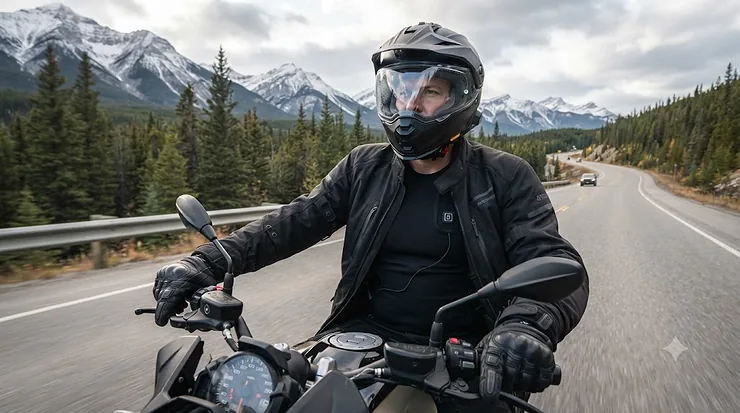
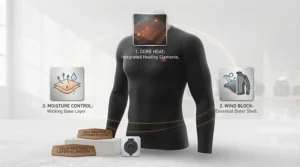
Your hands are fine. Your boots are fine. It’s your core that quits first, and once your torso goes cold, everything downstream — grip strength, reaction time, patience for the last 20 minutes of a commute — goes with it. A heated undershirt for motorcycle riding winter is a thin, battery- or bike-powered base layer with built-in heating panels across the chest and back, worn directly under your jacket so warmth sits against the skin instead of getting lost in bulky insulation. Riders reach for one specifically because it solves the problem regular thermals can’t: thermals trap the heat you make, a heated undershirt actively adds more.
This guide walks through how to choose a heated undershirt for motorcycle riding winter without overspending on features you’ll never use or underspending on a garment that dies at the first red light of your commute. You’ll get seven real products spanning budget to premium, a breakdown of 7V versus 12V wiring, a sizing framework that actually accounts for what you layer over top, and a handful of scenarios matched to specific riders. None of this is theoretical — every product, price range, and spec below comes from manufacturer documentation and aggregated rider feedback, not guesswork. Whether you’re commuting through a Calgary cold snap or stretching your Ontario riding season into November, the right heated base layer buys you weeks, sometimes months, of extra saddle time. According to Health Canada’s guidance on cold-weather exposure, dressing in insulating layers with a wind-resistant shell is one of the simplest ways to reduce cold-related risk — a heated undershirt just adds an active layer to that same logic.
Quick Comparison Table
Before the deep dive, here’s the shape of the market. Battery-powered options (7V/5V) prioritize portability and off-bike use; wired 12V systems trade convenience for essentially unlimited runtime on longer rides.
| Product | Power Type | Runtime (approx.) | Best For |
|---|---|---|---|
| Gerbing 7V Battery Heated Base Layer Shirt | 7V rechargeable | Up to several hours | Best all-round warmth |
| Warm & Safe Heat Layer Shirt (HLS) | 7.4V battery or 12V bike | 3–7 hrs (battery mode) | Serious cold, long tours |
| Venture Heat Nomad 9W Heated Baselayer Shirt | USB rechargeable | Up to 6.5 hrs | All-day flexible comfort |
| Milwaukee Heated WORKSKIN Midweight Base Layer | USB (RedLithium) | Up to 3 hrs | Fast heat, work/commute |
| Mobile Warming Longmen Heated Base Layer Shirt | 7.4V rechargeable | Up to 10 hrs | Longest runtime, thin fit |
| ActionHeat 5V Men’s Heated Base Layer Shirt | 5V power bank | 2–4.5+ hrs | Budget entry point |
| Volt Heat 7V Tactical Heated Base Layer Shirt | 7V battery | Up to 8 hrs | Lesser-known value pick |
Looking at the table, the split isn’t really about who runs “hottest” — it’s about how you ride. Mobile Warming Longmen Heated Base Layer Shirt wins on sheer endurance for all-day tours, while Milwaukee Heated WORKSKIN Midweight Base Layer is built for riders who need heat now, not in ten minutes. Budget-conscious commuters should note that the ActionHeat 5V Men’s Heated Base Layer Shirt and Volt Heat 7V Tactical Heated Base Layer Shirt deliver real warmth for meaningfully less than the premium tier, provided you accept a shorter or more localized heat zone.
💬 Just one click — help others make better buying decisions too!😊
Top 7 Best Heated Motorcycle Undershirts: Expert Review & Analysis
Picking a heated thermal shirt for motorcycle winter riding isn’t about finding “the best” in isolation — it’s about matching heating zones, power source, and runtime to how cold your commute actually gets and how long you’re in the saddle. These seven cover budget through premium, battery-only through hybrid wiring, and single-zone through full torso coverage.
1. Gerbing 7V Battery Heated Base Layer Shirt — best all-round Microwire warmth
Gerbing has built heated motorcycle gear since 1975, and the patented Microwire heating panels on the chest and upper back are the reason this shirt keeps showing up on recommendation lists five decades later. The touch-button chest control lets you toggle through heat settings without fumbling at gloved fingers, and the stretch fabric is genuinely built to move with a riding position rather than bunch up under a tank bag strap. Based on the spec comparison with lower-cost competitors, the Microwire system’s advantage is even heat distribution — thin wire elements spread warmth rather than concentrating it in one hot spot that cooks your sternum while your shoulder blades stay cold.
This is a battery-only 7V garment, not a bike-wired system, so don’t pair it expecting a 12V connector kit to help — reviewers on multiple retail platforms specifically flag this mix-up as an “expensive mistake” worth avoiding before you buy. Reviewers consistently report strong warmth in the high-teens Fahrenheit (roughly -8°C) range with a couple of layers on top, and machine washability (battery removed) is a genuine convenience over pricier hybrid systems.
Pros:
- ✅ Even heat spread via proven Microwire technology
- ✅ Touch-button control, easy to operate with gloves nearby
- ✅ Machine washable once the battery is removed
Cons:
- ❌ Battery-only — no 12V bike-wired option on this model
- ❌ Heating zones limited to chest and upper back, not full torso
Priced in the C$210-C$260 range at the time of research, the Gerbing 7V Battery Heated Base Layer Shirt earns its spot as the default recommendation for riders who want proven tech without stepping into 12V hybrid territory.
2. Warm & Safe Heat Layer Shirt (HLS) — most heat zones for serious cold
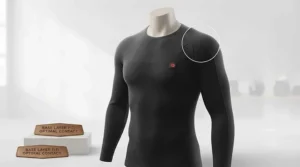
If your commute regularly dips below -10°C, the Warm & Safe Heat Layer Shirt (HLS) is built for exactly that problem. Seven heating zones — chest, both upper arms, neck, upper back, and lower back — cover far more real estate than a typical two-zone competitor, and the hybrid design lets you run it off a 7.4V portable battery when you’re off the bike or switch to a 12V DC connection sourced from the motorcycle itself for unlimited runtime on longer rides. What most buyers overlook about hybrid systems like this is that the flexibility isn’t just convenience — it’s a genuine cost-per-ride advantage over years of ownership, since you’re not burning through disposable battery cycles on every trip.
The optional Heat-troller remote control (adjustable from 3% to 100% power) is what elevates this from “heated shirt” to “climate system,” letting you dial in exact output rather than choosing between three fixed settings. Reviewers note the wiring is rated to -40°C, which matters more than it sounds — cheaper connectors turn brittle and crack in genuine Canadian winter cold.
Pros:
- ✅ Seven heat zones cover neck, arms, and full back
- ✅ Hybrid 7.4V battery or 12V bike power
- ✅ Wiring rated to -40°C for genuine cold-climate durability
Cons:
- ❌ Premium pricing puts it well above entry-level competitors
- ❌ Full functionality requires the separately sold Heat-troller controller
At around C$400-C$550 depending on the battery/controller configuration you choose, this is the investment pick — the one riders buy once and keep for a decade of Canadian winters rather than replacing every couple of seasons.
3. Venture Heat Nomad 9W Heated Baselayer Shirt — best 4-way stretch comfort
Venture Heat markets this as the only heated base layer built to move like an actual base layer, and the 4-way stretch construction backs that up on paper — most competitors prioritize heating-panel placement over fabric mechanics, leaving a stiffer garment underneath your jacket. The Nomad’s carbon fibre heating targets the shoulders, spine, and abdomen with a 9-watt system powered by a USB-rechargeable battery good for up to 6.5 hours.
Here’s what the spec sheet won’t tell you, but user reports suggest: the button placement matters as much as the wattage. Earlier VentureHeat base layer models drew complaints about a hard-to-reach waist-mounted control button hidden under layers — the Nomad’s redesigned layout addresses exactly that friction point. The moisture-wicking fabric also means this doubles reasonably well as a non-heated thermal layer on milder days when you just want the stretch and warmth retention without draining the battery.
Pros:
- ✅ Genuine 4-way stretch fabric, moves with riding posture
- ✅ Carbon fibre heating across shoulders, spine, and abdomen
- ✅ Doubles as a comfortable non-heated thermal on milder days
Cons:
- ❌ 6.5-hour runtime trails hybrid and longer-runtime competitors
- ❌ USB charging cord required — no quick-swap battery pack included
Expect to pay in the C$170-C$220 range, positioning the Venture Heat Nomad 9W Heated Baselayer Shirt squarely as the mid-range comfort-first pick.
4. Milwaukee Heated WORKSKIN Midweight Base Layer — fastest heat-up for commuters
Milwaukee built this for jobsite workers, not motorcyclists specifically, but the spec sheet reads like it was designed for a cold morning commute anyway. The Quick-Heat function reaches your selected temperature roughly three times faster than the brand’s earlier heating tech, which matters enormously if your ride to work is only 20 minutes long — a shirt that takes ten minutes to warm up is only useful for half your commute. The RedLithium USB battery is notably smaller than the bulky 12V packs found on some competitors, about the size of a large AA battery, which keeps the whole system genuinely low-profile under a jacket.
Reviewers consistently report the double-lined polyester body and fleece-lined arms provide meaningful warmth even before the heat is switched on, and the raglan sleeve design avoids the shoulder-seam bunching that shows up on cheaper competitors. On the practical side, the kit ships complete — battery, controller/charger, and micro-USB cable — so there’s no scrambling for a compatible charger the week you actually need it.
Pros:
- ✅ Quick-Heat reaches temperature roughly 3x faster
- ✅ Compact RedLithium USB battery, low-profile fit
- ✅ Complete kit included — battery, charger, and cable
Cons:
- ❌ Two heat settings only, less granular than premium competitors
- ❌ Runtime tops out around 3 hours on a charge
At around C$180-C$210, this sits at the intersection of work-gear durability and commuter practicality — check current price and availability, as Milwaukee rotates kit configurations by season.
5. Mobile Warming Longmen Heated Base Layer Shirt — longest runtime under a jacket
For riders doing genuinely long days in the saddle, runtime beats raw wattage, and this is where the Mobile Warming Longmen Heated Base Layer Shirt separates itself from the pack — up to ten hours of heat from a single 7.4V 2.2Ah lithium-ion battery. The fabric is deliberately thin and slightly slippery, engineered specifically to slide easily under a motorcycle jacket even when a factory thermal liner is still installed, which solves a genuine layering headache many riders don’t think about until they’re already zipped in and sweating trying to adjust something.
On paper this means less peak heat than a system pushing more watts into fewer zones, and reviewers do describe the warmth as comfortable rather than intense — this isn’t the shirt for -25°C days on its own. One notable point worth flagging honestly: the manufacturer’s own care instructions advise against wearing it directly against bare skin, recommending a thin undershirt beneath it instead, which is worth knowing before you assume it slots in as your innermost layer.
Pros:
- ✅ Up to 10 hours of runtime, longest in this lineup
- ✅ Thin, slippery fabric slides easily under existing jacket liners
- ✅ Includes both battery and charger in the box
Cons:
- ❌ Heat output is comfortable rather than intense on its own
- ❌ Manufacturer recommends an undershirt beneath it, not bare skin
Priced around C$180-C$210, the Mobile Warming Longmen Heated Base Layer Shirt is the pick for riders whose problem is duration, not intensity.
6. ActionHeat 5V Men’s Heated Base Layer Shirt — best budget entry point
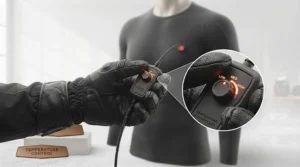
Not everyone needs a $400 heated system to survive a Canadian winter commute, and the ActionHeat 5V Men’s Heated Base Layer Shirt is proof of that. Three heat settings top out around 130°F (roughly 54°C) for 2+ hours on high, stretching to 4.5+ hours on low, powered by an included 6,000mAh power bank that doubles as a phone charger in a pinch — a genuinely clever bit of cross-utility most competitors skip. The FAR infrared heating panels sit at the chest and upper back, the same real estate as pricier competitors, just without the carbon fibre branding premium attached.
Reviewers consistently report strong satisfaction for the price point, with one common thread: the heating coils sit slightly higher on the torso than some buyers expect from the product photos, leaving the lower chest and stomach area unheated. That’s a real trade-off worth weighing, not a dealbreaker — for shoulder-and-upper-back cold, which is where most riders actually feel wind chill first, the panel placement works fine.
Pros:
- ✅ Lowest price point of any tested product in this guide
- ✅ Power bank doubles as a phone charger
- ✅ Ghost Mode disables the control-button LED for discreet wear
Cons:
- ❌ Heating coils sit higher on the torso than some buyers expect
- ❌ Fabric and stitching quality trail premium competitors over time
At roughly C$140-C$220 depending on retailer promotions, this is the shirt to buy if you want to try heated riding gear before committing to a premium system.
7. Volt Heat 7V Tactical Heated Base Layer Shirt — lesser-known Zero Layer alternative
Volt Heat doesn’t have Gerbing’s five-decade brand recognition, but the patented Zero Layer heating technology deserves more attention from Canadian riders than it currently gets. Instead of stitching heating wire between fabric layers the way most competitors do, Zero Layer bonds the heating system directly to the shell fabric using a tape-sealing process — the practical upshot, according to the manufacturer’s own technical description, is more direct heat transfer with less bulk between the element and your body. Four 7V heat panels concentrate warmth down the centre of the back rather than spreading thin across the whole torso.
Here’s what the spec sheet won’t tell you, but rider feedback suggests: the back-only heating layout means your chest can still feel the wind on an unfaired bike, so riders running an open-face setup or a bike without wind protection may want to pair this with a wind-resistant base layer up front. Riders report solid results down to around 5°C under a mid-weight jacket with an additional thermal layer, with roughly three hours of runtime at half power per charge — enough for a standard two-battery rotation on longer days.
Pros:
- ✅ Zero Layer bonding gives direct-to-skin heat with less bulk
- ✅ Four-panel back heating concentrates warmth efficiently
- ✅ Fits comfortably under a standard jacket without added stiffness
Cons:
- ❌ Chest and arms have no heating coverage, back-only design
- ❌ Less brand recognition means a smaller pool of long-term reviews
Priced around C$140-C$190, the Volt Heat 7V Tactical Heated Base Layer Shirt rewards riders willing to look past the marquee names for genuinely solid engineering.
Setting Up and Living With Your Heated Undershirt
Getting a heated undershirt working properly is less about the shirt and more about the thirty days after you unbox it. First-use mistakes are almost never about the garment failing — they’re about riders skipping steps that seem optional but aren’t.
Charge the battery fully before the first ride, even if the packaging suggests it arrives partially charged; lithium cells calibrate more accurately after a full initial cycle, and you’ll get a more honest runtime reading going forward. Fit the shirt snugly, not loosely — heating panels need skin or near-skin contact to transfer warmth efficiently, and a baggy fit lets heat escape into the air gap instead of into you. During week one, test all heat settings at home before you’re relying on them mid-commute; it’s far easier to diagnose a stuck button or unresponsive zone in your driveway than at a stoplight in traffic.
A common mistake in the first month is running the highest setting constantly out of excitement, which drains batteries faster and, on some cheaper carbon-fibre systems, accelerates element wear over repeated cycles. Medium settings paired with a wind-resistant outer layer typically deliver more consistent warmth over a full ride than max heat with no outer shell. For maintenance, remove the battery before every wash, use a gentle cycle, and air-dry rather than tumble-dry — heating elements and dryer heat are not friends. Riders who treat the battery like a phone battery — avoiding full depletion, storing it at partial charge over the off-season — consistently report longer garment lifespans than those who run it flat every single ride.
Real Riders, Real Cold: Three Winter Riding Scenarios
The daily commuter. Picture a rider covering 15 km each way through a Toronto or Winnipeg winter, five days a week, on a bike with a full fairing and windscreen. Runtime matters less here than heat-up speed, since the ride is short and predictable. The Milwaukee Heated WORKSKIN Midweight Base Layer, with its Quick-Heat function, suits this profile well — warmth arrives before the ride is half over, and the compact battery tucks away without adding bulk under a work-appropriate jacket.
The weekend tourer. This rider is logging 300+ km days through the Rockies or the Maritimes, off the bike for gas and coffee stops, back on for hours at a stretch. Battery swaps and hybrid power matter more than they do for a commuter. The Warm & Safe Heat Layer Shirt (HLS), switchable between portable battery and bike-sourced 12V power, matches this use case directly — you’re never stuck choosing between “cold” and “plugged in.”
The budget-conscious first-timer. Someone extending their riding season for the first time, unsure whether heated gear is worth the investment before committing serious money. The ActionHeat 5V Men’s Heated Base Layer Shirt is the sensible entry point — real heat, real coverage of the areas that matter most, at a price that doesn’t sting if it turns out heated gear isn’t for them after all.
Cold Weather Riding Tips: Problems Riders Face and How to Solve Them
Problem: Fogging visor from breath and body heat. Solution: pair your heated undershirt with a proper anti-fog visor insert or pinlock system rather than cracking the visor open, which lets in exactly the cold air you’re trying to avoid.
Problem: Cold hands despite a warm torso. Solution: heated grips or heated gloves address this separately — a torso-focused undershirt won’t solve numb fingers, since blood flow to extremities drops first as the body prioritizes core warmth.
Problem: Battery dies mid-ride. Solution: carry a spare battery on longer trips, or choose a hybrid 12V-capable garment for rides where you’re regularly out longer than the battery’s rated runtime.
Problem: Sweating at stoplights, then chilling on the highway. Solution: use a mid-range heat setting rather than max, and layer a breathable shell over the undershirt so moisture can escape rather than sitting against your skin and cooling you down once you’re moving again.
Problem: Not sure when it’s genuinely too cold to ride. Solution: check the wind chill, not just the air temperature — the Canada Safety Council’s guide to cold-weather risk notes that uncovered skin can suffer cold injury far faster than most riders expect once wind chill drops meaningfully below freezing, heated gear or not.
How to Choose a Heated Undershirt for Motorcycle Riding Winter
Cutting straight to it: choosing the right heated undershirt comes down to matching seven variables to your actual riding pattern, not the flashiest spec on a product page.
- Determine your typical ride length. Short commutes favour fast heat-up (Milwaukee-style Quick-Heat); long tours favour high runtime or hybrid power (Warm & Safe, Mobile Warming).
- Check heating zone coverage. Chest-and-back coverage suits most riders; neck and arm zones matter more if your jacket has poor collar sealing or you ride an unfaired bike.
- Match power source to your bike setup. Battery-only garments work on any bike; 12V-capable hybrids need a wired connection point, which some cruisers and older bikes lack without an aftermarket harness.
- Weigh runtime against your longest realistic ride. Buy for your longest regular ride, not your average one — a shirt that dies halfway through your monthly long ride isn’t doing its job.
- Confirm size against your full layering system. Heated undershirts fit snug by design; verify sizing against what you’ll wear over top, not just your everyday shirt size.
- Compare price against expected winters of use. A pricier hybrid system that lasts a decade often beats replacing a cheaper battery-only shirt every two winters.
- Read aggregated review sentiment, not just the star rating. Look specifically for recurring complaints about button placement, panel location, and battery life — these patterns tell you more than an average score.
Heated Undershirt Sizing Guide
Sizing a heated thermal shirt wrong is one of the most common — and most avoidable — mistakes riders make. Unlike a regular base layer, a heated undershirt needs to sit close enough to the skin for the heating panels to transfer warmth efficiently, but not so tight that it restricts the arm movement you need for clutch and brake control.
Start with your chest measurement, not your usual shirt size — several manufacturers, including VentureHeat-family brands, size these garments closer to compression fits than casual wear, and a size that feels “generous” in a tape measurement often turns out correct once the stretch fabric is on. Sleeve length deserves attention too, particularly for taller riders; a heated undershirt with sleeves that ride up leaves a cold gap at the wrist right where jacket cuffs meet gloves. If you’re between sizes, size up rather than down when you plan to wear anything underneath the heated layer itself, and size to your measured chest when it’ll sit directly against skin.
Women-specific cuts, where available, typically adjust dart placement and heating-panel position for a different torso shape rather than simply scaling down a men’s pattern — worth seeking out specifically rather than assuming a smaller men’s size will fit the same way.
Motorcycle Heated Clothing Wiring: 7V, 12V, and USB Explained
Understanding wiring is where most first-time buyers get confused, and it’s genuinely the single biggest factor separating a satisfied customer from someone who returns a shirt within a week.
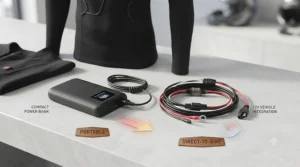
7V and 5V battery systems are self-contained — a rechargeable battery pack (lithium-ion, typically 2,000-10,000mAh) powers the garment independently of your motorcycle. These are portable, usable off the bike, and require no wiring modifications whatsoever, but they’re bound by whatever charge is in the battery when you leave the driveway.
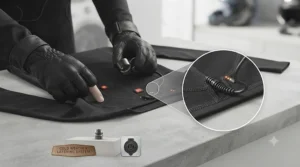
12V hybrid or bike-wired systems, like the Warm & Safe HLS in its 12V configuration, connect to your motorcycle’s electrical system through a fused battery harness, drawing power directly from the bike for effectively unlimited runtime. The trade-off is installation complexity — you’re running a harness to your battery terminals and typically adding a SAE-style connector to your wiring loom — plus the obvious catch that the garment stops heating the moment you shut off the engine.
USB-rechargeable systems, used by Milwaukee’s WORKSKIN line and several Venture Heat products, split the difference: rechargeable via any standard USB charger, which means no proprietary charging brick to lose, but still tethered to a battery’s finite capacity rather than the bike’s alternator. For most Canadian commuters riding shorter, predictable distances, a 7V or USB battery system covers the need without the installation hassle; touring riders logging serious daily mileage are the ones who genuinely benefit from wiring into the bike.
🔍 Take Your Winter Riding to the Next Level
Ready to stop dreading the first cold snap? Click through on any of the heated undershirts above to check current pricing and availability. A properly matched heated base layer is one of the cheapest ways to genuinely extend your riding season into real Canadian winter.
Common Mistakes When Buying a Heated Motorcycle Undershirt
The single most common mistake is buying based on wattage alone. A higher-wattage garment with poor panel placement can feel less warm in practice than a lower-wattage shirt with panels positioned exactly where wind chill hits hardest — the chest and upper back, not the stomach or lower ribs. Reviewers across multiple product lines flag this same pattern repeatedly: manufacturer marketing emphasizes power output, but panel location is what actually determines comfort on the road.
A second frequent error is ignoring the difference between “designed for motorcycling” and “designed for general outdoor cold,” then being surprised when a hunting- or hiking-oriented heated shirt doesn’t hold up to a riding position for hours at highway speed. Sitting posture, wind exposure at speed, and the compression of a jacket over top all behave differently than standing still in a deer stand. Third, buyers frequently skip checking whether a garment is battery-only or bike-wireable before purchasing a companion controller, leading to the “expensive mistake” scenario noted in reviews of the Gerbing shirt earlier in this guide — always confirm compatibility before adding accessories to the cart. Finally, riders often underestimate battery degradation over multiple winters; lithium batteries lose capacity over repeated charge cycles regardless of brand, so budgeting for an eventual replacement battery is smarter than assuming year-one runtime holds indefinitely.
Heated Thermal Shirt vs Heated Vest vs Heated Jacket Liner
| Garment Type | Coverage | Bulk Under Jacket | Best For |
|---|---|---|---|
| Heated Undershirt | Chest, back, sometimes arms/neck | Minimal | Daily commuters, layering flexibility |
| Heated Vest | Chest and back only, no arms | Low-moderate | Riders who run warm-armed already |
| Heated Jacket Liner | Full torso and arms, sometimes collar | Higher | Long tours, extreme cold, maximum coverage |
A heated undershirt wins on versatility — it slides under whatever jacket you already own, works as a stand-alone layer on mild days, and rarely adds noticeable bulk to your riding silhouette. A heated vest trades arm coverage for slightly simpler construction and often a lower price, which suits riders whose jackets already have good arm insulation. A heated jacket liner delivers the most total warmth and the most consistent coverage, but it’s a dedicated garment you’re committing space and budget to rather than a layer that pulls double duty in your everyday wardrobe. For most riders extending a shoulder-season commute into real winter, the undershirt strikes the best balance between warmth, cost, and flexibility; tourers facing sustained sub-zero exposure often end up owning both an undershirt and a liner, layered together.
Long-Term Cost & Maintenance: The Real 5-Winter Price Tag
| Cost Factor | Budget Tier (ActionHeat/Volt Heat) | Premium Tier (Warm & Safe) |
|---|---|---|
| Initial purchase | C$140-C$220 | C$400-C$550 |
| Replacement battery (est., per unit) | Lower cost, more frequent | Higher cost, less frequent |
| Expected garment lifespan | 2-4 winters | 5-8+ winters with care |
| Approx. cost per winter of use | Similar once averaged | Similar once averaged |
The table above tells a story that a single sticker price hides: a C$180 shirt replaced every two winters and a C$500 hybrid system replaced every seven winters can land at roughly the same annual cost. What actually separates them is capability, not value-for-money in isolation — the premium system delivers more heat zones and hybrid power over that same span, while the budget option keeps upfront cash outlay lower for riders unsure they’ll stick with heated gear long-term. Maintenance costs matter too: always remove the battery before washing, follow the manufacturer’s gentle-cycle instructions, and avoid high-heat drying, since heating elements degrade faster under thermal stress than the fabric around them does. For riders who split time between motorcycling and outdoor work, the Canadian Centre for Occupational Health and Safety’s cold-environment guidelines are a useful reference for how clothing insulation values should scale with both activity level and exposure time.
Safety, Certification & Canadian Winter Riding Rules
Heated apparel doesn’t replace protective riding gear, and Canadian helmet law is a useful reminder of that hierarchy: every province and territory requires a certified helmet meeting DOT, ECE, or Snell standards before you even get to the question of staying warm, as outlined in Alberta’s official motorcycle safety guidance. A heated undershirt is a comfort and endurance tool that sits underneath your actual protective jacket, gloves, and helmet, not a substitute for any of them.
Look for UL certification or equivalent safety testing on the battery and heating elements specifically — this matters more with heated apparel than with ordinary clothing, since you’re dealing with lithium cells and electrical components worn directly against the body. Check that wiring and connectors are rated for cold-temperature flexibility; connectors designed for room-temperature use can become brittle and crack in genuine sub-zero riding conditions, a failure point several premium brands specifically engineer against. Finally, remember that heated gear reduces the discomfort that causes riders to cut a ride short, but it doesn’t change the physics of wind chill on exposed skin — glove and helmet choices still carry the bulk of your cold-weather safety margin.
Frequently Asked Questions
❓ Can you wear a heated undershirt every day in winter?
❓ Do heated undershirts work under any motorcycle jacket?
❓ How long does a heated motorcycle undershirt battery last per charge?
❓ Is a heated undershirt better than heated grips for cold weather riding?
❓ Can I wash a heated motorcycle undershirt in a washing machine?
Conclusion
A heated undershirt for motorcycle riding winter isn’t a novelty gadget — it’s the single piece of gear most likely to add real weeks to your riding season without requiring a new jacket or a garage full of accessories. The right choice depends less on chasing the highest wattage number and more on matching runtime, heating zones, and power source to how you actually ride: short predictable commutes favour fast heat-up and simple battery systems, while long touring days reward hybrid power and higher heat-zone counts. Whether you land on the proven Microwire warmth of the Gerbing 7V Battery Heated Base Layer Shirt, the seven-zone coverage of the Warm & Safe Heat Layer Shirt (HLS), or the budget-friendly entry point of the ActionHeat 5V Men’s Heated Base Layer Shirt, the underlying principle is the same: warmth against the skin beats warmth you have to generate and trap yourself.
Layer it properly, size it to your actual riding setup rather than your everyday shirt size, and pair it with certified protective gear rather than treating it as a substitute for a proper jacket. Do that, and the first frost of the season stops being a deadline for parking the bike.
Recommended for You
- Heated Undershirt for Motorcycle Riding: 7 Top Picks for 2026
- 12V vs Battery Powered Heated Vest Motorcycle: 7 Picks 2026
- Heated Vest for Motorcycle Riding: 7 Winners for 2026
Disclaimer: This article contains affiliate links. As an Amazon Associate, I earn from qualifying purchases. If you purchase products through these links, we may earn a small commission at no additional cost to you.
✨ Found this helpful? Share it with your friends! 💬🤗
