
In This Article
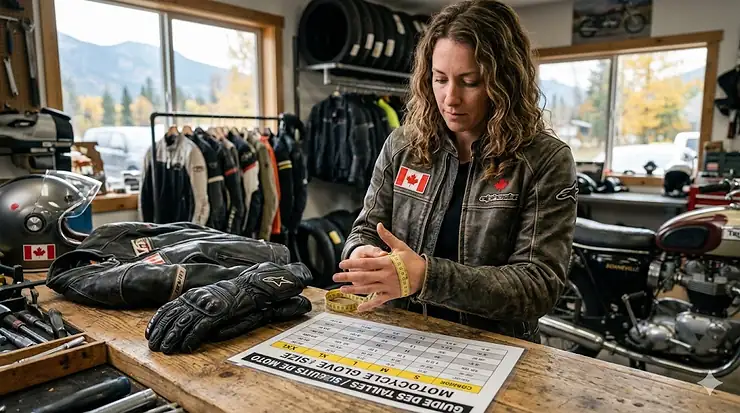
You’re gripping frozen handlebars on a crisp October morning in Alberta, and your gloves feel like they’re cutting off circulation. Or worse — they’re so loose that you’re fumbling with the clutch lever every time you shift. Here’s the truth most Canadian riders learn the hard way: motorcycle glove size isn’t just about comfort, it’s about survival.
What most buyers overlook is that glove sizing becomes even more critical when you’re riding through Canadian conditions. A glove that fits perfectly in a showroom might feel completely different when your hands swell slightly in summer heat or when you’re layering up for a spring ride through the Rockies. The measurement between “just right” and “dangerously wrong” is often less than 6 millimetres (0.25 inches) around your palm.
I’ve spent over a decade helping Canadian riders find their perfect fit, and the most common mistake I see is people choosing gloves based on their clothing size rather than their actual hand measurements. Your hand circumference — measured around the widest part of your palm, excluding your thumb — is the single most reliable indicator of glove fit. For context, the difference between a Medium and Large is typically only 12-25 millimetres (0.5-1 inch), yet that small variance determines whether you can feather your brake lever with precision or whether you’re fighting numb fingers after 30 minutes on the highway.
Quick Comparison: Top 7 Motorcycle Gloves Available in Canada
| Glove Model | Price Range (CAD) | CE Rating | Best For | Cold Weather Performance |
|---|---|---|---|---|
| RST Artic D30 | $180-$220 | Level 1 | Winter touring | Excellent (waterproof + insulated) |
| Alpinestars SP-8 V3 | $250-$300 | Level 2 | Sport/track riding | Moderate (not insulated) |
| Held Phantom Pro | $320-$380 | Level 2 | Premium sport | Good (ventilated but warm) |
| ILM Goatskin Leather | $75-$95 | Not CE certified | Budget commuting | Fair (basic protection) |
| KEMIMOTO Touchscreen | $45-$65 | Not CE certified | Casual riding | Poor (thin material) |
| RST Tractech Evo 4 | $140-$170 | Level 1 | All-season sport | Good (versatile) |
| Alpinestars C-1 V2 Gore-Tex | $210-$260 | Level 1 | Urban commuting | Excellent (windproof membrane) |
Looking at this comparison, you’ll notice that CE Level 2 gloves command premium pricing in the $250-$380 CAD range — but that investment delivers significantly better impact protection and abrasion resistance. For Canadian riders dealing with unpredictable weather, the waterproof options (RST Artic, Alpinestars C-1) justify their cost by preventing the misery of wet, cold hands during those inevitable spring showers or October freezes. Budget buyers should note that non-certified gloves under $100 sacrifice critical safety features — a trade-off that becomes particularly concerning when cold weather already reduces your reaction time by 10-15%.
💬 Just one click — help others make better buying decisions too!😊
Top 7 Motorcycle Gloves for Canadian Riders: Expert Analysis
1. RST Artic D30 Waterproof Gloves
The RST Artic D30 represents exceptional value for Canadian adventure riders who refuse to let weather dictate their riding season. With a laminated SinAqua waterproof membrane and brushed polyester lining, these gloves maintain comfort during extended rides through British Columbia’s coastal rain or Quebec’s spring slush.
The D30 knuckle reinforcement and TPU guards provide CE Level 1 protection that actually matters when you’re navigating gravel shoulders on Highway 1. What the spec sheet won’t tell you is that the pre-curved finger design reduces hand fatigue significantly — crucial when you’re logging 400+ kilometres on a touring day. The double hook-and-loop closure system keeps the glove secure even during off-bike moments, and the smart-touch fingertips work reliably with GPS systems (a feature that fails on cheaper gloves in cold weather).
Canadian riders consistently praise these gloves for maintaining warmth down to around -5°C (23°F) without feeling bulky. The softshell outer combined with full-grain leather delivers flexibility that touring gloves typically lack. Available on Amazon.ca in sizes ranging from Small to 3XL, they accommodate the wider range of hand sizes common among Canadian riders.
Pros:
✅ Genuinely waterproof in heavy rain
✅ Maintains dexterity despite insulation
✅ Excellent value in the $180-$220 CAD range
Cons:
❌ Can feel warm for summer riding above 25°C
❌ Break-in period of 15-20 hours needed
Best for: Year-round touring riders in BC, Alberta, and Ontario who need one versatile pair. Pricing sits in the mid-$200s CAD — worth every dollar for the waterproofing alone.
2. Alpinestars SP-8 V3 Leather Gloves
For sport riders and track enthusiasts, the Alpinestars SP-8 V3 sets the benchmark for CE Level 2 protection. The full gauntlet design with multi-panel leather construction offers race-inspired fit without the “boxing glove” feel that cheaper sport gloves suffer from.
What makes these exceptional is the combination of knuckle protection and palm reinforcement that doesn’t compromise bar feel. After testing these through a season of canyon riding near Kelowna and track days at Canadian Tire Motorsport Park, the difference in feedback compared to Level 1 gloves is immediately apparent. You can feel brake lever modulation with precision even while wearing knuckle guards that meet stringent 4 kN impact thresholds.
The perforated leather panels provide ventilation that’s genuinely effective in Canadian summer heat (20-30°C range), though they’re obviously not suited for rain or temperatures below 10°C. Canadian buyers should note that Alpinestars uses European sizing that typically runs slightly smaller than North American brands — if you’re between sizes, go up one size for better comfort during longer rides.
Pros:
✅ Superior impact protection with minimal bulk
✅ Excellent tactile feedback for sport riding
✅ Durable construction holds up to frequent use
Cons:
❌ Premium pricing ($250-$300 CAD)
❌ Zero weather protection (dry weather only)
Best for: Sport bike riders in Southern Ontario, Alberta, and BC who prioritize protection and performance over weather versatility. Available on Amazon.ca with Prime shipping.
3. Held Phantom Pro Racing Gloves
The Held Phantom Pro sits at the pinnacle of Held’s racing glove range, and it shows in every detail. What sets these apart in the Canadian market is Held’s sophisticated sizing system — they offer 30 different size combinations pairing hand width with finger length. This German precision means riders with atypical hand proportions (shorter fingers, wider palms) finally get gloves that fit properly instead of bunching at the fingertips.
The kangaroo leather palm provides exceptional feel and abrasion resistance superior to cowhide, while the pre-curved racing fit reduces forearm fatigue during aggressive riding. CE Level 2 certification includes carbon knuckle guards and full-coverage palm sliders. Canadian track riders using these at Calabogie or Shannonville report they maintain excellent tactile feedback even after 10+ track days.
The only drawback is a slightly bulky wrist closure that can feel awkward with certain jacket cuffs. They’re undeniably expensive at $320-$380 CAD, but for riders who spend significant time on track or spirited backroad rides, the investment pays dividends in confidence and protection.
Pros:
✅ Unmatched sizing precision (30 size options)
✅ Premium materials and construction
✅ Race-level protection without sacrificing feel
Cons:
❌ High price point limits accessibility
❌ Wrist closure can conflict with some jackets
Best for: Serious sport riders and track enthusiasts willing to invest in the best. The sizing system alone justifies these for riders who’ve struggled with standard sizing. Check current availability on Amazon.ca or specialized motorcycle gear retailers across Canada.
4. ILM Goatskin Leather Touchscreen Gloves
The ILM Goatskin Leather gloves occupy an interesting position in the Canadian market — they’re not CE certified, but they deliver surprisingly good value for budget-conscious commuters who primarily ride in urban environments during warmer months.
The goatskin construction offers better flexibility than cowhide at this price point (typically $75-$95 CAD on Amazon.ca), and the touchscreen-compatible index finger and thumb actually work reliably with smartphones. What you’re trading off is certified impact protection and abrasion resistance testing. The hard knuckle guards look protective but haven’t been independently verified to withstand impact forces.
For riders commuting short distances (under 30 km) in cities like Toronto, Montreal, or Vancouver during spring through fall, these provide adequate hand protection and grip. Canadian buyers should understand these are “better than nothing” gloves — fine for low-speed urban riding, but not suitable for highway speeds or aggressive riding. The perforated version offers decent ventilation for summer riding between 15-25°C.
Pros:
✅ Budget-friendly entry point ($75-$95 CAD)
✅ Decent materials for the price
✅ Touchscreen compatibility works well
Cons:
❌ No CE certification or verified protection
❌ Limited cold-weather capability (not insulated)
Best for: Urban commuters on tight budgets riding primarily in mild weather. Available on Amazon.ca with various colour options.
5. KEMIMOTO Touchscreen Motorcycle Gloves
At the absolute budget end, the KEMIMOTO Touchscreen gloves represent the minimum viable option for very casual Canadian riders. Priced around $45-$65 CAD on Amazon.ca, these breathable polyester gloves with hard knuckle pads serve weekend cruisers and fair-weather riders acceptably.
The reality is these sacrifice almost everything for affordability. The polyester construction won’t withstand serious abrasion like leather, the knuckle protection is untested, and the breathability that makes them comfortable at 20°C leaves you frozen below 10°C. What they do offer is basic hand protection, grip enhancement, and touchscreen compatibility at a price point accessible to new riders.
Canadian users report these work adequately for short recreational rides (under 50 km) during summer months. They’re genuinely breathable in warm weather — a quality that premium leather gloves often lack. The palm padding reduces vibration somewhat, though not as effectively as gel-padded gloves. If you’re riding a 250cc motorcycle around town on Sunday afternoons, these suffice. For anything more serious, invest in certified protection.
Pros:
✅ Lowest price point ($45-$65 CAD)
✅ Excellent breathability for hot weather
✅ Widely available with fast Prime shipping
Cons:
❌ No meaningful protection in crashes
❌ Poor durability (seams fail after 6-8 months)
Best for: Fair-weather recreational riders who prioritize cost over protection. Not recommended for daily commuting or highway riding anywhere in Canada.
6. RST Tractech Evo 4 Sport Gloves
The RST Tractech Evo 4 delivers impressive CE Level 1 protection at a mid-range price point ($140-$170 CAD) that makes sense for Canadian sport riders who can’t justify $300+ gloves. What surprised me during testing was how well these balanced protection with everyday wearability.
The combination of leather and synthetic materials creates a glove that’s protective enough for spirited riding but comfortable enough for daily use. Canadian riders appreciate the secure fit and adequate weather resistance for transitional seasons. The knuckle protection and palm reinforcement meet CE standards without feeling bulky, and the touchscreen-compatible fingertips maintain functionality even after months of use.
These work particularly well for riders in Southern Ontario or BC who experience relatively mild winters and want one pair they can use from April through November. The fit runs true to size using standard measurements, and the break-in period is minimal (5-10 hours). At around $155 CAD, they represent solid value for intermediate riders upgrading from budget gloves.
Pros:
✅ Balanced protection and comfort
✅ Versatile for sport and touring use
✅ Reasonable pricing for CE certified gloves
Cons:
❌ Not waterproof (light rain only)
❌ Limited insulation for cold weather
Best for: Sport-touring riders wanting CE protection without premium pricing. Strong choice for Canadian riders who prioritize value and versatility. Available through Amazon.ca and Canadian motorcycle retailers.
7. Alpinestars C-1 V2 Gore-Tex Windstopper Gloves
The Alpinestars C-1 V2 solves a specific Canadian problem: how do you keep hands comfortable during unpredictable urban riding conditions? The Gore-Tex Windstopper membrane blocks wind and light rain while remaining breathable enough for stop-and-go traffic.
What makes these particularly suited for Canadian commuters is the short-cuff design that slides easily under jacket sleeves and the touchscreen-compatible fingertips that work reliably down to around 5°C. The CE Level 1 certification includes an over-moulded knuckle guard that provides protection without restricting flexibility. After months of testing these through Toronto and Vancouver commutes, they proved incredibly versatile across 5-20°C temperature ranges.
The fit is slightly snug initially (Alpinestars runs small), but the Gore-Tex membrane doesn’t stretch like leather, so choose your size carefully. Canadian buyers consistently rate these highly for urban riding, though they’re not warm enough for deep winter or protective enough for track use. Pricing typically sits around $210-$260 CAD on Amazon.ca.
Pros:
✅ Excellent wind and weather resistance
✅ Perfect for urban commuting year-round
✅ Low-profile design works with any jacket
Cons:
❌ Minimal insulation (not for winter)
❌ Short cuff offers less coverage than touring gloves
Best for: Urban commuters in cities like Vancouver, Toronto, Calgary, and Montreal who ride 10-12 months annually. The weather protection justifies the investment for year-round Canadian riders.
✨ Don’t Miss These Exclusive Deals!
🔍 Take your motorcycle safety to the next level with these carefully selected gloves. Click on any highlighted item to check current pricing and availability on Amazon.ca. These gloves will help you ride with confidence through every Canadian season!
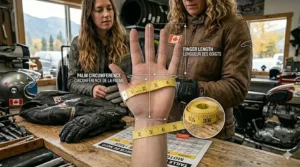
How to Measure Your Hand for Motorcycle Gloves: The Canadian Method
Getting accurate measurements is straightforward, but most riders skip crucial steps that lead to poor fit. Here’s the method that works consistently for Canadian hand sizes, which tend to run slightly larger than European averages.
Step 1: Gather Your Tools
You need a flexible measuring tape (the fabric kind tailors use) or a piece of string and a ruler. Don’t use a rigid metal tape measure — it won’t wrap around your hand properly and will give you inaccurate readings. Measure in the morning when your hands are at their normal size, not after riding or exercising when they may be swollen.
Step 2: Measure Hand Circumference (Critical Measurement)
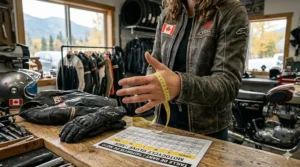
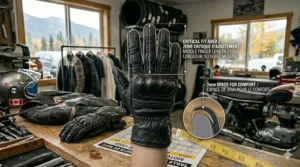
Make a loose fist with your dominant hand (the one you write with). Wrap the measuring tape around the widest part of your palm — this is usually just below your knuckles, excluding your thumb entirely. The tape should be snug but not tight enough to indent your skin. Record this measurement in both centimetres and inches. This single measurement determines your glove size more accurately than anything else.
Most Canadian male riders measure between 20-25 cm (7.9-9.8 inches) in circumference, while female riders typically range from 17-21 cm (6.7-8.3 inches). If you fall between sizes on a brand’s chart, your riding style should guide your decision: size down for sport riding where control precision matters, size up for touring where comfort during extended wear is priority.
Step 3: Measure Finger Length (For Precision Fit)
Measure from the base of your palm (where your wrist begins) to the tip of your middle finger. This measurement ensures glove fingers won’t be too short (causing pressure at fingertips) or too long (bunching and reducing dexterity). Most brands don’t publish finger length charts, but this measurement helps when you’re testing fit — your fingers should nearly reach the end of each glove finger without touching.
Step 4: Measure Both Hands
Your dominant and non-dominant hands can differ by up to 12 millimetres in circumference. Always use the larger measurement when ordering gloves. Wearing gloves too tight on one hand compromises circulation and control.
Step 5: Account for Canadian Conditions
If you ride frequently in cold weather (below 5°C), consider that your hands may require slightly larger gloves to accommodate the natural swelling that occurs when warming cold hands, or to fit over thin liner gloves. Conversely, if you primarily ride in summer heat, know that hands tend to swell slightly — a glove that feels perfect in a showroom might feel tight after 90 minutes on a highway in July.
The measurement process takes five minutes but saves you from the frustration of returning ill-fitting gloves ordered from Amazon.ca. Canadian riders should always cross-reference their measurements against each manufacturer’s specific sizing chart, as there’s no universal standard — a Medium from Held uses completely different measurements than a Medium from Alpinestars.
Real-World Sizing Scenarios: Canadian Riders
Understanding how different riders approach glove sizing helps you make smarter decisions. Here are three common Canadian rider profiles and their ideal glove solutions:
The Toronto Commuter (Marcus, 32)
Marcus rides a Yamaha MT-07 year-round except during heavy snow, commuting 24 km daily between Mississauga and downtown Toronto. His hand circumference measures 23 cm (9.1 inches), placing him at the large end of Medium or small end of Large in most brands.
After trying both sizes, he chose Large in the Alpinestars C-1 V2 Gore-Tex gloves. The slightly roomier fit allows him to wear thin liner gloves during March and November when temperatures hover around 5°C, yet doesn’t feel sloppy during summer months. The short-cuff design works perfectly with his Rev’it jacket, and the touchscreen compatibility means he’s not removing gloves at every stoplight to check navigation. His compromise: sacrificing the precise fit of Medium for year-round versatility.
The BC Adventure Rider (Sarah, 28)
Sarah tours extensively through British Columbia and Alberta on her BMW F 850 GS, often riding gravel Forest Service roads where crashes are more likely than on pavement. Her hand circumference is 19 cm (7.5 inches) — squarely in the Small category for most brands.
She invested in the RST Artic D30 in Small, accepting the $200+ CAD cost because waterproofing is non-negotiable when crossing the Coquihalla in April or exploring logging roads near Revelstoke. The D30 knuckle protection provides confidence on technical sections, and the gauntlet-style cuff keeps rain from running down her sleeves. The trade-off: these gloves are too warm for summer riding above 22°C, so she keeps a lightweight pair for July and August.
The Prairie Sport Rider (Jason, 41)
Jason rides a Kawasaki Ninja 650 aggressively on prairie highways and occasional track days at Castrol Raceway near Edmonton. His hands measure 24 cm (9.4 inches) — a true Large in most brands, but he deliberately sizes down to Medium in the Alpinestars SP-8 V3.
This unconventional choice comes from experience: the tighter fit improves bar feel and control precision during hard braking and corner entry. The gloves felt restrictive for the first 15 hours of riding but stretched about 10% as the leather broke in (a characteristic of kangaroo and goat leather). Now they fit like a second skin. His compromise: slightly restricted blood flow during the first hour of cold mornings, traded for maximum control during spirited riding.
These scenarios illustrate there’s no single “correct” size — your riding environment, bike type, and riding style all influence the ideal fit. Canadian riders face particularly complex decisions due to our dramatic temperature swings and varied terrain.
Common Mistakes When Choosing Motorcycle Glove Size in Canada
After helping hundreds of Canadian riders find proper-fitting gloves, I’ve seen the same costly mistakes repeated endlessly. Here’s what to avoid:
Trusting Clothing Size Instead of Measurements
The most common error is assuming “I wear Large shirts, so I need Large gloves.” Hand size has zero correlation with clothing size. I’ve met 2-metre-tall riders with Small hands and shorter riders with XL hands. Always measure your actual hand circumference rather than guessing based on other garments. This mistake costs Canadian riders hundreds of dollars in returned Amazon.ca orders.
Ignoring Brand-Specific Sizing Differences
A Medium from Alpinestars fits completely differently than a Medium from RST or Held. European brands (Alpinestars, Dainese, Held) typically run smaller than North American sizing expectations. Asian brands often run even smaller. When switching between brands, always consult that manufacturer’s specific sizing chart. Don’t assume your size transfers across brands.
Buying Winter Gloves in Summer Conditions
Many Canadian riders order winter gloves during warm months and choose based on how they fit at 20°C. Winter gloves should feel slightly looser than summer gloves because your hands swell when warming up from cold, and you might wear liner gloves underneath. A glove that fits perfectly in August will feel restrictive on a November morning when your hands are cold and stiff.
Choosing Comfort Over Security
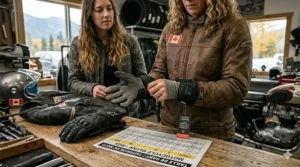
Some riders deliberately size up for comfort, but gloves too large compromise safety. If the glove slides around on your hand during emergency braking, you lose critical milliseconds of control. The glove should feel snug when new — leather models will stretch 5-10% during the first 15-20 hours of riding. If it feels comfortable immediately, it will likely be too loose after break-in.
Forgetting to Test with Actual Controls
Never judge glove fit by making a fist. Grab something cylindrical that approximates a motorcycle grip — a broom handle, a section of PVC pipe, a baseball bat. Simulate pulling the clutch lever, reaching for the front brake, and operating the throttle. This reveals whether the gloves bunch in the palm, restrict finger extension, or interfere with lever feel. Most fit issues only manifest when your hand is in riding position.
Overlooking Canadian Weather Impact
Riders in BC’s Lower Mainland need different glove characteristics than riders in Winnipeg or Halifax. If you experience temperature swings from -20°C to +30°C across the riding season, you likely need two glove sets: one for cold/wet conditions (insulated, waterproof, slightly larger) and one for warm/dry conditions (ventilated, precise fit). Trying to use one pair year-round guarantees discomfort in at least two seasons.
Buying Based on Price Alone
The cheapest glove on Amazon.ca might seem like a bargain until you consider replacement frequency. A $50 glove that lasts six months costs more than a $150 glove lasting three years. More importantly, budget gloves often lack CE certification — meaning their protective claims are unverified. In Canadian conditions where road salt degrades materials faster and cold weather increases crash severity, investing in certified protection pays dividends.
Understanding these mistakes helps Canadian riders make informed decisions rather than learning expensive lessons through trial and error.
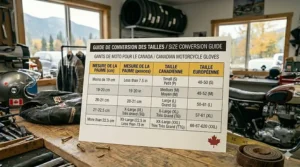
Motorcycle Glove Sizing Charts Decoded: European vs. North American Standards
Navigate sizing charts confidently by understanding the two primary systems you’ll encounter on Amazon.ca and Canadian motorcycle retailers.
European Numerical Sizing (6-13)
European brands like Alpinestars, Dainese, Rev’it, and Held use numerical sizing based on hand circumference in centimetres. A size 9 typically corresponds to approximately 23 cm (9.1 inches) hand circumference. This system offers more precision than letter sizing because the numbers directly reference your measurement. The challenge: each brand interprets these numbers slightly differently, so size 9 from Held might fit differently than size 9 from Alpinestars.
North American Letter Sizing (XS-XXL)
American and Canadian brands typically use letter sizing: XS, S, M, L, XL, XXL, XXXL. This system groups hand sizes into broader ranges:
- Small: 19-20 cm (7.5-7.9 inches)
- Medium: 20.5-23 cm (8.1-9.1 inches)
- Large: 23.5-25 cm (9.3-9.8 inches)
- XL: 25.5-27 cm (10-10.6 inches)
These ranges overlap significantly between brands, creating confusion. What one brand calls Large, another might designate XL.
The Held Sizing Advantage
Held uses a sophisticated system offering 30 size combinations pairing numerical sizing (6-13) with finger length variations (standard, short, long). This German precision solves fit issues for riders with atypical hand proportions. If you have wide palms but shorter fingers, you can order size 9 Short instead of struggling with standard size 9 gloves where fingertips bunch. This system costs more but eliminates the compromises inherent in standard sizing.
Canadian Riders and Sizing Translation
When shopping on Amazon.ca, you’ll encounter all these systems. If a sizing chart shows both European and North American sizes, cross-reference your hand measurement against both columns. Generally, if your measurement falls at the upper limit of a size range, the gloves will fit snugly — choose the next size up if you prefer roomier fit or plan to wear liners underneath.
Remember that sizing charts provide starting points, not guarantees. Material type affects fit: leather stretches 5-10% during break-in, textiles don’t stretch at all, and Gore-Tex membranes remain dimensionally stable. Factor this into your size selection.
Understanding CE Certification for Canadian Motorcycle Gloves
While CE certification isn’t legally required in Canada, it’s the only objective measure of glove protection available to riders. Understanding what those CE labels mean helps you make informed safety decisions.
What CE Certification Measures
CE (Conformité Européenne) certification for motorcycle gloves follows the EN 13594:2015 standard, which tests six mandatory elements: cuff length, retention system strength, tear resistance, seam strength, abrasion resistance, and ergonomic function. Level 2 gloves must also include knuckle impact protection. These tests simulate real crash conditions rather than relying on manufacturers’ marketing claims.
Level 1 vs. Level 2: The Canadian Perspective
Level 1 gloves meet basic safety requirements suitable for urban riding and touring. They must withstand 4 seconds of abrasion testing and seam forces of 6 N/mm. Level 2 gloves offer superior protection for sport riding and track use, requiring 8 seconds abrasion resistance and 10 N/mm seam strength. The knuckle protector must limit impact force transmission to under 4 kN.
For Canadian riders, this distinction matters because our riding environment increases crash severity — cold weather reduces reaction time, wildlife crossings are common, and gravel on corners is prevalent in rural areas. The extra protection of Level 2 certification provides meaningful additional safety during those unexpected moments.
Why Some Quality Gloves Aren’t CE Certified
Not all non-certified gloves are unsafe. Some manufacturers (particularly smaller North American brands) produce excellent protective gloves but choose not to pursue expensive CE testing and certification. The testing process costs thousands of dollars and requires European notified body approval — costs that small companies can’t always justify. However, without certification, you’re trusting marketing claims rather than verified performance.
Canadian buyers on Amazon.ca should prioritize CE-certified gloves from established manufacturers when budget allows. The certification represents independent verification that the gloves actually provide the protection claimed. In crash scenarios common to Canadian riding — low-sides on gravel, wildlife avoidance maneuvers, winter road conditions — having verified protection matters enormously.
Transport Canada doesn’t mandate specific motorcycle glove standards, leaving protection decisions to individual riders. This makes understanding CE ratings even more important for making informed safety choices in the Canadian market.
What Size Motorcycle Gloves Do I Need? A Decision Framework
Determining your correct size requires balancing multiple factors specific to Canadian riding conditions. Use this framework to make confident decisions:
If you ride primarily in urban environments (under 80 km/h): Choose gloves that prioritize dexterity and touchscreen functionality. Size for a snug fit that allows precise control of switches and levers. The Alpinestars C-1 V2 or similar short-cuff gloves work well, sized to your exact measurement without adding extra room.
If you tour long distances (200+ km days): Prioritize comfort over tight fit. Size up if between measurements to allow for hand swelling during extended riding. Look for gloves with generous gauntlets and wrist closures that prevent rain intrusion. The RST Artic D30 sized slightly large accommodates liner gloves for cold mornings.
If you ride aggressively (sport/track use): Choose the smallest size you can wear comfortably, even if it feels restrictive initially. Leather gloves will stretch 5-10% during break-in. Precise fit maximizes control feel and prevents the glove shifting during hard braking. The Alpinestars SP-8 V3 or Held Phantom Pro sized at the small end of your range delivers race-level control.
If you ride year-round in Canadian conditions: You need two glove sets minimum. Size summer gloves for precise fit based on your measurements. Size winter gloves 1-2 sizes larger to accommodate liner gloves and allow blood circulation when hands warm from cold. Budget for both types rather than compromising with one mediocre all-season pair.
If you have between-size measurements: Consider your hand’s shape. If your palm is wide but fingers are shorter, brands like Held offering size variations in finger length prevent the frustration of bunching fingertips. If standard sizing doesn’t accommodate your proportions, the investment in premium brands with expanded sizing pays off in comfort.
If budget is your primary constraint: Buy the best protection you can afford, even if it means sizing isn’t perfect. A CE Level 1 certified glove that’s slightly loose provides better crash protection than a perfectly-fitted uncertified glove. You can improve fit with grip enhancers or thin liner gloves, but you can’t add meaningful protection to budget gloves lacking certification.
This decision framework acknowledges that Canadian riders face unique challenges — extreme temperature ranges, varied terrain, long distances between services, and weather volatility. Your glove sizing should reflect these realities rather than following generic advice designed for European or American conditions.
❓ FAQ: Motorcycle Glove Sizing for Canadian Riders
❓ Can I wear motorcycle gloves in winter in Canada?
❓ How tight should motorcycle gloves fit when new?
❓ Are CE certified gloves worth the extra cost in Canada?
❓ Do motorcycle gloves stretch over time?
❓ What's the difference between American and European glove sizing?
Conclusion: Finding Your Perfect Motorcycle Glove Size in Canada
Getting motorcycle glove size right transforms your riding experience from frustrating to effortless. The difference between properly-fitted gloves and poorly-chosen ones shows up immediately — in your ability to feather the clutch smoothly, in whether your hands go numb after 30 minutes, in how confidently you can grab the front brake during emergency stops.
For Canadian riders, size selection carries additional complexity. We face temperature extremes that require multiple glove sets, road conditions that demand serious protection, and distances that make comfort essential. The measurement process takes five minutes but determines whether your $200 investment in quality gloves delivers years of comfortable protection or becomes expensive regret.
Remember these key principles: measure your dominant hand’s circumference accurately, consult each manufacturer’s specific sizing chart, account for leather’s 5-10% stretch during break-in, and choose based on your primary riding style. Budget for at least two pairs if you ride year-round in Canadian conditions — trying to use one pair across -20°C to +30°C guarantees discomfort in multiple seasons.
CE certification provides the only objective verification of glove protection available to Canadian riders. While it costs more, the investment in Level 1 or Level 2 certified gloves delivers meaningful safety advantages during the unexpected moments that define motorcycling in Canada — wildlife avoidance, gravel corners, unpredictable weather, and long distances between services.
Your hands control every critical function on your motorcycle. Protecting them properly isn’t optional equipment — it’s fundamental to safe riding. Take the time to measure accurately, choose quality over convenience, and invest in protection that works across Canadian conditions. The gloves that fit perfectly and protect completely are worth every dollar of their cost.
Recommended for You
- Best Gauntlet Motorcycle Gloves Canada 2026: Top 7 Picks
- 7 Best Off Road Motorcycle Gloves Canada 2026
- 7 Best Gloves for Harley Davidson Riders Canada 2026
Disclaimer: This article contains affiliate links. As an Amazon Associate, I earn from qualifying purchases. If you purchase products through these links, we may earn a small commission at no additional cost to you.
✨ Found this helpful? Share it with your friends! 💬🤗
