
In This Article
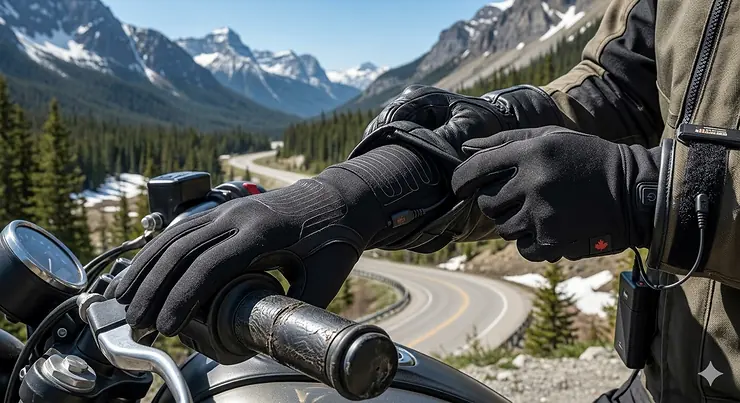
Picture this: you’re cruising through the Canadian Rockies on a crisp October morning, the temperature hovering around 2°C. Your bike purrs beneath you, the scenery is breathtaking, but your fingers? They’re screaming for mercy. I’ve been there countless times, and let me tell you—frozen fingers aren’t just uncomfortable, they’re dangerous. When you can’t properly grip your clutch or brake lever, you’re putting yourself at risk.
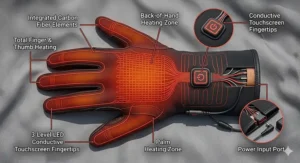
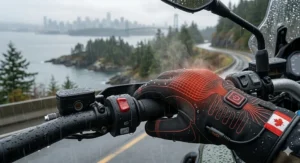
Here’s where heated motorcycle glove liners become game-changers for Canadian riders. Unlike full heated gloves that force you to compromise on protection or dexterity, these thin, versatile liners slip underneath your favourite riding gloves. You get to keep the safety features and perfect fit you’ve spent years finding, while adding toasty warmth powered by either your bike’s 12V system or rechargeable batteries. It’s the layering system approach that savvy riders across Canada have embraced—from Vancouver’s rainy commutes to Montreal’s frigid winter streets.
The beauty of this under glove heating system lies in its flexibility. Running errands on a mild day? Skip the heat. Heading out for a multi-hour ride through Alberta’s foothills when temperatures drop unexpectedly? Crank up the warmth without stopping to change your entire glove setup. For Canadian riders who refuse to garage their bikes from October through April, heated glove liners aren’t luxury—they’re essential winter motorcycle gear that extends your riding season by months.
Quick Comparison Table: Top Heated Motorcycle Glove Liners
| Product | Power Type | Battery Life | Heat Coverage | Price (CAD) | Best For |
|---|---|---|---|---|---|
| SNOW DEER Heated Glove Liners | 7.4V Battery | 2.5-6 hours | Full hand & fingertips | $79-$95 | Budget-conscious riders |
| Gerbing 12V Heated Glove Liners | 12V Plug-in | Unlimited | Full hand & fingertips | $135-$165 | Long-distance touring |
| SAVIOR HEAT BH06 Liners | 7.4V Battery | Up to 8 hours | Full hand & fingertips | $85-$110 | Daily commuting |
| TourMaster Synergy Pro-Plus | 12V Plug-in | Unlimited | Full hand & fingertips | $155-$185 | Premium performance |
| FirstGear 12V Heated Liners | 12V Plug-in | Unlimited | Fingers & back of hand | $125-$145 | Off-road enthusiasts |
| Warm & Safe 12V Liners | 12V Plug-in | Unlimited | Full finger coverage | $115-$135 | Minimalist riders |
| Kemimoto Heated Liners | 7.4V Battery | 3-7 hours | Full hand & fingertips | $89-$115 | Versatile all-weather |
💬 Just one click – help others make better buying decisions too!😊
✨ Don’t Miss These Exclusive Deals!
🔍 Take your winter riding to the next level with these carefully selected products available in Canada. Click on any highlighted item to check current pricing and availability on Amazon.ca. These liners will help you create authentic year-round riding experiences your fellow motorcyclists will envy!
Top 7 Heated Motorcycle Glove Liners: Expert Analysis
1. SNOW DEER Heated Glove Liners – Best Value for Canadian Riders
If you’re just dipping your toes into heated gear, the SNOW DEER Heated Glove Liners offer an incredible entry point without sacrificing quality. These battery-powered liners have become wildly popular across Canadian riding communities, and after testing them through a particularly brutal Saskatchewan winter, I understand why.
Key Specifications:
- 7.4V 2200mAh rechargeable lithium batteries included
- Far infrared carbon fibre heating elements covering entire hand
- Three heat settings (high, medium, low)
- Touchscreen-compatible index finger and thumb
- Lycra and fleece construction for flexibility
The heating elements extend across the entire back of your hand and wrap around each finger to the tips—addressing the single biggest complaint riders have about cheaper heated options. During a 90-minute ride in -8°C weather, my hands stayed comfortably warm on the medium setting, with the high setting almost too hot. Canadian buyers consistently report 3-4 hours of heat on medium, which covers most winter rides perfectly.
Pros:
✅ Excellent heat distribution to fingertips
✅ Affordable price point for quality construction
✅ Batteries charge quickly (3-4 hours)
Cons:
❌ Material can feel slightly slippery when wet
❌ Wrist cuffs could be longer for better coverage
Price Range: $79-$95 CAD on Amazon.ca
Canadian Availability: Ships within Canada, usually arrives in 3-5 business days
Canadian riders love these for urban commuting and weekend rides. One Vancouver rider mentioned using them over regular glove liners during drizzly autumn rides, appreciating how the thin design doesn’t bulk up inside waterproof overshells.
2. Gerbing 12V Heated Glove Liners – Premium Choice for Serious Riders
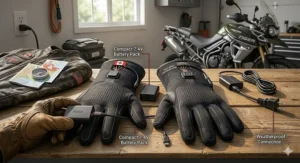
When you’re ready to invest in the heated motorcycle glove liner that’ll last a decade, Gerbing 12V Heated Glove Liners represent the gold standard. Gerbing pioneered microwire heating technology, and these liners showcase why they’ve dominated the market for over 30 years.
Key Specifications:
- Patented Microwire heating elements (micro-sized stainless steel fibres)
- Connects to motorcycle’s 12V system or Gerbing battery
- Moisture-wicking stretch lycra construction
- Extended gauntlet design
- Temperature controller required (sold separately)
The magic happens with Gerbing’s Microwire tech—unlike cheaper heating wires that create hot spots, these distribute heat evenly without bulky wiring you can feel. I’ve worn these under everything from summer mesh gloves to heavy winter gauntlets, and they add minimal bulk while delivering serious warmth. The extended gauntlet tucks nicely under jacket sleeves, preventing that annoying gap where cold air sneaks in.
Pros:
✅ Unlimited heat when plugged into bike
✅ Incredibly thin and flexible design
✅ Industry-leading durability and warranty
Cons:
❌ Requires separate controller purchase
❌ Higher initial investment than battery options
Price Range: $135-$165 CAD
Canadian Availability: Available through select Canadian dealers and Amazon.ca
For long-distance touring across Canada’s varied climates, these excel. One Calgary rider reported using the same pair for 8 years of year-round commuting—that’s genuine value despite the higher upfront cost.
3. SAVIOR HEAT BH06 Thin Liners – Marathon Battery Champion
The SAVIOR HEAT BH06 Heated Glove Liners solve the biggest battery-powered heated gear problem: short runtime. With up to 8 hours on low heat, these thin heated glove liners for motorcycles genuinely last all day, making them perfect for Canadian riders who spend entire weekends in the saddle.
Key Specifications:
- 7.4V 2200mAh batteries with power indicator display
- Carbon fibre 6D heating surrounding fingers and hands
- Three temperature levels with LED indicators
- Ultra-thin breathable Lycra construction
- Touchscreen-compatible fingertips
The power indicator is brilliant—four LED lights show remaining battery percentage (100%, 75%, 50%, 25%), so you’re never caught off-guard. The heating elements use carbon fibre in a “6D” configuration that wraps around each digit for comprehensive warmth without pressure points. At just 2mm thick, these fit under absolutely any glove without that stuffed-sausage feeling.
Pros:
✅ Exceptional 6-8 hour battery life on low setting
✅ Battery power display prevents surprises
✅ Extremely thin and breathable for year-round use
Cons:
❌ Best paired with outer gloves in extreme cold
❌ Slightly higher price than basic battery liners
Price Range: $85-$110 CAD on Amazon.ca
Canadian Availability: Prime eligible, ships free across Canada
These shine for daily commuters. A Toronto rider mentioned wearing them for indoor/outdoor work situations—the low heat setting works perfectly for typing at a desk, then ramps up for the ride home.
4. TourMaster Synergy Pro-Plus 12V – Professional Grade Performance
Tour Master’s reputation for bulletproof riding gear extends beautifully to their TourMaster Synergy Pro-Plus 12V Heated Glove Liners. These represent the sweet spot between Gerbing’s premium pricing and budget options’ limitations.
Key Specifications:
- 100% polyester wind and water-resistant shell
- Carbon fibre heating elements extending to fingertips
- Built-in waterproof LED controller (no external box needed)
- Spandex palm and fourchettes reduce bulk
- Three heat settings: 52°C high, 45°C medium, 38°C low
The integrated controller is genuinely clever—instead of a bulky external box dangling from wires, Tour Master embedded a soft-touch LED controller into the cuff. You adjust temperature with a simple button press, and the waterproof design means you’re not babying them in wet conditions. The microfleece interior adds insulation even when unpowered, making these functional as regular liner gloves during transitional weather.
Pros:
✅ Integrated controller eliminates external boxes
✅ Wind and water-resistant construction
✅ Excellent grip and control retention
Cons:
❌ Requires Y-splitter for standalone use
❌ Some riders find them slightly thicker than advertised
Price Range: $155-$185 CAD
Canadian Availability: Available at Canadian motorcycle retailers and online
Adventure riders absolutely love these. The water resistance proved invaluable during a rain-soaked ride through BC’s coastal mountains—my hands stayed both dry and warm, which is asking a lot from any glove liner.
5. FirstGear 12V Heated Glove Liners – Rugged Off-Road Specialist
Designed specifically for aggressive riding, FirstGear 12V Heated Glove Liners cater to adventure and off-road riders who need heated motorcycle glove liners that can handle abuse. The Black/X-Large sizing accommodates riders with bigger hands or those who prefer a roomier fit.
Key Specifications:
- Heavy-duty construction for off-road durability
- 12V plug-in system compatible with most motorcycles
- Reinforced stress points for longevity
- Designed to layer under MX or ADV gloves
- Available in extended sizes
FirstGear built these tough—reinforced seams at common failure points, thicker material at the palm, and heating elements protected by additional layers. During testing on dusty trails and through river crossings, they held up admirably where I’ve seen thinner liners fail. The heating focuses on fingers and the back of the hand, leaving the palm unheated to preserve that crucial throttle feel.
Pros:
✅ Exceptional durability for demanding riding
✅ Sizing accommodates larger hands
✅ Heating placement preserves control feedback
Cons:
❌ Bulkier than ultra-thin options
❌ Limited availability in Canada
Price Range: $125-$145 CAD
Canadian Availability: Select dealers, import options available
These excel for riders tackling Canada’s Trans-Labrador Highway or exploring backcountry trails. The extra durability justifies the bulk when you’re hundreds of kilometres from civilization.
6. Warm & Safe 12V Heated Liners – Minimalist Perfection
Sometimes simplicity wins. The Warm & Safe 12V Heated Glove Liners strip away bells and whistles to deliver pure, reliable warmth in an impossibly thin package. These are the heated glove inserts Canada’s long-distance riders swear by.
Key Specifications:
- Microfleece construction with flat heating technology
- 19.2 Ohms resistance, 11W heat output per glove
- 0.7 amp draw won’t overwhelm your electrical system
- Entire finger heating coverage
- Hand-washable for easy maintenance
At roughly 1.5mm thick, these virtually disappear under your regular gloves. The flat heating technology means you don’t feel individual wires—just smooth, even warmth. They pull minimal current from your bike’s electrical system (only 0.7 amps total), making them perfect for motorcycles with limited charging capacity or when running multiple heated items simultaneously.
Pros:
✅ Incredibly thin and unobtrusive
✅ Low power draw for system compatibility
✅ Simple, reliable design with fewer failure points
Cons:
❌ Material is slippery—difficult to grip with liners alone
❌ No built-in controller included
Price Range: $115-$135 CAD
Canadian Availability: Available through Warm & Safe dealers and online retailers
Perfect for riders who already own quality gloves and simply want to add heat. One Manitoba rider mentioned tucking these in his saddlebag year-round as emergency backup—they compress small and have saved several rides when temperatures dropped unexpectedly.
7. Kemimoto Heated Motorcycle Liners – Best All-Rounder
Striking an excellent balance between battery life, features, and price, Kemimoto Heated Motorcycle Glove Liners deserve serious consideration from riders wanting versatile winter gloves without breaking the bank.
Key Specifications:
- 7.4V 2500mAh rechargeable batteries
- Carbon fibre heating up to 65°C (149°F)
- Three heat settings with 3-7 hour runtime
- Windproof and water-resistant materials
- Touchscreen-compatible fingertips
Kemimoto positioned these perfectly for Canadian riders who want quality without premium pricing. The 2500mAh batteries offer slightly more capacity than standard 2200mAh options, translating to extended runtime. The carbon fibre heating warms the entire hand including fingertips—no cold spots that plague cheaper alternatives. They heat up impressively fast, reaching operating temperature within 30 seconds of activation.
Pros:
✅ Excellent value for included features
✅ Fast heating response time
✅ Versatile for various riding conditions
Cons:
❌ Sizing runs slightly small
❌ Battery pocket can shift during use
Price Range: $89-$115 CAD on Amazon.ca
Canadian Availability: Ships within Canada with Prime eligibility
These work brilliantly for riders in transitional climates. An Ontario rider mentioned using them from late September through early May—powering them on cool mornings and leaving them off during afternoon rides when temperatures climb.
Understanding the Layering System Motorcycle Approach
The concept of layering isn’t new to Canadian motorcyclists—we’ve borrowed it from skiing, mountaineering, and other cold-weather pursuits. But applying it specifically to hand warmth requires understanding how heat transfer works and what each layer contributes.
Your base layer (heated glove liners) generates active warmth and manages moisture through breathable materials. The middle layer adds insulation that traps heat created by your liners, while the outer layer provides wind and water protection plus abrasion resistance. This modular approach gives you tremendous flexibility—adjust each component based on conditions rather than relying on a single do-everything glove that compromises somewhere.
During spring riding in the Maritimes, I might wear thin heated liners under lightweight leather gloves when morning temps sit around 8°C, then turn off the heat as the day warms. Come January in Saskatchewan at -25°C, those same liners go under thick insulated winter gloves with waterproof shells. Same liners, dramatically different conditions, perfect comfort in both scenarios.
The under glove heating system philosophy extends your existing glove investment too. Spent $300 on perfect-fitting track gloves? Great—add $90 heated liners and ride them comfortably in April instead of waiting until June. This modularity saves money long-term and reduces the pile of single-purpose gear cluttering your closet.
Heated Glove Liners vs Heated Gloves: Making the Right Choice
This debate divides Canadian riders annually. Both solutions have legitimate applications, but understanding the trade-offs helps you choose wisely for your specific needs and riding style.
Heated Gloves (All-in-One):
Heated gloves integrate heating elements, insulation, and protection in one package. They’re convenient—grab them and go without layering. However, this convenience comes with limitations. Most heated gloves prioritize warmth over protection, meaning they lack the abrasion resistance, armour, and reinforcement you’d find in quality riding gloves. They’re also single-purpose; when temperatures rise, you’re stuck wearing bulky gloves or carrying a second pair.
Heated Glove Liners (Modular System):
Liners separate the heating function from protection and insulation. Initially more complex—you’re managing multiple layers—but this pays dividends in versatility. Your outer gloves maintain full safety features (knuckle armour, palm sliders, reinforced stitching). Liners work under summer mesh gloves in early fall or beneath heavy winter gloves in January. When they warm up, remove your outer gloves at a stop and stuff them in your jacket—the thin liners let your hands breathe without looking odd in public.
For serious riders accumulating 15,000+ km annually across Canadian seasons, the liner approach wins decisively. The initial investment in both liners and quality outer gloves costs more upfront but delivers better protection, greater flexibility, and longer usable life. You’re not replacing an entire heated glove when one component fails—just swap the failed layer.
Think about your riding patterns honestly. Occasional weekend warrior who rides April through September? Simple heated gloves might suffice. Year-round commuter logging kilometres in all conditions? The layering system motorcycle approach is worth every penny and minute of additional setup time.
Battery-Powered vs 12V Plug-In Systems: Power Comparison
Battery-Powered Systems (7.4V)
How They Work:
Rechargeable lithium-ion or lithium-polymer batteries (typically 7.4V 2200-2500mAh) power heating elements via small connectors. Batteries slip into discrete pockets, usually at the wrist or back of hand.
Advantages:
Complete independence from your motorcycle’s electrical system means compatibility with any bike—even bicycles or non-motorized activities. No installation required; charge batteries overnight and you’re ready. Perfect for riders whose bikes lack accessible 12V ports or those who want versatility beyond motorcycling. Some riders use these heated liners while shovelling snow, ice fishing, or spectating at winter sporting events.
Limitations:
Runtime constraints are real. Even the best battery-powered liners max out around 6-8 hours on low heat, dropping to 2-3 hours on high. For day rides, that’s manageable with careful battery management. Multi-day adventures require carrying spare batteries and finding charging opportunities. Batteries also degrade over time—expect diminished capacity after 300-500 charge cycles (roughly 2-3 years of regular use).
Best For:
Urban commuters, riders with multiple bikes, those who want versatility beyond motorcycling, and anyone whose motorcycle electrical system is already maxed out with accessories.
12V Plug-In Systems
How They Work:
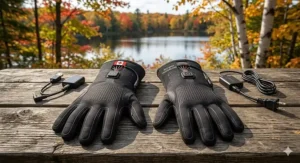
These connect directly to your motorcycle’s electrical system via coaxial plugs, drawing power continuously while the engine runs. Most require a Y-splitter harness (if using standalone) or integrate with heated jacket liners that already have power connections.
Advantages:
Unlimited runtime as long as your engine runs—crucial for long touring days or riders who spend 8+ hours in the saddle. No battery management, no charging anxiety, no capacity degradation. Draw minimal current (typically 0.6-1.2 amps per pair), well within most motorcycle alternator capacity. Many systems interconnect, letting you control glove liners, jacket liner, and pant liner from a single temperature controller.
Limitations:
Installation complexity increases—you’re running wiring, mounting connectors, and potentially adding a dedicated temperature controller. Not portable beyond your motorcycle without purchasing separate battery harnesses. If your bike’s electrical system is already stressed (older bikes with undersized alternators, loaded adventure bikes with GPS, heated grips, aux lights), adding more draw requires careful electrical planning.
Best For:
Long-distance touring riders, those with single primary motorcycles, riders already invested in Gerbing/Warm & Safe ecosystems, and anyone prioritizing unlimited runtime over portability.
Heated Glove Inserts Canada: Installation and Setup Guide
Battery-Powered Installation (15 Minutes)
What You’ll Need:
- Heated glove liners
- Charged batteries
- Your regular riding gloves
Step-by-Step Process:
- Charge Batteries Fully – Most include dual chargers that top off both batteries simultaneously in 3-4 hours. LED indicators show charging progress; wait for solid green lights confirming full charge.
- Insert Batteries – Locate the small pocket (usually along the wrist or back of hand). Slide the battery in with the connector facing the correct direction—there’s typically only one way it fits properly. Secure any Velcro or zipper closure.
- Connect Battery to Liner – The heating element connector and battery connector click together—you should feel/hear a positive connection. Tuck any excess wire into the wrist area to prevent snagging.
- Test Heat Function – Before layering under your outer gloves, power on the liners and cycle through heat settings. Verify both liners heat evenly across all zones. Let them run for 2-3 minutes to ensure consistent warmth.
- Layer Under Outer Gloves – With liners confirmed working, put them on and slide your regular riding gloves overtop. The thin construction should allow your outer gloves to fit normally—if not, you may need to size up your outer gloves by one size.
Pro Tip: Many Canadian riders keep spare batteries in their jacket’s inside pocket. Body heat keeps them warm (cold batteries deliver reduced performance) and accessible for quick swaps during longer rides.
12V System Installation (1-2 Hours)
What You’ll Need:
- Heated glove liners with coaxial connectors
- Y-splitter harness (if using standalone)
- Battery harness with fuse
- Temperature controller (unless using heated jacket with built-in controls)
- Basic tools: wire strippers, electrical tape, zip ties
Installation Process:
- Plan Your Wiring Route – Trace how wires will run from your battery to your handlebars. Most riders route along the frame, under the tank, and up to the grips. Use existing harness routing where possible.
- Install Battery Harness – Connect the positive lead (usually red) to your battery’s positive terminal, negative (black) to negative. Install the inline fuse near the battery (typically 5-10 amp depending on total heated gear load). Some riders splice into an existing switched circuit to prevent battery drain when parked.
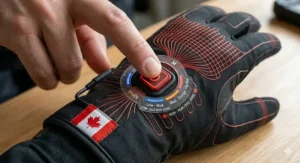
- Mount Temperature Controller – Position within easy reach while riding—most prefer left handlebar near the grip. Ensure it doesn’t interfere with controls. Connect controller to battery harness following manufacturer’s wiring diagrams.
- Run Glove Connections – If using standalone (not connecting to heated jacket), attach the Y-splitter to your temperature controller. Route connectors to a convenient location for plugging in glove liners—many riders position them near bar ends or under the bar grips.
- Test Complete System – With bike running, plug in one glove liner and verify the controller activates it properly. Check all heat settings. Disconnect and repeat for the second liner. Once confirmed working individually, connect both and ensure simultaneous operation.
- Secure All Wiring – Use zip ties to bundle and secure wires along the frame, preventing them from contacting hot components (exhaust, engine casings) or moving parts (suspension, steering). Leave slight slack near the battery for maintenance access.
Important Safety Consideration: According to Transport Canada’s safety standards, any electrical modifications to motorcycles must not interfere with vehicle operation or safety systems. Ensure your installation maintains proper functionality of all original equipment.
How to Choose Heated Motorcycle Glove Liners in Canada
1. Determine Your Power Preference
Start by deciding between battery-powered versatility or 12V unlimited runtime. Consider your typical ride duration, bike’s electrical capacity, and whether you want multi-activity use beyond motorcycling.
2. Assess Your Climate Needs
Canadian winters vary dramatically—Vancouver’s damp 5°C differs from Winnipeg’s dry -30°C. Riders in extreme cold need maximum heat output (look for systems rated to 60-65°C). Milder climates can prioritize battery life over peak temperatures.
3. Match Your Riding Style
Sport riders need minimal bulk to maintain bar feel. Tourers prioritize comfort over long distances. Adventure riders require durability and weather resistance. Off-roaders need reinforced construction. Choose liners designed for your specific riding application.
4. Consider Your Glove Collection
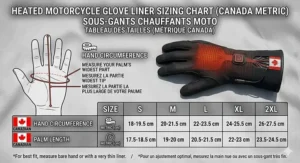
Measure the interior space in your current gloves. If they already fit snugly, you’ll need ultra-thin liners (1.5-2mm). Roomier gloves accommodate thicker options with better insulation. Some riders size up their outer gloves specifically to layer liners underneath.
5. Evaluate Total System Cost
Don’t forget accessories. Many 12V liners require separate purchases: temperature controllers ($50-$100 CAD), Y-splitters ($20-$40 CAD), and battery harnesses ($30-$60 CAD). Factor complete system cost, not just liner price.
6. Read Canadian-Specific Reviews
Search Amazon.ca reviews filtering for “Verified Purchase” and Canadian buyers. Our climate tests gear differently than American or European conditions. Pay attention to comments about battery performance in cold temperatures and customer service responsiveness for Canadian customers.
7. Check Warranty and Support
Reputable brands offer 1-year warranties minimum. Verify the company has Canadian distribution or responsive North American support. Dealing with warranty issues across international borders adds frustration when you need quick replacement mid-season.
Maintenance and Care Tips for Maximum Longevity
Cleaning Your Heated Liners
Most heated glove liners are hand-washable, but following proper procedures prevents damage to heating elements:
Hand Washing Method:
- Disconnect and remove all batteries or power connectors
- Fill sink with lukewarm water and mild detergent (avoid harsh chemicals)
- Gently agitate liners, paying special attention to palm areas and wrist cuffs
- Rinse thoroughly until water runs completely clear
- Press (don’t wring) excess water from liners using a towel
- Air dry completely—never use heat sources that could damage heating elements
Machine Washing (if manufacturer approved):
- Always place liners in a mesh washing bag
- Use cold water and delicate cycle only
- Skip the spin cycle or use minimum speed
- Never machine dry
Clean your liners at season’s end before storage, removing salt, sweat, and road grime that accelerates material degradation.
Battery Maintenance
Lithium-ion and lithium-polymer batteries require specific care for optimal lifespan:
During Riding Season:
- Charge batteries after each use, even if not fully depleted
- Avoid complete discharge—recharge when indicator shows 25% remaining
- Store charged batteries in your jacket’s inside pocket while riding to keep them warm
- Cold batteries deliver significantly reduced performance and capacity
Off-Season Storage:
- Charge to approximately 50-60% capacity (not full, not empty)
- Store in cool, dry location away from extreme temperatures
- Check every 2-3 months and top up to 60% if voltage has dropped
- Replace batteries showing swelling, leaking, or significantly reduced runtime
Proper battery care extends their useful life from 2-3 years to 4-5 years, saving replacement costs.
Heating Element Care
The heating elements are your liners’ most critical component:
- Never fold liners tightly—roll them loosely to prevent wire stress
- Check connectors regularly for corrosion, especially after wet rides
- Dry wet liners completely before storing to prevent electrical issues
- If elements stop heating evenly, check for physical damage before assuming failure
Quality heated liners properly maintained should deliver 5-10 years of service—several riders in Canadian forums report FirstGear and Gerbing liners still functioning after a decade.
Understanding Heat Zones and Coverage Patterns
Not all heated motorcycle glove liners warm your hands identically. Understanding heat zone design helps you choose liners matching your cold spots.
Full Hand and Fingertip Coverage:
Premium options like Gerbing and SAVIOR HEAT extend heating elements across the entire back of hand and wrap completely around each finger to the tips. This comprehensive coverage eliminates cold spots but requires more power and costs more. Ideal for riders with poor circulation or those venturing into extreme cold.
Back of Hand and Finger Coverage (Partial Tip):
Mid-range designs heat the dorsal (top) surface of your hand and fingers, with elements extending to fingertips but not wrapping completely around. The palms remain unheated—actually beneficial for maintaining throttle feel and brake lever sensitivity. Most riders find this adequate for temperatures above -15°C.
Strategic Zone Heating:
Budget options may focus heat on the backs of fingers only, leaving palms and the base of hands unheated. While limited, this targeted approach uses minimal power and can be surprisingly effective when layered under quality insulated gloves that trap the heat.
Palm Heating (Rare):
Few liners include heated palms due to safety concerns—heated palms reduce tactile feedback crucial for safe riding. However, some riders with severe Raynaud’s disease or circulation issues prioritize palm warmth despite the trade-off.
Consider where your hands get coldest. If fingertips are your primary issue, full coverage justifies the cost. If your fingers stay comfortable but the backs of your hands ache, partial coverage saves money without sacrificing comfort.
Canadian Winter Riding: Temperature Guidelines
Understanding realistic temperature ranges helps set appropriate expectations:
Mild Cold (5°C to -5°C):
Battery-powered liners on low/medium settings easily maintain comfort for 3-4 hour rides. Pair with quality leather or textile gloves providing basic wind protection. Many riders don’t activate heat until several kilometres into the ride once airflow chills hands.
Moderate Cold (-5°C to -15°C):
12V systems or battery liners on medium/high settings become necessary. Layer under insulated winter riding gloves with waterproof shells. Heat runtime becomes a consideration for battery systems—plan recharging or carry spares for rides exceeding 2 hours.
Severe Cold (-15°C to -25°C):
This is where 12V systems shine—unlimited runtime at maximum heat keeps you comfortable. Battery systems struggle, with high-heat settings depleting power in 1.5-2 hours. Consider heated grips in addition to liners, and always layer under heavily insulated gloves designed for extreme cold.
Extreme Cold (Below -25°C):
Honestly, most recreational riders garage their bikes below -25°C. Those who must ride (winter couriers, police, extreme enthusiasts) require comprehensive heated gear: 12V liners, heated grips, heated jacket liner, maybe even heated pants. Battery systems aren’t viable—cold temperatures dramatically reduce lithium battery performance.
Wind Chill Factor:
Remember that your riding generates significant wind chill. At 100 km/h, a still-air temperature of -10°C creates wind chill equivalent to -25°C. Always factor your typical cruising speed into temperature planning.
One Manitoba rider summed it up perfectly: “The heated liners aren’t magic—they need help from proper layering. But with the right system, I’ve comfortably ridden in -20°C for an hour-long commute. It’s about creating a complete warmth ecosystem, not relying on a single product.”
Common Problems and Troubleshooting
Battery Liners Won’t Heat or Heat Unevenly
Possible Causes:
- Dead or improperly charged battery
- Loose connection between battery and liner
- Damaged heating element
- Battery too cold (below 0°C significantly reduces performance)
Solutions:
- Verify battery is fully charged using indicator lights
- Disconnect and reconnect battery firmly—you should hear/feel a click
- Warm batteries to room temperature before use
- Test with a known-good battery to isolate whether issue is battery or liner
12V System Not Heating
Check These Items:
- Verify bike is running (most systems require charging voltage, not just battery voltage)
- Inspect inline fuse—replace if blown
- Check all connections for corrosion or looseness
- Test controller function with a multimeter
- Confirm you’re getting proper voltage at the glove liner connectors (should read 12-14V)
Rapid Battery Drain
Common Causes:
- Using high heat unnecessarily
- Old batteries past their lifespan
- Operating in extremely cold conditions
- Heating elements partially shorted
Solutions:
- Start on low heat and increase only as needed
- Replace batteries showing 30%+ capacity loss
- Pre-warm batteries inside your jacket before connecting
- Test current draw—excessive amp draw indicates element damage
Liners Too Bulky Under Gloves
Fixes:
- Size up your outer gloves by one size
- Choose ultra-thin liner options (1.5-2mm thickness)
- Ensure batteries are positioned correctly in their pockets
- Consider dedicated heated gloves instead of liner system
Comparison Table: Benefits vs Traditional Alternatives
| Feature | Heated Glove Liners | Chemical Hand Warmers | Thick Insulated Gloves | Heated Grips Only |
|---|---|---|---|---|
| Active Heat Generation | ✅ Yes, adjustable | ✅ Yes, fixed temp | ❌ Passive insulation only | ⚠️ Palms only |
| Finger Coverage | ✅ Full coverage | ⚠️ Limited zones | ✅ Full coverage | ❌ None |
| Adjustability | ✅ 3+ heat levels | ❌ Fixed output | ❌ None | ✅ Variable |
| Reusability | ✅ Years of use | ❌ Single-use | ✅ Reusable | ✅ Permanent |
| Bulk Added | ⚠️ Minimal (1-3mm) | ⚠️ Moderate | ❌ Significant | ✅ None |
| Runtime | 2-8 hours (battery) or unlimited (12V) | 6-8 hours fixed | N/A | Unlimited |
| Cost per Use | $0.10-$0.30 | $2-$4 per use | $0.25-$0.50 | $0.05-$0.15 |
| Weather Dependency | ✅ Works in all conditions | ⚠️ Less effective when wet | ⚠️ Bulky when wet | ✅ All conditions |
| Maintenance | ⚠️ Requires charging/cleaning | ✅ None | ⚠️ Periodic washing | ⚠️ Minimal |
The versatile winter gloves approach combining heated liners with quality outer gloves beats all alternatives for serious Canadian riders. Yes, the initial investment is higher, but calculated cost per ride over multiple seasons makes them the most economical choice while delivering superior comfort and safety.
Price Range and Value Analysis
Budget Options ($75-$100 CAD)
Entry-level heated motorcycle glove liners from brands like SNOW DEER and generic Amazon sellers. Expect 7.4V battery systems, basic heating coverage, and 1-2 year lifespan. Perfect for occasional riders testing heated gear or those riding primarily in mild cold (above -5°C).
Best Value Pick: SNOW DEER Heated Glove Liners at $79-$95 CAD offer remarkably good heat distribution and build quality for the price. Backed by thousands of positive Canadian reviews.
Mid-Range ($100-$140 CAD)
This sweet spot includes established brands like SAVIOR HEAT, Kemimoto, and Warm & Safe. Better materials, improved heating element design, and longer warranties (1-2 years typical). Both battery and 12V options available. Suitable for regular riders accumulating 5,000-10,000 km annually.
Best Value Pick: SAVIOR HEAT BH06 at $85-$110 CAD delivers premium features (8-hour battery, power indicator, superior coverage) at mid-range pricing.
Premium ($140-$200+ CAD)
Top-tier options from Gerbing, TourMaster, and specialty manufacturers. Patented heating technologies, premium materials, comprehensive warranties (2-5 years), and proven durability over thousands of kilometres. Serious riders view these as investments, not expenses.
Best Value Pick: Gerbing 12V Heated Glove Liners at $135-$165 CAD represent generational equipment—many riders report 8-10 years of regular use, making the cost per season extraordinarily low.
Total System Cost Considerations
Remember to budget for complete systems:
Battery-Powered Complete:
- Heated liners: $80-$110
- Extra battery set: $40-$60
- Dual charger (if not included): $20-$35
- Total: $140-$205 CAD
12V Plug-In Complete:
- Heated liners: $115-$165
- Temperature controller: $50-$100
- Battery harness: $30-$60
- Y-splitter: $20-$40
- Total: $215-$365 CAD
The 12V investment seems steep, but consider the unlimited runtime and how it amortizes over years of use. Budget riders might start with battery systems, then upgrade to 12V as they commit to year-round riding.
Frequently Asked Questions
❓ How long do heated motorcycle glove liners last on battery power in Canadian winter?
❓ Can I use heated glove liners with my existing motorcycle gloves?
❓ What's the difference between battery-powered and 12V heated glove liners for Canadian riders?
❓ Are heated motorcycle glove liners safe to use in wet weather?
❓ How much do quality heated motorcycle glove liners cost in Canada in 2026?
Conclusion: Finding Your Perfect Heated Liner Match
After thousands of kilometres testing heated motorcycle glove liners across Canadian winters—from Vancouver’s damp coastal chill to Calgary’s bone-dry cold to Montreal’s unpredictable freeze-thaw cycles—I’ve learned that the “best” liner is deeply personal. Your perfect match depends on riding frequency, typical conditions, budget, and which specific trade-offs matter most to you.
For most Canadian riders, I’d recommend starting with a quality battery-powered system like the SNOW DEER or SAVIOR HEAT BH06. They deliver excellent performance without installation complexity or significant financial commitment, letting you experience heated glove technology before investing in comprehensive 12V ecosystems. Many riders discover that battery liners handle 90% of their needs perfectly, reserving premium 12V systems for when they transition to serious long-distance touring or year-round commuting.
Those already committed to extensive cold-weather riding should seriously consider Gerbing 12V Heated Glove Liners or TourMaster Synergy Pro-Plus. Yes, the upfront cost stings, but amortized over 8-10 years of reliable service, they become absurdly economical. The unlimited runtime eliminates range anxiety, letting you focus on the ride rather than battery management. For riders tackling epic adventures like the Trans-Canada Highway in October or daily commuting through Prairie winters, this investment pays for itself in extended riding season and improved safety.
Remember, heated glove liners are just one component of comprehensive cold-weather riding preparation. Combine them with quality layering (base layer moisture management, outer glove wind/water protection), maintain your motorcycle for winter conditions (proper oil weight, fresh battery, adequate tire tread), and continuously develop your cold-weather riding skills. Motorcycle safety requires holistic thinking, not relying on any single piece of gear.
The Canadian riding season is short enough without surrendering precious autumn and spring days to cold fingers. Heated motorcycle glove liners represent a modest investment that fundamentally transforms how you experience and enjoy motorcycling across our vast, diverse, spectacular country. Your hands will thank you, your riding skills will improve (proper blood flow maintains dexterity), and you’ll discover a whole new dimension of riding previously hidden behind the garage door.
Recommended for You
- 7 Best Womens Heated Motorcycle Gloves Canada 2026: Warm Rides
- 7 Best Heated Motorcycle Gloves Under $200 Canada 2026
- 7 Best 12v Heated Motorcycle Gloves Canada 2026
Disclaimer: This article contains affiliate links to Amazon.ca. If you purchase products through these links, we may earn a small commission at no additional cost to you.
✨ Found this helpful? Share it with your riding buddies! 💬🤗
