
In This Article
If you’ve ever gripped frozen handlebars during an early-spring ride through Alberta or fought through a surprise Vancouver downpour, you already know that leather gloves have their limits. Textile motorcycle gloves have evolved from budget alternatives into high-performance gear that handles Canada’s unpredictable climate better than traditional options ever could. Modern synthetic materials like Cordura, Kevlar, and advanced waterproof membranes now deliver crash protection that rivals leather while adding breathability, flexibility, and weather resistance that leather simply can’t match.
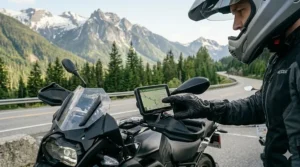
Canadian riders face unique challenges — sudden temperature swings, spring slush mixed with road salt, summer heat waves followed by evening chills, and early snowfalls that catch you mid-commute. Textile motorcycle gloves address these realities with features that matter: waterproof-breathable membranes that keep hands dry during Maritime fog, stretch panels that maintain dexterity in cold weather, and touchscreen-compatible fingertips so you can check navigation without exposing your hands to windchill. What used to mean sacrificing protection for comfort now means getting both, often at a lower price point than premium leather.
The shift toward textile gloves isn’t just about convenience. Modern fabric technology has matured to the point where abrasion resistance, impact protection, and durability meet or exceed CE Level 1 and Level 2 safety standards. Canadian riders are discovering that a well-constructed textile glove with reinforced palms, knuckle armour, and strategic seam placement can handle everything from urban commuting in Toronto traffic to adventure touring through British Columbia’s backcountry — all while keeping your hands comfortable enough to ride longer and safer.
Quick Comparison: Top Textile Motorcycle Gloves Available in Canada
| Model | Waterproof | CE Rating | Best For | Price Range (CAD) |
|---|---|---|---|---|
| Oxford Convoy 3.0 | Yes (Dry2Dry) | CE Level 1 | Budget-conscious all-weather | $95-$115 |
| Alpinestars Reef | No | CE Level 1 KP | Urban summer riding | $60-$80 |
| Joe Rocket Alter Ego | Yes (Dry-Tech) | Not specified | Cold wet weather | $110-$140 |
| Joe Rocket Element | Yes (Dry-Tech) | Not specified | Year-round touring | $100-$130 |
| REV’IT Mosca H2O | Yes (Hydratex) | CE Level 1 | Lightweight summer rain | $140-$170 |
| Alpinestars Corozal V2 Drystar | Yes (Drystar) | CE Level 1 | Versatile street/adventure | $150-$180 |
| HWK Textile Tactical | No | Not specified | Entry-level budget option | $35-$55 |
💬 Just one click — help others make better buying decisions too! 😊
Top 7 Textile Motorcycle Gloves — Expert Analysis
1. Oxford Convoy 3.0 Textile Waterproof Gloves
The Oxford Convoy 3.0 represents exactly what Canadian budget-conscious riders need: legitimate weather protection and CE Level 1 certification without breaking the bank. Built with an improved Dry2Dry waterproof-breathable membrane and reflective detailing, these gloves handle everything from morning commutes through Toronto’s unpredictable spring weather to weekend rides along the Sea-to-Sky Highway when clouds roll in unexpectedly.
The accordion stretch inserts on the first three fingers mean you’re not fighting stiff fabric when working the clutch or front brake — a detail that matters more than spec sheets suggest, especially during long rides when hand fatigue accumulates. The dual adjustment system at wrist and cuff creates an effective seal against rain creeping up your sleeves, something anyone who’s ridden through a Maritime downpour appreciates immediately. What the CE Level 1 certification tells you is that knuckle and palm protection meet European safety standards for impact and abrasion, though this isn’t track-grade armour.
Canadian riders consistently report these gloves perform well in temperatures ranging from 5°C to 20°C — that sweet spot for spring and fall riding across most provinces. The waterproofing holds up during sustained rain (tested riders report staying dry through 2-3 hours of steady precipitation), though like any membrane-based glove, prolonged exposure will eventually overwhelm the system. For the mid-$100 CAD range, you’re getting dependable protection that covers 80% of Canadian riding conditions without the premium price tag.
Pros:
✅ Genuine waterproof-breathable membrane proven in Canadian weather
✅ CE Level 1 certified for legitimate crash protection
✅ Reflective details improve visibility during low-light commutes
Cons:
❌ Basic knuckle protection won’t satisfy track riders or sport touring enthusiasts
❌ Sizing runs slightly small — order up if between sizes
Price & Value: Available on Amazon.ca in the $95-$115 CAD range depending on size and colour. For riders who need reliable all-weather gloves without spending $200+, the Convoy 3.0 delivers exceptional value that justifies itself after just one ride through unexpected rain.
2. Alpinestars Reef Textile Street Gloves
The Alpinestars Reef takes a different approach entirely — these are purpose-built urban summer gloves that prioritize breathability and lightweight comfort over weather protection. Constructed with stretch fabric throughout the back of hand and a synthetic suede palm, they feel closer to a second skin than traditional motorcycle gloves, which is exactly the point for riders navigating stop-and-go traffic in Montreal’s summer heat or cruising through Vancouver’s mild evenings.
What makes the Reef work for Canadian urban riders is the ergonomic stretch insert in the palm that enhances grip and reduces hand fatigue during extended city riding. The multi-media compatible index finger means you can operate your phone’s navigation without removing gloves — a practical feature when you’re filtering through downtown traffic and need to check your route. CE Level 1 KP certification provides legitimate protection despite the minimalist design, with a maze-pattern heat stamp on the palm adding abrasion resistance beyond what the slim profile suggests.
These gloves excel in temperatures above 15°C and shine during humid summer conditions where leather becomes unbearably sweaty. The stretch mesh construction allows genuine airflow, not just marketing claims — Canadian reviewers consistently note these are among the coolest gloves they’ve worn without going fingerless. The trade-off is obvious: no waterproofing, no insulation, and limited protection in crash scenarios compared to gauntlet-style touring gloves.
Pros:
✅ Exceptional breathability keeps hands cool during Canadian summer heat
✅ Slim construction provides superior feel for urban riding controls
✅ Touchscreen compatibility works reliably (tested on iPhone and Android)
Cons:
❌ Zero weather protection — one rainstorm and you’re soaked
❌ Minimal wrist coverage won’t overlap jacket sleeves properly
Price & Value: Typically found on Amazon.ca in the $60-$80 CAD range. If you’re an urban commuter in Toronto, Vancouver, or Calgary riding May through September only, these deliver outstanding value. Any other use case, and you’ll want something more versatile.
3. Joe Rocket Alter Ego Waterproof Textile Gloves
The Joe Rocket Alter Ego is the glove Canadian riders buy when they’re serious about riding through shoulder seasons and variable weather. Built with a breathable Rock Tex 900 outer shell that’s genuinely abrasion-resistant (not just marketing fluff) and Joe Rocket Canada’s proven Dry-Tech waterproof membrane, these handle everything from October drizzle in Nova Scotia to April slush in Saskatchewan without letting moisture reach your skin.
What separates the Alter Ego from cheaper waterproof gloves is the 70g insulation paired with 4-way stretch fabric — you get warmth without bulk, and flexibility without sacrificing protection. The dual-stage closure system at wrist and cuff creates an overlap seal that stops water from tracking up your sleeves, a detail that anyone who’s ridden through Canadian spring knows matters more than fancy knuckle guards. Functional touchscreen fingertips actually work (tested reliably down to about 5°C, below which most touchscreen gloves struggle anyway), so you don’t have to expose bare hands to check navigation during cold rides.
Canadian riders in colder provinces particularly appreciate how these gloves bridge the gap between summer mesh gloves and dedicated winter gauntlets. They handle morning commutes at 2°C (with liners underneath), perform comfortably at 15°C (without liners), and keep you dry during sustained rain. The 4-way stretch means you maintain control feel even when wearing insulating layers, something cheaper waterproof gloves sacrifice entirely. For the $110-$140 CAD range, you’re getting gloves that extend your riding season by weeks on both ends.
Pros:
✅ 100% waterproof with breathable membrane that actually breathes (tested in heavy rain)
✅ 70g insulation handles Canadian shoulder season temperatures (0-15°C range)
✅ 4-way stretch maintains dexterity despite weatherproof construction
Cons:
❌ Bulkier than summer gloves — not ideal for peak heat (above 25°C)
❌ No CE certification listed (protection relies on materials/construction only)
Price & Value: Available from Canadian retailers including Amazon.ca in the $110-$140 CAD range. For riders who want one pair of gloves to handle March through November across most of Canada, the Alter Ego justifies its price through sheer versatility.
4. Joe Rocket Element All-Weather Waterproof Gloves
The Joe Rocket Element gloves represent Joe Rocket Canada’s solution for riders who refuse to let weather dictate their schedule. Combining leather palm sections with Rock Tex 500 stretch outer shell and featuring the same Dry-Tech waterproof membrane as the Alter Ego, these gloves tackle Canadian touring conditions where you might start a ride in sunshine and finish in sleet.
The 70g insulation keeps hands comfortable down to near-freezing temperatures, making these ideal for riders who push into late October or start early in April across prairie provinces or the Interior of BC. What touring riders appreciate is how the combination leather-textile construction balances durability where it matters (palms and high-wear zones) with flexibility where you need it (backs of fingers and thumbs). The waterproof membrane has proven reliable during multi-hour rides through rain — Canadian reviewers consistently report staying dry through conditions that would have soaked lesser gloves within 30 minutes.
For year-round commuters in cities like Victoria, Vancouver, or the Lower Mainland, these gloves handle the mild-but-wet winters without requiring dedicated winter gauntlets. The stretch outer shell accommodates subtle wrist movements without binding, and the combination of materials provides better crash protection than pure textile while maintaining better weather resistance than pure leather. According to provincial motorcycle safety guidelines, wearing proper gloves that cover the wrists and overlap jacket sleeves significantly reduces hand injuries during crashes. The trade-off comes in warmer weather — above 20°C, the insulation and waterproof membrane start working against you, trapping heat rather than protecting from cold.
Pros:
✅ Hybrid leather-textile construction optimizes durability and flexibility
✅ Dry-Tech membrane keeps hands dry through extended Canadian rain
✅ 70g insulation extends usable temperature range to near-freezing
Cons:
❌ Too warm for summer riding (above 20°C becomes uncomfortable)
❌ Leather sections require occasional conditioning to maintain weather resistance
Price & Value: Generally priced in the $100-$130 CAD range on Amazon.ca and Canadian motorcycle retailers. If you’re a touring rider covering long distances across variable Canadian climates, these gloves deliver protection and comfort that justify choosing them over separate summer/winter pairs.
5. REV’IT Mosca H2O Waterproof Summer Gloves
The REV’IT Mosca H2O solves a problem many Canadian riders didn’t know had a solution: how to get waterproof protection in a genuine summer glove. Most waterproof gloves sacrifice breathability for weather protection, leaving you sweaty and uncomfortable the moment temperatures climb above 18°C. REV’IT addressed this with their proprietary Hydratex Z-liner membrane — it’s marginally less breathable than Gore-Tex but just as waterproof, and the lighter textile construction means air can still circulate around the membrane.
What makes these work for Canadian conditions is the single-piece supple goat leather palm that provides slide protection and superior handlebar feel while the stretch mesh back-of-hand construction keeps air flowing. You get CE Level 1 certification with TPR knuckle protection that remains flexible during normal riding but hardens on impact. Canadian riders report these handle summer rain showers perfectly — you stay dry without feeling like you’re wearing winter gloves in July heat, a balance that’s harder to achieve than it sounds.
For the $140-$170 CAD price point, you’re paying for European engineering and proven materials, but you’re also getting gloves that expand your riding window. Instead of choosing between summer mesh gloves that leave you soaked or waterproof gloves that leave you sweaty, the Mosca H2O lets you ride comfortably through those unpredictable Canadian summer days when morning sunshine gives way to afternoon thunderstorms. The fact that REV’IT only charges about $10 extra for the waterproof version compared to the standard Mosca makes this one of the better values in their lineup.
Pros:
✅ Hydratex waterproof membrane works without excessive bulk or heat retention
✅ Goat leather palm provides excellent feel and slide protection
✅ CE Level 1 certified with TPR knuckle protection
Cons:
❌ Premium price ($140-$170 CAD) for seasonal-use gloves
❌ Limited availability on Amazon.ca compared to US market
Price & Value: When available on Amazon.ca, expect pricing in the $140-$170 CAD range. For riders who want premium summer gloves that won’t fail during weather changes, the Mosca H2O represents the upper tier of value before you’re paying for brand prestige rather than performance.
6. Alpinestars Corozal V2 Drystar Adventure Gloves
The Alpinestars Corozal V2 Drystar is what you buy when you need one pair of gloves to handle urban commuting Monday through Friday and adventure riding on weekends. This short-cuff street glove combines Alpinestars’ proprietary Drystar waterproof membrane with a strategic blend of full-grain leather in slide-prone areas and textile everywhere else, creating a glove that’s protective enough for highway speeds but flexible enough for daily riding.
What adventure and touring riders appreciate is how the Corozal V2 balances protection with versatility. The CE Level 1 certification provides legitimate crash protection without the bulk of Level 2 track gloves, while the Drystar membrane has proven reliable during Canadian touring conditions — riders report staying dry through moderate rain, though extended downpours (the kind you get during BC coastal riding) will eventually saturate the outer shell even if the membrane holds. The short-cuff design means these slip easily under jacket sleeves, creating a weatherproof seal without the commitment of full gauntlet gloves.
Canadian riders particularly value how these gloves transition between riding styles. They’re substantial enough for highway cruising at 110 km/h but not so bulky that you’re fumbling with your bike’s fuel cap or struggling with jacket zippers during stops. The combination of materials provides better abrasion resistance than pure textile in critical areas while maintaining better flexibility than pure leather — a practical middle ground for riders who can’t justify owning separate gloves for every scenario.
Pros:
✅ Drystar membrane provides reliable waterproofing for moderate Canadian weather
✅ Leather-textile hybrid construction optimizes protection and flexibility
✅ Short-cuff design pairs well with most jacket styles
Cons
❌ CE Level 1 rather than Level 2 (adequate but not maximum protection)
❌ Not designed for extreme cold (comfortable range approximately 5-20°C)
Price & Value: Typically priced in the $150-$180 CAD range on Amazon.ca. If you’re looking for versatile adventure-touring gloves that handle the majority of Canadian riding conditions without requiring a dedicated glove wardrobe, the Corozal V2 delivers solid value in the mid-premium range.
7. HWK Textile Tactical Motorcycle Gloves
The HWK Textile Tactical gloves occupy the entry-level budget category, and it’s important to be realistic about what you’re getting. Constructed from popcorn fabric and Ammara material with neoprene palm padding, these gloves prioritize affordability and basic protection over advanced features or premium materials. They’re what Canadian riders buy for their first season, for backup pairs, or for situations where you need gloves but can’t justify spending $100+.
What separates functional budget gloves from garbage is attention to basics, and HWK gets this right. The injection-molded hard knuckle protector provides legitimate impact protection, the reinforced palm with 3D silicone HWK logos adds grip and some crash resistance, and the hook-and-loop wrist closure keeps them secure. Are these gloves going to save your hands during a 100 km/h highway crash? Probably not to the extent CE Level 2 certified gloves would. Will they protect you during urban riding, provide basic weather resistance, and give you control over your motorcycle? Yes, and that’s the honest value proposition.
Canadian riders should understand these limitations clearly. There’s no waterproof membrane, so heavy rain will soak through within 15-20 minutes. There’s no CE certification, so you’re trusting construction quality rather than tested standards. The materials won’t last multiple seasons of daily riding. But for $35-$55 CAD, you’re getting gloves that beat riding bare-handed or wearing hardware store work gloves by a massive margin. New riders figuring out if motorcycling is their thing, experienced riders needing throwaway gloves for messy maintenance work, or budget-conscious commuters willing to accept trade-offs — that’s who these serve.
Pros:
✅ Genuinely affordable entry point ($35-$55 CAD) for new riders
✅ Hard knuckle protector and palm padding provide basic impact protection
✅ Machine washable (claimed by manufacturer)
Cons:
❌ No waterproofing or weather resistance beyond basic fabric
❌ No CE certification (protection level untested and unverified)
Price & Value: Consistently available on Amazon.ca in the $35-$55 CAD range. These represent the absolute minimum investment in hand protection that still qualifies as actual motorcycle gloves rather than work gloves with logos. Perfect for beginners; inadequate for serious riders.
How to Care for Textile Motorcycle Gloves in Canadian Conditions
Canadian weather and road conditions demand more from your gloves than simply protecting your hands during rides — they face road salt corrosion during spring, UV degradation during summer, moisture exposure during fall, and storage challenges during winter. Proper care extends the life of textile motorcycle gloves significantly and maintains their protective properties when you actually need them.
Start by addressing the immediate post-ride reality: Canadian roads leave residue. After riding through spring slush mixed with road salt (a Saskatchewan and prairie provinces specialty), rinse gloves with cool water to remove salt crystals before they penetrate fabric fibres and break down waterproof membranes. Don’t just toss them aside — salt actively degrades both textile materials and stitching, particularly around high-stress areas like finger joints and palm seams. For gloves with leather components like the Joe Rocket Element or Alpinestars Corozal V2, wipe leather sections with a damp cloth and apply leather conditioner every 4-6 weeks of regular use to prevent cracking in our dry prairie winters or salt damage in Maritime climates.
When gloves get genuinely soaked (not just damp from morning dew, but saturated from riding through a Maritime downpour or unexpected Alberta thunderstorm), resist the urge to accelerate drying with heat. Never place textile gloves near radiators, wood stoves, or in direct sunlight for extended periods — this degrades waterproof membranes, stiffens materials, and can warp protective armour inserts. Instead, remove gloves promptly after riding, stuff them loosely with newspaper to absorb internal moisture while maintaining shape, and allow them to air dry in a cool, well-ventilated space. Replace newspaper every few hours initially, then let gloves dry completely over 24-36 hours. This method preserves membrane integrity and prevents the musty smell that develops when gloves stay damp in closed storage.
Storage between seasons matters more than most Canadian riders realize. Before storing gloves for winter (or if you’re in Victoria and Calgary where year-round riding is sometimes possible, before extended breaks), clean them thoroughly following manufacturer guidelines. Most textile gloves can handle gentle hand washing with mild soap — check care labels, but avoid machine washing unless explicitly stated as safe. Store gloves in a cool, dry location away from direct sunlight, preferably in a breathable bag rather than sealed plastic (which traps residual moisture and promotes mildew). Periodically inspect knuckle protectors, palm sliders, and stitching for wear — catching frayed seams before they fail during a crash is the difference between protective gear and decorative accessories.
Real-World Scenarios: Matching Gloves to Canadian Riding Profiles
Profile 1: The Toronto Urban Commuter (March-November riding)
You’re navigating stop-and-go traffic along the Gardiner Expressway, filtering through downtown intersections, and facing unpredictable weather that swings from sunshine to sudden downpours within the same commute. Your gloves need touchscreen compatibility for navigation, waterproof capability for those surprise storms, and enough protection for highway merges while remaining comfortable during 30-minute parking lot sessions at work.
Best match: Joe Rocket Alter Ego Waterproof Textile Gloves ($110-$140 CAD). The Dry-Tech membrane handles Toronto’s spring rain reliably, touchscreen fingertips work with your phone even during cold mornings, and 4-way stretch maintains dexterity during slow-speed manoeuvres. The insulation covers cool morning rides (common until late May) without becoming oppressive during afternoon heat. Alternative consideration: Alpinestars Corozal V2 Drystar if you occasionally take weekend rides beyond the city and need something that transitions to highway touring.
Profile 2: The Vancouver Island Year-Round Rider
Mild winters mean you’re riding through December and starting again in February, but “mild” still means rain — constant, persistent, soul-testing rain that defines coastal BC riding. You need gloves that prioritize waterproofing above all else while maintaining enough breathability for the occasional sunny break. Temperature range covers 5°C winter mornings to 22°C summer afternoons.
Best match: REV’IT Mosca H2O Waterproof Summer Gloves ($140-$170 CAD) for primary use, with a backup pair of Oxford Convoy 3.0 for deep winter. The Mosca H2O’s Hydratex membrane provides genuine waterproofing without excessive bulk, handling coastal moisture better than heavier insulated gloves that just trap sweat. The goat leather palm maintains feel even when wet. For the coldest months (December-February), swap to the Oxford Convoy 3.0 which adds more insulation while keeping waterproof capability.
Profile 3: The Prairie Long-Distance Tourer (Saskatchewan/Manitoba/Alberta)
You’re covering 400-600 km days across the prairies, dealing with extreme temperature variations (morning frost followed by afternoon heat), sudden weather changes (clear skies to thunderstorms in 30 minutes), and the reality that nearest towns might be 100 km apart when conditions change. Your gloves need to handle everything without stopping to swap gear.
Best match: Joe Rocket Element All-Weather Waterproof Gloves ($100-$130 CAD). The hybrid leather-textile construction survives extended handlebar contact during long highway stretches, Dry-Tech membrane handles prairie thunderstorms, and 70g insulation bridges the temperature gap between early morning (potentially near freezing) and afternoon heat (potentially 25°C+). The durability matters when you’re hours from replacement options and can’t afford gear failure.
Common Mistakes When Buying Textile Motorcycle Gloves in Canada
Mistake 1: Ignoring CE Certification Because “They Look Protective”
Canadian riders frequently purchase textile gloves based on aggressive styling — carbon-fibre-look knuckle guards, thick padding, racing stripes — without checking for CE Level 1 or Level 2 certification. The CE mark indicates the glove has passed standardized impact and abrasion testing under European safety standards (EN 13594:2015). Without certification, you’re trusting manufacturer claims rather than tested performance. This matters during insurance claims and medical treatment; hospitals and adjusters recognize CE ratings, not marketing descriptions.
The practical reality: CE Level 1 gloves provide adequate protection for street riding and touring at legal speeds. CE Level 2 gloves add significantly more impact resistance and are designed for track use or aggressive sport riding. Many budget gloves (like the HWK Tactical) provide zero certification — they’ll protect you better than bare hands but won’t meet the standards that certified gloves guarantee. If you’re spending above $100 CAD, CE certification should be mandatory; below that price point, you’re accepting risk in exchange for affordability.
Mistake 2: Buying “Waterproof” Gloves Without Understanding Membrane Technology
Not all waterproof claims are equal, and Canadian weather exposes this brutally. True waterproof gloves use breathable membranes (Gore-Tex, Drystar, Dry-Tech, Hydratex) that block external water while allowing internal moisture vapour to escape. Cheaper gloves often use water-resistant coatings that repel light rain but fail during sustained precipitation — exactly the scenario you face during spring rides through Nova Scotia or fall touring through BC Interior.
The test Canadian riders should apply: Can you find specific membrane technology named in product descriptions? “Waterproof coating” or “water-resistant treatment” means your hands will be soaked within 30-45 minutes of moderate rain. Named membrane technology (Dry2Dry, Drystar, Dry-Tech) indicates genuine waterproof-breathable construction. The price difference reflects real engineering — expect to pay $100+ CAD for legitimate waterproof textile gloves versus $50-70 for water-resistant pretenders.
Mistake 3: Ordering Based on “Regular” Sizing Without Measuring
Motorcycle glove sizing varies dramatically between manufacturers, and ordering your “usual medium” often results in gloves that don’t fit properly — either too tight (restricting blood flow and causing numbness during rides) or too loose (reducing control feel and allowing gloves to shift during grips). European brands (Alpinestars, REV’IT) typically run smaller than North American brands (Joe Rocket, HWK), and this matters more with textile gloves where stretch varies by fabric type.
Canadian riders should measure hand circumference across knuckles (excluding thumb) and compare against manufacturer sizing charts before ordering. If between sizes, consider riding style: sport and urban riders benefit from snugger fits (better control feel), while touring and adventure riders often prefer slightly looser fits (room for thin liner gloves during cold weather). Amazon.ca’s return policy allows exchanges, but measuring correctly the first time saves shipping delays and ensures you’re actually riding rather than managing returns.
Mistake 4: Forgetting About Canadian Winter Storage Requirements
Unlike riders in California or Arizona who might use the same gloves year-round, Canadian riders face 3-5 months where gloves sit unused in garages, basements, or storage units. Storing textile gloves incorrectly leads to degraded waterproof membranes, stiffened materials, corroded Velcro closures, and musty odours that never fully disappear.
Before storage, clean gloves thoroughly (removing road salt, oil, and dirt that gradually degrade materials), allow them to dry completely (any residual moisture promotes mildew during months-long storage), and store in breathable containers away from heat sources or direct sunlight. Don’t leave gloves compressed under heavy objects or stuffed into tight spaces — this permanently deforms padding and knuckle protectors. Taking 15 minutes of care before winter storage can mean the difference between gloves that last 5+ seasons versus gloves that need replacement every 2 years.
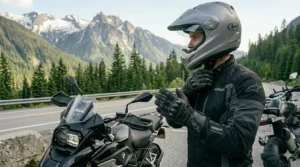
Textile vs Leather Motorcycle Gloves: The Canadian Climate Perspective
The traditional leather-versus-textile debate shifts significantly when viewed through Canadian climate realities. Leather advocates point to superior abrasion resistance and classic durability; textile supporters highlight weather versatility and breathability. Both camps are correct, but neither fully addresses what Canadian riders actually face: dramatic seasonal variations, unpredictable weather within single rides, and the practical need for gear that handles diverse conditions without requiring extensive wardrobe investments.
Abrasion Protection Reality Check
High-quality leather (kangaroo, goat, cowhide) provides better slide resistance than basic textile — this remains true. However, modern textile gloves using Cordura, Kevlar, or Dyneema in critical zones (palms, finger sides, knuckle backs) now meet CE Level 1 and Level 2 standards that demonstrate adequate crash protection for street riding. The gap has narrowed considerably since the 1990s when textile meant “definitely not leather quality.” Canadian riders should understand that CE Level 2 certified textile gloves provide verified protection; uncertified leather gloves provide assumed protection based on material reputation alone. According to RCMP motorcycle safety recommendations, protective gloves should be made of leather or similar materials designed specifically for riding — modern textile fabrics now qualify under this guidance.
The practical difference emerges during crashes: leather’s natural material properties mean it gradually wears through during slides, providing consistent protection until ultimate failure. Textile gloves (depending on construction quality) may fail more suddenly if seams burst or fabric tears, but high-quality examples with reinforced stitching and strategically placed panels perform comparably. For street riding at Canadian highway speeds (80-110 km/h), either material works when properly constructed and certified.
Weather Protection: Where Textile Wins Decisively
This is where Canadian climate realities override traditional preferences. Leather gloves excel in dry cold (prairie winter days at -5°C with clear skies) but struggle with moisture. Water penetrates leather gradually, and once saturated, leather requires extensive drying time and conditioning to restore weather resistance. Spring riding through Manitoba or Nova Scotia — where morning frost gives way to afternoon slush — means leather gloves spend more time wet than dry, leading to rapid deterioration and unpleasant rides.
Textile gloves with waterproof membranes (Dry-Tech, Drystar, Hydratex, Gore-Tex) provide genuine all-weather capability. They keep hands dry during sustained rain, dry quickly after rides, and maintain protective properties regardless of moisture exposure. For Canadian riders who face unpredictable weather during the actual riding season (April through October in most provinces), waterproof textile gloves extend usable riding days by weeks compared to leather alternatives. The ability to ride through a surprise afternoon thunderstorm without soaked hands isn’t luxury — it’s practical necessity when you’re commuting or touring.
Temperature Versatility: Textile’s Hidden Advantage
Canadian riding conditions span approximately -5°C (late-season brave souls in BC or Southern Ontario) to +30°C (prairie summer heat waves). Leather gloves generally require separate summer (perforated, unlined) and winter (insulated, gauntlet) versions to cover this range. Textile gloves offer more temperature flexibility through strategic fabric choices: mesh panels for ventilation, waterproof membranes that double as windproof barriers, and compatible liner glove systems that extend range without bulk.
A well-chosen mid-season textile glove like the Joe Rocket Element handles 0°C (with thin liner gloves underneath) through 20°C (without liners) effectively — covering March through November for many Canadian riders with one pair. Achieving similar versatility with leather requires multiple glove investments or accepting suboptimal comfort across temperature ranges. For riders on budget constraints or with limited storage, textile’s adaptability provides real value.
Understanding Waterproof Membrane Technology in Motorcycle Gloves
Waterproof membranes represent the engineering difference between gloves that keep you dry and gloves that leave you miserable, but not all membranes perform equally. Canadian riders encounter membrane technology names constantly — Gore-Tex, Drystar, Dry-Tech, Hydratex, Dry2Dry — yet rarely understand what separates marketing from genuine performance.
How Waterproof-Breathable Membranes Actually Work
All waterproof-breathable membranes operate on the same basic principle: microscopic pores that are small enough to block liquid water molecules but large enough to allow water vapour (sweat) to escape. Gore-Tex pioneered this technology and remains the premium standard, but proprietary alternatives from Alpinestars (Drystar), Joe Rocket (Dry-Tech), REV’IT (Hydratex), and Oxford (Dry2Dry) use similar micropore technology with varying pore sizes, density, and construction methods.
The performance difference emerges in breathability ratings (how effectively sweat vapour escapes) and hydrostatic head ratings (how much water pressure the membrane withstands before failing). Gore-Tex typically achieves 15,000-28,000mm hydrostatic head with high breathability; proprietary membranes may range from 5,000mm (adequate for moderate rain) to 20,000mm+ (handles sustained downpours). Canadian riders should understand that adequate waterproofing (10,000mm+) handles the majority of riding conditions we actually face — you’re more likely to stop riding during extreme storms than continue pushing through conditions that overwhelm modern membranes.
Practical Performance: What Matters During Canadian Rides
The theoretical membrane specifications matter less than construction quality and integration. A glove with superior Gore-Tex membrane but poor seam sealing will leak at stress points (finger joints, palm creases, wrist closures) long before the membrane itself fails. Conversely, well-constructed gloves using mid-tier membranes (Dry-Tech, Hydratex) with properly sealed seams and overlapping closures keep hands dry during multi-hour rain exposure.
Canadian riders report that any quality waterproof membrane handles our typical conditions: spring drizzle, summer thunderstorms, fall rain, coastal moisture. Where membranes differ significantly is breathability during temperature swings. Gore-Tex and Hydratex provide better moisture vapour transmission, reducing internal sweat buildup when you’re riding through variable temperatures (morning at 8°C, afternoon at 22°C). Cheaper membranes trap more internal moisture, leaving you with clammy hands even though external water stayed out.
Membrane Lifespan and Canadian Climate Factors
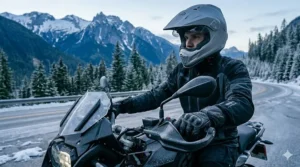
Waterproof membranes degrade over time, and Canadian conditions accelerate this process. Road salt contamination during spring riding, UV exposure during summer storage, and repeated wet-dry cycles all reduce membrane effectiveness. Quality membranes (Gore-Tex, Drystar) typically maintain waterproofing for 3-5 years of regular use; budget membranes may show reduced performance after 1-2 seasons.
The maintenance reality Canadian riders face: you can’t fully restore degraded membrane performance through cleaning or treatment. Once micropores become contaminated or damaged, waterproofing fails progressively until replacement becomes necessary. This is why investing in higher-quality membrane technology makes sense for riders who plan to use gloves across multiple seasons — a $170 pair with Gore-Tex that lasts five years provides better value than a $100 pair with basic membrane that needs replacement every two years.
FAQ
❓ Are textile motorcycle gloves as safe as leather for Canadian riding conditions?
❓ Can I use waterproof textile motorcycle gloves in winter across Canada?
❓ How long do waterproof membranes last in textile motorcycle gloves?
❓ Do textile motorcycle gloves work with touchscreen phones in cold weather?
❓ Which textile motorcycle gloves are best for Canadian commuters riding year-round?
Conclusion
Textile motorcycle gloves have evolved from compromise alternatives into legitimate high-performance gear that addresses Canadian riding realities better than traditional options. The combination of waterproof-breathable membranes, modern synthetic materials meeting CE safety standards, and temperature versatility means Canadian riders can now invest in gloves that handle our unpredictable climate without sacrificing protection or comfort.
For budget-conscious riders, the Oxford Convoy 3.0 ($95-$115 CAD) delivers genuine waterproofing and CE Level 1 protection without premium pricing. Urban commuters benefit from the touchscreen compatibility and weather versatility of the Joe Rocket Alter Ego ($110-$140 CAD). Touring riders covering long distances across variable conditions should seriously consider the Joe Rocket Element ($100-$130 CAD) for its hybrid construction and extended temperature range. And riders willing to invest in premium engineering will find the REV’IT Mosca H2O ($140-$170 CAD) provides exceptional summer waterproofing without bulk.
The shift toward textile motorcycle gloves isn’t about following trends — it’s about matching gear to the conditions Canadian riders actually face. Spring slush, summer thunderstorms, fall rain, and the need for equipment that performs across diverse scenarios all favour textile construction with proper waterproof membranes. Whether you’re commuting through Toronto traffic, touring across prairie highways, or navigating BC coastal routes, modern textile gloves deliver protection and comfort that extend your riding season and improve every ride.
Recommended for You
- 7 Best Gore-Tex Motorcycle Gloves Canada 2026
- 7 Best Leather Motorcycle Gloves Canada 2026
- CE Level 1 vs Level 2 Motorcycle Gloves: 7 Best Safety Options Canada 2026
Disclaimer: This article contains affiliate links. As an Amazon Associate, I earn from qualifying purchases. If you purchase products through these links, we may earn a small commission at no additional cost to you.
✨ Found this helpful? Share it with your friends! 💬🤗
