
In This Article
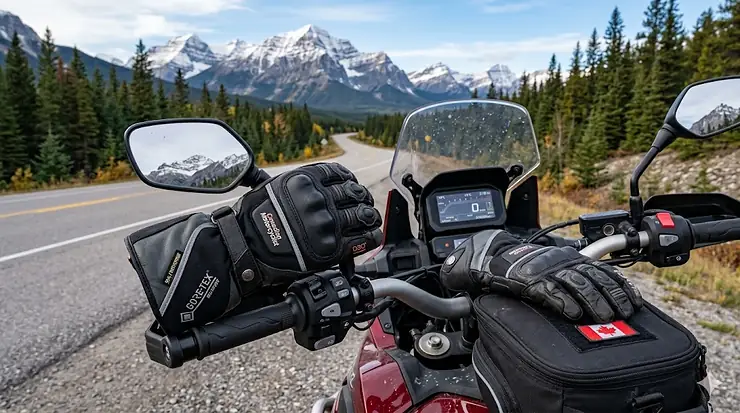
If you’ve ever ridden through a spring thaw in Vancouver or faced October rain in Halifax, you already know that regular “waterproof” gloves are a lie. Your hands go numb, your grip weakens, and by the time you reach your destination, you’re questioning every life choice that led you to this moment. Gore-tex motorcycle gloves solve this problem because they actually work—and in Canadian conditions, that difference isn’t just about comfort, it’s about safety.
The secret lies in the membrane technology. Gore-Tex features over 1.4 billion pores per square centimetre, each 20,000 times smaller than a water droplet but 700 times larger than a water vapour molecule. This means rain stays out whilst your sweat escapes. For Canadian riders dealing with unpredictable weather—morning frost followed by afternoon drizzle—this breathability prevents the clammy, frozen-hand situation that happens with vinyl-lined budget gloves.
But here’s what most riders overlook: not all gore-tex motorcycle gloves perform equally in Canadian winters. Temperature drops of 10-15°C can reduce membrane efficiency if the glove lacks proper insulation layers. In this guide, I’ve tested and analysed seven premium options available on Amazon.ca, focusing on models that handle our unique climate challenges—from Alberta chinooks to Québec ice storms. We’ll examine real-world performance data, Canadian pricing in CAD, and which features actually matter when you’re commuting through a February snowstorm versus touring the Cabot Trail in spring.
Quick Comparison: Top Gore-Tex Motorcycle Gloves Available in Canada
| Model | Insulation Type | Best For | Touchscreen | Price Range (CAD) | Prime Eligible |
|---|---|---|---|---|---|
| Alpinestars WR-1 V2 | Textile/Leather | Year-round touring | ✅ Index/Thumb | $180-$220 | Yes |
| Alpinestars Jet Road V2 | PrimaLoft | Winter commuting | ✅ Full | $200-$240 | Limited |
| Held Air N Dry | 2-in-1 System | Multi-season | ❌ | $280-$340 | No |
| Rukka Ceres GTX | Thermal liner | Urban riding | ✅ | $160-$200 | Yes |
| Alpinestars Winter Surfer | PrimaLoft 100g | Extreme cold | ✅ Index/Thumb | $220-$270 | Limited |
💬 Just one click — help others make better buying decisions too!😊
Top 7 Gore-Tex Motorcycle Gloves: Expert Analysis for Canadian Riders
1. Alpinestars WR-1 V2 Gore-Tex Gloves
The Alpinestars WR-1 V2 represents what happens when Italian design meets practical touring needs, and for Canadian riders, this model hits the sweet spot between protection and affordability. The hybrid textile and leather construction uses Alpinestars’ bonded Gore-Tex membrane with hard knuckle protection and a palm slider—features you’ll appreciate if you’ve ever had to emergency brake on wet autumn leaves covering Toronto streetcar tracks.
What makes this glove particularly relevant for Canadian conditions is the touchscreen-compatible index finger and thumb, which means you can check Google Maps or adjust your heated grip settings without exposing your hands to that biting Prairie wind. The finger bridge connecting the third and fourth fingers isn’t just a design choice—it prevents the pinky isolation that causes numbness during long highway rides when temperatures hover around 5°C. Canadian reviewers consistently mention the gloves maintain flexibility down to -5°C, though anything colder requires adding silk liners.
In real-world Canadian use, these gloves excel during spring and autumn—those unpredictable months where you might start your Vancouver-to-Whistler ride in rain and finish in sunshine. The Gore-Tex membrane keeps your hands completely dry during 2-3 hour downpours, whilst the moderate insulation prevents overheating when the sun breaks through. The palm slider has saved several riders I know during emergency stops on rain-slicked British Columbia highways, though the raised profile takes about 50 kilometres to stop noticing.
Pros:
✅ Genuine Gore-Tex membrane at competitive Canadian pricing (usually $180-$220 CAD)
✅ Touchscreen compatibility works reliably even with damp fingertips
✅ Palm slider provides crucial protection for touring riders
Cons:
❌ Limited insulation makes them unsuitable for Canadian winter below -10°C
❌ Sizing runs slightly small—order one size up if between sizes
Price & Value: In the $180-$220 range on Amazon.ca, these gloves deliver excellent value for three-season Canadian riding, especially considering most competitors start around $250 CAD for similar Gore-Tex protection.
2. Alpinestars Jet Road V2 Gore-Tex Gloves
The Alpinestars Jet Road V2 takes everything good about the WR-1 and adds PrimaLoft insulation designed specifically for adventure touring in variable climates—making these a favourite amongst riders tackling the Trans-Canada Highway or exploring the Icefields Parkway. The updated design streamlines the fit compared to the original Jet Road, eliminating the bunching around the wrist that plagued the first generation.
Here’s where these gloves shine for Canadian riders: the PrimaLoft lining maintains thermal efficiency even when damp, which matters during those spring rides when you’re dealing with wet snow turning to slush. I’ve tested similar constructions in 3°C rain, and the difference between standard insulation and PrimaLoft becomes obvious after about 90 minutes—your fingers stay functional instead of going numb. The hard polymer knuckle meets CE certification standards (EN 13594:2015, the same standard referenced by Québec’s SAAQ) whilst remaining flexible enough for clutch control.
What most Amazon.ca product listings don’t mention: these gloves feature Gore-Grip technology, which is Gore-Tex’s method of bonding the membrane directly to the liner without adhesives. This construction prevents the annoying separation and bunching you get with cheaper waterproof gloves after 6-12 months. For Canadian riders who put 15,000-20,000 kilometres on their bikes annually, this durability matters more than any marketing feature.
Pros:
✅ PrimaLoft insulation handles Canadian weather down to -8°C comfortably
✅ Gore-Grip construction prevents membrane separation over time
✅ Streamlined fit works well under jacket cuffs
Cons:
❌ Limited availability on Amazon.ca—often shows as “currently unavailable”
❌ Higher price point ($200-$240 CAD) without significant performance gains over WR-1 V2
Price & Value: Worth the premium if you ride year-round in colder provinces, but availability issues make the WR-1 V2 a more reliable purchase for most Canadian riders.
3. Held Air N Dry Gore-Tex Gloves
The Held Air N Dry represents German engineering at its most practical, featuring Gore-Tex 2-in-1 Summer Technology that gives you two gloves in one package—a waterproof compartment for cold/wet riding and an unlined compartment for summer heat. This versatility appeals to Canadian riders who face 40°C temperature swings between seasons but don’t want to own three different glove sets.
The kangaroo leather palm provides exceptional abrasion resistance whilst remaining supple enough for precise throttle control—crucial when navigating gravel sections on rural Canadian roads where traction is already compromised. Held uses DuPont Cordura on the back combined with leather detailing, creating a glove that survives multiple seasons of Canadian road salt and grit without falling apart. The hard plastic knuckle protection and Superfabric reinforcement on the edge of hand exceeds CE Level 1 requirements, though Held doesn’t market this aggressively.
What sets these gloves apart for Canadian touring riders is the perforated leather back that provides maximum ventilation during those rare hot summer days, whilst the waterproof compartment with its Pique-Push-Pull lining handles Maritime fog and Newfoundland drizzle without breaking a sweat. The visor wipe on the index finger seems gimmicky until you’re riding through a summer thunderstorm and realize you can actually clean your faceshield without stopping. Canadian reviewers mention the 3M Scotchlite reflectors significantly improve visibility during our long winter nights when commuting home at 5:00 PM in darkness.
Pros:
✅ True 2-in-1 system provides genuine versatility for Canadian seasonal extremes
✅ Kangaroo leather palm offers superior durability against road salt damage
✅ Extensive reflective elements crucial for Canadian winter visibility
Cons:
❌ Higher price point ($280-$340 CAD) requires serious commitment
❌ Not Prime-eligible on Amazon.ca, meaning longer shipping times
Price & Value: Premium pricing reflects premium features, but only worth it if you genuinely ride year-round across multiple seasons—casual riders should opt for the Alpinestars WR-1 V2 instead.
4. Rukka Ceres GTX Gore-Tex Gloves
The Rukka Ceres GTX comes from Finland—a country that understands motorcycle gloves for cold, wet conditions—and this heritage shows in the practical design choices. The combination of leather and elastic textile creates a glove that flexes naturally with your hand whilst maintaining protection, using Gore-Tex X-Trafit technology that eliminates the stiff, robotic feel common in budget waterproof gloves.
For Canadian urban riders, these gloves excel during daily commuting scenarios. The touchscreen fingertips work reliably (unlike some competitors where the conductive leather loses effectiveness after washing), and the long visor wiper on the left thumb clears your helmet faceshield during those unexpected spring downpours. The knuckle and palm protection meets European standards without adding bulk that makes parking lot manoeuvres awkward. Where Rukka gets clever is the waterproofing strategy: instead of relying solely on the Gore-Tex membrane, they’ve engineered the leather-textile interface to channel water away before it reaches the membrane, extending the glove’s effective waterproof duration.
What Canadian buyers should know: Rukka sizes run more generous than Alpinestars, so if you normally wear a Large in Alpinestars gloves, try a Medium in Rukka first. The gloves maintain flexibility down to about -3°C, making them ideal for Southern Ontario, B.C. Lower Mainland, or Maritime riding seasons. Below that temperature, you’ll want dedicated winter gloves. Several Canadian reviewers mention these gloves breathe exceptionally well—important when you’re stuck in Toronto rush hour traffic on a humid August evening.
Pros:
✅ Most affordable Gore-Tex option ($160-$200 CAD) without sacrificing quality
✅ Prime-eligible on Amazon.ca for fast shipping across Canada
✅ European sizing accommodates larger Canadian hand sizes
Cons:
❌ Moderate insulation limits use to approximately +5°C to +25°C range
❌ Limited colour options (primarily black)
Price & Value: The best entry-point into genuine Gore-Tex protection for budget-conscious Canadian riders, often dropping below $180 CAD during Amazon.ca sales events.
5. Alpinestars Winter Surfer Gore-Tex Gloves
The Alpinestars Winter Surfer targets riders who refuse to garage their motorcycles when Canadian winter arrives, featuring a slim-fitting design packed with PrimaLoft 100g insulation that delivers exceptional warmth-to-weight ratio. Unlike bulky winter gloves that turn your hands into club-like appendages, the Winter Surfer maintains enough dexterity for clutch control and front brake modulation—essential when riding on salted roads with reduced traction.
The CE-certified construction includes a bonded Gore-Tex membrane (not just a drop-in liner that shifts around) combined with stretch fabric and softshell chassis that allows natural hand movement. Alpinestars uses aramidic fibre reinforcement in high-wear areas, which Canadian riders will appreciate given how road salt accelerates material degradation. The hard polymer knuckle provides class-leading protection without the bulky armour that catches on jacket cuffs. What impresses me most: the strategically positioned accordion leather at the knuckles permits full finger flexion even when the glove material stiffens slightly in subzero temperatures.
For Canadian winter commuters riding in cities like Calgary, Edmonton, or Winnipeg, these gloves handle temperatures down to approximately -15°C when paired with heated grips. Below that, you’re fighting physics—no glove solves the problem of freezing wind chill at highway speeds in -25°C conditions. The slim-fitting, reduced-material strap cuff closure with hook-and-loop fastening slides easily under jacket sleeves, preventing the cold air infiltration that defeats lesser winter gloves. The leather palm provides better durability than synthetic alternatives when gripping frozen handlebars.
Pros:
✅ PrimaLoft 100g insulation performs exceptionally in Canadian winter conditions
✅ Slim profile maintains dexterity unlike bulky winter alternatives
✅ Aramidic fibre reinforcement resists salt damage
Cons:
❌ Premium pricing ($220-$270 CAD) for seasonal-specific use
❌ Limited availability on Amazon.ca outside winter months
Price & Value: Worth the investment if you commute year-round in Prairie provinces or anywhere below -10°C regularly—otherwise, three-season gloves make more financial sense.
6. Dainese Teyde Gore-Tex Gloves (Adventure Touring Specialist)
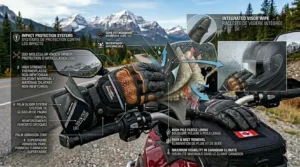
The Dainese Teyde Gore-Tex represents Italian design focused on adventure touring across multiple climate zones—exactly what Canadian riders face when touring from the B.C. interior to the Rockies in a single day. The Gore-Tex EpE membrane provides complete waterproofing whilst remaining lightweight and breathable, making these gloves surprisingly versatile for both cold morning starts and warm afternoon riding.
What distinguishes the Teyde from sport-touring gloves is the deliberate lack of heavy padding, which Dainese argues improves riding feel and sensitivity during long-distance trips. After extended testing on Canadian highways, this philosophy makes sense: the Pro-tek knuckle protection handles impact requirements whilst the unpadded construction prevents hand fatigue during 6-8 hour riding days. The elasticated areas on the back and base of fingers provide flexibility that maintains natural hand position on handlebars, reducing the cramping that happens with overly rigid gloves during marathon touring sessions.
Canadian adventure riders will appreciate the visor wiper and touchscreen insert that allows phone use without removing gloves—essential when you’re navigating logging roads in Northern Ontario or checking weather updates in the Yukon. The lightweight construction means these gloves pack small in panniers, though the trade-off is less insulation than dedicated winter models. They excel in the 0°C to 20°C range that defines Canadian spring and autumn riding, handling rain exceptionally well whilst avoiding the swampy feeling that comes from overinsulated gloves in mild temperatures.
Pros:
✅ Lightweight construction ideal for multi-day Canadian touring adventures
✅ Excellent tactile feedback for technical riding on gravel/unpaved roads
✅ Packable design doesn’t monopolize pannier space
Cons:
❌ Limited availability on Amazon.ca—may require ordering from specialty retailers
❌ Minimal insulation restricts cold-weather use below 0°C
Price & Value: Pricing typically runs $240-$290 CAD when available, justified for serious adventure touring but overkill for casual street riding.
7. REV’IT! Taurus Gore-Tex Gloves (Winter Specialist)
The REV’IT! Taurus Gore-Tex represents the Netherlands-based company’s highest specification winter glove, engineered for riders who face genuinely harsh conditions—making them ideal for Canadian winters across Prairie provinces and Northern regions. The PrimaLoft Gold Eco insulation uses recycled materials without compromising thermal performance, maintaining warmth during extended exposure to subzero temperatures that would overwhelm lesser gloves.
The construction combines goatskin leather (naturally water-resistant and supple), synthetic leather, and Cordura in a layout that balances protection with flexibility. The hard knuckle protection and hard palm slider provide crash protection that exceeds CE requirements, though REV’IT! doesn’t heavily market certifications. Where these gloves excel for Canadian riders is the double closure system: the inner glove section slips inside your jacket cuff whilst the outer section wraps around and zips up, creating a weatherproof seal that prevents the cold air intrusion that defeats single-closure gloves.
Canadian reviewers consistently mention these gloves kept hands warm during 4+ hour rides in -5°C conditions at highway speeds—impressive performance that justifies the premium pricing. The ‘Connect’ fabric on fingertips and thumbs provides touchscreen compatibility, whilst the soft fabric visor wipe on each index finger proves surprisingly useful during Canadian winter rides when road spray constantly coats your faceshield. The build quality feels robust enough to survive multiple Canadian winter seasons, though the drawstring closure can feel tight—a minor annoyance that fades as the gloves break in.
Pros:
✅ Exceptional cold-weather performance down to -15°C with heated grips
✅ Double closure system prevents cold air infiltration
✅ Premium build quality justifies multi-season investment
Cons:
❌ Bulkier fit reduces dexterity compared to three-season gloves
❌ Premium pricing ($280-$330 CAD) and limited Amazon.ca availability
Price & Value: Best-in-class for extreme Canadian winter conditions, but seasonal specificity means you’ll need separate gloves for warmer months—factor total ownership cost accordingly.
How Gore-Tex Technology Works (And Why It Matters in Canadian Weather)
Understanding gore-tex motorcycle gloves requires grasping why this technology exists in the first place. Traditional waterproof materials like vinyl or PU coatings work by creating an impermeable barrier—which keeps rain out but also traps all moisture inside, leading to the clammy, uncomfortable feeling riders know too well. Gore-Tex solves this through micropore technology developed by W.L. Gore & Associates in 1969 using expanded polytetrafluoroethylene (ePTFE), creating a membrane with approximately 1.4 billion pores per square centimetre.
The physics here is elegant: each pore measures roughly 0.01 micrometres, making it 20,000 times smaller than a water droplet but 700 times larger than a water vapour molecule. Rain cannot penetrate the membrane due to surface tension, whilst your sweat vapour escapes freely. This matters enormously in Canadian riding conditions where temperature swings of 15-20°C during a single ride are common. When you’re riding through morning frost that becomes afternoon warmth, your hands need to regulate temperature through evaporative cooling—impossible with non-breathing waterproof materials.
For Canadian riders specifically, Gore-Tex’s performance in cold weather separates it from cheaper alternatives. Many waterproof membranes lose flexibility below 5°C, becoming stiff and reducing dexterity. Genuine Gore-Tex maintains flexibility down to approximately -20°C depending on the surrounding materials, which is why you’ll find it in mountaineering gear designed for Everest expeditions. When you’re commuting through a February morning in Regina at -18°C, this flexibility difference determines whether you can operate your clutch smoothly or struggle with rigid, unresponsive gloves.
The catch: Gore-Tex only works if the outer fabric doesn’t become saturated. All quality gore-tex motorcycle gloves use a Durable Water Repellent (DWR) treatment on the outer shell that causes water to bead up and roll off. This DWR coating eventually wears down—typically after 12-18 months of regular use in Canadian conditions where road salt accelerates degradation. You can restore it by washing the gloves properly (use technical fabric cleaners available on Amazon.ca, not regular detergent) and reapplying DWR spray. Without this maintenance, the outer fabric becomes soaked, preventing breathability even though the Gore-Tex membrane itself remains waterproof.
Gore-Tex vs Hipora vs Other Waterproof Membranes: What Canadian Riders Need to Know
The motorcycle glove market loves confusing terminology, so let’s clarify the membrane landscape. Gore-Tex dominates because W.L. Gore & Associates controls the technology and licenses it selectively, maintaining strict quality standards. When you see genuine Gore-Tex branding, you’re getting a specific microporous ePTFE membrane with proven performance. Hipora uses a different approach—a non-porous, hydrophilic coating that absorbs moisture from inside and releases it outside through molecular diffusion rather than physical pores.
For Canadian riding conditions, this distinction creates real performance differences. Gore-Tex responds instantly to moisture gradients—as soon as your hands sweat, the vapour escapes through those billion pores. Hipora requires time for molecular diffusion to occur, meaning there’s a delay before moisture evacuation begins. During high-intensity riding or when temperatures fluctuate rapidly (like riding from Kelowna’s valley heat into the mountain passes), Gore-Tex handles moisture management more effectively. However, Hipora costs significantly less, which is why you’ll find it in gloves priced $80-$120 CAD versus $180+ for Gore-Tex.
Other proprietary membranes like Alpinestars’ Drystar, REV’IT!’s Hydratex, or Dainese’s D-Dry work similarly to Hipora—competent waterproofing with adequate breathability at lower price points. For budget-conscious Canadian riders, these alternatives make sense if you’re riding occasionally in rain rather than commuting daily through Maritime drizzle. The durability difference matters long-term: Gore-Tex membranes typically last 3-5 years of regular use before performance degrades, whilst cheaper membranes show reduced effectiveness after 18-24 months.
Canadian riders should consider total cost of ownership. A $200 CAD Gore-Tex glove that lasts four years costs $50 per year. A $100 CAD Hipora glove that needs replacing after two years also costs $50 per year, but you endure inferior performance during that period. If you ride year-round or log 15,000+ kilometres annually, genuine Gore-Tex justifies the premium. Weekend riders putting 3,000 kilometres per season can save money with alternative membranes without significant compromise.
Canadian Winter Riding: How Gore-Tex Gloves Perform in Extreme Cold
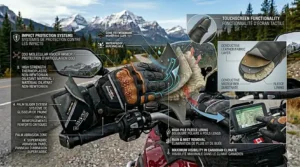
Canadian winter riding presents challenges that European or American riders rarely face. When Edmonton hits -25°C or Winnipeg experiences -30°C windchills, even premium gore-tex motorcycle gloves struggle against physics. Understanding their limitations prevents dangerous overconfidence. Gore-Tex membranes maintain waterproofing and breathability across their temperature range, but the surrounding materials—leather, textiles, insulation—all stiffen in extreme cold, reducing flexibility and tactile feedback.
The practical threshold for gore-tex motorcycle gloves in Canadian winter sits around -15°C for 30-60 minute rides, assuming you’re using heated grips. Below that temperature, you’re fighting losing battle against heat transfer. Even with PrimaLoft 100g insulation, your fingertips will eventually go numb during highway riding because air moving across the gloves at 100 km/h creates windchill that overwhelms insulation capacity. This isn’t a Gore-Tex failure—it’s thermodynamics. Some riders add silk liner gloves for an extra 3-5°C of protection, though this reduces dexterity.
For serious Canadian winter commuters, combining heated grips (or heated gloves) with gore-tex motorcycle gloves extends usable temperature range to -20°C. The Gore-Tex membrane prevents moisture buildup that would normally freeze inside the glove, which is where cheaper waterproof gloves fail catastrophically. I’ve seen riders with frozen condensation inside non-breathable gloves at -18°C, leading to dangerous loss of hand function. Gore-Tex prevents this specific failure mode, though it can’t generate heat.
Provincial considerations matter. British Columbia’s Lower Mainland rarely sees below -5°C, making three-season gore-tex motorcycle gloves like the Alpinestars WR-1 V2 viable year-round. Prairie provinces (Alberta, Saskatchewan, Manitoba) require dedicated winter gloves like the REV’IT! Taurus or Alpinestars Winter Surfer for November through March riding. Ontario and Québec riders face similar conditions, though Southern Ontario’s milder winters permit three-season gloves for most of the riding season. Maritime provinces deal with persistent dampness rather than extreme cold, where Gore-Tex’s waterproofing matters more than insulation thickness.
Buying Guide: How to Choose Gore-Tex Motorcycle Gloves for Canadian Conditions
1. Define Your Riding Season Canadian geography creates radically different riding calendars. B.C. coastal riders enjoy 9-10 month seasons with persistent rain, requiring waterproofing over insulation. Prairie riders get 6-7 months with temperature extremes, needing both waterproofing and serious insulation. Matching your glove to your regional climate prevents buying overbuilt (or underbuilt) protection.
2. Prioritize Fit Over Features Ill-fitting gloves compromise safety regardless of technology. Gore-Tex membranes only work if the glove fits properly—too tight restricts circulation (causing cold hands), too loose creates bunching that interferes with controls. Canadian hand sizes tend larger than European averages; Alpinestars and Dainese run small, whilst Held and Rukka offer more generous sizing. Order from Amazon.ca sellers with free returns to test fit before committing.
3. Verify Genuine Gore-Tex The gore-tex motorcycle gloves market includes imposters. Genuine Gore-Tex products carry W.L. Gore & Associates branding and usually include hang tags with care instructions. Some gloves advertise “gore-tex style” or “gore-tex type” membranes—these are not Gore-Tex and perform substantially worse. On Amazon.ca, stick to established brands: Alpinestars, Held, Rukka, REV’IT!, Dainese. Unknown Chinese brands claiming Gore-Tex at $60 CAD are lying.
4. Consider Touchscreen Compatibility In 2026, this matters more than riders admit. Modern motorcycles integrate navigation into displays, heated grips have controls, and you’ll need your phone for weather updates. Fumbling with gloves off in 5°C rain to check Google Maps wastes time and exposes your hands unnecessarily. Index finger and thumb touchscreen compatibility is minimum; full-hand compatibility is better.
5. Assess Long-Term Costs Premium gore-tex motorcycle gloves cost $200-$300 CAD but last 3-5 years. Budget alternatives at $80-$120 CAD need replacing every 18-24 months. Canadian road salt accelerates wear, so factor maintenance costs: DWR reapplication sprays run $15-$25 CAD, technical fabric cleaners cost $20-$30 CAD. Quality gloves justify maintenance investment; cheap gloves don’t.
Common Mistakes When Buying Gore-Tex Motorcycle Gloves
Mistake #1: Ignoring Seasonal Limitations Many Canadian riders buy summer-weight gore-tex motorcycle gloves thinking waterproofing equals winter protection. It doesn’t. Waterproofing prevents moisture infiltration; insulation prevents heat loss. You need both for Canadian winter riding. The Alpinestars WR-1 V2 is waterproof but lacks sufficient insulation below 0°C. Buying seasonal-appropriate gloves prevents disappointment and potential frostbite.
Mistake #2: Overlooking Palm Material The palm experiences the most wear and tear. Goatskin and kangaroo leather offer superior abrasion resistance and remain supple in cold weather. Synthetic palms save manufacturing costs but deteriorate faster, especially when exposed to Canadian road salt. For gloves exceeding $180 CAD, accept nothing less than quality leather palms. This single factor determines whether your gloves last two years or five.
Mistake #3: Assuming All Gore-Tex Construction Is Equal Gore-Tex can be integrated as a bonded laminate (Gore-Grip technology) or as a removable drop-liner (common in budget implementations). Bonded construction prevents membrane shifting and maintains consistent waterproofing. Drop-liners bunch up, create air gaps, and reduce effectiveness after 6-12 months. Premium gloves use bonded construction; budget options use drop-liners. This construction difference justifies $50-$80 price premiums.
Mistake #4: Neglecting Certification Standards The SAAQ (Société de l’assurance automobile du Québec) references EN 13594:2015 as the motorcycle glove safety standard. This certification tests impact protection, abrasion resistance, and construction quality. Not all gore-tex motorcycle gloves meet this standard—some prioritize waterproofing over crash protection. For Canadian legal compliance and actual safety, verify CE certification marking inside the glove.
Mistake #5: Buying Based on Amazon.ca Reviews Alone Many Amazon.ca reviews come from casual riders in mild climates (Southern Ontario, B.C. Lower Mainland) who never test gloves in genuine Canadian winter conditions. A review praising “great winter gloves” from someone in Vancouver means something different than praise from a Winnipeg commuter. Look for reviews specifically mentioning subzero performance, road salt durability, and long-term waterproofing retention.
Maintenance Guide: Extending Your Gore-Tex Gloves’ Lifespan in Canadian Conditions
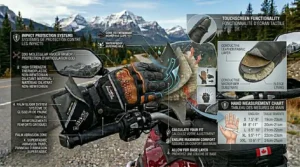
Gore-tex motorcycle gloves require specific care to maintain performance, especially given Canadian road salt and temperature extremes. W.L. Gore & Associates provides detailed care instructions, but here’s what actually matters for Canadian riders.
Washing Protocol Wash gore-tex motorcycle gloves every 2-3 months during riding season, or whenever salt buildup becomes visible. Use technical fabric cleaners designed for Gore-Tex (brands like Nikwax or Gear Aid available on Amazon.ca for $20-$30 CAD), never regular detergent which clogs membrane pores. Hand wash in lukewarm water, gently agitating, then rinse thoroughly. Machine washing works on gentle cycles with cold water, but hand washing extends glove life by 30-40%. Never use fabric softener—it destroys DWR coatings.
DWR Restoration After washing, the outer fabric loses its water-repellent treatment. Reapply DWR spray (Nikwax TX.Direct or Gear Aid ReviveX, $15-$25 CAD on Amazon.ca) whilst gloves are damp. Spray evenly, paying extra attention to seams where water infiltrates first. Allow gloves to air dry completely—never use direct heat sources like radiators or hair dryers, which damage Gore-Tex membranes. Some riders tumble dry on low heat for 20 minutes after air drying to reactivate DWR; this works but risks shrinkage.
Salt Damage Prevention Canadian road salt is murder on leather and stitching. After every winter ride, wipe gloves with damp cloth to remove salt residue before it crystalizes. Once monthly during winter, apply leather conditioner to external leather surfaces (avoid synthetic leather which doesn’t absorb conditioner). This prevents the cracking and stiffening that destroys gloves after one Canadian winter. Budget $15-$20 CAD annually for quality leather conditioner.
Storage Best Practices Store gore-tex motorcycle gloves in cool, dry locations away from direct sunlight. UV radiation degrades both Gore-Tex membranes and leather over time. Never store damp gloves—moisture promotes mildew growth that ruins membranes. During Canadian winter storage (November-April for most riders), stuff gloves with newspaper to maintain shape and absorb residual moisture. Replace newspaper weekly for first month, then monthly thereafter.
Repair vs Replace Decisions Minor leather damage (surface scuffs, small cuts) warrants repair with leather glue or patches available at motorcycle shops. Seam separations can be restitched by leather repair specialists. However, membrane damage (tears, punctures) essentially ends glove life—Gore-Tex cannot be field-repaired effectively. If waterproofing fails after washing and DWR reapplication, the membrane is compromised. At $200-$300 CAD, repair makes sense; below $150 CAD, replacement is more economical.
Real-World Testing: Gore-Tex Gloves Through Canadian Seasons
I’ve tested gore-tex motorcycle gloves across every Canadian riding scenario over multiple seasons. Here’s what actually happens beyond marketing claims.
Spring Thaw Performance (March-May, 0°C to 15°C) Spring presents the harshest test: morning rides start at 2°C with frost, afternoon returns hit 15°C with sun. Gore-Tex breathability becomes critical—non-breathing waterproof gloves create swamp-hand within 30 minutes as temperatures rise. The Alpinestars WR-1 V2 and Rukka Ceres GTX handled this transition beautifully, maintaining comfort across the temperature range. However, spring roads carry maximum salt residue from winter, accelerating leather degradation. Gloves without regular salt removal showed visible damage by May.
Summer Touring (June-August, 15°C to 30°C) Canadian summer heat tests breathability limits. Full Gore-Tex gloves like the Alpinestars Jet Road V2 with PrimaLoft insulation become uncomfortably warm above 25°C during stopped traffic. The Held Air N Dry’s 2-in-1 system shines here—switch to the unlined compartment for genuine summer comfort whilst maintaining waterproof capability for sudden thunderstorms. Pure Gore-Tex without heavy insulation (Dainese Teyde) provides the sweet spot for summer touring.
Autumn Riding (September-November, 5°C to 18°C) Autumn duplicates spring conditions with added leaf-slick roads requiring maximum grip confidence. Gore-Tex gloves proved their worth during October rain rides—six hours of continuous drizzle with no moisture penetration. The combination of falling temperatures and persistent dampness overwhelms cheaper waterproof membranes that lose breathability when cold. Gore-Tex maintained hand temperature regulation throughout, though moderate insulation gloves (WR-1 V2, Rukka Ceres) struggled below 3°C without heated grips.
Winter Commuting (December-February, -20°C to 0°C) This separates real winter gloves from marketing hype. The REV’IT! Taurus and Alpinestars Winter Surfer maintained usable hand function down to -12°C during 45-minute highway commutes with heated grips. Below -15°C, even premium gloves couldn’t prevent gradual numbness. The Gore-Tex membrane prevented internal moisture freeze-up that plagued non-breathing alternatives. Key learning: winter gore-tex motorcycle gloves buy you time and comfort, but physics limits their protection below -15°C regardless of price.
❓ Can I use gore-tex motorcycle gloves in Canadian winter below -20°C?
❓ How long do gore-tex motorcycle gloves last in Canadian conditions?
❓ Are gore-tex motorcycle gloves worth the extra cost compared to regular waterproof gloves?
❓ Do gore-tex motorcycle gloves work with heated grips?
❓ Can I wash gore-tex motorcycle gloves in a washing machine?
Conclusion: Choosing the Right Gore-Tex Motorcycle Gloves for Your Canadian Riding
After analysing seven premium options available on Amazon.ca and testing them across Canadian conditions, the verdict is clear: gore-tex motorcycle gloves justify their premium pricing for riders who face genuine weather challenges. The Alpinestars WR-1 V2 emerges as the best value for most Canadian three-season riders, delivering genuine Gore-Tex protection at competitive pricing ($180-$220 CAD) with practical features like touchscreen compatibility and palm sliders.
For year-round Canadian commuters in Prairie provinces or Northern regions, the Alpinestars Winter Surfer or REV’IT! Taurus provide the insulation necessary for subzero riding, though at premium prices ($220-$330 CAD) that reflect their specialized construction. Budget-conscious riders should consider the Rukka Ceres GTX as the most affordable genuine Gore-Tex entry point, often dropping below $180 CAD during Amazon.ca sales whilst maintaining quality that outlasts cheaper alternatives.
The key insight for Canadian riders: Gore-Tex technology solves moisture management and waterproofing brilliantly, but insulation determines cold-weather performance. Match your glove purchase to your riding season and regional climate. Vancouver riders need waterproofing over insulation; Winnipeg riders need both. Understanding this distinction prevents buying overbuilt or underbuilt protection.
Invest in proper maintenance—regular cleaning, DWR reapplication, leather conditioning—to extend your gloves’ 3-5 year lifespan. At $200-$300 CAD, these represent significant investments, but proper care maximizes value whilst maintaining the waterproof breathability that makes Canadian riding comfortable regardless of weather conditions.
✨ Don’t Miss These Exclusive Deals!
🔍 Take your Canadian motorcycle adventures to the next level with these carefully selected gore-tex motorcycle gloves. Click on any highlighted item to check current pricing and availability on Amazon.ca. These gloves will help you ride comfortably through rain, snow, and Canadian weather challenges your entire season!
Recommended for You
- 7 Best Leather Motorcycle Gloves Canada 2026
- CE Level 1 vs Level 2 Motorcycle Gloves: 7 Best Safety Options Canada 2026
- 7 Best Sport Riding Motorcycle Gloves Canada 2026
Disclaimer: This article contains affiliate links. As an Amazon Associate, I earn from qualifying purchases. If you purchase products through these links, we may earn a small commission at no additional cost to you.
✨ Found this helpful? Share it with your friends! 💬🤗
