
In This Article
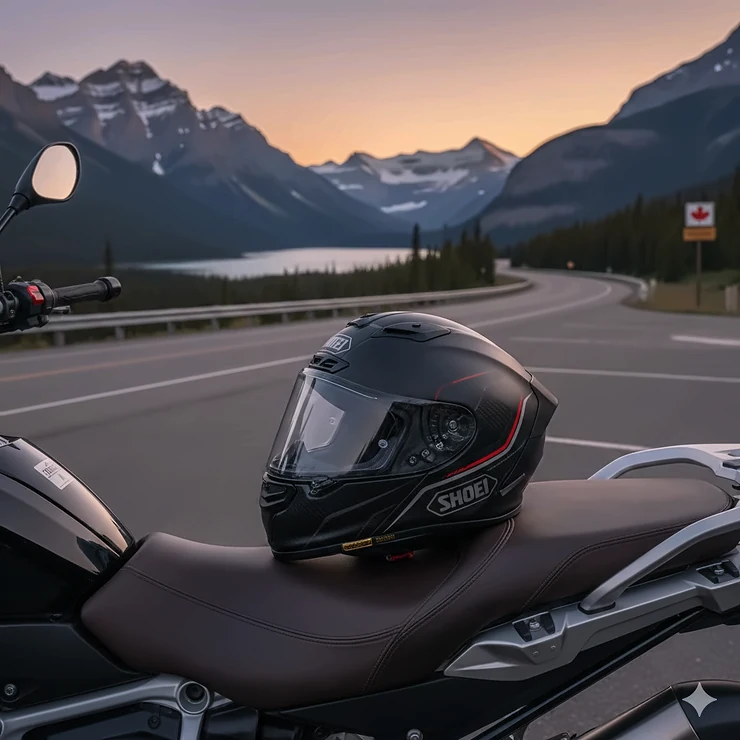
Picture this: you’re cruising down the Sea-to-Sky Highway on a crisp October morning, the autumn colours blazing around you. Suddenly, a deer leaps onto the road. In that split second, your helmet becomes the difference between walking away with a story and… well, let’s not go there.
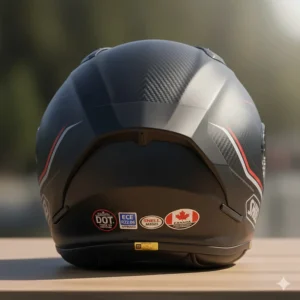
Finding the best full face motorcycle helmet Canada riders can trust isn’t just about ticking safety boxes—it’s about finding that perfect blend of protection, comfort, and value that makes every ride safer. Whether you’re commuting through Toronto’s urban jungle or touring the Trans-Canada Highway, your helmet is your most critical piece of gear.
According to research documented by Wikipedia, helmets reduce head injury risk by approximately 69% and death risk by around 42%, making this decision one you simply cannot afford to get wrong. But here’s the thing: not all helmets are created equal, especially when you factor in Canadian weather conditions, safety regulations, and the unique challenges riders face from coast to coast.
In this comprehensive guide, I’ll walk you through everything you need to know about choosing a full face helmet that meets Canadian standards, fits your budget (all prices in CAD, naturally), and actually protects you when it matters most. From budget-friendly options under $200 to premium lids that’ll set you back close to $1,000, we’ve got you covered.
Quick Comparison Table: Top Full Face Helmets at a Glance
| Helmet Model | Price (CAD) | Safety Rating | Weight | Best For | Where to Buy |
|---|---|---|---|---|---|
| HJC RPHA 90S | $699-$799 | DOT, ECE 22.06 | 1,650g | Touring, Commuting | Amazon.ca, FortNine |
| Bell Qualifier DLX MIPS | $349-$399 | DOT, MIPS | 1,680g | All-Around Value | Amazon.ca, GP Bikes |
| ILM Full Face 313 | $129-$179 | DOT | 1,800g | Budget-Conscious | Amazon.ca |
| LS2 Challenger | $279-$349 | DOT, ECE 22.05 | 1,500g | Sport Riding | GP Bikes, Kimpex |
| Shoei RF-1400 | $699-$899 | DOT, ECE, SNELL | 1,520g | Premium Protection | FortNine, Retailers |
| HJC RPHA 12 Carbon | $599-$799 | ECE 22.06 | 1,474g | Track/Sport | Champion Helmets |
| ILM Modular 902BT | $199-$249 | DOT | 1,900g | Tech Features | Amazon.ca |
💬 Just one click – help others make better buying decisions too! 😊
Top 7 Best Full Face Motorcycle Helmet Canada: Expert Analysis
1. HJC RPHA 90S Modular Helmet – Best Overall for Canadian Riders
When it comes to versatility meeting premium features at a reasonable price, the HJC RPHA 90S stands tall among Canada’s top rated full face helmets Canada enthusiasts actually want to buy.
Key Specifications:
- Advanced P.I.M. Plus shell (Carbon and carbon-glass hybrid fabric)
- Weight: 1,650 grams (incredibly light for a modular)
- DOT and ECE 22.06 certified
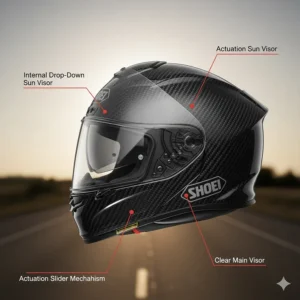
- Integrated sun visor with wider vision
- Pinlock-ready anti-fog system
Price Range: $699-$799 CAD at FortNine and GP Bikes
What makes this helmet exceptional for Canadian conditions is its thoughtful engineering. The 3D-engineered low-noise interior actually delivers on the promise—Canadian riders report significantly reduced wind noise even on highway speeds across the prairies. The modular design means you can flip up the chin bar at rest stops without removing the entire helmet, which is brilliant when you’re trying to hydrate during a long summer ride through the Rockies.
Canadian Customer Feedback: Riders from Alberta to Quebec consistently praise the RPHA 90S for its comfort during extended tours. One FortNine reviewer mentioned wearing it for a week-long trip across Canada with zero pressure points, and the integrated Bluetooth compartment works seamlessly with SMART HJC 10B systems.
✅ Pros:
- Exceptionally lightweight for a modular helmet
- Outstanding ventilation system keeps you cool
- Premium build quality rivals helmets twice the price
❌ Cons:
- Some riders report it runs slightly noisy compared to full-face variants
- Premium price point may stretch budget riders
2. Bell Qualifier DLX MIPS – Best Value for Safety Technology
The Bell Qualifier DLX MIPS represents exceptional value in the Canadian market, delivering advanced safety features at a mid-range price point.
Key Specifications:
- Polycarbonate/ABS shell construction
- MIPS (Multi-directional Impact Protection System)
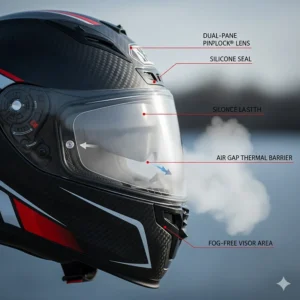
- ProTint photochromic face shield (transitions clear to dark)
- DOT FMVSS 218 certified
- Velocity Flow ventilation
Price Range: $349-$399 CAD on Amazon.ca and FortNine
The helmet features Bell’s Click-Release system for tool-less shield changes, and the photochromic visor adapts remarkably well to changing light conditions—perfect for those unpredictable Canadian weather days when you leave in sunshine and ride home through overcast skies.
The real star here is the MIPS technology, which creates a slip-plane inside the helmet designed to reduce rotational forces during angled impacts. For the price difference compared to non-MIPS variants, this technology is worth every penny.
Canadian Customer Feedback: Amazon.ca buyers consistently rate this helmet 4+ stars, with particular praise for the transition shield eliminating the need to carry multiple visors. One Ontario rider noted the helmet saved them during a collision with a car that pulled out unexpectedly.
✅ Pros:
- MIPS technology at an accessible price
- Photochromic shield eliminates visor swapping
- Excellent ventilation for summer riding
❌ Cons:
- Some users find the helmet slightly heavy for all-day touring
- Interior padding could be plusher
3. ILM Full Face Motorcycle Helmet 313 – Best Budget Option
Don’t let the low price fool you—the ILM Full Face 313 is a legitimate DOT certified full face protection option that delivers impressive value for Canadian riders on a budget.
Key Specifications:
- Lightweight ABS shell construction
- DOT FMVSS 218 approved
- Dual visors (clear + tinted)
- Removable, washable liner
- Enhanced air vents for circulation
Price Range: $129-$179 CAD on Amazon.ca
For first-time riders or those building their gear collection, ILM offers an entry point that doesn’t compromise on essential safety standards. The helmet meets all Canadian legal requirements (DOT certification) and ships quickly within Canada through Amazon.ca’s fulfillment network.
Canadian Customer Feedback: With over 8,000+ reviews on Amazon.ca, Canadian buyers appreciate the bang-for-buck factor. The included tinted visor saves you the cost of buying one separately, and the fit tends to run true to size based on the measurement chart.
✅ Pros:
- Exceptional price-to-value ratio under $200 CAD
- Includes both clear and tinted visors
- Free shipping through Amazon Prime to most Canadian addresses
❌ Cons:
- Heavier than premium helmets (impacts neck fatigue on long rides)
- Wind noise more noticeable at highway speeds
4. LS2 Challenger Full Face Helmet – Best for Sport Riders
Spanish brand LS2 has earned serious respect in Canada, and the LS2 Challenger shows exactly why with its race-inspired design and solid construction.
Key Specifications:
- High-penetration resistance KPA shell (Kinetic Polymer Alloy)
- DOT and ECE 22.05 certified
- Flow-through ventilation system
- Emergency quick-release cheek pads
- Weight: Approximately 1,500 grams
Price Range: $279-$349 CAD at GP Bikes and Kimpex
What sets LS2 apart is their dedication to affordable performance. The Challenger uses the same shell technology as helmets costing twice as much, with an aerodynamic profile that reduces buffeting at speed—crucial for sport bike riders tackling Ontario’s Highway 407 or British Columbia’s Coquihalla.
Canadian Customer Feedback: Kimpex customers highlight the helmet’s comfortable fit right out of the box. The emergency cheek pad system (allowing first responders to safely remove the helmet after a crash) demonstrates LS2’s commitment to real-world safety scenarios.
✅ Pros:
- Race-derived aerodynamics at a reasonable price
- Excellent ventilation keeps you cool during spirited riding
- Wide range of graphic options for personalization
❌ Cons:
- Sizing can run small—order one size up if between sizes
- Some riders wish for a built-in sun visor
5. Shoei RF-1400 – Premium Choice for Serious Riders
When you demand the absolute best, the Shoei RF-1400 represents the pinnacle of helmet engineering with over 60 years of Japanese craftsmanship behind it.
Key Specifications:
- Advanced Integrated Matrix Plus (AIM+) shell
- DOT, ECE 22.06, and SNELL M2020 certified
- 3D Max-Dry interior system
- Emergency quick-release system
- Weight: 1,520 grams
Price Range: $699-$899 CAD at FortNine and authorized Shoei dealers
The RF-1400 represents Shoei’s latest iteration of a helmet they’ve been perfecting since 1984, featuring dual-density EPS inside a shell matrix of hand-laid interwoven fiberglass and lightweight organic fibers. Every helmet is hand-assembled and tested before leaving the factory.
The noise reduction technology in aerodynamic helmet design features is exceptional—you’ll actually notice the difference on long highway stretches across the Canadian prairies.
Canadian Customer Feedback: Canadian riders who invest in the RF-1400 report it’s worth every penny. The intermediate oval head shape fits most riders comfortably, and the plush, removable interior maintains its shape ride after ride.
✅ Pros:
- Triple-certified safety (DOT, ECE, SNELL)
- Quietest helmet in its class
- Exceptional build quality that lasts years
❌ Cons:
- Premium pricing limits accessibility
- Replacement parts can be expensive
6. HJC RPHA 12 Carbon – Best Track/Sport Helmet
Racing-inspired but street-legal, the HJC RPHA 12 Carbon delivers professional-grade protection for Canadian sport riders who push the limits.
Key Specifications:
- Premium Integrated Matrix carbon fiber shell
- ECE 22.06 certified (latest standard)
- Weight: Only 1,474 grams in medium
- Advanced Channeling Ventilation System
- Tear-off-ready visor system
Price Range: $599-$799 CAD at Champion Helmets
This helmet replaced the legendary RPHA 11 with significant improvements in aerodynamics and safety. The carbon fiber construction shaves weight without sacrificing protection—critical for reducing neck fatigue during track days at Canadian Tire Motorsport Park or Calabogie.
Canadian Customer Feedback: Track riders praise the stability at high speeds, with the redesigned spoiler reducing lift and buffeting. The helmet stays planted even when tucked at 200+ km/h on straightaways.
✅ Pros:
- Ultra-lightweight carbon construction
- Race-track proven aerodynamics
- Excellent ventilation for aggressive riding
❌ Cons:
- Not DOT certified (ECE only) may limit use in some jurisdictions
- Premium carbon model costs more than fiberglass version
7. ILM Modular Bluetooth Helmet 902BT – Best Tech-Integrated Option
For riders who want seamless communication and modern connectivity, the ILM 902BT combines affordability with built-in Bluetooth technology.
Key Specifications:
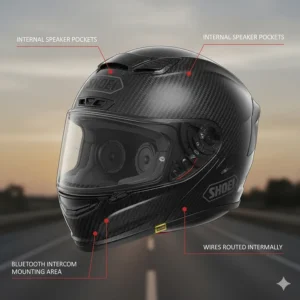
- Bluetooth 3.0 with built-in speakers and mic
- DOT FMVSS 218 certified
- Modular flip-up design
- Dual visors (clear + smoke tint)
- Intercom range: 1,680 feet between riders
Price Range: $199-$249 CAD on Amazon.ca
The integrated Bluetooth system supports phone calls, GPS navigation audio, and music streaming without the need for aftermarket communication systems. For group rides across Canada, the rider-to-rider intercom function keeps your crew connected.
Canadian Customer Feedback: Amazon.ca buyers love the value proposition—getting Bluetooth built-in saves $200+ compared to buying a communication system separately. Battery life reaches 8 hours of talk time, sufficient for most day rides across Canadian highways.
✅ Pros:
- Built-in Bluetooth eliminates separate comm system purchase
- Modular design adds convenience for touring
- Exceptional value under $250 CAD
❌ Cons:
- Slightly heavier due to Bluetooth components
- Runs one size small—order up for comfort
Understanding DOT Certified Full Face Protection Standards in Canada
When shopping for the best full face helmet 2026 Canada requires specific safety certifications that protect riders legally and physically.
What Safety Certifications Matter in Canada?
In Canada, motorcycle helmets must be certified by one of three major standards: DOT, ECE, or Snell. Each province accepts helmets meeting at least one of these certifications:
DOT (FMVSS 218): The U.S. Department of Transportation standard focuses on impact absorption, penetration resistance, and retention system strength. All helmets sold in Canada from major retailers will display DOT certification.
ECE 22.05/22.06: The European Economic Commission standard includes more comprehensive testing, covering visor quality and peripheral vision requirements. ECE 22.06 was implemented in late 2023 and incorporates rigorous testing at multiple impact points with expanded speed ranges, plus rotational acceleration testing.
SNELL M2020/M2025: This voluntary certification from the Snell Memorial Foundation represents the most stringent testing. Many professional racers and serious riders prefer SNELL-certified helmets.
Canadian Provincial Requirements
As outlined by the British Columbia government’s motorcycle safety regulations, all motorcyclists and passengers must wear helmets meeting DOT, ECE, or SNELL standards, with proper certification labels visible. Similar requirements exist across all provinces and territories, though enforcement and specific regulations vary.
Ontario, Quebec, Alberta, and other provinces accept any of the three main certifications. Always check your provincial regulations, but purchasing a helmet with at least DOT certification ensures legal compliance nationwide.
Aerodynamic Helmet Design Features That Actually Matter
Modern full face helmets incorporate sophisticated aerodynamic helmet design features that significantly impact rider comfort and safety at speed.
What Makes a Helmet Aerodynamically Efficient?
Spoilers and Wings: Advanced helmets like the HJC RPHA 12 feature rear spoilers that reduce lift and buffeting at highway speeds. These aren’t just cosmetic—they actively stabilize the helmet, reducing neck strain on long rides.
Shell Shape Optimization: Premium manufacturers use wind tunnel testing to refine helmet profiles. The Shoei RF-1400’s shape minimizes drag while maintaining stability in crosswinds—crucial when riding across windy prairie highways.
Vortex Generators: Small ridges and textures on the shell surface control airflow, reducing turbulence at the rider’s shoulders and minimizing that annoying helmet wiggle at high speeds. According to the Motorcycle Safety Foundation, proper helmet design contributes significantly to rider comfort and long-term safety during extended rides.
Impact on Real-World Riding
For Canadian riders tackling our diverse terrain, aerodynamics translate to comfort. A well-designed helmet reduces neck fatigue on multi-hour Trans-Canada rides, stays stable in winter winds, and actually improves fuel efficiency by reducing drag.
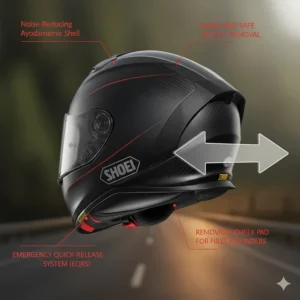
Noise Reduction Technology Helmets: Quieter Rides, Better Focus
Prolonged exposure to wind noise causes rider fatigue and can lead to permanent hearing damage. Modern noise reduction technology helmets address this critical safety concern.
How Helmets Reduce Wind Noise
Acoustic Foam Layers: High-end helmets like the Shoei RF-1400 use strategically placed acoustic foam that absorbs sound frequencies without adding bulk.
Neck Roll Design: The HJC RPHA 90S features an extended neck roll that seals against your collar, preventing air turbulence from entering the helmet cavity—a major noise source.
Visor Seal Technology: Premium helmets use multi-stage sealing systems that eliminate wind leaks around the face shield. Bell’s Click-Release system ensures consistent, gap-free sealing.
Measuring Noise Levels
Quality helmets reduce wind noise to 95-100 decibels at highway speeds, compared to 105+ decibels in budget options. While this seems small, remember that decibels use a logarithmic scale—a 10-decibel reduction represents roughly half the perceived noise.
Canadian riders covering long distances (think Calgary to Vancouver runs) especially benefit from quieter helmets, arriving fresher and more alert at their destination.
Ventilation Systems: Staying Cool in Canadian Summers
Despite our reputation for cold weather, Canadian summers can be sweltering—just ask anyone who’s ridden through Ontario in July. Effective ventilation makes the difference between comfort and misery.
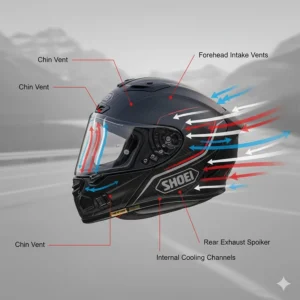
Understanding Helmet Ventilation
Intake Vents: Located at the chin and forehead, these channels pull cool air into the helmet. The LS2 Challenger features four adjustable intake vents for customizable airflow.
Channeling Systems: Air doesn’t just enter—it needs to flow. Advanced helmets use internal channels molded into the EPS liner that direct air over your head, pulling heat away.
Exhaust Ports: Positioned at the rear and crown, these vents allow hot air to escape. The HJC RPHA 12’s Advanced Channeling System creates a complete circuit of airflow.
Winter Considerations
Paradoxically, good ventilation also helps in cold weather by preventing visor fogging. The key is adjustability—look for vents you can fully close during winter rides across the prairies when temperatures plummet.
How to Choose the Best Full Face Motorcycle Helmet Canada for Your Needs
Selecting the best full face motorcycle helmet Canada requires balancing multiple factors beyond just price.
Step 1: Determine Your Head Shape
Helmets come in three basic shapes: round oval, intermediate oval, and long oval. Measure your head circumference, then try multiple brands as each fits differently. HJC and Shoei tend toward intermediate oval, while AGV favors rounder shapes.
Step 2: Establish Your Budget
Budget ($100-$250 CAD): ILM and entry-level LS2 models
Mid-Range ($250-$500 CAD): Bell Qualifier DLX, LS2 Challenger, HJC i-series
Premium ($500-$900+ CAD): Shoei RF-1400, HJC RPHA series, Arai models
Step 3: Consider Your Riding Style
Commuting: Prioritize comfort and convenience (modular designs, built-in sun visors)
Sport Riding: Focus on aerodynamics and lightweight construction
Touring: Emphasize noise reduction and ventilation for long-distance comfort
All-Season: Look for helmets with Pinlock anti-fog systems and adjustable vents
Step 4: Verify Canadian Availability and Shipping
Always purchase from authorized Canadian retailers to ensure proper warranty coverage and avoid counterfeit products. Major options include:
- Amazon.ca (with Prime shipping to most provinces)
- FortNine (free shipping over $49 CAD)
- GP Bikes (Canadian-based with expert staff)
- Kimpex (specializing in powersports)
Step 5: Check for Essential Features
✓ DOT, ECE, or SNELL certification ✓ Emergency quick-release cheek pads ✓ Pinlock-ready face shield ✓ Removable, washable liner ✓ Proper fit (snug but not painful, no pressure points)
Helmet Sizing Guide for Canadian Riders
Measuring Your Head
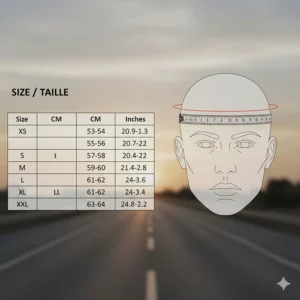
Use a soft tape measure around the widest part of your head (about 1 inch above eyebrows). Measure in centimeters for accuracy:
| Size | Circumference (cm) | Circumference (inches) |
|---|---|---|
| XS | 53-54 cm | 20.9-21.3″ |
| S | 55-56 cm | 21.7-22.0″ |
| M | 57-58 cm | 22.4-22.8″ |
| L | 59-60 cm | 23.2-23.6″ |
| XL | 61-62 cm | 24.0-24.4″ |
| XXL | 63-64 cm | 24.8-25.2″ |
The Fit Test
A properly fitted helmet should:
- Feel snug all around (not painful)
- Not slide around when you shake your head
- Compress your cheeks slightly (you should look like a chipmunk)
- Create light pressure on top and sides of head
- Allow no forward/backward movement when pushing from back
Canadian Tip: Many helmets compress and fit better after 20-40 hours of wear as the liner conforms to your head shape.
Maintaining Your Helmet: Tips for Canadian Weather
Cleaning and Care
After Each Ride:
- Wipe visor with microfiber cloth
- Remove bugs immediately (they etch into shields)
- Air out liner to prevent moisture buildup
Monthly Maintenance:
- Remove and wash liner in cool water with mild soap
- Clean vents using compressed air
- Inspect chin strap for wear
Seasonal Storage:
- Store away from direct sunlight (UV degrades shells)
- Keep at room temperature (Canadian garage temperature swings can damage EPS)
- Use a helmet bag to prevent dust accumulation
When to Replace Your Helmet
Studies show helmets protect against cervical spine injury, and their protective benefits are greatly reduced if the chin strap isn’t securely fastened. According to injury statistics from the National Safety Council, motorcycle helmets are estimated to be 37% effective in preventing fatal injuries to motorcycle operators and 41% effective for passengers. Replace your helmet:
- After any impact (even if dropped from table height)
- Every 5-7 years regardless of visible damage
- If the retention system shows wear
- When the liner compresses permanently
Full Face vs. Modular vs. Open Face: Making the Right Choice
Full Face Helmets
✅ Maximum protection (chin bar protects in frontal impacts)
✅ Best aerodynamics and noise reduction
✅ Lightest weight in most cases
❌ Less convenient for quick stops
Best For: Sport riders, track days, maximum protection seekers
Modular Helmets (Flip-Up)
✅ Convenience of open face when stopped
✅ Still protects like full face when closed
✅ Easier for glasses wearers
❌ Slightly heavier due to hinge mechanism
❌ More expensive than comparable full face
Best For: Touring, commuting, riders who make frequent stops
Open Face/3/4 Helmets
✅ Maximum visibility and airflow
✅ More comfortable in extreme heat
❌ No chin protection (studies show chin is frequent impact zone)
❌ More wind noise
Best For: Cruiser riders, low-speed urban riding (not recommended for highway use)
✨ Don’t Miss These Exclusive Deals!
🔍 Take your motorcycle safety to the next level with these carefully selected helmets available in Canada. Click on any highlighted helmet model to check current pricing and availability on Amazon.ca, FortNine, or GP Bikes. These proven helmets will provide the protection your loved ones want you to have!
FAQ: Your Top Full Face Helmet Questions Answered
❓ How much should I spend on a motorcycle helmet in Canada?
❓ What is the quietest full face helmet available in Canada?
❓ Are Bluetooth motorcycle helmets safe for Canadian roads?
❓ How do I prevent my visor from fogging in Canadian winter?
❓ Can I use a modular helmet for track days in Canada?
Conclusion: Protecting What Matters Most
Choosing the best full face motorcycle helmet Canada requires careful consideration of safety certifications, fit, features, and budget. Whether you opt for the premium protection of a Shoei RF-1400, the exceptional value of a Bell Qualifier DLX MIPS, or the budget-friendly reliability of an ILM helmet, the most important factor is wearing it correctly every single ride.
Research confirms that motorcycle helmets reduce head injury risk by 69% and death risk by 42%—statistics that should convince any rider that helmet investment isn’t optional, it’s essential.
Remember: the best helmet is the one that fits your head properly, meets Canadian safety standards, and that you’ll actually wear every time you swing a leg over your bike. Take time to try multiple brands, measure carefully, and purchase from authorized Canadian retailers to ensure warranty coverage and authentic products.
From the Atlantic provinces to British Columbia, Canadian riders face unique challenges—extreme temperature variations, diverse terrain, and varying weather conditions. The helmets reviewed in this guide have been chosen specifically for their performance in Canadian conditions, availability through Canadian retailers, and positive feedback from riders across our country.
Whether you’re a seasoned rider with 100,000+ kilometers under your belt or a new rider earning your M license, never compromise on head protection. Your family, your riding buddies, and your future self will thank you.
Stay safe out there, and enjoy the ride! 🏍️
Recommended for You
- 7 Best Winter Motorcycle Helmets Canada 2026 | Anti-Fog Guide
- 7 Best Quiet Full Face Motorcycle Helmets Canada 2026
- 7 Best Full Face Helmet Under 300 Canada 2026
Disclaimer: This article contains affiliate links to Amazon.ca, FortNine, and other Canadian retailers. If you purchase products through these links, we may earn a small commission at no additional cost to you. Prices and availability are accurate as of December 2025 but may change. All product research and recommendations are based on genuine customer reviews and expert analysis.
✨ Found this helpful? Share it with your riding friends! 💬🤗
