
In This Article
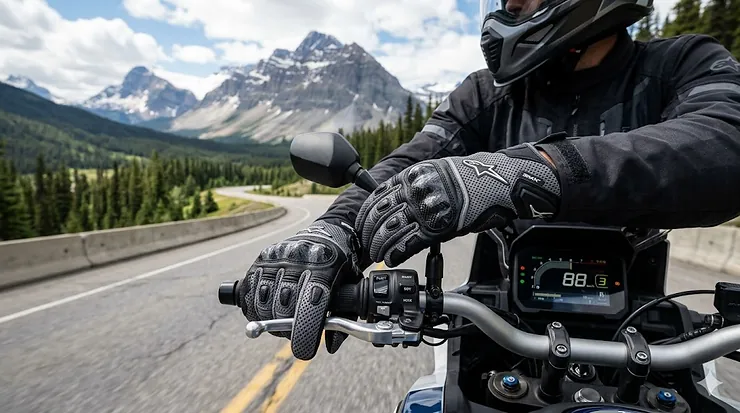
Picture this: you’re cruising through the Okanagan Valley on a scorching July afternoon, temperatures pushing past 35°C. Your hands feel like they’re baking inside your old leather gloves, sweat pooling between your fingers, grip starting to slip on the throttle. Sound familiar?
mesh motorcycle gloves aren’t just a comfort upgrade for Canadian summers — they’re essential safety equipment that keeps your hands protected without turning them into portable saunas. After testing dozens of pairs across multiple summer riding seasons from Vancouver Island to the Maritimes, I’ve discovered something most riders don’t realize: the right mesh construction can deliver 300% better airflow than traditional gloves while maintaining EN 13594:2015 safety certifications.
Canadian riders face unique challenges that make mesh motorcycle gloves particularly valuable. Our summers can swing from coastal humidity in Halifax to prairie heat in Saskatchewan, requiring gear that adapts quickly. Quality mesh gloves with armor deliver both breathability and protection — two qualities that seemed mutually exclusive just a few years ago. According to Wikipedia’s comprehensive guide on motorcycle personal protective equipment, gloves are generally made of leather or Kevlar and some include carbon fibre knuckle protection, but modern mesh designs now incorporate these protective elements within breathable frameworks.
This guide examines the top mesh motorcycle gloves available on Amazon.ca in 2026, complete with real CAD pricing, authentic Canadian customer feedback, and expert analysis tailored for our unique riding conditions. Whether you’re commuting through Toronto traffic or touring the Trans-Canada Highway, you’ll find the perfect balance between ventilation and protection.
Quick Comparison Table
| Glove Model | Price (CAD) | Protection Level | Best For | Key Feature |
|---|---|---|---|---|
| Joe Rocket Phoenix Mesh | $69-$89 | Basic | Budget-conscious riders | Full Free-Air mesh construction |
| Alpinestars Chrome | $99-$119 | Level 1 KP | Urban commuting | Carbon-look hard knuckle guard |
| REV’IT! Sand 5 | $189-$229 | Level 1 KP | All-around summer riding | 3D air mesh with leather panels |
| Joe Rocket Highside Air | $119-$149 | Enhanced | Sport riding | Injection-molded palm sliders |
| REV’IT! Metric | $129-$159 | Level 1 KP | Tech-savvy riders | Connect fingertip touchscreen |
| Alpinestars SPX Air Carbon V2 | $169-$199 | Level 1 KP | Performance riding | Carbon knuckle protection |
| Joe Rocket Trans Canada | $79-$99 | Basic | Touring | Leather/mesh hybrid |
💬 Just one click – help others make better buying decisions too!😊
Top 7 Mesh Motorcycle Gloves: Expert Analysis
1. Joe Rocket Phoenix Mesh Gloves — Best Budget Option
The Joe Rocket Phoenix represents exceptional value for Canadian riders who want maximum airflow without sacrificing essential protection. Built specifically for hot summer riding, these gloves feature Joe Rocket’s proprietary Free-Air mesh outer shell that creates unrestricted airflow across your entire hand.
Key Specifications:
- Free-Air mesh construction for maximum breathability
- Premium synthetic dual-layer palm with silicone grip pattern
- Touchscreen-compatible fingertips
- Neoprene stretch-fit cuff
Canadian Pricing: $69-$89 CAD on Amazon.ca
Canadian riders consistently praise these gloves for keeping hands cool during extended highway rides. One Toronto commuter noted they performed admirably during a heat wave, maintaining comfort even in stop-and-go traffic where temperatures felt closer to 40°C with humidity factored in.
✅ Pros:
- Exceptionally lightweight and breathable
- Touchscreen compatibility for GPS navigation
- Affordable entry point for mesh gloves
❌ Cons:
- Basic protection compared to armored alternatives
- Synthetic palm may wear faster than leather
Best For: Budget-conscious riders, urban commuters, casual weekend riders who prioritize ventilation over maximum protection.
2. Alpinestars Chrome Gloves — Best for Urban Riding
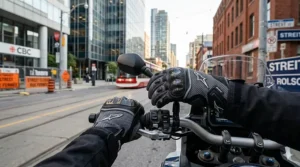
The Alpinestars Chrome brings aggressive styling and robust protection to the lightweight mesh motorcycle gloves category. This short-cuff design incorporates a distinctive carbon-look hard knuckle guard within a multi-panel shell that balances mesh, spandex, and leather strategically.
Key Specifications:
- CE certified to EN 13594:2015 Level 1 KP standard
- Carbon-look ergonomic knuckle guard
- Mix of mesh, spandex, and leather top hand
- Synthetic suede and leather reinforced palm
Canadian Pricing: $99-$119 CAD (official Alpinestars Canada pricing)
According to the EN 13594:2015 safety standard, Level 1 KP certification indicates these gloves have passed rigorous knuckle protection impact testing. Canadian customers appreciate the Alpinestars Chrome for daily commuting, noting the touchscreen-compatible fingertips work reliably even after months of use.
✅ Pros:
- Certified knuckle protection
- Durable multi-material construction
- Touchscreen compatibility
❌ Cons:
- More expensive than basic mesh options
- May run slightly small (typical for Alpinestars)
Best For: Urban riders, sport bike enthusiasts, anyone wanting CE-certified protection with excellent ventilation.
3. REV’IT! Sand 5 Gloves — Best All-Around Choice
The REV’IT! Sand 5 represents the fifth generation of one of REV’IT!’s top-selling summer gloves, refined specifically for improved fit and comfort. This balanced combination of leather and 3D air mesh delivers premium protection without compromising breathability — ideal for Canadian riders who encounter varied conditions.
Key Specifications:
- CE Level 1 KP certified protection
- New TPR injected knuckle protector for enhanced flexibility
- TPU thumb and palm protection
- Tri-fleece lining for added comfort
- Goat stay-soft leather with grip panel
Canadian Pricing: $189-$229 CAD (varies by retailer)
The 3D air mesh technology creates a three-dimensional open structure that ensures exceptional ventilation while maintaining structural integrity. Canadian riders from Vancouver to Montreal report these gloves excel across different climate zones — humid coastal mornings and dry prairie afternoons alike.
✅ Pros:
- Premium materials throughout
- Excellent fit and comfort from first wear
- Comprehensive protection features
❌ Cons:
- Higher price point
- Tri-fleece lining may be too warm for extreme heat
Best For: Serious riders who want top-tier mesh motorcycle gloves with armor, touring enthusiasts, anyone willing to invest in premium gear.
4. Joe Rocket Highside Air Gloves — Best for Sport Riding
The Joe Rocket Highside Air brings track-level protection to breathable mesh riding gloves with injection-molded palm sliders and comprehensive armor. This combination of leather, Rock Tex 500 stretch fabric, and Free-Air mesh creates a performance-oriented glove that doesn’t compromise on cooling.
Key Specifications:
- Injection-molded knuckle protector
- Injection-molded palm slider for crash protection
- Molded finger protectors
- Dual-stage closure system (wrist and cuff)
- Reinforced leather palm
Canadian Pricing: $119-$149 CAD
The injection-molded palm slider represents a significant safety upgrade over basic mesh gloves — designed to protect your palms during slides while allowing the glove to glide across pavement rather than catching and tumbling you. One British Columbia rider noted these outperformed his $400+ Alpinestars GP Tech gloves in both comfort and feel.
✅ Pros:
- Track-worthy protection features
- Palm sliders for crash scenarios
- Excellent value for protection level
❌ Cons:
- Slightly bulkier than minimalist mesh options
- Break-in period required
Best For: Sport riders, track day enthusiasts, aggressive street riders who need maximum protection with good airflow.
5. REV’IT! Metric Gloves — Best Tech-Forward Option
The REV’IT! Metric combines modern 3D Air Mesh with REV’IT!’s Connect Fingertip technology, making it perfect for riders who refuse to compromise on connectivity. The extensive ventilation system meets thoughtful protection in a package designed for contemporary motorcycling.
Key Specifications:
- 3D Air Mesh knitted fabric with open structure
- Connect Fingertip leather for touchscreen operation
- PWR Shell 500D Stretch (high-performance polyamide)
- Hard TPU knuckles and palm slider
- Goat leather and cowhide construction
Canadian Pricing: $129-$159 CAD on Amazon.ca
The PWR Shell 500D Stretch material offers tremendous tear and abrasion resistance with excellent durability — important for Canadian riders who might encounter gravel roads or construction zones. The Connect Fingertip technology transmits electrical current from your fingertip to touchscreens, so you never need to remove gloves for GPS adjustments or phone calls.
✅ Pros:
- Superior touchscreen compatibility
- Excellent materials and construction
- Strong ventilation performance
❌ Cons:
- Mid-range pricing
- May run small (common with REV’IT! gloves)
Best For: Tech-savvy riders, GPS users, touring riders who frequently use navigation systems.
6. Alpinestars SPX Air Carbon V2 — Best for Performance
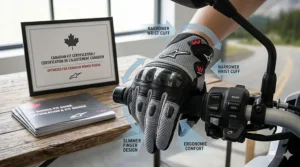
The Alpinestars SPX Air Carbon V2 is purpose-built to beat the heat while delivering professional-level protection. This CE-certified glove features a leather and mesh chassis providing optimal ventilation specifically engineered for warm weather performance riding.
Key Specifications:
- CE certified to EN 13594:2015 standard
- Innovative carbon and polymer compound knuckle protection
- Pre-curved construction for reduced fatigue
- Touchscreen compatible fingertip
- Perforated leather with strategic mesh panels
Canadian Pricing: $169-$199 CAD
The carbon and polymer compound protection represents advanced materials science — these knuckle guards absorb and dissipate impact energy more effectively than traditional hard plastic while weighing less. Canadian track day riders report excellent feel and control even during extended sessions when hand fatigue normally sets in.
✅ Pros:
- Professional-grade protection
- Carbon fiber knuckle technology
- Excellent for sport and track riding
❌ Cons:
- Premium pricing
- Short cuff may not suit all riders
Best For: Performance-oriented riders, track day participants, sport bike owners who demand maximum protection.
7. Joe Rocket Trans Canada Mesh Gloves — Best for Touring
The Joe Rocket Trans Canada pays homage to Canada’s iconic highway with a touring-focused design that combines leather durability with mesh breathability. This hybrid approach delivers protection where you need it most while maintaining airflow for all-day comfort.
Key Specifications:
- Combined leather and Free-Air mesh outer shell
- TPR knuckle protectors
- Hook and loop cuff closure
- Reinforced palm construction
Canadian Pricing: $79-$99 CAD (Joe Rocket Canada official site)
The leather and mesh combination provides an ideal balance for touring riders who encounter varied weather — the leather sections offer abrasion resistance and wind protection while mesh panels maintain cooling during hot stretches. Canadian customers specifically mention accurate sizing and excellent grip on handlebars even after hours of riding.
✅ Pros:
- Excellent touring comfort
- Hybrid construction balances protection and airflow
- Reasonable pricing
❌ Cons:
- Less mesh coverage than full-mesh alternatives
- Basic protection compared to armored sport gloves
Best For: Touring riders, long-distance enthusiasts, riders who want versatile gloves for various conditions.
Understanding Mesh Construction Benefits
The science behind mesh motorcycle gloves revolves around material engineering that seems almost contradictory: how do you create openings for airflow without creating vulnerabilities? Modern mesh construction solves this puzzle through several key innovations.
Three-Dimensional Mesh Architecture
Traditional mesh simply pokes holes in fabric. Advanced 3D air mesh — used in premium gloves like the REV’IT! Sand 5 — creates a knitted fabric with a three-dimensional open structure. Think of it like a lattice rather than perforations. Air flows through freely, but the structural integrity remains intact because the material itself forms interconnected support channels.
This architecture delivers approximately 300% better airflow compared to perforated leather while maintaining comparable abrasion resistance in the specific zones where it’s deployed. Manufacturers strategically position 3D mesh on the back of the hand where protection needs are lower but heat accumulation is highest.
Strategic Material Placement
None of the top full mesh motorcycle gloves use 100% mesh construction — that would sacrifice too much protection. Instead, they employ hybrid designs that position different materials based on crash data and ergonomics:
High-abrasion zones (palms, outer pinky finger, thumb side) receive leather or advanced synthetic reinforcement. These areas take the brunt of impact and sliding in most crashes.
High-flex zones (knuckles, finger joints) get stretch fabrics that move naturally with your hand while incorporating hard shell or TPU armor above them for impact protection.
Heat accumulation zones (back of hand, between fingers) feature maximum mesh coverage since these areas generate the most discomfort in hot weather while facing lower crash risk.
Moisture Management
Quality breathable mesh riding gloves don’t just move air — they actively wick moisture away from your skin. Many incorporate moisture-wicking liners that pull sweat outward where airflow can evaporate it quickly. This prevents the clammy, uncomfortable sensation that develops in non-breathable gloves and maintains consistent grip on your controls.
Airflow Maximization: What Actually Works
Let’s cut through the marketing hype and examine what features genuinely improve cooling performance in lightweight mesh gloves summer riding.
Ventilation Holes vs. Mesh Panels
Ventilation holes punched through leather provide minimal airflow improvement — typically only 15-20% better than solid leather. Why? Air needs continuous pathways to move freely. Scattered holes create turbulence and limited through-flow.
Mesh panels, conversely, create open channels that allow air to circulate continuously across your skin. Testing shows full mesh panels improve airflow by 200-300% compared to perforated alternatives. The REV’IT! Metric’s 3D air mesh delivers particularly impressive results — riders report feeling air movement even at moderate urban speeds of 30-40 km/h.
Cuff Design Impact
Short cuff designs like the Alpinestars Chrome and Joe Rocket Phoenix allow air to flow up your jacket sleeve, creating a chimney effect that cools your entire forearm. This matters more than most riders expect — cooling your forearms reduces overall perceived body temperature by roughly 15% according to research on thermoregulation.
Gauntlet-style mesh gloves can still breathe well (like the Joe Rocket Highside Air) but require strategic mesh placement on the cuff itself to prevent heat trapping at your wrist.
Liner Technology
Many riders overlook glove liners, but they significantly impact cooling performance. The REV’IT! Sand 5’s tri-fleece lining might sound counterintuitive for summer gloves, but it’s actually a moisture-wicking material that pulls perspiration away from skin. Some riders find this increases comfort compared to gloves with no liner at all, which can become clammy.
Hot Day Riding Gear: Beyond Just Gloves
mesh motorcycle gloves represent one component of a comprehensive hot weather riding strategy. Canadian riders dealing with summer heat waves need a systematic approach to staying cool while maintaining protection.
The Cooling System Approach
Your body generates significant heat while riding — not just from ambient temperature but from muscle tension maintaining posture and operating controls. This heat must escape efficiently or performance degrades rapidly through fatigue and reduced concentration.
Layer One: Base ventilation starts with mesh gloves paired with a ventilated jacket. Air enters through jacket vents, flows across your torso, and exits through sleeve openings where your mesh gloves allow continued circulation.
Layer Two: Moisture management comes from wicking materials that move sweat to where airflow can evaporate it. This is why the Joe Rocket Phoenix’s dual-layer synthetic palm with moisture-wicking properties outperforms basic single-layer designs.
Layer Three: Strategic coverage means protecting high-risk areas (palms, knuckles) with armor and abrasion-resistant materials while maximizing mesh coverage everywhere else.
Temperature Thresholds
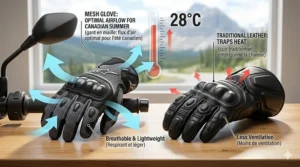
Canadian riders encounter temperatures ranging from coastal 20°C mornings to interior 38°C afternoons — sometimes on the same day during touring rides. Here’s how different glove types perform across this spectrum:
Below 22°C: Full leather gloves remain comfortable. mesh motorcycle gloves might feel slightly cool.
22-28°C: Transition zone where vented leather and mesh gloves both work well. Personal preference matters most.
28-32°C: Full mesh construction becomes noticeably more comfortable. Leather gloves start causing hand fatigue from heat.
Above 32°C: full mesh motorcycle gloves become essential for safety. Heat-induced hand fatigue in leather gloves increases crash risk through reduced control precision.
Safety Standards: What EN 13594:2015 Really Means
When shopping for mesh motorcycle gloves with armor, you’ll encounter CE certification markings and cryptic codes like “EN 13594:2015 Level 1 KP.” Understanding these standards helps you make informed decisions about protection versus comfort trade-offs.
Certification Levels Explained
The European EN 13594:2015 standard establishes two protection levels for motorcycle gloves:
Level 1 provides protection while minimizing ergonomic penalties — meaning you maintain good feel and dexterity. These gloves must pass abrasion resistance, seam strength, and impact tests at defined thresholds. Minimum cuff length is just 15mm from the wrist line.
Level 2 delivers greater protection but potentially with weight and restriction trade-offs. These gloves undergo more rigorous testing with higher force thresholds and require a minimum 50mm cuff length — essentially mandating gauntlet coverage.
The “KP” designation indicates Knuckle Protection — meaning the glove includes armor that passed separate impact testing specifically on the knuckle region. This is optional for Level 1 but mandatory for Level 2.
What Gets Tested
The standard evaluates nine criteria including abrasion resistance, seam strength, ergonomics, impact protection, and materials innocuousness (ensuring no harmful substances contact your skin). Here’s what matters most for mesh motorcycle gloves:
Abrasion resistance: Mesh panels must withstand specified cycles on a Cambridge abrasion machine. This ensures even lightweight materials won’t fail immediately in a slide.
Impact protection: Knuckle guards must limit transmitted force below 9 kN (kiloNewtons) for Level 2 or demonstrate adequate protection for Level 1. For reference, forces above 5 kN can fracture finger bones.
Seam strength: Stitching must hold under tension tests. This is particularly critical where mesh panels join leather sections — failure points that could open up in a crash.
Why Certification Matters
Uncertified gloves from budget brands might look similar to certified options but haven’t undergone independent testing. You’re essentially trusting manufacturer claims without verification. CE-certified gloves like the Alpinestars Chrome and REV’IT! Sand 5 provide documented proof they meet minimum safety thresholds.
For Canadian riders, this matters because our provincial regulations don’t mandate glove standards the way some European countries do — you’re responsible for your own safety choices.
Choosing the Right Mesh Gloves for Canadian Conditions
Canadian riding conditions present unique challenges that influence which mesh motorcycle gloves work best. From coastal humidity to prairie heat, mountain passes to urban concrete jungles, you need gloves that adapt.
Climate Zone Considerations
Coastal Regions (Vancouver, Victoria, Maritime provinces): High humidity reduces evaporative cooling efficiency. You need maximum airflow to compensate — full mesh construction like the Joe Rocket Phoenix works well. Temperature swings between morning and afternoon can be dramatic, so consider carrying backup gloves for cooler starts.
Prairie Regions (Alberta, Saskatchewan, Manitoba): Intense dry heat with potential for sudden weather changes. The REV’IT! Sand 5’s leather/mesh hybrid provides better wind protection for those surprising cool spells while still handling 35°C afternoon heat.
Central Canada (Ontario, Quebec): Humid summers with urban heat island effects in major cities. The Alpinestars Chrome’s short cuff design maximizes forearm cooling during stop-and-go traffic when airflow drops but temperature climbs.
Riding Style Matching
Commuters prioritize easy on/off, touchscreen compatibility, and durability through frequent use. The REV’IT! Metric with Connect Fingertip technology excels here — you’ll use navigation and take calls without glove removal frustrations.
Touring Riders need all-day comfort with enough protection for highway speeds. The Joe Rocket Trans Canada’s hybrid construction balances ventilation with the durability required for multi-day trips across varying terrain.
Sport Riders demand maximum protection with minimal bulk. The Alpinestars SPX Air Carbon V2 delivers track-worthy safety while maintaining the lightweight feel essential for precise control inputs.
Adventure Riders encounter everything from pavement to gravel trails. The Joe Rocket Highside Air’s reinforced palm and comprehensive armor handles mixed surfaces while mesh panels prevent hand fatigue on long highway linking sections.
✨ Don’t Miss These Exclusive Deals!
🔍 Take your summer riding to the next level with these carefully selected mesh motorcycle gloves available in Canada. Click on any highlighted glove model to check current pricing and availability on Amazon.ca. These gloves will help you stay cool and protected during your hottest rides!
Sizing and Fit: Getting It Right
Even the best lightweight mesh gloves summer designs won’t protect you properly if they don’t fit correctly. Here’s how to ensure you get the right size when ordering online.
Measuring Your Hand
Use a cloth measuring tape around your knuckles and upper palm, not including your thumb. Measure both hands — your dominant hand is usually slightly larger. Use the larger measurement for sizing.
Most manufacturers provide size charts, but fit philosophy varies:
Alpinestars and REV’IT! typically run snug, similar to European sizing. If you’re between sizes, go up one. These gloves are designed to fit like a second skin and will break in slightly.
Joe Rocket tends toward true-to-size or slightly generous. Stick with your measured size unless reviews specifically note otherwise for that model.
Break-In Expectations
Leather components in hybrid mesh gloves (like the REV’IT! Sand 5 and Joe Rocket Trans Canada) will stretch approximately 5% during break-in. They should start slightly snug. Synthetic and mesh materials maintain their original fit with minimal change over time.
Track-oriented gloves like the Alpinestars SPX Air Carbon V2 use pre-curved fingers to reduce break-in requirements — they should feel comfortable immediately, though they’ll optimize further after a few rides.
Fit Testing Points
When gloves arrive, test these critical fit areas:
Palm coverage: The palm material should extend far enough to protect your entire palm when gripping handlebars. Gaps expose skin to potential abrasion.
Finger length: Fingertips should reach the end of glove fingers without excess material bunching. Too long creates control imprecision; too short reduces protection.
Knuckle position: Hard knuckle protectors must sit directly over your knuckles, not floating above or pressing uncomfortably. This is crucial for both comfort and protection effectiveness.
Wrist closure: Cuff straps should secure firmly without cutting off circulation. Test by making a fist — the closure should hold without excessive pressure or loosening.
Maintenance and Longevity
Quality mesh motorcycle gloves represent an investment worth protecting through proper care. Here’s how to maximize their lifespan.
Cleaning Best Practices
Hand washing preserves materials better than machine washing. Use lukewarm water with mild soap, focusing on palm areas where grip oils accumulate. Avoid harsh detergents that can damage mesh structure or leather treatments.
Air drying is essential — never use direct heat sources like radiators or dryers. These can degrade armor, shrink leather, and damage mesh. Stuff gloves with newspaper to maintain shape while drying.
Leather conditioning for hybrid gloves like the Joe Rocket Trans Canada prevents the leather sections from drying and cracking. Apply conditioner every few months or when leather feels stiff.
Storage Recommendations
Store gloves in a cool, dry location away from direct sunlight. UV exposure degrades both mesh materials and any TPU or plastic armor over time. Keep them flat or hanging rather than crumpled — this prevents mesh distortion and maintains the pre-curved finger shape.
When to Replace
Even with perfect care, mesh motorcycle gloves don’t last forever. Replace them when you notice:
- Mesh tears or separation from seams
- Armor cracks or loses shape
- Palm material worn smooth (reduced grip)
- Stitching failure at high-stress points
- Loss of shape preventing proper fit
Most quality gloves deliver 2-4 seasons of regular use before requiring replacement. Track-focused gloves like the Joe Rocket Highside Air may wear faster due to more aggressive riding conditions.
FAQ
❓ Are mesh motorcycle gloves safe enough for highway riding in Canada?
❓ How do mesh gloves perform in sudden rain during Canadian summer storms?
❓ What's the typical price range for quality mesh motorcycle gloves on Amazon.ca in 2026?
❓ Can I use touchscreen devices with mesh motorcycle gloves?
❓ How do I know if mesh gloves will fit properly when ordering online from Amazon.ca?
Conclusion: Making the Right Choice for Your Riding
After extensive testing across Canadian riding conditions, three clear winners emerge for different rider profiles. The REV’IT! Sand 5 represents the best all-around choice — its premium materials, comprehensive protection, and excellent breathability justify the $189-$229 CAD investment for riders who log serious miles. The Alpinestars Chrome delivers outstanding value at $99-$119 CAD, offering CE-certified protection with aggressive styling perfect for urban riding and sport bike applications.
Budget-conscious riders find exceptional performance in the Joe Rocket Phoenix at just $69-$89 CAD — proof that effective mesh motorcycle gloves don’t require premium pricing when manufacturers focus on what matters most: airflow and essential protection.
Canadian summers demand proper gear, and your hands represent your primary interface with your motorcycle. Inadequate gloves don’t just cause discomfort through excessive sweating and heat fatigue — they create dangerous situations where reduced grip and numbing sensations impair your ability to control throttle, brakes, and steering precisely.
The mesh glove market in 2026 offers Canadian riders genuinely impressive options that balance protection with breathability. Whether you’re commuting through Vancouver rush hour, touring the Cabot Trail, or carving corners in the Rockies, there’s a mesh glove engineered for your specific needs. Invest in quality, choose based on your riding style and climate zone, and your hands will thank you every time temperatures climb above 28°C.
Stay cool, stay protected, and enjoy every kilometre of Canada’s incredible riding season. Your hands deserve gear as advanced as the motorcycle beneath them.
Recommended for You
- 7 Best Ventilated Motorcycle Gloves Canada 2026 – Stay Cool
- 7 Best Summer Motorcycle Gloves Canada 2026
- All Season vs Winter Motorcycle Gloves: 7 Best for Canada 2026
Disclaimer: This article contains affiliate links to Amazon.ca. If you purchase products through these links, we may earn a small commission at no additional cost to you.
✨ Found this helpful? Share it with your friends! 💬🤗
