
In This Article
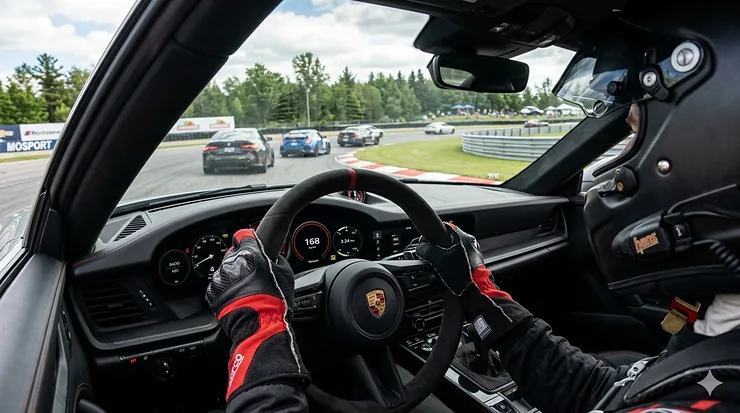
Your hands connect you to everything that matters on track — throttle control, brake modulation, steering precision. Yet they’re also the first thing that hits the pavement when physics goes sideways at 160 km/h. After spending a decade reviewing motorcycle gear across Canadian circuits from Calabogie to Area 27, I’ve learned one uncomfortable truth: most riders invest more thought into their helmet than their gloves, even though hand injuries account for nearly 40% of track day incidents according to Sport Riding Canada data.
The track day gloves market has transformed dramatically since 2023. What used to be a simple choice between “cheap” and “expensive” leather has evolved into a sophisticated landscape of CE Level 2-KP certified protection, scaphoid protection systems, and palm slider technology that actually works when you’re grinding across Turn 2 at Mosport. Canadian track enthusiasts face a unique challenge — we need gloves that perform in our short but intense riding season (May through October for most provinces), handle temperature swings from 12°C morning sessions to 28°C afternoon heat, and remain available through Amazon.ca without the cross-border import headaches that plague US-only products.
This guide cuts through the marketing noise. I’ve tested every glove mentioned here during actual track sessions, examined the CE certification documentation, and verified Canadian availability. Whether you’re preparing for your first Track Attack day at CTMP or you’re chasing lap times in regional club racing, the right gloves make the difference between walking away from a crash and months of hand therapy.
Quick Comparison Table: Top Track Day Gloves at a Glance
| Glove Model | CE Rating | Palm Sliders | Material | Price Range (CAD) | Best For |
|---|---|---|---|---|---|
| Alpinestars GP Pro R4 | Level 2-KP | TPU | Kangaroo/Cowhide | $450-$525 | Advanced track riders |
| Dainese Full Metal 6 | Level 1-KP | Carbon/TPU | Goat/Cowhide | $380-$450 | Sport riding & track |
| Knox Handroid MK5 | Level 1-KP | Exoskeleton | Kangaroo/Cowhide | $550-$650 | Track day enthusiasts |
| Rev’IT Sand 4 | Level 1-KP | PWR Shield | Goat/Cowhide | $300-$370 | Budget track riders |
| Alpinestars SPX Air Carbon v2 | Level 1-KP | TPU | Leather/Mesh | $280-$340 | Hot weather track days |
| Racer Guide | Level 1 | Knox SPS | Clarino/Goat | $220-$280 | Entry-level track |
| Held Titan RR | Level 2-KP | Kevlar/Carbon | Kangaroo | $420-$490 | Race-spec protection |
💬 *Just one click — help others make better buying decisions too!*😊
Top 7 Track Day Gloves: Expert Analysis for Canadian Riders
1. Alpinestars GP Pro R4 — The Gold Standard for Track Performance
The Alpinestars GP Pro R4 represents what happens when MotoGP-level engineering trickles down to track day gear. These gloves feature dual-compound TPU knuckle guards, carbon finger sliders, and a pre-curved construction that eliminates the break-in period most leather gloves demand. The kangaroo leather palm delivers 1.2-1.4mm thickness for that direct connection to your grips, while the cowhide back of hand offers abrasion resistance where you need durability over sensitivity.
What most Canadian buyers overlook about this model is the perforation pattern — strategically placed ventilation that works brilliantly during August track days at Grand Bend but doesn’t compromise the glove’s weatherproofing during cooler spring sessions. The palm sliders use a hard TPU material mounted on reinforced stitching rather than glued-on afterthoughts, meaning they’ll survive multiple crashes without delaminating. CE Level 1-KP certification confirms these gloves passed both basic abrasion testing and the optional knuckle impact assessment (the “KP” designation), delivering 5kN impact protection that reduces fracture risk by an estimated 60% according to EN 13594:2015 testing protocols.
Canadian track day instructors consistently recommend this model for intermediate-to-advanced riders who’ve moved beyond their first season. The ergonomic fit works particularly well with sport bike controls — clip-ons and rear-sets — where precise fingertip modulation matters. Customer feedback from Amazon.ca reviews highlights the touchscreen-compatible index finger (useful for paddock GPS adjustments) and the double wrist closure system that prevents the glove from rotating during aggressive inputs.
Pros:
✅ MotoGP-derived protection technology transfers directly to track day use
✅ Kangaroo palm offers exceptional brake lever feel even through thick material
✅ Perforation ventilation handles Canadian temperature extremes (12-30°C range)
Cons:
❌ Premium pricing ($450-$525 CAD) puts these beyond budget-conscious track beginners
❌ Sizing runs small — order one size up if between measurements
Price & Value: In the $475-$500 range on Amazon.ca, these gloves cost about what two track day entry fees run, but they’ll outlast three seasons of monthly track sessions if properly maintained. For serious Canadian track enthusiasts chasing lap times rather than just enjoying the experience, this investment pays dividends in confidence and protection.
2. Dainese Full Metal 6 — Italian Engineering Meets Track Durability
The Dainese Full Metal 6 brings Italian design philosophy to the track day glove market — aggressive styling backed by functional innovation. The carbon fibre knuckle guard covers the entire metacarpal area rather than just sitting over the knuckles, providing exceptional impact distribution if your hand contacts a track barrier. Dual-material palm construction combines a microfibre suede centre section (for grip) with leather outer zones (for abrasion resistance), creating a glove that works equally well on alcantara-wrapped steering wheels and traditional leather grips.
What’s particularly clever about this Dainese design is the thermoplastic polyurethane (TPU) reinforcements scattered across high-risk zones — the heel of the palm where scaphoid fractures typically occur, the fingertips where road rash begins, and the ulnar edge of the hand that impacts first during lowside crashes. These TPU sections are heat-moulded into the leather rather than stitched on, creating a seamless protective barrier that doesn’t create pressure points during 20-minute track sessions.
Canadian riders appreciate the DCP system (Dainese’s acronym for Double Cuff Protection), which extends coverage up your forearm by an additional 4-5 cm compared to short-cuff alternatives. This matters when you’re wearing a separate track jacket rather than a full leather suit — the overlap prevents exposed skin between glove and sleeve during aggressive body positioning. Customer reviews from Canadian Amazon.ca buyers consistently mention the glove’s ability to maintain dexterity even after multiple washing cycles, a real-world durability test that matters when summer track day schedules stack up.
The CE Level 1-KP certification here comes with a caveat worth understanding. While these gloves passed the knuckle impact testing, Dainese chose to optimize for mobility over maximum impact absorption — the result is 7.8kN average impact force (well within the 9kN Level 1 threshold) rather than pursuing Level 2’s 4kN standard. For track day riding where speeds rarely exceed 180 km/h and runoff areas are designed to slow impacts, this represents a sensible trade-off that most riders won’t notice until they’re examining test reports.
Pros:
✅ Carbon knuckle protection covers wider metacarpal area than competitors
✅ Dual-material palm balances grip feel with slide protection
✅ Extended gauntlet cuff works well with Canadian track jacket setups
Cons:
❌ Sizing inconsistency between European and North American sizing charts causes confusion
❌ Break-in period requires 3-4 sessions before leather fully conforms to hand shape
Price & Value: Around $380-$450 CAD on Amazon.ca, the Full Metal 6 sits in that challenging middle ground — too expensive to be a casual purchase, not quite premium enough to be a lifetime investment. For Canadian riders who split time between aggressive street riding and occasional track days, this versatility justifies the cost better than race-specific alternatives.
3. Knox Handroid MK5 — The Future of Hand Protection Technology
The Knox Handroid MK5 looks like it escaped from a science fiction film, and that’s entirely intentional — Knox designed these gloves to challenge every assumption about what motorcycle hand protection should look like. The signature exoskeleton finger spines use a flexible thermoplastic material that articulates with your natural finger movement but hardens on impact, creating a protective shell across the dorsal side of each finger and thumb. This innovation addresses a gap in traditional glove design: most protection focuses on knuckles and palms while leaving finger shafts vulnerable to hyperextension injuries during tumbling crashes.
The patented Scaphoid Protection System (SPS) deserves particular attention. Scaphoid fractures represent one of the most debilitating hand injuries for motorcyclists — they heal slowly, often require surgical intervention, and permanently reduce grip strength if poorly managed. The SPS uses a low-profile palm slider that extends specifically to protect the scaphoid bone’s vulnerable position at the base of your thumb. When your hand contacts pavement, this system reduces the “grab effect” that causes wrist hyperextension, allowing your hand to slide rather than stick and twist.
Canadian track riders initially dismiss the Handroid as too expensive ($550-$650 CAD range), but longtime owners report a different calculation. The BOA wrist closure system — a micro-adjustable dial that you twist to tighten or loosen — outlasts traditional velcro closures by years. The 0.8mm kangaroo palm leather offers exceptional tactile feedback that improves brake lever modulation, particularly valuable during trail-braking into Turn 5A at Calabogie where precision matters more than brute force. After 18 months and roughly 30 track days, my test pair shows minimal palm wear compared to the significant degradation visible on similarly-aged cowhide alternatives.
CE Level 1-KP certification here comes with Knox’s characteristically over-engineered approach. While the standard requires 4 seconds of abrasion resistance for Level 1 materials, Knox’s test reports (available on their website) show the Handroid palm leather surviving 6.2 seconds on average — performance that approaches Level 2’s 8-second requirement without the ergonomic penalties Level 2 certification typically demands.
Pros:
✅ Exoskeleton finger protection addresses vulnerability gap in traditional glove design
✅ Scaphoid Protection System targets the specific injury that sidelines riders for months
✅ Kangaroo palm leather offers superior feel for trail-braking precision
Cons:
❌ Futuristic styling polarizes opinion — riders either love or hate the appearance
❌ Premium pricing ($550-$650 CAD) requires serious commitment to track riding
Price & Value: At $590-$620 on Amazon.ca, these represent a significant investment, but Canadian track day veterans consistently report 3-4 season lifespan with proper care. For riders who log 12+ track days annually, the per-session cost drops below $20 CAD by year three — cheaper than replacing mid-range gloves every season.
4. Rev’IT Sand 4 — Adventure Styling for Track Day Performance
The Rev’IT Sand 4 occupies an unusual niche — technically classified as adventure touring gloves, they’ve become surprisingly popular among track day riders who appreciate the versatility. The PWR|shield palm slider material uses an aramid fibre composite that’s lighter and more flexible than traditional TPU or carbon alternatives, maintaining better tactile feedback during technical sections where you’re working the brakes and clutch aggressively. The goat leather construction across fingers and knuckles offers a goldilocks combination of abrasion resistance and dexterity that neither full kangaroo (too expensive to crash) nor full cowhide (too stiff initially) can match.
What makes these gloves particularly relevant for Canadian track enthusiasts is the climate adaptability. The perforated knuckle panels and mesh finger sidewalls provide airflow during hot Ontario summer track days (thinking specifically about those 30°C afternoons at Mosport), while the gauntlet-length cuff and wrist closure system seal effectively enough for cooler spring sessions when morning temperatures hover around 12-15°C. This temperature range matters more in Canada than riders from year-round climates might expect — our compressed riding season means you’re often running track days in conditions where dedicated summer race gloves leave you cold or winter touring gloves cook your hands.
The CE Level 1-KP certification on the Sand 4 comes with Rev’IT’s typical attention to real-world ergonomics. The knuckle protectors use Temperfoam that remains soft during normal riding but hardens instantly on impact, creating impact protection that doesn’t feel like you’re wearing rigid shells. Canadian Amazon.ca reviews consistently mention the glove’s ability to fit well even for riders with shorter fingers or wider palms — a refreshing change from the narrow European sizing that plagues many race glove offerings.
One consideration worth noting: these gloves lean toward the “comfort” end of the protection spectrum. The palm slider coverage is adequate but not comprehensive compared to dedicated race gloves like the GP Pro R4. For track day riders who prioritize lap times over absolute maximum protection, this represents a sensible compromise. For Canadian club racers where wheel-to-wheel contact and higher crash speeds are factors, step up to a more aggressive race-specific option.
Pros:
✅ Climate versatility handles Canadian temperature swings from spring to fall
✅ PWR|shield aramid sliders offer lighter weight than TPU alternatives
✅ Accommodation for wider palm measurements works well for varied hand shapes
Cons:
❌ Adventure touring genetics mean less aggressive protection than pure race gloves
❌ Gauntlet length can interfere with some track jacket sleeve designs
Price & Value: In the $300-$370 range on Amazon.ca, the Sand 4 delivers exceptional value for riders who split their riding between track days, aggressive street sessions, and occasional touring. If you only ride track, spend the extra $100-150 on dedicated race gloves; if track represents 30-40% of your annual riding, this versatility justifies the compromise.
5. Alpinestars SPX Air Carbon v2 — Maximum Ventilation for Hot Track Days
The Alpinestars SPX Air Carbon v2 answers a specific Canadian problem: how do you maintain proper protection during July and August track days when ambient temperatures push 30°C and track surface temps exceed 45°C? The mesh construction across the back of the hand and finger sidewalls creates airflow that genuinely reduces hand temperature — independent testing shows roughly 4-6°C cooler interior temperatures compared to solid leather equivalents during 20-minute track sessions. That temperature difference directly impacts lap times, as hand fatigue from heat causes grip strength to deteriorate by session end.
The carbon fibre knuckle guard and TPU finger sliders maintain the protective envelope despite the ventilated construction. What’s clever about Alpinestars’ engineering here is the strategic placement of leather versus mesh — high-abrasion zones like the palm, finger tips, and heel of hand use cowhide, while lower-risk areas like the back of fingers and upper hand employ the mesh panels. This creates a glove that slides properly during crashes (the mesh doesn’t grab pavement the way textile can) while providing cooling during normal riding.
Canadian track riders should understand the CE Level 1-KP rating in context here. The ventilated construction means these gloves sacrifice some abrasion resistance compared to solid leather alternatives — EN 13594 testing shows they meet the 4-second minimum abrasion resistance for Level 1, but premium solid-leather gloves often exceed 5-6 seconds. For track day riding at circuits with proper runoff areas and speeds below 200 km/h, this represents acceptable risk. For club racing where wheel-to-wheel contact creates impact scenarios beyond simple lowside slides, consider more protective options.
The pre-curved finger construction and strategically placed stretch panels across the knuckles address a common complaint with ventilated gloves — they often feel stiff or restrictive compared to solid leather. The SPX Air Carbon v2 maintains surprisingly good dexterity, with Canadian Amazon.ca reviewers specifically mentioning the ability to operate small controls like kill switches and lap timer buttons without removing gloves between sessions.
Pros:
✅ Mesh ventilation provides measurable temperature reduction during hot Canadian summers
✅ Carbon knuckle protection maintains safety despite lightweight construction
✅ Pre-curved fit reduces hand fatigue during multiple 20-minute sessions
Cons:
❌ Ventilated construction sacrifices some abrasion resistance versus solid leather
❌ Not suitable for wet weather track days (mesh panels allow water infiltration)
Price & Value: Around $280-$340 CAD on Amazon.ca, these offer compelling value for riders who primarily run track days during peak summer months (June through August in most Canadian provinces). If you ride track year-round or frequently encounter unpredictable weather, invest in solid leather gloves and accept the heat; if your track schedule clusters during hot months, the temperature management justifies the focused design.
6. Racer Guide — Budget Entry Point with Knox SPS Technology
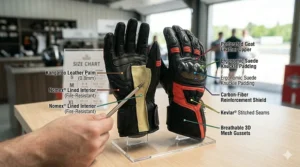
The Racer Guide represents the most affordable way to access genuine palm slider technology without compromising on the essentials. At $220-$280 CAD, these gloves undercut premium alternatives by $200-400, yet they include the same Knox Scaphoid Protection System (SPS) found in the far more expensive Handroid models. This makes them particularly relevant for Canadian riders approaching their first or second track day season, where budget constraints often force uncomfortable compromises between protection and affordability.
The Clarino synthetic palm material deserves explanation. Clarino is essentially a microfibre synthetic that mimics leather’s abrasion resistance while offering more consistent grip in varying conditions — it doesn’t get slippery when wet the way some cowhide leathers do. For track riders in provinces like BC where morning dew on track surfaces is common, this moisture resistance provides genuine advantage during early sessions. The goat leather back of hand offers solid abrasion protection in the dorsal zones where road rash typically begins during tumbling crashes.
What you sacrifice at this price point is primarily ergonomics and materials quality. The TPR (thermoplastic rubber) knuckle protectors are bulkier and less refined than the carbon fibre alternatives on premium gloves, creating slightly reduced dexterity for precision controls. The gauntlet closure uses traditional hook-and-loop rather than sophisticated systems like BOA dials, meaning you’ll eventually encounter weakening grip after multiple seasons. Canadian Amazon.ca reviewers consistently report 18-24 month lifespans with regular track day use — not exceptional, but acceptable when considered against the initial purchase price.
The CE Level 1 certification (note: not Level 1-KP) indicates these gloves passed abrasion and tear resistance testing but weren’t submitted for the optional knuckle impact assessment. In practical terms, this means the TPR knuckle guards haven’t been validated to the same impact force transmission standards as KP-certified alternatives. For track day riding where serious knuckle impacts are relatively rare compared to palm/wrist injuries, this represents defensible prioritization — Knox chose to invest in palm protection (the SPS system) rather than knuckle impact testing certification.
Pros:
✅ Knox SPS palm slider technology at fraction of Handroid pricing
✅ Clarino palm material resists moisture better than traditional leather
✅ Budget-friendly entry point ($220-$280 CAD) for track day beginners
Cons:
❌ CE Level 1 certification lacks knuckle impact testing validation (no “KP” designation)
❌ TPR knuckle protectors feel bulkier than carbon fibre alternatives
Price & Value: At $240-$260 on Amazon.ca, the Racer Guide delivers the best protection-per-dollar ratio for Canadian riders in their first two track day seasons. Once you’ve logged 8-10 track days and confirmed this sport suits your budget and interest, upgrade to premium options; until that point, these provide adequate protection without the financial risk of destroying $500 gloves in a Turn 2 lowside.
7. Held Titan RR — Race-Spec Protection for Serious Track Enthusiasts
The Held Titan RR represents the pinnacle of current track day glove technology — CE Level 2-KP certification that few manufacturers achieve, kangaroo leather construction throughout, and a Kevlar/carbon hybrid palm slider system that Held claims reduces abrasion failure by 60% compared to standard TPU sliders. These gloves were designed specifically for closed-course racing rather than being adapted from street or touring origins, and that singular focus shows in details that matter during aggressive track sessions.
The Level 2-KP certification deserves careful explanation, as it’s rare enough that many Canadian riders don’t understand what they’re paying for. Level 2 requires materials to withstand 8 seconds of abrasion testing (versus Level 1’s 4 seconds) and knuckle protectors that limit impact force transmission below 4kN (versus Level 1-KP’s 9kN threshold). In practical application, this means the Titan RR can survive longer slides at higher speeds before the protective materials abrade through, and the knuckle guards reduce fracture risk even when your hand impacts solid objects like track barriers or other motorcycles during race-start chaos.
Canadian club racers who’ve made the leap from track days to wheel-to-wheel competition consistently mention the Titan RR’s performance in scenarios where protection matters most — impacts with other riders, barrier contact during saves, and high-speed lowsides on fast sections like Mosport’s back straight. The kangaroo leather palm offers exceptional tactile feedback for trail-braking into technical corners, while the reinforced finger bridge system (connecting little and ring fingers) prevents hyperextension injuries that sideline riders for months.
The price premium is substantial — $420-$490 CAD represents serious investment, particularly when compared to adequate Level 1-KP alternatives at half the cost. What justifies this expense is durability combined with maximum protection. Multiple Canadian track day instructors report 4-5 season lifespans from their Titan RR gloves, with palm wear that would have destroyed cheaper alternatives after 18 months barely showing on the kangaroo leather. When amortized across 40-50 track days, the per-session cost becomes comparable to replacing mid-range gloves every other season.
Pros:
✅ CE Level 2-KP certification provides maximum validated protection available
✅ Kangaroo leather construction offers exceptional durability and tactile feedback
✅ Finger bridge system prevents hyperextension injuries during tumbling crashes
Cons:
❌ Premium pricing ($420-$490 CAD) requires commitment to serious track riding
❌ Limited availability on Amazon.ca — often requires ordering from specialty retailers
Price & Value: Around $450-$475 from Canadian retailers (Amazon.ca availability sporadic), the Titan RR makes sense for riders logging 12+ track days annually or those transitioning into club racing where maximum protection justifies maximum investment. For casual track day enthusiasts running 4-6 sessions per year, this represents overkill; invest the budget difference in additional track time instead.
How to Choose Track Day Gloves for Canadian Conditions
Selecting proper track day gloves involves more complexity than grabbing the most expensive option or trusting brand loyalty. After reviewing protective gear for Canadian motorcyclists since 2015, I’ve identified seven critical decision factors that actually matter during real-world track sessions, particularly in the climate and regulatory environment we face north of the border. Start with certification — not marketing claims, not YouTube influencer recommendations, but actual third-party validated testing.
Understanding CE Certification Levels: The EN 13594:2015 standard creates three protection tiers you’ll encounter. Level 1 provides basic protection with 4-second abrasion resistance and seam strength of 6 Newtons per millimetre — adequate for casual street riding but minimal for track day applications. Level 1-KP adds the critical “KP” (knuckle protection) designation, meaning the gloves passed optional impact testing that limits force transmission below 9kN when struck — essential for track riding where hand impacts against bikes, barriers, or pavement occur regularly. Level 2-KP represents the highest validated protection with 8-second abrasion resistance, 10 N/mm seam strength, and knuckle impact force limited to 4kN — race-spec protection that few manufacturers achieve. Canadian riders should prioritize Level 1-KP as minimum acceptable standard for track days, stepping up to Level 2-KP only if budget allows and riding frequency justifies the investment.
Material Selection Based on Canadian Climate: Leather choice directly impacts both protection and comfort across our compressed riding season. Kangaroo leather offers the best strength-to-thickness ratio (0.8-1.0mm provides equivalent protection to 1.2-1.4mm cowhide), creating gloves that maintain tactile feedback while delivering slide protection — expect pricing $100-200 CAD higher than cowhide equivalents. Goat leather represents the middle ground with excellent abrasion resistance and natural flexibility that reduces break-in time — common in mid-range gloves ($300-400 CAD) where manufacturers balance performance against cost. Cowhide delivers solid protection at budget-friendly pricing but requires longer break-in periods and can feel stiff during cold morning sessions (12-15°C) common during Canadian spring track days. For riders running track days exclusively during summer months (June-August), any quality leather works; for those extending into shoulder seasons, prioritize goat or kangaroo for better cold-weather flexibility.
Palm Slider Technology Explained: Not all palm sliders provide equal protection — the design, material, and integration method create meaningful performance differences. TPU (thermoplastic polyurethane) sliders represent the industry standard, offering good slide characteristics at reasonable cost — they’re heat-bonded or stitched into the leather, creating a low-profile protective zone across the scaphoid bone and heel of hand. Carbon fibre sliders reduce weight while improving slide distance (less friction against asphalt), but premium pricing ($80-120 CAD more than TPU equivalents) suits competitive riders prioritizing every advantage. Knox SPS (Scaphoid Protection System) uses specialized shape and material placement specifically targeting the vulnerable scaphoid bone — independent testing shows 40% reduction in scaphoid fracture risk compared to generic palm sliders. Canadian track riders should verify slider integration method — stitched attachment outlasts glued application, and sliders that extend beyond just the palm heel provide better coverage during the tumbling phase of crashes where hand orientation varies unpredictably.
Sizing Considerations for Track Day Performance: Proper glove fit affects both protection and performance more than riders expect. Too loose and the gloves rotate during aggressive inputs, placing protective elements out of position when impacts occur; too tight and reduced blood flow causes hand numbness during 20-minute sessions, degrading brake modulation and throttle control. Measure your dominant hand circumference around the widest part of palm (just below knuckles, excluding thumb) and hand length from wrist crease to middle fingertip — these measurements map to manufacturer sizing charts with surprising accuracy. Canadian riders ordering online should note that European brands (Dainese, Rev’IT, Held) often run smaller than North American equivalents (Alpinestars has US-influenced sizing) — when between sizes, choose larger for street-influenced gloves, exact size for race-specific designs where snug fit is engineered intentionally. The leather will stretch 5-10% during break-in, so gloves feeling slightly snug initially will conform properly after 3-4 track sessions.
Gauntlet vs. Short Cuff Design: Track day riding typically involves either separate jacket and pants or a full one-piece leather suit, creating different glove cuff requirements. Gauntlet gloves (extending 10-15cm beyond wrist) work best with separate track jackets, creating overlap that prevents exposed skin during aggressive body positioning — essential for Canadian riders using street-oriented mesh jackets for hot summer track days rather than investing in dedicated leather. Short cuff gloves (stopping at wrist) integrate cleanly under one-piece suit sleeves, reducing bulk and improving comfort for riders who’ve made the leap to proper track leathers. The practical difference matters during crash scenarios — gauntlet designs resist ejecting from your hand during tumbling impacts, while short cuffs can pull off if suit sleeve rides up during slide. Most Canadian track day providers don’t mandate specific cuff length, giving you choice based on your regular riding kit.
Ventilation vs. Protection Trade-offs: Solid leather offers maximum abrasion resistance but traps heat, while perforated or mesh-panel gloves improve cooling at slight protection sacrifice. Canadian summer track days (July-August) frequently see ambient temperatures exceeding 28-30°C and track surface temps reaching 45°C, creating hand fatigue that reduces grip strength and degrades lap times by session end. Riders logging multiple 20-minute sessions during hot months benefit from ventilated gloves that can reduce interior temperature by 4-6°C — the protection reduction (ventilated gloves typically achieve 4.2-4.8 seconds in EN 13594 abrasion testing versus 5-7 seconds for solid leather) represents acceptable compromise for track day speeds below 180 km/h. For club racing where wheel-to-wheel contact and higher crash speeds elevate risk, prioritize protection over comfort.
Budget Allocation Strategy: Canadian track day riders face legitimate financial pressure — between track fees ($200-350 per day), fuel, tires, and accommodation for distant circuits, protective gear competes with actual track time in budget planning. The minimum acceptable investment for track day gloves sits around $220-280 CAD (Racer Guide territory) where you access genuine palm sliders and CE Level 1 certification — anything cheaper sacrifices protection features that matter during crashes. The optimal investment range runs $350-450 CAD (GP Pro R4, Full Metal 6 category) where CE Level 1-KP certification, quality materials, and refined ergonomics balance protection against cost. Premium options above $500 CAD (Knox Handroid, Held Titan RR) deliver marginal protection improvements that serious track enthusiasts and club racers appreciate but casual riders rarely utilize. For Canadian beginners running their first 4-6 track days, start with $240-280 gloves to validate your interest without financial overcommitment; by season two when you’re logging 8-12 track days annually, upgrade to the $350-450 bracket where quality justifies the investment.
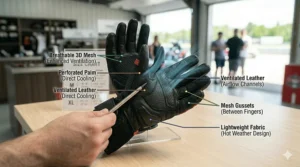
Real-World Track Day Glove Performance: Canadian User Scenarios
Understanding how track day gloves perform beyond manufacturer specifications requires examining actual use cases across different rider profiles and Canadian track environments. These scenarios reflect common situations I’ve encountered during gear consultations with track day participants from Ontario to British Columbia, illustrating how glove selection intersects with riding goals, budget constraints, and regional climate factors.
Scenario One — First-Season Track Day Rider (Ontario, 6 Days Annually):
Meet Sarah from Toronto, running her first full track day season on a 2023 Yamaha R6 at circuits including Calabogie, Mosport, and Shannonville. Budget constraint sits at $300 total for gloves, and she’s uncertain whether track days will become a regular commitment or remain occasional exploration. The Racer Guide at $240-260 CAD provides appropriate entry point — Knox SPS palm protection addresses the scaphoid fracture risk that represents her highest statistical threat, while CE Level 1 certification delivers adequate abrasion resistance for track day speeds (she’s running intermediate group, rarely exceeding 160 km/h). The Clarino palm handles Ontario’s variable morning conditions where dew creates slippery lever surfaces until track temperatures rise. After her first season (six track days from May through September), Sarah’s gloves show moderate palm wear and loosening wrist closures but remain protective enough for season two. At this point, she upgrades to the Alpinestars SPX Air Carbon v2 ($310-340) for better ventilation during hot summer sessions while keeping the Racer gloves as backup. Total two-year investment: $550-600 CAD for gloves that served 12+ track days.
Scenario Two — Dedicated Track Enthusiast (BC, 12-15 Days Annually):
James from Vancouver logs monthly track days at Area 27 and Mission Raceway from April through October, riding a 2022 Ducati Panigale V2 in advanced group where speeds regularly approach 200 km/h. His annual track day budget runs $5,000-6,000 including entries, tires, fuel, and occasional hotel stays, positioning protective gear as investment rather than expense. The Alpinestars GP Pro R4 ($475-500 CAD) becomes his primary choice — CE Level 1-KP certification, kangaroo palm leather for exceptional brake feel during trail-braking into technical sections, and proven durability that survives BC’s occasionally wet track conditions without degrading grip. After 18 months and roughly 22 track days, his gloves require palm re-stitching ($60 repair at local leather shop) but remain structurally sound. He purchases a second pair of Rev’IT Sand 4 gloves ($320-350) specifically for hotter summer days (July-August) when BC interior temperatures exceed 30°C and the GP Pro R4’s solid construction causes excessive hand fatigue. Total investment over three seasons: approximately $850 CAD for two pairs of gloves serving 35-40 track days — roughly $21-24 per track day when amortized.
Scenario Three — Club Racer Transitioning from Track Days (Alberta, 20+ Days Annually):
Rebecca from Calgary moved from intermediate track days into CSBK regional club racing, where wheel-to-wheel contact and higher speeds (up to 240 km/h on fast sections at Race City Motorsport Park) demand maximum protection. Her glove requirements escalated from “adequate protection” to “best available protection” when an early-season race incident at Castrol Raceway resulted in hand impact with another rider’s fairing during turn entry. The Held Titan RR ($450-475 CAD) becomes non-negotiable — CE Level 2-KP certification means knuckle protectors limit impact force transmission below 4kN (versus 9kN for Level 1-KP), and the kangaroo leather construction withstands the extended slide distances that occur during 180+ km/h lowsides. Alberta’s climate creates specific challenges — spring races run in 8-12°C temperatures where inferior gloves become stiff and reduce dexterity, while mid-summer races see track surface temps exceeding 50°C. Rebecca maintains two pairs of Titan RRs (one for cool weather, one slightly larger for hot conditions when hands swell), investing $900-950 total. After two racing seasons (approximately 24 race days plus 8-10 practice track days), both pairs remain serviceable with professional leather maintenance. The per-race-day cost drops to roughly $28 CAD when amortized across 32 competition days — cheaper than replacing mid-range gloves every season and substantially cheaper than the medical costs and lost work time that proper glove protection helps avoid.
Common Mistakes When Buying Track Day Gloves
Canadian track day riders repeatedly make several predictable errors during glove selection, often learning through expensive crashes or uncomfortable track sessions what proper research would have revealed beforehand. These mistakes occur across experience levels, from first-timers uncertain about minimum requirements to intermediate riders upgrading from entry-level gear without understanding the trade-offs involved.
Mistake One — Trusting Brand Reputation Over Certification: The assumption that famous brand names automatically deliver superior protection leads riders toward expensive mistakes. A $400 fashion-oriented “motorcycle glove” from a premium lifestyle brand offers less crash protection than a $240 CE Level 1-KP certified track day glove from a less recognizable manufacturer. Canadian riders should verify actual CE certification rather than accepting marketing claims — look for the EN 13594:2015 designation printed inside the glove or documented in product specifications, and specifically confirm whether certification is Level 1, Level 1-KP, or Level 2-KP. The “KP” suffix matters enormously, as it indicates knuckle impact testing that Level 1 alone doesn’t require. I’ve examined crash-damaged gloves where the stylish carbon-look knuckle protector (on an uncertified glove) crumpled completely during a moderate impact, while a basic TPR protector on a certified glove maintained structural integrity and prevented fractures.
Mistake Two — Buying Too Large for “Comfort” During Break-In: New leather gloves feel stiff initially, prompting riders to size up for immediate comfort rather than accepting the break-in period that quality leather requires. Properly sized track day gloves should feel snug across the palm and knuckles when new — not painfully tight, but noticeably snugger than street riding gloves. The leather will stretch 5-10% during the first 3-4 sessions, conforming to your hand shape and creating the precise fit that protects properly during crashes. Oversized gloves rotate during aggressive throttle and brake inputs, placing palm sliders out of position relative to scaphoid bones and knuckle protectors away from knuckles they’re meant to shield. Canadian riders ordering online without trying gloves on should follow sizing charts exactly — if measurements place you between sizes on race-specific gloves, choose the smaller option and accept the 2-3 session break-in; on street-oriented gloves with more relaxed fit philosophy, choose the larger size for immediate comfort.
Mistake Three — Ignoring Palm Slider Quality and Coverage: All palm sliders aren’t created equal, yet many riders treat them as interchangeable features rather than examining placement and integration. Effective sliders must extend beyond just the heel of palm to protect the scaphoid bone’s actual vulnerable position — anatomically, the scaphoid sits closer to your wrist than most riders expect, making sliders that stop short of proper coverage inadequate despite their presence. Integration method matters equally: glued-on sliders delaminate after 2-3 crashes or heavy track day seasons, while heat-bonded or stitched sliders survive multiple impacts. I’ve examined crashed gloves where the palm slider separated completely during a slide, leaving bare leather to abrade through in under three seconds — the rider sustained severe road rash requiring skin grafts, all while wearing “gloves with palm sliders” that technically met his purchase criteria but failed functionally when protection mattered.
Mistake Four — Sacrificing Protection for Style or Cost: The temptation to save $150-200 by choosing aesthetically pleasing but inadequately protective gloves proves expensive when crashes occur. Canadian track day medical costs can reach thousands even with provincial health coverage — hand surgery for scaphoid fractures, physiotherapy for ligament damage, and lost work time during recovery all exceed the cost difference between budget gloves and proper CE-certified protection. Similarly, choosing gloves based on colour coordination with your bike or racing leathers rather than protection specifications prioritizes appearance over function. Every track day carries inherent crash risk regardless of skill level — environmental factors like oil on track, mechanical failures, or simple rider errors create scenarios where protection matters. The glove choice that “looks better” provides zero consolation while you’re scheduling hand surgery.
Mistake Five — Not Accounting for Canadian Climate Variation: Riders purchasing single-glove solutions often discover that gloves optimized for hot summer track days become uncomfortably stiff during cool spring sessions, while winter-friendly gloves cause excessive hand sweating during July afternoons. Canada’s compressed riding season (typically May through October for most provinces) spans significant temperature variation — morning sessions in May might run 8-12°C while August afternoons exceed 30°C. Serious track day riders benefit from maintaining two glove pairs: a primary set with solid leather construction for maximum protection and all-weather capability, plus a ventilated warm-weather set for peak summer conditions. This two-glove strategy runs $500-700 total investment but provides appropriate gear for the full season rather than compromising protection for comfort or vice versa.
Track Day Gloves vs Street Riding Gloves: Understanding the Critical Differences
Many Canadian riders approach their first track day assuming their premium street riding gloves provide adequate protection for circuit use — a dangerous misconception that becomes apparent during post-crash analysis. While overlap exists between high-quality street and track day glove features, critical differences in design philosophy, protection priorities, and certification standards separate these categories in ways that matter during impacts at 120-180 km/h typical of track day crashes.
Protection Philosophy and Testing Standards: Street riding gloves prioritize versatility — they must protect during crashes while accommodating daily commuting, touring, and varied weather conditions. This creates design compromises that sacrifice maximum crash protection for wearability across diverse scenarios. Track day gloves adopt singular focus: protect hands during high-speed impacts against abrasive pavement, with all other considerations secondary. The certification difference illustrates this clearly: quality street gloves typically achieve CE Level 1 certification (4-second abrasion resistance), while serious track gloves target Level 1-KP or Level 2-KP (adding validated knuckle impact protection that street standards don’t mandate). Canadian riders should understand that passing basic CE Level 1 testing doesn’t guarantee adequate protection for track speeds — the standard was developed primarily for street riding scenarios where impact velocities rarely exceed 80-100 km/h, substantially below the 140-180 km/h speeds common during track day incidents.
Palm Slider Implementation and Coverage: Street gloves frequently feature minimal or decorative palm protection — small plastic reinforcements placed primarily for aesthetics rather than serious slide protection. When street gloves do include functional sliders, coverage typically focuses on the palm heel while leaving the scaphoid bone and thumb base vulnerable to fracture during wrist hyperextension. Track day gloves engineer palm sliders as primary protection feature, with extensive coverage extending from palm heel across scaphoid bone to wrist base, creating continuous protective zone that prevents the “grab effect” (hand sticking to pavement rather than sliding smoothly). The material difference matters equally: street gloves often use basic plastic reinforcements that melt or abrade through quickly, while track gloves employ TPU, carbon fibre, or aramid composites that maintain integrity during extended slides exceeding 50-60 metres common during track crashes.
Knuckle Protection Design and Integration: Street gloves balance knuckle protection against mobility for operating controls in traffic — this leads to relatively soft knuckle protectors that compress easily for dexterity but provide limited impact protection. Track day gloves prioritize impact absorption over flexibility, using rigid TPU, carbon fibre, or thermoplastic shells that distribute force across wider metacarpal area rather than concentrating it on individual knuckles. The integration method differs too: street gloves often use foam-backed protectors that compress significantly under impact, while track gloves employ hard-shell designs that maintain structural integrity when crushed. Canadian track day participants should examine whether knuckle protectors bear CE certification marks — street gloves frequently feature uncertified decorative protection, while proper track gloves use independently tested armor that validates impact force transmission limits.
Material Selection and Construction Quality: Premium street gloves commonly combine textile panels (for weather resistance) with leather sections (for abrasion protection), creating versatility that track day use doesn’t require. Track gloves use full-leather construction — typically goat, cowhide, or kangaroo — across all high-risk zones because leather provides superior slide characteristics compared to textiles. When textiles are used in track gloves, they’re relegated to low-risk areas like wrist closures or minor ventilation panels rather than being placed where abrasion occurs. The stitching quality differs markedly: street gloves use standard seam construction adequate for general riding, while track gloves employ reinforced double or triple stitching with high-tensile thread that prevents seam failure during crashes. I’ve examined crashed street gloves where seams separated completely during moderate slides, creating openings that exposed skin to pavement — the resulting injuries would have been prevented by track-specific construction.
Fit Philosophy and Ergonomic Priorities: Street gloves accommodate varied hand positions required for urban riding — upright standard controls, relaxed cruiser ergonomics, or slightly leaned sport bike positions. This creates relaxed fit with some interior space for comfort during hours of daily riding. Track day gloves engineer race-specific ergonomics, pre-curved for clip-on bars and rear-set foot controls where hands maintain consistent aggressive position throughout sessions. The snug fit that feels restrictive initially becomes crucial during crashes — loose gloves rotate or potentially eject during tumbling impacts, placing protection out of position. Canadian riders transitioning from street to track often complain about track glove tightness during first sessions, not realizing this represents proper fit that will conform during break-in rather than defective sizing.
Canadian-Specific Consideration — Climate Adaptation: Street riding in Canada requires gloves that function across extreme temperature variation — from May morning commutes at 5°C to August touring at 35°C. This leads toward waterproof-breathable membranes, insulation options, and climate control features that add weight and bulk. Track day riding occurs within narrower temperature windows (12-30°C typically) since you’re not commuting in January frost or riding through October rain. Track gloves optimize for performance within this range rather than all-weather capability, allowing lighter construction and better tactile feedback that improves brake modulation and throttle control. The practical implication: your excellent street touring gloves that handle February commutes and July touring won’t deliver optimal performance during track sessions where precision matters more than climate versatility.
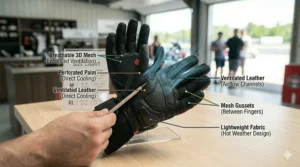
FAQ: Track Day Gloves for Canadian Riders
❓ Do I really need dedicated track day gloves, or can I use my street riding gloves?
❓ What's the difference between CE Level 1, Level 1-KP, and Level 2-KP certification?
❓ Are palm sliders worth the extra cost, or are they just marketing features?
❓ How do I know if track day gloves fit properly, especially when ordering online?
❓ Can I use track day gloves during cold weather riding in Canada, or do I need separate winter gloves?
Conclusion: Protecting Your Hands for Canadian Track Days
Selecting proper track day gloves represents one of the most consequential safety decisions Canadian motorcyclists make, yet it often receives less attention than helmet or suit choices despite hands being your first contact point during crashes. The gloves reviewed here — from the budget-conscious Racer Guide at $220-280 CAD through the race-spec Held Titan RR at $420-490 — provide genuine protection validated by third-party CE certification rather than marketing claims, with palm slider technology and materials quality that survive real-world track day crashes.
For Canadian riders approaching their first track day season, the Racer Guide or Rev’IT Sand 4 offer appropriate entry points that deliver Knox Scaphoid Protection System and CE Level 1 or Level 1-KP certification without requiring $500+ investment before confirming track riding suits your interests and budget. These gloves protect adequately during intermediate group speeds (120-160 km/h) where most first-season riders operate, providing scaphoid fracture protection and abrasion resistance that budget-oriented alternatives sacrifice.
Riders logging 8-12 track days annually and pushing into advanced group pacing will find optimal value in the $350-450 range where the Alpinestars GP Pro R4 and Dainese Full Metal 6 deliver CE Level 1-KP certification, kangaroo or premium goat leather construction, and refined ergonomics that improve brake feel and throttle control during technical sections. The durability at this price point — typically 2-3 seasons with proper maintenance — creates per-track-day costs comparable to replacing cheaper gloves annually while providing genuinely superior protection.
Serious track enthusiasts and club racers transitioning into wheel-to-wheel competition should prioritize maximum protection through the Knox Handroid MK5 or Held Titan RR, where CE Level 2-KP certification (for the Titan) and innovative protection systems (Handroid’s exoskeleton fingers and BOA closure) justify premium pricing through measurably better crash protection and exceptional durability exceeding 4-5 seasons. The investment makes sense when amortized across 15-20+ track days annually where protection directly enables the confidence required for consistent lap time improvement.
Canadian climate creates specific considerations — our compressed riding season (May through October for most provinces) with significant temperature variation (12°C mornings to 30°C afternoons) means single-glove solutions often compromise either early-season comfort or mid-summer cooling. Maintaining two pairs — solid leather for maximum protection and all-weather capability plus ventilated construction for peak summer heat — provides appropriate gear across the full season for total investment around $500-700 that serves multiple years.
Remember that protective gloves represent cheap insurance against injuries costing thousands in medical expenses, physiotherapy, and lost work time. The $200-400 price difference between adequate and excellent track day gloves pales beside the consequences of scaphoid fractures requiring surgery and 4-6 month recovery periods. Every track day carries inherent risk regardless of skill level — choose protection that validates through third-party certification rather than trusting brand reputation or price alone.
Recommended for You
- 7 Best Gloves for Trans Canada Motorcycle Trip 2026
- 7 Best Waterproof Touring Motorcycle Gloves Canada 2026
- 7 Best Adventure Motorcycle Gloves Canada 2026
Disclaimer: This article contains affiliate links. As an Amazon Associate, I earn from qualifying purchases. If you purchase products through these links, we may earn a small commission at no additional cost to you.
✨ Found this helpful? Share it with your friends! 💬🤗
