
In This Article
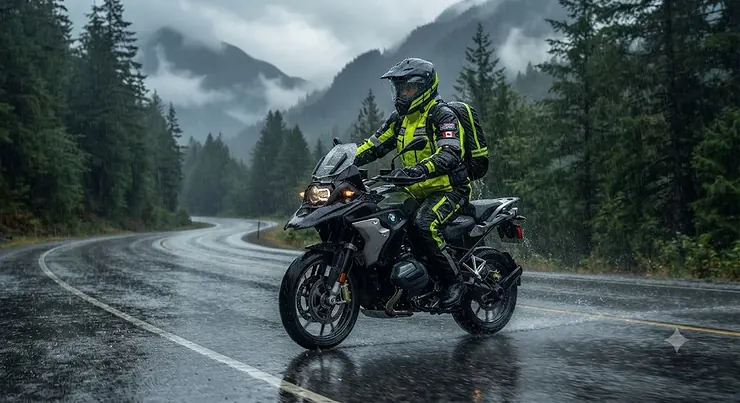
Picture the on-ramp to Highway 401 outside Kitchener at 4:15 on a Tuesday, sky the colour of wet asphalt, and the radar on your phone showing a solid green blob rolling in for the next ninety minutes. You’ve got two choices: duck under an overpass and wait it out, or trust the gear rolled up under your seat. A decent motorcycle rain suit is what turns that second option from a miserable gamble into a non-event.
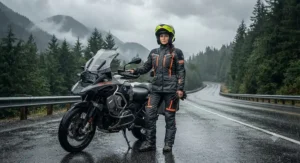
A motorcycle rain suit is an oversized, two-piece waterproof jacket-and-pant set built to pull on over your existing riding gear in under a minute, sealing out water at the collar, cuffs, and waist without forcing you to change boots or unzip your jacket first. It’s not a raincoat borrowed from a hiking trip — it’s cut generously to fit over armour, has storm flaps over every zipper, and usually packs down small enough to live permanently in a saddlebag.
Canadian riders don’t get to opt out of this problem the way someone commuting through a dry Arizona summer might. Climate normals from Environment and Climate Change Canada show that even relatively dry stretches of the Prairies see measurable precipitation on a meaningful share of riding-season days, and coastal routes through British Columbia and the Maritimes push that figure considerably higher. If you’re commuting, touring, or just refusing to trailer your bike home every time a forecast turns grey, a motorcycle rain suit stops being optional gear and starts being the thing that decides whether your gloves are dry tomorrow morning too.
This guide covers seven real, currently available motorcycle rain suits sold through amazon.ca, weighted heavily toward the budget and mid-range end of the market since that’s where most Canadian riders actually shop. We’ll break down waterproof rating in plain language, settle the PVC vs nylon shell debate with real trade-offs instead of marketing copy, cover hi-vis rain suit options for anyone riding after dark, and walk through exactly how to pick between a cheap two-piece rain suit and something built to last a decade of Canadian weather.
Quick Comparison Table
Before the full breakdowns, here’s a fast snapshot of how the seven picks stack up on shell material, price tier, and who each one actually suits.
| Product | Shell Type | Price Range (CAD) | Best For |
|---|---|---|---|
| Frogg Toggs Hogg Togg Rainsuit | Nonwoven waterproof nylon | around C$60-C$90 | cheapest way to stay dry |
| Milwaukee Leather MPM9510 Rain Suit | PVC-coated polyester | around C$70-C$100 | budget hi-vis commuting |
| HWK Two-Piece Motorcycle Rain Suit | PVC-coated nylon | around C$70-C$100 | best all-round budget set |
| Viking Cycle Nomad Rain Suit | Lightweight coated nylon | around C$80-C$110 | roomy fit over full gear |
| Joe Rocket RS-2 Two-Piece Rainsuit | Coated nylon shell | around C$90-C$130 | easy on/off, wide size run |
| Nelson-Rigg Stormrider Rain Suit | PVC-coated nylon | around C$140-C$190 | packable touring suit |
| Tourmaster Sentinel 2.0 Rainsuit | Heavy-duty nylon shell | around C$160-C$220 | most durable, long highway miles |
Looking at this lineup, the split really comes down to shell weight versus durability: the Frogg Toggs Hogg Togg Rainsuit and HWK Two-Piece Motorcycle Rain Suit win on pure affordability and pack size, while the Nelson-Rigg Stormrider Rain Suit and Tourmaster Sentinel 2.0 Rainsuit justify their higher price with heavier shells built to survive repeated highway use rather than the occasional surprise shower. If budget waterproof motorcycle gear is your main concern, stick to the top four rows before scrolling further, because the value gap between those and the premium end is real but only matters if you’re putting on serious annual mileag
Just one click — help other Canadian riders make better buying decisions too!😊
Top 7 Motorcycle Rain Suits: Expert Analysis
We picked these seven to cover every realistic buying scenario a Canadian rider actually faces: an ultra-cheap option for the rider who only needs backup gear twice a season, mid-range two-piece sets built for regular commuting, and two heavier-duty suits for anyone racking up real touring mileage. Here’s the full spec picture before the individual breakdowns.
| Product | Fit | Reflective/Hi-Vis | Sizing Range | Price Range (CAD) | Best For |
|---|---|---|---|---|---|
| Frogg Toggs Hogg Togg Rainsuit | Relaxed, boxy | Reflective piping | SM-5XL | around C$60-C$90 | occasional backup gear |
| Milwaukee Leather MPM9510 Rain Suit | Standard | Hi-vis reflective tape | XS-6XL | around C$70-C$100 | dusk/evening commuting |
| HWK Two-Piece Motorcycle Rain Suit | Relaxed | Reflective jacket + pants | SM-4XL | around C$70-C$100 | matched jacket-and-pant set |
| Viking Cycle Nomad Rain Suit | Generous/oversized | Reflective accents, hoodie | SM-5XL | around C$80-C$110 | layering over full gear |
| Joe Rocket RS-2 Two-Piece Rainsuit | Relaxed-generous | Hi-vis piping | XS-4XL, women’s cut | around C$90-C$130 | fast on/off commuting |
| Nelson-Rigg Stormrider Rain Suit | Relaxed | Hi-vis black/yellow/orange | SM-4XL | around C$140-C$190 | packable touring |
| Tourmaster Sentinel 2.0 Rainsuit | Standard-relaxed | Hi-vis yellow/black option | XS-4XL | around C$160-C$220 | high-mileage durability |
Reading this table left to right, sizing range tells you almost as much as the price column — the Milwaukee Leather MPM9510 Rain Suit and Nelson-Rigg Stormrider Rain Suit both stretch from extra-small into plus sizing, which matters enormously for a garment meant to fit over a full jacket, armour, and winter layers. The presence of a genuine women’s cut on the Joe Rocket RS-2 Two-Piece Rainsuit is also worth flagging, since most rain suits in this category are unisex-cut men’s sizing that riders simply size down.
1. Frogg Toggs Hogg Togg Rainsuit — cheapest way to stay bone dry
Frogg Toggs built its entire reputation on lightweight, packable rainwear, and the Hogg Togg is their motorcycle-specific answer to that formula. The jacket and pants use a nonwoven, waterproof-rated nylon shell with taped seams, and the whole set compresses into an included stuff sack small enough to live under a seat permanently rather than taking up saddlebag space. Based on the spec comparison against PVC-coated alternatives, this fabric trades some long-term abrasion resistance for dramatically lower weight and pack size, which is exactly the trade-off a rider who only needs backup rain gear wants. It’s the strongest pick for someone building a first rain kit on a tight budget, or anyone who wants a spare suit stashed permanently on the bike without noticing the extra bulk. Reviewers on motorcycle forums discussing Frogg Toggs’ rain gear consistently note that the material genuinely keeps riders dry in sustained downpours, though a recurring theme is that the thin nonwoven fabric can flap and rustle noticeably at highway speed compared to heavier woven shells. Sizing also tends to run generously boxy, which most riders treat as a feature since it layers easily over a winter jacket.
Pros:
- ✅ Lowest price point of any suit on this list
- ✅ Packs down to almost nothing in stuff sack
- ✅ Genuinely waterproof nonwoven nylon construction
Cons:
- ❌ Thin shell flaps and rustles at highway speed
- ❌ Less abrasion-resistant than heavier PVC shells
At around C$60-C$90, this is the definition of an affordable motorcycle rain suit Canada riders can actually stash under a seat, and the value case is nearly impossible to beat if you’re buying emergency backup gear rather than a daily-use suit.
2. Milwaukee Leather MPM9510 Rain Suit — budget hi-vis with reflective piping
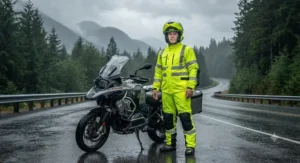
Milwaukee Leather’s MPM9510 leans into the hi-vis rain suit option category, wrapping a PVC-coated polyester shell in reflective tape across the shoulders, arms, and legs. The two-piece set closes with a combination of snaps and a zipper covered by a storm flap, which keeps wind-driven rain from working its way in at the front placket the way a plain zipper-only design would. What most buyers overlook about this style of suit is that Milwaukee markets it as water-resistant rather than fully waterproof, a distinction that matters in genuinely sustained rain versus a quick shower — the seams aren’t fully taped the way premium suits are, so expect very good performance in typical rain and some seepage in an hours-long downpour. It’s a strong fit for commuters riding mixed daylight and dusk hours who want a real visibility boost without paying premium-suit pricing. Aggregated feedback on Milwaukee’s rain gear line frequently praises how bright the reflective tape reads under headlights, while a common complaint is that popular sizes and colour combinations sell out quickly, leaving buyers choosing between limited stock options.
Pros:
- ✅ Genuine reflective hi-vis tape across shoulders and legs
- ✅ Storm flap covers front zipper from driving rain
- ✅ Wide size range from extra-small through 6XL
Cons:
- ❌ Water-resistant coating, not fully sealed seams
- ❌ Popular colour combinations frequently sell out
Priced around C$70-C$100, this sits solidly in budget waterproof motorcycle gear territory, and it’s the pick to reach for if visibility during dusk commutes matters as much as staying dry.
3. HWK Two-Piece Motorcycle Rain Suit — best all-rounder under C$100
HWK’s rain suit is sold explicitly as a matching two-piece set — reflective jacket and reflective pants together, rather than a jacket-only listing with pants as an afterthought. The PVC-coated nylon shell is built for all-season weatherproof protection, with elastic at the waist, wrists, and ankle cuffs to cinch out drafts and prevent water from wicking up the sleeve during a long ride. Here’s what to weigh: the reflective strips run across both the jacket and pants rather than just the jacket, which genuinely improves 360-degree visibility compared to suits that only reflect from the torso. It’s a sensible choice for riders who want one straightforward purchase rather than mixing and matching separate jacket and pant listings, and the included compact carry pouch makes it easy to keep in a tank bag for surprise weather. Reviewers shopping this category of affordable two-piece rain suits for riders commonly mention that the fit runs generously enough to layer over a leather jacket, while a fair number note the zippers lack a storm flap, so wind-driven rain can find its way in at the closure during a hard downpour.
Pros:
- ✅ True matching jacket-and-pants two-piece set
- ✅ Reflective strips on both jacket and pants
- ✅ Elastic cuffs and waist seal out drafts
Cons:
- ❌ Zippers lack a storm flap covering
- ❌ Colour options mostly limited to orange or black
At around C$70-C$100, the HWK suit earns its spot as one of the best cheap two-piece rain suits for riders who want full head-to-ankle coverage without hunting for matching separates.
4. Viking Cycle Nomad Rain Suit — roomiest fit for layering
Viking Cycle’s Nomad takes the opposite approach to bulk, using a lightweight coated nylon shell that still manages a genuinely oversized, generous cut designed to fit over a full leather jacket, armoured pants, and riding boots without straining a single seam. It ships direct through amazon.ca with Canadian availability, and includes an adjustable hood that tucks under a helmet to keep the strap and neck area dry — a detail plenty of competing suits skip entirely. Based on the spec comparison with tighter-cut alternatives, the trade-off for that roominess is a small aerodynamic penalty at highway speed, since excess fabric can billow more than a closer-fitting shell. It’s the strongest option for riders in colder regions who are already wearing heavy winter-weight gear underneath and need a rain layer that goes on over everything rather than replacing anything. Aggregated review sentiment on Viking Cycle’s rain gear line consistently highlights the generous sizing as the standout feature, while a recurring note across owner feedback is that the looser pant legs benefit from boot straps or ankle cinches to stop them riding up.
Pros:
- ✅ Oversized cut fits over full leather jacket and armour
- ✅ Adjustable hood keeps helmet strap area dry
- ✅ Sold directly through Amazon.ca with local shipping
Cons:
- ❌ Looser fit creates more wind flap at speed
- ❌ Pant legs need boot straps to stay secure
Expect to pay around C$80-C$110, making this a smart pick specifically for riders who layer heavily through Canadian shoulder seasons rather than commuting in mild summer rain alone.
5. Joe Rocket RS-2 Two-Piece Rainsuit — trusted mid-range with easy on/off
Joe Rocket has sold the RS-2 for years, and its staying power comes down to a relaxed-generous fit that genuinely slides on over full gear in seconds rather than requiring a wrestling match at the roadside. The coated nylon shell includes vented underarm and calf panels, a detail budget suits typically skip, which cuts down on the sauna effect during a warm-weather downpour. What stands out is the size range — it runs from extra-small through 4XL and includes a dedicated women’s cut, rather than the unisex-only sizing most competitors default to. On paper this means a wider range of riders can get a properly fitted suit instead of sizing down from oversized men’s cuts. Reviewers on gear forums discussing the RS-2 consistently mention how quickly it goes on over a jacket at the first sign of rain, which is precisely the point of a rainsuit built for real commuting rather than planned tours. A recurring caution is that some sizes and colourways have gone in and out of stock as older stock clears, so availability can be inconsistent depending on when you shop.
Pros:
- ✅ Relaxed fit goes on fast over full riding gear
- ✅ Underarm and calf vents reduce overheating
- ✅ Dedicated women’s sizing alongside men’s range
Cons:
- ❌ Stock and colourways fluctuate by size
- ❌ Jacket and pants priced as a full set, not modular
Priced around C$90-C$130, the RS-2 lands squarely in the mid-range tier and remains one of the more trusted names for riders who want a suit they can trust after years on the market.
6. Nelson-Rigg Stormrider Rain Suit — best packable suit for touring
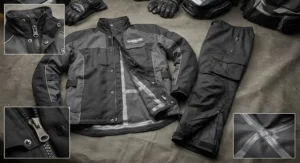
Nelson-Rigg’s Stormrider (model SR6000) steps up from entry-level suits with a heavier PVC-coated nylon shell that still compresses into its own stuff sack, a detail that matters enormously to touring riders trying to save saddlebag space. It’s available in black plus hi-vis yellow and orange, and the size range spans small through 4XL, covering most riders without forcing a guess between two awkward sizes. Based on the spec comparison against the budget tier above, the heavier fabric weight translates into noticeably better resistance to wind flap and abrasion at sustained highway speed, which is exactly where thinner nonwoven suits start to show their limits. It’s the suit to reach for if you’re planning a multi-day tour through unpredictable weather rather than keeping emergency gear under a commuter seat. Aggregated owner feedback on the Stormrider line frequently highlights how well it compresses for storage relative to its build quality, while some riders note the higher price compared to entry-level suits is the trade-off for that added durability and the brighter hi-vis colour options costing a premium over plain black.
Pros:
- ✅ Heavier shell resists wind flap at highway speed
- ✅ Compresses into included stuff sack for touring
- ✅ Wide SM-4XL range with hi-vis colour options
Cons:
- ❌ Noticeably pricier than entry-level budget suits
- ❌ Hi-vis colourways cost more than the black version
At around C$140-C$190, this sits at the upper end of what most riders should spend unless they’re logging serious annual mileage, where the durability difference genuinely pays for itself.
7. Tourmaster Sentinel 2.0 Rainsuit — most durable premium shell
Tourmaster built the Sentinel 2.0 as a heavier-duty nylon rain jacket and pant system aimed at long-haul touring riders rather than occasional commuters, and it shows in the reinforced seams and thicker shell fabric compared to every other suit on this list. It’s sold with a genuine hi-vis yellow-and-black option alongside standard black, and the sizing runs from extra-small through 4XL to fit over substantial touring gear underneath. Here’s what to weigh: the jacket and pants are sometimes sold as separate pieces rather than one bundled listing, which lets riders replace just one half if it wears out first but also means total cost can run higher than a single combined purchase. It’s the strongest choice for riders putting thousands of highway kilometres on a suit each season, where a thin nonwoven shell would show wear within a year. Reviewers who’ve run Tourmaster’s rain gear across multi-season touring consistently describe the shell as noticeably tougher than entry-level suits, while a fair number note the bulkier fabric takes up more under-seat or saddlebag space than packable alternatives.
Pros:
- ✅ Reinforced seams and heavier shell built for longevity
- ✅ Genuine hi-vis yellow/black colourway available
- ✅ Sizing runs XS-4XL for broad rider fit
Cons:
- ❌ Bulkiest option for storage space
- ❌ Premium pricing versus budget and mid-tier suits
Expect to pay around C$160-C$220 for the full jacket-and-pant system, positioning it as the suit for riders who’ve decided rain gear is an investment rather than a once-a-season backup.
Practical Usage Guide: Getting the Most Out of Your Motorcycle Rain Suit
A motorcycle rain suit only works as well as how it’s stored, put on, and maintained, and most of the mistakes that lead to a soggy commute happen before the rain even starts. Store your suit somewhere genuinely accessible — a saddlebag or under-seat compartment beats a backpack you might not be carrying that day — since the whole point of a packable suit is that it’s there the moment radar turns green. Before your first ride in it, do a dry run putting it on over your actual riding gear at home; discovering that the pant legs don’t clear your boots properly is a lot less stressful in your driveway than on a highway shoulder in a downpour. Once you’re wearing it, work top to bottom: jacket first with the collar sealed high, then pants pulled up and cinched at the waist, then boot straps or ankle cinches last so water rolling down the pant leg has nowhere to pool. After riding in genuinely wet conditions, hang the suit to air dry fully before compressing it back into its stuff sack, since packing away a damp PVC or nylon shell invites mildew smell that’s difficult to fully remove later. A light wipe-down with mild soap and water a few times a season keeps road grime from degrading the waterproof coating faster than normal wear alone would, and avoiding high-heat drying preserves the seam tape and elastic far longer than most owners expect.
What Is a Motorcycle Rain Suit?
A motorcycle rain suit is a two-piece, oversized waterproof jacket and pant set designed to be worn over existing riding gear rather than in place of it, sealing rain out at the collar, cuffs, waist, and ankles through elastic, storm flaps, and adjustable closures. Unlike a standalone waterproof riding jacket, a full rain suit adds leg coverage that keeps the lower body dry too, which matters enormously on a bike where rain hits your thighs and boots just as directly as your chest. Most motorcycle rain suits are built from either a PVC-coated fabric or a coated nylon shell, packed into a stuff sack small enough to carry permanently, and designed to go on in under a minute at the first sign of weather.
How to Choose a Motorcycle Rain Suit
Picking the right suit comes down to matching material, fit, and features to how you actually ride. Here’s the reasoning behind each factor, roughly in the order most riders should weigh them.
- Start with how often you’ll actually use it. Occasional backup gear favours a cheap two-piece rain suit for riders like the Frogg Toggs or HWK; daily commuters or tourers justify spending more on a heavier shell.
- Check the sizing range against your actual gear. A rain suit needs to fit over your jacket, armour, and boots, not just your bare body, so size up rather than trusting your normal jacket size.
- Decide how much visibility matters to your riding hours. Dusk and night commuters should prioritize a hi-vis rain suit option with genuine reflective tape, not just a bright colour that doesn’t reflect light.
- Weigh PVC against coated nylon for your climate. PVC shells resist abrasion better; nylon shells breathe better and pack smaller, which matters more in humid summer riding.
- Look for storm flaps over every zipper. Wind-driven rain finds any gap, and a covered zipper closure is one of the biggest differences between budget and mid-range suits.
- Confirm it packs down to fit your storage. A suit that lives permanently on the bike gets used; one that only fits in a suitcase at home usually doesn’t.
- Match your budget to your annual mileage. High-mileage tourers get real value from the durability of premium shells; low-mileage riders rarely recoup that extra cost.
Waterproof Rating Explained: What the Numbers Actually Mean
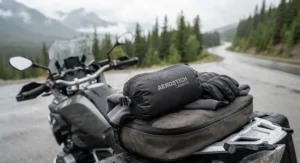
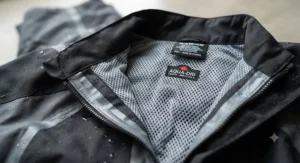
Waterproof rating is the single most misunderstood spec on any rain suit’s listing, and it’s worth understanding before comparing products on price alone. Fabric waterproofing is technically measured using hydrostatic head, a test that records how many millimetres of water a column can exert on a fabric before it begins leaking through, and the science behind it is well documented on Wikipedia’s hydrostatic head entry. Most motorcycle rain suit listings don’t publish an exact hydrostatic head number the way premium outdoor rain jackets do, which is genuinely frustrating for comparison shopping, but the practical distinction that matters more is whether a suit is marketed as “waterproof” with taped seams or “water-resistant” with untaped construction. A fully taped, genuinely waterproof suit like the Frogg Toggs Hogg Togg Rainsuit or HWK Two-Piece Motorcycle Rain Suit will keep you dry through sustained highway rain, while a water-resistant suit like the Milwaukee Leather MPM9510 Rain Suit performs excellently in typical rain but can start letting moisture through at the seams during an hours-long downpour. Reading the actual product description rather than assuming every listing labelled “rain suit” performs identically is the single best habit for avoiding a disappointing purchase.
PVC vs Nylon Shell: Which Material Actually Keeps You Dry
The PVC vs nylon shell debate comes down to a genuine trade-off rather than one material simply being better, and understanding it explains most of the price and weight differences across this list.
| Factor | PVC-Coated Shell | Coated Nylon Shell |
|---|---|---|
| Waterproofing | Excellent, fully sealed | Very good, seam-dependent |
| Weight/Pack Size | Heavier, bulkier | Lighter, packs smaller |
| Breathability | Poor, traps heat | Better airflow |
| Abrasion Resistance | Stronger | Moderate |
| Typical Price Tier | Mid-to-premium | Budget-to-mid |
| Best For | daily riders, heavy weather | occasional or warm-weather use |
Analyzing the pattern here, PVC-coated shells like those used on the Milwaukee Leather MPM9510 Rain Suit and Nelson-Rigg Stormrider Rain Suit trade breathability and pack size for a genuinely tougher, more fully sealed barrier against water, which is why they tend to sit higher on price and weight. Coated nylon shells like the Frogg Toggs Hogg Togg Rainsuit flip that equation, prioritizing pack size and breathability at the cost of a slightly less bombproof seal in truly extreme, hours-long downpours. Neither material is objectively wrong for a motorcycle rain suit — the right pick depends on whether you value packability for occasional use or durability for daily wear.
✨ Don’t Miss These Exclusive Deals! 🔍
Compare current pricing on all seven picks above and lock in the motorcycle rain suit that matches your riding style before the next forecast turns grey.
Motorcycle Rain Suit vs Regular Rain Gear
Riders sometimes wonder whether a purpose-built motorcycle rain suit is really necessary compared to a hiking raincoat or a generic poncho already sitting in a closet, and the comparison isn’t close once you actually ride in either.
| Feature | Motorcycle Rain Suit | Generic Poncho/Raincoat |
|---|---|---|
| Fits over riding gear | Yes, designed for it | Rarely, sized for bare body |
| Wind stability at speed | Stable, cinched closures | Flaps and billows badly |
| Leg/boot coverage | Full coverage | Minimal or none |
| Reflective/hi-vis options | Commonly available | Rarely available |
| Approx. Cost (CAD) | around C$60-C$220 | around C$15-C$40 |
| Best For | riders in any real rain | dry-day emergencies only |
The written comparison matters more than the price gap alone: a poncho genuinely can’t seal at the wrists, waist, and ankles the way a fitted motorcycle rain suit does, and a loose poncho at 100 km/h doesn’t just look silly, it becomes a wind sail that can catch on foot pegs or obscure your view of controls. Generic rain gear also almost never includes reflective panelling, which matters if a downpour happens to coincide with dusk. For the modest price difference, purpose-built motorcycle rain gear removes an entire category of highway-speed risk that a walking raincoat was never engineered to handle.
Real-World Scenarios: Matching a Rain Suit to Your Ride
Consider a college student in Halifax commuting nine kilometres to class on a used standard bike, riding maybe twice a month in real rain — for this rider, the Frogg Toggs Hogg Togg Rainsuit makes the most sense, since it’s the cheapest way to guarantee dry gear without justifying a premium purchase for occasional use. Now picture a delivery rider in Toronto logging rain-or-shine shifts through evening traffic several times a week — visibility and durability both matter here, making the Milwaukee Leather MPM9510 Rain Suit or HWK Two-Piece Motorcycle Rain Suit a stronger fit thanks to their reflective tape and repeated-wear construction at a still-reasonable price. Finally, imagine a tourer riding the Icefields Parkway between Banff and Jasper across a multi-day trip where mountain weather can shift in minutes — that rider needs the packability and heavier shell of the Nelson-Rigg Stormrider Rain Suit or the reinforced durability of the Tourmaster Sentinel 2.0 Rainsuit, since a thin backup suit simply won’t hold up to days of exposure. In each case, the “best” motorcycle rain suit isn’t universal — it’s a function of how often you’ll actually wear it and how far from help a failure would leave you.
Common Mistakes When Buying a Motorcycle Rain Suit
The most common mistake is buying a rain suit sized to fit your body rather than your body plus your riding gear, which leads to a jacket that won’t zip over armour or pant legs too short to overlap your boots properly. A second frequent error is assuming every product labelled “rain suit” is fully waterproof, when plenty of budget listings are honestly marketed as water-resistant with untaped seams — reading the actual description rather than the headline avoids a soggy surprise. Riders also commonly skip a dry-run fitting at home, only discovering a sizing or zipper issue on the side of the highway during an actual downpour, which defeats the entire purpose of owning backup gear. Another overlooked issue is storing a suit somewhere inconvenient, like a garage shelf instead of under the seat, meaning it never actually gets worn when weather turns unexpectedly. Finally, many first-time buyers default to the cheapest possible option regardless of how many kilometres they ride annually, when a high-mileage commuter or tourer genuinely gets better long-term value from a heavier-duty suit rather than replacing a thin one every season.
Hi-Vis Rain Suit Options for Different Riders
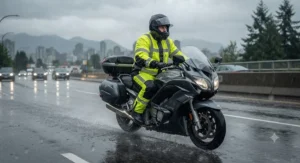
A hi-vis rain suit option isn’t just about looking bright in a parking lot — reduced visibility during rain, combined with reduced driver attentiveness in poor weather, is precisely when reflective gear earns its keep. Road safety guidance from ICBC’s motorcycle safety resources specifically recommends wearing gear that improves conspicuity, noting that rain and reduced light both compound the visibility gap between a rider and an oncoming driver scanning for hazards. Among this list, the Milwaukee Leather MPM9510 Rain Suit and HWK Two-Piece Motorcycle Rain Suit deliver genuine reflective hi-vis coverage at budget pricing, making them sensible picks for dusk and evening commuters who want visibility without paying premium-suit prices. The Nelson-Rigg Stormrider Rain Suit and Tourmaster Sentinel 2.0 Rainsuit both offer a true hi-vis yellow colourway alongside black, which pairs bright daytime visibility with reflective piping for after-dark riding. Riders who primarily ride in daylight on well-lit urban streets can reasonably prioritize other features over hi-vis colouring, but anyone commuting through fall and winter’s shorter daylight hours should weigh visibility as seriously as waterproofing itself.
Long-Term Cost & Maintenance
A motorcycle rain suit’s total cost of ownership depends heavily on how it’s cared for, not just its purchase price. Budget nonwoven and lightly coated nylon suits, like the Frogg Toggs Hogg Togg Rainsuit, typically hold up for a few riding seasons of occasional use before the coating starts wearing thin at high-friction points like the inner knee and seat contact area. Heavier PVC-coated and reinforced-nylon suits, like the Nelson-Rigg Stormrider Rain Suit and Tourmaster Sentinel 2.0 Rainsuit, generally last considerably longer under regular use, which is exactly why their higher upfront price can work out cheaper per riding season for high-mileage owners. Simple maintenance extends any suit’s lifespan meaningfully: rinsing off road salt and grime after wet-weather rides, air drying fully before storage, and avoiding prolonged direct sun exposure when not in use all slow down coating breakdown. Replacing a worn suit before it fails completely, rather than after you discover a leak mid-ride, is the most cost-effective habit any regular rider can build.
Safety, Regulations & Compliance Guide for Canadian Riders
Motorcycle safety guidance across Canadian provinces consistently treats rider visibility as a shared responsibility between gear choice and riding habits, and high-visibility apparel standards are formally addressed under CSA Group’s high-visibility safety apparel standard, the same framework referenced for road crews and other high-exposure workers. While a motorcycle rain suit isn’t legally required to meet formal CSA hi-vis certification the way a construction vest is, choosing gear built with genuine reflective material rather than simple bright colouring follows the same underlying visibility science that standard is built on. Provincial motorcycle handbooks generally recommend layering visibility strategies rather than relying on any single piece of gear, meaning a hi-vis rain suit works best alongside reflective tape on your helmet and functioning running lights rather than as a standalone solution. It’s also worth noting that no Canadian jurisdiction restricts rain suit colour or material choice, so the decision between a bright hi-vis suit and a plain black one comes down entirely to personal risk tolerance and typical riding hours rather than any regulatory requirement.
Problem → Solution Guide: Fixing Common Rain-Riding Issues
Fogging inside a full-face visor while wearing a rain suit is almost always a ventilation issue rather than a suit problem — cracking your visor’s vents slightly and ensuring your rain jacket’s collar isn’t sealed so tightly that warm breath has nowhere to escape upward usually resolves it. Water pooling inside boots despite a rain suit typically means the pant legs aren’t actually overlapping the boot tops; the fix is sizing up or adding boot straps that cinch the fabric down over the boot shaft rather than letting it ride up during the ride. A rain suit that leaks at the seams after a season of use is usually a sign the seam tape or coating has worn thin from repeated folding at the same crease points — rotating how you fold the suit when storing it reduces this, and reapplying a fabric waterproofing spray can extend a suit’s life by another season. Overheating inside a PVC-coated suit during a warm-weather downpour is a breathability issue inherent to that material; switching to a coated nylon option with vent panels, like the Joe Rocket RS-2, solves this for riders who ride through warm summer rain regularly. Finally, a suit that constantly works itself loose at highway speed usually just needs better initial fitting — cinching the waist, wrists, and ankles fully snug before riding, rather than leaving adjustable closures loose for comfort, keeps wind from working its way underneath the shell.
Frequently Asked Questions
❓ What is the best cheap two-piece rain suit for riders on a budget?
❓ Is a motorcycle rain suit actually waterproof or just water-resistant?
❓ Should I buy a PVC or nylon shell motorcycle rain suit?
❓ Do I need a hi-vis rain suit option if I mostly ride during the day?
❓ How do I size a motorcycle rain suit correctly?
Conclusion
A motorcycle rain suit is one of those purchases that feels unnecessary right up until the moment it isn’t, and across the seven options here, the right choice really does come down to how often you ride and how far you’re willing to stretch your budget. Riders wanting the cheapest possible backup gear should look hard at the Frogg Toggs Hogg Togg Rainsuit, while anyone commuting regularly through dusk or unpredictable weather gets genuine added value from the reflective coverage on the Milwaukee Leather MPM9510 Rain Suit or HWK Two-Piece Motorcycle Rain Suit. Touring riders logging serious highway kilometres each season should treat the Nelson-Rigg Stormrider Rain Suit or Tourmaster Sentinel 2.0 Rainsuit as an investment rather than an impulse buy, since the heavier shell genuinely pays for itself over years of Canadian weather. Whichever suit you land on, understanding waterproof rating, the PVC vs nylon shell trade-off, and your own visibility needs matters just as much as the price tag on the listing — a well-chosen affordable motorcycle rain suit Canada riders trust beats an expensive one that doesn’t actually fit your riding habits.
✨ Ready to ride through the next downpour without a second thought? Check current prices on today’s top pick and get your motorcycle rain suit packed before the forecast turns!🏍️🌧️
Recommended for You
- Hi-Vis Reflective Armband for Night Cycling: 7 Top Picks 2026
- 7 Best Reflective Tape for Motorcycle Helmets in 2026
- 7 Best Reflective Helmet Stickers for Canadian Riders (2026)
Disclaimer: This article contains affiliate links. As an Amazon Associate, I earn from qualifying purchases. If you purchase products through these links, we may earn a small commission at no additional cost to you.
✨ Found this helpful? Share it with your friends! 💬🤗
