

In This Article
It’s 6:15 p.m. in late November, and the sun set forty minutes ago somewhere over Lake Ontario. You’re three kilometres from home on a bike lane with no streetlights, wearing a dark jacket because it’s the only clean one left, and the SUV signalling a right turn ahead genuinely doesn’t see you until its headlights catch the reflective strip wrapped around your forearm. That’s the entire case for a hi-vis reflective armband for night cycling in one sentence — it’s the cheapest, fastest thing you can strap on before a ride that puts your silhouette exactly where a driver’s eyes are already scanning: at arm height, moving, and impossible to mistake for a mailbox or a shadow.
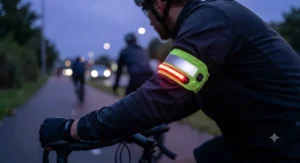
Canadian daylight disappears fast for half the year, and the numbers back up why that matters. According to a CAA National review of cycling collision data, most cycling injuries and deaths in Canada happen between 4 p.m. and 8 p.m., during rush hour and as it gets dark — precisely the window when a commuter is riding home and a driver’s eyes haven’t fully adjusted to lower light. Statistics Canada’s own review of pedestrian fatalities found that a striking share of nighttime collisions involved a pedestrian in dark clothing, a pattern that maps directly onto cyclists too, since a bike and rider moving through a crosswalk or intersection present the same recognition problem to an oncoming driver.
This guide covers seven real, currently available hi-vis reflective armband for night cycling options sold through amazon.ca — from battery-free reflective slap bands under C$15 to rechargeable LED armbands with multiple flash modes — and breaks down which closure style actually survives a Canadian winter glove, which battery format makes sense for your riding habits, and what the law actually requires versus what’s simply smart. By the end, you’ll know exactly which band fits your commute, your budget, and how much fuss you’re willing to put up with before a ride.
Quick Comparison Table
Before the full breakdown, here’s a fast snapshot of how the seven picks stack up on power source, closure, and ideal use case.
| Product | Power Source | Closure | Price Range (CAD) | Best For |
|---|---|---|---|---|
| Rivsli LED Armband for Running | USB rechargeable | Elastic slip-on | around C$10-C$15 | budget single rechargeable LED |
| Samlior LED Armband for Running (2 Pack) | USB rechargeable | Elastic/velcro hybrid | around C$16-C$23 | best multi-mode LED two-pack |
| Didiseaon 2pcs LED Reflective Armband | Replaceable button batteries | Hook-and-loop (velcro) | around C$9-C$14 | lightweight backup LED lighting |
| X AUTOHAUX 8pcs Reflective Bands | None (passive) | Hook-and-loop (velcro) | around C$10-C$15 | bulk passive velcro bands |
| Zubebe 48 Pcs Reflective Bands | None (passive) | Elastic slap/hook-loop | around C$14-C$20 | families and cycling groups |
| MECCANIXITY Reflective Bands | None (passive) | Elastic slip-on | around C$8-C$12 | minimalist no-battery option |
| Biking Pants Strap Reflective Ankle Band | None (passive) | Hook-and-loop (velcro) | around C$9-C$14 | dedicated ankle band for cyclists |
Looking at this table, the real dividing line isn’t price — it’s whether you want an active light source or a passive reflector, and Canadian municipal cycling-safety guidance consistently recommends combining both rather than choosing one over the other. The Samlior LED Armband for Running (2 Pack) wins on raw visibility since it’s an active light, while the Zubebe 48 Pcs Reflective Bands wins on value if you’re outfitting a whole family or cycling club. If you specifically need something for your ankle rather than your arm, jump ahead to the Biking Pants Strap Reflective Ankle Band breakdown below.
💬 Just one click — help others make better buying decisions too!😊
Top 7 Hi-Vis Reflective Armbands for Night Cycling: Expert Analysis
We picked these seven to cover the realistic spread of how Canadians actually buy this category: rechargeable LED armbands for maximum active visibility, replaceable-battery LED options for anyone who doesn’t want to remember to charge anything, and battery-free passive reflective bands for riders who just want a set-and-forget upgrade. Here’s the full spec picture before the individual breakdowns.
| Product | Type | Light Modes | Reflective Coverage | Price Range (CAD) |
|---|---|---|---|---|
| Rivsli LED Armband for Running | Active LED | Steady / slow flash / fast flash | 360° band, LED strip | around C$10-C$15 |
| Samlior LED Armband for Running (2 Pack) | Active LED | 5 colours, 3 modes | 360° band, LED strip | around C$16-C$23 |
| Didiseaon 2pcs LED Reflective Armband | Active LED | Steady / flash | Partial band + LED | around C$9-C$14 |
| X AUTOHAUX 8pcs Reflective Bands | Passive | N/A | Full elastic band | around C$10-C$15 |
| Zubebe 48 Pcs Reflective Bands | Passive | N/A | Full elastic band | around C$14-C$20 |
| MECCANIXITY Reflective Bands | Passive | N/A | Full elastic band | around C$8-C$12 |
| Biking Pants Strap Reflective Ankle Band | Passive | N/A | Ankle-specific strap | around C$9-C$14 |
Reading this table left to right, the pattern is straightforward: active LED options cost roughly two to three times more per unit than passive bands, but they’re also visible from farther away and at wider angles because they generate their own light instead of depending on a driver’s headlights hitting them first. Passive bands, on the other hand, never need charging or batteries and typically come in bulk multi-packs, which matters if you’re outfitting more than one bike or more than one household member.
1. Rivsli LED Armband for Running — best budget single rechargeable LED
The standout here is straightforward: a single USB-rechargeable LED armband for under C$15 that doesn’t ask you to manage disposable batteries. The listing describes a built-in rechargeable cell charged via USB cable, with a stretch-fit elastic band that slips over a jacket sleeve rather than needing to be measured and fastened, and multiple light settings that typically include a steady glow and one or two flash speeds. Based on the spec comparison against passive reflective bands, an active LED source like this one is visible from a noticeably wider angle range than a purely reflective strip, because it isn’t dependent on a driver’s headlight beam hitting it at the right angle first — it’s putting out its own light regardless of where the vehicle is positioned. This is a solid fit for a rider who commutes a few times a week after dark and wants one reliable light source without committing to a two-pack, though riders doing longer rural rides may want a brighter dedicated bike light in addition. Reviewers of USB-rechargeable armbands in this general product category consistently note that a full charge tends to last several rides on the slower flash setting, while a recurring theme across this style of import electronics is that build quality on the charging port can be hit-or-miss between units, so testing the charge cycle immediately after your first ride is worth the two minutes it takes.
Pros:
- ✅ USB rechargeable, no disposable batteries needed
- ✅ Multiple light modes for different visibility needs
- ✅ Simple elastic slip-on fit over most sleeves
Cons:
- ❌ Single unit only, no backup if it fails
- ❌ Charging port durability varies between units
At around C$10-C$15, this sits at the entry point for active LED armbands, and the value case is strongest for a rider who wants one dependable light without paying for a multi-pack they don’t need.
2. Samlior LED Armband for Running (2 Pack) — best multi-mode LED two-pack
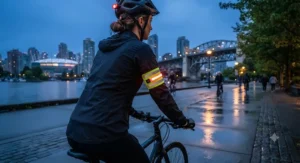
If one armband covers one arm, this pack solves the obvious problem: symmetry. The Samlior LED Armband for Running (2 Pack) ships as a pair, listed with five available colours and three lighting modes per unit, which means you can run matching lights on both arms or split the pack between two riders in your household. Key to its appeal is the combination of colour choice and mode flexibility — a steady mode for consistent ambient visibility on a well-lit commute, and flash modes for darker rural stretches where a moving light draws a driver’s eye faster than a static one. What most buyers overlook about two-arm LED setups is that having visibility on both sides of your body matters more than it sounds, since a vehicle approaching from your left sees a completely different silhouette than one approaching from your right, and a single armband on your dominant arm leaves one side of your profile relatively dark. This is a strong pick for a rider who takes night cycling seriously enough to want redundancy — if one unit’s battery dies mid-ride, the other is still running. Aggregated buyer sentiment on multi-colour rechargeable armband packs in this category tends to praise the novelty and flexibility of the colour options, while a common thread across this format is that the elastic-and-velcro hybrid closures found on similar dual packs can loosen slightly over a long ride and need an occasional readjustment.
Pros:
- ✅ Two-pack covers both arms for full-profile visibility
- ✅ Five colour options with three lighting modes
- ✅ Built-in redundancy if one unit’s battery fails
Cons:
- ❌ Higher upfront cost than a single-unit armband
- ❌ Hybrid closure may need mid-ride readjustment
Priced around C$16-C$23 for the pair, the per-unit cost lands close to a single premium armband elsewhere on this list, making the two-pack format the better deal if you were going to buy two lights anyway.
3. Didiseaon 2pcs LED Reflective Running Armband Light — best lightweight backup LED lighting
This pack takes a different approach to power entirely: rather than a built-in rechargeable cell, the listing describes a lightweight nylon strap running on replaceable button-style batteries, secured with a hook-and-loop closure rather than a stretch-fit band. The nylon material is noticeably thinner and lighter than the silicone or TPU bands used on most rechargeable competitors, which some riders genuinely prefer for warm-weather rides where a bulkier silicone band feels sticky against skin. Here’s what to weigh: a replaceable-battery design means you’re never stuck with a dead unit and no charger on hand — a spare button battery in a jacket pocket revives it in seconds — but it also means an ongoing, if small, cost every time the battery runs down, unlike a USB-rechargeable unit you simply plug in overnight. This is genuinely the better option for anyone who wants a spare or backup light kept in a bag rather than relied on as a primary daily light, since it doesn’t need periodic charging maintenance to stay ready. Reviewers of similar replaceable-battery LED armband lights commonly note the lightweight feel and easy on/off button as strengths, while a fair number mention that the included batteries tend to be modest starter cells rather than long-life ones, so budgeting for a battery swap within the first few months of regular use is realistic.
Pros:
- ✅ Lightweight nylon strap, comfortable in warm weather
- ✅ Replaceable batteries mean no charging downtime
- ✅ Two-pack works well as backup or spare lighting
Cons:
- ❌ Ongoing battery replacement cost over time
- ❌ Included starter batteries may need early replacement
At around C$9-C$14 for the pair, it’s one of the more affordable active-LED entries here, particularly well-suited to a glovebox, backpack, or gear bag as an always-ready backup.
4. X AUTOHAUX 8pcs Reflective Bands for Arm Cycling — best bulk passive velcro bands
Not every rider wants to think about batteries at all, and this eight-piece pack is built for exactly that mindset. Each band uses a hook-and-loop, or velcro closure, adjustable strap wrapped in a reflective fabric surface, meaning there’s genuinely nothing to charge, replace, or forget before a ride — you fasten it once and it works every single time you put it on. The velcro closure specifically is worth calling out because, unlike a stretch-fit elastic sleeve that can slip down a jacket arm over a bumpy ride, a properly adjusted hook-and-loop strap stays exactly where you positioned it until you deliberately remove it. Based on the spec comparison against LED alternatives, a purely passive band like this depends entirely on an external light source — a car’s headlights, a streetlamp — bouncing back off its reflective surface, so it won’t help a driver see you from an angle that light isn’t reaching, but it also literally cannot fail, run flat, or malfunction. This is the pick for a rider who wants redundant, no-maintenance visibility layered under a proper bike light rather than relying on it as a sole visibility source. Reviewer feedback on multi-piece reflective velcro band packs in this category consistently highlights how quickly you can distribute them across a household — arms, ankles, backpack straps — and a recurring theme is that the velcro’s grip holds up well through repeated fastening cycles, though a few reviewers note the reflective coating can dull slightly after many machine washes.
Pros:
- ✅ Zero batteries or charging, works indefinitely
- ✅ Velcro closure stays put better than elastic slip-on
- ✅ Eight-piece pack covers arms, ankles, and more
Cons:
- ❌ No active light, depends on external headlights
- ❌ Reflective coating can dull after repeated washing
At around C$10-C$15 for eight bands, the per-unit cost is low enough to treat these as disposable-but-durable, distributing them across every family bike without a second thought.
5. Zubebe 48 Pcs Reflective Bands for Wrist Arm Ankle Leg — best value for families and cycling groups
Scale is the entire pitch here: forty-eight individual reflective bands in one package, built around a stretchable elastic and hook-loop design that fits wrists, arms, ankles, and legs interchangeably depending on where you fasten it. For a household with multiple cyclists, a cycling club coordinating a group night ride, or a school running a bike-safety event, the per-unit math on this pack is hard to beat compared to buying single-purpose armbands one at a time. What most buyers overlook about bulk passive reflective packs like this one is that distributing reflective surface area across multiple points on the body — both wrists, both ankles, not just one arm — actually improves a driver’s ability to recognize the moving shape as a person on a bike, since the human eye picks up on repeated, symmetrical movement patterns faster than a single isolated point of reflectivity. The elastic design pulls on quickly without precise adjustment, trading some of the locked-in security of a true velcro closure for speed, which matters when you’re getting a group of ten kids ready for an evening ride and don’t have time to fine-tune forty-eight straps individually. Aggregated feedback on large multi-piece reflective band packs commonly praises the sheer utility of having spares on hand for lost or forgotten bands, while some reviewers note that at this price point per unit, the reflective material is a notch less bright than a dedicated premium single-band product.
Pros:
- ✅ Forty-eight bands cover an entire family or group
- ✅ Fits wrist, arm, ankle, or leg interchangeably
- ✅ Lowest per-unit cost of any option on this list
Cons:
- ❌ Elastic fit less secure than a true velcro closure
- ❌ Reflective brightness modest versus premium single bands
Priced around C$14-C$20 for the full set, this works out to well under fifty cents per band, making it the clear choice for anyone outfitting more than two or three riders at once.

6. MECCANIXITY Reflective Bands for Arm Wrist Ankle — best minimalist no-battery option
Sometimes the simplest option is the right one, and this pack strips the category down to its essentials: a stretch-fit elastic reflective band with no battery, no charging cable, and no closure mechanism to fiddle with in the dark. You pull it on like a thick hair tie and it sits snugly against your sleeve or ankle cuff, relying purely on a reflective outer layer to bounce back headlight beams. Based on the spec comparison against the bulkier velcro-strap options on this list, the trade-off is speed of use versus adjustability — an elastic band goes on in under two seconds without needing to find the right velcro overlap length, but it also can’t be cinched tighter if it starts working its way down your forearm over a long ride. This suits a rider who wants the absolute lowest-friction way to add a reflective accent before heading out the door, particularly for shorter commutes where slippage over distance isn’t much of a concern. Reviewer sentiment on simple elastic reflective band products in this style commonly highlights the quick on-and-off convenience as the main selling point, while a recurring caution is that riders with larger forearms or those layering over thick winter jackets should size up if a looser fit is available, since a band that’s too snug for the sleeve underneath can bunch uncomfortably.
Pros:
- ✅ Instant on-and-off, no adjustment needed
- ✅ No battery or charging ever required
- ✅ Comfortable, low-profile fit for shorter rides
Cons:
- ❌ Cannot be cinched tighter if it slips down
- ❌ Less secure than velcro over bumpy long rides
At around C$8-C$12, this is one of the cheapest genuinely useful entries here, and a sensible add-on purchase alongside a proper bike light rather than a rider’s only visibility measure.
7. Biking Pants Strap Reflective Wristbands / Ankle Bands — best dedicated ankle band for cyclists
Every other product on this list targets the arm or wrist, but this one solves a problem specific to cycling that a runner never has to think about: pant legs and bike chains do not get along. Marketed as a combination pant-leg strap and reflective band, this is genuinely a reflective ankle band for cyclists first and a general reflective accessory second, using a hook-and-loop velcro closure sized to wrap snugly around a trouser cuff or bare ankle without slipping down while pedalling. The dual function matters more than it initially sounds — a loose pant leg caught in a chain or chainring isn’t just annoying, it can yank a rider’s foot awkwardly off the pedal at exactly the wrong moment, and a properly cinched ankle band solves that mechanical problem while simultaneously adding a low, moving point of reflectivity that catches headlights from a completely different angle than an armband does. What the spec sheet won’t tell you, but basic physics suggests, is that ankle-level reflectors are particularly effective at night because the up-and-down pedalling motion creates a distinct, unmistakably human movement pattern that a driver’s brain processes faster than a static reflective patch — it’s part of why cycling safety pages recommend spoke and pedal reflectors specifically, not just body-worn ones. Reviewers of pant-strap-style reflective ankle bands consistently mention the dual-purpose design as the standout feature, since it replaces a separate trouser clip entirely, while some note the velcro can wear down slightly faster than arm-mounted versions given the friction and flex ankle bands experience during a normal pedal stroke.
Pros:
- ✅ Doubles as a pant-leg strap, keeps cuffs chain-safe
- ✅ Velcro closure stays secure through pedalling motion
- ✅ Ankle-level reflectivity adds distinct visual movement
Cons:
- ❌ Velcro may wear faster given constant pedal friction
- ❌ Ankle-only coverage, not a substitute for arm/body reflectors
At around C$9-C$14, this is a genuinely different product category disguised as a similar price point, and worth buying alongside — not instead of — one of the armbands above.
What Is a Hi-Vis Reflective Armband for Night Cycling?
A hi-vis reflective armband for night cycling is a wearable band, worn on the upper arm or forearm, made from either a passive retroreflective material or an active battery-powered LED strip, designed to make a cyclist visible to drivers in low-light or nighttime conditions. Passive versions bounce a vehicle’s own headlight beam back toward its source using embedded reflective fibres or glass-bead coatings, while active LED versions generate their own light independent of external illumination. Both types share the same core goal recognized across high-visibility clothing standards worldwide: placing a moving, recognizable visual signal at a height and position a driver’s eyes naturally scan for other road users.
How to Choose a Hi-Vis Reflective Armband for Night Cycling
Picking the right band comes down to matching power source, closure type, and coverage to your actual riding habits. Here’s the expert reasoning behind each factor, roughly in the order most riders should weigh them.
- Decide between active LED and passive reflective first. Active LED bands work regardless of ambient light and are visible from wider angles; passive bands never need charging but depend on a driver’s own headlights hitting them.
- Match closure type to your riding style. A velcro closure stays fixed in place through bumps and long rides, while elastic slip-on bands go on faster but can migrate down your arm.
- Consider battery format if going the LED route. USB-rechargeable units cost more upfront but avoid ongoing battery purchases; replaceable-battery units are handy as backups but add a small recurring cost.
- Think about coverage beyond just one arm. A two-pack or bulk multi-pack lets you add bands to both arms, ankles, or a bike frame for a more recognizable silhouette from multiple angles.
- Factor in your typical ride length. Short commutes tolerate a looser elastic fit; longer rides benefit from a locked-in velcro closure that won’t need mid-ride adjustment.
- Check whether you need a dedicated ankle band. If loose pant cuffs are a recurring annoyance, a reflective ankle band for cyclists that doubles as a trouser strap solves two problems with one purchase.
- Buy in bulk if outfitting more than one rider. Multi-piece packs bring the per-unit cost down significantly, which matters for families, cycling clubs, or group commutes.
LED Reflective Armband Canada: Battery-Powered LED Options Explained
Searching for a LED reflective armband Canada shoppers can actually get shipped quickly narrows the field to a handful of realistic battery-powered LED options, and understanding the two power formats available makes the choice much easier. USB-rechargeable armbands, like the Rivsli LED Armband for Running and Samlior LED Armband for Running (2 Pack) covered above, use a built-in lithium cell charged through a USB cable, typically holding a charge for several rides depending on which flash mode you use most. Replaceable-battery models, like the Didiseaon 2pcs LED Reflective Armband, run on small button-style cells that swap out in seconds without any cable or wall outlet involved. Based on the spec comparison between the two formats, rechargeable units generally cost more upfront but eliminate the recurring cost of buying batteries, while replaceable-battery units are genuinely more convenient as a backup kept in a bag, since a fresh battery revives them instantly even if you forgot to charge anything the night before. For a rider commuting after dark most weeknights, a rechargeable unit charged on a regular Sunday-night schedule tends to be the lower-hassle long-term choice, while occasional night riders or backup-light shoppers are often better served by a cheaper replaceable-battery option that can sit unused in a drawer for months without degrading.
Velcro Closure vs Elastic Slip-On: Which Reflective Armband Actually Stays Put?
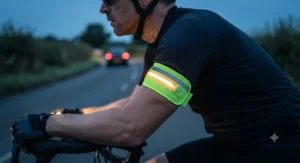
This is the detail most reflective band listings gloss over entirely, and it matters more than brightness for a lot of riders: how the band actually stays on your arm. A velcro closure — the hook-and-loop strap used on the X AUTOHAUX 8pcs Reflective Bands, the Biking Pants Strap Reflective Ankle Band, and the Didiseaon 2pcs LED Reflective Armband — lets you fasten the band to a precise circumference and, once set, it generally stays exactly where you put it through bumps, wind, and repeated arm movement. An elastic slip-on band, used on products like the Rivsli LED Armband for Running and MECCANIXITY Reflective Bands, trades that precision for speed — you pull it on in under two seconds, but a band sized for a bare arm can migrate down or bunch up when pulled over a bulky winter jacket sleeve, since the elastic tension that holds it in place on skin behaves differently over slick synthetic fabric. Here’s what to weigh: if you’re layering over winter gear for months of the year, as most Canadian cyclists do, a velcro closure’s adjustability is worth the extra two seconds it takes to fasten, since a band that’s slipped down to your wrist mid-ride is providing far less visible surface area than one still sitting high on your upper arm where drivers expect to see it. Riders who cycle mostly in warmer months over bare arms or thin sleeves can reasonably prioritize the speed of an elastic band without much practical downside.
Practical Usage Guide: Wearing, Charging and Maintaining Your Armband
Getting genuine value out of any reflective armband comes down to placement, charging discipline, and basic upkeep — details most product listings skip entirely. Position the band on your upper arm or forearm above the elbow rather than at the wrist whenever possible, since a higher placement stays within a driver’s typical headlight sweep for longer as they approach from an angle, and it’s less likely to be obscured by a jacket cuff. If you’re running an LED unit, build a simple charging habit rather than waiting for it to die mid-commute — plugging it in every Sunday night regardless of remaining charge means you’re never caught with a dead unit on a Monday evening ride. For velcro-closure bands specifically, fasten them snugly enough that you can’t easily slide two fingers underneath, since a loose wrap both looks worse and shifts position over a bumpy ride, undermining the very placement advantage you’re trying to achieve. Passive reflective bands benefit from an occasional wipe-down with a damp cloth to clear off road grime and salt residue, which genuinely dulls reflective brightness over a Canadian winter if left to build up. A common first-month mistake is forgetting the band entirely on the handful of rides that start in daylight but end after sunset — keeping one clipped to your bike bag or helmet strap, rather than only in a drawer at home, solves this reliably. Finally, rotate through a two-pack or bulk set rather than running the same single unit every single ride, since even passive reflective coating experiences gradual wear from repeated flexing and washing.
Real-World Scenarios: Matching the Right Band to Your Ride or Run
Consider a graduate student in Waterloo cycling home from evening lab sessions along a mixed-use path with intermittent lighting — for this rider, the Samlior LED Armband for Running (2 Pack) makes sense because active light on both arms compensates for the path’s inconsistent overhead lighting, and the multiple colour and mode options let them stand out distinctly from cyclists running only passive gear. Now picture a parent in suburban Calgary who bikes with their kids to a 7 p.m. hockey practice a few times a week during the shoulder seasons — here, the Zubebe 48 Pcs Reflective Bands is the practical choice, since it’s genuinely a night running visibility band and cycling accessory in one bulk purchase, letting every family member grab arm and ankle bands from the same set without buying separate products for each person. Finally, consider a food-delivery cyclist in downtown Vancouver working evening shifts through wet, low-visibility conditions — this rider benefits most from layering the Biking Pants Strap Reflective Ankle Band with an LED armband, since the ankle band solves the practical chain-catch problem delivery cyclists deal with constantly while adding a second, lower point of reflectivity that a driver’s headlights catch at a different angle than an arm-mounted band alone. In each case, the right choice isn’t universal — it depends on how consistently dark the actual riding environment gets, how many people need outfitting, and whether the rider is dealing with a genuine mechanical annoyance like loose pant cuffs alongside the visibility question.
Reflective Ankle Band for Cyclists: Why Your Arm Isn’t Enough
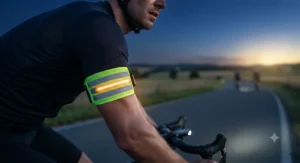
Most riders reach for an armband first because it’s the most obvious, visible spot to add reflectivity, but a reflective ankle band for cyclists solves a genuinely different problem that arm-mounted gear can’t touch. Ankle-level reflectivity sits directly in line with a bike’s pedal stroke, meaning it moves in a distinctive up-and-down pattern that’s mechanically different from the more static sway of an arm swinging at your side — and that repetitive, rhythmic motion is precisely what catches a driver’s peripheral vision fastest in low light. Beyond the visibility angle, a dedicated ankle band like the Biking Pants Strap Reflective Ankle Band solves the practical annoyance of a loose pant cuff working its way into a chain or chainring, which isn’t just a wardrobe problem — a caught cuff can pull a foot unexpectedly off the pedal mid-stroke, which is a genuine safety issue at any speed. What most buyers overlook is that pairing an arm band with an ankle band isn’t redundant; it’s complementary, since the two create reflective or lit points at completely different heights and movement patterns, giving a driver two separate visual cues rather than one. For riders who commute in trousers or looser pants rather than dedicated cycling gear, treating an ankle band as a functional necessity rather than an optional add-on makes practical sense regardless of the visibility argument.
Hi-Vis Reflective Armbands vs LED Bike Lights and Reflective Vests
Reflective armbands are one piece of a broader visibility toolkit, and it’s worth understanding where they earn their keep against the alternatives Canadian cyclists typically consider.
| Visibility Option | Brightness/Range | Coverage | Approx. Cost (CAD) | Best For |
|---|---|---|---|---|
| Reflective armband (passive) | Moderate, depends on external light | Single arm point | around C$8-C$20 | low-cost, no-maintenance layering |
| LED armband (active) | High, self-generated light | Single arm point | around C$9-C$23 | active visibility without a full light kit |
| Front/rear bike lights | Highest, legally required | Front and rear only | around C$20-C$60 | mandatory baseline lighting |
| Hi-vis reflective vest | High, largest surface area | Full torso | around C$15-C$40 | maximum surface-area visibility |
The written comparison matters more than the numbers alone: front and rear bike lights are a legally required baseline for cycling after dark in every Canadian province, not an optional add-on, so an armband should always be treated as a supplement to lights rather than a replacement for them. A reflective vest wins on sheer surface area since it covers your entire torso, but it’s also bulkier to carry and less convenient to throw on for a spontaneous evening ride than a small armband that lives in a jacket pocket. Armbands and ankle bands, meanwhile, add reflectivity at specific, moving points on your body that a torso-level vest doesn’t emphasize, which is precisely the complementary role they’re best suited for — cheap, fast to put on, and genuinely additive rather than competing with your existing lights.
✨ Don’t Miss These Exclusive Deals! 🔍
Compare current pricing on all seven picks above and get your visibility gear sorted before your next after-dark ride.
Features That Actually Matter (And Those That Don’t)
Cutting through the marketing language on most reflective band listings, a handful of features genuinely affect real-world visibility while others are mostly noise. Active light output matters far more than exact lumen or candela figures printed on a listing, since the practical difference between a steady LED glow and a flashing mode — flashing draws a driver’s eye faster in peripheral vision — outweighs small differences in raw brightness numbers between competing units. Closure security matters more than most buyers expect going in, because a band that’s slipped down to your wrist mid-ride is functionally providing less visible surface area than a smaller band that stayed put at the correct height. On the other hand, colour choice on LED bands, while marketed heavily, makes essentially no safety difference — a red, blue, or white LED are all equally visible to an approaching driver, so choosing based on personal preference rather than any claimed visibility advantage is perfectly reasonable. Similarly, claimed “waterproof” ratings on budget import electronics are worth treating with healthy skepticism unless a specific IP rating is listed, since “water-resistant” and “waterproof” get used interchangeably in casual product copy far more often than the underlying build quality actually differs. Pack size and bulk quantity matter enormously if you’re outfitting multiple people, but are irrelevant noise if you’re a solo rider who just needs one reliable band — don’t let a lower per-unit price on a 48-piece pack pull you toward buying far more than you’ll ever use.
Long-Term Cost & Maintenance
The total cost of ownership on this category stays low across the board, but the shape of that cost differs meaningfully between power formats. A passive band like the MECCANIXITY Reflective Bands or X AUTOHAUX 8pcs Reflective Bands has essentially zero ongoing cost beyond eventual replacement when the reflective coating dulls after roughly one to two riding seasons of regular Canadian weather exposure. A USB-rechargeable LED unit like the Rivsli LED Armband for Running costs nothing to run beyond electricity so negligible it’s not worth calculating, but the internal battery itself will gradually hold less charge over one to three years of regular charge cycles, eventually requiring replacement of the whole unit rather than just a battery swap. A replaceable-battery unit like the Didiseaon 2pcs LED Reflective Armband sits in between — the unit itself can last indefinitely, but expect to budget for a fresh button battery every few months of regular after-dark use, which adds up to a small but real recurring cost over several riding seasons.
| Power Format | Typical Lifespan | Ongoing Cost | Best Value For |
|---|---|---|---|
| Passive reflective | 1-2 seasons | None | infrequent night riders |
| USB rechargeable LED | 1-3 years | Negligible (electricity only) | frequent commuters |
| Replaceable-battery LED | Indefinite unit life | Small (periodic batteries) | backup/occasional use |
Reading this table against your own riding frequency is the fastest way to avoid overpaying for a feature set you won’t use — a rider who cycles after dark twice a month doesn’t need a premium rechargeable unit’s charge-cycle longevity, while a daily commuter genuinely benefits from avoiding the recurring cost of replaceable batteries.
Pedestrian Visibility Laws in Canada: What Cyclists and Runners Need to Know
Understanding pedestrian visibility laws in Canada helps explain why reflective gear is recommended so consistently by municipal and provincial safety authorities, even though the specific legal requirements focus mainly on the bicycle itself rather than the rider’s clothing. Quebec’s Highway Safety Code, for instance, mandates that bicycles carry specific reflectors and lighting — a white front reflector, a red rear reflector, wheel-mounted reflectors or reflective tires, and pedal reflectors or reflective ankle bands where pedals lack them — plus a white front light and red rear light whenever cycling after dark, with cyclists themselves responsible for installing this equipment. Ontario’s Highway Traffic Act similarly requires a white front light and red rear light or reflector for cycling between half an hour after sunset and half an hour before sunrise, a rule Toronto’s own cycling safety guidance echoes directly, while also recommending light-coloured or reflective clothing as a supplementary measure rather than a strict legal mandate. Pedestrians, meanwhile, generally aren’t subject to a specific reflective-gear law in most provinces, but that legal gap is exactly why public safety campaigns lean so heavily on voluntary reflective wear — the law sets a minimum for vehicles and bicycles, while a driver’s actual ability to see a person in the dark depends heavily on choices the law doesn’t mandate at all, like wearing a hi-vis reflective armband for night cycling or an equivalent accessory. Provincial requirements do vary meaningfully, so checking your specific province’s cycling regulations before assuming a Quebec or Ontario rule applies elsewhere is worth the five minutes it takes, particularly since fines for missing mandatory reflectors can be steeper than the cost of the reflective gear itself.
Problem → Solution Guide: Fixing Common Reflective Armband Issues
A band that keeps sliding down your arm mid-ride is almost always a sizing or closure-type mismatch — the fix is either tightening a velcro closure one notch further or switching from an elastic slip-on to a hook-and-loop band if you’re layering over bulky winter sleeves regularly. Reduced brightness on a passive reflective band after a season or two of use typically means road grime and salt residue have dulled the reflective coating, and a simple wipe-down with a damp cloth after grimy rides slows this considerably, though eventual replacement is normal and inexpensive. An LED unit that won’t hold a charge anymore, after a year or more of regular use, usually points to natural battery degradation rather than a defect — at that point, replacing the whole unit is more practical than trying to service an internal cell not designed to be swapped. Velcro that’s lost its grip after months of use is a common complaint on ankle-worn bands specifically, since pedalling motion creates more friction and flex than an arm band experiences, and the practical fix is simply rotating to a fresh band from a multi-pack rather than expecting one unit to survive an entire season of daily pedal-stroke wear. Finally, if you’ve bought a band and genuinely can’t tell whether it’s making a visibility difference, the most reliable test is having a friend drive past you at dusk in a parking lot at low speed — that quick, safe check reveals more about real-world visibility than any spec sheet claim.
Frequently Asked Questions
❓ Is a reflective armband enough for night cycling, or do I still need bike lights?
❓ What's better for night cycling, a velcro closure or an elastic slip-on band?
❓ Do LED reflective armbands need to be waterproof for Canadian winters?
❓ How long does a battery-powered LED armband actually last per charge?
❓ Should cyclists wear a reflective ankle band in addition to an armband?
Conclusion
A hi-vis reflective armband for night cycling is one of the smallest purchases on this list of seven that makes a genuinely outsized difference to how visible you are on a dark commute, and the right pick really does come down to how you actually ride rather than which option has the flashiest marketing copy. Riders who commute after dark several nights a week get the most out of an active LED option like the Samlior LED Armband for Running (2 Pack) or the budget-friendly Rivsli LED Armband for Running, while anyone who wants a zero-maintenance backup layered under their existing lights will do just fine with a passive pick like the X AUTOHAUX 8pcs Reflective Bands or the bulk-value Zubebe 48 Pcs Reflective Bands. Don’t overlook the ankle specifically, either — the Biking Pants Strap Reflective Ankle Band solves a genuine mechanical annoyance while adding a second, differently angled point of visibility that an arm band alone can’t provide. Whatever you choose, treat it as one layer in a system that starts with legally required bike lights, not as a stand-alone fix, and you’ll be measurably easier to spot on every ride between now and next spring’s earlier sunsets.
✨ Ready to ride safer after dark? Check current prices on today’s top pick and get your visibility gear sorted before your next commute! 🚴♂️💡
Recommended for You
- 7 Best Reflective Tape for Motorcycle Helmets in 2026
- 7 Best Reflective Helmet Stickers for Canadian Riders (2026)
- Hi-Vis Rain Jacket for Motorcycle Commuting: 7 Picks (2026)
Disclaimer: This article contains affiliate links. As an Amazon Associate, I earn from qualifying purchases. If you purchase products through these links, we may earn a small commission at no additional cost to you.
✨ Found this helpful? Share it with your friends! 💬🤗
