
In This Article
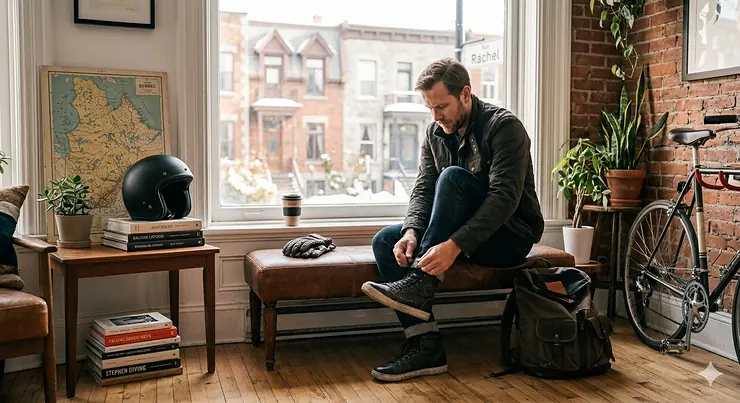
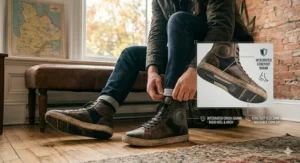
You pull into the parking garage, kill the engine, and walk straight into the boardroom — nobody has any idea you just rode 25 km through downtown Toronto traffic. No clunky motocross boots. No suspicious looks from the receptionist. Just a clean, low-profile sneaker that happens to be hiding reinforced ankle protection, anti-slip soles, and a gear-shift pad under its unremarkable exterior. That’s the whole promise of motorcycle sneakers look normal, and in 2026, that promise has never been better kept.
For Canadian riders specifically, this category has become almost essential. Our riding seasons are compressed — from a fleeting spring thaw in April to the first hard frost in October, depending on your province — which means most of us are urban commuters, weekend cafe-racers, or both. We’re not spending eight hours a day in full ADV gear. We’re riding to work, to brunch, to a friend’s place in Westmount, and we need footwear that handles all of it without looking like we raided a powersports catalogue.
So what exactly are motorcycle sneakers that look normal? They’re CE-rated protective footwear engineered to meet the European standard EN 13634:2017 for motorcycle footwear — covering abrasion resistance, ankle impact protection, and structural rigidity — built inside an aesthetic shell that reads as an ordinary sneaker or casual shoe. At a glance, your coworker thinks you’re wearing Nikes. At 80 km/h, your ankles are significantly safer than they would be in actual Nikes. That’s the sweet spot these shoes occupy, and this guide covers the seven best options you can pick up on Amazon.ca right now.
Quick Comparison Table: Top 7 Motorcycle Sneakers at a Glance
| Product | CE Rated | Style | Waterproof | Price Range (CAD) | Best For |
|---|---|---|---|---|---|
| IRON JIA’S Motorcycle Shoes | ✅ Yes | Low-top sneaker | ❌ No | $80–$120 | Budget urban commuters |
| RIDEIRON CE Certified Shoes | ✅ Yes | Athletic high-top | ❌ No | $90–$135 | Value-focused daily riders |
| ILM Motorcycle Shoes UB32 | ✅ Yes | Low leather shoe | ✅ Yes | $130–$170 | All-season commuters |
| ILM Motorcycle Leather UB305 | ✅ Yes | Casual ankle boot | ✅ Yes | $140–$185 | Wet-weather & office crossover |
| Alpinestars Meta Road Shoes | ❌ Comfort-focused | Athletic sneaker | ❌ No | $160–$220 | Paddock/city casual riders |
| Milwaukee Leather MBM9108 | ✅ Reinforced | Canvas sneaker | ❌ No | $110–$155 | Cruiser & cafe-racer aesthetic |
| TCX Street 3 WP | ✅ CE Level 2 | Leather high-top | ✅ Yes | $260–$330 | Premium all-weather commuters |
The table above tells one clear story: waterproofing and CE certification don’t always come as a package deal, and budget doesn’t always mean compromise on protection. The ILM UB305 and TCX Street 3 WP are the standout all-weather options — critical for Vancouver or Halifax riders dealing with near-constant rain — while the IRON JIA’S and RIDEIRON entries serve Toronto or Calgary city riders who want daily protection without breaking the bank.
💬 Just one click — help others make better buying decisions too! 😊
✨ Don’t Miss These Exclusive Deals!
🔍 Take your riding game to the next level with these carefully selected protective sneakers. Click any highlighted product name to check current pricing and availability on Amazon.ca. Your commute deserves gear that works as hard as you do!
Top 7 Motorcycle Sneakers That Look Normal — Expert Analysis
1. IRON JIA’S Motorcycle Shoes for Men
IRON JIA’S has quietly become one of the most-searched brands in the budget moto-shoe space on Amazon.ca — and for good reason. These CE-certified low-top riding shoes pack ankle support, a built-in gear-shift pad, and a thickened anti-slip sole into a silhouette that reads as a fairly standard athletic shoe. The reinforced toe box and internal ankle armour cover the most statistically dangerous impact zones in a slide.
What most budget-conscious Canadian buyers overlook is the sole compound. The anti-slip rubber used here is formulated for oil and fuel resistance — which matters when you’re filling up at a Petro-Canada and your foot accidentally hits a slick patch on the forecourt. That’s not a feature you get on a $60 skate shoe. The breathable mesh upper, however, is not built for a Canadian October. It’ll let cold air in just as efficiently as it lets heat out, so consider these a May-through-September shoe unless you’re layering with thick wool socks.
Ideal for: A first-time rider in Edmonton or Winnipeg doing a daily commute under 30 km and looking to step up from zero protection without spending premium dollars.
✅ CE-certified ankle and toe protection
✅ Built-in gear-shift pad, anti-slip fuel-resistant sole
✅ Legitimately looks like a sneaker off the bike
❌ Mesh upper offers no weather resistance — cold-season riders need a backup
❌ Sizing can run slightly narrow; go half a size up if you’re between sizes
Price range: Around $80–$120 CAD. For CE protection at this price point in Canada, it’s hard to argue with the value.
2. RIDEIRON CE Certified Motorcycle Shoes
Born from IRON JIA’S engineering lineage, RIDEIRON positions itself as the elevated version — slightly more aggressive styling, a thicker reinforced sole, and better ankle collar support. The CE certification is present, the shift pad is reinforced, and the high-top silhouette offers marginally more ankle-wrap than its sibling brand. Think of it as the difference between a standard Converse Chuck Taylor and a high-top Chuck — same DNA, meaningfully more coverage.
The thickened anti-slip sole here is noticeably chunkier than the base IRON JIA’S, which in real-world terms means better peg feel and more vibration damping on longer city rides. Canadian spring roads — post-winter, pre-repaving, essentially a gravel-and-pothole obstacle course — will stress-test any outsole, and RIDEIRON’s holds up well. The breathable construction is the same caveat as above: pack a dry pair for October.
Ideal for: Riders who want the budget-friendly price tier but slightly more presence on the peg and a higher-top silhouette for ankle confidence.
✅ CE certified, reinforced ankle collar, dual anti-slip sole layers
✅ More substantial peg contact than most budget options
✅ Available in multiple colourways on Amazon.ca
❌ Still not waterproof — not built for Canada’s shoulder seasons
❌ The athletic-high-top look is more obvious than some sneaker-style alternatives
Price range: $90–$135 CAD range — a small premium over IRON JIA’S that’s generally worth it for the added ankle support.
3. ILM Motorcycle Shoes UB32
The ILM UB32 is where this category starts getting serious about weather. It’s a leather, waterproof, breathable riding shoe with full ankle support and anti-slip sole — and it looks, from five metres away, like a clean leather casual shoe. The waterproof membrane is the game-changer here for Canadian buyers. When you’re riding into work on a damp Tuesday in Vancouver or through early morning fog in Ontario, dry feet at 8 a.m. are not optional.
The leather upper also provides meaningfully better abrasion resistance than mesh alternatives — the spec sheet won’t always tell you this, but in a low-speed slide, leather buys you significantly more slide distance before the material fails than synthetics at the same price. ILM’s UB32 sits at the intersection of weather readiness and genuine protection in a form factor that will pass a business-casual dress code without a second look.
Ideal for: Year-round urban commuters in Vancouver, Victoria, or any Canadian city where “raining lightly” is a euphemism for “raining constantly.”
✅ Waterproof leather construction, full ankle support
✅ Anti-slip sole with fuel/oil resistance
✅ Genuinely looks like a smart casual leather shoe
❌ Leather upper requires break-in — expect 2–3 weeks before they feel completely natural
❌ Warmer than mesh options; summer riders in Calgary heat may find them sweaty
Price range: $130–$170 CAD — excellent value for a leather waterproof riding shoe at this price in Canada.
4. ILM Motorcycle Leather Shoes UB305
The UB305 is ILM’s ankle-boot interpretation of the same waterproof-leather formula, and it’s the pair I’d recommend to someone who specifically wants the “office-appropriate footwear that secretly moonlights as riding gear” experience. The silhouette reads as a slim Chelsea-adjacent ankle boot — not motorcycle at all. The waterproof construction, ankle support system, and anti-slip sole are identical in principle to the UB32, but the higher collar means slightly more ankle-wrap in an impact.
In Canadian context: this is a strong choice for riders in professional environments. A teacher in Ottawa, a consultant in Calgary, or a downtown Vancouver architect can walk from the parking garage to their desk without anyone asking where their motocross gear is. The leather will also respond well to a regular conditioning treatment — especially important for Canadian winters, when road salt is the greatest enemy of every leather product you own. Apply a quality leather conditioner monthly during riding season and the UB305 will outlast cheaper alternatives by years.
Ideal for: Professionals who need dual-purpose footwear that works at a desk and on a Kawasaki Z650RS.
✅ Slim ankle-boot silhouette — genuinely office-appropriate
✅ Waterproof, leather, full ankle protection
✅ CE-rated with gear-shift reinforcement
❌ More expensive than the UB32 for similar protection — you’re paying for the elevated aesthetic
❌ Limited colourway options on Amazon.ca; mostly black
Price range: $140–$185 CAD — justified for anyone who needs a professional-looking option.
5. Alpinestars Meta Road Shoes
Full disclosure: the Alpinestars Meta Road is not CE-certified for motorcycle riding in the traditional EN 13634 sense — it’s designed primarily as a paddock/technical shoe for comfort and mechanics on-site. But it earns its place on this list for a specific type of rider: the person who already owns proper moto boots for longer rides and wants something supremely comfortable for short hops, event days, and city errands where looking like a casual sneaker wearer is the priority.
The Meta Road’s single-piece mesh upper is one of the most breathable constructions in this price category. The oil-resistant rubber sole and dual-density PU foam ankle hold provide meaningful stability on the peg. Canadian riding in July? This is the shoe that won’t have you cursing your gear choice at the 45-minute mark in traffic. Alpinestars is available directly through Amazon.ca — and their Canadian presence means warranty claims don’t require cross-border headaches.
Ideal for: Experienced riders who pair these with proper gear for longer rides and want the Alpinestars brand quality for casual urban use.
✅ Best-in-class breathability, Alpinestars build quality
✅ Oil-resistant sole, dual-density ankle support
✅ Truly looks like a running shoe — zero giveaway
❌ Not CE-certified to EN 13634 — not a replacement for rated footwear on serious rides
❌ No waterproofing — a spring rain will soak through quickly
Price range: $160–$220 CAD — premium pricing for a comfort-first shoe. Worth it for the brand quality if protection is supplemented by other gear choices.
6. Milwaukee Leather MBM9108 Men’s Canvas Reinforced Riding Shoes
Milwaukee Leather is a well-established North American brand with genuine Canadian retail presence, and the MBM9108 is their canvas-and-reinforced answer to the “I want my moto shoes to look like old-school skate sneakers” request. The canvas upper with suede reinforcement panels, rubber outsole, and internal ankle support structure lands squarely in the cafe-racer aesthetic camp — if your bike is a vintage-looking Triumph or Royal Enfield, these shoes make sense stylistically and practically.
The ankle support is reinforced but not CE-rated in the formal EN 13634 sense — Milwaukee Leather positions these as “reinforced” riding shoes rather than certified PPE, which is an important distinction. The protection is meaningfully better than a regular canvas shoe, but riders wanting a certified standard should note that. The canvas construction also means no waterproofing, which in a Canadian context is a significant seasonal limitation. Treat these as your warm, dry-weather weekend shoe.
Ideal for: Cafe-racer and cruiser enthusiasts who want period-correct styling to match their bike’s aesthetic, primarily in summer months.
✅ Vintage sneaker look — excellent with cafe-racer and bobber styles
✅ Reinforced ankle and toe, anti-slip sole
✅ Milwaukee Leather has North American customer service (no cross-border warranty drama)
❌ Not EN 13634 CE-certified — protection is good but unrated
❌ Canvas breathes well but offers no weather resistance
Price range: $110–$155 CAD — solid pricing for the aesthetic and reinforcement level offered.
7. TCX Street 3 WP
If you’re going to spend premium money on motorcycle sneakers that look normal, the TCX Street 3 WP is where the category peaks. TCX, now under the Dainese group, has been making motorcycle footwear seriously longer than most brands in this space, and it shows. The Street 3 WP packs CE Level 2 protection — the higher of the two available rating tiers under EN 13634:2017 — into a leather high-top sneaker that legitimately looks like something you’d see on a fashion-forward pedestrian in Plateau-Mont-Royal.
The T-Dry waterproof membrane means you can ride into a Vancouver rainstorm and arrive with dry feet. The Z-Plate shank under the sole reduces torsional flex on the peg while still allowing natural walking gait — a detail most budget shoes skip entirely. CE Level 2 means the ankle and heel zones have been tested to a higher impact threshold than Level 1 counterparts. For Canadian highway riding or longer commutes on faster roads, that gap in certified protection is genuinely worth the premium.
Ideal for: The serious Canadian commuter or weekend touring rider who wants one pair of shoes that does everything — office Tuesdays, Saturday highway runs, and October shoulder-season rain — without compromise.
✅ CE Level 2 — highest certified protection available in this sneaker form factor
✅ Waterproof T-Dry membrane, Z-Plate shank for peg stability
✅ TCX’s Italian engineering pedigree in a package that looks like streetwear
❌ The price premium is real — roughly double the mid-tier options in CAD
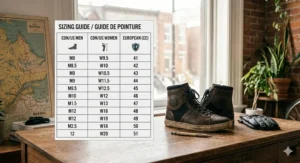
❌ Sizing follows EU standards; confirm your conversion before ordering
Price range: $260–$330 CAD — a significant investment, but the TCX Street 3 WP is the pair you buy once and don’t replace for years.
How to Break In Your Moto Sneakers and Care for Them Through a Canadian Riding Season
New riding shoes — especially leather ones — can be unforgiving for the first few weeks. Here’s what actually works, and what the product listing won’t tell you.
The first 50 km are the honest test. Wear your new shoes around the house, to the grocery store, everywhere before you commit them to a full riding day. Leather shoes especially need to mould to your foot shape before they feel natural on the peg. Rushing this step means blisters on your first long ride.
Condition leather before the first ride and monthly after. Canadian road salt during the spring thaw is brutally corrosive. A quality leather conditioner (applied to the upper and sole edges) creates a barrier that prevents salt from drying and cracking the leather. Neglect this and your $180 CAD shoes look like garbage by June.
After wet rides, dry naturally — never with direct heat. Stuffing wet leather shoes next to a furnace vent will crack the leather faster than any road condition. Stuff them with newspaper and let them air-dry at room temperature overnight.
Check the gear-shift pad every 3–4 months. This is the highest-wear zone on any moto shoe. On budget models, the shift pad can thin out after a season of daily riding. If your shoe upper starts showing wear through at the left-toe zone, it’s time to consider replacement — the upper material at that point may no longer meet its abrasion spec.
The ankle armour on budget CE shoes is often removable for washing. Pull the insoles and any removable armour panels periodically and hand-wash them. Sweat and grime degrade foam inserts faster than riding does.
Canadian Rider Profiles: Which Shoe Fits Your Riding Life?
Profile 1: The Downtown Toronto Commuter Sarah rides a Honda CB500F, 18 km each way, five days a week, May through October. She needs shoes that read as office-appropriate (she works in finance), won’t bake her feet in July traffic, and can handle the odd rainy morning. Best match: ILM UB305. The slim ankle-boot look clears her dress code, the waterproof leather covers unpredictable mornings, and the CE protection handles her daily exposure on the DVP.
Profile 2: The Vancouver Weekend Warrior Marcus has a Kawasaki Z900RS and rides Sundays on Sea-to-Sky corridor routes. He doesn’t need to walk into an office — he needs something that handles spirited riding and mountain weather. Best match: TCX Street 3 WP. Level 2 certification for a faster riding style, full waterproofing for Pacific weather, and enough ankle support to handle the pegs confidently.
Profile 3: The Calgary Budget Rider Dani is a university student in Calgary commuting to campus on a used Yamaha MT-03. She’s got about $100 CAD to spend and needs something better than sneakers. Best match: IRON JIA’S Motorcycle Shoes. CE-certified protection at under $120 CAD — it’s the most responsible upgrade she can make to her gear for that budget, and Calgary’s dry summers mean waterproofing is less critical.
Profile 4: The Montreal Cafe-Racer Rider Julien owns a Royal Enfield Meteor 350 and cares deeply about the aesthetic. He rides weekends in Laurentians, parks outside terrasse bars, and wants shoes that look as considered as his jacket. Best match: Milwaukee Leather MBM9108. The vintage canvas-and-suede look matches his bike perfectly, and the reinforced construction is a meaningful upgrade over the actual Vans he was wearing before.
How to Choose Motorcycle Sneakers That Look Normal in Canada — 6 Key Criteria
1. Verify the CE certification level. Not all “CE certified” claims are equal. Look specifically for EN 13634:2017 labelling on the product — this is the current and most stringent revision of the European standard for motorcycle footwear. Level 1 is the baseline; Level 2 means higher tested impact and abrasion thresholds. For highway commuters and faster riders, Level 2 is worth the hunt.
2. Match the upper material to your riding season. Mesh = summer only in Canada. Leather = year-round with conditioning. Leather + waterproof membrane = all-weather. Be honest with yourself about when you’ll actually ride — buying a mesh shoe in September means a cold commute by October.
3. Check for a proper gear-shift pad. This sounds minor until your left shoe’s canvas starts wearing through by July. A reinforced shift pad (usually a rubberised overlay at the left-toe zone) is the detail that separates a shoe built for riding from a shoe that merely claims to be.
4. Assess the ankle collar height. Lower-extremity injuries account for a disproportionate share of motorcycle crash injuries — specifically the ankle complex. A shoe that covers only to the ankle bone offers less protection than a mid-top that wraps above it. For casual urban riding, ankle-height is acceptable; for anything faster or on less predictable roads, consider a higher collar.
5. Check Amazon.ca availability — not just Amazon.com. Several premium riding shoe models appear in Amazon.com search results but don’t ship affordably to Canada, or are listed by third-party sellers at inflated CAD prices. Filter for “ships to Canada” and “Fulfilled by Amazon” to avoid cross-border shipping surprises.
6. Size for thick socks. If you ride in the spring and fall, you’re wearing thicker socks. Order a half-size up from your normal street size — this is especially true for EU-sized models like TCX, where the conversion doesn’t always land on standard Canadian sizing increments.
What CE Protection Actually Means for Canadian Riders
There’s a lot of marketing noise around “CE certified” in the motorcycle gear world, and it’s worth cutting through it. The EN 13634:2017 standard tests footwear across four primary areas: abrasion resistance (how far the material slides before failing against pavement), cut resistance (resistance to sharp object penetration), transverse rigidity (protection against crushing and torsional forces), and impact resistance at the ankle.
Each of these areas is rated at either Level 1 or Level 2. A boot labelled “CE Level 1 1 1 1” has passed all four tests at the baseline level. A “Level 2 2 2 2” means it passed all four at the higher threshold. Most motorcycle sneakers that look normal achieve CE Level 1 across the board — which is a meaningful step above uncertified footwear, but not equivalent to a full touring boot.
For Canadian urban riding context: Level 1 certification is appropriate for city commuting at speeds under 80 km/h, regular stop-and-go riding, and low-speed manoeuvring. If you regularly ride on highways, through mountain passes, or at sustained higher speeds, Level 2 is the smarter standard to seek — and the TCX Street 3 WP is currently the most accessible Level 2 option in the sneaker form factor on Amazon.ca.
One thing CE certification does not cover: electrical conductivity, oil resistance, or waterproofing. Those are separate specifications that individual manufacturers add independently.
Motorcycle Sneakers vs. Traditional Motorcycle Boots: Is the Trade-Off Honest?
Let’s not pretend there isn’t a trade-off. A full-height touring boot like a Sidi Adventure or Alpinestars Corozal provides more ankle support, more shin coverage, more energy absorption in a high-speed crash, and a longer service life under repeated stress. Nobody is arguing otherwise.
But here’s the real conversation: the best protective footwear is the footwear you’ll actually wear. Research repeatedly shows that riders make gear choices based on convenience and social acceptability as much as protection level. A full touring boot that stays home because you “only need shoes for this quick trip” offers exactly zero protection. A CE Level 1 sneaker that you wear every single ride provides real, meaningful protection 100% of the time.
The motorcycle sneaker category exists to close that gap — to offer certified protection in a form that riders will genuinely choose to put on every morning. Statistics Canada data on motorcycle fatalities and injury patterns consistently show lower-extremity injuries as among the most prevalent in collisions. Protecting your ankles and feet even at Level 1 is a genuine harm-reduction choice, not a compromise.
The honest recommendation: use moto sneakers for your daily urban commutes and short rides; keep a quality touring boot for longer highway trips or spirited riding. Most Canadian riders with compressed seasons can manage both.
Motorcycle Sneakers for Urban Canadian Commuters
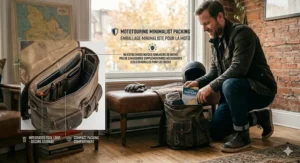
Urban commuting is the highest-use case for this entire product category in Canada. Toronto, Vancouver, Montréal, Calgary, Ottawa — these cities have dense, stop-and-go traffic conditions where the riding speed rarely exceeds 70 km/h for meaningful stretches, parking is a tactical exercise, and social acceptability of gear is a real consideration.
For this use case specifically, the priority hierarchy is: CE certification first, then waterproofing (for coastal cities especially), then aesthetics and all-day wearability, then price. A rider who commutes 20 km each way, 80 days per riding season, puts 3,200 km on their commuter shoes in a year — that’s serious cumulative exposure. Gear choices for that rider should reflect the exposure level, not casual weekend mileage.
The ILM UB32 and UB305 punch above their weight for urban commuters who want genuine weather protection. The IRON JIA’S and RIDEIRON CE shoes are the responsible minimum — they meet the certification bar without demanding a premium investment. The TCX Street 3 WP is the option for the commuter who has made the calculation that their feet are worth the best available protection in this format.
Prime membership on Amazon.ca makes a significant difference for regular gear shoppers — free shipping on these products (all above the $35 CAD free shipping threshold, and all available through Prime) versus paying $10–$20 CAD in per-order shipping on lower-cost options adds up across a gear wardrobe.
Common Mistakes When Buying Urban Motorcycle Shoes
Mistake 1: Confusing “reinforced” with “CE-certified.” These are not the same thing. “Reinforced” is a marketing descriptor with no standardised meaning. CE certification under EN 13634:2017 is a tested, verified standard. Always look for the actual CE marking and standard number on the product.
Mistake 2: Ignoring Canadian shipping reality. Some motorcycle shoe brands list on Amazon.ca via third-party sellers whose “ships to Canada” status changes without notice. Before purchasing, confirm the listing is Fulfilled by Amazon or from a seller with a clear Canadian shipping record — especially for products in the $150–$300 CAD range where a customs or duties surprise stings.
Mistake 3: Buying mesh shoes for a shoulder-season climate. If you’re in Halifax in late September or Victoria in November, a breathable mesh shoe is aggressively optimistic gear selection. Ride in it twice in a cold rain and you’ll understand. Match your upper material to your actual riding season, not your aspirational riding season.
Mistake 4: Skipping the break-in period. A leather moto shoe that feels slightly stiff in the shop will feel significantly better after 30 km of walking. A shoe that feels tight in the shop will feel like a vice on a long ride. Wear them around the house first.
Mistake 5: Ignoring the left shoe specifically. The left shoe on a motorcycle shift-equipped bike takes a disproportionate beating. Check that your chosen model has meaningful reinforcement at the left-toe zone — and inspect that zone every few months of daily riding.
Features That Actually Matter (And Those That Don’t)
Matters: Ankle collar construction. The difference between a loose ankle collar and a snug, structured one is significant in a lateral ankle impact. Check for internal ankle-cup stiffeners, not just padding.
Matters: Outsole oil resistance. Fuel-station forecourts, garage floors, parking ramps — these are genuinely oily surfaces. An outsole rated for oil and fuel resistance isn’t marketing; it prevents a slow-speed slip that could embarrass or injure you.
Matters: Internal shift pad thickness. Not all shift pads are created equal. A 2mm overlay will wear through in a season; a proper reinforced rubber pad will outlast the shoe upper.
Doesn’t matter (much): Brand logos. The visibility of a brand name on your shoe has zero correlation with its protection level. A subtle $120 CAD shoe with genuine CE certification beats a flashy one without it.
Doesn’t matter as much as claimed: Weight. Moto shoe weights are often marketed as a differentiator, but for urban commuting, the difference between a 400g and 600g shoe is imperceptible across a full riding day.
Matters more than you think: Lace security. Loose laces near a chain drive or near hot exhaust components are a genuine hazard. Look for lace-lock or lace-garage systems on higher-end models — TCX’s lace-lock design is notably better than the elastic strip used on most budget models.
Long-Term Cost and Maintenance in Canada
Let’s run the real numbers in CAD. A quality moto sneaker at the $130–$180 range, properly maintained, should last 2–3 Canadian riding seasons of urban commuting (roughly 400–600 riding hours). That’s a cost-per-use that most outdoor gear can’t match.
Maintenance costs are minimal if you do them correctly:
- Leather conditioner: $12–$18 CAD for a quality product (Leather Honey, Obenauf’s) that lasts an entire season applied monthly
- Waterproofing spray refresh: $10–$15 CAD per season
- Insole replacement: $15–$25 CAD when originals compress
Compare this to replacing a $90 CAD unprotected shoe every season (which Canadian urban riders who commute by foot tend to do), and the moto sneaker at $150 CAD starts looking like the economical choice, with the protective benefit as a bonus.
The TCX Street 3 WP at the $260–$330 CAD price point, maintained properly, can realistically deliver 4–5 seasons of riding. Amortised, that’s $60–$80 CAD per year of certified Level 2 protection. That’s not an extravagance — that’s a sound gear investment.
✨ Don’t Miss These Exclusive Deals on Amazon.ca!
🔍 Every product reviewed above is available to check on Amazon.ca right now. Click any highlighted product name for current pricing, size availability, and shipping options. Prime members get free, fast delivery — perfect for gearing up before the season’s best riding days arrive!
Frequently Asked Questions
❓ Are motorcycle sneakers that look normal safe enough for Canadian highway riding?
❓ Can I wear motorcycle sneakers year-round in Canada?
❓ Do motorcycle sneakers ship to all provinces from Amazon.ca?
❓ Are there bilingual (French/English) product labels on motorcycle shoes sold in Canada?
❓ What's the difference between CE Level 1 and Level 2 in motorcycle footwear?
Conclusion
Motorcycle sneakers that look normal aren’t a compromise. They’re a product category that grew directly out of riders choosing between looking like a human being and protecting their feet — and collectively deciding they shouldn’t have to choose. In 2026, the best options in this space deliver legitimate CE certification, materials that handle Canadian weather realities, and aesthetics that won’t trigger dress codes or curious glances.
For most Canadian urban riders, the ILM UB305 or ILM UB32 hit the practical sweet spot: waterproof leather construction, CE protection, genuine everyday wearability, and Amazon.ca availability at a price point that doesn’t require a gear budget conversation with a partner. The IRON JIA’S and RIDEIRON CE shoes are the responsible entry point for riders upgrading from zero protection. And the TCX Street 3 WP is the answer for anyone who has looked at their riding schedule, looked at their feet, and decided they’re worth the best.
The riding season in most Canadian provinces runs roughly 180–200 days. That’s 180–200 opportunities for your footwear choice to matter. Make it count.
✨ Ready to Upgrade Your Riding Gear?
🔍 Check current prices and availability on all seven picks directly on Amazon.ca — click any product name highlighted throughout this article. Free shipping for Prime members, and most ship within days. Your next ride deserves better than lucky.
Recommended for You
- Sport Touring Boots vs Race Boots: 7 Best Picks for Canadian Riders 2026
- Track Day Motorcycle Boots Requirements: 7 Best CE Boots Canada 2026
- 7 Best All-Season Waterproof Motorcycle Boots in Canada (2026)
Disclaimer: This article contains affiliate links. As an Amazon Associate, I earn from qualifying purchases. If you purchase products through these links, we may earn a small commission at no additional cost to you.
✨ Found this helpful? Share it with your friends! 💬🤗
