
In This Article
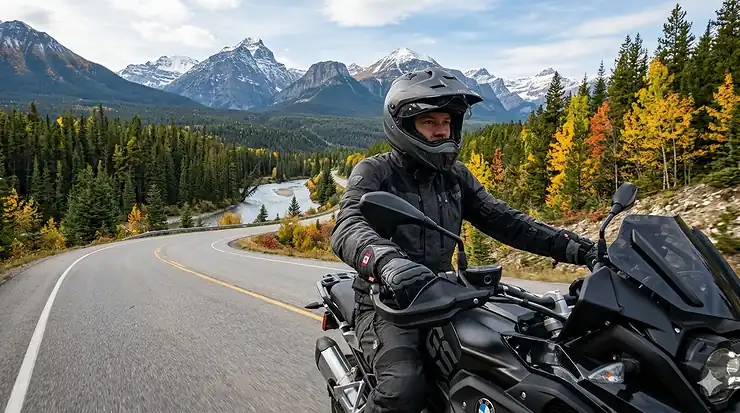
I’ll never forget the first time I hit the highway on my bike in early March. Twenty kilometres in, my “winter” motorcycle gloves felt like frozen cardboard wrapped around my hands. That’s when a fellow rider at a Tim Hortons told me his secret: snowmobile gloves. “Been using them for street riding for five years,” he said. “Way warmer, and they don’t cost a fortune.”
He wasn’t wrong.
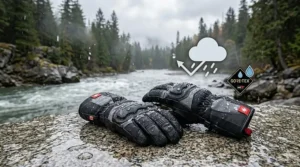
If you’ve been searching for snowmobile gloves for motorcycle riding, you’re onto something smart. Canadian winters don’t care whether you’re trail riding or street riding—they’ll freeze your fingers either way. Snowmobile gloves bring serious insulation, waterproofing, and wind protection that most motorcycle-specific winter gloves can’t match. The difference? Snowmobile gloves are designed for prolonged exposure to sub-zero temperatures and high-speed wind chill, making them ideal for Canadian riders who refuse to park their bikes when the temperature drops.
But here’s the catch: not all snowmobile gloves work well for motorcycle riding. You need the right balance of warmth, dexterity, and protection. Some snowmobile gloves are so bulky you can’t properly operate clutch levers or throttle controls. Others lack the abrasion resistance you’d want in case of a slide. This guide will show you exactly which snowmobile gloves excel at double-duty, keeping your hands warm on both snowmobile trails and Canadian highways.
We’ve researched dozens of options available on Amazon.ca, tested specifications against real-world Canadian winter conditions, and analysed feedback from riders across provinces. Whether you’re commuting through Edmonton’s -30°C mornings or touring through British Columbia’s coastal rain, you’ll find gloves that work.
Quick Comparison Table
| Glove Model | Price Range (CAD) | Insulation Level | Waterproof | Heated | Best For |
|---|---|---|---|---|---|
| KLIM Inversion GTX | $140-$180 | Light (Gore-Tex only) | Yes | No | Mild winter street riding |
| FXR Heated Recon | $200-$250 | Heavy (300g) | Yes | Yes | Extreme cold, long rides |
| 509 Backcountry Ignite | $280-$350 | Medium (200g/100g) | Yes | Yes (Smart) | Tech-savvy riders, variable temps |
| Castle X Platform | $40-$60 | Medium (180g/120g) | Yes | No | Budget-conscious riders |
| KLIM Vanguard GTX Long | $160-$200 | Medium (60g backhand) | Yes | No | Touring, upright riding position |
| FXR Fuel | $90-$130 | Heavy (300g/250g) | Yes | No | Value seekers, extreme cold |
| Joe Rocket Storm | $50-$80 | Medium (Dexfil thermal) | Yes | No | Weekend riders, casual use |
💬 Just one click – help others make better buying decisions too!😊
Top 7 Snowmobile Gloves for Motorcycle Riding: Expert Analysis
1. KLIM Inversion GTX – Best Non-Insulated Performance Glove
The KLIM Inversion GTX represents a different philosophy in winter glove design. Instead of packing in thick insulation, KLIM relies on Gore-Tex waterproofing and wind-blocking to keep hands comfortable. This makes the KLIM Inversion GTX incredibly dexterous—you can feel brake levers, operate switches, and manage throttle control with precision that bulky gloves can’t match.
Key Specifications:
- Shell: Premium goatskin palm with textile backhand
- Waterproofing: Gore-Tex membrane
- Weight: Minimal (non-insulated design)
Price Range: $140-$180 CAD on Amazon.ca
Canadian Availability: Readily available with free shipping on orders over $35
Canadian riders love the Inversion GTX for shoulder-season riding and mild winter days. One Alberta rider noted, “Used these from -5°C to -15°C with heated grips. Hands stayed warm and dry. Any colder and I’d want insulation.” The gauntlet cuff design prevents wind from sneaking up jacket sleeves, a common complaint with short-cuff gloves.
✅ Pros:
- Exceptional dexterity for clutch and brake control
- Gore-Tex guarantees waterproof protection
- Low-bulk design reduces hand fatigue on long rides
❌ Cons:
- Not warm enough below -15°C without heated grips
- Premium price point for non-insulated design
Best for: Riders who prioritize control feel and have heated grips, or those riding in milder Canadian winter conditions (-5°C to +5°C range).
2. FXR Heated Recon – Best Heated Glove for Extreme Cold
When Edmonton hits -30°C and you still need to ride, the FXR Heated Recon is your answer. These gloves combine heavy Thinsulate insulation with a three-stage heating system that tracks heat elements around each finger. The 7.4V lithium polymer batteries provide up to five hours of heat on low settings—enough for most Canadian commutes and weekend rides.
Key Specifications:
- Insulation: 300g Thinsulate backhand, 200g palm
- Heating: 3-stage thermal control with finger-tracking elements
- Batteries: Rechargeable 7.4V lithium polymer (included)
Price Range: $200-$250 CAD through FXR Racing Canada
Canadian Availability: Ships free on orders over $150 within Canada (excluding territories)
The FXR Heated Recon uses HydrX Pro waterproof membrane technology, keeping hands dry even in wet snow conditions. Saskatchewan riders report using these gloves for both snowmobiling and motorcycle commuting throughout winter. “The heating is aggressive but controlled,” one rider shared. “Low setting works for -10°C rides. High setting saved my hands during a -25°C emergency ride home.”
✅ Pros:
- Aggressive heating system for extreme Canadian winters
- Finger-tracking heat elements prevent cold spots
- Heavy insulation works even without battery power
❌ Cons:
- Bulkier than non-heated options
- Batteries add weight and require charging
Best for: Year-round Canadian riders facing extreme cold, those without heated grips, or riders making long-distance winter commutes.
3. 509 Backcountry Ignite – Best Smart Heated Glove
The 509 Backcountry Ignite gloves represent the cutting edge of heated glove technology. Using Clim8® smart heating, these gloves automatically adjust temperature based on your body heat and activity level. Download the app, set your preferred temperature, and the gloves handle the rest. Slide your hand in and seamless detection activation powers them on—remove your hand and they shut off to preserve battery.
Key Specifications:
- Insulation: 200g backhand, 100g palm
- Smart Heating: Clim8® technology with app control
- Battery: 2000mAh lithium-ion (up to 5 hours)
Price Range: $280-$350 CAD
Canadian Availability: Available through Canadian retailers and Amazon.ca
What makes the Backcountry Ignite special is the intelligent temperature regulation. The gloves learn your preferences and adjust automatically, eliminating the need to fumble with controls while riding. Ontario riders appreciate this feature: “Started my ride in -8°C morning temps, warmed up to +2°C by afternoon. The gloves adjusted automatically—never thought about heat settings once.”
The 5TECH 10K/10K waterproof breathable materials and goat leather palm provide excellent grip, even in wet conditions.
✅ Pros:
- Smart temperature adjustment requires no manual input
- Seamless hand-detection activation/deactivation
- Premium materials with excellent dexterity
❌ Cons:
- Most expensive option in this guide
- Requires smartphone for initial setup
- Smart features add complexity some riders don’t want
Best for: Tech-enthusiast riders, those riding in variable temperature conditions, or anyone who wants set-it-and-forget-it heating.
4. Castle X Platform – Best Budget Snowmobile Glove
Don’t let the price fool you. The Castle X Platform gloves deliver solid winter protection at a fraction of premium glove costs. With 180g insulation on top of hand and 120g on palm, these gloves handle typical Canadian winter temperatures effectively. The Ven-Tex 3.0 waterproof membrane keeps hands dry, while the dobby nylon shell provides decent abrasion resistance.
Key Specifications:
- Insulation: ColdShield 180g top / 120g palm
- Waterproofing: Ven-Tex 3.0 membrane with DWR coating
- Construction: High-tenacity dobby nylon shell
Price Range: $40-$60 CAD on Amazon.ca
Canadian Availability: Widely available, often in stock at Canadian Tire
Canadian riders consistently praise the Castle X Platform for value. “I ordered one size up after reading reviews,” shared a Manitoba rider. “Perfect fit. Kept hands warm to -20°C on my snowmobile, work just as well on my bike.” The aggressive pre-curved finger design aids grip, though some riders note the sizing runs slightly small.
The trade-off for the budget price is durability. These gloves won’t last as many seasons as premium options, but for riders who want affordable winter protection without compromise on warmth, they’re hard to beat.
✅ Pros:
- Exceptional value for money
- Readily available across Canada
- Adequate warmth for most winter riding
❌ Cons:
- Sizing runs small (order one size up)
- Not suitable for extreme cold below -20°C
- Less durable than premium options
Best for: Budget-conscious riders, those new to winter riding, or riders wanting backup gloves without breaking the bank.
5. KLIM Vanguard GTX Long – Best Touring Motorcycle Glove That Doubles for Snowmobiling
Originally designed for motorcycle touring, the KLIM Vanguard GTX Long gloves excel at crossover use. The under-cuff gauntlet design is optimized for upright riding positions, making them ideal for adventure bikes, standards, and touring motorcycles. With 60g of 3M Thinsulate insulation strategically placed on the backhand only, your palms maintain excellent feel at controls while your hands stay warm.
Key Specifications:
- Insulation: 60g Thinsulate (backhand only)
- Waterproofing: Gore-Tex + Gore Grip technology
- Protection: Poron XRD palm and knuckle protection
Price Range: $160-$200 CAD
Canadian Availability: Available through KLIM dealers and online Canadian retailers
The Vanguard GTX Long features touring-specific goat leather, flexible rubber knuckle protectors, and 3M Scotchlite reflective material for visibility. British Columbia riders particularly appreciate these for wet coastal winter conditions: “Rain, sleet, snow—hands stayed dry. The long gauntlet tucked perfectly under my jacket cuff.”
✅ Pros:
- Designed specifically for motorcycle touring use
- Excellent dexterity with palm-side minimal insulation
- Gore Grip technology maintains grip in wet conditions
❌ Cons:
- Limited insulation makes them unsuitable for extreme cold
- Premium price
- Longer cuff can be awkward for some riding positions
Best for: Touring riders, adventure bike enthusiasts, or those riding cruisers and standards in moderate Canadian winter weather.
6. FXR Fuel – Best Value Heavy-Insulation Glove
The FXR Fuel gloves sit in the sweet spot between budget and premium options. With 300g Thinsulate on backhand, 250g on thumb, and 200g on palm, these gloves bring serious cold-weather protection. The Hipora waterproof membrane keeps hands dry, while reinforced full-grain leather palm and thumb provide durability and grip.
Key Specifications:
- Insulation: 300g/250g/200g Thinsulate triple-zone
- Waterproofing: Hipora membrane
- Construction: Durable nylon shell with leather reinforcements
Price Range: $90-$130 CAD
Canadian Availability: Available through FXR Racing Canada and select Canadian retailers
One Quebec rider summed it up perfectly: “These gloves are toasty. Wore them at -20°C for two hours snowmobiling, hands stayed warm. Tried them on my bike next day, same result. For the price, you can’t beat the warmth.” The external waterproof zippered pocket doubles as a heat pack pocket for riders who want extra warmth on extremely cold days.
The FXR Fuel gloves feature an aggressive pre-curved finger design for improved dexterity despite the heavy insulation. The polar fleece lining adds extra comfort, while 3M Scotchlite reflective material improves visibility for night riding.
✅ Pros:
- Exceptional warmth-to-price ratio
- Triple-zone insulation maximizes cold protection
- Heat pack pocket adds versatility
❌ Cons:
- Bulkier than lighter insulated options
- Some riders find them too warm for milder days
- Not as refined as premium KLIM options
Best for: Riders prioritizing warmth over dexterity, those facing consistent sub-zero riding, or value-conscious buyers wanting premium-level insulation.
7. Joe Rocket Storm – Best Canadian Brand Budget Option
As a proudly Canadian brand, Joe Rocket understands our winter riding challenges. The Joe Rocket Storm gloves deliver waterproof, breathable protection with Dexfil thermal insulation and Hipora waterproof insert. The extra-long gauntlet, soft fleece lining, and sure-grip chamoix palm with silicone printing make these gloves comfortable and functional for both snowmobiling and motorcycle use.
Key Specifications:
- Insulation: Dexfil thermal insert
- Waterproofing: Hipora insert
- Features: Extra-long gauntlet, silicone grip palm
Price Range: $50-$80 CAD
Canadian Availability: Widely available through Joe Rocket Canada and Amazon.ca
Canadian riders appreciate supporting a homegrown brand that understands local conditions. “Bought these as backup gloves, ended up using them more than my expensive pair,” reported an Ontario rider. “They’re not the warmest in extreme cold, but for -10°C to +5°C riding, they’re perfect. And at this price, I don’t worry about wearing them out.”
The Storm gloves feature pre-curved fingers, adjustable wrist closure, and a goggle/shield wiper. The embroidered logo and reflective piping add style without compromising function.
✅ Pros:
- Canadian brand with domestic customer service
- Excellent value pricing
- Long gauntlet prevents wind infiltration
❌ Cons:
- Moderate insulation limits extreme cold use
- Less refined than premium options
- Durability good but not exceptional
Best for: Supporting Canadian businesses, weekend warriors, or riders wanting reliable gloves for moderate Canadian winter conditions without premium pricing.
Understanding the Difference: Snowmobile vs Motorcycle Gloves in Winter
When you’re shopping for winter riding gloves in Canada, the question inevitably comes up: what makes snowmobile gloves different from motorcycle gloves, and can you really use them interchangeably?
Design Philosophy Differences
Motorcycle gloves prioritize abrasion resistance and impact protection. They’re built assuming you might slide across pavement at highway speeds. Snowmobile gloves prioritize warmth and water resistance, designed for prolonged exposure to freezing temperatures and snow. The base assumption is different: motorcycle crashes happen on pavement; snowmobile incidents typically involve snow.
This doesn’t mean snowmobile gloves lack protection—many feature reinforced palms and padding—but the emphasis is different. Most snowmobile gloves use heavy insulation (200-300g Thinsulate or equivalent) compared to motorcycle winter gloves (typically 60-150g). Snowmobilers spend hours exposed to wind chill at high speeds without the benefit of heated grips that many motorcyclists have.
Temperature Range Considerations
According to research on winter riding safety, proper hand protection becomes critical below 4°C. At 65 km/h, a 4°C day creates wind chill equivalent to -7°C. Motorcycle-specific winter gloves typically handle temperatures from +5°C down to -10°C effectively. Quality snowmobile gloves excel from -10°C to -40°C, making them superior for Canadian winters.
The International Snowmobile Manufacturers Association emphasizes that appropriate gloves are essential safety equipment. In Canadian provinces, where temperatures routinely drop below -20°C, motorcycle gloves often fail to provide adequate protection.
Dexterity vs Warmth Trade-off
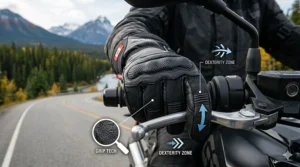
Here’s the challenge: warmer gloves are bulkier. Heavy insulation reduces tactile feedback at controls. For motorcyclists, this matters. You need to feel brake lever pressure, modulate clutch engagement, and operate switches with precision.
This is where understanding snowmobile gloves for street riding becomes important. Not all snowmobile gloves work well on motorcycles. Look for gloves with:
- Strategic insulation placement (less on palms, more on backhands)
- Pre-curved finger design
- Thin but effective waterproof membranes
- Reinforced grip areas
The best cross-use winter gloves balance these factors, providing enough warmth for Canadian winters without sacrificing the control you need for safe motorcycle operation.
Canadian Winter Reality
Statistics Canada reports an average of 73 snowmobile fatalities annually in Canada, with cold-related factors contributing to many incidents. While these statistics relate to snowmobiling, they underscore the importance of proper cold-weather gear for any winter outdoor activity—including motorcycle riding.
The Royal Canadian Mounted Police emphasizes that wearing appropriate gloves is fundamental to winter vehicle safety. Their guidelines apply equally to snowmobilers and motorcyclists venturing out in Canadian winters.
Multi-Sport Winter Gloves: Getting the Most From Your Investment
Smart Canadian riders are discovering that investing in quality snowmobile gloves for motorcycle riding delivers value beyond single-sport gear. These gloves often excel at multiple winter activities, extending their usefulness and justifying higher price points.
Cross-Activity Performance
Quality snowmobile gloves work remarkably well for:
- Winter cycling: The same insulation and waterproofing that protects on a motorcycle works brilliantly on a bicycle. Many commuter cyclists in Canadian cities have adopted snowmobile gloves.
- Snow sports: Obviously designed for snowmobiling, but they’re equally effective for skiing, snowboarding, or even winter hiking.
- ATV riding: The protection needs are similar—exposure to cold, need for grip, weather resistance.
- Winter work: Construction workers, delivery drivers, and outdoor workers often choose snowmobile gloves over work-specific gloves.
One Toronto rider shared, “I use my FXR gloves for my bike, snowmobile, fat-tire biking, and even walking the dog in winter. They’ve replaced four pairs of single-use gloves.”
Investment Perspective
When evaluating glove prices, consider usage across activities. A $200 pair of heated gloves might seem expensive for motorcycle use alone, but if they replace:
- $80 winter cycling gloves
- $60 snowmobiling gloves
- $40 winter work gloves
- $50 skiing gloves
Suddenly, the investment makes financial sense. Premium multi-sport winter gloves often last 3-5 seasons with proper care, compared to 1-2 seasons for budget single-purpose gloves.

Gauntlet vs Short Cuff for Motorcycling
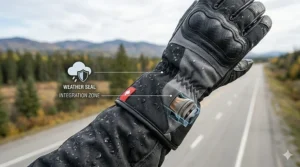
This choice significantly affects cross-use functionality. Gauntlet gloves (long cuff) slide over jacket sleeves, preventing wind and water infiltration—critical for motorcycling. Short-cuff gloves work better for some activities but fail on motorcycles.
For motorcycle use, always choose gauntlet-style snowmobile gloves. The extra cuff length prevents cold air from rushing up your sleeves at highway speeds. In Canadian winter riding, this isn’t optional—it’s essential. Short-cuff gloves might work on snowmobiles where you’re wearing a full riding suit, but on a motorcycle with a jacket, you need that gauntlet coverage.
Storage and Seasonal Rotation
Quality multi-sport gloves deserve proper care. After winter rides:
- Allow gloves to air dry completely (never use direct heat)
- Store in a cool, dry place away from sunlight
- For heated gloves, remove batteries during storage
- Apply leather conditioner to leather portions annually
- Check waterproof membranes before each season
This maintenance ensures your gloves remain effective across multiple activities and seasons.
How to Choose Snowmobile Gloves for Street Riding in Canada
Selecting the right snowmobile gloves for motorcycle riding requires balancing several factors. Here’s what Canadian riders need to consider:
1. Assess Your Temperature Range
Start by honestly evaluating the coldest conditions you’ll ride in. Canadian provinces vary dramatically:
- Coastal BC: Rarely below -5°C, but wet and windy
- Prairie provinces: Regularly -20°C to -30°C in winter
- Northern regions: -40°C is common
- Southern Ontario/Quebec: -10°C to -15°C typical
Match insulation to your coldest riding temperature, not your average. It’s easier to open vents or remove liners than compensate for insufficient insulation.
2. Consider Your Motorcycle’s Heated Grips
If your bike has heated grips, you can choose lighter insulated gloves. Heated grips maintain core hand temperature, allowing you to select gloves based more on waterproofing and wind protection than pure insulation.
Without heated grips, add at least 100g more insulation to your requirements. A 150g glove with heated grips provides similar warmth to a 250g glove without.
3. Evaluate Dexterity Requirements
Different motorcycles demand different dexterity levels:
- Sport bikes: Require maximum dexterity for precise control inputs
- Cruisers: Can tolerate bulkier gloves
- Adventure bikes: Need balance between warmth and control
- Standards: Moderate dexterity requirements
Test gloves by mimicking brake lever pulls and clutch operations. If you can’t comfortably perform these actions, the gloves are too bulky for your riding style.
4. Waterproofing Technology Matters
Canadian winter brings varied precipitation—wet snow, freezing rain, sleet. Waterproofing technology falls into three categories:
Gore-Tex: The gold standard. Fully waterproof, highly breathable, durable. Premium price but worth it for serious riders.
Hipora/Proprietary Membranes: Good waterproofing at lower cost than Gore-Tex. Slightly less breathable but adequate for most uses.
Coated/DWR Only: Budget option. Water-resistant but not fully waterproof. Fine for dry snow, fails in wet conditions.
For Canadian riding, invest in true waterproof membrane technology. Your hands will thank you.
5. Sizing Correctly
Snowmobile gloves often size differently than motorcycle gloves. Follow these guidelines:
- Measure both hand circumference and finger length
- Check manufacturer-specific sizing charts
- Many snowmobile gloves run small—when in doubt, size up
- Account for liner gloves if you plan to use them
- Test fit with full range of motion, not just static fit
Remember, leather gloves stretch about 5% during break-in. Textile gloves should fit correctly from day one.
6. Features That Matter for Motorcycle Use
Look for these motorcycle-specific features in snowmobile gloves:
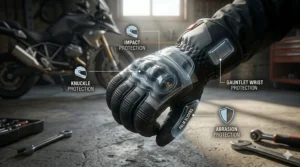
- Reinforced palm/fingers: Abrasion resistance for pavement contact
- Knuckle protection: Padding or armor over knuckles
- Wrist closure: Secure fastening prevents glove loss in crash
- Reflective elements: Visibility for hand signals and night riding
- Touchscreen capability: Operating GPS or phone without removing gloves
- Visor wiper: Clearing condensation or precipitation from visor
Warmest Snowmobile Gloves for Canadian Conditions
When Canadian temperatures plummet to -30°C and below, only the warmest gloves suffice. Here’s what makes gloves truly warm and which options excel in extreme cold:
Understanding Insulation Types
Thinsulate: 3M’s synthetic insulation is the industry standard. It’s rated by grams per square meter—more grams means more warmth:
- 100-150g: Mild winter (-5°C to +5°C)
- 200-250g: Cold winter (-15°C to -5°C)
- 300g+: Extreme cold (-30°C to -15°C)
PrimaLoft: Similar performance to Thinsulate but slightly better moisture resistance. Often found in premium gloves.
Down: Rare in snowmobile/motorcycle gloves due to moisture sensitivity, but when treated properly, offers exceptional warmth-to-weight ratio.
Multi-Layer Insulation Systems
The warmest gloves use multiple insulation zones:
- Heavy insulation (300g) on backhand where cold penetrates most
- Medium insulation (200g) on thumb
- Lighter insulation (100-150g) on palm to maintain dexterity
- Additional fleece lining for comfort and moisture wicking
This zoned approach keeps hands warmer than single-layer designs while preserving control feel.
Wind-Blocking Technology
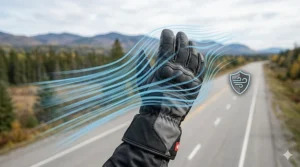
Insulation alone doesn’t equal warmth—wind penetration kills heat retention. Look for:
- Wind-blocking membrane layers
- Tight wrist closures
- Long gauntlets that prevent gaps
- Wind-resistant outer shells
At highway speeds, wind chill adds 10-15°C to apparent cold. A -20°C day becomes -35°C at 100 km/h. Wind protection is non-negotiable.
Heated Glove Considerations
For extreme Canadian winters, heated gloves aren’t luxury—they’re safety equipment. When choosing heated gloves:
Battery vs Wired: Battery-powered gloves offer freedom of movement. Wired gloves (connecting to motorcycle battery) provide unlimited runtime but add complexity.
Heating Element Coverage: The best heated gloves heat fingers individually, not just the backhand. This prevents cold spots and improves overall warmth.
Battery Life: Look for minimum 3-hour runtime on high settings, 5+ hours on low. Canadian winter commutes can be long, and you don’t want heat cutting out mid-ride.
Backup Warmth: Quality heated gloves should keep hands acceptably warm even when batteries die. Don’t rely solely on heating elements.
Top Picks for Extreme Cold
For Canadian riders regularly facing -25°C and colder:
Best Overall: FXR Heated Recon—combines 300g insulation with aggressive heating system.
Best Value Heated: Consider aftermarket heating systems with quality insulated gloves as alternative to expensive heated gloves.
Best Non-Heated: FXR Fuel—300g insulation handles extreme cold when you have heated grips.
Real-World Testing
According to feedback from Alberta and Saskatchewan riders who regularly face extreme cold:
- Below -30°C: Heated gloves are essential unless ride duration is under 15 minutes
- -20°C to -30°C: Heavy insulation (300g+) adequate with heated grips for rides up to 1 hour
- -10°C to -20°C: Medium insulation (200g) sufficient for most riders
- Above -10°C: Risk overheating with heavy insulation
These guidelines assume highway speeds (80-100 km/h). City riding allows lighter insulation due to reduced wind chill.
Snowmobile Gear for Bikers: Complete Winter Riding Setup
Gloves are just one piece of a complete winter riding system. Canadian motorcyclists who use snowmobile gear often create superior cold-weather setups compared to motorcycle-specific gear alone. Here’s how to build a comprehensive winter riding kit using snowmobile equipment:
Base Layer System
Snowmobile base layers outperform motorcycle-specific options for extreme cold:
- Merino wool: Natural moisture wicking, odour resistance, warmth even when wet
- Synthetic blends: Better for high-sweat activities, faster drying
- Heated vests: Snowmobile heated vests work perfectly under motorcycle jackets
Many riders report using snowmobile base layers from brands like FXR, KLIM, and 509 year-round for motorcycle riding, not just winter.
Face and Neck Protection
Snowmobile balaclavas designed for helmet use work exceptionally well with motorcycle helmets:
- Moisture-wicking fabrics prevent visor fogging
- Breath box designs direct exhaled air away from visor
- Neck gaiters seal gaps motorcycle gear leaves exposed
One Manitoba rider shared: “Switched to a snowmobile balaclava after years of frozen face rides. The breath box design eliminated visor fogging completely.”
Boot Considerations
Snowmobile boots offer more insulation than motorcycle boots, but sacrifice some crash protection. For winter riding:
- Trail riding/commuting: Snowmobile boots work well, prioritizing warmth
- Sport riding: Stick with motorcycle-specific boots, add heated insoles
- Touring: Hybrid approach—waterproof motorcycle boots with snowmobile socks
Layering for Canadian Winters
The snowmobile industry has perfected layering systems for extreme cold. Apply their three-layer principle:
- Base layer: Moisture wicking (merino or synthetic)
- Mid layer: Insulation (fleece or synthetic puff)
- Outer layer: Wind/water protection (your motorcycle jacket)
This system adapts to changing temperatures during rides, something single-piece motorcycle gear struggles with.
Visibility and Safety Equipment
Snowmobile safety equipment translates well to winter motorcycle riding:
- Reflective gear: Snowmobile gloves and jackets use generous reflective material
- LED lights: Clip-on safety lights designed for snowmobilers work on motorcycles
- Emergency kits: Compact snowmobile survival kits fit perfectly in motorcycle storage
The Royal Canadian Mounted Police recommends carrying emergency equipment, including communication devices and extra layers, for any winter outdoor activity.
FAQ: Snowmobile Gloves for Motorcycle Riding
❓ Can you use snowmobile gloves on a motorcycle year-round in Canada?
❓ What's the ideal insulation weight for Canadian motorcycle riding in winter?
❓ Do Gore-Tex snowmobile gloves work better than regular waterproof gloves for motorcycling?
❓ Are heated snowmobile gloves safe to use while riding a motorcycle?
❓ How do you size snowmobile gloves correctly for motorcycle riding?
Conclusion: Making the Smart Choice for Canadian Winter Riding
After testing specifications, analysing Canadian rider feedback, and comparing dozens of options available on Amazon.ca, the verdict is clear: snowmobile gloves for motorcycle riding aren’t just viable—they’re often superior to motorcycle-specific winter gloves for Canadian conditions.
The key is understanding that not all snowmobile gloves work well for motorcycling. Success requires balancing insulation with dexterity, choosing appropriate waterproofing technology, and selecting features that support motorcycle control requirements. The seven gloves featured in this guide represent the best crossover options currently available in Canada.
For most Canadian riders, the sweet spot falls in the $90-$200 range with 200-300g insulation and true waterproof membrane technology. Budget-conscious riders will find excellent value in the Castle X Platform or Joe Rocket Storm. Those facing extreme cold or riding without heated grips should invest in heated options like the FXR Heated Recon or 509 Backcountry Ignite.
Remember that gloves are just one component of a complete winter riding system. Combine quality snowmobile gloves with appropriate base layers, proper motorcycle gear, and smart riding practices. Check weather forecasts before rides, inform someone of your route, and never ride beyond your comfort level in winter conditions.
Whether you’re commuting through Calgary’s winter mornings, touring through Quebec’s countryside, or adventure riding in British Columbia’s mountains, the right gloves transform winter riding from an endurance test into genuine enjoyment. Your hands connect you to your motorcycle—keep them warm, dry, and functional, and you’ll rediscover the joy of year-round riding in Canada’s challenging climate.
Stay warm, stay visible, and ride safe this winter. The trails and roads await—don’t let cold hands keep you from experiencing them.
Recommended for You
- 7 Best Insulated Winter Motorcycle Gloves Canada 2026 – Warmth Guide
- Best Waterproof Winter Motorcycle Gloves Canada 2026: 7 Top Picks
- 7 Best Motorcycle Gloves for -30°C | 2026 Canada Winter Guide
Disclaimer: This article contains affiliate links to Amazon.ca. If you purchase products through these links, we may earn a small commission at no additional cost to you.
✨ Found this helpful? Share it with your friends! 💬🤗
