
In This Article
Let me paint you a picture. It’s 6:30 AM in Alberta, the thermometer reads -32°C, and you’re staring at your motorcycle wondering if you’ve lost your mind. Your colleagues think you’re crazy for winter riding, but here’s the thing—with the right motorcycle gloves for -30 degrees celsius, those frozen morning commutes transform from torture sessions into manageable adventures.
I learned this lesson the hard way during my first Calgary winter. Ten minutes into my ride with “regular” winter gloves, my fingers went numb. By the time I pulled over, I couldn’t operate the clutch. That experience sent me down a rabbit hole of research into extreme cold weather motorcycle gloves, and what I discovered changed everything.
The Canadian climate demands gear that can handle conditions most riders will never face. When wind chill pushes temperatures to -40 or below, frostbite becomes a real danger within minutes. According to Health Canada, exposed skin can freeze in as little as 5-10 minutes at these temperatures. This isn’t about comfort anymore—it’s about safety and the ability to maintain control of your bike when your hands are the only connection between you and 400+ pounds of steel.
Whether you’re commuting through a Saskatchewan winter, exploring the Yukon, or simply refusing to garage your bike from November to March, this guide covers everything you need to know about choosing motorcycle gloves that actually work at -30 degrees celsius and beyond.
Quick Comparison Table
| Glove Model | Type | Temperature Rating | Price (CAD) | Best For |
|---|---|---|---|---|
| Alpinestars HT-7 | 7.4V Battery | -30°C to -40°C | $419-$509 | Premium performance & Bluetooth control |
| Gerbing Vanguard 12V | 12V Hardwired | -35°C to -45°C | $270-$320 | Unlimited heat, long rides |
| Klim Inversion GTX HTD | 7.4V Battery | -25°C to -35°C | $350-$420 | Dual-sport versatility |
| Alpinestars HT-5 | 7.4V Battery | -25°C to -35°C | $320-$380 | Balanced value & performance |
| Firstgear Carbon Heated | 12V Hardwired | -30°C to -38°C | $280-$340 | Armoured protection |
| Highway 21 Radiant | 7V Battery | -20°C to -30°C | $180-$230 | Budget-friendly option |
| Savior Heated SDW03 | 7.4V Battery | -15°C to -28°C | $140-$190 | Entry-level heated |
💬 Just one click – help others make better buying decisions too!😊
Top 7 Motorcycle Gloves for -30°C: Expert Analysis
1. Alpinestars HT-7 Heat Tech Drystar – The Smart Choice
If money isn’t your primary concern and you want the absolute best motorcycle gloves for -40 celsius canada conditions, the Alpinestars HT-7 represents the current gold standard.
Key Specifications:
- 7.4V lithium battery system with Bluetooth app control
- 80g PrimaLoft insulation + heating elements
- Waterproof Drystar membrane
- Auto-on/auto-off sensors
Price: $419-$509 CAD on FortNine and specialty retailers
Canadian riders in Edmonton and Winnipeg consistently rate these as their go-to gloves for prairie winter riding. The Bluetooth connectivity lets you adjust heat levels through your phone without stopping, and the auto-activation feature means they start heating the moment you slide your hand in.
✅ Pros:
- Smartphone app control for temperature adjustment
- Dual heating lines per finger for even warmth
- Premium goat leather construction
- Excellent dexterity despite insulation
❌ Cons:
- Premium pricing
- Batteries add slight bulk to gauntlet area
Canadian Rider Feedback: Alberta riders report using these comfortably at -38°C with moderate wind chill. The heating system provides 4-7 hours depending on setting, which covers most commutes and day rides.
2. Gerbing 12V Vanguard Heated Gloves – Unlimited Power
For riders who demand unlimited heat output, the Gerbing Vanguard connects directly to your motorcycle’s electrical system, eliminating battery life concerns entirely.
Key Specifications:
- 12V DC direct motorcycle connection
- 150g Thinsulate insulation
- Aquatex waterproof/breathable membrane
- Maximum heat output: 135°F (57°C)
Price: $270-$320 CAD (requires separate controller and wiring harness)
What sets Gerbing apart is their patented Microwire heating technology—thousands of conductive filaments 1/10th the thickness of human hair create incredibly even heating without bulky wires. A WebBikeWorld reviewer in Alberta tested these at -40°C and reported they were the warmest gloves on the market.
✅ Pros:
- Unlimited heating time while bike runs
- Industry-leading heat output
- Lifetime warranty on heating elements
- Premium Aniline cowhide leather
❌ Cons:
- Requires permanent wiring installation
- Additional cost for controller needed
- Slightly heavier than battery models
Canadian Rider Feedback: Arctic motorcycle gloves canada riders particularly favour this model for extreme temperature work. The unlimited power makes them ideal for all-day rides in -30°C to -45°C conditions.
3. Klim Inversion GTX HTD – The Crossover Champion
Originally designed for snowmobiling, the Klim Inversion GTX HTD has become a favourite among adventure riders tackling extreme cold weather motorcycle gloves needs in Canadian backcountry.
Key Specifications:
- 7.4V lithium-ion battery heating
- Gore-Tex waterproof/breathable construction
- Three heat settings with LED indicators
- Touchscreen compatible fingertips
Price: $350-$420 CAD at FortNine
The Gore-Grip technology provides exceptional tactile feel even in sub-zero conditions. While these excel in the -25°C to -35°C range, riders report needing to layer with liners or add handlebar muffs for sustained -40°C exposure.
✅ Pros:
- Superior grip and bar feel
- Versatile for both motorcycle and snowmobile use
- Excellent waterproofing
- High battery run time (5-8 hours)
❌ Cons:
- Less insulation than dedicated extreme cold models
- Can feel warm above -10°C
- Higher price point
Canadian Rider Feedback: British Columbia and Yukon riders praise the dexterity for technical riding. The heating elements cover the back of hand and fingertips effectively.
4. Alpinestars HT-5 Heat Tech Drystar – Best Value Premium
The Alpinestars HT-5 delivers 90% of the HT-7’s performance at a more accessible price point, making it the sweet spot for serious Canadian winter riders.
Key Specifications:
- 7.4V battery-powered heating
- Three independent heat settings per glove
- 100% waterproof Drystar technology
- Goat leather palm construction
Price: $320-$380 CAD
Think of these as the HT-7’s younger sibling—you lose the Bluetooth app and auto-sensors, but keep the excellent heating system and build quality. For riders who don’t mind manually adjusting temperature, these coldest rated motorcycle gloves represent exceptional value.
✅ Pros:
- Significant savings versus HT-7
- Same heating technology and coverage
- Individual hand temperature control
- Pre-curved ergonomic fit
❌ Cons:
- Manual button control only (no app)
- No auto-activation feature
- Slightly less insulation than HT-7
Canadian Rider Feedback: Saskatchewan riders report these handle -32°C comfortably with medium heat setting. Battery life extends 30-40% longer than HT-7 due to lack of Bluetooth drain.
5. Firstgear Carbon Heated Gloves – The Armoured Option
Safety-conscious riders who want impact protection alongside heating will appreciate the Firstgear Carbon’s hard knuckle armour and reinforced construction.
Key Specifications:
- 12V motorcycle-powered heating
- Carbon fiber knuckle protection
- Grade-A drum-dyed cowhide
- 15 watts heat output per glove
Price: $280-$340 CAD at FortNine
These gloves blend the unlimited heat advantage of 12V systems with serious protective features. The armoured knuckles meet CE Level 1 certification, making them ideal for riders who prioritize safety in extreme temperature gloves.
✅ Pros:
- Excellent crash protection with armour
- Reflective detailing for visibility
- Visor wiper on thumb
- Solid value for features included
❌ Cons:
- Bulkier than non-armoured options
- Some riders report pinky finger constriction
- Requires Heat-Troller purchase for best results
Canadian Rider Feedback: Ontario winter commuters appreciate the added protection for urban riding. The alberta cold weather gear community rates these highly for daily use at -25°C to -35°C.
6. Highway 21 Radiant 7V Heated Gloves – Budget Performance
Don’t let the lower price fool you—the Highway 21 Radiant gloves punch well above their weight class for cold weather protection.
Key Specifications:
- 7V lithium-ion battery system
- 100g Thinsulate insulation
- Hipora waterproof liner
- Three heat settings with LED
Price: $180-$230 CAD on Amazon.ca
These gloves won’t match the extreme cold capabilities of premium options, but for riders facing -20°C to -30°C conditions, they deliver impressive performance at nearly half the price of top-tier alternatives.
✅ Pros:
- Excellent price-to-performance ratio
- Genuine leather construction
- Touchscreen compatible
- Included batteries and charger
❌ Cons:
- Limited to -30°C maximum comfort range
- Shorter battery life (3-5 hours)
- Less refined heating element distribution
Canadian Rider Feedback: Budget-conscious riders in Southern Ontario and BC coastal regions find these adequate for typical Canadian winters. Multiple owners recommend sizing up for better circulation.
7. Savior Heated Sheepskin SDW03 – The Entry Point
For riders new to heated gloves or those on tight budgets, the Savior SDW03 offers a taste of electric heating without breaking the bank.
Key Specifications:
- 7.4V battery heating system
- Sheepskin lining for natural insulation
- Waterproof outer shell
- Four temperature settings
Price: $140-$190 CAD at Savior Heat Canada
While these won’t handle the most extreme prairie winter riding scenarios, they provide a cost-effective introduction to heated glove technology for milder Canadian winters.
✅ Pros:
- Very affordable entry price
- Natural sheepskin provides good insulation
- One-year warranty included
- Available from Canadian distributor
❌ Cons:
- Only rated to -28°C comfortably
- Build quality below premium brands
- Shorter expected lifespan
Canadian Rider Feedback: New riders in Montreal and Halifax report these work well for fall/spring riding extending into early winter. Best suited for -15°C to -25°C range.
Understanding Extreme Cold Motorcycle Hand Protection
Why Standard Winter Gloves Fail at -30°C
Regular insulated gloves rely entirely on your body heat to stay warm. At highway speeds in -30°C temperatures, wind chill can push perceived temperature to -45°C or lower. Your hands simply cannot generate enough heat to compensate, leading to rapid cooling and potential frostbite.
The Canadian Centre for Occupational Health and Safety warns that at wind chill values below -27°C, the risk of frostbite increases dramatically. For motorcyclists, this threshold arrives much earlier due to constant wind exposure.
The Science of Heated Glove Technology
Modern extreme cold weather motorcycle gloves use three complementary technologies:
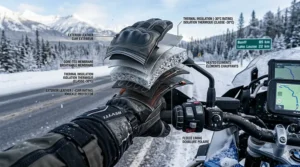
Insulation Barriers: Materials like PrimaLoft, Thinsulate, and down trap air pockets to reduce heat loss. Premium gloves use 80-200 grams of insulation.
Active Heating Elements: Thin conductive wires or carbon fiber heating panels generate warmth. Battery systems typically produce 7-15 watts per glove, while 12V systems can output 15+ watts.
Waterproof-Breathable Membranes: Gore-Tex, Drystar, Hipora, and similar technologies block external moisture while allowing sweat vapour to escape, preventing the clammy hands that accelerate cooling.
7V Battery vs 12V Hardwired: The Great Debate
Battery-Powered (7-7.4V) Systems:
- Portable, works on or off bike
- Typical runtime: 3-8 hours depending on setting
- Higher initial cost but no installation required
- Ideal for commuters and day rides
12V Hardwired Systems:
- Unlimited heat while motorcycle runs
- Requires wiring harness and temperature controller
- Better for long-distance touring and extreme cold
- Lower glove cost but higher total system investment
For Canadian riders regularly facing -30°C conditions, many veterans recommend the 12V route despite the installation complexity—the unlimited power eliminates range anxiety during extended cold snaps.
How to Choose Your Perfect -30°C Gloves
Step 1: Assess Your Riding Profile
Daily Commuters (20-60 km rides): Battery-powered gloves like the Alpinestars HT-5 or Highway 21 Radiant provide adequate heat for typical commute durations without installation hassles.
Weekend Warriors (100-300 km rides): Premium battery options like the HT-7 or Klim Inversion GTX offer extended runtime for day trips and touring.
Long-Distance Tourers (300+ km rides): 12V systems like the Gerbing Vanguard eliminate battery anxiety for multi-day adventures in extreme cold.
Adventure/Dual-Sport Riders: The Klim Inversion GTX HTD provides versatility for both on-road and off-road winter riding scenarios.
Step 2: Determine Your Temperature Range
Not all “coldest rated motorcycle gloves” perform equally. Match your typical riding temperatures:
- -15°C to -25°C: Entry-level heated or premium insulated gloves sufficient
- -25°C to -35°C: Mid-tier heated gloves with good insulation required
- -35°C to -45°C: Premium heated systems with 12V or high-capacity batteries essential
- Below -45°C: Consider heated gloves plus handlebar muffs or supplemental hand warmers
Step 3: Consider Your Budget vs Features
Budget Tier ($140-230 CAD): Savior SDW03, Highway 21 Radiant
Mid-Range ($280-380 CAD): Alpinestars HT-5, Firstgear Carbon, Klim Inversion
Premium ($400-550 CAD): Alpinestars HT-7, top-tier Gerbing systems
Remember that with 12V systems, you’ll need to budget an additional $100-200 CAD for controllers and wiring harnesses.
Step 4: Fit and Dexterity Testing
Order from retailers with good return policies (FortNine, Amazon.ca) and test the following:
Grip Test: Can you comfortably operate clutch, brake, and throttle for extended periods?
Range of Motion: Do fingers flex naturally, or does insulation restrict movement?
Gauntlet Length: Does the cuff extend far enough to tuck under or over your jacket sleeve without gaps?
Touchscreen Function: If you navigate via smartphone GPS, verify touchscreen compatibility actually works.
Essential Safety Considerations for Arctic Riding
Recognizing and Preventing Frostbite
According to Health Canada’s extreme cold guidelines, frostbite occurs when body tissues freeze. Motorcyclists face elevated risk due to wind chill amplification.
Early Warning Signs:
- Numbness or tingling in fingers
- Skin turning pale or waxy white
- Reduced dexterity and grip strength
- Pain or burning sensations
If you experience these symptoms, immediately find shelter and begin gentle rewarming. Never rub frostbitten areas or expose them to direct heat sources.
The Hypothermia Risk Factor
While your focus is on hand protection, remember that cold hands are often the first sign of declining core body temperature. A 2003 Canadian medical study found that at temperatures below -10°C, hypothermia risk increases significantly with wind exposure.
Proper heated gloves should be part of a complete cold weather system including heated jacket liner, quality base layers, and insulated riding pants.
Pre-Ride Glove Checklist
Before any ride in -30°C conditions:
Battery Status: Fully charge all batteries the night before; cold temperatures reduce capacity by 20-30%
Connection Verification: For 12V systems, test connections and controller function before departure
Backup Plan: Carry chemical hand warmers or backup gloves in case of equipment failure
Emergency Kit: Keep emergency blanket and additional hand protection in saddlebags or backpack
Maintenance Tips for Maximum Lifespan
Battery Care in Extreme Cold
Lithium batteries powering your motorcycle gloves for -40 celsius canada need special attention:
Storage: Keep batteries at room temperature when not in use; never store below 0°C
Charging: Allow cold batteries to warm to room temperature before charging to prevent damage
Pre-Ride Warming: Insert fully-charged, room-temperature batteries immediately before riding
Replacement Timeline: Expect 300-500 charge cycles (2-4 seasons) before noticeable capacity decline
Leather and Waterproofing Maintenance
Regular Conditioning: Apply leather conditioner monthly during riding season to prevent cracking from freeze-thaw cycles
Waterproofing Treatment: Reapply DWR (Durable Water Repellent) treatment annually or when beading decreases
Salt Removal: Canadian winters mean road salt exposure. Wipe gloves with damp cloth after each ride to prevent leather degradation
Proper Drying: Never place gloves on radiators or heat sources. Stuff with newspaper and air dry at room temperature
Heating Element Protection
Inspection Routine: Before each season, check heating wires for breaks or damage, especially at connection points
Gentle Handling: Avoid sharp creases or folds in areas containing heating elements
Storage Position: Store gloves flat or gently curved to prevent wire stress
Professional Repair: Most manufacturers offer element repair services—cheaper than replacement gloves
Layer Strategies for Extreme Cold
The Base Layer Debate
Some riders swear by silk or merino wool liner gloves under their heated gloves. This adds warmth but can restrict blood flow if too tight.
Pros of Liner Gloves:
- Additional insulation barrier
- Wicks moisture from skin
- Can wear liners independently for quick stops
Cons:
- Reduced dexterity
- Risk of circulation restriction
- Heating elements less effective with extra fabric
Most experts recommend properly-sized heated gloves without liners for best balance of warmth and control.
Supplemental Heat Sources
Heated Grips: Combine with heated gloves for dual heat sources. Set grips to low and gloves to medium for optimal warmth and battery life.
Handlebar Muffs: Wind deflection dramatically reduces heat loss. Oxford or Acerbis muffs popular among extreme cold riders.
Chemical Warmers: HotHands or similar disposable warmers provide emergency backup heat but reduce dexterity.
Regional Considerations Across Canada
Prairie Provinces (AB, SK, MB)
Flatland riding means sustained wind chill exposure. Prairie winter riding riders need gloves rated for at least -35°C with emphasis on wind resistance. The Gerbing Vanguard 12V excels in these conditions.
Local Tip: Manitoba riders report handlebar muffs as essential equipment for Trans-Canada Highway travel during cold snaps.
Yukon and Northern Territories
Extreme temperatures regularly exceeding -40°C demand top-tier equipment. 12V systems become nearly mandatory, and many riders add supplemental hand protection.
Local Tip: Whitehorse riders recommend keeping backup batteries in inside jacket pockets where body heat maintains charge capacity.
British Columbia and Coastal Regions
Wet cold presents different challenges. Waterproofing becomes as important as heat output. The Klim Inversion GTX’s Gore-Tex construction ideal for coastal conditions.
Local Tip: Vancouver Island riders prioritize breathability to prevent sweat accumulation during variable temperature rides.
Ontario and Quebec
Urban riding through stop-and-go traffic requires gloves with quick heat-up times and good dexterity. Battery systems with multiple heat settings allow adjustment for varying riding intensity.
Local Tip: GTA commuters favour touchscreen compatibility for GPS navigation and quick phone checks at lights.
Atlantic Provinces
Maritime weather brings unpredictable temperature swings. Versatile mid-range gloves handle -20°C to -30°C variation common in these regions.
Local Tip: Nova Scotia riders recommend gloves with removable batteries for quick warm-up between home and garage.
✨ Don’t Miss These Exclusive Deals!
🔍 Take your extreme cold riding to the next level with these carefully selected products available in Canada. Click on any highlighted item to check current pricing and availability on Amazon.ca or FortNine.ca. These tools will help you create authentic winter riding experiences your fellow riders will envy!
Common Mistakes to Avoid
Sizing Errors
Too Tight: Restricts blood flow, making hands colder despite heating elements. If gloves feel snug in the showroom, they’ll be uncomfortable on the bike.
Too Loose: Excess material bunches around controls, reducing safety and feel. Fingertips shouldn’t have empty space.
Manufacturer Variance: Alpinestars sizes run slightly smaller than Gerbing. Always check brand-specific sizing charts.
Neglecting the Jacket-Glove Interface
Gauntlet gloves should create weather-sealed overlap with jacket cuffs. Standard practice:
Long Gauntlets (12+ cm): Jacket cuff goes inside glove, glove cinches tight around jacket sleeve
Short Gauntlets: Jacket cuff goes over glove, creating shingle effect to shed water/snow
A 2-3 cm gap exposes wrists to frostbite risk—one of the most common winter riding injuries.
Battery Management Failures
Heated gloves die in the middle of rides due to preventable battery issues:
Under-Charging: Partially charged batteries drain rapidly in cold. Always charge to 100%.
Cold Soaking: Batteries left in garage overnight at -20°C start ride at 60% capacity. Store indoors.
Age Ignorance: Batteries degrade. If you notice decreased runtime, replace before they fail entirely.
Advanced Techniques for Extreme Conditions
The Pre-Ride Warm-Up Protocol
Smart riders warm hands before starting:
- Run hot water over hands for 2-3 minutes indoors
- Perform hand exercises to increase circulation (make fists, spread fingers)
- Insert room-temperature batteries
- Start bike and let heated grips warm for 5 minutes before departure
- Begin ride with gloves on highest setting, reduce after 10-15 minutes
This technique extends comfortable riding time by 30-40% according to experienced Yukon riders.
Managing Power Consumption
Battery life is precious at -30°C. Strategic heat management extends range:
Highway Riding: High setting initially, drop to medium after hands warm. Wind protection from fairing/windscreen allows lower settings.
City Riding: Variable throttle and frequent stops require medium setting maintained throughout.
Long Stops: Turn gloves off during fuel stops over 5 minutes. Heat retained in insulation keeps hands comfortable.
Emergency Protocols
Equipment fails. Every rider should know:
Partial Heating Loss: If one glove fails, reduce speed and find shelter within 15-20 minutes. Cover failed glove with outer shell or jacket sleeve.
Complete System Failure: Chemical warmers provide 30-60 minutes of emergency heat. Reduce speed, avoid highway riding, seek nearest warm building.
Frostbite Response: Never attempt to thaw and continue riding. Thawed then refrozen tissue suffers severe permanent damage. End ride immediately.
The Future of Extreme Cold Glove Technology
Emerging Technologies
Graphene Heating Elements: Next-generation gloves from select manufacturers now use graphene heating—faster warm-up, more even distribution, 40% lighter than traditional wire systems.
Smart Sensors: Prototype gloves measure hand temperature and adjust heat automatically, optimizing battery life while maintaining comfort.
Wireless Charging: Some 2026 models feature inductive charging—set gloves on charging pad instead of plugging in cables.
Environmental Considerations
Canadian riders increasingly consider sustainability:
Repairability: Brands offering element repair services and replacement batteries reduce waste
Battery Recycling: Most manufacturers now accept old batteries for proper recycling
Durable Construction: Premium gloves lasting 5-8 seasons vs budget options requiring replacement every 1-2 years
FAQ: Motorcycle Gloves for -30 Degrees Celsius
❓ What is the warmest motorcycle glove for extreme cold in Canada?
❓ How long do heated motorcycle glove batteries last at -30°C?
❓ Can you use heated motorcycle gloves without turning on the heat?
❓ Are 12V or battery heated gloves better for Canadian winters?
❓ Do heated motorcycle gloves work with regular motorcycle jackets?
Conclusion: Choosing Your Cold Weather Companion
Selecting the right motorcycle gloves for -30 degrees celsius isn’t about finding a single “best” option—it’s about matching technology to your specific riding needs, budget, and temperature exposure.
For riders regularly facing extreme prairie winter riding conditions below -35°C, the investment in 12V systems like the Gerbing Vanguard pays dividends through unlimited heat and proven reliability. Urban commuters and day riders find excellent value in battery-powered options like the Alpinestars HT-5 or Highway 21 Radiant, which eliminate installation complexity while delivering solid performance.
Remember that no glove can compensate for poor overall cold weather gear. Your heated gloves work best as part of a complete system including heated jacket liner, quality base layers, and proper helmet with breath guard to prevent visor fogging.
The Canadian motorcycle community continues to push boundaries of winter riding. From Vancouver rain to Yukon deep freeze, riders across this country have proven that extreme cold weather motorcycle gloves enable year-round riding when most people believe it’s impossible.
Start with honest assessment of your coldest typical riding conditions, add 10°C buffer for safety margin, and choose gloves rated accordingly. Your hands will thank you during that first -30°C morning commute, and you’ll understand why so many Canadian riders now consider heated gloves as essential as helmets for winter operation.
Stay warm, stay safe, and keep those wheels rolling regardless of what the thermometer says.
Recommended for You
- 7 Best Winter Motorcycle Gloves Canada 2026
- 7 Best Heated Motorcycle Glove Liners Canada 2026
- 7 Best Womens Heated Motorcycle Gloves Canada 2026: Warm Rides
Disclaimer: This article contains affiliate links to Amazon.ca and FortNine.ca. If you purchase products through these links, we may earn a small commission at no additional cost to you.
✨ Found this helpful? Share it with your friends! 💬🤗
