
In This Article
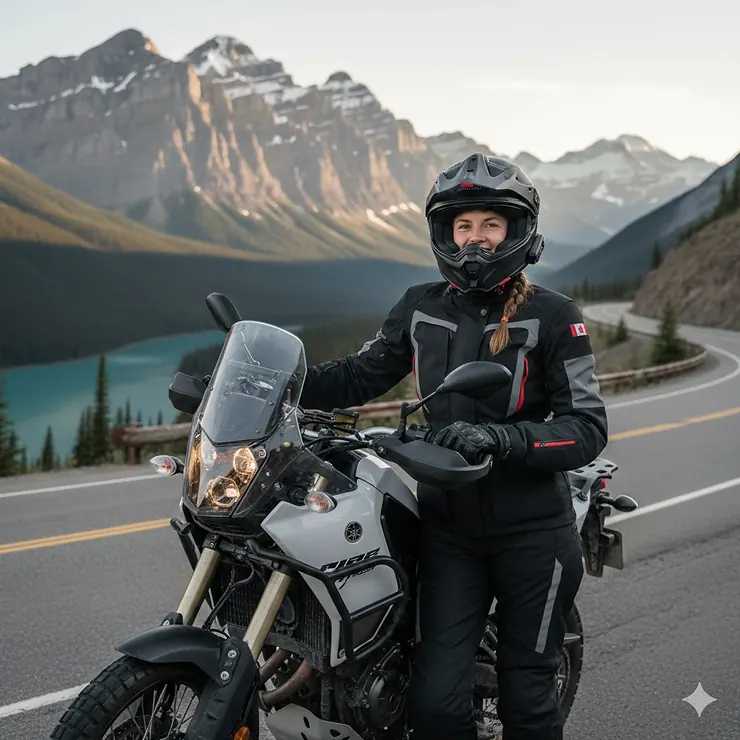
Picture this: you’re gearing up for a beautiful ride through the Canadian Rockies, but your helmet feels like wearing a bobblehead. Sound familiar? Finding the right motorcycle helmet for women isn’t just about choosing a “pretty” colour anymore. Women riders face unique challenges—from smaller head circumferences to the eternal struggle of accommodating a ponytail without creating uncomfortable pressure points.
Here’s something most people don’t realize: women’s heads and faces are anatomically different from men’s, with more vertical foreheads and flatter crowns. Yet for decades, the motorcycle industry simply slapped pink graphics on men’s helmets and called it a day. Thankfully, 2026 brings genuine innovation in feminine design aesthetics and smaller shell sizing specifically engineered for female riders across Canada.
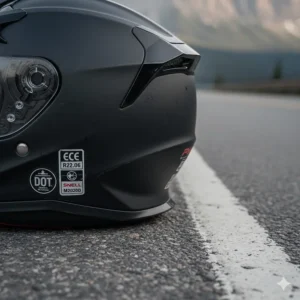
Whether you’re cruising through Toronto’s streets or tackling the Sea-to-Sky Highway in BC, your helmet needs to meet Canada’s strict safety standards—DOT, ECE, or Snell certification. All provinces require DOT-approved helmets at minimum, with some accepting ECE 22.05 or Snell M2020 standards. This guide covers everything from budget-friendly options starting at $70 CAD to premium lids exceeding $400 CAD, ensuring every Canadian woman rider finds her perfect match.
Quick Comparison Table: Top Women’s Motorcycle Helmets at a Glance
| Helmet Model | Type | Price (CAD) | Weight | Best For | Rating |
|---|---|---|---|---|---|
| ILM Full Face 317 | Full Face | $89-99 | 1,550g | Budget-conscious riders | 4.3/5 |
| HJC CL-17 | Full Face | $139-169 | 1,520g | All-around performance | 4.4/5 |
| Scorpion EXO-R420 | Full Face | $199-249 | 1,480g | Sport riders | 4.5/5 |
| Bell Qualifier DLX | Full Face | $179-229 | 1,595g | Cruiser enthusiasts | 4.3/5 |
| LS2 Valiant II | Modular | $299-349 | 1,720g | Touring riders | 4.6/5 |
| AGV K1 S | Full Face | $249-299 | 1,450g | Lightweight seekers | 4.4/5 |
| Shoei RF-SR | Full Face | $549-649 | 1,590g | Premium buyers | 4.8/5 |
💬 Just one click – help others make better buying decisions too! 😊
Top 7 Motorcycle Helmet for Women: Expert Analysis
1. ILM Full Face Motorcycle Helmet Model 317
The ILM Full Face 317 punches well above its weight class for budget-conscious Canadian riders. This DOT-approved helmet delivers surprising quality at an entry-level price point, making it perfect for new riders or those maintaining a spare helmet for passengers.
Key Specifications:
- Shell Material: Impact-resistant ABS composite
- Weight: 1,550 grams (surprisingly light for the price)
- Price Range: $89-99 CAD on Amazon.ca
Canadian buyers consistently praise its snug fit for smaller head sizes (available down to XS). The dual visor system—a clear shield plus drop-down sun visor—eliminates the need for separate sunglasses during those bright prairie rides. The removable, washable liner uses moisture-wicking fabric that handles humid Eastern Canadian summers remarkably well.
Customer Feedback: Toronto-based rider Sarah M. notes, “Finally found an XS that doesn’t look like a bucket on my head. The cheek pads are narrow enough for my face shape.”
✅ Pros:
- Exceptional value under $100 CAD
- Multiple shell sizes (not just padding differences)
- Quick-release visor mechanism
❌ Cons:
- Ventilation adequate but not exceptional
- Road noise slightly higher than premium models
2. HJC CL-17 Full Face Helmet
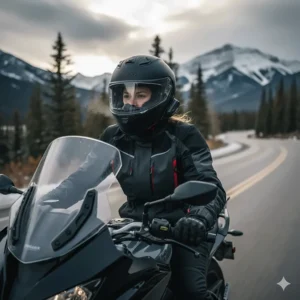
HJC’s reputation for quality at mid-range prices shines through in the CL-17. This Korean manufacturer understands that women need actual smaller shells, not just thicker padding stuffed into men’s molds.
Key Specifications:
- Shell Material: Advanced polycarbonate composite
- Weight: 1,520 grams
- Price Range: $139-169 CAD
The CL-17’s intermediate oval shape suits most Canadian women perfectly. The SilverCool interior uses advanced moisture-wicking technology—crucial for those sticky summer rides through Ontario’s humidity. HJC offers multiple cheek pad thicknesses sold separately, letting you customize the fit as the liner breaks in.
Customer Feedback: Vancouver rider Emma describes it as “comfortable enough for my 4-hour ride to Whistler without pressure points.”
✅ Pros:
- Three shell sizes across the size range
- Pinlock-ready anti-fog visor
- Excellent replacement parts availability in Canada
❌ Cons:
- Graphics options sometimes limited in XS/S sizes
- Chin curtain sold separately
3. Scorpion EXO-R420 Sport Helmet
For women who appreciate spirited riding, the Scorpion EXO-R420 delivers race-inspired features without the premium price tag. This American brand (now owned by a Korean conglomerate) has gained serious traction among Canadian sport bike enthusiasts.
Key Specifications:
- Shell Material: TCT (Thermodynamically Composite Technology) shell
- Weight: 1,480 grams
- Price Range: $199-249 CAD
The aerodynamic shell cuts through wind noise effectively—you’ll actually hear your bike’s engine character instead of buffeting at highway speeds. The Kwikwick III liner absorbs sweat faster than traditional materials, while the AirFit inflation system lets you fine-tune cheek pad pressure with a small pump on the chin bar.
Customer Feedback: Calgary rider Jessica raves, “The ponytail port at the back lets me ride comfortably without bunching my hair. Game changer!”
✅ Pros:
- Superior aerodynamics reduce neck fatigue
- Ellip-Tec II ratchet system for easy one-handed operation
- Aggressive ventilation system
❌ Cons:
- Sport-oriented fit might feel snug for touring
- Premium graphics cost $30-50 CAD more
4. Bell Qualifier DLX MIPS
American heritage meets modern safety technology in the Bell Qualifier DLX. Bell pioneered many helmet innovations, and the MIPS (Multi-directional Impact Protection System) adds a crucial layer of rotational impact protection.
Key Specifications:
- Shell Material: Lightweight polycarbonate
- Weight: 1,595 grams (MIPS adds ~40g)
- Price Range: $179-229 CAD
Research shows MIPS technology can reduce rotational forces on the brain during angled impacts—the most common type of motorcycle crashes. The magnetic Panovision shield uses tool-free removal, perfect when you need to clean it quickly at a Tim Hortons stop.
Customer Feedback: Montreal’s Marie-Claire shares, “The transition visor is perfect for those unpredictable Quebec weather changes. No more fumbling with sunglasses.”
✅ Pros:
- MIPS safety technology
- Velocity Flow ventilation moves serious air
- Excellent value for MIPS-equipped helmet
❌ Cons:
- Slightly heavier than non-MIPS alternatives
- Some riders find chin bar wider than ideal
5. LS2 Valiant II Modular Helmet
The LS2 Valiant II solves the age-old problem: how do you put on a full-face helmet without destroying your makeup or hairstyle? This modular design flips up completely, making coffee stops and gas station chats infinitely easier.
Key Specifications:
- Shell Material: KPA (Kinetic Polymer Alloy)
- Weight: 1,720 grams
- Price Range: $299-349 CAD
LS2’s Spanish engineering delivers DOT and ECE 22.06 dual certification. The drop-down sun shield deploys with a simple slider—no fumbling while riding. The emergency quick-release cheek pads are a thoughtful safety feature; paramedics can remove them quickly if needed without moving your head.
Customer Feedback: Prairie rider Samantha notes, “Being able to flip it up at red lights without removing the entire helmet is brilliant for city riding.”
✅ Pros:
- Genuine flip-front convenience
- Pinlock MaxVision visor included
- Bluetooth-ready with speaker pockets
❌ Cons:
- Heavier than comparable full-face models
- Modular mechanism adds complexity
6. AGV K1 S Helmet
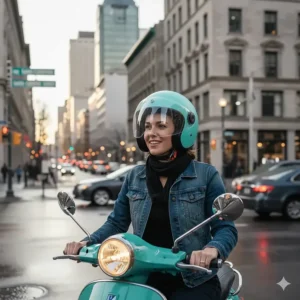
Italian design meets accessible pricing in the AGV K1 S. AGV’s racing pedigree (they protect MotoGP champions like Valentino Rossi) trickles down to this sport-touring option designed for smaller European head shapes—perfect for many Canadian women.
Key Specifications:
- Shell Material: Thermoplastic resin in 4 shell sizes
- Weight: 1,450 grams (lightest in its class)
- Price Range: $249-299 CAD
Four distinct shell sizes mean XS riders get an appropriately sized shell, not just more foam stuffing. The aerodynamic spoiler isn’t just for looks—it genuinely stabilizes the helmet at highway speeds, reducing neck strain on long rides through the Canadian prairies.
Customer Feedback: BC rider Jennifer shares, “Lightest helmet I’ve owned. After 6 hours riding to the Okanagan, my neck wasn’t screaming.”
✅ Pros:
- Exceptionally lightweight
- Micro-Lock retention system is secure yet easy
- Excellent optics through the visor
❌ Cons:
- Ventilation could be better for hot climates
- Quieter competitors available
7. Shoei RF-SR Premium Helmet
The Shoei RF-SR represents the pinnacle of Japanese helmet engineering specifically designed for sport-touring riders. Yes, it’s expensive—but Canadian riders consistently report this helmet lasting 7-10 years with proper care.
Key Specifications:
- Shell Material: Advanced Integrated Matrix (AIM+) multi-composite fiberglass
- Weight: 1,590 grams
- Price Range: $549-649 CAD
Shoei’s legendary build quality shows in every detail. The CWR-1 shield uses Shoei’s proprietary coating that resists scratching better than cheaper alternatives. The fully adjustable intake and exhaust vents create a precisely tuned airflow system—you’ll stay cool without excessive noise.
Customer Feedback: Ontario veteran rider Catherine states, “On my third Shoei over 20 years. Nothing else compares for all-day comfort.”
✅ Pros:
- Supreme comfort for extended wear
- Whisper-quiet at highway speeds
- Excellent customer service and parts availability
❌ Cons:
- Premium price point
- Replacement shields cost $80-120 CAD
✨ Don’t Miss These Exclusive Deals!
🔍 Take your motorcycle riding experience to the next level with these carefully selected helmets available in Canada. Click on any highlighted product above to check current pricing and availability on Amazon.ca. These helmets will help you ride safely and confidently across Canadian roads!
Understanding Women-Specific Helmet Design
Why Generic Helmets Don’t Work for Most Women
The motorcycle industry’s dirty little secret? For decades, manufacturers simply made helmets in smaller sizes without changing the actual shell shape. Imagine wearing shoes that are the right length but completely wrong for your foot shape—that’s what many women experience with “unisex” helmets.
Research on head anthropometry reveals significant differences. Women typically have:
- Narrower temples (by 5-8mm on average)
- More vertical foreheads (12-15 degree difference)
- Flatter crowns in the posterior region
- Smaller overall circumference (54-56cm vs. 57-59cm for men)
These differences matter tremendously. A helmet designed for a rounder male head creates pressure points on women’s temples while leaving gaps at the sides—compromising both comfort and safety. The best women’s motorcycle helmet options now feature dedicated shells in smaller sizes, not just thicker padding.
The Smaller Shell Sizing Revolution
Premium manufacturers like Shoei, Arai, and AGV now offer 3-4 distinct shell sizes. Here’s why this matters:
Traditional Approach (BAD):
- One shell for XS through L
- Thicker pads for smaller sizes
- Results in bulky, ill-fitting helmets for petite riders
Modern Approach (GOOD):
- Shell 1: XXS-XS
- Shell 2: S-M
- Shell 3: L-XL
- Shell 4: 2XL-3XL
Smaller shells reduce weight, improve aerodynamics, and crucially, position safety features correctly relative to your head. The EPS foam layer sits where it should—ready to protect your specific anatomy.
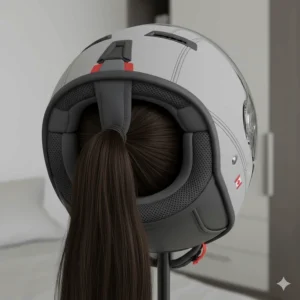
Ponytail Accommodation: Engineering That Actually Works
Let’s address the elephant in the room—or rather, the hair at the back of your head. Traditional motorcycle helmets treated long hair as an afterthought, leading to uncomfortable bunching, pressure headaches, and that awkward bulge at the base of your skull.
Modern Ponytail Solutions
Ponytail Port Systems: Brands like Scorpion and HJC now incorporate dedicated channels in the helmet’s rear. These aren’t just gaps in the padding—they’re engineered pathways that:
- Route hair comfortably down your back
- Maintain safety integrity (no compromises to impact protection)
- Accommodate various hair thicknesses and styles
Interior Cutouts: Some helmets feature recessed areas in the comfort liner specifically shaped for gathered hair. The LS2 Valiant II’s design particularly excels here, with a comfort liner that compresses around a ponytail without creating pressure points.
Pro Tips for Long-Haired Riders
Canadian rider and hair stylist Danielle from Halifax recommends: “Low ponytails work better than high ones. Position your elastic about 2cm below your occipital bone (that bump at the back of your skull). The helmet slides on easier and sits more comfortably.”
Alternative hairstyles that work well:
- French braid: Distributes hair flat against your head
- Low bun: Works with helmets featuring rear cutouts
- Twin braids: Reduce overall hair volume
- Helmet-specific products: Companies like Hightail Hair make pouches that attach to helmet interiors
Feminine Design Aesthetics: Beyond Pink and Purple
The evolution of feminine design aesthetics in motorcycle gear represents more than superficial changes. While early attempts at “women’s gear” simply applied pastel colours and flower graphics to men’s designs, modern manufacturers understand that style preferences span a sophisticated spectrum.
What Modern Women Riders Actually Want
Survey data from Canadian Women Riders Association shows:
- 38% prefer matte black or dark colours (easier to match gear)
- 27% choose bold graphic designs (expressing personality)
- 22% select solid metallics (gold, silver, bronze tones)
- 13% opt for traditional “feminine” colours and patterns
The Bell Qualifier DLX exemplifies this understanding, offering everything from aggressive carbon fiber patterns to elegant solid colours—all engineered on the same high-quality shell. You’re choosing based on aesthetics, not compromising on features.
Size and Proportion Matter
Beyond colour, feminine design aesthetics include:
Sleeker Profiles: Smaller shells naturally create more proportional looks. An XS AGV K1 S doesn’t look like its larger siblings scaled down—it’s fundamentally redesigned for visual balance.
Finishing Details:
- Softer chin bar angles that complement facial structure
- Strategically placed vents that don’t overwhelm smaller shells
- Shield curvature optimized for shorter sight lines
Canadian Safety Standards: What You Need to Know
Every province in Canada mandates helmet use, but the specific certifications accepted vary slightly. Understanding these standards protects both your safety and legal standing.
Accepted Certifications Across Canada
DOT (Department of Transportation):
- Based on U.S. FMVSS 218 standard
- Accepted in all Canadian provinces
- Tests impact absorption, penetration resistance, and retention system strength
- Self-certified by manufacturers (spot-checked by authorities)
ECE 22.05/22.06 (Economic Commission for Europe):
- Increasingly common in Canada
- More stringent testing than DOT in some areas
- Includes visor testing and peripheral vision requirements
- Considered slightly superior to DOT by many experts
Snell M2020:
- Voluntary standard from nonprofit Snell Memorial Foundation
- Historically considered most rigorous
- Recent revisions address concerns about excessive hardness
- Required by some race tracks
Provincial Variations
British Columbia: Accepts DOT, ECE, or Snell. Helmets must display proper certification labels. Police can inspect and seize non-compliant helmets.
Alberta: Same certifications accepted. Exemptions exist for Sikh riders wearing turbans.
Ontario: DOT, ECE, or Snell required. Rigorous enforcement in GTA.
Quebec: Strictest enforcement. SAAQ actively campaigns on helmet safety.
All helmets in this guide meet or exceed Canadian requirements. When purchasing, verify the certification sticker inside the helmet—it’s your legal protection.
How to Choose the Perfect Motorcycle Helmet for Women in Canada
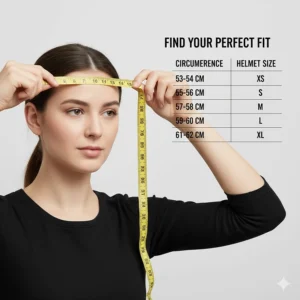
Step 1: Measure Your Head Accurately
Grab a flexible measuring tape (or string and ruler). Position it:
- 2-3cm above your eyebrows
- Across the widest part of your head (usually above the ears)
- Around the largest circumference at the back
Measure three times, use the largest measurement. Canadian women typically fall between 52-58cm circumference.
Step 2: Determine Your Head Shape
Look in a mirror from above (stand on a chair). Your head is likely:
- Long Oval: Noticeably longer front-to-back than side-to-side
- Intermediate Oval: Slightly longer than wide (most common)
- Round Oval: Nearly circular from above
Different brands cater to different shapes:
- Arai, Shoei: Long oval
- HJC, Bell: Intermediate oval
- AGV, LS2: Mix of shapes (check specific models)
Step 3: Try Before You Buy (When Possible)
Nothing beats physically trying helmets. Visit these Canadian retailers known for good selection:
National Chains:
- FortNine (locations across Canada)
- Royal Distributing (Ontario)
- Riding Gear (Edmonton)
Regional Specialists:
- Blackfoot Motorsports (Calgary)
- Deeley Harley-Davidson (Vancouver – carries diverse brands)
- Moto International (Montreal)
Step 4: The Fit Test
A properly fitted motorcycle helmet for women should:
Initial Fit:
- Require effort to put on (should feel slightly tight)
- Contact your head all around
- Not move when you shake your head vigorously
- Allow only one finger between forehead and liner
Cheek Test:
- Cheek pads should be snug but not painful
- Slight pressure that makes talking feel different is normal
- Check that you’re not biting your cheeks when jaws close
Vision Test:
- Eye port should allow you to see traffic lights directly above without tilting head
- No obstructions in peripheral vision
- Clear sight lines to mirrors
Step 5: Wear It for 20+ Minutes
Many shops accommodate this. A helmet might feel fine initially but create pressure points after 15 minutes. Canadian winters mean you’ll wear this potentially for hours—make sure it’s genuinely comfortable.
Budget Considerations: Finding Value Without Compromising Safety
Price Tiers Explained
Budget-Friendly ($70-150 CAD): Examples: ILM, YEMA, Generic brands on Amazon.ca
What You Get:
- DOT certification (essential safety baseline)
- Basic comfort liners (often not removable)
- Polycarbonate shells (heavier but protective)
- Limited ventilation systems
What You Miss:
- Advanced materials
- Multiple shell sizes
- Premium comfort features
- Long-term durability
Best For: New riders, infrequent riders, passenger helmets
Mid-Range ($150-350 CAD): Examples: HJC, Scorpion, Bell, LS2
What You Get:
- Multiple shell sizes
- Removable, washable liners
- Better ventilation systems
- Improved aerodynamics
- Often ECE certified alongside DOT
Sweet Spot: This tier offers the best balance for most Canadian riders. You’re getting 80% of premium features at 40-50% of the cost.
Premium ($350-700+ CAD): Examples: Shoei, Arai, AGV, Schuberth
What You Get:
- Advanced composite materials (carbon fiber, fiberglass)
- Exceptional noise reduction
- Superior comfort over extended wear
- Longest lifespan (7-10 years typical)
- Best warranty and customer service
Worth It If: You ride frequently (100+ hours annually), prioritize comfort, or plan to keep helmet 5+ years.
Hidden Costs to Consider
Replacement Parts:
- Shields/Visors: $30-120 CAD depending on brand
- Cheek Pads: $20-60 CAD
- Comfort Liners: $40-80 CAD
Premium brands often have better parts availability. That $200 HJC becomes more economical when replacement shields cost $35 vs. $90 for some brands.
Pinlock Anti-Fog Inserts: Essential for Canadian riding. Budget $30-50 CAD. Many mid-range and premium helmets include these; budget options rarely do.
Maintenance Tips for Canadian Conditions
Dealing with Canadian Weather Extremes
Winter Storage:
- Never store in unheated garage (extreme cold degrades EPS foam)
- Keep away from direct heat sources (furnace rooms)
- Store in breathable helmet bag, not plastic
- Ideal temperature: 10-20°C
Summer Care:
- UV exposure degrades shells and shields
- Don’t leave on bike in parking lots (use a helmet lock or take it with you)
- Clean after sweaty rides (salt damages liners faster than you’d think)
Cleaning Your Helmet Properly
Shell Cleaning:
- Warm water and mild soap only
- Never use petroleum-based cleaners (damages polycarbonate)
- Microfiber cloths prevent scratching
- Polish with automotive wax 2x/year for UV protection
Liner Care:
- Remove and hand wash monthly during riding season
- Use lingerie bag in washing machine (delicate cycle) if manufacturer allows
- Air dry completely (24-48 hours) before reinstalling
- Replace liners every 2-3 years
Shield Maintenance:
- Clean with dedicated visor cleaner or very mild soap
- Never use paper towels (microscratches accumulate)
- Replace if scratched—compromised visibility is dangerous
- Keep Pinlock insert clean (carefully remove, rinse, air dry)
When to Replace Your Helmet
Immediate Replacement Needed:
- Any impact (even if no visible damage—EPS foam compresses permanently)
- Cracks in shell
- Loose or damaged retention system
- Helmet older than manufacturer’s recommendation (typically 5-7 years from production date)
Canadian-Specific Consideration: Our temperature extremes accelerate aging. A helmet used year-round in Vancouver might last longer than one experiencing -30°C Alberta winters and +35°C summers.
Check the manufacturing date on the label inside (usually under padding). Most manufacturers recommend replacement after 5 years regardless of use.
Understanding Helmet Technology Advances in 2026
MIPS and Rotational Impact Protection
Multi-directional Impact Protection System (MIPS) addresses a crucial gap in traditional helmet safety. Standard testing focuses on linear impacts, but most crashes involve rotational forces—your head twisting upon impact.
MIPS adds a low-friction layer between the helmet and your head. During angled impacts, this layer rotates slightly (10-15mm), redirecting rotational energy away from your brain. Research indicates this can reduce rotational forces by up to 40%.
Previously only in premium helmets, MIPS now appears in mid-range options like the Bell Qualifier DLX. Expect to pay $40-60 CAD extra for MIPS-equipped variants.
Advanced Shell Materials
Polycarbonate:
- Most affordable
- Thermoplastic (molded under heat)
- Durable but heavier
- Good impact absorption
Fiberglass Composite:
- Mid-range pricing
- Lighter than polycarbonate
- Better energy dissipation through flexing and cracking
- Used in HJC, Scorpion mid-tier models
Carbon Fiber:
- Premium pricing
- Exceptionally light
- Superior strength-to-weight ratio
- Found in Shoei, Arai top models
AIM+ (Shoei’s Advanced Integrated Matrix):
- Proprietary blend of fiberglass, organic fibers, and resin
- Optimizes different fiber types in different shell zones
- Best of both worlds—light yet strong
Ventilation Innovations
Older helmets often meant choosing between airflow and noise. Modern designs solve this with:
Computational Fluid Dynamics (CFD): Manufacturers use computer modeling to optimize vent placement. The Scorpion EXO-R420’s Kwikwick III system moves air efficiently without excessive noise.
Variable Vent Controls: Adjustable intakes and exhausts let you adapt to conditions. Touring Alberta’s mountains on a spring morning? Close vents. Highway cruising in July humidity? Open everything.
Venturi Effects: Strategic shaping creates low-pressure zones that pull hot air out while minimizing turbulent noise. Premium helmets excel here—it’s one reason the Shoei RF-SR remains quiet while well-ventilated.
Common Mistakes Canadian Women Make When Buying Helmets
Mistake #1: Choosing Based on Style Alone
Yes, that helmet looks amazing. But if it doesn’t fit your head shape, you’ll never wear it comfortably. Style should be your tiebreaker between equally well-fitting options, not your primary criterion.
Mistake #2: Going Too Large “For Comfort”
Helmets break in. Those snug cheek pads will compress 15-20% after a few rides. If it feels “just right” in the store, it’ll be loose in two weeks. A proper fit should feel almost uncomfortably snug initially.
Mistake #3: Ignoring Head Shape
Your best friend swears by her Arai, but it gives you a headache after 20 minutes? You likely have different head shapes. Long oval heads in round oval helmets create temple pressure points—no amount of “breaking in” fixes this.
Mistake #4: Skimping on Features for Passengers
Buying a cheap helmet “just for passengers” seems economical until your friend suffers an injury because that $60 helmet’s retention system failed. Passenger helmets need the same quality as rider helmets.
Mistake #5: Not Considering Climate
That gorgeous full-leather interior looks premium, but leather doesn’t breathe well during Ontario’s humid summers. Moisture-wicking synthetic liners make sense for Canadian conditions.
Mistake #6: Forgetting About Eyewear Compatibility
Wear glasses or sunglasses? Some helmets have cutouts in the cheek pads for temples; others don’t. The Bell Qualifier DLX specifically accommodates eyewear—crucial detail often overlooked until you’re on the road squinting.
Frequently Asked Questions
❓ What is the best motorcycle helmet for women with small heads in Canada?
❓ How much should I expect to spend on a quality women's motorcycle helmet in Canada?
❓ Do I need a women-specific motorcycle helmet or will a unisex model work?
❓ Are modular helmets as safe as full-face helmets for women riders?
❓ How do I accommodate a ponytail with a motorcycle helmet in Canada?
Conclusion: Ride Safe, Ride Confident
Finding the perfect motorcycle helmet for women in Canada no longer means settling for ill-fitting “unisex” designs or sacrificing style for safety. The 2026 market offers genuine innovations in smaller shell sizing, feminine design aesthetics, and ponytail accommodation that respect both female anatomy and personal expression.
Whether you’re investing in the premium comfort of a Shoei RF-SR for those long rides through the Rockies, choosing the versatile LS2 Valiant II for daily commuting in Toronto, or starting your riding journey with the budget-friendly ILM Full Face 317, every helmet in this guide meets Canada’s strict safety standards while addressing women-specific fit challenges.
Remember the fundamentals: prioritize proper fit over graphics, ensure DOT/ECE certification, and replace your helmet after any impact or every 5-7 years. Your helmet is the single most important piece of safety equipment—choose wisely, fit carefully, and maintain diligently.
Canadian riding conditions are diverse—from coastal British Columbia’s rain to Prairie winds to Quebec’s temperature extremes. The right helmet makes every ride safer and more enjoyable. Now get out there and explore those incredible Canadian roads with confidence!
Recommended for You
- 7 Safest Motorcycle Helmets Canada 2026 | SHARP 5-Star Rated
- 7 Best DOT Approved Helmets Canada 2026 – Safety First Guide
- 7 Best Arai Helmet Canada Models: Expert Reviews 2026
Disclaimer: This article contains affiliate links to Amazon.ca. If you purchase products through these links, we may earn a small commission at no additional cost to you.
✨ Found this helpful? Share it with your riding friends! 💬🤗
