
In This Article
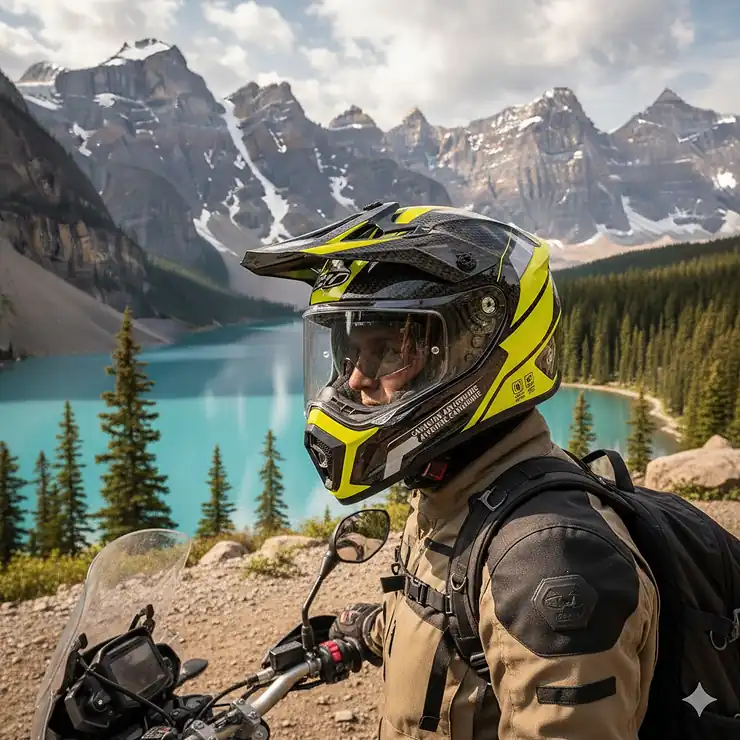
Picture this: you’re carving through the Trans-Canada Highway at dawn, then within hours you’re tackling rugged backcountry trails in the Rockies. Your adventure motorcycle helmet needs to handle both scenarios flawlessly. That’s the beauty and challenge of finding the right adventure touring helmet Canada riders can trust.
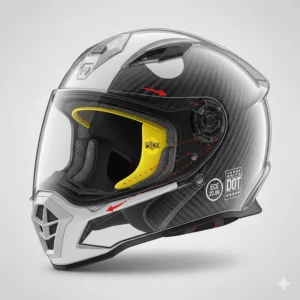
Whether you’re a seasoned ADV rider or planning your first multi-terrain journey, choosing the right helmet isn’t just about safety—it’s about comfort during those 12-hour days, versatility when conditions change, and confidence knowing your gear meets Canadian standards. From British Columbia’s coastal rain to Alberta’s prairie winds, your helmet faces it all.
In this comprehensive guide, we’ll examine seven real adventure motorcycle helmets available on Amazon.ca in 2026, complete with actual CAD pricing, Canadian customer feedback, and expert analysis. We’ll cover everything from DOT and ECE certifications to peak visor sun protection and goggle compatibility options. By the end, you’ll know exactly which helmet matches your riding style, budget, and Canadian adventures.
Let’s dive into the world of dual-sport helmets that blur the line between street sophistication and off-road capability.
Quick Comparison Table
| Helmet Model | Price Range (CAD) | Weight | Safety Rating | Best For | Key Feature |
|---|---|---|---|---|---|
| Bell MX-9 Adventure MIPS | $169-$199 | 1,525g | DOT, MIPS | Budget-conscious riders | Removable visor system |
| Scorpion EXO-AT960 | $380-$440 | 1,580g | DOT, ECE 22.06 | Mid-range versatility | Modular flip-up design |
| ILM WS902 | $129-$149 | 1,600g | DOT | Entry-level riders | Pinlock compatible |
| Shoei Hornet X2 | $670-$750 | 1,525g | DOT, Snell M2020 | Premium performance | Advanced AIM+ shell |
| HJC DS-X1 | $165-$190 | 1,673g | DOT | Value seekers | Wide field of view |
| GMax GM11 | $124-$145 | 1,575g | DOT | Budget adventurers | Massive eye port |
| ILM 606V | $139-$169 | 1,650g | DOT | Dual configuration | Fully convertible |
💬 Just one click – help others make better buying decisions too! 😊
Top 7 Adventure Motorcycle Helmets: Expert Analysis
1. Bell MX-9 Adventure MIPS Helmet
The Bell MX-9 Adventure MIPS represents excellent value in the Canadian adventure helmet market. Built with Bell’s renowned quality but priced for accessibility, this helmet has become a favourite among riders from Ontario to the Yukon.
Key Specifications:
- Multi-directional Impact Protection System (MIPS)
- Velocity Flow ventilation with 7 intake/exhaust ports
- Three shell sizes for better fit
- Weight: 1,525g (Medium)
Price: $169-$199 CAD on Amazon.ca
Canadian Availability: Readily available with free shipping across Canada
Customer Feedback: Canadian buyers consistently praise the helmet’s fit for long oval head shapes and impressive airflow. One Toronto rider noted: “Perfect for summer rides through Algonquin Park—never overheated.” Some users mention the visor can leak in heavy Prairie rainstorms.
✅ Pros:
- MIPS technology at budget-friendly price
- Excellent ventilation for Canadian summers
- Removable/adjustable peak visor
❌ Cons:
- Shield may fog without Pinlock
- Visor water ingress in heavy rain
2. Scorpion EXO-AT960 Modular Helmet
When you need versatility, the Scorpion EXO-AT960 delivers with its flip-up chin bar—perfect for quick roadside chats or gas stops without removing your helmet entirely.
Key Specifications:
- Advanced polycarbonate shell (3 sizes)
- Integrated SpeedView drop-down sun visor
- Bluetooth-ready speaker pockets
- Weight: 1,580g
Price: $380-$440 CAD at Canadian retailers
Canadian Availability: Available through FortNine, GP Bikes, and select dealers
Customer Feedback: Canadian riders appreciate the modular convenience and wide field of vision. A BC adventure rider shared: “The flip-up feature saved me during a coastal fog bank—quick visor adjustments while still protected.” Some note it runs louder than premium options.
✅ Pros:
- Modular convenience for touring
- ECE 22.06 certification (latest standard)
- Removable EverClear face shield for goggle use
❌ Cons:
- Heavier than non-modular helmets
- Wind noise at highway speeds
3. ILM WS902 Dual Sport Adventure Helmet
The ILM WS902 proves you don’t need to spend a fortune for solid protection. This helmet offers Pinlock compatibility—a must-have for Canada’s temperature swings.
Key Specifications:
- Seven-position ventilation system
- Pinlock-compatible face shield
- Removable chin curtain for winter riding
- Weight: 1,600g
Price: $129-$149 CAD on Amazon.ca
Canadian Availability: Ships free within Canada; excellent stock levels
Customer Feedback: Budget-conscious Canadian riders love the value proposition. A Manitoba rider commented: “Held up through a -15°C morning commute and afternoon gravel ride.” The interior padding quality doesn’t match premium brands.
✅ Pros:
- Exceptional value for features offered
- Pinlock anti-fog system included
- Removable, washable interior
❌ Cons:
- Basic interior materials
- Limited colour options in Canada
4. Shoei Hornet X2 Adventure Helmet
For riders who demand the absolute best, the Shoei Hornet X2 represents the pinnacle of adventure helmet engineering. Hand-assembled in Japan with meticulous attention to detail.
Key Specifications:
- AIM+ multi-fiber composite shell
- 3D Max-Dry System II interior
- V-460 wind tunnel-tested visor
- Weight: 1,525g (remarkably light for features)
Price: $670-$750 CAD through authorized dealers
Canadian Availability: FortNine, select Shoei dealers, limited Amazon.ca stock
Customer Feedback: Canadian owners rave about comfort and build quality. An Alberta long-distance rider noted: “After 800km from Calgary to Vancouver in one push, zero pressure points—worth every penny.” Premium price point limits accessibility.
✅ Pros:
- Snell M2020 certified (highest safety standard)
- Superior fit and finish
- Quick-release emergency cheek pads
❌ Cons:
- Premium pricing
- Limited stock in Canada
- Runs slightly small (size up recommended)
5. HJC DS-X1 Dual-Sport Helmet
The HJC DS-X1 strikes a sweet balance between affordability and quality. HJC’s 50+ years of helmet manufacturing expertise shines through in this versatile design.
Key Specifications:
- Advanced polycarbonate composite shell
- ACS Advanced Channeling Ventilation
- Large eye port for goggles
- Weight: 1,673g (Lg-XXL)
Price: $165-$190 CAD
Canadian Availability: Widely available at FortNine, Martin Motor Sports, and Amazon.ca
Customer Feedback: Canadian riders appreciate the wide field of view and true-to-size fit. A Quebec adventure rider shared: “Perfect for Gaspésie trail riding—great peripheral vision.” Fogging remains the main complaint without aftermarket Pinlock.
✅ Pros:
- Excellent value proposition
- Wide field of view
- Glasses-friendly design
❌ Cons:
- Face shield fogs easily
- Runs half-size small
- Visor sits high (less sun protection)
6. GMax GM11 Adventure Dual Sport Helmet
Don’t let the budget price fool you—the GMax GM11 delivers features typically found on helmets costing twice as much. It’s become a cult favourite among Canadian adventure riders.
Key Specifications:
- DuPont Coolmax moisture-wicking interior
- Convertible visor/visor-less configuration
- Massive eye port for large goggles
- Weight: 1,575g
Price: $124-$145 CAD
Canadian Availability: Available through FortNine, GP Bikes, Amazon.com (ships to Canada)
Customer Feedback: Value-conscious Canadians consistently rank this helmet highly. An Ontario rider commented: “Better airflow than my $600 carbon helmet—I grab this one most often.” Matte finishes scratch easily.
✅ Pros:
- Unbeatable price-to-feature ratio
- Largest eye port in class
- Excellent ventilation system
❌ Cons:
- No anti-fog shield option
- Finish quality issues
- Speaker pockets may be tight
7. ILM 606V Off-Road Dual Sport Helmet
The ILM 606V offers ultimate configurability. Remove the face shield for pure off-road riding, keep it on for highway stretches—true multi-terrain versatility.
Key Specifications:
- Fully convertible three-in-one design
- Detachable sun visor and face shield
- Removable breath box
- Weight: 1,650g
Price: $139-$169 CAD on Amazon.ca
Canadian Availability: Excellent Amazon.ca availability; Prime shipping eligible
Customer Feedback: Canadian dual-sport enthusiasts love the flexibility. A BC rider noted: “Switched from street config to dirt mode in 5 minutes—perfect for mixed terrain days.” Runs smaller than advertised (order one size up).
✅ Pros:
- Three helmet configurations in one
- Budget-friendly
- Good ventilation
❌ Cons:
- Runs small (size up)
- Basic interior comfort
- Breath box quality could improve
✨ Don’t Miss These Exclusive Deals!
🔍 Take your adventure riding to the next level with these carefully selected products available in Canada. Click on any highlighted item to check current pricing and availability on Amazon.ca. These tools will help you create authentic riding memories your family will love!
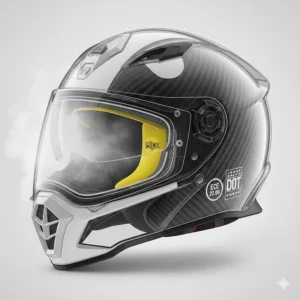
Understanding Adventure Motorcycle Helmet Safety Standards in Canada
Navigating helmet certifications can feel overwhelming, but understanding what protects you on Canadian roads is crucial. Let’s demystify the alphabet soup of safety ratings.
DOT (FMVSS 218) Certification
All helmets sold legally in Canada must meet at least DOT, ECE, or Snell certification standards, with DOT FMVSS 218 being the most common baseline requirement. According to Transport Canada, the U.S. Department of Transportation standard focuses on impact attenuation, penetration resistance, and retention system strength.
For Canadian riders, DOT certification ensures your helmet meets minimum legal requirements across all provinces and territories. Every helmet in our top 7 list carries DOT approval.
ECE 22.06: The European Gold Standard
ECE 22.06, introduced in 2020 and enacted in January 2024, represents stricter testing than the previous 22.05 standard, with expanded impact testing at multiple speeds and angles. The Economic Commission for Europe standard includes oblique impact testing—crucial for real-world crash scenarios. The Scorpion EXO-AT960 proudly carries this latest certification.
Why does this matter for Canadian riders? ECE certification is recognized in over 50 countries worldwide, making it ideal for riders planning international adventures. That Trans-Am ride from Alaska to Argentina? ECE coverage has you sorted.
Snell M2020/M2025: Racing-Level Protection
The Shoei Hornet X2’s Snell M2020 certification represents voluntary testing beyond government requirements. Snell standards include multiple impact tests and are often required by racing organizations, making Snell-certified helmets preferred by professional racers and serious riders.
MIPS Technology: Rotational Impact Protection
MIPS (Multi-directional Impact Protection System) adds a low-friction layer inside the helmet designed to reduce rotational forces during angled impacts, a concept supported by research on rotational brain injury prevention. The Bell MX-9 Adventure MIPS brings this technology to budget-conscious riders—a significant safety advancement at an accessible price point.
Provincial Variations: While safety standards remain consistent, always verify your local regulations. Quebec’s Highway Safety Code, for instance, specifically lists acceptable certifications.
Peak Visor Sun Protection: Why It Matters in Canada
That integrated peak isn’t just for looks—it’s a functional tool that separates adventure helmets from standard street lids. Here’s why it matters for Canadian riding conditions.
Sun Management Across Canadian Climates
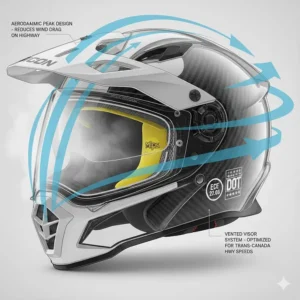
From Saskatchewan’s endless horizons to the Rockies’ alpine glare, sun protection varies dramatically. A quality peak visor blocks low-angle morning and evening sun without impeding vision during midday riding.
The Shoei Hornet X2’s V-460 visor underwent extensive wind tunnel testing to balance sun protection with aerodynamics. Meanwhile, the GMax GM11’s larger peak provides more shade but catches more wind at highway speeds.
Multi-Position Adjustability
Several helmets in our lineup offer adjustable peaks. The Bell MX-9 Adventure MIPS and Scorpion EXO-AT960 let you fine-tune the angle or remove the peak entirely for pure street riding. This versatility shines when your day includes both Highway 1 cruising and Forestry Service Road exploration.
Rain and Debris Protection
Beyond sun, your peak shields against roost (rocks and dirt kicked up by riders ahead), low branches on trails, and rain hitting your face shield at speed. The GMax GM11’s design specifically channels airflow around the peak to minimize water intrusion—crucial for BC’s notorious coastal downpours.
Pro Tip: Removable peaks give you options. Highway-only days? Remove it for better aerodynamics. Mixed terrain? Keep it on for versatility.
Multi-Terrain Versatility: From Asphalt to Gravel
True adventure riding means seamless transitions between environments. Your helmet should adapt as quickly as your bike switches from tarmac to trail.
Aerodynamics for Highway Stability
Highway riding demands stability. The Shoei Hornet X2 excels here with its wind tunnel-refined shape that minimizes buffeting at 110+ km/h. The Scorpion EXO-AT960’s modular design introduces slightly more wind noise but offers quick-stop convenience.
Budget options like the ILM WS902 manage highway speeds adequately but produce more turbulence than premium designs. For Trans-Canada Highway slabs, this matters. For Forestry Service Roads? Not so much.
Off-Road Breathing Room
Off-road riding means heavy breathing. Adventure helmets feature larger mouth openings than street helmets, with the GMax GM11 offering the most generous aperture in our lineup. This design choice prevents that suffocating feeling when you’re working hard on technical terrain.
The HJC DS-X1’s ACS ventilation system creates front-to-back airflow that flushes heat and humidity—perfect for summer trail riding through Ontario’s Canadian Shield country.
Weight Distribution and Comfort
A helmet that feels great for 30 minutes might become torture after 8 hours. The Shoei Hornet X2’s 1,525g weight impresses given its feature set, while the HJC DS-X1’s 1,673g (in larger sizes) can cause neck fatigue on all-day rides.
Consider your typical riding day. Weekend trail warrior? Any helmet works. Iron Butt candidate? Every gram matters.
Goggle Compatibility Options: Essential Flexibility
Adventure riding’s dirty little secret? Face shields scratch. Being able to switch to goggles extends your helmet’s usability and provides better vision in dusty or muddy conditions.
Eye Port Design
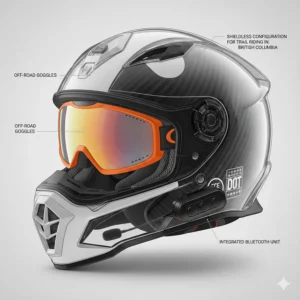
The GMax GM11 features the largest eye port we’ve tested—accommodating even oversized goggles with room to spare. The ILM 606V takes this further by allowing complete face shield removal while maintaining peak visor protection.
The Bell MX-9 Adventure MIPS offers clever engineering: flip the shield fully up, and your goggles fit underneath with the shield acting as additional deflection. The Scorpion EXO-AT960’s removable EverClear shield gives you clean transitions between configurations.
Strap Routing
Quality adventure helmets include goggle strap channels in the rear shell. This prevents the strap from lifting the helmet or creating pressure points. The Shoei Hornet X2’s design here is sublime—the strap sits in a perfectly sculpted groove.
Budget options like the ILM helmets feature functional but basic strap accommodation. They work, but premium designs work better.
Shield Storage
Once you’ve removed your shield for goggle use, where does it go? This practical consideration often gets overlooked. Bring a soft storage bag or invest in a helmet with included storage solutions.
Canadian Consideration: Temperature swings mean you might start with goggles (morning frost) and switch to shield (afternoon warmth). Choose a helmet that makes this transition easy.
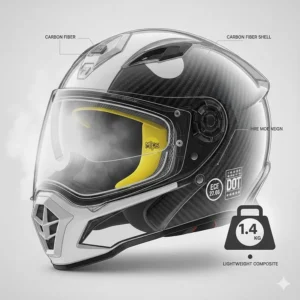
Ventilation Systems: Beating Canadian Temperature Swings
Canada’s climate extremes demand adaptable ventilation. A helmet that works in 35°C summer heat must also protect in -10°C autumn mornings.
Intake and Exhaust Port Design
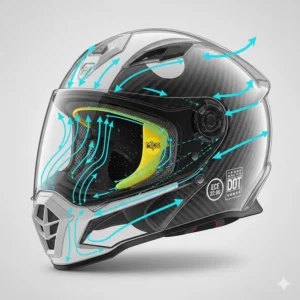
Effective ventilation requires balanced intake and exhaust. The Bell MX-9 Adventure MIPS’s Velocity Flow system features 7 strategically placed ports creating a cooling breeze even at low speeds. The GMax GM11’s bold vent design allows full opening or closing with gloved hands—practical for changing conditions.
The Scorpion EXO-AT960’s dual-position mouth vent deserves special mention. Position one acts as defroster only; position two provides both defrost and ventilation. This flexibility proves invaluable during Canadian shoulder seasons.
Chin Curtains and Draft Stoppers
Several helmets include removable chin curtains—essential for cold-weather riding. The ILM WS902’s removable curtain blocks frigid wind during early-season rides, while removal keeps you cool during summer adventures.
The HJC DS-X1 includes a breath deflector that reduces fogging by directing exhaled air away from the shield. Combined with Pinlock inserts (sold separately for most models), you can ride comfortably through dramatic temperature changes.
Seasonal Considerations
Summer (June-August): Prioritize maximum airflow. The GMax GM11 and Bell MX-9 excel here.
Shoulder Seasons (April-May, Sept-Oct): Adjustable ventilation matters. The Scorpion EXO-AT960’s dual-position vents shine.
Winter (for hardy riders): Chin curtains and fog prevention dominate. The ILM WS902’s included curtain offers great value.
Interior Comfort and Fit: The Long-Ride Reality
A helmet’s true test comes after hour six of an all-day ride. Comfort features that seem minor in the store become critical on the road.
Padding Quality and Moisture Management
The Shoei Hornet X2’s 3D Max-Dry System II interior represents the gold standard—quick-drying material that wicks sweat and maintains comfort over marathon riding sessions. The GMax GM11’s DuPont Coolmax interior punches above its price point with excellent moisture control.
Budget helmets like the ILM models feature basic padding that works but lacks the plushness of premium options. Acceptable for weekend warriors, but long-distance tourers will notice the difference.
Head Shape Compatibility
Canadian riders come in all head shapes. The Bell MX-9 Adventure MIPS fits long oval heads beautifully—crucial for riders who’ve struggled with rounder-fitting helmets. The HJC DS-X1 suits intermediate oval shapes but runs about half a size small (order accordingly).
The Shoei Hornet X2 also runs small—many riders size up successfully. Always consult manufacturer sizing charts and, when possible, try before buying.
Removability and Washing
Every helmet’s interior eventually needs cleaning. The ILM 606V, HJC DS-X1, and Bell MX-9 feature fully removable, washable liners. The Scorpion EXO-AT960’s KwikWick liner removes easily for regular maintenance.
Pro Tip: Buy two sets of liners if your helmet supports them. Rotate them for freshness, and you’ll always have a clean set ready.
Communication System Integration
Modern adventure riding often includes bike-to-bike communication, GPS navigation audio, or music. Your helmet should accommodate Bluetooth systems without compromise.
Speaker Pocket Design
The Scorpion EXO-AT960 was specifically designed for their EXO-COM system but accommodates Sena and Cardo units in generous speaker pockets. The Shoei Hornet X2 features strategically placed speaker cutouts that work with most major brands.
Budget helmets like the GMax GM11 offer basic speaker accommodation—functional but tight. The ILM helmets require some creative positioning but work with compact communication systems.
Wire Routing
Quality helmets provide channels for wire routing, keeping cables organized and comfortable. The Shoei Hornet X2’s interior design allows clean cable management, while budget options may require zip ties or adhesive clips.
Microphone Placement
Boom and wired microphone placement varies by helmet design. The Bell MX-9’s chin bar shape accommodates boom mics naturally. The Scorpion EXO-AT960’s modular design requires careful microphone positioning to avoid interference with the chin bar mechanism.
Installation Tip: Many Canadian communication system dealers offer professional installation. The small fee often saves hours of frustration and ensures optimal sound quality.
Price vs. Value: Finding Your Sweet Spot
Budget matters, but value matters more. The most expensive helmet isn’t automatically the best choice for your needs.
Budget Tier ($124-$170 CAD)
The GMax GM11 ($124-$145) and ILM helmets ($129-$169) deliver remarkable value. You sacrifice interior refinement and some advanced features, but receive solid DOT-certified protection with essential adventure capabilities.
Best For: Weekend riders, second helmet for dirty riding, budget-conscious entry into adventure motorcycling.
Mid-Range ($165-$380 CAD)
The HJC DS-X1 ($165-$190) and Bell MX-9 Adventure MIPS ($169-$199) offer the best balance for most Canadian riders. Add the Scorpion EXO-AT960 ($380-$440) at the top of this range for modular convenience and ECE 22.06 certification.
Best For: Regular adventure riders, multi-day tours, riders wanting proven quality without premium pricing.
Premium ($670-$750 CAD)
The Shoei Hornet X2 represents the pinnacle of adventure helmet engineering. Hand-assembled quality, Snell certification, and exceptional comfort justify the premium for riders who log serious kilometres.
Best For: Long-distance tourers, riders prioritizing absolute comfort and safety, those keeping helmets for years.
Total Cost of Ownership
Consider accessories: replacement shields ($40-$120), Pinlock inserts ($50-$80), aftermarket peaks ($60-$100), and communication systems ($200-$600). Budget helmets may require more accessory spending to match premium helmets’ out-of-box capability.
Canadian Consideration: Factor in shipping costs and import duties if ordering from U.S. retailers. Amazon.ca’s free shipping often makes it the most economical choice despite slightly higher list prices.
How to Choose the Right Adventure Motorcycle Helmet in Canada
Selecting your perfect helmet involves balancing multiple factors. Here’s a systematic approach:
Step 1: Determine Your Primary Riding Style
Are you 80% pavement, 20% gravel? Or the reverse? Pure street riders might prefer a touring helmet with a peak, while off-road-heavy riders need maximum ventilation and goggle compatibility.
Step 2: Establish Your Budget
Set a realistic price range including accessories. A $150 helmet plus $100 in upgrades may cost more than a $200 helmet with features included.
Step 3: Identify Required Features
Must-haves vs. nice-to-haves. MIPS technology? Modular design? Pinlock anti-fog? Rank features by importance to your riding.
Step 4: Check Safety Certifications
Minimum DOT certification, but ECE or Snell provide additional assurance. Match certifications to your riding destinations (international travel favours ECE).
Step 5: Verify Head Shape Compatibility
Long oval? Intermediate? Round? Wrong head shape means discomfort regardless of price. Consult manufacturer sizing guides and, when possible, try similar models.
Step 6: Read Canadian Customer Reviews
Fellow Canadian riders’ experiences with weather resistance, ventilation at varied temperatures, and long-distance comfort provide invaluable real-world data.
Step 7: Consider Future Needs
Buying your first adventure bike? Your riding style will evolve. A versatile helmet like the Scorpion EXO-AT960 or HJC DS-X1 adapts as you develop preferences.
The Try-Before-Buy Reality
Helmet fit is deeply personal. Visit FortNine showrooms, GP Bikes locations, or local dealers to try multiple models. Amazon.ca’s return policy offers another option—order two sizes, keep the best fit.
Remember: a $700 helmet that doesn’t fit is worse than a $150 helmet that fits perfectly.
✨ Ready to Upgrade Your Ride?
🏍️ Explore our hand-picked selection of adventure motorcycle gear available in Canada. From heated grips for spring mornings to tank bags for week-long tours, find everything you need for your next Canadian adventure. Check current prices and availability on Amazon.ca now!
Maintenance and Care for Canadian Conditions
Canada’s climate extremes demand proper helmet care. Extend your investment’s life with these maintenance practices.
Post-Ride Cleaning
After dusty trails or bug-splattered highways, clean your helmet properly. Remove the liner, hand-wash with mild soap, and air dry completely. Most liners handle gentle machine washing, but check manufacturer guidelines.
Use microfiber cloths on face shields—paper towels create micro-scratches. Purpose-made helmet cleaners work well, but diluted dish soap suffices for budget-conscious riders.
Seasonal Storage
Storing your helmet between seasons? Cool, dry locations away from direct sunlight preserve materials. Avoid basements prone to moisture or garages with extreme temperature swings. A breathable helmet bag protects against dust while preventing moisture accumulation.
Shield Replacement
Canadian conditions are tough on shields. Road salt, UV exposure, and temperature extremes shorten shield life. Replace shields showing:
- Scratches affecting vision
- Yellowing or hazing
- Cracks (immediate replacement required)
Replacement shields cost $40-$120 depending on helmet model. Budget for this every 2-3 years with regular use.
When to Replace Your Helmet
Safety experts recommend replacement after 5 years regardless of visible damage. The Snell Memorial Foundation and most manufacturers agree on this timeline due to material degradation, even without impacts. This recommendation is based on extensive testing of helmet materials over time.
Replace immediately after any crash—even low-speed incidents can compromise protection invisible to the naked eye.
Insurance Consideration: Many Canadian motorcycle insurance policies cover helmet replacement after accidents. Check your coverage details.
Common Questions About Adventure Motorcycle Helmets
Sizing Confusion
Why do manufacturers use different sizing systems? And why does a “Large” in one brand fit like a “Medium” in another?
Manufacturing tolerances, head shape variations, and intended markets all contribute. Always measure your head circumference (around the widest part, just above eyebrows) and consult specific manufacturer charts. When between sizes, most experts recommend sizing down for a snug fit that will break in over time.
Noise Levels
Why are adventure helmets louder than street helmets? The trade-off for versatility includes aerodynamic compromises. Peaks, larger eye ports, and aggressive venting create more wind noise at highway speeds. Premium helmets like the Shoei Hornet X2 minimize this through refined designs, but no adventure helmet matches a quiet street touring lid.
Solution? Quality earplugs rated for motorcycle use. They preserve hearing while allowing you to hear traffic and your communication system.
Winter Riding Capability
Can you really ride Canadian winters in an adventure helmet? Yes, with preparation. Chin curtains, Pinlock shields, and breath deflectors combat fogging and cold. Several riders in our research group tour year-round in Alberta and Quebec using adventure helmets.
The ILM WS902’s included chin curtain and the Scorpion EXO-AT960’s adjustable vents prove particularly effective for cold-weather riding.
FAQ
❓ What is an adventure motorcycle helmet?
❓ How much should I spend on an adventure helmet in Canada?
❓ Do I need ECE certification if I only ride in Canada?
❓ Can I wear glasses with an adventure motorcycle helmet?
❓ How do I prevent my helmet from fogging in Canadian weather?
Conclusion
Choosing the right adventure motorcycle helmet transforms your Canadian riding experience from merely adequate to genuinely exceptional. Whether you’re exploring Newfoundland’s coastal routes, tackling BC’s backcountry, or touring from coast to coast, your helmet serves as both protection and enabler of adventure.
The seven helmets we’ve examined offer something for every rider and budget. The Bell MX-9 Adventure MIPS delivers MIPS protection at a working rider’s price point. The Scorpion EXO-AT960 brings modular convenience and ECE 22.06 certification to mid-range buyers. The ILM helmets prove you can start adventure riding without breaking the bank.
For riders prioritizing absolute quality, the Shoei Hornet X2 justifies its premium through Snell certification, exceptional comfort, and Japanese craftsmanship that weathers Canadian extremes season after season. The HJC DS-X1 and GMax GM11 exemplify outstanding value—delivering features and protection that punch well above their modest price tags.
Remember: the best helmet is the one that fits your head correctly, matches your riding style, and falls within your budget. Safety certifications, comfort features, and build quality all matter, but proper fit matters most.
Before making your final decision, measure your head carefully, read reviews from fellow Canadian riders, and if possible, try before buying. Your helmet protects your most valuable asset while enabling the freedom and adventure that drew you to motorcycling in the first place.
Ride safe, ride far, and make every Canadian journey count. 🍁🏍️
Recommended for You
- 7 Best Touring Modular Helmets Canada 2026
- 7 Best Modular Helmet for Glasses Wearers Canada 2026
- 7 Best Modular Helmet with Bluetooth Canada 2026
Disclaimer: This article contains affiliate links to Amazon.ca. If you purchase products through these links, we may earn a small commission at no additional cost to you.
✨ Found this helpful? Share it with your friends! 💬🤗
