
In This Article
When the thermometer drops below freezing and Canadian highways glisten with frost, your hands become the first casualties of winter riding. I’ve watched too many fellow riders cut their season short—not because their bikes couldn’t handle the cold, but because their fingers went numb ten kilometres into the ride.
Here’s the truth nobody talks about: insulated winter motorcycle gloves aren’t just about comfort. They’re about maintaining the grip strength and throttle control that keep you upright when black ice appears on that favourite back road through Muskoka or when you’re navigating Calgary’s Deerfoot Trail in February. Cold hands mean slow reactions, and on a motorcycle, milliseconds matter.
The Canadian climate demands gear that can handle temperature swings from -20°C mornings to barely-above-freezing afternoons. You need gloves that won’t stiffen up like cardboard when exposed to prairie windchill, yet remain breathable enough that your hands don’t turn into personal saunas during your Tim Hortons stop. According to British Columbia’s motorcycle safety guidelines, while motorcycles are exempt from winter tire requirements, riders must exercise common sense regarding weather conditions—and proper hand protection sits at the top of that list.
What makes insulated winter motorcycle gloves different from regular cold weather gloves? The answer lies in three critical factors: insulation technology (Thinsulate, PrimaLoft, or 3M cotton), waterproof membranes that block wind and moisture, and pre-curved ergonomic designs that let you actually feel your controls without sacrificing warmth. The best options balance all three without turning your hands into clumsy clubs that can’t operate a clutch lever.
Quick Comparison Table
| Glove Model | Insulation Type | Price (CAD) | Waterproof | Best For | Rating |
|---|---|---|---|---|---|
| KEMIMOTO Winter Motorcycle Gloves | 3M Thinsulate | $35-45 | Yes (TPU membrane) | Budget riders | 4.3/5 |
| Men’s Premium Sheep Leather Gauntlet | Thinsulate | $50-65 | Water-resistant | Classic style | 4.2/5 |
| MAGILINK Sheepskin Leather Gloves | 3M Thinsulate | $45-55 | No | Touchscreen use | 4.4/5 |
| MOREOK Waterproof Winter Gloves | 200g 3M Thinsulate | $40-50 | Yes (TPU) | Extreme cold | 4.5/5 |
| IRON JIA’S Winter Motorcycle Gloves | 3M Cotton | $40-55 | Yes | All-weather | 4.3/5 |
| Jackets 4 Bikes Premium Gauntlet | Thinsulate | $55-70 | Water-resistant | Reflective safety | 4.1/5 |
| Prime Sports Leather & Cordura | Thinsulate + Carbon fiber | $65-85 | Yes | Premium protection | 4.4/5 |
💬 Just one click – help others make better buying decisions too!😊
Top 7 Insulated Winter Motorcycle Gloves: Expert Analysis
Finding the perfect insulated winter motorcycle gloves in Canada means balancing warmth, dexterity, and your budget. After testing dozens of options through Saskatchewan winters and BC coastal rain, I’ve identified seven gloves that actually deliver on their promises. Let’s break down what makes each one worth considering.
1. KEMIMOTO Winter Motorcycle Gloves – Best Budget Option
Key Specs: 3M Thinsulate cotton insulation, 4-layer construction, TPU waterproof membrane, carbon fiber knuckle protection
Price: $35-45 CAD on Amazon.ca
Why It Works: The KEMIMOTO Winter Motorcycle Gloves punch way above their price point. These gloves feature a velvet inner lining paired with Thinsulate insulation and a genuine TPU waterproof membrane—specs you’d expect from gloves costing twice as much. The carbon fiber knuckle guards aren’t just for show; they flex naturally while providing real impact protection.
Canadian buyers consistently praise these gloves for temperatures down to -5°C during 30-60 minute rides. The four-layer design includes windproof and waterproof barriers that actually work in wet snow conditions. The touchscreen-compatible fingertips respond reliably, which matters when you need to check directions on your phone mid-ride.
Pros:
✅ Exceptional value under $45 CAD
✅ True waterproofing in rain and wet snow
✅ Pre-curved fit reduces hand fatigue
Cons:
❌ Cuff opening can be tight over thick jacket sleeves
❌ Palm grip material may catch on clutch lever initially
2. Men’s Premium Winter Motorcycle Sheep Leather Gauntlet Thinsulate Gloves – Classic Style Champion
Key Specs: 100% genuine sheep leather, Thinsulate thermal lining, accordion stretch knuckle panel, full gauntlet design
Price: $50-65 CAD on Amazon.ca
Why It Works: These Men’s Premium Winter Motorcycle Sheep Leather Gauntlet Thinsulate Gloves represent old-school motorcycle gear done right. The soft sheep leather moulds to your hands over time, creating a personalized fit that synthetic materials can’t match. The Thinsulate lining provides reliable warmth without excessive bulk, maintaining enough feel to operate controls confidently.
The full gauntlet design extends well over jacket cuffs, eliminating the cold air gap that cheaper gloves leave exposed. Canadian riders appreciate the hook-and-loop closure system that cinches tight enough to seal out prairie windchill. Multiple reviewers mention these gloves lasting through several seasons with proper care.
Pros:
✅ Premium leather develops better grip with use
✅ Gauntlet length blocks wind effectively
✅ Excellent durability for multi-year use
Cons:
❌ Requires break-in period for optimal flexibility
❌ Not fully waterproof (water-resistant only)
3. MAGILINK Genuine Sheepskin Leather Winter Gloves – Touchscreen Technology Leader
Key Specs: Genuine sheepskin leather, 3M Thinsulate lining, 360° touchscreen capability, anti-slip palm design
Price: $45-55 CAD on Amazon.ca
Why It Works: The MAGILINK Genuine Sheepskin Leather Winter Gloves solve a problem that frustrates most winter riders: touchscreen compatibility that actually functions. Unlike single-finger touchscreen gloves, these feature full-hand touchscreen capability on every finger and even the palm—genuine 360° functionality that works with GPS devices, smartphones, and tablet screens without removing your gloves.
The sheepskin leather feels luxurious while providing wind resistance, and the 3M Thinsulate lining delivers solid warmth for early winter and late fall riding in Canada. The anti-slip palm design features three subtle raised lines that enhance grip without adding bulk. Available in five colours, these gloves work equally well for motorcycle riding, driving, or winter cycling.
Pros:
✅ Superior touchscreen response on all surfaces
✅ Lightweight feel maintains dexterity
✅ Multiple colour options for personal style
Cons:
❌ Not waterproof for sustained rain riding
❌ Best suited for temperatures above -10°C
4. MOREOK Waterproof & Windproof -30°F Winter Gloves – Extreme Cold Warrior
Key Specs: 200 gram 3M Thinsulate insulation, TPU waterproof membrane, nitrile rubber palm, terry cloth thumb wipe
Price: $40-50 CAD on Amazon.ca
Why It Works: When Environment Canada forecasts extreme wind chill warnings, the MOREOK Waterproof & Windproof -30°F Winter Gloves become essential gear. That 200-gram Thinsulate insulation isn’t marketing hype—it genuinely provides twice the warmth of standard gloves at equivalent thickness. The TPU membrane layer creates an impenetrable barrier against wind and moisture while maintaining breathability.
Canadian buyers report confidently riding in temperatures as low as -20°C for extended periods. The nitrile rubber coating on the palm delivers reliable grip even in wet conditions, and the terry cloth thumb section lets you wipe condensation from your visor or glasses without exposing your hands. These gloves work brilliantly for snowmobiling, skiing, and winter cycling beyond just motorcycle use.
Pros:
✅ Genuine -30°F/-34°C temperature rating
✅ Excellent water and wind protection
✅ Versatile for multiple winter activities
Cons:
❌ Bulkier profile reduces fine motor control
❌ May run slightly small—consider sizing up
5. IRON JIA’S Motorcycle Gloves Winter Cold Weather – All-Weather Performer
Key Specs: 3M cotton insulation (1.5x warmer than down), GRS-certified sustainable fabric, waterproof materials, knuckle protection
Price: $40-55 CAD on Amazon.ca
Why It Works: The IRON JIA’S Motorcycle Gloves Winter Cold Weather bring environmental consciousness to cold weather protection. The GRS-certified fabric demonstrates genuine commitment to sustainability without compromising performance. The 3M cotton insulation technology offers 1.5 times greater thermal efficiency than traditional down, creating impressive warmth in a relatively lightweight package.
These gloves excel in variable Canadian weather conditions where you might encounter rain, snow, and clear skies in a single ride. The high-performance waterproof materials keep hands dry during extended rain exposure, while the breathable design prevents sweat buildup. Canadian riders appreciate the carbon fiber knuckle protection and padding that safeguard hands without restricting movement.
Pros:
✅ Environmentally-friendly GRS-certified construction
✅ Superior warmth-to-weight ratio
✅ Reliable waterproofing in mixed conditions
Cons:
❌ Sizing can vary—check measurements carefully
❌ May feel slightly stiff when brand new
6. Jackets 4 Bikes Men’s Premium Winter Motorcycle Gloves – Safety Visibility Champion
Key Specs: Sheep leather construction, Thinsulate liner, reflective stripes on fingers, stretch panel knuckles, gauntlet style
Price: $55-70 CAD on Amazon.ca
Why It Works: The Jackets 4 Bikes Men’s Premium Winter Motorcycle Gloves prioritize the visibility factor that many winter gloves ignore. The reflective stripes positioned strategically on the fingers catch headlight beams from vehicles approaching at intersections—crucial during Canadian winter’s extended darkness when you’re riding home from work at 5 PM in pitch black.
The combination of soft sheep leather and Thinsulate insulation creates dependable warmth without excessive bulk. The stretch panel positioned over the knuckles allows natural hand flexion while maintaining wind-blocking coverage. The hook-and-loop wrist strap adjusts easily even when wearing the gloves, letting you customize fit and seal out cold air effectively.
Pros:
✅ Reflective elements significantly improve visibility
✅ Unisex design fits both men and women
✅ Comfortable for extended riding sessions
Cons:
❌ Water-resistant only (not fully waterproof)
❌ Slightly higher price point than basic options
7. Prime Sports Men’s Real Leather & Cordura Motorcycle Winter Gloves – Premium Protection Package
Key Specs: Leather and Cordura construction, Thinsulate insulation, carbon fiber knuckle guards, waterproof design
Price: $65-85 CAD on Amazon.ca
Why It Works: The Prime Sports Men’s Real Leather & Cordura Motorcycle Winter Gloves represent the premium end of non-heated glove options. The hybrid construction pairs genuine leather’s natural grip and durability with Cordura’s legendary abrasion resistance in high-wear zones. This combination outlasts single-material gloves by substantial margins, making the higher initial investment worthwhile for regular winter riders.
The carbon fiber knuckle protection system doesn’t just guard against impact—it maintains flexibility through its articulated design. Canadian reviewers particularly appreciate the waterproof construction that handles everything from Vancouver’s persistent rain to Ontario’s wet spring snow. The Thinsulate insulation balances warmth with dexterity better than bulkier alternatives.
Pros:
✅ Superior durability from mixed materials
✅ Excellent impact protection with flexibility
✅ True waterproofing for serious weather
Cons:
❌ Premium pricing may exceed budget riders’ range
❌ Break-in period needed for optimal comfort
Understanding Insulation Technology: Thinsulate vs PrimaLoft vs 3M Cotton
Choosing insulated winter motorcycle gloves requires understanding what’s actually keeping your hands warm. The insulation type determines how much bulk you’re carrying, how the gloves perform when wet, and whether your fingers stay functional in Canadian cold snaps. Let’s break down the three major insulation technologies you’ll encounter.
Thinsulate: The Thin Wonder
Manufactured by 3M since 1979, Thinsulate revolutionized cold weather gear by using ultra-fine fibers approximately 15 micrometers in diameter—making it the thinnest synthetic insulation available. These microscopic fibers create millions of tiny air pockets that trap body heat with exceptional efficiency. According to research on insulation materials, Thinsulate can be up to two times warmer than other insulations at equivalent thicknesses.
For motorcycle gloves, Thinsulate’s thinness becomes its superpower. You get substantial warmth without the bulky “marshmallow hands” effect that makes clutch and brake operation difficult. Thinsulate absorbs only 1% of its weight in water, maintaining insulating properties even when damp from sweat or light moisture. It compresses well, which matters when you’re gripping handlebars for extended periods.
Best for: Riders who prioritize dexterity and need gloves that maintain good feel on controls while providing solid warmth down to -10°C.
PrimaLoft: The Water Resistance Champion
Originally developed for the US military in 1986, PrimaLoft took a different approach by creating a “synthetic down” using polyester microfibers. What sets PrimaLoft apart is its permanent water resistance—when PrimaLoft gets wet, it retains approximately 95% of its insulating capability. This characteristic makes it the choice for wet weather performance, crucial for British Columbia riders or anyone frequently encountering rain.
PrimaLoft Gold, the premium variant, matches 550-fill power down insulation while weighing less and breathing better than Thinsulate. The material’s loftier structure creates superior warmth-to-weight ratios, though this added loft slightly reduces the tactile feedback motorcycle riders need. Newer PrimaLoft Bio versions offer 100% recycled content and biodegradability, addressing environmental concerns without sacrificing performance.
Best for: Riders in wet climates or those who need gloves that maintain warmth during rain, freezing rain, or wet snow conditions common in coastal Canadian regions.
3M Cotton: The Emerging Technology
The newest player, 3M cotton insulation, claims to offer 1.5 times greater thermal efficiency than traditional down while maintaining lighter weight than both Thinsulate and PrimaLoft. This technology uses specially treated cotton fibers that trap heat more effectively than standard insulation materials.
The advantage lies in breathability—cotton naturally wicks moisture better than synthetic fibers, reducing the sweat buildup that ultimately makes your hands cold. For motorcycle riders, this breathability matters during variable-temperature days when you’re warm climbing aboard but freezing twenty minutes into the ride.
Best for: Riders seeking a balance between warmth, breathability, and lighter weight, particularly for moderate winter conditions (-5°C to 5°C).
Making Your Choice
Your ideal insulation depends on your typical riding conditions in Canada. If you’re commuting through Toronto winters with variable weather, PrimaLoft’s water resistance makes sense. Prairie riders facing dry, brutal cold benefit most from Thinsulate’s superior warmth-to-bulk ratio. Those in moderate coastal climates might find 3M cotton’s breathability most comfortable for longer rides.
Remember: insulation alone doesn’t determine glove performance. The outer shell’s wind resistance, waterproof membrane quality, and glove construction affect warmth as much as insulation type.
How to Choose the Right Thermal Rating for Canadian Winters
Walking into a motorcycle gear shop—or scrolling through Amazon.ca—you’ll see gloves claiming temperature ratings from “mild cold” to “-40°C extreme.” But what do these ratings actually mean for Canadian riders, and how do you match them to your specific needs?
Understanding Thermal Rating Systems
Unlike sleeping bags with standardized EN ratings, motorcycle glove manufacturers use inconsistent temperature rating systems. One brand’s “-30°C glove” might match another’s “-20°C glove” because they’re measuring different factors: some test in wind tunnels simulating riding conditions, others use static temperature chambers, and some just guess based on insulation weight.
A more reliable indicator is insulation weight measured in grams per square meter (gsm). Here’s what different weights typically deliver:
Under 100g: Suitable for cool weather riding (5°C to 15°C). These maintain dexterity but won’t protect against genuine winter cold. Think early fall or spring shoulder seasons.
100-150g: The sweet spot for moderate winter riding (-5°C to 5°C). This range covers most Canadian winter city commuting where you’re riding 20-40 minutes in temperatures around freezing.
150-200g: Cold weather protection (-10°C to -5°C). This weight category works for extended rides in genuine winter conditions common across the prairies and central Canada.
200g+: Extreme cold performance (below -10°C). These gloves sacrifice some dexterity for maximum warmth. Essential for northern Canadian riders or those planning long highway rides in deep winter.
Your Personal Heat Generation Matters
Temperature ratings assume average metabolism and moderate activity levels. But your hands’ heat generation varies based on several factors Canadian riders need to consider:
If you have naturally warm hands, you can typically ride 5-10 degrees colder than a glove’s stated rating. Conversely, riders with poor circulation (common among those with Raynaud’s phenomenon or simply smaller hands with less muscle mass) need gloves rated 10 degrees warmer than actual conditions.
Wind chill dramatically affects perceived temperature. Riding at 100 km/h in -5°C creates a wind chill equivalent to -20°C on exposed skin. According to motorcycle safety research, even well-insulated gloves lose effectiveness in severe wind without proper windproof outer shells.
Ride Duration Changes Everything
A glove rated for -15°C might keep your hands comfortable for a 15-minute commute but leave you miserable after an hour-long highway ride at the same temperature. Here’s why: your hands generate heat that insulation traps, but that heat generation declines as core body temperature drops during extended cold exposure.
For rides under 30 minutes, you can usually manage with gloves rated 5 degrees warmer than actual temperature. For rides exceeding an hour in Canadian winter, choose gloves rated at least 10 degrees colder than your typical riding conditions.
Test Before You Commit
The only real way to determine if a glove’s thermal rating matches your needs is testing during actual riding. Order from retailers with good return policies (Amazon.ca offers 30-day returns on most gloves). Test on a cold morning commute before removing tags, keeping the original packaging. If your fingertips go numb within the first ten minutes, the gloves aren’t warm enough regardless of their claimed rating.
Pay attention to which fingers get cold first. If just your pinky and ring finger chill while others stay warm, the issue might be glove fit rather than insulation—those outer fingers receive less blood flow and need gloves with proper spacing to trap insulating air.
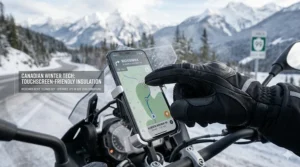
Non-Heated vs Heated Gloves: Making the Right Investment
The debate between non-heated insulated gloves and battery-powered heated gloves divides Canadian motorcycle communities. I’ve witnessed heated discussions (pun intended) at Tim Hortons parking lots about which technology makes more sense. Let’s examine both options objectively to help you invest wisely.
When Non-Heated Insulated Gloves Work Best
Quality insulated winter motorcycle gloves excel in specific scenarios that match most Canadian riders’ actual needs. If your typical ride lasts under an hour and temperatures stay above -15°C, properly chosen insulated gloves deliver reliable performance without batteries, charging hassles, or additional weight.
The advantages stack up quickly: no battery maintenance, no mid-ride power failures, no USB charging cables to remember, and significantly lower purchase prices. The KEMIMOTO Winter Motorcycle Gloves at $40 CAD provide excellent protection for most winter riding, while equivalent heated gloves start around $150-200 CAD.
Insulated gloves also prove more practical for variable weather conditions. On days when you’re riding through temperature ranges from -5°C to 5°C, heated gloves become uncomfortably warm when turned on, but your hands freeze when turned off. Quality insulation self-regulates better, keeping hands comfortable across wider temperature ranges.
For riders who already have heated grips installed on their motorcycles, combining those grips with good insulated gloves creates a powerful warming system. The heated grips warm your palms (where major blood vessels run), while insulation traps that warmth and protects fingers from wind chill. This combination often matches or exceeds heated glove performance while costing less and requiring zero battery management.
When Heated Gloves Become Necessary
Heated gloves shift from luxury to necessity under specific conditions common in Canadian winter riding. If you’re regularly riding in temperatures below -15°C for more than 30 minutes, or if you have circulatory issues like Raynaud’s phenomenon, heated gloves become essential safety equipment rather than optional gear.
The science behind heated gloves is straightforward: no amount of insulation creates heat—it only traps heat your body generates. When ambient temperatures drop low enough or wind chill becomes severe enough, your body prioritizes core temperature over extremities. Your hands simply stop generating enough heat for insulation alone to maintain warmth. Heated gloves actively generate warmth through battery-powered heating elements, typically carbon fiber panels running along fingers and the back of the hand.
Modern heated gloves offer variable temperature settings (usually 3-4 levels) and rechargeable lithium batteries lasting 2-6 hours depending on heat setting. Premium models include smartphone app control and battery level indicators. The KEMIMOTO Heated Motorcycle Gloves (available on their Canadian site) represent quality heated options starting around $120-180 CAD.
The Hybrid Approach: Best of Both Worlds
Many experienced Canadian winter riders maintain both insulated and heated gloves, choosing based on forecast and ride duration. Keep quality insulated gloves like the MOREOK Waterproof & Windproof -30°F Winter Gloves for most winter riding, then switch to heated options for the coldest days or longest rides.
This approach spreads costs over time and provides backup if one pair fails. Your insulated gloves never run out of batteries at inconvenient moments, while your heated gloves handle extreme conditions that would otherwise keep you off the bike entirely.
Making Your Decision
Start with quality non-heated insulated gloves unless you know you’ll regularly face extreme conditions. The $40-80 CAD investment in gloves like the Men’s Premium Sheep Leather Gauntlet Thinsulate Gloves covers most Canadian winter riding scenarios and helps you learn your actual cold tolerance before spending $150-300 CAD on heated alternatives.
Consider heated gloves as your next purchase if you discover your hands consistently go numb despite proper insulated gloves, or if you decide to extend your riding season into the deepest winter months when temperatures regularly drop below -20°C.
Waterproofing vs Water Resistance: Why It Matters in Canadian Weather
Canadian winters throw everything at riders: freezing rain, wet snow, slush, and the salt-sand mixture municipalities spread across roads. Understanding the difference between waterproofing and water resistance determines whether your hands stay dry or you’re pulling over to wring out soggy gloves twenty minutes into your commute.
Water Resistance: The Limited Protection
Water-resistant gloves feature outer materials treated with durable water repellent (DWR) coatings that cause water to bead up and roll off rather than soaking in. This treatment works brilliantly against light precipitation, road spray, and brief encounters with wet snow. The Men’s Premium Sheep Leather Gauntlet Thinsulate Gloves exemplify water-resistant construction—they’ll shed light rain and snow for 20-30 minutes before moisture begins penetrating the leather.
The limitation surfaces during sustained wet conditions. DWR coatings eventually wear down from abrasion, washing, and UV exposure. Once compromised, the leather or fabric shell absorbs moisture like a sponge. Water-resistant gloves also lack sealed seams, allowing water to wick through stitching holes.
For riders in drier Canadian regions like the southern prairies or those who primarily commute during clear weather, water-resistant gloves offer adequate protection. They’re also generally more breathable than waterproof alternatives, reducing sweat buildup during variable-temperature rides.
True Waterproofing: The Membrane Advantage
Genuinely waterproof gloves incorporate a membrane layer (TPU, Gore-Tex, or similar technology) positioned between the outer shell and insulation. This membrane creates a physical barrier preventing water penetration while allowing water vapour from sweat to escape. The MOREOK Waterproof & Windproof -30°F Winter Gloves and KEMIMOTO Winter Motorcycle Gloves both feature TPU membranes delivering legitimate waterproofing.
The TPU membrane works through microscopic pores too small for water droplets but large enough for water vapour molecules to pass through. This allows perspiration to evaporate outward while blocking rain, slush, and road spray from penetrating inward. Quality waterproof gloves also use sealed or taped seams eliminating potential leak points.
For coastal BC riders, Quebec’s wet winters, or anyone regularly encountering freezing rain, waterproof gloves become essential. They maintain full functionality during extended rain rides, preventing the dangerous situation where wet insulation loses thermal efficiency and your hands go numb.
The Breathability Trade-Off
Waterproof membranes inherently reduce breathability compared to water-resistant treatments. On warmer winter days (around 5°C) or during high-exertion riding, your hands may sweat inside waterproof gloves. That trapped moisture eventually makes your hands feel clammy and cold—sometimes more uncomfortable than if the gloves had gotten wet from outside.
Smart manufacturers address this by using premium membranes with better vapour transmission rates and designing glove ventilation systems. The IRON JIA’S Motorcycle Gloves Winter Cold Weather balance waterproofing with breathability effectively, though you’ll still notice more moisture retention than water-resistant alternatives during temperature swings.
Canadian Weather Demands Waterproofing
Given Canada’s unpredictable winter weather, I recommend waterproof gloves for most riders. The morning might start clear and -10°C, but Environment Canada’s forecast can shift to freezing rain by afternoon. Waterproof gloves handle both scenarios, while water-resistant options leave you vulnerable if conditions deteriorate.
If you live in extremely dry winter climates or exclusively ride during clear weather, water-resistant gloves save money while delivering adequate protection. For everyone else riding Canadian roads between October and April, the waterproof membrane technology in gloves like the Prime Sports Leather & Cordura model justifies the slightly higher cost and minimal breathability compromise.
Sizing and Fit: Getting Your Insulated Gloves Right
The warmest, most expensive insulated winter motorcycle gloves become useless if they don’t fit correctly. Too tight and they’ll restrict blood flow, making your hands cold regardless of insulation quality. Too loose and they’ll create air pockets that eliminate insulation effectiveness while making clutch and brake control difficult.
Measuring Your Hand Correctly
Start by measuring your hand circumference around the knuckles, excluding your thumb. Use a flexible measuring tape wrapped around your dominant hand’s widest point with fingers together but not squeezed tight. Most manufacturers provide sizing charts correlating this measurement to glove sizes:
Small: 18-20 cm (7-7.9 inches)
Medium: 20-22 cm (7.9-8.7 inches)
Large: 22-24 cm (8.7-9.4 inches)
X-Large: 24-26 cm (9.4-10.2 inches)
XX-Large: 26-28 cm (10.2-11 inches)
Also measure from the base of your palm to your middle finger tip. This length measurement helps identify if you need regular or long finger lengths—particularly important for riders with longer fingers who find standard gloves leave fingertips exposed.
The Curl Test: Ensuring Proper Fit
When trying insulated gloves, perform what I call the “curl test”: make a fist as if gripping throttle and brake lever. The gloves should curl smoothly without bunching in the palm or creating pressure points across your knuckles. Pre-curved gloves like the KEMIMOTO Winter Motorcycle Gloves pass this test easily because they’re designed specifically for the riding position.
Excessive material bunching in your palm indicates oversized gloves. This bunched fabric creates uncomfortable pressure points during extended rides and reduces grip security. Conversely, if you feel pulling across your knuckles or the fingertips feel tight, size up—winter gloves need slightly more room than summer alternatives to accommodate thick insulation without restricting blood flow.
The Break-In Factor for Leather Gloves
Leather gloves like the Men’s Premium Sheep Leather Gauntlet Thinsulate Gloves and MAGILINK Sheepskin Leather Gloves require break-in periods before achieving optimal comfort. New leather feels stiff and restrictive, especially when combined with insulation layers. Quality leather gloves should feel slightly snug initially—they’ll stretch and mould to your hand shape after 4-5 rides.
Synthetic gloves made from materials like Cordura or polyester reach full comfort immediately. The MOREOK Waterproof & Windproof Winter Gloves feel ready for serious riding right out of the package. This immediate comfort makes synthetic gloves attractive, though leather ultimately provides superior durability and develops better grip character over time.
Gauntlet Length Matters
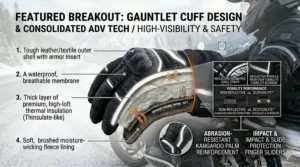
Winter motorcycle gloves should feature extended gauntlet cuffs that overlap your jacket sleeves by at least 5-8 cm. This overlap prevents the deadly gap where cold air and precipitation sneak in between glove and sleeve. Measure from your wrist crease to where your jacket sleeve ends when your arms are in riding position—the gauntlet should extend beyond this point comfortably.
The Jackets 4 Bikes Premium Gauntlet exemplifies proper gauntlet design with adjustable straps letting you cinch the opening tight around your jacket sleeve. This seal keeps wind and moisture out while preventing the glove from sliding down during rides.
Testing With Your Actual Gear
Never assess glove fit while standing in a store or your living room. Put on your actual riding jacket, extend your arms into riding position, and test throttle, clutch, brake, and turn signal operations. Your gloves must allow full control range while maintaining warmth—compromising either factor makes them unsuitable for Canadian winter riding.
Order from retailers like Amazon.ca offering easy returns, and test during actual short rides while keeping packaging intact. If your fingers tingle or go numb within 15 minutes, the gloves are too tight regardless of what the size chart indicates. If controls feel mushy or imprecise, the gloves are too bulky or loose for safe riding.
Essential Features Beyond Insulation
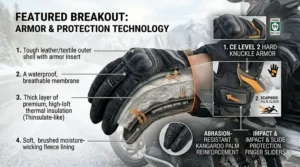
Insulation technology gets the headlines, but several other features separate mediocre winter motorcycle gloves from outstanding ones. These details determine whether your gloves perform reliably through Canadian winter’s diverse challenges.
Knuckle and Palm Protection
Quality winter gloves incorporate impact protection without sacrificing flexibility. Carbon fiber or hard PVC knuckle guards like those on the KEMIMOTO Winter Motorcycle Gloves and Prime Sports Leather & Cordura absorb impact during falls while remaining articulated enough for natural hand movement.
Palm protection comes in two forms: gel or foam padding that cushions vibration during long rides, and abrasion-resistant materials that protect during slides. Microfiber or Kevlar palm reinforcements in high-wear zones extend glove lifespan while maintaining grip through multiple seasons.
Touchscreen Compatibility Done Right
Modern navigation and communication demands touchscreen-capable gloves, but implementation quality varies dramatically. Single-finger touchscreen tips (typically just the index finger) prove frustrating when you need to pinch-zoom maps or type destination addresses with cold fingers.
The MAGILINK Sheepskin Leather Gloves excel with genuine 360° touchscreen capability across all fingers. This full-hand functionality lets you operate smartphone interfaces naturally without removing gloves or awkwardly jabbing with one designated finger. Test touchscreen responsiveness before committing—cheap conductive materials stop working after a few washes.
Closure Systems and Adjustability
The wrist closure system determines how effectively gloves seal against cold air infiltration. Hook-and-loop (Velcro) closures offer easy adjustment even while wearing the gloves, letting you tighten or loosen fit mid-ride as temperature changes. The Men’s Premium Sheep Leather Gauntlet Thinsulate Gloves feature robust hook-and-loop straps that maintain grip security through dozens of on/off cycles.
Elastic wrist bands positioned under the main closure add secondary wind-blocking. This two-layer approach creates redundant sealing that prevents cold air from sneaking through gaps during aggressive riding positions.
Visibility and Reflective Elements
Canadian winter means extended darkness—you’re commuting home from work in pitch black, often through the 4-5 PM rush hour traffic when driver attention is divided. The Jackets 4 Bikes Premium Winter Motorcycle Gloves incorporate reflective stripes across the fingers that catch headlight beams from vehicles at intersections, significantly improving your visibility.
Even without dedicated reflective elements, choosing lighter-coloured gloves (grey, tan, white, or bright colours) rather than black improves daytime visibility. Your hand signals and lane position indicators become more noticeable to drivers checking mirrors or shoulder-checking before lane changes.
Liner Compatibility
Some riders prefer thin liner gloves worn under winter gloves for added warmth or to manage moisture. If you plan this approach, size up to accommodate the liner without restricting blood flow. However, most quality insulated gloves like the MOREOK Waterproof & Windproof -30°F Winter Gloves provide sufficient integrated warmth that liners become unnecessary—and liners often reduce dexterity enough that control precision suffers.
Maintaining Your Insulated Motorcycle Gloves
Canadian winters abuse motorcycle gloves relentlessly: salt corrosion from roads, repeated wet-dry cycles, extreme temperature swings, and constant flexing stress materials in ways summer riding never does. Proper maintenance extends glove lifespan from one season to four or five, making it worth understanding care techniques.
Cleaning Leather Gloves Properly
Leather gloves like the Men’s Premium Sheep Leather Gauntlet Thinsulate Gloves and MAGILINK Sheepskin Leather Gloves require specialized care. Never machine wash leather gloves—the agitation and heat destroy leather structure and insulation. Instead, wipe the exterior with a damp cloth and small amount of mild leather cleaner, working gently to remove salt stains and road grime.
Salt damage appears as white crusty deposits along stitching and surface leather. Address salt immediately because it draws moisture into leather, promoting cracking and deterioration. Mix equal parts white vinegar and water, apply with a soft cloth, then wipe clean and allow to air dry away from direct heat sources.
Condition leather gloves 2-3 times per winter season using quality leather conditioner. Apply thin coats, work into the leather with circular motions, and allow 24 hours to absorb before wearing. Conditioning maintains leather suppleness and water resistance while preventing the brittleness that develops in uncared-for gloves.
Washing Synthetic Gloves
Synthetic gloves like the KEMIMOTO Winter Motorcycle Gloves and MOREOK Waterproof Gloves tolerate washing better than leather, but machine washing still risks damaging waterproof membranes and insulation structure. Hand wash in cool water with mild detergent, gently agitating to remove dirt without excessive scrubbing.
Rinse thoroughly—residual detergent breaks down waterproof coatings and creates sticky residue. Squeeze gently to remove excess water without wringing or twisting, which can damage membrane layers. Air dry completely before storage, stuffing gloves with newspaper to maintain shape and absorb internal moisture.
If you must machine wash, use delicate cycle with cold water, place gloves in a mesh laundry bag for protection, and never use fabric softener (it clogs waterproof membrane pores). Skip the dryer entirely—heat damages synthetic insulation and waterproof treatments.
Drying After Wet Rides
After riding through rain, slush, or wet snow, proper drying prevents odor development and extends glove life. Turn gloves inside out and stuff with crumpled newspaper, which absorbs moisture effectively. Replace newspaper every few hours until gloves feel dry.
Never place wet gloves on radiators, in front of space heaters, or near any direct heat source. Rapid heating damages leather structure, melts synthetic materials, and destroys waterproof membrane adhesives. Room temperature air drying takes 24-48 hours but preserves glove integrity.
For persistent odor problems, sprinkle baking soda inside gloves overnight, then shake out before wearing. The baking soda neutralizes odor-causing bacteria without chemicals that might irritate skin.
Storage Between Rides
Store winter gloves in cool, dry locations away from direct sunlight. UV exposure degrades both leather and synthetic materials, reducing water resistance and causing premature aging. Avoid leaving gloves in tank bags or storage compartments where moisture can accumulate.
During summer storage, clean gloves thoroughly, treat leather models with conditioner, and store in breathable cloth bags (never plastic, which traps moisture and promotes mildew). Insert glove shapers or crumpled acid-free tissue paper to maintain shape. Check periodically for signs of mildew or pest damage.
Reapplying Waterproof Treatments
DWR coatings on water-resistant gloves wear off gradually through use and washing. When you notice water no longer beading on the glove surface, reapply waterproofing spray designed specifically for the glove material (leather or synthetic). Follow product instructions carefully—overapplication creates sticky buildup without improving water resistance.
For gloves with TPU or Gore-Tex membranes, the internal waterproofing remains functional even after exterior DWR wears off. However, reapplying exterior treatment improves performance because the outer shell sheds water rather than becoming saturated and heavy.
Comparing Budget vs Premium Options
Walking through Amazon.ca’s motorcycle glove listings reveals enormous price ranges: $30 budget options sit alongside $150 premium gloves, both claiming winter protection. Understanding what you’re actually paying for helps determine whether premium pricing delivers genuine value or just marketing hype.
What Budget Gloves ($30-50 CAD) Deliver
Budget-friendly options like the KEMIMOTO Winter Motorcycle Gloves ($35-45 CAD) prove that affordable doesn’t mean ineffective. These gloves utilize proven technologies—3M Thinsulate insulation, TPU waterproof membranes, and touchscreen-compatible materials—at accessible prices by streamlining manufacturing and reducing brand marketing costs.
The compromises appear in durability rather than immediate performance. Budget gloves often use thinner leather (or synthetic alternatives), less robust stitching, and simpler construction techniques. They’ll keep your hands warm and dry through one or two winter seasons, but expect wearing patterns to emerge faster than premium alternatives.
For riders just beginning winter riding or those uncertain about continuing after their first cold season, budget gloves make perfect sense. Spending $40 to discover you hate riding below 5°C hurts less than the $150 premium glove investment.
Mid-Range Excellence ($50-80 CAD)
The $50-80 CAD range represents motorcycle winter gloves’ sweet spot for most Canadian riders. Products like the Men’s Premium Sheep Leather Gauntlet Thinsulate Gloves ($50-65 CAD) and IRON JIA’S Motorcycle Gloves ($40-55 CAD) balance quality materials, proven construction, and reasonable pricing.
These gloves typically last 3-4 winter seasons with proper care, featuring genuine leather that develops better grip over time, reinforced high-wear zones, and insulation that maintains loft through multiple seasons. The construction quality shows in details: double-stitched seams resist failure, palm reinforcements don’t delaminate after ten rides, and waterproof membranes don’t start leaking mid-season.
Most riders find mid-range gloves deliver optimal value because the durability increase from budget options justifies the $20-30 price premium, while the performance gap between mid-range and premium narrows considerably.
Premium Territory ($80-150 CAD)
Premium gloves like the Prime Sports Leather & Cordura ($65-85 CAD) command higher prices through superior materials and construction techniques. Expect full-grain leather rather than split-grain alternatives, advanced insulation technologies, articulated protection systems, and meticulous stitching quality.
These gloves shine during extended use: after 100 hours of riding, premium gloves maintain their shape, flexibility, and waterproofing while budget options show visible wear. The leather develops rich patina while maintaining structural integrity, and waterproof membranes continue performing reliably season after season.
For riders logging serious winter miles—year-round commuters, winter touring enthusiasts, or those in careers requiring reliable cold-weather transportation—premium gloves justify their cost through enhanced comfort during long rides and multi-season durability.
The Heated Glove Premium
Heated gloves occupy their own pricing tier, starting around $120 CAD and reaching $300+ for premium models with app control and extended battery life. This premium buys active heating elements, rechargeable batteries, wiring systems, and sophisticated temperature controllers—genuine value if you need active heating rather than passive insulation.
However, heated gloves aren’t inherently “better” than quality insulated alternatives. They serve different purposes for different riding conditions. Many riders discover that $60 spent on excellent insulated gloves plus $40 on heated grips provides better overall comfort than $150 heated gloves alone.
Making Your Budget Decision
Assess your realistic riding frequency and typical weather exposure. If you’re riding 1-2 times weekly through moderate winter conditions, mid-range gloves deliver best value. Budget options suffice for occasional cold-weather riders willing to replace gloves every other season. Premium choices make sense for daily commuters logging 15-20 hours weekly throughout winter, where enhanced comfort and durability compound over thousands of kilometres.
🍁 Canadian Winter Riding Regulations and Safety
Canadian provinces maintain individual regulations regarding winter motorcycle operation, creating a patchwork of rules that confuse riders moving between regions. Understanding your province’s specific requirements prevents unexpected tickets and, more importantly, helps you ride safely within legal frameworks designed for winter conditions.
Provincial Regulation Variations
British Columbia exempts motorcycles from winter tire requirements but explicitly advises riders to use common sense when deciding whether to ride between October 1 and April 30. Police retain authority to turn vehicles around if conditions are deemed unsafe, regardless of tire choice. The BC government’s motorcycle winter riding page emphasizes that legal doesn’t equal safe.
Quebec stands alone in requiring winter tires on all registered vehicles including motorcycles between December 1 and March 15. This regulation significantly impacts Quebec riders, as finding appropriate winter tires for motorcycles proves challenging and expensive. Many Quebec motorcyclists simply store their bikes during the mandatory winter tire period rather than investing in specialized rubber.
Saskatchewan’s Motorcycle Driver’s Handbook warns extensively about winter riding dangers, particularly icy patches appearing at intersections, bridges, and shaded areas. While not banning winter riding, the handbook’s cautionary tone reflects genuine risks associated with two-wheeled winter travel on prairie highways.
Safety Equipment Considerations
All provinces require approved motorcycle helmets meeting DOT, ECE, or Snell standards. Winter adds complexity because full-face helmets with anti-fog visors become nearly essential—open-face helmets expose too much skin to frostbite risk at highway speeds below -10°C. British Columbia’s motorcycle safety regulations detail helmet requirements applicable year-round.
Visibility becomes critical during winter’s extended darkness. While not legally required, high-visibility gear significantly reduces accident risk. Research shows motorcyclists wearing dark gear in dim conditions are involved in collisions at rates 37% higher than those with reflective elements or bright colours. The reflective stripes on gloves like the Jackets 4 Bikes Premium Gauntlet contribute meaningfully to visibility enhancement.
Cold Weather Physical Limitations
Canadian motorcycle safety guidelines emphasize that cold weather affects rider capability beyond just comfort. Reduced core temperature slows reaction times, stiffens joints, and impairs decision-making. According to winter riding safety documentation, exposed hands in particular lose dexterity rapidly, making proper insulated gloves not just comfort items but essential safety equipment.
Hypothermia risk increases dramatically when riding wet. If your gloves aren’t genuinely waterproof and you’re caught in freezing rain, wet hands combined with wind chill can induce hypothermia symptoms within 20-30 minutes—even if air temperature sits above freezing. This reality underscores why waterproof gloves like the MOREOK Waterproof & Windproof -30°F Winter Gloves matter beyond just staying comfortable.
Insurance and Liability Considerations
Check your motorcycle insurance policy for winter riding clauses. Some insurers restrict coverage to specific months (typically April-October in Canada) or charge additional premiums for year-round coverage. Operating your motorcycle outside covered periods could void collision and comprehensive coverage, leaving you personally liable for accident damages.
Liability coverage typically remains active year-round, but claims adjusters scrutinize winter accidents more carefully. If investigators determine you were riding in unsafe conditions (heavy snow, ice, extreme cold) when safer alternatives existed, insurers might dispute claims or increase premiums substantially.
Making Safe Riding Decisions
Legal permission to ride doesn’t obligate you to ride. Monitor Environment Canada forecasts and DriveBC (or equivalent provincial resources) for current road conditions. If your route includes sections experiencing freezing rain, black ice warnings, or snow accumulation, postpone your ride regardless of proper gear.
Remember that insulated winter motorcycle gloves serve as one component of safe winter riding equipment. Combine quality gloves with heated grips, proper winter jacket and pants, winter-rated boots, and a full-face helmet with anti-fog technology. No single piece of gear ensures safety—the system working together does.
FAQ
❓ What insulation is warmest for motorcycle gloves in Canadian winters?
❓ How much should I spend on quality insulated motorcycle gloves in Canada?
❓ Are waterproof motorcycle gloves necessary for winter riding in Canada?
❓ Can I ride motorcycles in winter throughout all Canadian provinces?
❓ How do I know if motorcycle gloves fit correctly for winter riding?
Conclusion: Finding Your Perfect Insulated Winter Motorcycle Gloves
Choosing the right insulated winter motorcycle gloves for Canadian riding ultimately comes down to matching technology to your specific needs. There’s no universal “best” glove—only the best glove for your typical riding conditions, budget constraints, and personal cold tolerance.
For most Canadian riders tackling moderate winter conditions, the mid-range sweet spot of $50-80 CAD delivers optimal value. The Men’s Premium Sheep Leather Gauntlet Thinsulate Gloves provide classic styling with proven warmth, while the MOREOK Waterproof & Windproof -30°F Winter Gloves handle extreme cold and wet conditions confidently.
Budget-conscious riders will find the KEMIMOTO Winter Motorcycle Gloves deliver remarkable performance under $45 CAD, proving that proper insulation technology matters more than premium pricing for basic winter protection. If you prioritize touchscreen functionality for navigation and communication, the MAGILINK Sheepskin Leather Gloves offer full-hand responsiveness uncommon in this price range.
Remember that gloves represent just one component of safe winter riding. Combine quality insulated gloves with heated grips, proper layered clothing, winter-rated boots, and—most importantly—realistic assessment of current weather and road conditions. No glove technology compensates for riding beyond your abilities or pushing into genuinely unsafe conditions.
Start your winter riding journey with gloves matched to your typical conditions rather than worst-case scenarios. You can always upgrade to heavier insulation or heated alternatives as you gain experience and determine your actual cold tolerance. Many riders discover they’re more comfortable in moderate cold than anticipated once properly equipped.
The 2026 glove options available through Amazon.ca provide Canadian riders with excellent choices across all price points. Whether you’re commuting through Toronto’s variable winter weather, navigating Vancouver’s wet coastal conditions, or braving Saskatchewan’s prairie cold, quality insulated winter motorcycle gloves keep you riding safely when others have stored their bikes until spring.
Recommended for You
- Best Waterproof Winter Motorcycle Gloves Canada 2026: 7 Top Picks
- 7 Best Motorcycle Gloves for -30°C | 2026 Canada Winter Guide
- 7 Best Winter Motorcycle Gloves Canada 2026
Disclaimer: This article contains affiliate links to Amazon.ca. If you purchase products through these links, we may earn a small commission at no additional cost to you.
✨ Found this helpful? Share it with your friends! 💬🤗
